





Abstract
Introduction:
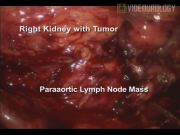
Laparoscopic radical nephrectomy has been an established procedure for dealing with organ-confined renal malignancies. 1 We present a video demonstration of this exercise for management of renal neoplasms in challenging scenarios (lesions with a longitudinal diameter >10 cm, lesions with venous thrombi, and advanced renal malignancy with hilar lymph node mass).
Materials and Methods:
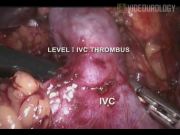
All patients are worked up in detail. Computed tomography scan or magnetic resonance imaging was performed to define the lesional extent, identify venous thrombi, and characterize the vascular anatomy. Our technique of laparoscopic radical nephrectomy has been previously presented. 2 We prefer transperitoneal approach, because a wider working space is available and different situations may be conveniently tackled. In level-I venacaval thrombus, the venous lumen was suture occluded distal to the extent of the thrombus to avoid thrombus migration during handling. Thereafter, the thrombus was milked toward the kidney, and hem-o-loc and long metal clips were applied sequentially followed by division of the renal vein. No additional vascular stapler was employed. Follow-up visits were scheduled every 3 months. Blood parameters and imaging studies were advised at each re-visit.
Results and Conclusions:
Of 252 laparoscopic radical nephrectomies performed by the same surgeon over last 10 years, 25 cases were >10-cm lesions. Three cases underwent the procedure with a metastatic disease with hilar adenopathy for cytoreductive intent. Three cases underwent successful laparoscopic extirpation in the presence of level-I venacaval thrombus. One hundred thirty-four lesions involved right kidney, and 118 lesions involved left kidney. Mean age was 45.5 years (range 7–79 years). Ninety-eight were females and 154 were males. Twenty-nine patients had deranged preoperative renal profile preprocedure (serum creatinine >1.4 mg/dL). Mean operation duration was 105.67 minutes (range 65–235 minutes). Mean blood loss was 175.34 mL (range 100–450 mL). Conversion to open technique was required in two cases. Clear cell carcinoma was the most commonly encountered neoplasm (n=230). Other variants included anaplastic Wilms tumor (n=1), chromophobe adenoma (n=15), renal cell sarcoma (n=1), and oncocytoma (n=5). Surgical margins were negative in all. Noteworthy postoperative events included prolonged peritonism (n=2), retrieval-site infection (n=3), and leg vein thrombosis (n=1). All others recovered uneventfully. Mean hospital stay was 4.2 days (range 3–7 days). Mean follow-up duration was 18.4 months (range 7–60 months). No local recurrences were detected. Two patients presented with recurrent neoplasm in contralateral kidney, which was dealt by nephron-sparing surgery. Laparoscopic radical nephrectomy, although technically demanding, was accomplished in different challenging scenarios. The key advantages were excellent morbidity profile and acceptable oncological outcome.
No competing financial interests exist.
Runtime of video: 9 mins 10 secs
Keywords
Get full access to this article
View all access options for this article.