





Abstract
Introduction:
To introduce a new and easy technique to perform laparoscopic ureteropelvic junction (UPJ) anastomosis with a double suture, single knot. To the best of our knowledge, this technique is the first in literature.
Materials and Methods:
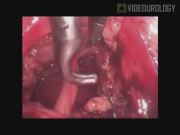
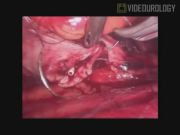
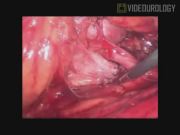
Before starting retroperitoneal approaches, all of the Double-J ureteral stents were placed at the lithotomy position under general anesthesia, after that lateral decubitis positions were given to the patients. With the patient in the full lateral position, the hips flexed and the kidney rest elevated, a 15-mm incision is made to muscle free Petit triangle, and this incision is used for 12-mm camera trocar. The other trocars are inserted by finger guidance, 10-mm trocar is used for surgeon's dominant hand, and the other is 5 mm. Dissection of the ureter and pelvis is shown. Complete mobilization of lower pole crossing vessel and transposition is described. Oblique division of the UPJ and lateral spatulation is illustrated. Before anastomosis, two 3/0 monocryl (17 mm round needle) sutures are tied and prepared in vitro. Formation of anterior and posterior wall anastomosis by two separate running sutures is described, and then these sutures are finally tied carefully and made a single knot. At the end of the surgery a drain tube was inserted into the operative field. The most important trick is that one needle is fixed into psoas muscle or fatty tissues during the suturing of anterior or posterior walls with other needle; by this method the surgeon is not confused. The other trick may be using different color suture materials.
Results:
All procedures were carried out by one surgeon (M.S.) through 12 retroperitoneal approaches. The data extend from April 2010 to February 2011. The obstruction was right sided in eight and left sided in four patients. A crossing vessel was found in two patients, and one patient with left-sided UPJ stenosis needed pyelolithotomy for concomitant stone. Neither blood transfusion nor conversion to open surgery was required due to blood loss or major complications. Mean operative time was 115 minutes (range, 85–150 minutes) and hospital stay was 2 days in all patients. Average anastomosis time was 29.1 minutes (range, 15–42 minutes). All of the anastomosis were watertight and no leakage from neo UPJs were observed at postoperative period.
Conclusions:
The experience with this technique for anastomosis of UPJ is preliminary; further studies are needed and awaited, but the results are promising, and we would like to propose it to all laparoscopic urologists.
No competing financial interests exist.
Runtime of video: 8 mins
Get full access to this article
View all access options for this article.