





Abstract
Introduction:
Vesicoureteric reflux (VUR) demands attention to avoid reflux nephropathy and renal failure. 1 Although medical management and endoscopic injections have been extensively utilized for correction of reflux, high-grade VUR demands operative correction. Laparoscopic approach provides an interesting option for correction of high-grade VUR. This video spans over 7 minutes and 39 seconds and demonstrates our technique of laparoscopic correction of VUR in different scenarios.
Methods:
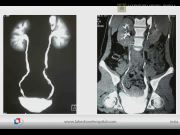
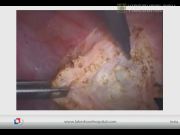
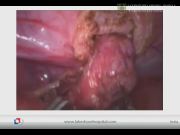
All patients were worked up in detail. Patients not responding to conservative approaches and demonstrating high-grade VUR (Grade III–V) on voiding cystourethrogram were planned for corrective surgery. Preprocedure cystoscopy was performed to rule out hitherto unidentified pathologies followed by ureteral stent and perurethral catheter placement. Ureteric reimplantation was performed after Lich-Gregoir principle. A detrusor trough was created whose length was 5 times the width of lower ureter. The ureter was tunneled into this trough and detrusorraphy completed. Stents were removed 6 weeks postprocedure. Repeat voiding cystourethrogram and magnetic resonance urogram was interpreted at 6 months' follow-up. At 3 years postprocedure, patients were re-evaluated.
Results and Discussion:
From March 2004 to May 2009, 26 patients (49 renal units, 22 bilateral, 3 unilateral, and 1 common sheath reimplantation in duplex moiety) underwent laparoscopic antireflux surgery. Mean surgical duration was 103.33 minutes for unilateral, 154.09 minutes for bilateral procedures, and 134 minutes for common sheath reimplantation. A difference in operation duration between boys and girls was perceived (mean operative duration for bilateral antireflux: boys 121.11 minutes vs. girls 176.92 minutes; p < 0.001). No significant intraoperative complications were encountered. Mean hospital stay was 3.5 days. Ureteral stents were removed at 6 weeks postoperatively. 46 units completed 6 months of follow-up. Satisfactory results were obtained in 43 units (93.5%). Although laparoscopic approach for high-grade VUR is not well established till date, 2 the results are durable and morbidity is excellent. Additionally, in this technique the bladder mucosa is not transgressed and the consequences thereof may be avoided. A wide detrusor trough, inverted Y myotomy at level of vesicoureteric junction, and optimum tension during detrusorrhaphy are the key issues with this technique. The procedure may be carried out simultaneously in the presence of bilateral VUR and even in duplex moiety. Grossly dilated ureters mandate tailoring before reimplantation to achieve satisfactory outcome. Follow-up urogram reveals a kink at the level of tunneled ureter with unhindered upper tract drainage. If the operator is conversant with pelvic laparoscopy, it can be conveniently adopted as a procedure of choice for rectifying high-grade VUR.
No competing financial interests exist.
Runtime of video: 7 mins 39 secs
Get full access to this article
View all access options for this article.