





Abstract
Objectives:
Bladder neck sling would likely gain proponents if surgical changes could ensure more rapid postoperative voiding, yet not compromise the procedure's 85% long-term cure rate for stress incontinence. 1 –15 Although two fingers' breadth sling length is commonly utilized, increasing the distance from the polypropylene knot to the rectus fascia would facilitate earlier voiding without compromising success rates.
Materials and Methods:
Eighty-four consecutive, retrospectively evaluated patients underwent a bladder neck sling with Repliform under spinal anesthetic. All patients underwent multichannel urodynamics testing and completed a history and physical examination, pre- and postoperative Incontinence Impact Questionnaire (IIQ7), and Urogenital Distress Inventory (UDI-6).
Results:
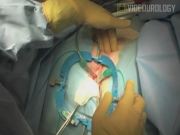
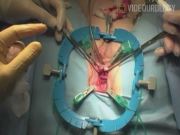
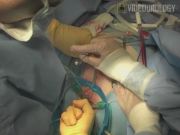
In our study of 80 women (4 had urethra tied off with a sling to avoid leaking vaginally with a chimney reservoir), we found that increasing the distance from the polypropylene knot to the rectus fascia, while simultaneously observing the closure of the bladder neck with a cystoscope, resulted in 92% of women voiding the same day and 88% experiencing no stress incontinence at 6-year follow-up. One patient required urethrolysis for prolonged retention. Three patients complained of de novo urgency. Preoperative IIQ7 and UDI-6 median scores were 52.37 and 12; postoperative median scores of 9.52 and 3 demonstrated statistically significant improvements (p<0.0001).
Conclusion:
Increasing bladder neck sling length from the commonly utilized two finger's breadth separation may facilitate a more rapid return to same-day voiding and maintain stress incontinence cure rates in the medium term (6 years).
No competing financial interests exist.
Runtime of video: 8 mins 28 secs
Keywords
Get full access to this article
View all access options for this article.