





Abstract
Introduction:
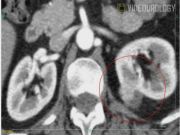
Robot-assisted partial nephrectomy is one of the fastest growing robotic procedures. It was quickly adopted by urologists with many different training levels as a minimally invasive alternative to open nephrectomy. 1 Larger tumors in more difficult locations are increasingly done. 2 The technique of placing the robotic camera lateral to the robotic arms is useful for tumors in posterior locations. This port placement also optimizes motion of the robotic arms and decreases collisions. 3 Most current published series come from large academic institutions, 4 and little has been published from the community setting. We illustrated the technique in this 7-min video with three cases performed by a community urologist with no fellowship training.
Methods:
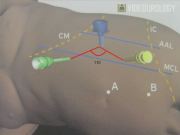
The technique of placing the robotic camera lateral to the robotic arms is usually performed at our institution when approaching tumors in posterior locations. The robotic camera is placed 3 fingerbreadths from the costal margin, in between the anterior axillary line and the midclavicular line. The other two robotic arms are placed 10 cm away from the camera at a 110° angle triangulated toward the mass.
Results:
All tumors were resected with negative margins. Two were papillary renal-cell carcinoma and one was an oncocytoma. No patient needed a transfusion. All patients were discharged home on postoperative day 3 without drains. One patient did not require clamping of the vessels 5 and two required clamping, with warm ischemia time of 23 and 31 min.
Conclusions:
Robot-assisted partial nephrectomy in posterior locations is a feasible procedure in the community setting. We believe that placement of the robotic camera laterally facilitates the procedure.
No conflict of interest to disclose.
Runtime of video: 7 mins 0 secs
This video was submitted to the 2010 South Central Section of the American Urologic Association meeting.
Get full access to this article
View all access options for this article.