





Abstract
The video illustrates the technique of modified inguinal lymphadenectomy for the treatment of penile cancer.
Technique:
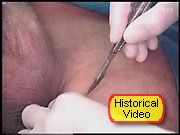
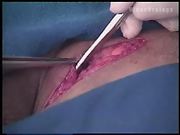
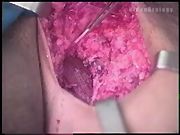
A 5 cm skin incision was made, 2 cm below the inguinal arcade, along the femoral vessels. The adipose and lymphatic tissues below the Scarpa's fascia were resected en bloc, with the adductor longus muscle as the medial border, the medial surface of the femoral and saphenous veins as the lateral border, and the inguinal arcade as the superior border, performing a triangle. Frozen-section analysis of lymph nodes was performed; if metastases were absent, the procedure was concluded and a suction closed drain was maintained for at least 5 days. If metastases were detected, an ipsilateral complete inguinal lymphadenectomy was performed. Modified inguinal lymphadenectomy causes a lower complication rate than complete inguinal lymphadenectomy.Bilateral modified inguinal lymphadenectomy is performed at the same time of penectomy and does not increase the complication rate. When frozen-section analysis is negative bilaterally, 5.5% of inguinal regions might still harbor occult metastasis. 1 Modified inguinal lymphadenectomy is recommended in all patients with T2-3 penile carcinoma as a staging procedure. Meticulous follow-up is required for 2 years, since all recurrences occurred within this period.
This is an historical video of an important urological procedure that may be of interest to urologists today. The content of the video reflects the views of the authors, and the techniques and technologies used by the authors, at the time the video was produced. The complete author disclosures are no longer available.
Runtime of video: 3 min 33 sec
Get full access to this article
View all access options for this article.