






Abstract
Abstract
Introduction:
Graves' disease is the most common cause of hyperthyroidism, resulting from the development of autoreactive thyroid-stimulating hormone-receptor antibodies, which lead to increased production of thyroid hormone, thyrocyte proliferation, and thyroid gland enlargement. Total thyroidectomy, antithyroid drugs, and radioactive iodine are all acceptable management options for this condition, with unique benefits, risks, and optimal use scenarios.
Results:
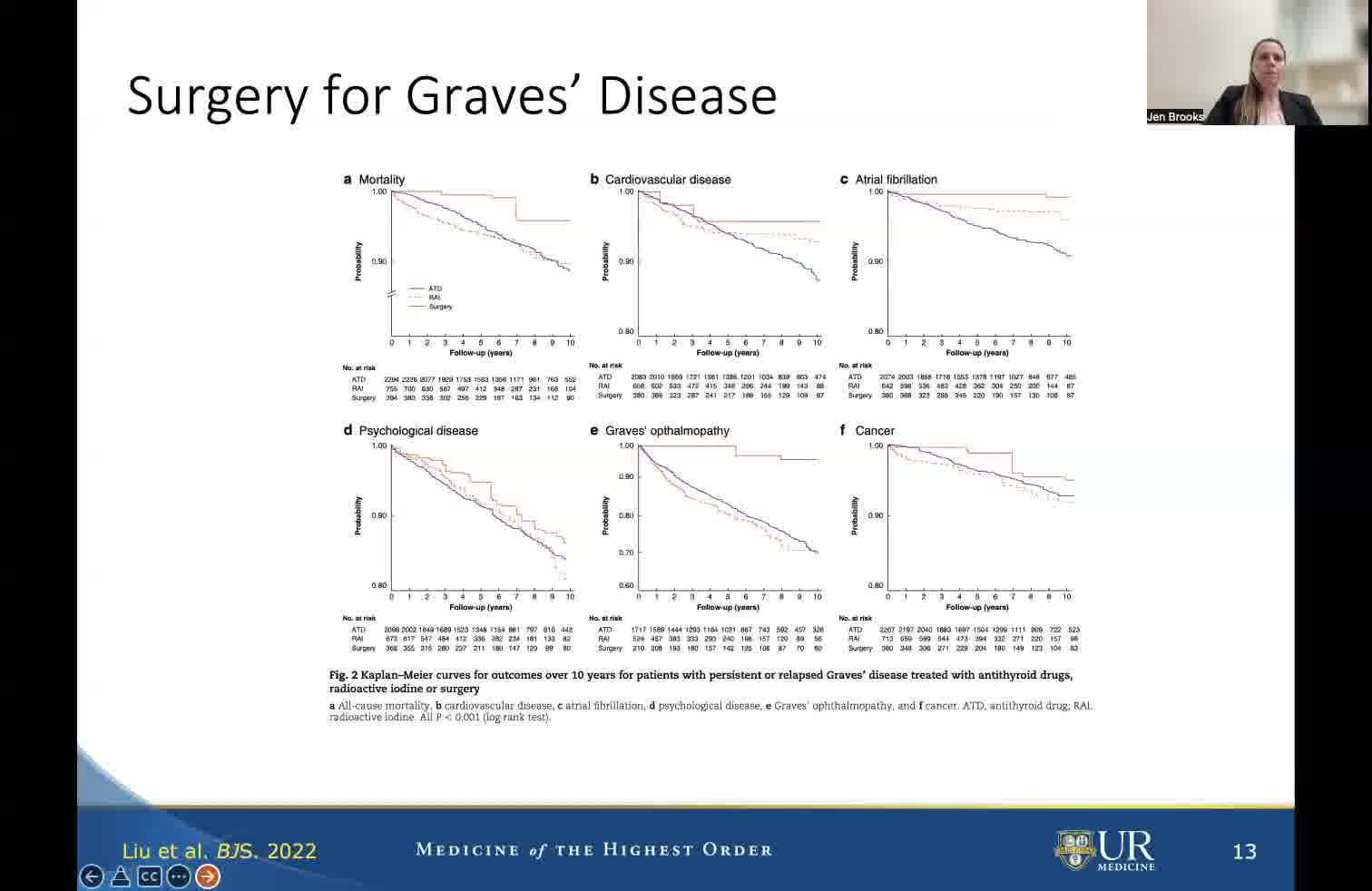
Total thyroidectomy leads to rapid and definitive resolution of hyperthyroidism at the cost of hypothyroidism. Risks include those of anesthesia, recurrent laryngeal nerve injury, and hypoparathyroidism, rates of which are low in the hands of a high-volume surgeon. Surgical indications for Graves' hyperthyroidism include presence of goiter (nodular or diffuse) with compressive symptom, coexistence of other surgical indications (suspicious nodules or biopsy-proven thyroid cancer, and primary hyperparathyroidism), moderate-to-severe thyroid eye disease, and presence of contraindications to antithyroid drug therapy and radioactive iodine (e.g., young children, pregnancy, or desiring pregnancy soon). Patient preference and shared decision making are critical to choosing the right therapy for a given patient.
Conclusions:
Total thyroidectomy, antithyroid drugs, and radioactive iodine are all safe and effective treatment modalities for Graves' disease. The most appropriate treatment for an individual patient is best chosen after reviewing therapy logistics, benefits, risks, speed of onset, potential side effects, and incorporating patient values and preferences in shared decision making.
No competing financial interests exist.
Runtime of video: 9 mins 20 secs
Get full access to this article
View all access options for this article.