






Abstract
Abstract
Introduction:
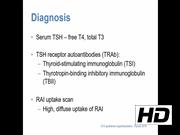
Graves disease is an autoimmune disorder wherein antibodies to the thyroid stimulating hormone receptor result in increased thyroid hormone production and release. It is the most common cause of hyperthyroidism in the United States. Management options for Graves disease include antithyroid medications, radioactive iodine (RAI) administration, and either total or subtotal thyroidectomy. The aim of this presentation was to review and present recent literature on the surgical management of Graves disease.
Materials and Methods:
The 2016 American Thyroid Association Guidelines for Diagnosis and Management of Hyperthyroidism and Other Causes of Thyrotoxicosis as well as other recent available literature regarding controversies in the surgical management of patients with Graves disease were reviewed and compiled for presentation.
Results:
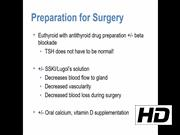
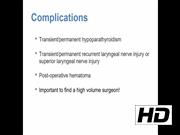
Surgery is preferred for patients with Graves disease who have active ophthalmopathy, large thyroid nodules or suspected thyroid malignancy, compressive symptoms, or substernal goiter. It is also preferred in pregnancy, in those who prefer surgery to other treatment modalities, or in those who have contraindications to RAI or antithyroid medication. A euthyroid state should be obtained before surgery. Preoperative treatment with potassium iodide or calcium can also be considered. Either total or subtotal thyroidectomy can be chosen for patients with Graves disease. Total thyroidectomy has a decreased risk of recurrence, whereas subtotal thyroidectomy is ideal in situations wherein there is limited availability of thyroid hormone. Patients with Graves disease who undergo thyroidectomy are at an increased risk of postoperative complications, so it is crucial to refer patients to high-volume thyroid surgeons.
Conclusion:
Graves disease is the most common cause of hyperthyroidism in the United States. Thyroidectomy for Graves disease has an excellent long-term cure rate. Patients should be referred to high-volume surgeons.
No competing financial interests exist.
This video is adapted from a talk given at the 5th New York Masters Course in Endocrinology and Endocrine Surgery on December 12, 2019.
Runtime of video: 11 mins 53 secs
Get full access to this article
View all access options for this article.