






Abstract
Abstract
Introduction:
For patients seeking to avoid a permanent anterior cervical scar from thyroidectomy, numerous remote access robotic techniques are accepted as safe and effective. One approach is the robotic facelift thyroidectomy (RFT) utilizing a postauricular incision. Recent robotic advances introduce a new robotic platform that deploys its surgical instruments through a single cannula, which has the potential to improve the ability to operate remotely with smaller and fewer incisions. This study includes the first video demonstration of the clinical use of the Intuitive da Vinci single-port (SP) robotic surgical system in a postauricular robotic facelift thyroid lobectomy (RFTL).
Materials and Methods:
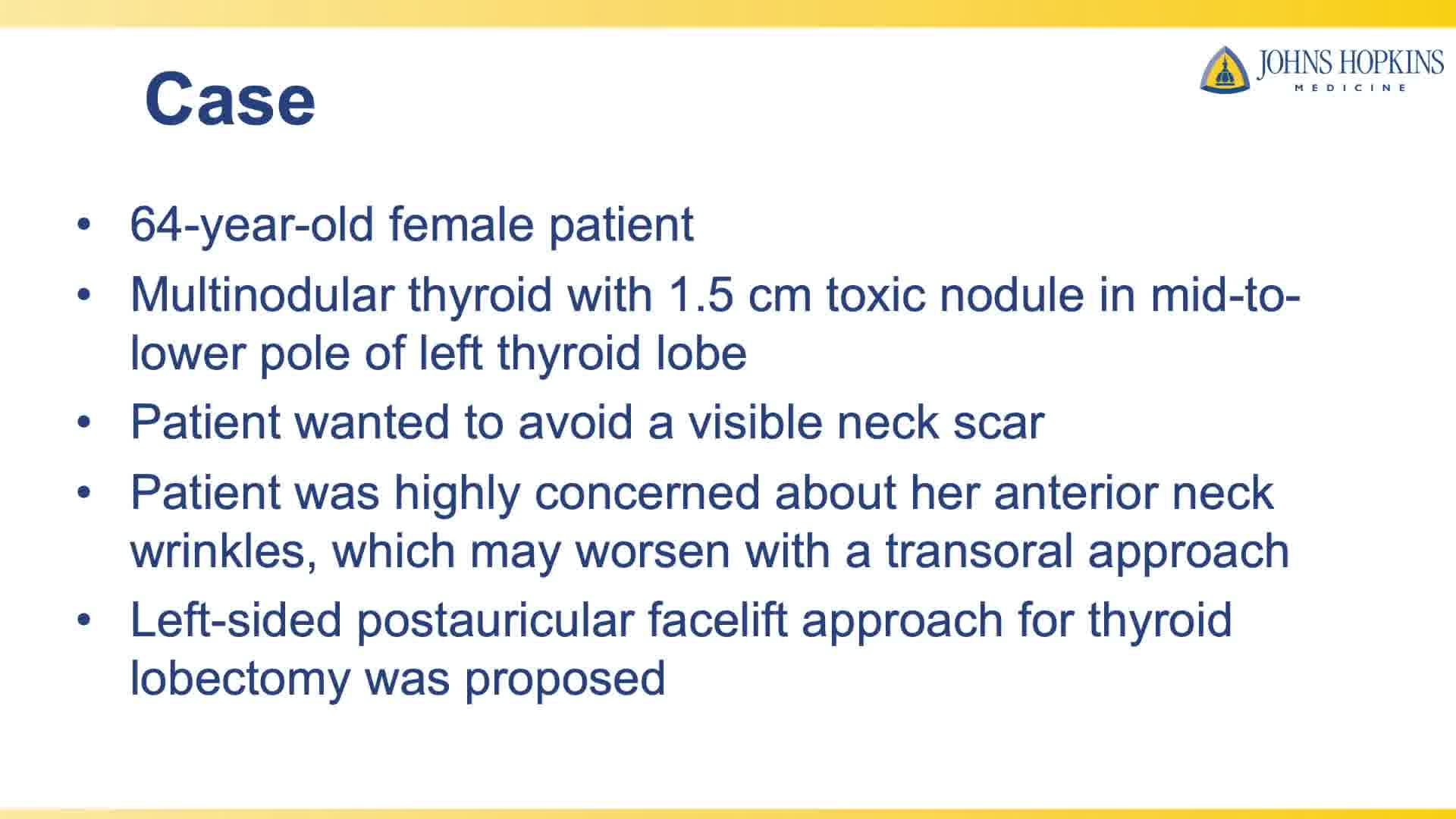
The RFTL was largely performed as described by Terris et al. 1 The patient was a 64-year-old woman with a multinodular thyroid and a 1.5 cm toxic nodule in the mid-to-lower pole of her left thyroid lobe. She sought remote access options for thyroid surgery to avoid a neck scar. The patient was not a good candidate for the transoral thyroid approach because she was highly concerned about vertical wrinkles on her neck, which the transoral approach may exacerbate. A left-sided postauricular facelift approach was proposed, and she requested an elective right-sided face and neck suspension for balance.
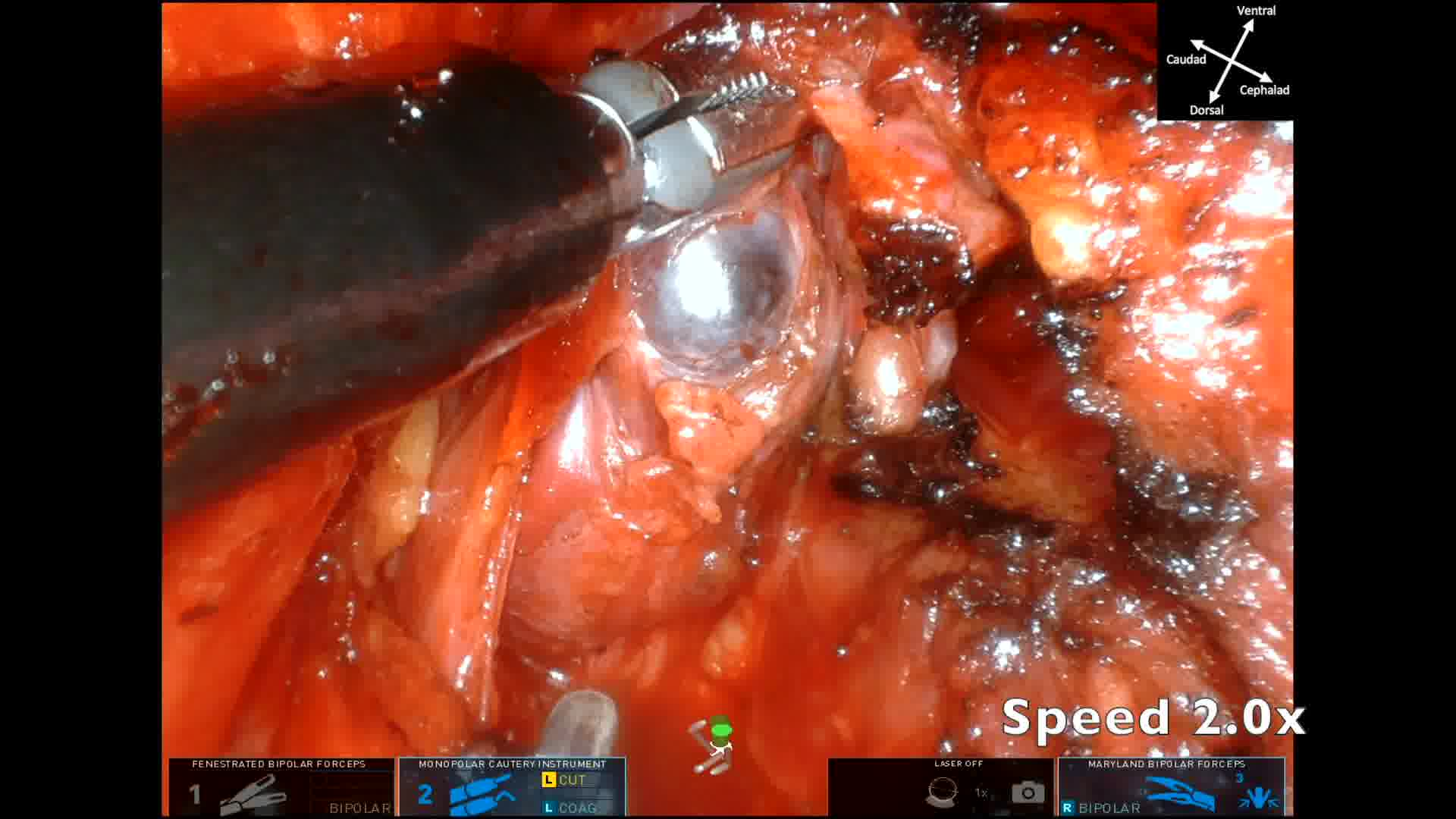
Informed consent was obtained from the patient. Left-sided incisions were made postauricularly creating a subcutaneous skin flap extending to the postmastoid region. The subcutaneous skin flap was elevated in the postauricular area in a subplatysmal plane anteriorly to the level of the thyroid mass. The dissection was extended past the midline contralaterally to facilitate the right-sided facelift and neck lift. The Intuitive da Vinci SP was sterilely docked and equipped with a 30° endoscope, Maryland bipolar forceps, ProGrasp forceps, and spatula bovie. A harmonic scalpel, nerve stimulator probe, endoscopic suction, and endoscopic kittner are introduced manually into the operative space by the bedside assistant surgeon as needed. The robotic thyroid lobectomy proceeded as shown in the video.
Results:
The left thyroid lobe was removed and the parathyroid glands were protected. The total time for the SP RFTL operation was 258 minutes, and the total console time was 160 minutes. There were no intraoperative nor postoperative complications.
Conclusions:
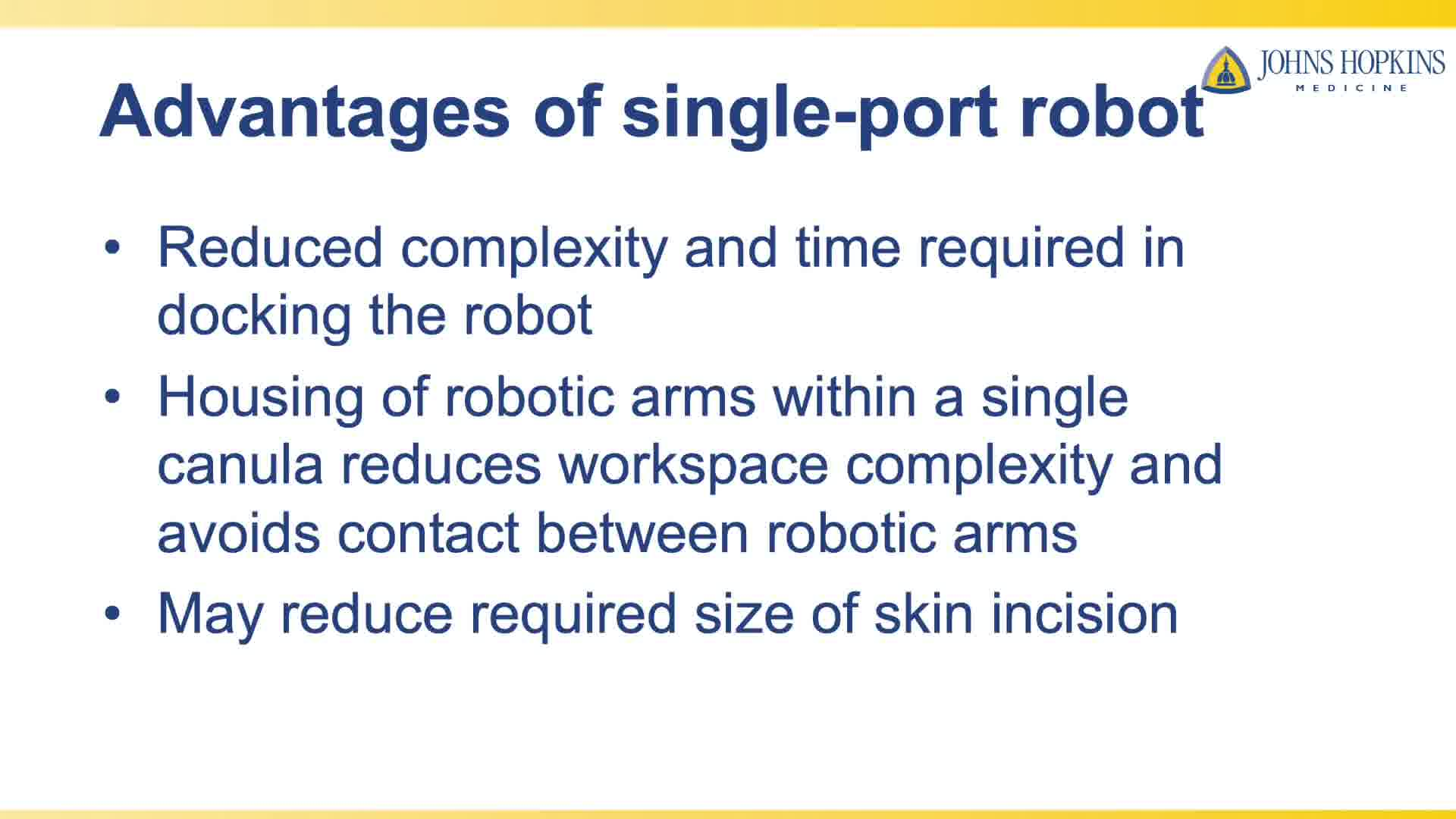
The RFT approach is an excellent option for patients who wish to avoid an anterior cervical scar. 2 The da Vinci SP system offers numerous advantages for RFT compared with the da Vinci Xi. The housing of the robotic arms within a SP allows for more efficient docking of the robot, reduces local workspace complexity, and avoids robotic arm collision. 3 The SP system may facilitate surgery through a smaller postauricular skin incision in RFT compared with the da Vinci Xi, though this has not yet been investigated in a cohort of patients. More widespread usage of the robotic platform is limited because of factors such as the cost of the robot, increased operative time, and the learning curve required to proficiently operate the robot. 4
R.P.T. is a consultant for Medtronic, RGS Healthcare, and Pulse Biosciences. The other authors have no conflicts of interest to disclose.
Runtime of video: 5 mins 43 secs
Keywords
Get full access to this article
View all access options for this article.