






Abstract
Abstract
Introduction:
A 63-year-old female with history of Graves' disease was treated by radioactive iodine ablation. She was seen by ophthalmology for worsening exophthalmos, and was then referred because of persistently high thyroid stimulating hormone (TSH) receptor autoantibody. Thyroid ultrasonography revealed rudimentary lobes bilaterally: the right measured 1.9 × 0.9 × 0.7 cm and left measured 1.3 × 0.7 × 0.7 cm
Materials and Methods:
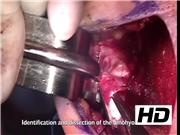
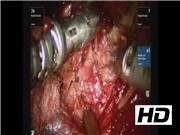
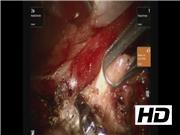
A 5-cm incision was done in the right anterior axillary line and a subcutaneous flap was created. The right vagus nerve was stimulated initially, and then the superior thyroid pedicle was dissected and divided using the harmonic scalpel. Recurrent laryngeal nerve was identified after meticulous dissection and confirmed using the nerve stimulator. The inferior pedicel was then dissected and divided, and the right thyroid lobe and isthmus were shaved from the trachea using the harmonic scalpel until reaching the contralateral tracheoesophageal groove. Then the left vagus nerve was stimulated followed by identification of the left recurrent laryngeal nerve in the tracheoesophageal groove, which was confirmed by nerve stimulation. Then the remaining small thyroid tissue was dissected circumferentially and from the nerve and the trachea, and the specimen was extracted through the axillary incision.
Results:
The patient was discharged home the next day with uneventful postoperative course. On follow-up, there was improvement of TSH receptor autoantibodies, and the patient reported improvement of her eye symptoms.
Conclusions:
Robot-assisted transaxillary total thyroidectomy is a safe and feasible technique, which can be performed from one side. Total thyroidectomy could be a curative option, in patients with Graves' ophthalmopathy and persistently high autoantibodies after radioactive iodine ablation. It can provide reduction of TSH receptor autoantibodies level and improvement of ophthalmopathy; consequently.
No competing financial interests exist
.
Runtime of video: 10 mins 24 secs
A different and shorter version of the same video operation was presented in the Third World Congress on Thyroid Cancer in Boston, MA, July 27–30, 2017.
Get full access to this article
View all access options for this article.