





Abstract
Abstract
Case:
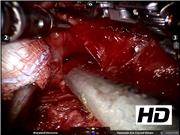
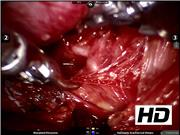
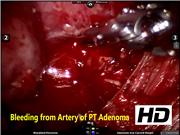
A 40-year-old African female patient was referred to our center for investigation of an asymptomatic primary hyperparathyroidism. The laboratory results showed an important elevation of parathyroid hormone (PTH) level to 487 pg/mL (normal range: 10–65 pg/mL) and high level of calcium (Ca) 3.31 mmol/L (normal range: 2.15–2.50 mmol/L) and ionized calcium (Caionized) of 1.8 mmol/L (normal range: 1.15–1.32 mmol/L). Neck ultrasonography was performed and showed a huge hypoechogenic mass in the right retrolobar area. The sestamibi parathyroid scan confirmed the existence and position of the parathyroid adenoma, with a slight retrosternal extension. Surgical removal was decided, and the patient requested the robotic technique to avoid a neck scar. This video shows the main steps of the removal of this huge parathyroid adenoma using the daVinci® Si robotic system (Intuitive Surgical, Sunnyvale, CA) through a right transaxillary approach. The parathyroid adenoma was in the right retrolobar position and the thyroid lobe had to be elevated to find the mass. Then, the identification and dissection and stimulation of the right recurrent laryngeal nerve were performed. The inferior thyroid artery was ligated and the adenoma was dissected from the surrounding tissues. Bleeding from the feeding artery occurred while removing the adenoma, and control of hemostasis was carried out using the Harmonic™ ACE Curved Shears (Ethicon Endo-Surgery; Johnson & Johnson, New Brunswick, NJ). Frozen section results showed a parathyroid adenoma and peroperative PTH levels dropped to 24.8 pg/mL. The total operative time was 50 minutes. During the postoperative period, the patient had no drain and did not encounter any complications. PTH level on day 1 was 17 pg/mL and Ca level was 2.22 mmol/L. The patient was discharged home the day after surgery. Final anatomopathology results confirmed the parathyroid adenoma diagnosis (20 × 30 mm, 10 g), and on follow-up, the patient had a correct wound healing. She was satisfied with the axillary scar and showed no sign of recurrence with normal PTH and Ca levels.
Conclusion:
This video shows the removal of a huge parathyroid adenoma using the transaxillary robotic approach. This technique is feasible and safe with better cosmetic outcomes. Monitoring of the nerve is possible, with a good control of hemostasis in case of bleeding.
No competing financial interests exist.
Runtime of video: 10 mins 58 secs
Get full access to this article
View all access options for this article.