





Abstract
Abstract
Introduction:
Adrenocorticotropic hormone (ACTH) secreting pancreatic neuroendocrine tumors are rare malignancies that can present with symptoms of Cushing's syndrome. Here, we present a case of a 60-year-old female who developed classic Cushingoid features with bilateral adrenal hyperplasia on initial CT and PET scan. Repeat imaging before planned bilateral adrenalectomy revealed a new distal pancreatic tail PET-avid mass confirmed by endoscopic ultrasound and fine-needle aspiration to be a neuroendocrine tumor. We elected to resect this tumor through a laparoscopic approach.
Materials and Methods:
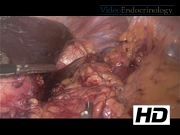
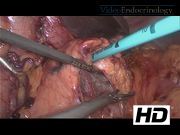
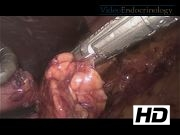
After administration of general endotracheal anesthesia, the patient was positioned supine with both arms out. Five ports were created to perform the procedure. Endosonic shears were used to transect the short gastric arteries and enter the lesser sac to expose the pancreas. The pancreatic body and tail were dissected, with care to identify and preserve the splenic vasculature. An Endo GIA stapler was used to transect the body of the pancreas. The specimen was sent for pathologic confirmation of the presence of neuroendocrine tumor and negative margins. The patient received 100 mg of hydrocortisone intraoperatively once the specimen was removed given her likely dormant hypothalamic–pituitary–adrenal axis. A drain was left by the cut edge of the pancreas at the end of the case. Surgical time for the case was 3 minutes 20 seconds.
Results:
The patient had an uncomplicated postoperative course. She was given a steroid taper and a drain amylase was sent once the patient was eating to confirm absence of a pancreatic leak. She was discharged on postoperative day 6. During follow-up on postoperative day 14, the patient was no longer requiring insulin for her diabetes and her previously refractory hypertension was improved. Serum ACTH decreased to <5 pg/mL, with a similar trend in serum dehydroepiandrosterone sulfate (from 240 preoperatively to 12 µg/dL postoperatively). Final pathology revealed a poorly differentiated neuroendocrine carcinoma with extensive lymphovascular invasion and 3/5 lymph nodes positive for disease, but negative margins.
Conclusions:
A laparoscopic approach can be used to successfully remove functional neuroendocrine tumors from the distal pancreas. We believe that this approach is equivalent to open surgery for removing disease and may expedite recovery.
No competing financial interests exist.
Runtime of video: 5 mins 43 secs
Get full access to this article
View all access options for this article.
Supplementary Material
Please find the following supplemental material available below.
For Open Access articles published under a Creative Commons License, all supplemental material carries the same license as the article it is associated with.
For non-Open Access articles published, all supplemental material carries a non-exclusive license, and permission requests for re-use of supplemental material or any part of supplemental material shall be sent directly to the copyright owner as specified in the copyright notice associated with the article.
