





Abstract
Abstract
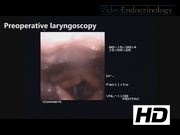
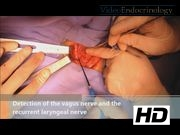
A 40-year-old Chinese female was admitted with a complaint about a rapidly growing neck lump and hoarseness of 10-day duration. The patient was initially found with an asymptomatic cystic nodule in her right thyroid lobe by a regular checkup with ultrasound 7 months ago and had received no treatment. Ten days before admission, the patient had a transient mild fever and sore throat, which resolved with 3 days of oral antibiotics, however, her voice became hoarse. Upon examination, a right-side neck mass 6 cm large was palpated, which moved on swallowing. The laryngoscopy found a palsy right vocal fold in the paramedial position. Neck ultrasound revealed a 5.3 × 2.9 cm well-circumscribed anechoic lesion within the right lobe of the thyroid. A CT scan showed that a 4.4 × 3.0 × 5.1 cm, well-defined, low-density mass was inside the right lobe. The mass was not enhanced during the contrast phase; the trachea was displaced to the left and narrowed. The blood thyroid functioning tests were normal. The patient was found to have right vocal cord palsy caused by a benign thyroid cyst and was scheduled for operation. During the surgery, a large cyst was in the right thyroid lobe. About 40 mL of apparent brownish fluid was aspirated for decompression. The right thyroid lobe was adhered to the surrounding muscles and the right recurrent laryngeal nerve was found tightly touched to the edematous thyroid back encapsule. After the nerve was clearly identified and safely dissected from the mass, a right thyroid lobectomy was performed. The right recurrent laryngeal nerve was completely exposed along its course in the neck. However, no signal could be induced when the probe touched the recurrent laryngeal nerve and the vagus nerve by the NIM 3.0 intraoperative neuromonitoring system. Histopathological analysis revealed the thyroid gland containing an epidermal cyst. The cyst was partly denuded of an epithelial lining, instead consisted of an inflamed fibroblastic and granulation tissue. The postoperative period was uncomplicated. The patient found her voice to be better when she was discharged on postoperative day 2. Four weeks after the operation, the patient's voice had completely recovered to normal and the laryngoscopy found both vocal folds moving normally.
Runtime of video: 5 mins 23 secs
Keywords
Get full access to this article
View all access options for this article.
Supplementary Material
Please find the following supplemental material available below.
For Open Access articles published under a Creative Commons License, all supplemental material carries the same license as the article it is associated with.
For non-Open Access articles published, all supplemental material carries a non-exclusive license, and permission requests for re-use of supplemental material or any part of supplemental material shall be sent directly to the copyright owner as specified in the copyright notice associated with the article.
