





Abstract
Abstract
Introduction:
Current diagnostic procedures for thyroid cancer often yield uncertain results, leading to recurrent clinical procedures and often unwarranted surgery. Scent-trained dogs have been trained to find and alert on small concentrations of human fluids and tissues. We tested the hypothesis that a scent-trained dog could reliably detect metastatic thyroid cancer in patient urine and blood samples.
Materials and Methods:
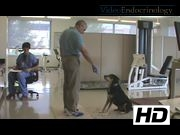
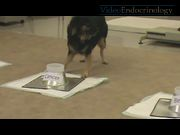
The UAMS IRB and IACUC committees approved the protocol. Urine and blood samples were collected from patients after total thyroidectomy and treatment of papillary cancer. Metastatic cancer was clinically significant (≥1.0 cm) and documented by imaging and/or elevated thyroglobulin levels (1742±656 ng/mL [SE] without antibodies; range 2.2 to >5000). All cancer patients were treated after surgery with radioactive iodine ablation. Thyroidectomy patients without thyroid cancer were identified by the pathologic absence of cancer. Our dog (male, mixed breed rescue) was imprinted on pathologically verified papillary thyroid cancer tissue obtained during surgery. Imprinting was accomplished by conditioning and positive reinforcement (rewarding for directed behaviors), and discrimination training involved the random presentation of cancer and healthy samples. The dog was rewarded with verbal excitement and a treat for correct answers. Training was conducted with scent-cones devices and evolved to solidify the dog's unique ability to identify cancer and noncancer samples. Reliability testing was accomplished by the random presentation of urine or blood samples. Each testing session included the presentation of six to eight urine and/or blood samples. Samples contained only the subject code, and the handler was blinded to the sample status (cancer
Results:
Imprinting and discrimination between metastatic and noncancerous patient samples were accomplished during the first session of training. Only samples from papillary cancer patients were examined. The dog's response was evaluated on both urine (
Conclusions:
A previously scent-trained dog can be quickly trained to detect metastatic thyroid cancer in a patient's blood and urine with a high degree of reliability. Current efforts focus on the dogs' prospective determination of cancer presence in thyroid nodules.
Source of Work:
The study was conducted at the UAMS and funded by internal sources.
There are no commercial associations with this work. Dr. Ferrando provided the previously scent-trained dog. Dr. Bodenner is the director of the UAMS Thyroid Cancer Clinic where patient samples were obtained. Dr. Stack is the thyroid surgeon who provided resected thyroid tissue and consulted for the study. Ms. Wilkerson functioned as a study coordinator and experimenter. Dr. Hinson performed data consolidation and interpretation and also functioned as a secondary study coordinator.
Runtime of video: 8 mins 12 secs
Get full access to this article
View all access options for this article.
Supplementary Material
Please find the following supplemental material available below.
For Open Access articles published under a Creative Commons License, all supplemental material carries the same license as the article it is associated with.
For non-Open Access articles published, all supplemental material carries a non-exclusive license, and permission requests for re-use of supplemental material or any part of supplemental material shall be sent directly to the copyright owner as specified in the copyright notice associated with the article.
