





Abstract
Abstract
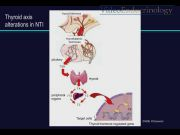
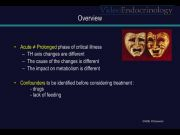
Critically ill patients typically present with low or low-normal plasma thyroxine, low plasma triiodothyronine (T3), and increased plasma reverse T3 (rT3) concentrations in the absence of a rise in thyrotropin (TSH). This constellation is referred to as non-thyroidal illness syndrome (NTI). In this narrative review presented by Dr. Greet Van den Berghe, the different faces of NTI during critical illness are highlighted. Acute alterations are dominated by changes in thyroid hormone binding, peripheral thyroid hormone uptake, and alterations in the expression and activity of the type-1 and type-3 deiodinases, whereas in the chronic phase a central suppression predominates. It is clear that the name “NTI” during critical illness refers to a syndrome with different faces. 1 Tolerating the early “fasting response” to critical illness and its concomitant changes in thyroid hormone parameters appears to be wise and beneficial. Thus, this applies to the NTI present in the majority of the patients treated in intensive care units. However, the NTI that occurs in prolonged critically ill patients appears different with regard to both its causes and consequences.
No competing financial interests exist.
Runtime of video: 6 mins 10 secs
Keywords
Get full access to this article
View all access options for this article.
References
Supplementary Material
Please find the following supplemental material available below.
For Open Access articles published under a Creative Commons License, all supplemental material carries the same license as the article it is associated with.
For non-Open Access articles published, all supplemental material carries a non-exclusive license, and permission requests for re-use of supplemental material or any part of supplemental material shall be sent directly to the copyright owner as specified in the copyright notice associated with the article.
