






Abstract
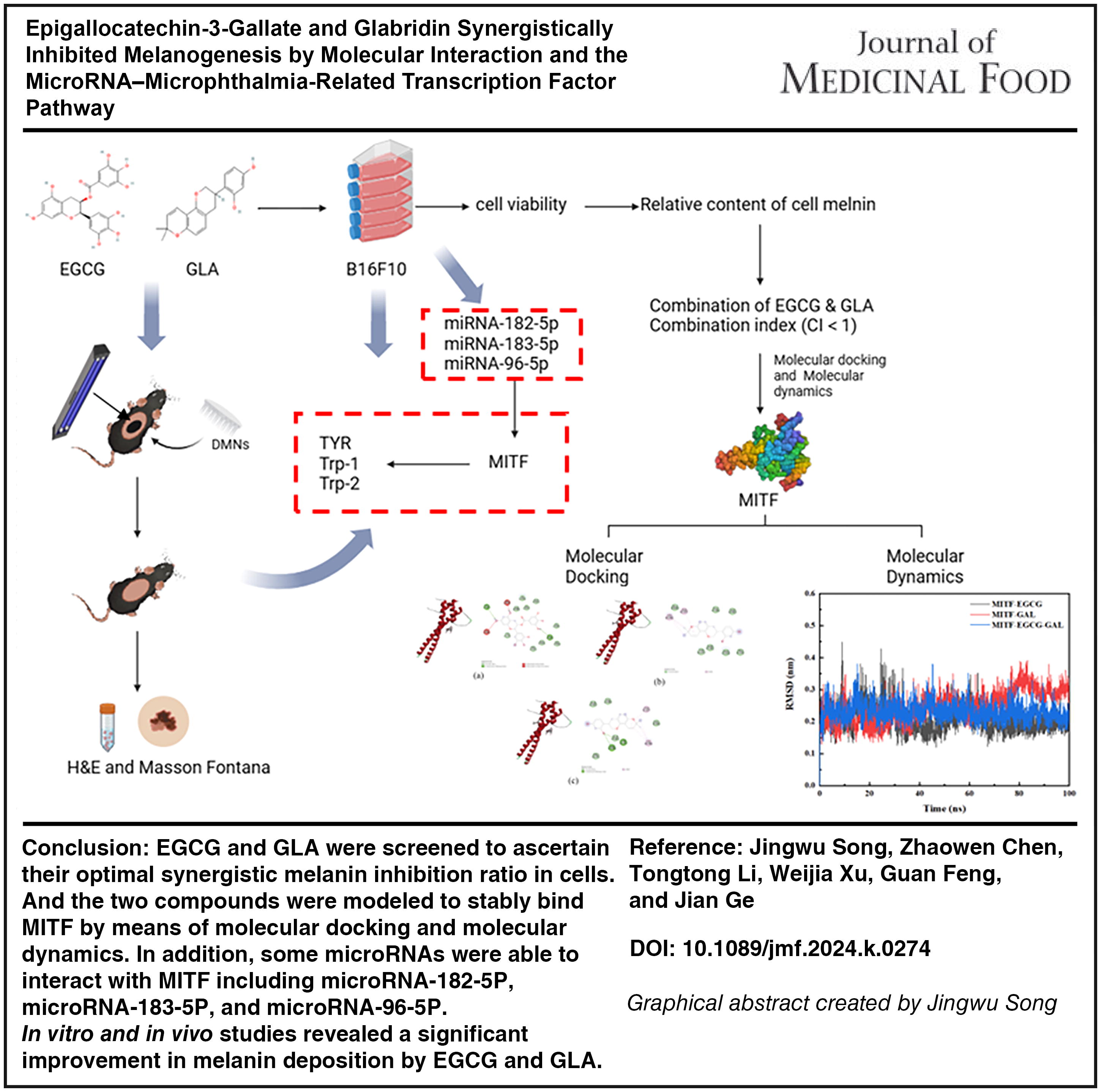
Epigallocatechin-3-gallate (EGCG) and glabridin (GLA) are two phytochemicals derived from homologous plants used for medicine and food that have demonstrated efficacy in inhibiting excessive production of melanin and promoting skin whitening properties. However, it is unknown whether EGCG and GLA can synergistically inhibit melanogenesis. The aim of this study was to explore the effects of the combination of EGCG and GLA on the expression and activity of microphthalmia-related transcription factor (MITF) and to reveal the mechanism of the synergistic treatment with EGCG and GLA on excessive melanin deposition. This study used B16F10 cells to screen for the synergistic effect on melanin deposition and determined the best ratio of EGCG and GLA. Dual-luciferase reported gene assays were used to explore whether GLA and EGCG could regulate the mRNA level of MITF. Molecular docking and molecular dynamics simulation were used to explain the synergistic interaction of EGCG and GLA with MITF, and then Masson–Fontana and hematoxylin–eosin were used to observe the skin changes of mice. The results showed that the combination of EGCG and GLA could synergistically regulate MITF and thus inhibit melanogenesis by modulating microRNA expression. EGCG and GLA were also able to synergistically interact with MITF to inhibit excessive melanogenesis.
Get full access to this article
View all access options for this article.