






Abstract
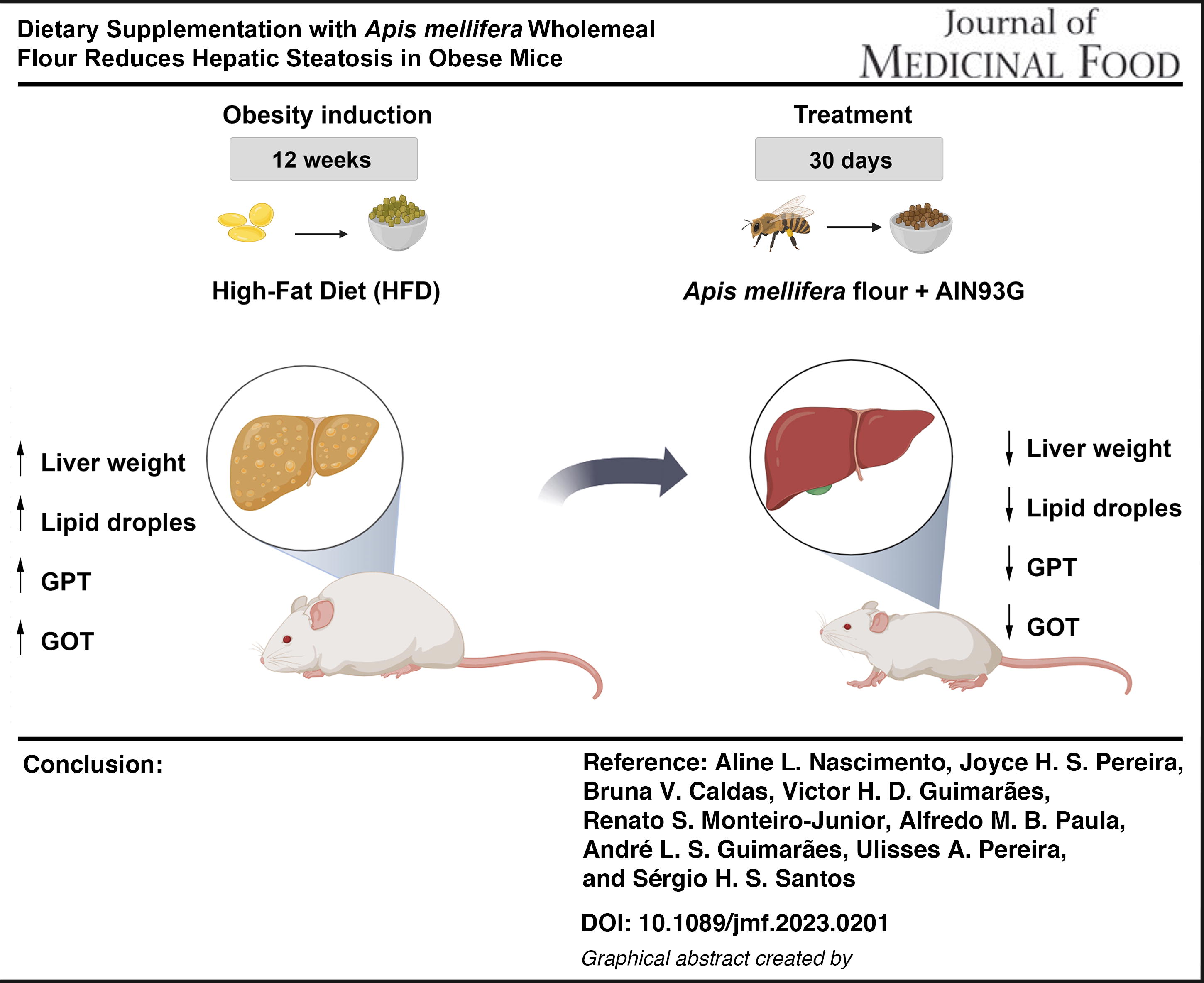
Chronic diseases associated with metabolism are becoming one of the most prevalent health problems in the world. Therefore, searching for foods with functional properties is a viable strategy to prevent the onset of chronic diseases. Amongst the most currently studied functional foods, the edible insects stand out, and Apis mellifera (bee) has received prominent attention due to its high nutritional value. In this context, the present study aimed to evaluate the effects of a food supplementation with A. mellifera wholemeal flour on the mice’s metabolic profile with diet-induced hepatic steatosis. Six-week-old male Swiss mice were divided into 6 groups and treated for 4 weeks. The groups were identified as follows: standard diet (AIN93), standard diet + 15% A. mellifera (AIN93 + 15%), standard diet + 30% A. mellifera (AIN93 + 30%), hyperlipidic diet (HFD) HFD + 15% A. mellifera (HFD + 15%), and HFD + 30% wholemeal bee A. mellifera flour (HFD + 30%). Several parameters such as liver histology, tissue weight, and liver mRNA expression were evaluated. The main results showed that including Apis mellifera wholemeal flour reduced hepatic steatosis by improving biochemical and histological parameters. Moreover, significant changes were also observed in the expression of the lipogenic genes PPARγ, SRBP1c, and GPX4. The main findings showed the potential use of A. mellifera wholemeal flour in improving hepatic steatosis and its beneficial effects on metabolic diseases.
Get full access to this article
View all access options for this article.
References
Supplementary Material
Please find the following supplemental material available below.
For Open Access articles published under a Creative Commons License, all supplemental material carries the same license as the article it is associated with.
For non-Open Access articles published, all supplemental material carries a non-exclusive license, and permission requests for re-use of supplemental material or any part of supplemental material shall be sent directly to the copyright owner as specified in the copyright notice associated with the article.
