






Abstract
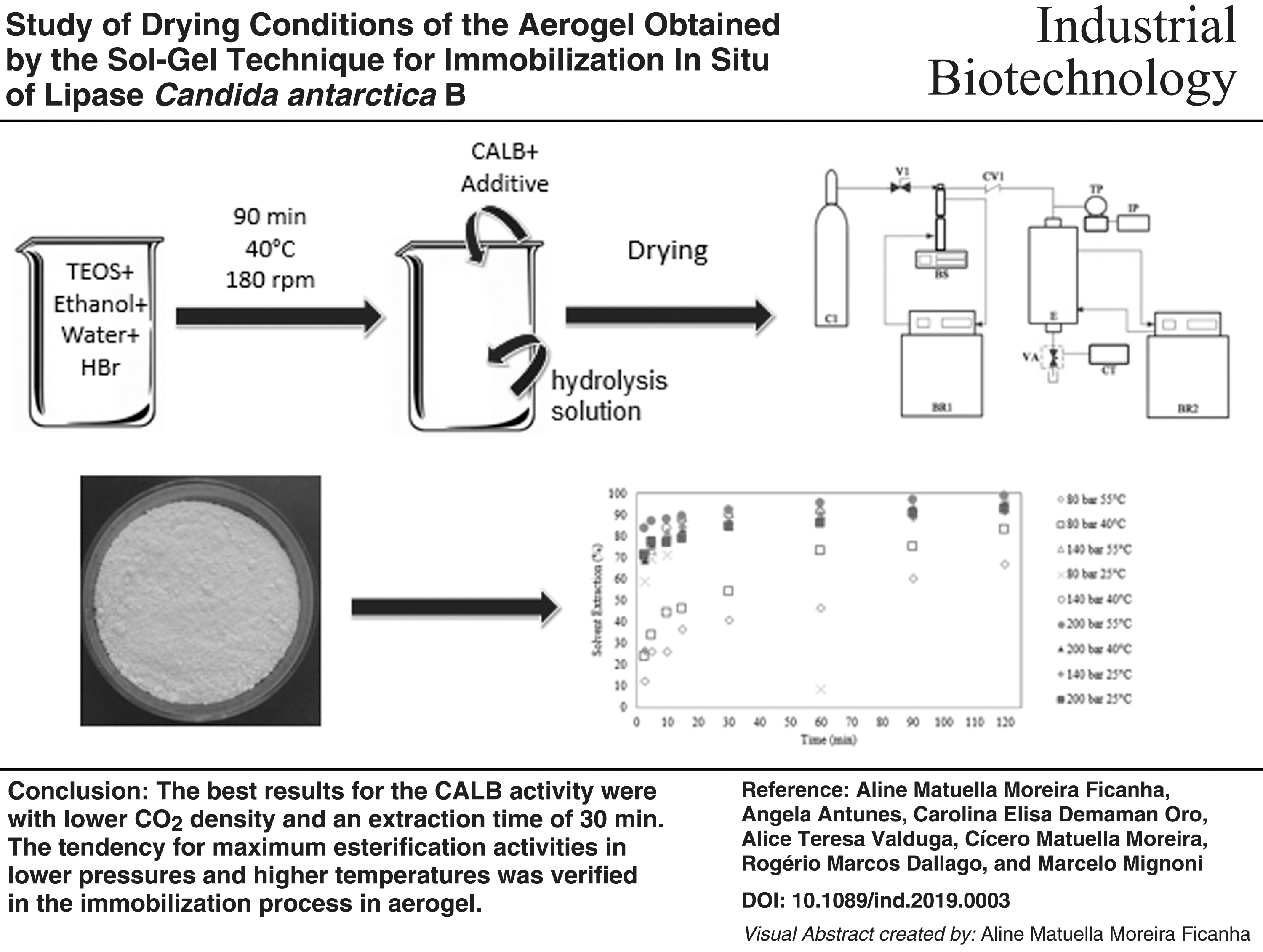
Aerogels are used in several areas and applications because of their properties. Study of the gel drying time by supercritical CO2 is among the attributes required for further study before these materials can be used in various applications. Drying is an important step in the synthesis of high-pressure silica of aerogel used for enzymatic immobilization. This step should keep the enzyme stable, with high enzymatic activity for its use. The aim of this work was to study the effect of the drying conditions for commercial lipase CALB immobilized in situ in aerogel. Silica gels were dried at different times, temperatures and CO2 pressure. The effects of the temperature (X1) and pressure (X2) on the CO2 drying of the immobilized lipase in aerogel was evaluated using a 32 Factorial Design. The best results for the CALB activity were with lower CO2 density and an extraction time of 30 min. This work presents a reduction in the time and drying conditions in the immobilization process in aerogel. In addition, the immobilization process is performed in situ and no further steps were required after drying the aerogel.
Get full access to this article
View all access options for this article.