






Abstract

Background:
Facial aberrant reinnervation syndrome (FARS) is a common sequelae of facial nerve injury followed by aberrant reinnervation and recovery. Patients with FARS can present with different patterns of facial synkinesis, facial muscle hypertonicity, and facial spasm/twitching. 1 Synkinesis associated with FARS is described as undesired muscle contraction when a voluntary movement is triggered. One of the most common and bothersome types of facial synkinesis is oral-ocular synkinesis, where patients experience unwanted eyelid closure with movement of the mouth such as smiling or pursing the lips. First-line treatment options for FARS include facial physical therapy and botulinum toxin selective chemodenervation. For patients with persistent or more significant symptoms, there are surgical options, including selective neurectomy and selective myectomy of the involved facial nerve branches and muscles. 2,3 Selective myectomy of the orbicularis oculi muscle has been shown to be an effective surgical treatment option for oral-ocular synkinesis. 3–4 There is nuance to this procedure, including deciding whether to target the upper eyelid, lower eyelid, or both, as well as which segments and how much of the orbicularis oculi muscle to remove, balancing the goals of improving synkinesis and hypertonicity while avoiding the creation of lagophthalmos. The novel implementation of autologous microfat grafting to the procedure can help improve postoperative eyelid volume and contour and may help prevent the cut edges of the muscle from fusing, thus reducing the likelihood of persistent or recurrent ocular synkinesis.
Objective:
To describe a selective myectomy of the orbicularis oculi with the novel addition of autologous microfat grafting for the treatment of oral-ocular synkinesis.
Methods:
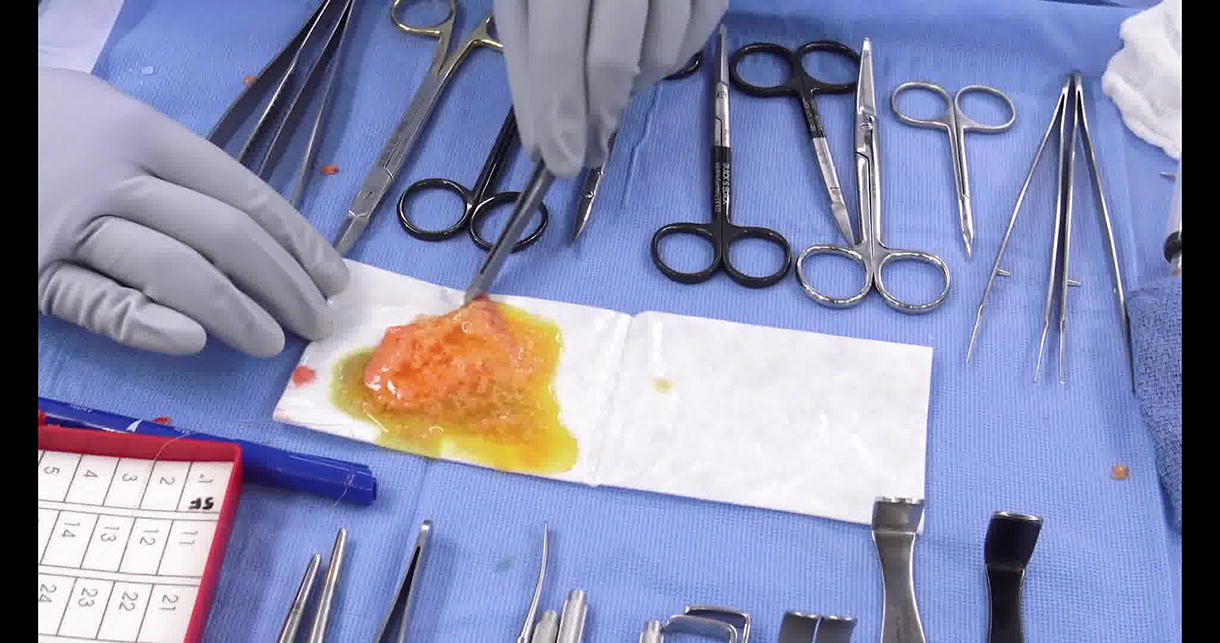
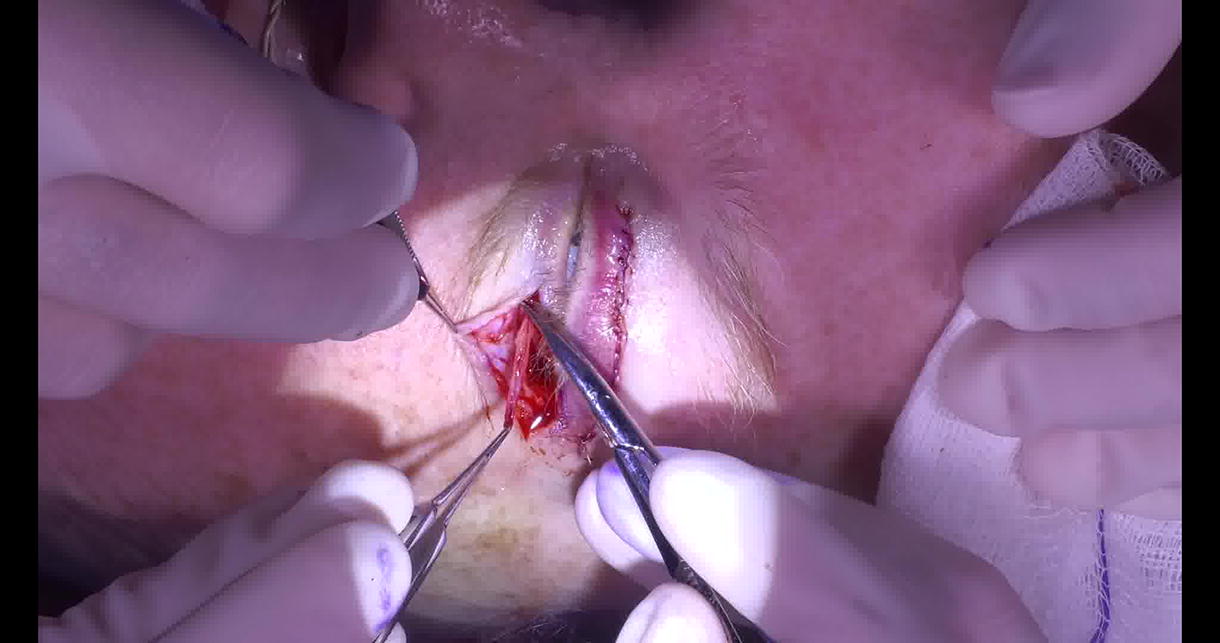
This video demonstrates the procedural steps for a selective myectomy of the orbicularis oculi with autologous microfat grafting for a patient with oral-ocular synkinesis due to FARS. In addition, it demonstrates the preparation of harvested abdominal fat that is utilized for the autologous microfat grafting.
Results:
Selective myectomy of the orbicularis oculi with autologous microfat grafting has been routinely performed safely and effectively by the senior author for treatment of oral-ocular synkinesis. Postoperative aesthetic eyelid shape and functional results have been reassuring with improvements up to 1 year postoperative and a need for additional long-term follow-up.
Conclusion:
To the authors’ knowledge, a selective myectomy of the orbicularis oculi with autologous microfat grafting has not been demonstrated in video documentation. Autologous microfat grafting may be a helpful addition to selective myectomy of the orbicularis oculi to enhance both eyelid aesthetics and function.
Patient Consent Statement:
All patients included in the video have consented to the use of videos and photographs of their faces for research and educational purposes.
Funding and Conflicts of Interest:
The authors have no funding, financial relationships, or conflicts of interest to disclose.
Runtime of video: 7 mins 11 secs.
Keywords
Get full access to this article
View all access options for this article.