






Abstract
The Mars Sample Return (MSR) Campaign must meet a series of scientific and technical achievements to be successful. While the respective engineering responsibilities to retrieve the samples have been formalized through a Memorandum of Understanding between ESA and NASA, the roles and responsibilities of the scientific elements have yet to be fully defined.
In April 2020, ESA and NASA jointly chartered the MSR Science Planning Group 2 (MSPG2) to build upon previous planning efforts in defining 1) an end-to-end MSR Science Program and 2) needed functionalities and design requirements for an MSR Sample Receiving Facility (SRF). The challenges for the first samples brought from another planet include not only maintaining and providing samples in pristine condition for study, but also maintaining biological containment until the samples meet sample safety criteria for distribution outside of biocontainment.
The MSPG2 produced six reports outlining 66 findings. Abbreviated versions of the five additional high-level MSPG2 summary findings are:
Summary-1. A long-term NASA/ESA MSR Science Program, along with the necessary funding and human resources, will be required to accomplish the end-to-end scientific objectives of MSR.
Summary-2. MSR curation would need to be done concurrently with Biosafety Level-4 containment. This would lead to complex first-of-a-kind curation implementations and require further technology development.
Summary-3. Most aspects of MSR sample science could, and should, be performed on samples deemed safe in laboratories outside of the SRF. However, other aspects of MSR sample science are both time-sensitive and sterilization-sensitive and would need to be carried out in the SRF.
Summary-4. To meet the unique science, curation, and planetary protection needs of MSR, substantial analytical and sample management capabilities would be required in an SRF.
Summary-5. Because of the long lead-time for SRF design, construction, and certification, it is important that preparations begin immediately, even if there is delay in the return of samples.
Table of Contents
Abstract
Introduction
Context
Abbreviated Statement of Task
Process
Summary of high-level MSPG2 findings
Summary of the MSR Campaign
Primary campaign elements
The planned history of the samples
Sample integrity
Sample acquisition
Sample caching and sample depot(s)
Sample retrieval
Earth return
Ground retrieval and processing
Scientific investigation
Summary of MSPG2 Results
Science Management Plan (Deliverable #1)
Sample curation (Deliverable #2)
Time-sensitive science (Deliverable #2)
Sterilization-sensitive science (Deliverable #2)
The analysis of martian dust (Deliverable #2)
The analysis of martian atmospheric gas (Deliverable #2)
Implications for the SRF (Deliverable #3)
Key decisions timeline (Deliverable #4)
Conclusions
Implications of the MSPG2 findings
Key requests of management
Highest-priority recommendations for future work
Final thoughts
Acknowledgments
Disclosure Statement
Funding Information
References
Acronyms Used
Appendix A: MSPG2 Terms of Reference
Appendix B: Recommendations for Future Work
Appendix C: Notes Regarding the Timeline
Context
The currently envisioned Mars Sample Return (MSR) Campaign is one of the most ambitious planetary exploration undertakings ever attempted. Scientifically selected samples collected by NASA's Mars 2020 (M2020) mission would be returned to Earth through the joint efforts of the National Aeronautics and Space Administration (NASA) and the European Space Agency (ESA). Upon delivery to Earth, the samples would be made available to the international science community to conduct investigations and address some of the most fundamental questions about the formation and evolution of the solar system and potentially the origins of life.
Beginning with M2020 operations, the MSR Campaign must meet a series of scientific and technical achievements to be successful. While the respective engineering responsibilities to retrieve the samples have been formalized through a Memorandum of Understanding (MOU) between ESA and NASA, the roles and responsibilities of the scientific elements have yet to be fully defined.
To aid in the process, ESA and NASA jointly chartered the MSR Science Planning Group 2 (MSPG2). The group's overarching aims were to build upon previous planning efforts in defining (1) an end-to-end MSR Science Program, highlighting a number of important issues that would influence the development and implementation of this Science Program and (2) needed functionalities and design requirements for an MSR Sample Receiving Facility (SRF). The challenges for the first samples brought from another planet include not only maintaining and providing samples in pristine condition for study, but also maintaining biological containment until the samples are demonstrated to meet sample safety criteria for distribution outside of biocontainment. To maximize the scientific output of the samples and minimize the cost and size of an SRF, as many analyses as possible should be conducted in labs outside of biocontainment, either on sterilized samples or after the samples have been determined to be safe for release.
Abbreviated Statement of Task
The MSPG2 Terms of Reference (Appendix A) includes four main tasks (listed here in abbreviated form): Develop inputs to a comprehensive MSR Science Management Plan; Identify and describe technical issues related to the science of MSR and how the implementation of the SRF impacts the potential scientific usefulness of the samples; Develop approaches and a working list of high-level requirements for the SRF that represent the needs and interests of science, curation, and planetary protection and can be used in cost estimation and budgeting, with the assumption that as many analyses as possible should be done outside of the SRF; Produce a list of key decision points related to the Mars returned samples with inputs from science, curation, and planetary protection.
Process
Following the ESA and NASA signature of the Terms of Reference, a “Dear Colleague” letter soliciting participation was released April 2, 2020, to the international science community. Applicants to the competitive process were selected through a joint ESA-NASA review, joining two ex officio members and a small group of assigned organizers. During the course of MSPG2's work, ESA and NASA each assigned one additional participant. In total, other than the assigned coordination team, MSPG2 had 25 members representing 11 countries summarized as follows: 11 United States, 12 Europe, 1 Canada, 1 Japan. The group was co-chaired by the NASA and ESA MSR Science Leads and organized into a Coordination Team, a Tactical Team, and a Strategic Team.
The group was given approximately one year to produce its deliverables. As the entirety of the MSPG2 effort was carried out during the course of the global COVID-19 pandemic, all of its work was conducted by virtual means; there was no travel and no in-person meetings were held.
A number of Focus Groups and Topical Teams comprising subsets of the MSPG2 membership were formed and assigned specific portions of the statement of task. Overall strategic direction and integration of materials was performed by the Coordination Team. In total, the MSPG2 produced 6 reports outlining 66 findings (Supplement 1), culminating in a briefing to the ESA and NASA sponsors May 27, 2021.
Summary of high-level MSPG2 findings
The overall conclusions of MSPG2 can be summarized with 5 high-level findings:
The following section represents a synopsis of 7 reports (Haltigin et al., 2022; Tosca et al., 2022; Velbel et al., 2022; Carrier et al., 2022; Tait et al., 2022; Grady et al., 2022; Swindle et al., 2022) that address the four deliverables (tasks) requested of the MSPG2. This information is offered to ESA and NASA management to aid in securing the approval and resources that would allow the MSR effort to be a success.
Summary of the MSR Campaign
Primary campaign elements
The concept of MSR as a campaign of missions has been studied for many years (see, e.g., Beaty et al., 2008; Mattingly and May, 2011, and references therein). However, the specifics of the proposed campaign have evolved over time. The origins of the current version of the MSR campaign can be traced to the 2013-2022 Decadal Survey “Visions and Voyages for Planetary Science in the Decade 2013-2022” (NRC, 2011). The technical inputs from the Mars Program Office of NASA's Mars Exploration Program (MEP) to the decadal survey described an architecture that they referred to as “3 + 1”, alluding to three flight mission elements and one “ground segment” element to receive and investigate the samples on Earth. A key principle of the 3 + 1 architecture was that, in the intervals between the major elements, the samples would be placed in one of several possible safe and stable states to minimize timing risk associated with the sequential nature of the campaign. The NASA MEP (NRC, 2011) subsequently assigned its highest priority in the Flagship mission class to the MSR sample-collecting rover (referred to at the time as MAX-C) that subsequently evolved to be implemented as the sample-caching M2020 mission and the Perseverance rover.
Utilizing the concept of safe sample states, it was deemed possible to set the 1st element of the “3 + 1” campaign architecture in motion with the M2020 mission without knowing the full details of the other campaign elements. Work on M2020 began with extensive early advance development planning, capitalizing on heritage from the Curiosity rover, which launched in 2011, and a Science Definition Team (Mars 2020 SDT, 2013). This was followed by a full development cycle that consisted of requirements definition, hardware design, delivery, test, and integration, resulting in a system superbly designed to meet the needs of MSR (see Farley et al., 2020). This mission was launched on July 30, 2020, and the Perseverance rover successfully landed in Jezero Crater, Mars on February 18, 2021. As of this writing, mission operations are in progress (see Farley, 2021).
The current version of the 2nd and 3rd elements of the “3 + 1” campaign architecture began to take shape with joint work between NASA and ESA engineers beginning in 2017. Early architectural work was presented at the 2nd International Mars Sample Return Conference (see especially Edwards and Vijendran, 2018; Muirhead, 2018; Duvet et al., 2018; Vijendran et al., 2018; and Parrish et al., 2018). This cooperation led to the formalization of an MSR partnership between NASA and ESA (beginning with a statement of intent in 2018, and a MOU for the flight elements of the MSR Program in October 2020). The current plan is for two flight missions, each of which has several key subsystems that would collectively carry out the work of transporting the samples from Mars to Earth, while protecting their scientific integrity. The two missions consist of:
Work over the last four years on these missions has consisted of understanding the requirements and the resource constraints (including mass, volume, energy, cost, and schedule), how to optimize the architecture, the constraints on the design of the different elements, and the interfaces between elements. Recent summary descriptions may be found in Lock et al. (2019), Nicholas (2020), and Muirhead et al. (2020).
The most recent planning for the “+1” ground segment campaign element was the work of the MSR Science Planning Group (see MSPG, 2019a,b,c), its extension into MSPG2 (this work and associated papers) and parallel systems engineering work (see e.g., Mattingly et al., 2020). The MSPG and MSPG2 work builds upon several major prior studies, including the International Mars Architecture for Return of Samples (iMARS; Beaty et al., 2008), Phase 2 Architecture and Management Plan for Return of Samples (iMARS-2; Haltigin et al., 2018), and the International MSR Objectives and Samples Team (iMOST; Beaty et al., 2019). Much of this prior planning has used the term Mars Returned Sample Handling (MRSH) to describe the overall set of ground-based activities. After landing on Earth, MRSH has been deemed to encompass: 1) transportation of the returned flight hardware (with included samples) from the Earth landing site to a Biosafety Level-4 grade SRF; 2) an SRF where the samples would be extracted from the tubes in which they had been stored since acquisition and tested for safety; 3) one or more uncontained sample curation facilities; and 4) a set of processes and systems that would allow the world's research scientists and laboratory infrastructure to carry out scientific investigations on the Mars samples.
Recent summaries of the MSR Campaign are provided by Gramling et al. (2021) and Gramling and Meyer (2021). Brief descriptions of the primary functional steps from the point of view of the samples are provided below (note that some aspects of planning are still in progress and are subject to modification).
The planned history of the samples
2.2.1. Sample integrity
A key consideration that stretches across all aspects of the MSR campaign is the need to preserve the scientific integrity of the sample collection in order to maximize its scientific value. Planning related to the expected state of the samples as received on Earth began early in the development process for the M2020 mission. Key goals for maintaining the integrity of important sample attributes include limiting fracturing, maintaining seals on the sample tubes, limiting organic and inorganic contamination, limiting maximum temperature, and limiting exposure to magnetic fields. Early contributors to this planning included Liu et al. (2014), Beaty et al. (2008; 2014; 2016) and Summons et al. (2014). Sample integrity related requirements for the M2020 and MSR Program flight missions have been derived from this work. Planning for protecting the scientific integrity of the samples after they arrive on Earth is currently underway, and the first set of proposed requirements in this domain for an SRF have been outlined by MSPG2 (Carrier et al., 2022).
Sample acquisition
The science team of the Perseverance rover plans to identify and collect a set of Scientifically Return-Worthy (SRW) martian samples. The Perseverance rover has a prime mission lifetime of one Mars year (about two Earth years) with a qualified lifetime of 1.5 Mars years (about three Earth years). In total, the rover has 38 sample tubes that can be filled with samples (one of which could be a drillable blank), and five single-use witness tubes used to document any terrestrial contamination during sample collection. The rover has the capability to acquire at least 20 samples within its prime mission lifetime. If the rover survives in a functional state into one or more extended missions, it could continue sampling until either the sample tube supply is used up, or the rover reaches the end of the lifetime of either the sampling subsystem or the rover itself. Samples would be chosen by the M2020 science team to represent the geologic diversity of the area that Perseverance explores and may include regolith/dust and breccias, sediments, carbonates and hydrated minerals, crater floor material, igneous rocks, and martian atmosphere. Relevant sample information including geological context, drill performance, the surface wind, temperature, pressure, and relative humidity during and after sampling are planned to be documented in a Sample Dossier for each sample.
Sample caching and sample depot(s)
The samples collected by Perseverance would be sealed inside sample tubes and stored, at least temporarily, in a rack inside the Perseverance rover. To make the samples available for retrieval by the SFR, the samples would need to be moved from Perseverance to the ground in one or more groups that are referred to as cache depots. If Perseverance continues to function, some samples could be retained onboard and delivered directly to the MAS. The number and placement of the depots is a critical planning question (see CSSC, 2021) that needs to be coupled with planning for the landing site of the SRL and the relative positioning of the Perseverance rover and its ability to function, as well as the design of the SFR traverses. All systems need to work together to result in the convergence at the OS of an SRW cache, currently defined as: (i) distinct sample suites or individual samples selected to represent the diversity of the exploration area and address the science objectives of MSR described by iMOST, in general, and the astrobiological potential, geologic history, and evolution of Mars as reflected in the Jezero Crater region, in particular; (ii) availability of in situ data and other information to understand the geological and environmental context of the returned samples, and; (iii) inclusion of one and preferably two, witness samples (CSSC, 2021).
Sample retrieval
The NASA-led SRL mission, including an ESA-led SFR, is currently proposed for launch in 2026 (with a primary backup date of 2028). Some (or potentially all) of the samples collected by Perseverance and left at a depot on the martian surface could be acquired by the SFR. The SFR is designed with the capability to pick up as many as 30 tubes from a single depot and place them in a tube storage rack on the SFR for transport to the SRL platform. Once there, some or all tubes would be transferred to the OS inside the MAS. It is planned that the option would also exist for the Perseverance rover to drop sample tubes in a sample tray in the front of SRL that could be accessed by the SRL robotic arm and, from there, loaded into the OS. The OS, as currently envisioned, is planned to have a capacity of up to 30 sample tubes.
Earth return
Current planning shows MAS launch from Mars's surface in 2029 (with 2031 as the backup date) and release of the sample-containing OS into low Mars orbit. The ERO would then capture the OS in orbit. The CCRS payload inside ERO would orient the OS (so that the samples would land in a preferred orientation). The OS and its encapsulated samples would then be sealed inside both a Primary Containment Vessel (PCV) and a Secondary Containment Vessel (SCV) to safely contain martian samples and dust and sterilize any uncontained martian dust to prevent any unsterilized martian material from being exposed to Earth's biosphere. This containment and sterilization process is referred to as “Breaking the Chain” and is required for Planetary Protection Category V Restricted Earth Return missions (COSPAR, 2021). The primary purpose of the PCV and SCV seals is for planetary protection. ERO would then jettison part of the Capture and Containment Module (CCM), leave Mars orbit, and return to Earth with an arrival in 2031 (backup date of 2033). Once at Earth, the ERO would release the EES for a ballistic entry through Earth's atmosphere.
Ground retrieval and processing
Upon successful landing and recovery in the United States, the EES would be placed in a biosafety container and transferred to an SRF. Activities conducted within an SRF would include (but not be limited to) the following: hardware de-integration; archiving and analyses of the flight hardware; collection, analyses, and curation of dust from the OS interior and the tube exteriors; sample tube headspace gas extraction and analyses; extraction of samples from the tubes; processing of witness materials; initial sample characterization; completion of sample safety assessment (Kminek et al., 2021); scientific investigations that are time-sensitive and sterilization-sensitive; and preparation of samples for investigations to be conducted in the SRF and in external laboratories.
Scientific investigation
After delivery of the samples to an SRF, scientific investigations would commence concurrently with the initial characterization of the samples. Teams of investigators competitively selected years in advance would conduct a variety of studies addressing the MSR objectives (“objective-driven investigations”). During this period, there would be considerable overlap with curation activities and sample safety assessment, which would require appropriate coordination to optimize the use of sample material and maximize the scientific return.
Two types of investigations would be conducted within the SRF itself as follows: (i) those that require time-sensitive measurements (i.e., characterizing physical or chemical properties that may change rapidly after sample tube opening) (MSPG, 2019a; Tosca et al., 2022) and (ii) those that require measurements that are sensitive to sample sterilization processes and have an element of time-criticality (Velbel et al., 2022). These two categories also encompass scientific investigations necessary to complete the sample safety assessment. However, most of the scientific study of the martian samples is expected to take place in uncontained laboratories outside the SRF, using sample material that has either been determined to be safe by test or rendered safe by sterilization. As with other sample return missions, it is envisioned that scientific investigations would continue for decades into the future.
Summary of MSPG2 Results
Science Management Plan (Deliverable #1)
A fundamental premise of the MSR Campaign is that the scientific benefit and discoveries are meant to be shared between the MSR Science MOU Partners and the world's scientific community. Because there are so many scientific elements that must be executed to achieve Campaign success, significant coordination is required. It is thus critical to ensure that the appropriate planning, resources, management, and oversight are available.
MSPG2 Deliverable #1 involves developing inputs for the MSR Campaign Science Management Plan (SMP). The scope covers the interface to the M2020 mission, science elements in the MSR flight program, ground-based science infrastructure, MSR science opportunities, and the MSR sample and science data management. Some of the required bodies and activities already exist; the remainder require definition and action. In our report on this topic, we propose a science management structure comprising specific bodies and/or activities that could be implemented to address the science functionalities throughout the MSR Campaign (Figure 1). Although some coordinating activities have already been instituted, and the timing of certain elements may be flexible depending on the anticipated date of samples arriving on Earth, it is crucial that others are implemented as soon as is feasible. Recommended first steps are to formalize the Science Program's management structure and overall MSR science agreement between the MSR partners by the end of 2021 (i.e., MSR Science MOU) and establish an MSR Campaign Science Group (MCSG) to support the NASA and ESA MSR Science Leads to implement the program.
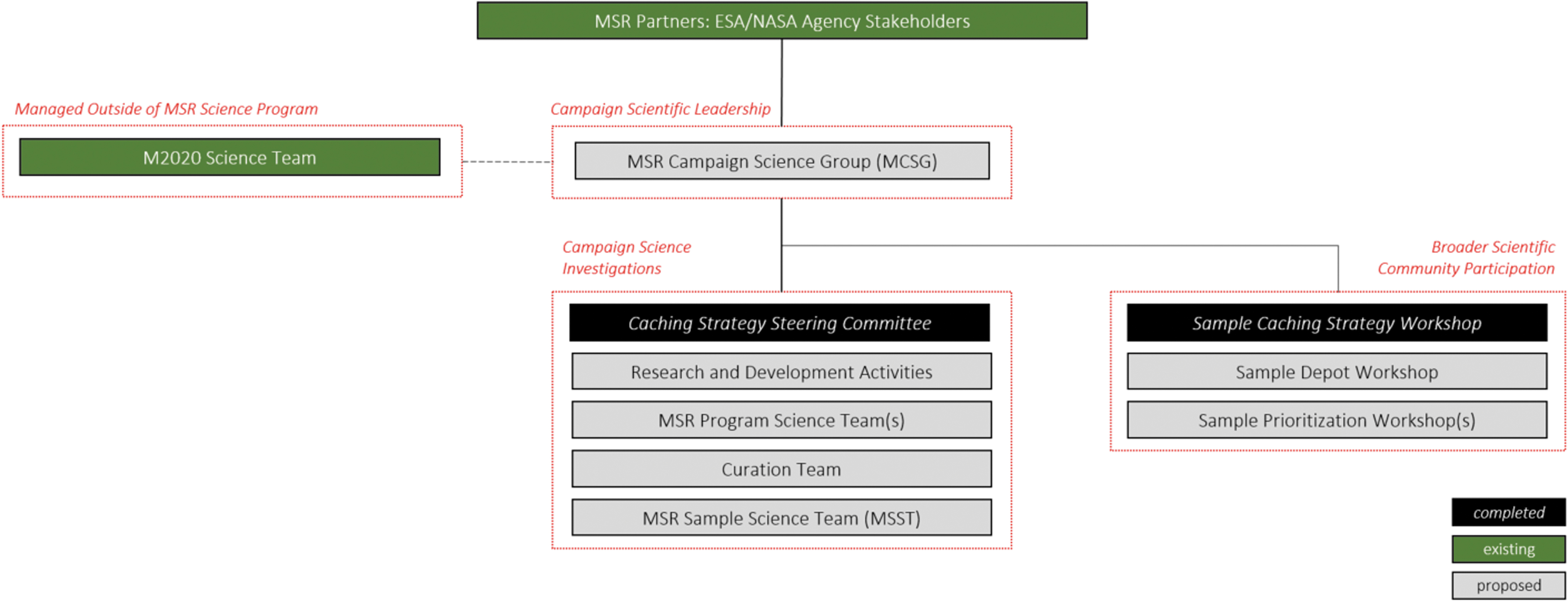
Hierarchical structure of the proposed MSR Science Program, representing relationships amongst the bodies and representative activities required to execute the MSR Campaign's scientific elements. Note that this is not meant to be a comprehensive list of necessary activities. Modified after Haltigin et al., 2022.
A long-term NASA/ESA MSR Science Program, along with the necessary funding and human resources, will be required to accomplish the end-to-end scientific objectives of MSR.
All material that is collected from Mars (e.g., gases, dust, rock, regolith) would need to be carefully handled, stored, and analyzed following Earth return to minimize the alteration or change that could occur on Earth and to maximize the scientific measurements that can be done on the samples, now and into the future. There are four curation goals that encompass all activities within the SRF:
Carefully manage the sample workflows, from entry into the SRF until exit from the SRF;
Monitor sample environments, handling, and storage to maximize preservation of sample scientific value;
Conduct initial sample characterization to enable preparation of a sample catalog and the sample allocation process;
Work together with scientific investigators at all stages to maximize the scientific value and utility of the samples.
To make these samples accessible, a series of observations and analytical measurements would need to be completed to produce a sample catalog for the scientific community. The sample catalog would be populated with data and information generated during all phases of activity, including data derived from the M2020 mission and produced during sample collection and transport to Earth and reception within the SRF. Data on specific samples and subsamples would also be generated during curation activities carried out within the SRF, including a series of initial sample characterization steps, which we have called Pre-Basic Characterization (Pre-BC), Basic Characterization (BC), and Preliminary Examination (PE) (Figure 2). The sample catalog would also be augmented by data collected during science investigations within the SRF.
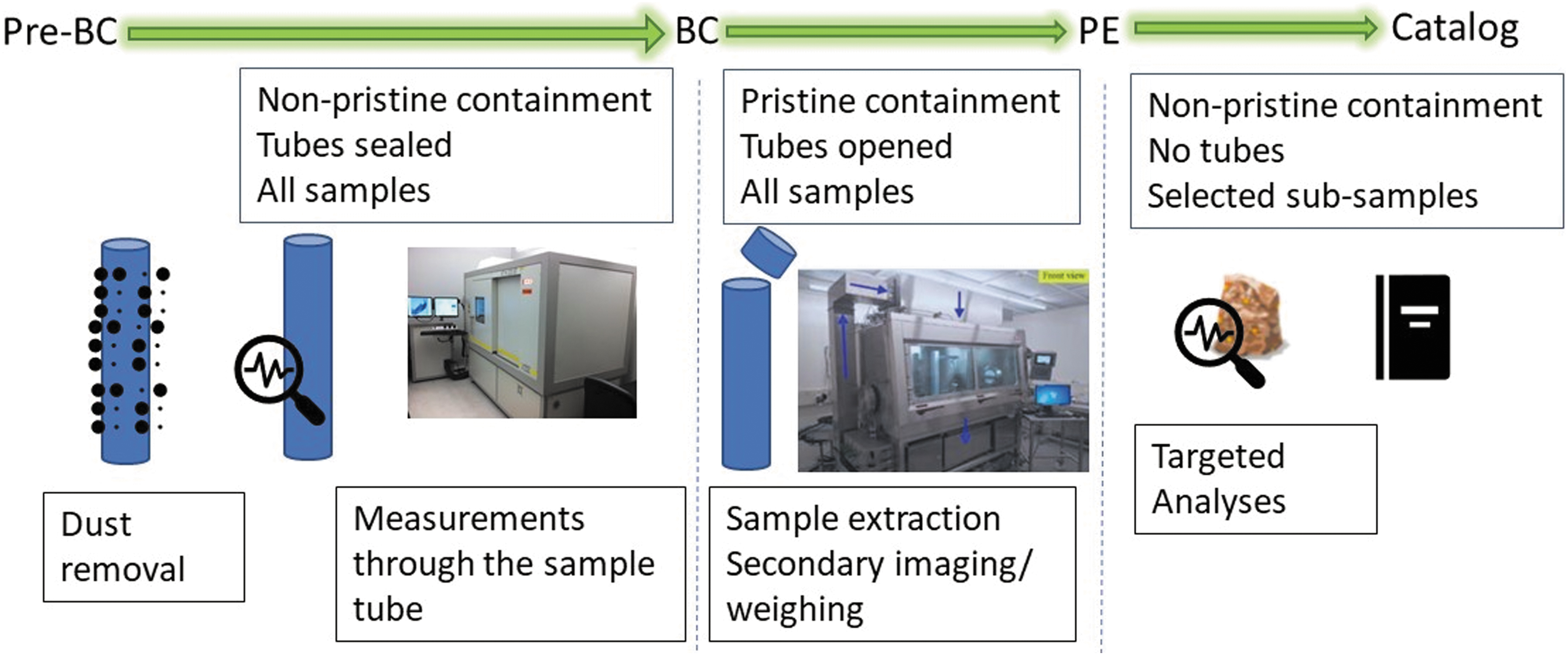
Proposed sequence of activities within the Pre-Basic Characterization (Pre-BC), Basic Characterization (BC), and Preliminary Examination (PE). Modified after Tait et al., 2022.
There is need for substantial future work to refine sample workflows, cleanliness and contamination control requirements, and further technology development related to the extraction from the sample tubes and subsequent sample handling.
Traditional curation of extraterrestrial samples involves cleanroom operations, but MSR curation would need to be done concurrently with BSL-4-level containment. This would lead to complex first-of-a-kind curation implementations and require further technology development.
Samples returned from Mars would be placed in biocontainment until it can be determined that they are safe to be released from biocontainment. The process of determining whether samples are safe for release, which may involve detailed analysis and/or sterilization, is expected to take several months per sample and up to two years or more (depending how many samples there are) for the full collection, but there is a substantial amount of uncertainty related to the timeline for release of samples from the SRF. However, it is certain that the process of breaking the sample tube seal and extracting the headspace gas would perturb local equilibrium conditions between gas and solid sample material and set in motion irreversible processes that proceed as a function of time.
Consideration of both the timescales and the degree to which these processes would jeopardize scientific investigations as a function of time supports the conclusion that the SRF must permit characterization of:
Organic material, possibly biosignatures
Sample headspace gas
Volatiles bound to solid samples
Solid-phase volatile hosts.
These investigations must be completed inside the SRF and on timescales that minimize the irrecoverable loss of scientific information (i.e., several months or less) (Figure 3). It is also important to note that all of the investigations identified as time-sensitive are related to sample attributes that can be altered by sterilization (see Section 2.4) and therefore cannot be done on samples that have been sterilized by heat or gamma irradiation. To allow these investigations to be carried out successfully, a number of specific recommendations for sample preparation and instrumentation within the SRF have been prepared (Carrier et al., 2022; Tosca et al., 2022).
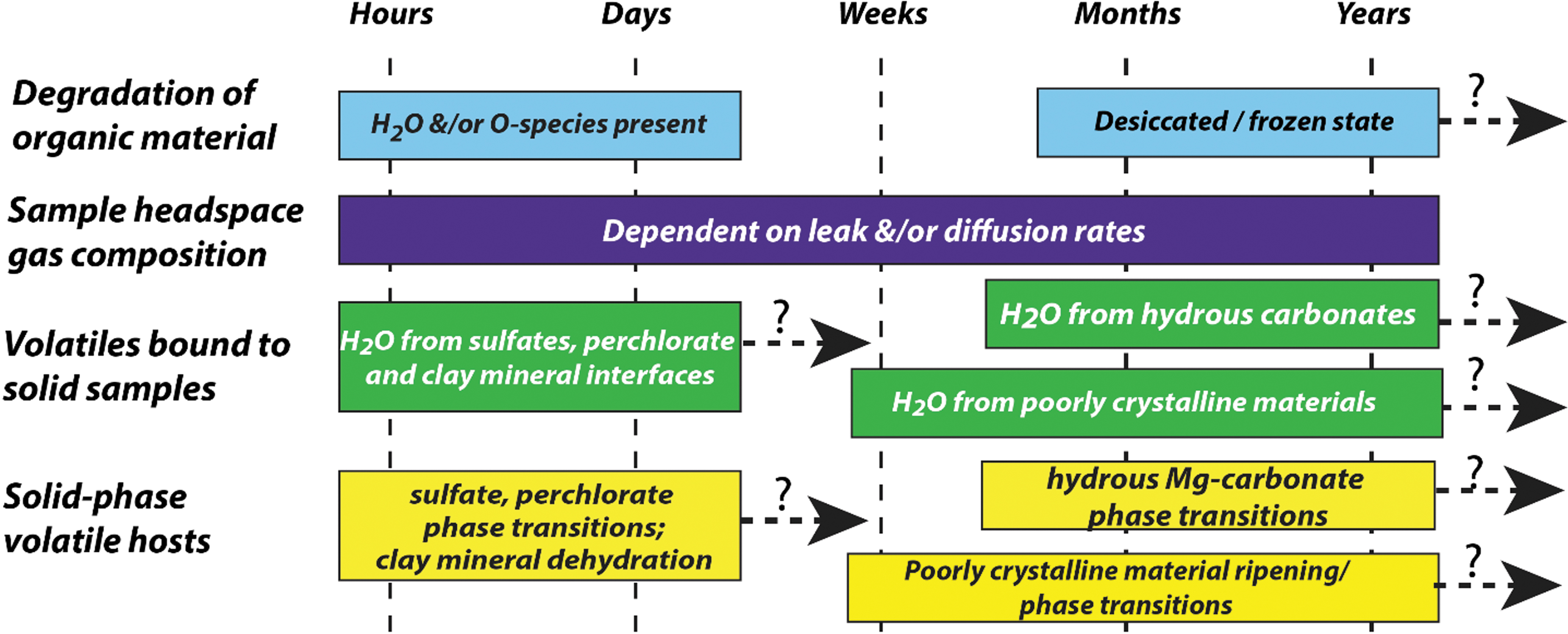
Characteristic timescales of processes that underpin the time-sensitivity of MSR measurements. Some processes (such as the degradation of organic material and mineral-volatile exchange) are associated with different timescales depending on other factors such as environmental conditions and mineralogy. Modified after Tosca et al., 2022.
A high priority of the MSR Campaign is to establish whether life on Mars exists or existed where and when environmental conditions allowed. To answer these questions through analyses of the returned samples requires measurements of many different properties and characteristics by multiple and diverse instruments. While it is preferable to plan for as many scientific investigations as possible outside the SRF in specialized laboratories, it is scientifically necessary to anticipate the negative effects that sterilization might have on sample integrity, specifically the fidelity of the subsample properties that are to be measured. By understanding potential sterilization effects, a balance may be achieved by allowing science that is minimally compromised by a sterilization method to be sterilized early in the process and to be analyzed by the world's best instruments outside biocontainment.
To determine what sample properties are sterilization-sensitive or sterilization-tolerant, the sterilization effects of two techniques were considered: (a) the application of dry heat under two temperature–time regimes (180°C for 3 hours; 250°C for 30 min) and (b) γ-irradiation (1 MGy). Four categories of science were considered:
Extant or recent martian life
Biosignatures of past martian life
Geological materials
Gas samples.
Several types of scientifically important measurements, especially those involving easily volatilized elements and molecules, cannot be made on sterilized samples:
No sterilization process could destroy the viability of cells whilst still retaining molecular structures completely intact. This applies not only to the organic molecules of living organisms, but also to most organic molecular biosignatures of former life (molecular fossils). As a matter of biological principle, any sterilization process would result in the loss of biological and paleobiological information, because destroying organic molecules is what sterilization is supposed to do.
Sterilization by dry heat at the proposed temperatures would lead to changes in many of the minerals and amorphous solids that are most significant for the study of paleoenvironments, habitability, preservation of potential biosignatures, and the geologic context of life-science observations.
Water and the effects of the products of its radiolysis for redox-sensitive chemical species are all adversely affected by γ-irradiation at even sub-MGy doses.
Sample properties that do not survive sterilization intact should be measured on unsterilized samples. If the investigations in question are also time-sensitive, then the SRF would need to provide the capabilities needed to perform these scientific investigations. If the measurements are not time-sensitive then they should be planned for outside of the SRF (Figure 4), if at all possible (Velbel et al., 2022).
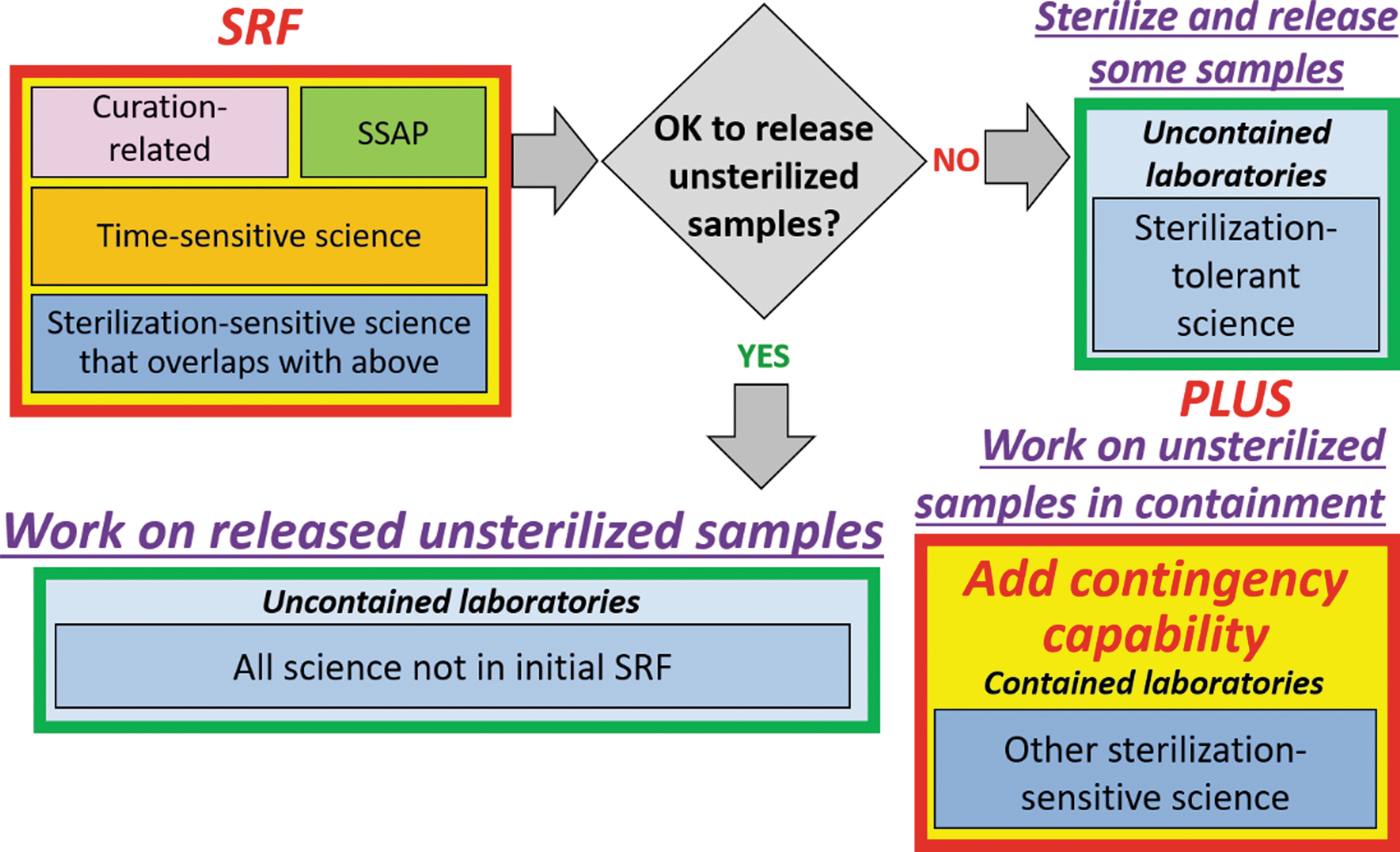
A key SRF strategy in which the SRF is designed to initially accommodate only the measurements and analyses that cannot reasonably or safely be made outside of biocontainment, including those required for initial sample characterization, the Sample Safety Assessment Protocol (SSAP), and time-sensitive science. Once it is determined whether the samples are free of biohazards, two possible scenarios exist. If it is possible to release unsterilized samples (“YES” path in diagram), then all other measurements can be made outside the SRF in uncontained laboratories. If it is not possible to release unsterilized samples (“NO” path in diagram), then most of the remaining measurements can be done on sterilized samples outside of biocontainment, but some capability would be needed for additional sterilization-sensitive science to be done inside biocontained laboratories (modified after Carrier et al., 2022).
Most aspects of MSR sample science could, and should, be effectively performed on samples deemed safe (either by test or by sterilization) in uncontained laboratories outside of the SRF. However, other aspects of MSR sample science would be both time-sensitive and sterilization-sensitive, including the search for life, assessment of habitability, and volatile exchange processes, and would need to be carried out in the SRF.
Dust that is lifted into the martian atmosphere is a material of high interest to martian atmospheric scientists, as well as planners for future human missions and some geologists and astrobiologists. The MSR Campaign, as it is presently designed, presents an important opportunity to return dust that has fallen out of the atmosphere by means of airfall sedimentation. The M2020 sample-collecting rover is planning to begin placing sample tubes in cache depots on the martian surface perhaps as early as 2023-24, and they are expected to be recovered by a subsequent mission not earlier than 2028-29, and it could be as late as 2030-31. Thus, the sample tube surfaces could passively collect dust for multiple years as demonstrated by the rover Spirit shown in Figure 5. This dust is deemed to be quite valuable scientifically. This dust would inform our knowledge and understanding of Mars's global mineralogy, its surface processes, surface-atmosphere interactions, and atmospheric circulation. Initial calculations indicate that the total mass of such dust on a full set of tubes could be as much as 100 mg, which would be sufficient for many types of laboratory analyses. Two planning steps would optimize our ability to take advantage of this opportunity: 1) The dust-covered sample tubes should be loaded into the OS with as little cleaning as possible and 2) The capability to recover the dust early in the workflow within the SRF needs to be established. A further opportunity to advance dust/atmospheric science using MSR, depending on the design of the MSR Campaign elements, may lie in the area of directly sampling and returning airborne dust (Grady et al., 2022).
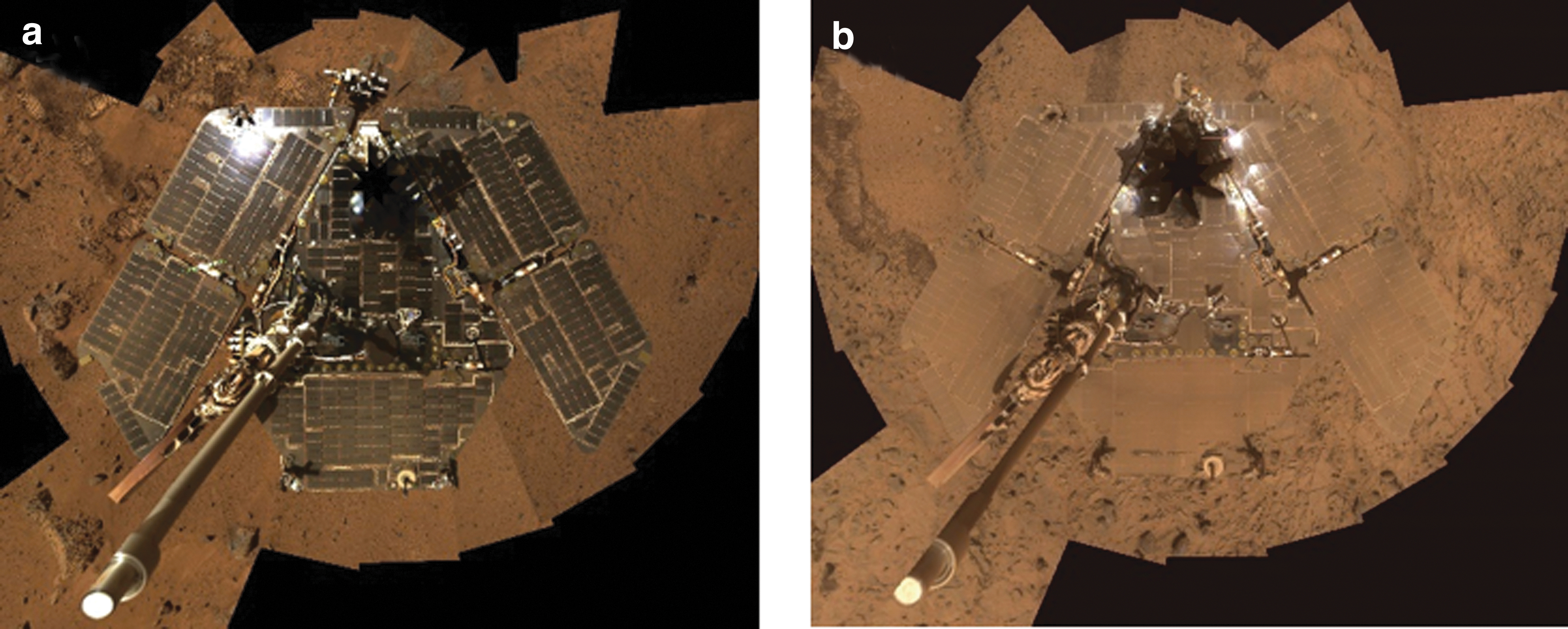
Two images of the Spirit Exploration Rover taken by its Panoramic Camera
There are several high-priority science questions that can be answered with a sample of martian atmosphere. Furthermore, the composition of the ambient atmosphere provides an important control for the headspace gas over solid samples collected by M2020, which itself would be of significant scientific interest. The headspace gas itself is of limited usefulness for atmospheric geochemistry investigations because the quantity of gas is insufficient for many investigations, and there would be exchange between solid samples and headspace gas (a topic of interest in itself) as well as tube walls. Furthermore, the sample tube materials and their preparation were not designed for optimal collection and storage of atmospheric gas (most importantly, they were not sent to Mars in an evacuated state, so they would have been exposed to both Earth's and Mars' atmospheres before collection), and there is a risk of seal leakage that would allow fractionation of the sample (for a leak out) and contamination (for a leak in).
The overall MSR science return can be significantly improved (and in some cases dramatically so) by adding one or more of several strategies:
Have M2020 collect a gas sample in one of its empty sample tubes (volume ∼13 cc)
Collect gas in a newly designed, valved, sample-tube sized vessel that is flown on either SFR or SRL
Add a larger (50-100 cc) dedicated gas sampling volume to the OS
Add a larger (50-100 cc) dedicated gas sampling volume to the OS, fill it with compressed martian atmosphere.
For all the above options, useful science is possible as long as the samples are managed correctly. Importantly, making proper use of headspace gas requires the presence of one of the dedicated gas sample types as an experimental control (i.e., a gas sample that is not in contact with a solid sample). Options for collecting a dedicated gas sample by SRF or SRL should be investigated. If this implementation is not possible, then M2020 should be directed to use one or more sample tubes for collection of an atmospheric gas sample, and a program should be undertaken to investigate the interactions of a similarly processed tube with a simulated martian atmosphere.
Implications for the SRF (Deliverable #3)
The most important single element of the ground portion of the MSR Campaign is the SRF. The SRF would need to be designed and equipped to enable the following: the ability to receive and house the returned spacecraft; extraction and opening of the sealed sample container; extracting the samples from the sample tubes and; a set of evaluations and analyses of the samples—all under strict protocols of biocontainment, cleanliness, and contamination control (Figure 6). One key open question for planning the SRF relates to the minimum size and cost needed to achieve its performance requirements. This, in turn, naturally leads to the question—what are those requirements?
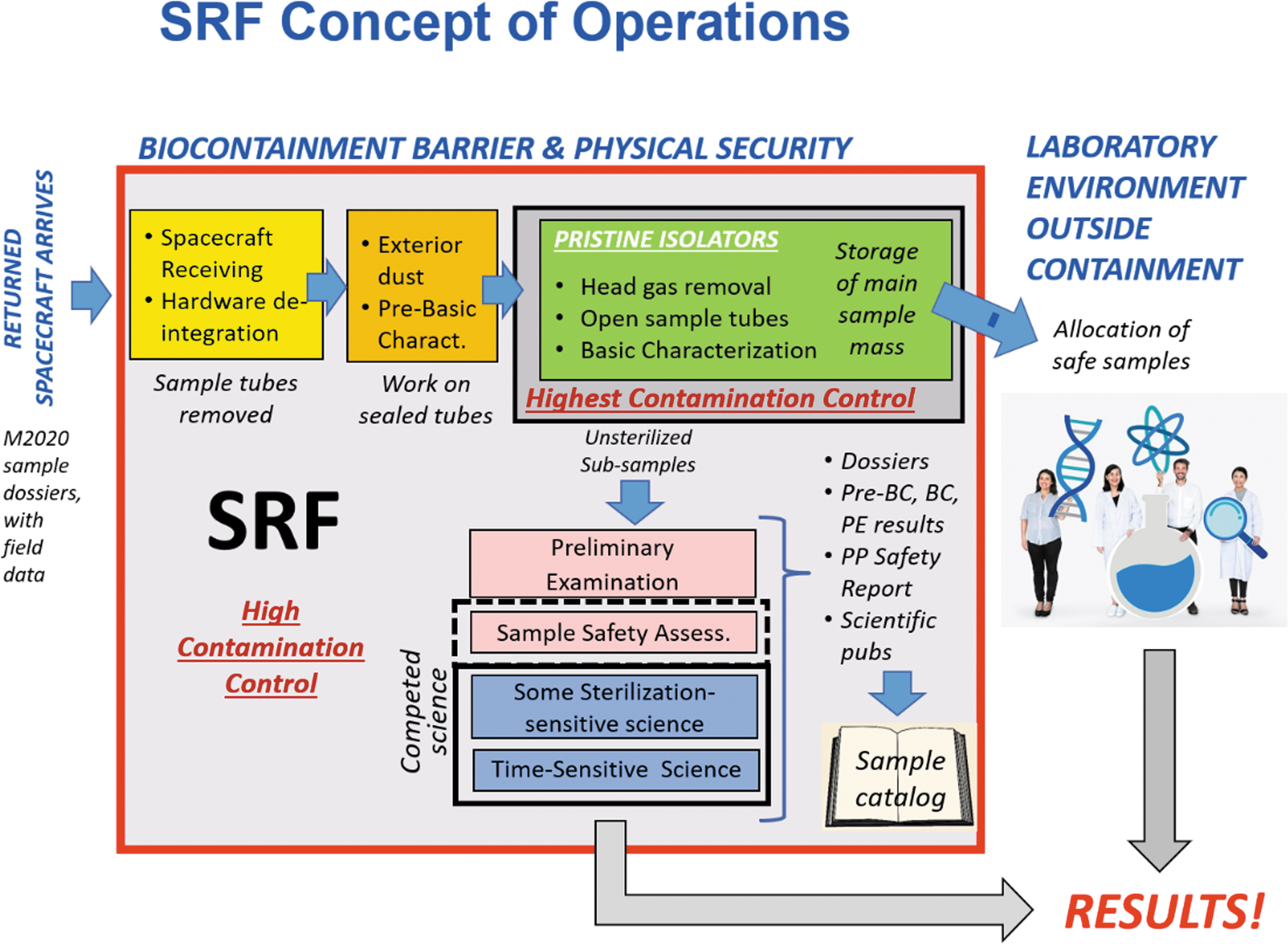
Schematic diagram showing the key concepts for SRF science-related activities that would need to be done inside biocontainment (Carrier et al., 2022).
The SRF needs to be designed to carry out certain curatorial functions associated with maintaining the scientific value of the samples. Protecting the samples from alteration and contamination is a very high priority. The SRF must also be designed to accommodate the range of analytical activities that cannot be done in outside laboratories because they are time-sensitive, sterilization-sensitive, necessary for the Sample Safety Assessment Protocol (SSAP), or are necessary components of the initial sample characterization process (Sections 2.2-2.4). Although one of the guiding principles of our analysis has been that as many scientific investigations as possible should be conducted outside the SRF, we have determined that SRF's laboratory functionality would need to include ∼20-30 scientific instruments, most of which are benchtop size instruments. Some of these would also have associated sample preparation steps. This results in a significant amount of floor space being required for analyses inside biocontainment; however, having the capabilities needed to analyze and allocate the samples correctly is crucial to achieving the scientific objectives of MSR. The final determination of what analytical capabilities are needed may be impacted by which sterilization methods are approved, and could potentially be reduced somewhat if alternative sterilization techniques, such as solvent extraction or gas filtration, are deemed to be acceptable with regards to both planetary protection and science quality concerns.
To meet the unique science, curation, and planetary protection needs of MSR—even with an explicit goal of performing as many MSR sample analyses as possible outside biocontainment—substantial analytical and sample management capabilities would be required in an SRF.
The notional timelines for key management and interagency level decision points, events, activities, and approvals for the flight elements (M2020, ERO, SRL/SFR), the SRF, the National Environmental Policy Act (NEPA) process, and for science-related items are shown in Figure 7. Two different scenarios are presented, dependent upon the launch years and years that Mars samples will be returned to Earth. A list summarizing the key decision points is provided below and a longer discussion of the purpose of the timelines and dependencies between different items is provided in Appendix C. The timelines contain a subset of the items that could have been included (e.g., EES recovery was not included) so as to focus on those items that were most relevant to MSPG2 considerations.
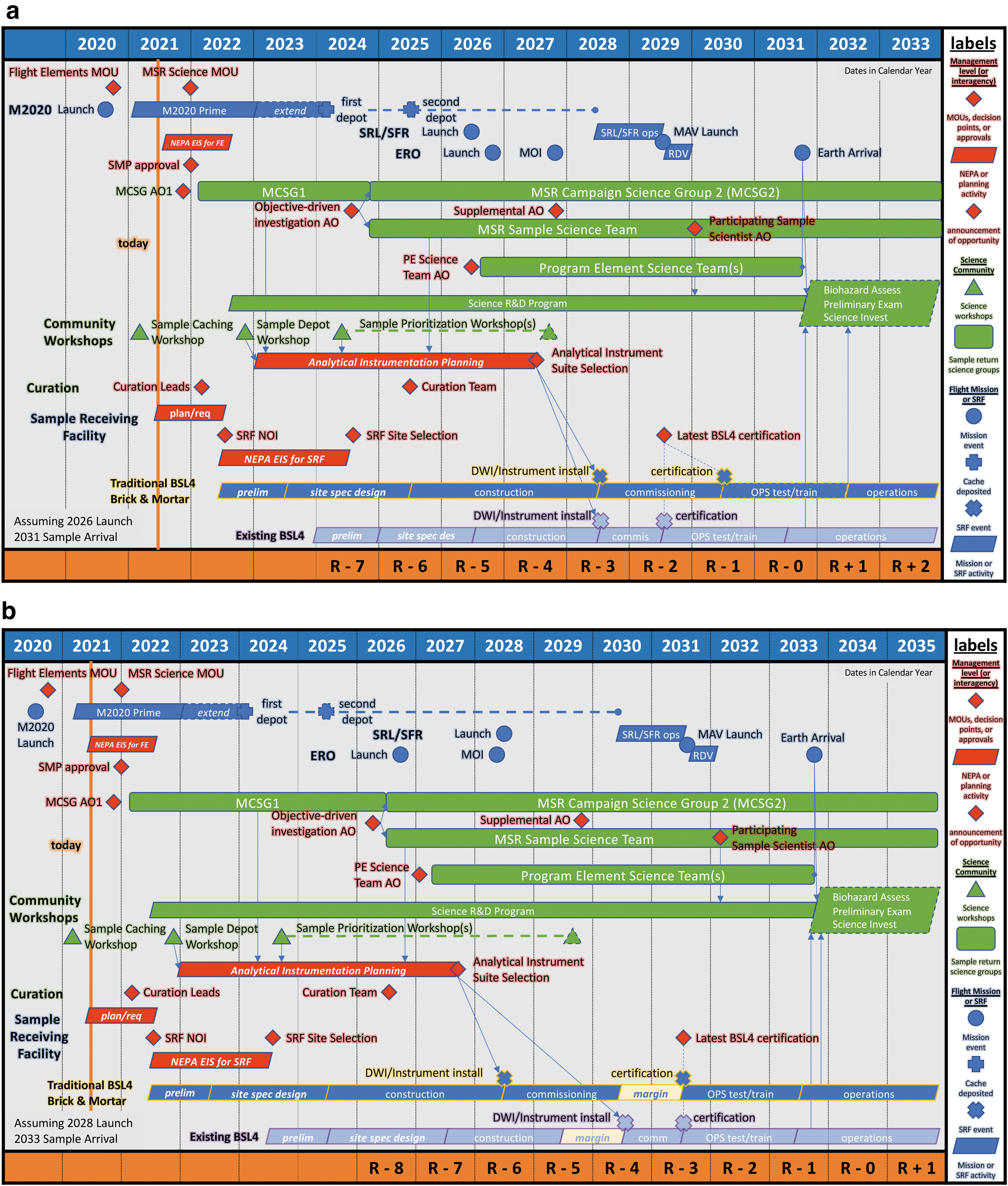
The notional timeline for major mission milestones and key decision points. The top timeline reflects a 2026 launch for SRL/SFR and a 2031 sample return; the bottom timeline assumes a 2028 launch for SRL/SFR and a 2033 sample return. Dates along the top are calendar year, not fiscal year; dates along the bottom are listed relative to the year of sample return. The same events are included on both timelines, and all events marked in red are described in section 4.8 Key Decisions Timeline. AO, Announcement of Opportunity; BSL, Biosafety Level; CSG, Campaign Science Group; EIS, Environmental Impact Statement; ERO, Earth Return Orbiter; MOI, Mars Orbit Insertion; MOU, Memorandum of Understanding; MSST, MSR Sample Science Team; NEPA, National Environmental Policy Act; NOI, Notice of Intent; OPS, Operations; RDV, Rendezvous; SFR, Sample Fetch Rover; SMP, Science Management Plan; SRF, Sample Receiving Facility; SRL, Sample Retrieval Lander.
A comparison of the two notional timeline scenarios illustrates that a potential two-year delay in the return of the samples does not impact the overall science program planning beyond some shift in the mid-term activities. This is because some MSR Campaign science planning elements are linked to M2020, some are linked to the MSR Program flight elements, and some are linked to the arrival date of the samples on Earth. Note that the timeline with sample arrival at Earth in 2031 has no margin in the current best-estimate SRF development schedule.
The list below includes the management and interagency level items shown in Figure 7 grouped by interagency MOUs, followed by items relevant to the flight elements, and continuing down through items relevant to the science community. Such a list groups related items together even though they may be separated by several years chronologically.
Flight Elements MOU (October 2020)—agreement on NASA and ESA respective roles and responsibilities for the flight elements under the Program
MSR Science MOU (expected 2021/2022)—agreement on NASA and ESA roles and responsibilities for the MSR science element of the MSR Campaign
NEPA Environmental Impact Statement (EIS) process for flight elements (mid-2021 thru mid-2024)—completed for the flight elements (ERO and SRL/SFR), with the resulting NASA Record of Decision determining the path forward, if any, on subsequent timeline milestones
MSR SMP (expected 2021/2022)—describes how NASA and ESA develop and manage the MSR Science Program
MSR Campaign Science Group 1 (late-2021)—selection of the science team to support the NASA and ESA MSR science leads to implement the SMP
Objective-driven Investigation Announcement of Opportunity (AO)—selection of teams that would conduct the objective-driven science analyses (mid-2024 OR mid-2026)—based on an international competitive AO; PIs of the selected science teams would form the MSR Sample Science Team and, together with the NASA and ESA science leads, form the MSR Campaign Science Group 2
Supplemental AO (late 2027 OR late 2029)—a second international competitive AO for additional expertise for “objective-driven science” that may be identified after further sampling activities
Participating Sample Scientists AO (early 2030 OR early 2032)—selection based on an international competitive AO; individuals proposing novel research investigations unique from those being performed by PI-led teams, but that contribute to overall MSR science objectives
Program Element Science Team(s) AO (late 2026 OR early 2027)—selection based on an international competitive AO; select the science teams of the SRL/SFR and ERO missions
Analytical suite instrument plan (early-2023 to mid-2027)—determination of instrumentation that would need to be accommodated in the SRF; inputs expected from the MCSG/MSST, Curation leads, and possibly from the Sample Prioritization Workshop(s)
Analytical instrument suite selection (at least 3-4 years prior to Earth Return)—selection of final suite of Analytical Instruments, must happen with enough time for installation, commissioning, certification, and operations testing and training for the given SRF design
Curation leads in place (TBD; early 2022)—selected as part of MCSG1; the NASA and ESA curation leads support SRF-related planning
Curation team in place (TBD; mid-2025 OR mid-2026)—selected as a joint NASA/ESA curation team that supports SRF detailed design and construction
SRF Planning and Requirements Definition (mid-2021 to mid-2022)—study of the types and requirements of the SRF in preparation for the Notice of Intent (NOI); key to deciding which type of SRF(s) would be considered
SRF NOI (mid-2022)—posting of public NOI in advance of solicitation for proposals to build or design the SRF
NEPA process for SRF (mid-2022 to mid-2024)—completion of the NEPA EIS for the SRF
SRF Site Selection (mid-2024)—decision of the specific site and architecture option for the SRF
SRF commissioning (at least 2 years prior to Earth Return) –the design and construction of the SRF as a biocontainment facility ends with Biosafety Level 4 (BSL-4) certification; start of test and training phase for the SRF functionalities not related to the biocontainment function.
The schedule required to have an SRF designed, constructed, and ready to receive the MSR samples has a longer lead time than perhaps anything previously attempted by NASA/ESA. It is important that preparations begin immediately; a potential delay in the return of the samples does not impact the overall science program planning beyond some shift in the mid-term activities.
Implications of the MSPG2 findings
Two significant implications arise from the findings and conclusions of MSPG2:
First, the establishment of a NASA/ESA MSR Science Program, along with the necessary funding and human resources, would enable proper interface management with both M2020 and the design of the sample transportation missions of the MSR Program. Both are currently in a high pace of activity and likely will be for several years. Science considerations must be adequately accounted for in the MSR Campaign, and the interfaces involving the samples must be managed correctly for the potential value of the samples to be maximized. Perhaps just as important, the community needs to be confident that NASA and ESA have a vested interest in the science of MSR.
Second, the merging of high-performance cleanroom operations and BSL-4 containment in a single facility has never been attempted by NASA or ESA before. This would necessarily lead to complex first-of-a-kind curation implementations. The planning lead time for such a facility has some uncertainty, and it may be a significant management challenge in the coming years to avoid underestimating it. Delaying SRF planning could compromise the ability to carry out MSR science in a timely and effective manner. Thus, it is important that preparations begin immediately. Finally, for the SRF to effectively enable high-level MSR science objectives to be achieved, even with the goal of conducting as few analyses as possible inside the SRF, it needs to have substantial laboratory analysis capability to accomplish analyses needed for curation, planetary protection, and time-sensitive science.
Key requests of management
Stemming from the MSPG2 findings and implications, a of the short-term priorities listed below have been identified for NASA and ESA decision makers to act on as soon as is feasible to achieve the scientific objectives of MSR.
Generate the documented agreements between NASA and ESA to define the end-to-end MSR Science Program (i.e., Science MOU and SMP) and seek the necessary funding and authority to implement them.
Develop a Terms of Reference, hold a competitive call, perform the selection of the MCSG membership, and provide them with an appropriate budget to carry out their duties.
Utilize and/or augment existing funding mechanisms or develop new mechanisms to support short- and medium-term technical studies required to carry out the MSR Science Program.
Near-term action to refine the draft SRF science-related requirements, especially regarding environmental conditions, cleanliness, contamination control, and priorities; and translate them into an overall curation plan, facility concept, budget and schedule as input into SRF implementation planning.
Highest-priority recommendations for future work
A listing of all recommendations for future work recognized by MSPG2 is presented in Appendix B. The following five recommendations are deemed to be of highest priority and require a dedicated funding profile through existing or new R&D programs supported by NASA and ESA.
Two critical sample-related science-engineering developments are needed that include the methodology to extract the gas samples and the solid samples from the sample tubes without compromising the scientific integrity of the samples. A related development should be the design of a secondary container (i.e., a sample tube isolation chamber) for samples tubes once removed from the OS.
Constrain the initial sample storage conditions to fit time-sensitive investigations within a functional sample workflow in the SRF.
Define the sterilization methods and parameters that could be approved for use on martian samples, which would include the sterilization-chamber atmosphere and potential non-traditional sterilization methods (e.g., filtration of gas samples, acid hydrolysis of solvent extracts).
Refine the draft SRF science-related requirements, especially with regard to environmental conditions and cleanliness contamination controls and priorities, and to translate them into an overall curation plan, facility concept, budget, and schedule, as input into SRF implementation planning.
Ensure that the end-to-end environmental conditions of the samples (from before collection on Mars to after receipt in the SRF) are well characterized, whether through direct measurements, numerical modeling, or some combination thereof.
Final thoughts
Achieving MSR would represent one of humankind's greatest technical accomplishments, with a two-part measure of success—one engineering and one scientific. In addition to the remarkable engineering accomplishments that are required to deliver samples safely from Mars to Earth, the world's scientific community stands to make historic discoveries. With the NASA-ESA partnership now confirmed, and the development of the flight program funded and well underway, it is crucial that the corresponding scientific elements are accorded similar careful and sustained attention that are required to achieve campaign success.
The reports and deliverables provided by the MSPG2 provide a framework to do just that, outlining a comprehensive MSR Science Program and highlighting important considerations for the eventual SRF. With appropriate action taken now, ESA and NASA could enable the safe and appropriate reception and handling of the samples and would ensure their role in providing invaluable scientific opportunities for laboratories around the world and for generations to come.
Footnotes
Acknowledgments
The decision to implement Mars Sample Return will not be finalized until NASA's completion of the National Environmental Policy Act (NEPA) process. This document is being made available for planning and information purposes only.
Disclosure Statement
No competing interests.
Funding Information
A portion of this work was funded by the National Aeronautics and Space Administration (NASA), the European Space Agency (ESA), and the Canadian Space Agency (CSA).
A portion of this work was carried out at the Jet Propulsion Laboratory, California Institute of Technology, under a contract with the National Aeronautics and Space Administration (80NM0018D0004).
This work has partly (H. B.) been carried out within the framework of the NCCR PlanetS supported by the Swiss National Science Foundation. M.A.V's participation in MSPG2 was supported in part by a sabbatical leave-of-absence from Michigan State University. M.-P.Z. was supported by projects PID2019-104205GB-C21 of Ministry of Science and Innovation and MDM-2017-0737 Unidad de Excelencia ‘Maria de Maeztu’- Centro de Astrobiología (CSIC-INTA) (Spain).
Acronyms Used
References
Supplementary Material
Please find the following supplemental material available below.
For Open Access articles published under a Creative Commons License, all supplemental material carries the same license as the article it is associated with.
For non-Open Access articles published, all supplemental material carries a non-exclusive license, and permission requests for re-use of supplemental material or any part of supplemental material shall be sent directly to the copyright owner as specified in the copyright notice associated with the article.
