






Abstract
There is concern in many developed countries that school students are turning away from science. However, students may be choosing not to study science and dismissing the possibility of a scientific career because, in the junior secondary years, they gain a false view of science and the work of scientists. There is a disparity between science as it is portrayed at school and science as it is practiced. This paper describes a study to explore whether engaging in science through astrobiology outreach activities may improve students' understanding of the nature and processes of science, and how this may influence their interest in a career in science. The results suggest that the students attending these Mars research–related outreach activities are more interested in science than the average student but are lacking in understanding of aspects of the nature of science. A significant difference was detected between pre- and posttest understandings of some concepts of the nature of science. Key Words: Science education—School science—Creativity—Nature and processes of science—Attitudes—Astrobiology. Astrobiology 12, 1143–1153.
1. Introduction
F
This study examines the effects of two programs: the Pathways to Space program at the Powerhouse Museum, Sydney, and the Mission to Mars program at the Victorian Space Science Education Centre, Melbourne. The programs incorporate aspects of contemporary science practice and demonstrate to students many aspects of the nature and processes of science that may not be apparent in school science activities including inquiry-based learning. These aspects include characteristics of scientific inquiry; the role, status, and characteristics of the scientific knowledge it generates; how scientists deal with uncertainty; how scientists work as a social group; and how science impacts, and is impacted by, the social context in which it is located (Osborne et al., 2003; Clough, 2006; Wong et al., 2009). Because astrobiology is multidisciplinary, it is applicable to many strands of school science syllabi and exemplifies for students the interrelationship between science disciplines.
These two programs have a similar goal of engaging students in the process of science, but differ in methodology. In the case of Pathways, the ultimate goal is to identify and encourage students who are interested in space-related courses and careers, and it is part of an effort to provide future skills for an emerging Australian space program. Pathways includes a 140-square-meter scientifically accurate Mars Yard and robotics lab in the public space of the Powerhouse Museum, and it also serves as a “living lab” in which Mars robotics and science research are undertaken and undergraduate and doctoral students undertake research projects. The high school education program element is integrated into the robotics and science research aspect of the project. In a 1-day program, the high school students use Thinkspace—the museum's digital learning studio—to plan a rover mission to Mars and then execute it in the Mars Yard assisted by a university robotics research engineer. They also consider the evidence for the origins of life on Earth and the relationship to looking for the geological and environmental evidence for the possibility of past or present life on Mars. Students who subsequently “self-identify” as being interested in further exposure to the project are offered the opportunity to undertake a NASA student research project run by the Mars Education team at Arizona State University in conjunction with NASA's Jet Propulsion Laboratory. The Mars Student Imaging Program takes 5 weeks to a year to complete depending on mode of delivery, the first program of which is nearing completion at the Powerhouse.
In the Mission to Mars project at the Victorian Space Science Education Centre, schools can choose to undertake pre- and post-visit experiences related to the Victorian State science curriculum. During their 1-day visit to the center, students role-play in a mission control center and a simulated martian crater where they collect samples and later analyze them in a university-level equipped lab. Students going out onto the crater don spacesuits and carry out experiments. It is similar to the approach of Challenger centers in the United States and elsewhere.
By focusing on engaging students in the processes of science, the programs provide hands-on experiences that demonstrate the nature of science and the work of scientists and can be difficult to achieve in the science classroom. Both programs involve students in using their creativity and imagination in solving the types of problems that astrobiologists face in exploring other worlds in the quest to answer one of the biggest questions in science: Are we alone in the universe? For example, in Pathways to Space, the students use their imagination and creativity to plan their mission within the engineering constraints. In Mission to Mars, students must come up with creative solutions to the simulated problems they encounter on their mission. The purpose of this study is to examine the effects of these activities on students' understandings and attitudes.
Many outreach programs do not include any meaningful form of evaluation, beyond collecting numbers, reflected in the lack of substantial data found in the literature on the effectiveness of programs. This research specifically profiles students taking part in the study to place the findings in context of the type of student undertaking these programs, thus providing a more meaningful data set.
The research questions are (1) What is the effectiveness of these out-of-school astrobiology programs in improving students' understanding of the nature and processes of science? (2) What are the effects of the programs on students' attitudes to science and their intentions regarding further science study?
1.1. Background
In many developed countries there is concern that, at a time when economic advancement is increasingly dependent on scientific and technological developments, many students are turning their backs on science. Both the United States (Hira, 2010; Maltese and Tai, 2011) and the United Kingdom (Department of Education, 2009; The Royal Society, 2011) have reported declining enrolments in science subjects. In Australia, a recent report commissioned by the Office of the Chief Scientist (Goodrum et al., 2011) revealed that, in 2010, only about half of all students studied science in Year 12. This means that by the end of Year 10, when students can choose to end their science study, almost half the students in Australia have already dismissed any possibility of a career in science.
Developing students' interest and engagement in science activities at an early age may be a strong determinant in influencing their career choices. A Royal Society survey (The Royal Society, 2006) of people in science careers found that 63% had started thinking about a career in science before the age of 14. A US study (Tai et al., 2006) suggests that by the time students reach the age of 14 they have already decided whether to continue their study of science. The research reveals that those pupils who show an interest in pursuing a science career before the age of 14 are 3.4 times more likely to complete a science degree than students who have expressed an interest in a nonscience career. An analysis by Maltese and Tai (2009) of interviews with graduate students and scientists regarding their earliest interest in science showed that the majority (65%) reported that their interest in science began before the end of primary school. However, Lyons and Quinn's Choosing Science study (2010) suggests that primary school is not the influencing factor but student experiences in science in Years (Grades) 9 and 10.
The study by Lyons and Quinn also found that 66% of students who chose to end their science study in Year (Grade) 10, as they can in Australia, did so because they could not picture themselves as scientists. Lyons and Quinn noted the significance of identity in students' decision making about science and the importance of providing students with authentic and relatable images of scientists and the work they do. The Relevance of Science Education (ROSE) project (Schreiner and Sjoberg, 2007) surveyed 15-year-olds from approximately 40 countries about their interest and intentions with regard to science. The data suggested that science did not fit with the identities of many of these students, particularly the girls. The students surveyed in the ROSE study viewed a career in science as incompatible with their values such as self-realization and creativity. To attract students to science careers, Schreiner and Sjoberg considered it important to make them aware of these values in school science and the work of scientists. Others have also noted the importance of not teaching science subjects in isolation and of recognizing the importance of creativity and design in science (Hoachlander and Yanofsky, 2011; Universities Australia, 2012).
The image of science portrayed in the classroom and the transmissive approach to teaching science are at odds with scientific practice (Kind and Kind, 2007; McWilliam et al., 2008; Schmidt, 2011). Osborne (2006) acknowledges that focusing on teaching the content of science inevitably leads to it being seen as “received knowledge,” misrepresenting the nature of science as it is practiced and alienating many students. An understanding of the “Nature of Science” is mandated in most science curricula (Tytler, 2007; Schwartz and Lederman, 2008), and although there is academic debate about the definition of the term, there is general agreement about what it entails at the school level (Osborne et al., 2003; Lederman, 2007), where it can be broadly described as an understanding of the practice of science or the way that science works. Science as a creative endeavor is an accepted characteristic of science included in Nature of Science literature (Osborne et al., 2003; Lederman, 2007). There is a large body of research showing that school students' understanding of the Nature of Science is generally poor (Lederman, 2007; Deng et al., 2011).
Lunn and Noble (2008) used interviews with scientists to provide a more contemporary image of science for high school students. They found that the major theme emerging from these interviews was of the creative aspect of science, a result that challenges the popular view of creativity and science as incompatible. Masnick et al. (2010) found that high school students perceive creativity and science as essentially opposite and scientific careers to be less creative than other career choices. Although Beghetto (2007) demonstrated a strong positive relationship between high school students' perceived science competence and their perceptions of their ability to generate creative ideas (i.e., creative self-efficacy), students do not make that connection for themselves. Students' perception of a mismatch between the culture of science and their self-image has been investigated by Kessels and Taconis (2011). They found that it was more important for students choosing to study science at a university to identify with the perceived culture of the field than it was for students choosing other fields of study. They found also that a student's image of science culture is often based on his or her image of a typical science teacher. Science teachers were generally perceived as having more negative traits than other teachers, and fewer students identified with them. So students appear to make decisions about whether they will “fit” a career in science based on a largely negative stereotype.
To address the problem of students not being able to identify with scientific careers, the Choosing Science report (Lyons and Quinn, 2010) recommends that strategies be developed to improve links between school science and working scientists in order to give students authentic, research-based science experiences and to create a greater awareness of the variety and scope of science careers. A recent report by the United States National Research Council (National Research Council, 2012) acknowledges that students currently have too little opportunity to experience how science is actually done. The report recommends emphasizing the cross-disciplinary nature of science and integrating the principles and practices that scientists follow in their work into the science curriculum. In the United Kingdom, the House of Commons has recently published a report concluding that “field trips are essential contributors to good quality science education” (UK Parliament, 2011) and recommending the expansion of good quality enhancement and enrichment activity programs. Although there is a view that these types of programs do benefit students, there is little evidence to support this (Braund and Reiss, 2006; Tytler et al., 2008; Department of Innovation Industry Science and Research, 2010). A 2008 NASA report found that the agency still, after more than half a century of elementary and secondary education and outreach, had no evaluation plan in understanding the effectiveness of these programs (Quinn et al., 2008).
2. Methodology
2.1. Sampling
Our sample consisted of 230 science students 15 to 16 years old attending either the Pathways to Space or the Mission to Mars programs. Each program is essentially structured as a 1-day science excursion or field trip for Year 9 and 10 students accompanied by a teacher.
2.2. Data collection
The survey instrument developed for this study was based on existing instruments: an Attitudes to Science measure developed by Kind et al. (2007) and the Student Understanding of Science and Scientific Inquiry (SUSSI) questionnaire (Liang et al., 2006). The SUSSI questionnaire was developed and tested for reliability and validity over a number of years (Liang et al., 2005, 2008). Kind et al. (2007) derived their individual scale items from existing attitude scales and subjected their scale to rigorous testing. Two pilot studies were carried out prior to this research project, to ensure the reliability and validity of the combined survey instrument. This process resulted in a robust survey instrument, which provided a detailed profile of each study participant. The survey was completed at school prior to students' attending the program and again after the program, providing pre- and posttest data for the study.
The Nature of Science subscales or constructs contained in the survey instrument represent six non-controversial aspects of science. These are listed with a brief explanation in Table 1. The Attitudes to Science subscales included were Learning science in school, Self-concept in science, Practical work in science, Science outside of school, Future participation in science, Importance of science, and Attitude to school. A measure of attitude to school was included for comparison, in case low levels of interest in science are related to low levels of interest in school generally, particularly at this age.
2.3. Limitations of survey instruments
A survey instrument was used in this research due to the relatively large sample size and the resources available. Interviews and open-ended response instruments provide depth but require more researcher resources, while fixed-response instruments can be used with large numbers but allow more limited expression of views. Given these limitations, the decision was taken to make use of existing survey instruments, which have already been subjected to the processes required to produce a good psychometric measure. Therefore, each component of this instrument has been based on existing instruments, for which validity and reliability have been established. The use of self-report data to measure the effectiveness of the programs is also a limited form of program evaluation (Schwarz and Oyserman, 2001; Podsakoff et al., 2003). Although measuring the difference between pre- and post-intervention scores is a conventional quantitative method of measuring change, this cannot necessarily be construed as an indication of intervention effectiveness (Lam and Bengo, 2003), particularly as the long-term effect is not being measured.
2.4. Data analysis
All survey items in this study required a response on a 5-point Likert scale from 1 (Strongly Disagree) to 5 (Strongly Agree). The developers of the SUSSI questionnaire provided a coding frame, based on existing Nature of Science literature, to enable responses to be coded with numerical values, with a score of 1 representing the least informed view and a score of 5 representing the most informed view. All negatively worded items were reverse coded for data analysis.
Although it is common in social science research to treat data resulting from Likert scales as interval-level data, there is a question about whether the intervals between scale values are all equal and therefore whether this data can be analyzed using parametric methods (Carifio and Perla, 2007). However, there is a body of literature asserting the robustness of parametric analysis of Likert-type responses (Zumbo and Zimmerman, 1993). Also, as may be expected, the students' understandings and attitudes tend to be reasonably positive, resulting in measures that are negatively skewed and data that is not normally distributed. It has been argued that parametric statistics should not be applied to data with non-normal distributions. For these reasons, both parametric and nonparametric methods of data analysis were used in this study, and the findings of both are reported. It should be noted that both instruments from which the current survey was adapted (Barmby et al., 2008; Liang et al., 2008) used parametric methods of data analysis, as did other researchers who used similarly derived instruments (Lyons and Quinn, 2010; Miller et al., 2010; Shim et al., 2010; Sjoberg and Schreiner, 2010; Golabek and Amrane-Cooper, 2011).
3. Results
The results are presented from surveys completed by 230 students, 121 attending Pathways to Space and 109 attending Mission to Mars in 2011. Where statistically significant differences were detected between the pre- and post-visit subscale scores, differences between the two groups were investigated and are discussed. The pre-visit data, when considered on its own, provides a snapshot of the Attitudes to Science and Nature of Science understandings of a cross section of Year 9 and 10 students in Australia. This data provides detailed background information about the students and can be compared with other studies that have used similar survey items.
3.1. Significant results from pre- to post-visit surveys
Both parametric and nonparametric tests were conducted to compare the pre- and post-visit survey results, because as is typical in outreach projects, the sample is nonrandom and there is no control group. Both tests detected a statistically significant difference on three of the Nature of Science subscales: Imagination and Creativity in Scientific Investigations, Social and Cultural Influence on Science, and Observations and Inferences. The results for the parametric paired samples t test are shown in Table 2.
The results for the nonparametric Related-Samples Wilcoxon Signed Rank test are shown in Table 3. These results indicate that the students showed more awareness in the post-visit survey, that scientists use their imagination and creativity throughout their investigations, and that culture determines what and how science is conducted, interpreted, and accepted. The students' awareness that scientists' observations are open to multiple valid interpretations showed a statistically significant decrease on the post-visit survey.
Differences between the two groups of students attending Pathways to Space and Mission to Mars were investigated on the subscales where significant pre- and post-visit differences were found. Both parametric (independent samples t tests) and nonparametric (Mann-Whitney U) tests were conducted. There was no significant difference between the groups on the Imagination and Creativity and Observations and Inferences subscales, but there was a statistically significant difference on both pre- and post-visit scores on the Social and Cultural Influence on Science subscale. According to an independent samples t test there was a significant difference in scores for the students attending Pathways to Space (M=3.33, SD=0.68) and those attending Mission to Mars [M=3.07, SD=0.56; t(210)=−3.07, p=.002] on the pre-visit survey; a Mann-Whitney U test showed a significance level of p=.002. On the post-visit survey there was also a significant difference in scores for the students attending Pathways to Space (M=3.41, SD=0.71) and those attending Mission to Mars on the pre-visit survey [M=3.14, SD=0.55; t(178)=−2.99, p=.003]; a Mann-Whitney U test showed a significance level of p=.002.
3.2. Attitudes to Science
There were no significant differences between pre- and post-visit scores on the attitude subscales. The pre-visit results are presented to provide a profile of the participants in the study. Figure 1 shows the relationship between subscale means. The mean values, ranked in descending order, of the students' pre-visit responses on all Attitudes to Science subscales are represented as plot points with standard error bars. The dotted line indicates the “Not sure” point (3), with means above this indicating increasing agreement. The error bars indicate two standard errors above and below the mean value, which corresponds approximately to a 95% confidence interval. From Fig. 1 it can be seen that Importance of science has the highest mean values, showing that the students generally agree that science is important. The lowest mean values, for Future participation in science, show that the students generally have a negative attitude to any future science study. The students do not view science more negatively than other school subjects, as shown by a comparison of the mean values of the Learning science in school and Attitude to school subscales.
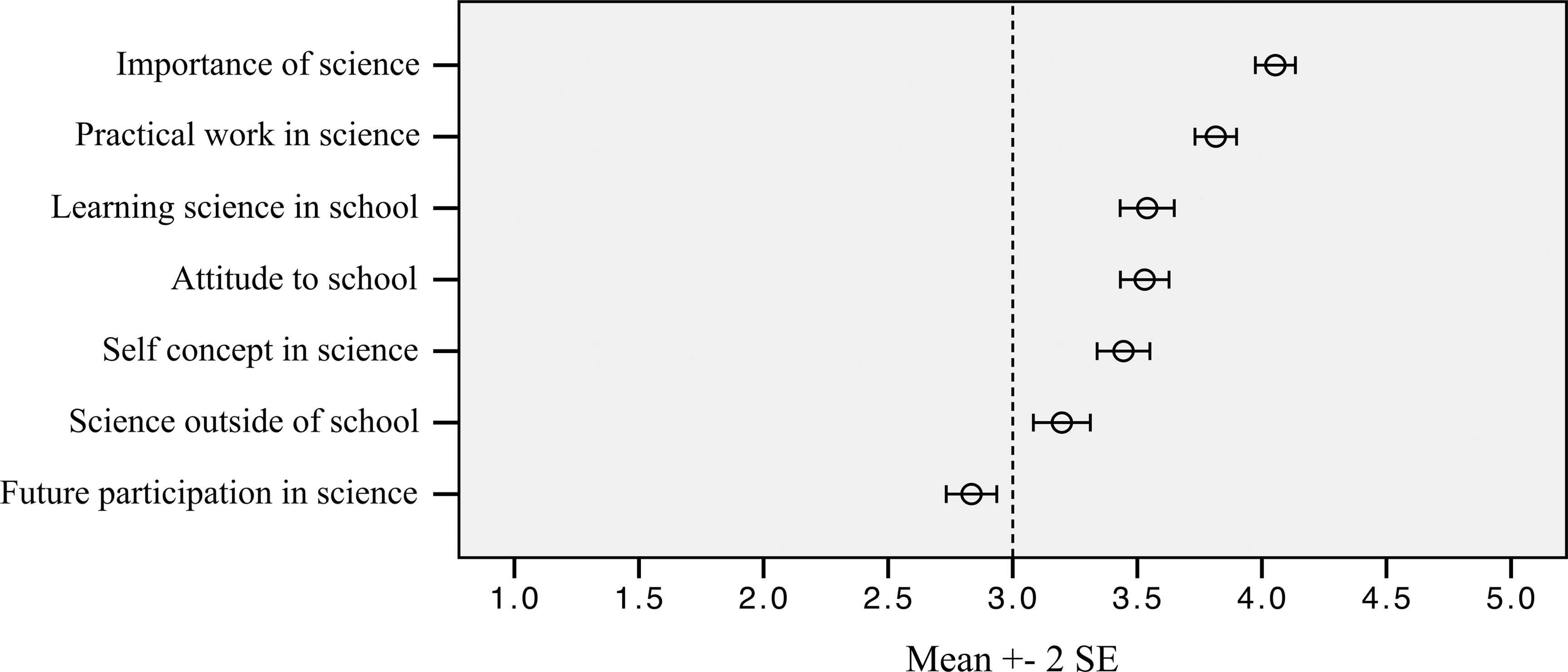
Means and standard errors of students' responses pre-visit on the Attitudes to Science subscales. [Response scale=1 (Strongly Disagree); 2 (Disagree); 3 (Uncertain); 4 (Agree) and 5 (Strongly Agree)].
Student pre-visit responses to individual items of the Future participation in science subscale are presented in Fig. 2. The mean values show that students endorsed most strongly the statement “I would like to study more science in the future.” Mean responses to the item “I would like to have a job working with science” were slightly above the middle point, but mean values for the item “I would like to become a scientist” were well below this level. The idea of being a science teacher was the least popular item, although it is unclear whether this has to do with the idea of being a science teacher or simply being a teacher.
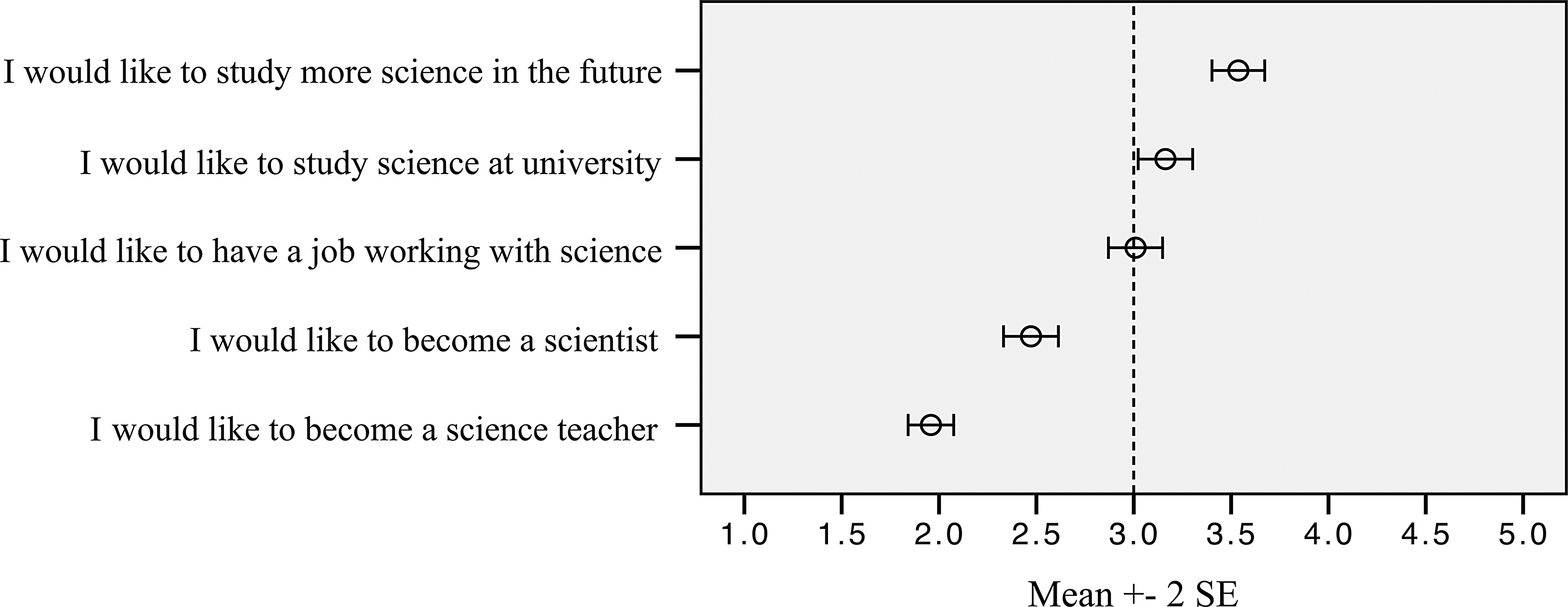
Means and standard errors of students' pre-visit agreement with statements in the Future participation in science subscale.
3.3. Becoming a scientist
One item included in the Future participation in science subscale, relating to students' intentions to become scientists, has been used in previous research studies, so the results can be compared. In the Choosing Science study (Lyons and Quinn, 2010), 15% of students agreed (i.e., chose Agree or Strongly Agree on a 5-point Likert scale) with the statement “I would like to be a scientist when I leave school.” The percentage agreeing with the statement “I would like to become a scientist” in the current study is very similar at 14.8% (Fig. 3).
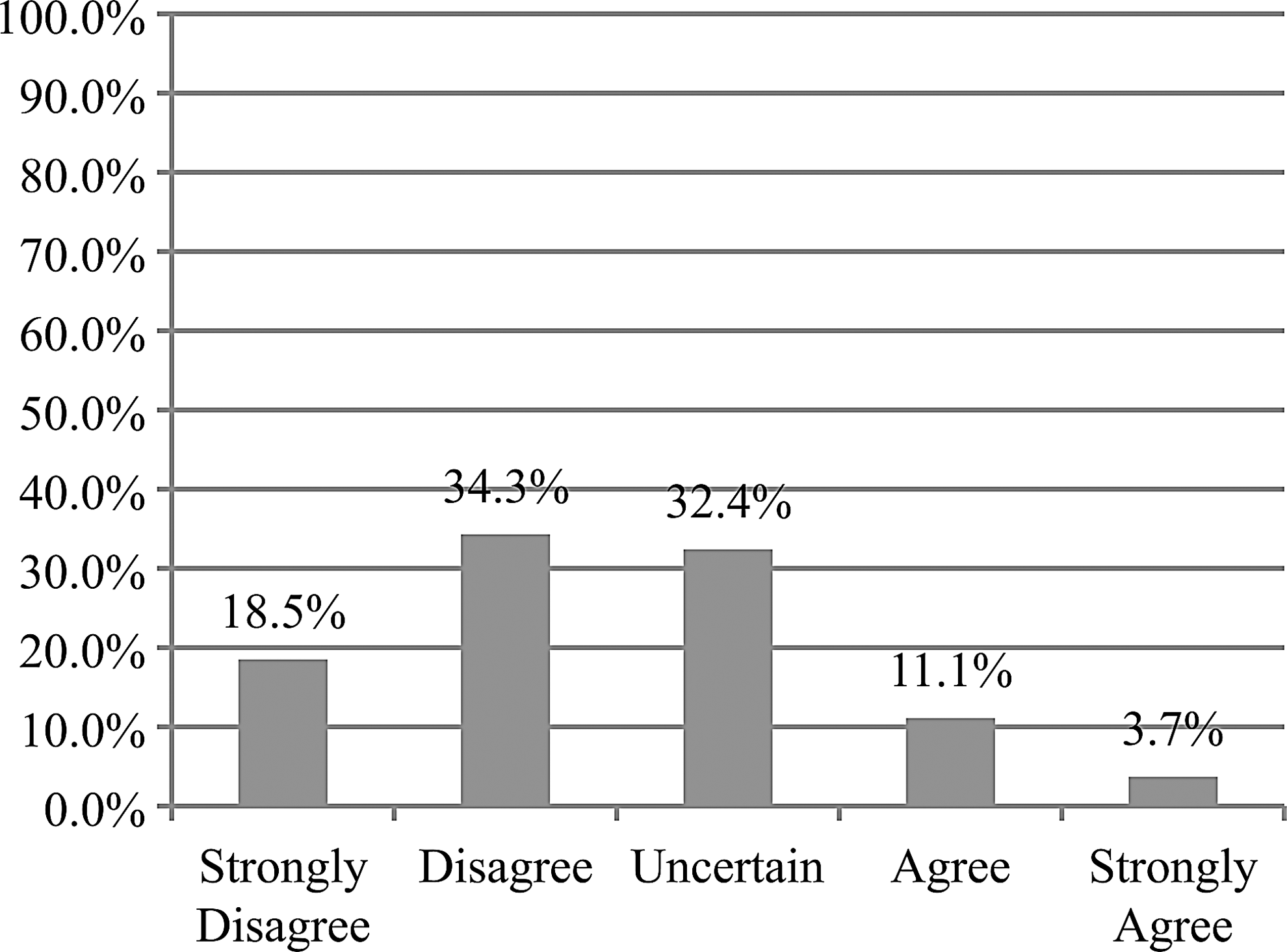
Frequencies of students' pre-visit responses to “I would like to become a scientist.”
The statement “I would like to become a scientist” was also included in the ROSE study (Schreiner, 2006), which found large differences between countries on this statement. In developed countries fewer students wanted to become scientists than in developing countries; this was particularly true of girls. In the current study, 17.3% of boys agreed that they would like to become a scientist compared with 11.4% of girls (Fig. 4). These figures are comparable with those for girls in developed countries in the ROSE study but somewhat lower for boys (Sjoberg and Schreiner, 2010), taking into consideration that the ROSE study percentages represent scores of 3 and 4 on a 4-point Likert scale.
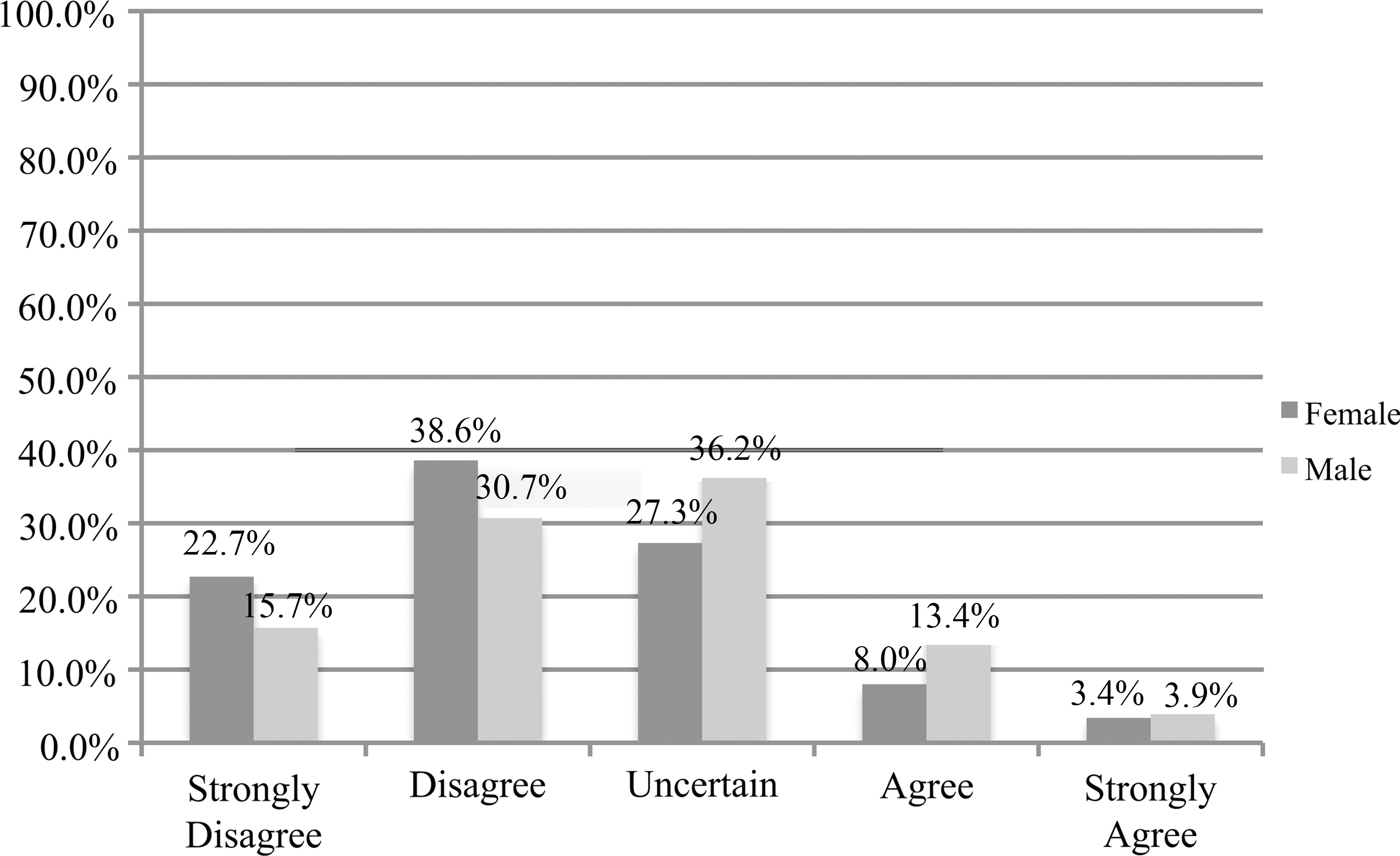
Frequencies of student responses pre-visit to “I would like to become a scientist” by gender.
3.4. Nature of Science understandings
Mean values and standard errors of the pre-visit Nature of Science constructs (subscales) are presented in Fig. 5. The concept of Imagination and Creativity in Scientific Investigations scored the lowest mean value, below the midpoint of the scale. Because there were statistically significant differences between pre- and post-visit scores on three of the Nature of Science subscales, the post-visit results are also shown. On the post-visit survey, as can be seen in Fig. 6, although there was a statistically significant increase in the scores, the mean value for the concept of Imagination and Creativity in Scientific Investigations was still below the midpoint.
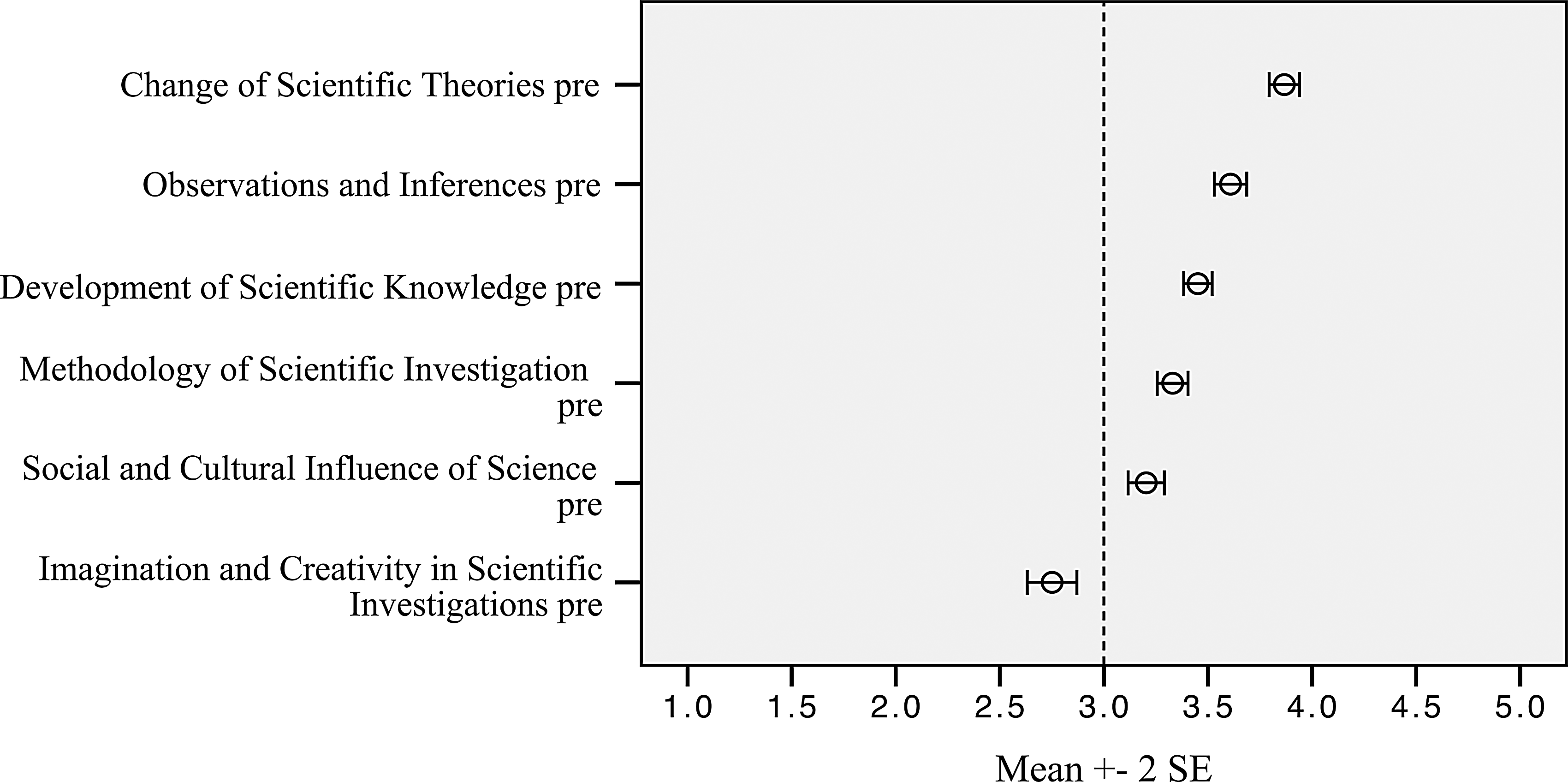
Means and standard errors of students' responses pre-visit on the Nature of Science subscales.
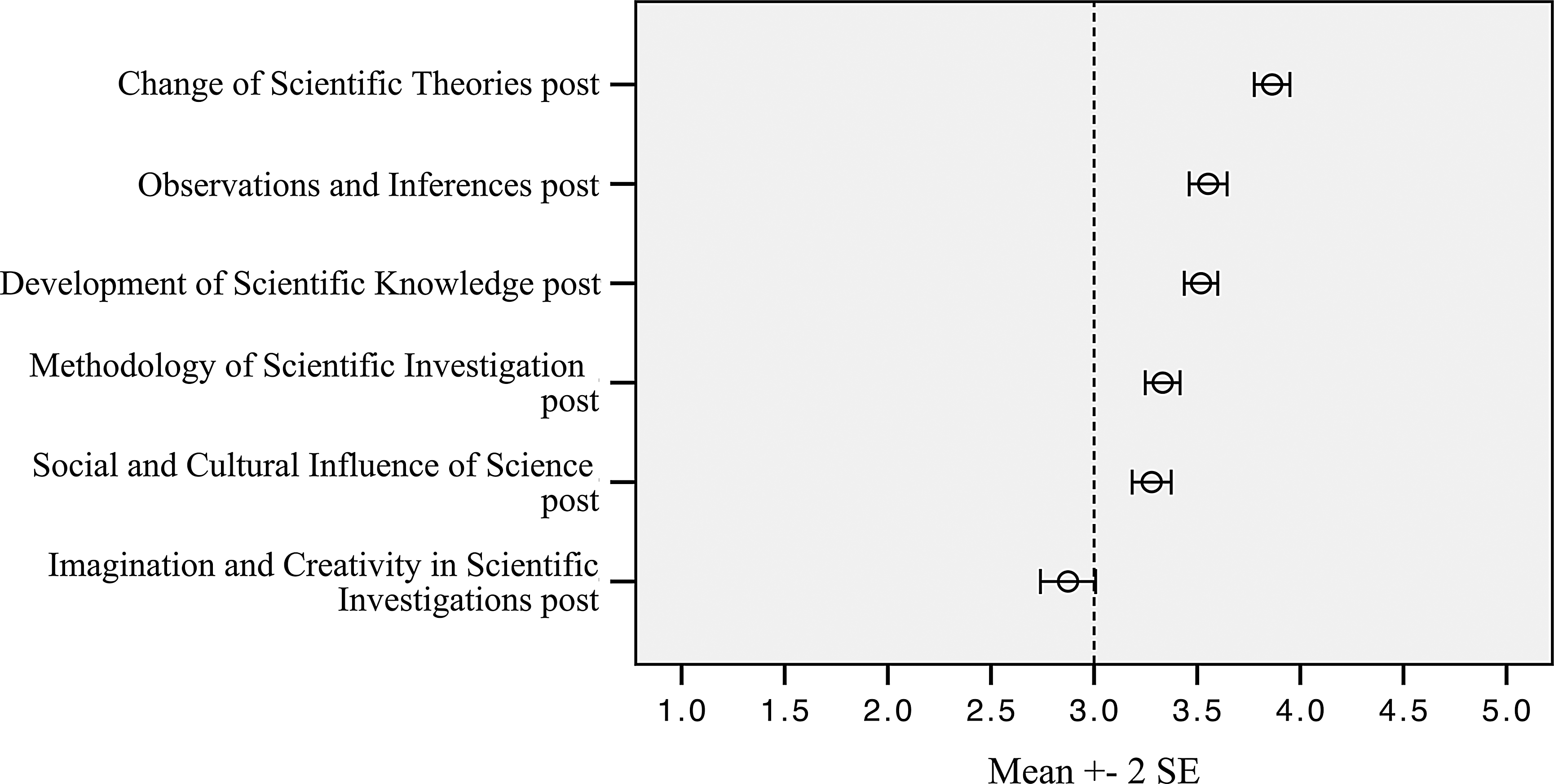
Means and standard errors of students' responses post-visit on the Nature of Science subscales.
Although the survey responses were all measured on the same 5-point Likert scale, responses to the Nature of Science scale items and the Attitudes to Science items may be viewed differently. On the Attitudes to Science scale the response reflects the relative strength of each attitude. However, according to the coding frame applied to the Nature of Science scale, the response indicates the degree of understanding of each concept. So a response of Agree or Strongly Agree would indicate understanding, while a response of Strongly Disagree, Disagree, or Uncertain would indicate lack of understanding. Figure 7 shows the percentage of students demonstrating understanding of each concept on the Nature of Science scale when pre- and post-visit responses were conflated in this way. On the pre-visit survey only 30% of students thought that imagination and creativity played a part in science, and less than half the students thought that social and cultural values influence the work of scientists. Despite a statistically significant increase from pre- to post-visit scores, the percentage of students showing understanding of these two concepts on the post-visit survey remained below 50%. The third most common area of misunderstanding concerned the methodology of scientific investigations, indicating a fairly common belief in a rigid, prescribed scientific method. By looking at the percentage of students showing understanding of each concept, it can be seen that the concept which showed a significantly significant decrease in scores from pre- to post-visit, Observations and Inferences, in fact shows that the level of understanding fell by only 1%. On the pre-visit survey, 64.4% of students understood that observations are open to multiple valid interpretations, compared with 63.4% post-visit.
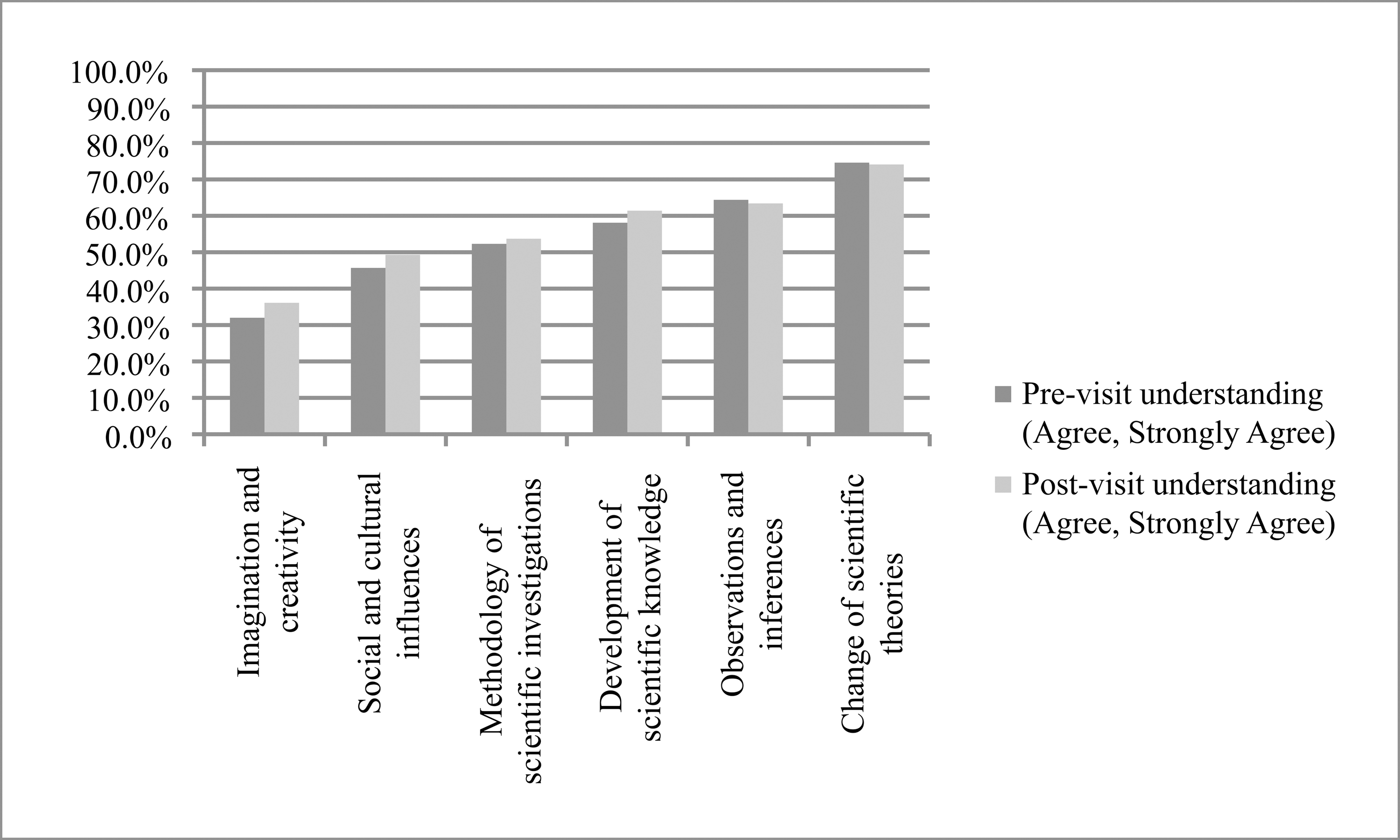
Understanding of Nature of Science concepts (pre- and post-visit).
In order to examine the association between possible predictor variables and students' responses to the item “I would like to be a scientist when I leave school,” stepwise linear regression analysis was carried out on the pre-visit data. As shown in Table 4, of all the Nature of Science and Attitudes to Science constructs, two had standardized regression coefficients that were significant at the 95% confidence level. The construct that contributed most was the Science outside of school construct (beta=0.37), followed by the Imagination and Creativity in Scientific Investigations construct (beta=0.13).
Dependent variable: I would like to become a scientist.
4. Discussion
The snapshot that the pre-visit data in this study provides of students' attitudes to science concurs with the results of similar studies, in some respects. The students have a high regard for the importance of science, but they show little interest in a career in science (Jenkins and Nelson, 2005; Lyons and Quinn, 2010). However, the students in this study do not conform to the image portrayed in the literature of students who are bored with science. These students are more positive toward science lessons. Only 16.8% of respondents agreed or strongly agreed with the statement “Science is boring,” compared with around a third of the students responding to the statement “Science lessons bore me” in the Choosing Science study (Lyons and Quinn, 2010).
This study shares another item with both the Choosing Science and ROSE studies, that is, “I like school science better than most other school subjects.” Once again the results show that students in this study are more positive about science. In this study, 45.2% of all students (40.4% of girls and 48.9% of boys) agreed with the statement to some extent (Fig. 4). This compares with only 30% of all students (more boys than girls) in the Choosing Science study and is slightly higher than the percentages of boys and girls in developed countries in the ROSE study.
The students taking part in this study also seem to be more positive about future science study than the students surveyed by Goodrum et al. (2011), half of whom chose not to study science after Year 10. As shown in Fig. 8, 57% of the students in this study Agreed or Strongly Agreed on the pre-visit survey that they would like to study more science in the future, presumably in the following year when science is not compulsory in Australia. Twenty-eight percent were uncertain, while only 15% Disagreed or Strongly Disagreed that they would study science in the future.
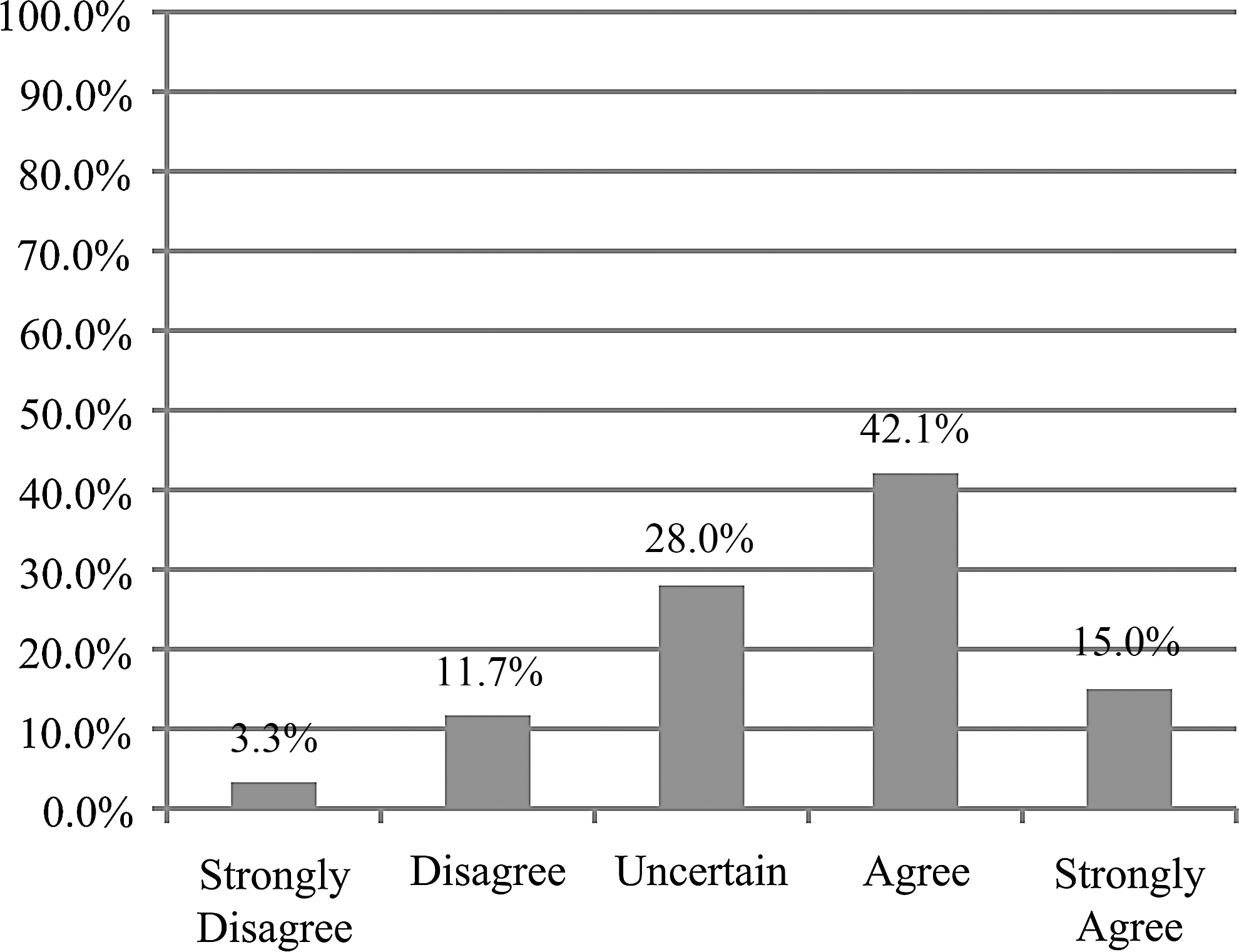
Frequencies of students' pre-visit responses to “I would like to study more science in the future.”
One possible reason for the higher science interest levels in this study is that these students are not a random sample. Because the students are attending programs outside of school, they may have been selected to attend because of their interest in science. Other possible factors are that teachers who are willing to take the students out of the school to attend science programs may be more enthusiastic and may foster their students' interest in science. Interestingly, a linear regression analysis found that the construct contributing most to a student wanting to become a scientist was an interest in science outside of school. Given the recommendations made in the United States (National Research Council, 2012), the United Kingdom (UK Parliament, 2011), and Australia (Lyons and Quinn, 2010) that all students be exposed to such programs, this may result in more students showing an interest in science. A further observation may be that if these students represent the body of students already interested in science, it could infer that we could expect a far worse picture among the typical students described in the literature, such as those in the Lyons and Quinn (2010) study.
The results of this study are in keeping with research indicating that many aspects of the Nature of Science are not well understood by school students (Lederman, 2007). In particular, the role of creativity in science was not well understood by the students in this study, with almost 70% believing that imagination and creativity are not part of a scientist's work. This result supports the findings by Masnick et al. (2010) that students see creativity and science as opposites. The results of the current study also tend to support previous studies that have considered the link between identity and a career in science (Lyons, 2006; Schreiner and Sjoberg, 2007; Aschbacher et al., 2010). These studies have suggested that students' beliefs that they would not be able to use their imagination and creativity in a career in science may be contributing to their inability to see themselves as scientists. A linear regression analysis identified one of the two constructs contributing to a student wanting to become a scientist was an understanding that science involves imagination and creativity.
Research has suggested that a false image of science and scientists may be perpetuated by the science education that students receive at school (Kind and Kind, 2007; McWilliam et al., 2008; Schmidt, 2011) and also by the image projected by science teachers (Kessels and Taconis, 2011). When students are exposed to science outside of school, when they meet scientists and get an insight into the work that scientists do, they see a different side of science. The students in this study had a greater understanding of the role of imagination and creativity in science and of social and cultural influences on science after they had participated in an outreach activity. This was confirmed by parametric and nonparametric tests. This result was unexpected, as a similar 1-day-long intervention conducted in 2008 did not reveal any change in student views (Oliver, 2008). A comprehensive review of the research on students' views of the Nature of Science (Deng et al., 2011), although finding mixed results for short-term interventions, did show that the overwhelming majority of effective interventions involved inquiry activities.
This result would have been more significant had there been a control group for comparison. However, it proved to be impossible to match student groups for this study. This is because the students who participate in outreach activities such as these tend to be unique groups within the school or whole school cohorts. This is a limitation of research studies such as this one and possibly a contributing factor to the scarcity of evidence that such interventions benefit students' science understandings and their intentions regarding further science study.
Additional data collected in the Pathways to Space program indicated that 19.5% had changed their minds between the pre- and post-visit surveys and were now considering space-related careers or university courses as a result of their 1-day experience with the program. These students have been offered the opportunity to be involved in a follow-up program, which also enables research on the long-term effectiveness of engaging students in their own scientific research.
5. Conclusion
The picture of students attending astrobiology outreach activities, provided by this study, shows students who are more interested in science than the average student but who are lacking in understanding of aspects of the nature of science. Although a significant difference was detected between pre- and post-visit understandings about imagination and creativity and social and cultural influences in science, more longitudinal studies are required to determine whether better understanding of science practice translates into students choosing careers in science. It would also be interesting to be able to measure the effect of the outreach activities on less-interested science students. Research studies are continuing on the Pathways to Space program.
There have been recommendations for the science community to provide outreach activities for school students in order to increase their understanding of science practice and perhaps stimulate their interest in a science career (Rennie, 2006; Tytler, 2007; Lyons and Quinn, 2010). However, the outreach activities that are available are often not effectively evaluated. This study provides evidence that astrobiology outreach can give students the opportunity to experience the way that science is actually done and the multidisciplinary nature of much contemporary science, both of which are increasingly being seen as important to good-quality science education. It also shows that outreach activities can generate meaningful data to gauge their effectiveness and adds to the understanding of how to build better projects in the future. This has wider application at a time when there is international agreement that such opportunities to engage with contemporary science practice are an essential part of science education.
Footnotes
Acknowledgments
Pathways to Space is funded by the Australian Space Research Program, an initiative of the Australian Government's Department of Innovation, Science, Research and Tertiary Education. The project is led by the Australian Centre for Astrobiology in the School of Biotechnology and Biomolecular Sciences at the University of New South Wales in Sydney. The other partners are the Powerhouse Museum, the Australian Centre for Field Robotics at the University of Sydney, and Cisco. The authors wish to acknowledge the Victorian Space Science Centre for their kind access to the Mission to Mars program for data collection. VSSEC is funded by the Victorian State Government.
Author Disclosure Statement
No competing financial interests exist.
Abbreviations
ROSE, Relevance of Science Education; SUSSI, Student Understanding of Science and Scientific Inquiry.