






Abstract
Background:
Acupuncture is widely recognized as the primary form of traditional medical treatment on a global scale, leading to a heightened emphasis on the training and development of proficient acupuncture professionals. The development of proficient practitioners in the field of acupuncture is hindered by the substantial challenges associated with augmenting system integration capabilities for clinical application and active participation in clinical operations.
Objective:
It is imperative to adhere to a combination of broad and specialized knowledge in order to establish a robust educational base, facilitate effective knowledge transfer, maintain a harmonious emphasis on theoretical understanding, refine practical skills, and improve clinical proficiency.
Methods:
Embracing collaborative educational strategies, fostering cross-disciplinary integration, and promoting innovative approaches are essential components for enhancing the educational experience in acupuncture. The incorporation of internet, Big Data, artificial intelligence, virtual reality, and other technologies into acupuncture and moxibustion education holds significant importance in advancing the innovation and development of acupuncture education.
Conclusion:
This article presents practical experiences in integrating digital intelligence with acupuncture talent training at Chengdu University of Traditional Chinese Medicine. The content includes the objectives of acupuncture talent development, a strategic plan for reforming acupuncture talent in practical and classroom teaching, and serves as a valuable reference for acupuncture education.
INTRODUCTION
Acupuncture stands as the predominant form of traditional medicine treatment globally, prompting increased focus on the cultivation of skilled acupuncture practitioners. The acupuncture major at Chengdu University of Traditional Chinese Medicine was established in 1960, marking the institution as a trailblazer in higher education for acupuncture and moxibustion. The institution has embraced the concept of “education-oriented, simultaneous development of five educations, inheritance and innovation, and cross-integration,” and has effectively advanced the systematic integration and education model of “strong faith, broad foundation, excellent ability, and innovation.” This approach has facilitated the cultivation of clinical proficiency in acupuncture while also emphasizing the importance of inheriting traditional Chinese medicine (TCM). The ability to integrate innovation and entrepreneurship, coupled with the courage to assume the role of high-level and high-quality acupuncture practitioners, is essential for the advancement of acupuncture and moxibustion. 1
ACUPUNCTURE EDUCATION AT CHENGDU UNIVERSITY OF TRADITIONAL CHINESE MEDICINE
Challenges in the Development of Skilled Practitioners in the Field of Acupuncture
Enhancing the capacity for system integration with the aim of clinical application poses a significant challenge
As a discipline focused on clinical application, individuals with expertise in acupuncture must possess a strong understanding of classical theory, a deep knowledge of TCM syndrome differentiation, extensive clinical experience, and a commitment to lifelong learning. 2 However, the challenge lies in effectively and systematically integrating and enhancing the skills related to classical inheritance, TCM thinking, clinical practice, and continuous learning during the training of these talents. 3
Engaging fully in clinical operations poses a challenge
The curriculum for acupuncture and moxibustion education consists of three main components: meridian acupoints, acupuncture and moxibustion techniques, and acupuncture treatment. Among these, the understanding of meridians, accurate positioning of acupuncture points, proficiency in acupuncture techniques, and the development of clinical syndrome differentiation and treatment strategies are identified as crucial and challenging aspects of instruction. 4 The impediments to immersive training of acupuncture talents include challenges in presenting meridians and acupoints, difficulties in replicating high-risk operation skills, challenges in developing clinical thinking, and obstacles in evaluating manual operation skills. 5
The Objective of Acupuncture Talent Development Should Prioritize the Cultivation of Three Key Abilities with Equal Emphasis
Adhere to a blend of general and specialized knowledge to establish a strong foundation and enhance the transmission of knowledge
According to the principles governing the development of students’ cognitive processes, the curriculum is structured into three categories of general education courses, including “ideological and moral cultivation and quality education, social science and humanistic literacy, scientific research methods and innovation and entrepreneurship,” as well as five professional course groups encompassing “Chinese medicine foundation, Chinese medicine classics, Chinese medicine clinical, basic medicine and clinical medicine courses, and preventive medicine courses.” The advanced training system, known as “immersive clinical evidence-point-and-click guidance-case-based understanding,” is designed to align with the principles of TCM thinking and cognitive development. 6 This system integrates internship experiences, teacher perceptions, and a combination of general and professional knowledge to strengthen the professional foundation of learners.
Maintain a balanced focus on theory, hone skills, and enhance clinical practice
Develop a comprehensive, three-dimensional experimental teaching system that incorporates multiple levels and full connectivity, utilizing the resources available, relying on the National Experimental Teaching Demonstration Center of Traditional Chinese Medicine, the National Clinical Teaching and Training Demonstration Center, the Sichuan Acupuncture and Tuina Experimental Teaching Demonstration Center, the Sichuan Acupuncture and Tuina Virtual Simulation Experimental Teaching Center, and the Clinical Practice Base, open teaching outpatient clinics, and provide bedside teaching for all basic courses and professional clinical courses of TCM. The department of acupuncture and massage has established a program for comprehensive training in teaching and research, which includes projects aimed at enhancing students’ critical thinking skills and overall abilities. Additionally, practical teaching components constitute over 35% of the total class hours. 7 By implementing a curriculum that includes skill training, intensive internships, and clinical practice, a comprehensive training system is established to enhance students’ proficiency in basic Chinese and Western clinical skills, as well as acupuncture and massage techniques. This approach ensures students receive thorough and immersive training, leading to continuous improvement in their clinical practice abilities. 8
Embrace collaborative educational practices, promote cross-disciplinary integration, and enhance innovative approaches
The course “Acupuncture and Tuina Innovation and Entrepreneurship Practice” has been established with a focus on innovation and entrepreneurship competitions, discipline competitions, and social practice competitions. 9 It integrates the resources of schools and enterprises, and implements future entrepreneur plans, project training incubation camps, and project achievement transformation camps, with the aim of continuously cultivating students’ sense of innovation; integrate the “Xinglin International Month·world-famous university courses” into the campus curriculum to promote student engagement in international study visits and academic exchanges, thereby fostering the development of students’ global Perspectives; and incorporate the benefits of various academic disciplines by introducing the “Future Scientist Program Training Camp,” providing access to advanced scientific research projects for undergraduate students, facilitating early involvement in laboratory work and team collaboration, and fostering students’ innovative capabilities through ongoing engagement with the scientific research community comprised of both faculty and peers (Fig. 1).
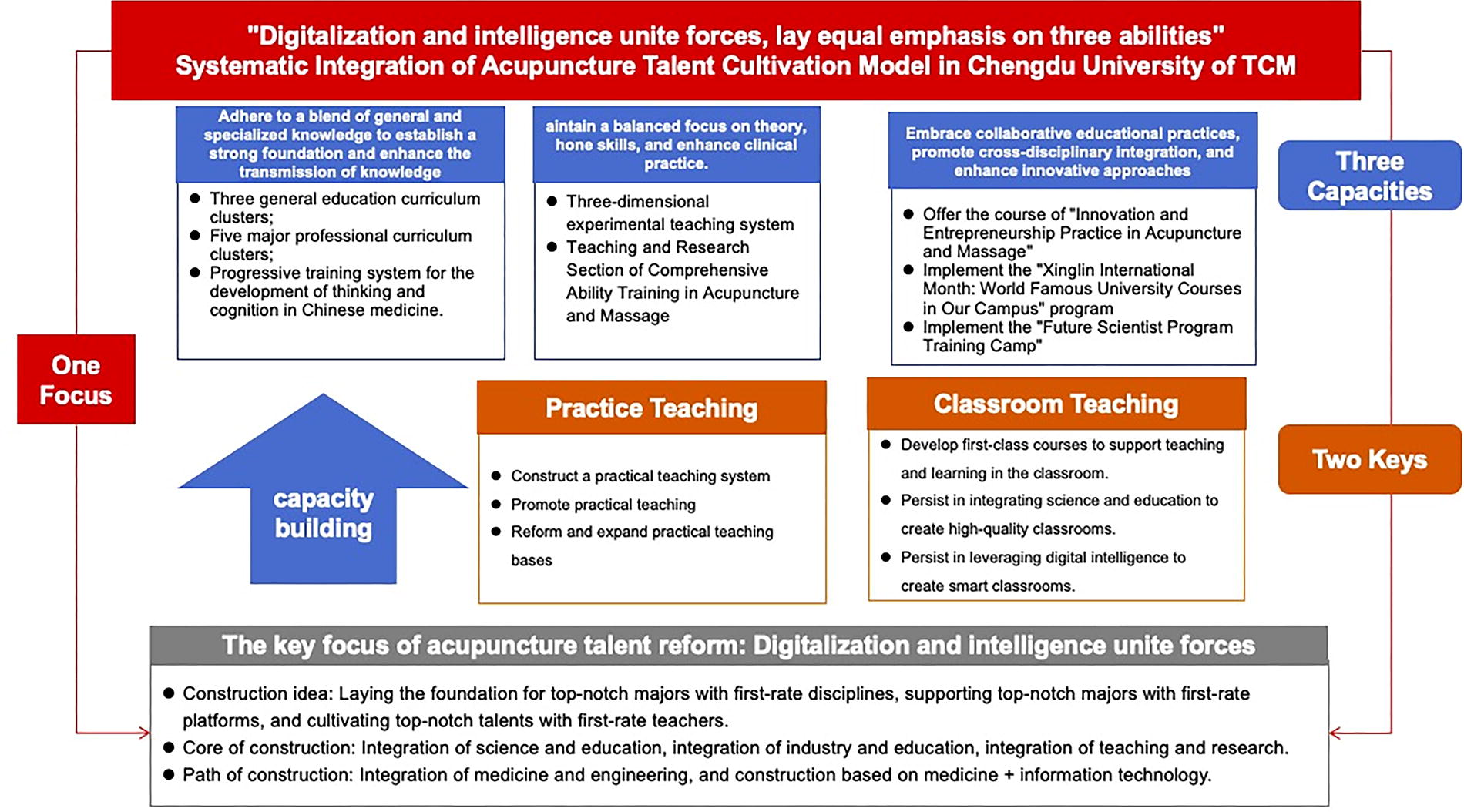
“Digital intelligence application, three abilities improvement”: Modernizing acupuncture education with Big Data and virtual reality at Chengdu University of Traditional Chinese Medicine.
Develop a Strategic Plan for the Reform of Acupuncture Talent, with a Specific Emphasis on the Integration of Digital Intelligence
The professional construction concept of “first-class disciplines fostering first-class majors, first-class platforms supporting first-class majors, and first-class educators nurturing first-class talents” serves as the guiding principle. The core principles of “integration of science and education, integration of industry and education, and integration of teaching and research” are emphasized. The integration of medicine and engineering, along with the development of medicine + informatization, will facilitate the evolution of talent training methods.
Practical teaching
Develop an effective instructional framework that is tailored to individual abilities
Based on the distinct learning characteristics and demands of the three stages of undergraduate education (the basic course learning stage, professional course learning stage, and clinical internship stage), the main goal is to strengthen the fundamental knowledge and expertise of individuals while promoting the six components of experiential learning, practical training, internships, discipline competitions, and the second classroom. 10 This is achieved through the implementation of a comprehensive experimental teaching system known as the “three stages, three abilities, and three levels.” Additionally, a collaborative effort involving schools, medical professionals, and businesses is established to enhance the education of individuals and enhance their ability to preserve and innovate in the field of TCM. The clinical practice efficacy and the scientific innovation capacity of cross-integration. 11
Advocate for the enhancement of practical teaching through the implementation of integration strategies
The first is the utilization of digital intelligence to facilitate the transformation of the traditional classroom model. By incorporating contemporary information technology into conventional educational practices, this study aims to enhance students’ critical thinking skills in the field of TCM. This will be achieved through the establishment of a digital case library and the implementation of case-based learning. Additionally, students’ clinical proficiency will be reinforced through a blended approach of virtual and hands-on practical teaching methods. Furthermore, their capacity for innovation and entrepreneurship will be developed through virtual design-transformation verification experimental teaching. Last, students’ lifelong learning abilities will be nurtured through online instruction and problem-based learning (PBL) strategies (Fig. 2).
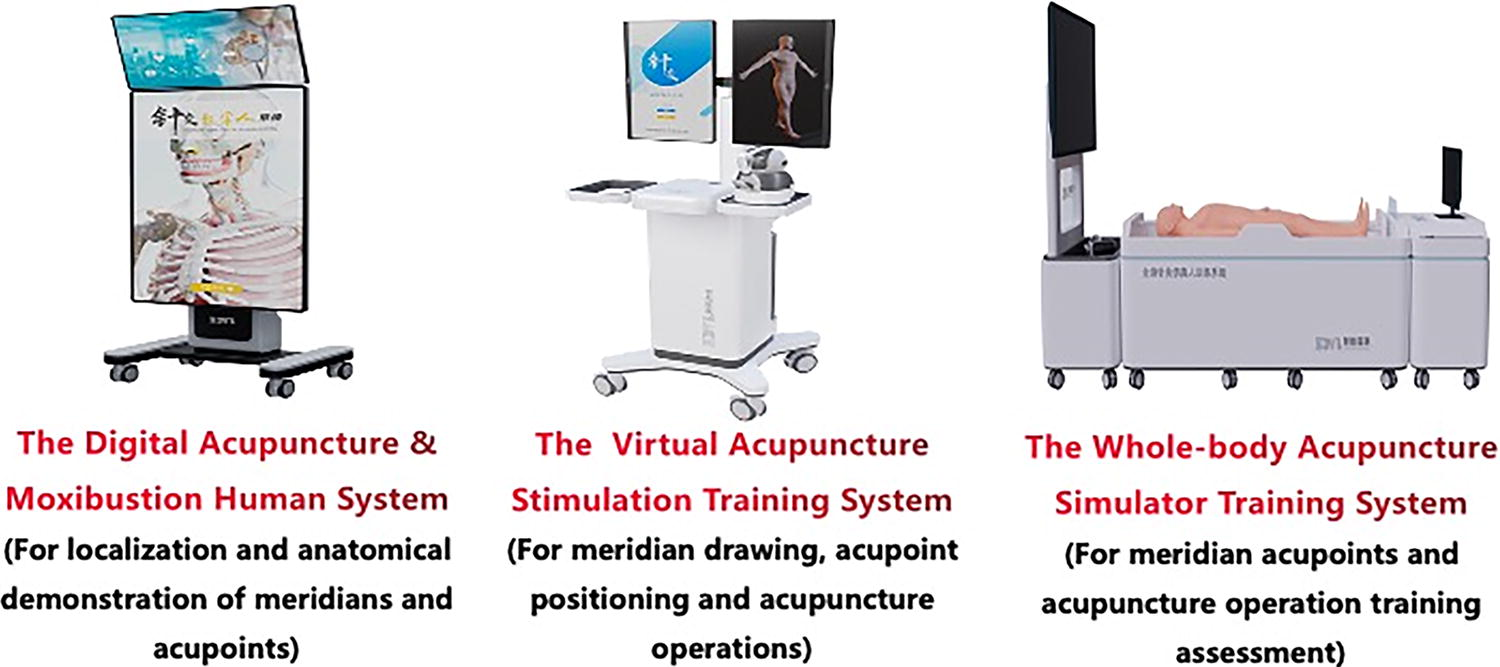
A comprehensive virtual simulation practice teaching platform has been developed to integrate the components of teaching demonstration, simulation operation, and training assessment in order to fully leverage the benefits and synergies of acupuncture instruction.
The second aspect involves the integration of virtual and physical resources to facilitate the reformation of teaching methodologies. The implementation of virtual simulation technology allows for the dynamic presentation of the meridians, acupoint locations, and anatomical structures of the human body in a three-dimensional format, effectively addressing the challenges associated with accurately depicting the meridians and acupoints. Construct a secure virtual simulation environment for acupuncture clinical operations to address the challenges associated with high-risk training. Acupuncture and moxibustion techniques that are deemed hazardous and intricate, such as those targeting sensitive areas like the eyes, are frequently avoided out of apprehension. Develop a scoring algorithm model utilizing virtual simulation and artificial intelligence technology, specifically employing a clustering algorithm to iteratively optimize the clustering center on the dataset. Additionally, integrate a fully connected neural network (MLP) to construct the scoring algorithm model, effectively mitigating scoring errors resulting from subjective evaluation and addressing the challenges associated with the “difficult evaluation” of manual operation.
The third objective is to advocate for the revision of educational material. The practical teaching content design of “learning-research-application whole chain advanced” is implemented to address challenges in cultivating innovation and transformation abilities in clinical experiment teaching. This approach involves strengthening basic knowledge, exploring mechanisms of action, and applying transformations across the stages of effect verification, mechanism exploration, and transformation application. The advancements in scientific research have been integrated into the educational setting, with the development of experimental training equipment including an acupoint sensitizer, evidence-based acupuncture clinical diagnosis and treatment decision support platform, moxibustion robot, acupuncture virtual simulation training system, and whole-body acupuncture simulator training system. These innovations have been independently created and have positively impacted over 5,000 students (Fig. 3).
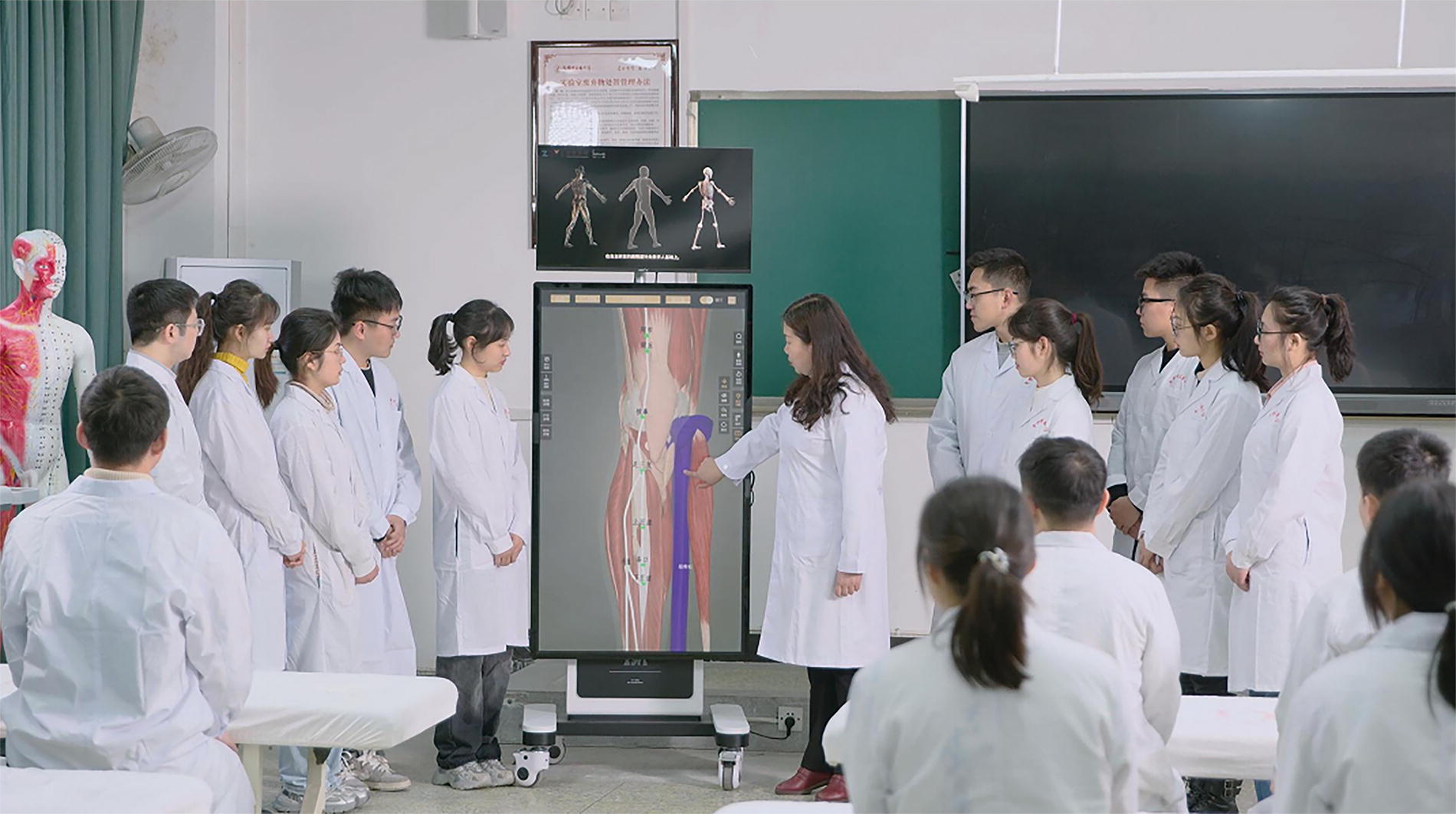
Practical teaching of meridians and acupoints using the acupuncture digital human system (Demonstration: F.Z., Students of Chengdu University of Traditional Chinese Medicine.).
Enhance the scope of practice teaching through collaborative guidance
The Clinical Practice Center for the Integration of Medical Education and Education is dedicated to promoting the integration of medical education and clinical practice. Following the principles of “early clinical exposure, multiple clinical experiences, and repeated clinical practice,” the institution has established 11 clinical teaching bases dedicated to acupuncture instruction. Additionally, clinical clerkship periods have been extended, bedside teaching has been emphasized, and comprehensive training in diagnosis and treatment has been enhanced. Collaborate with hospitals to establish a clinical practice teaching base that integrates virtual and real-world experiences. By collaborating with China Mobile to develop a 5G remote teaching transmission system and partnering with Meishan Hospital of Traditional Chinese Medicine and Pidu District Hospital of Traditional Chinese Medicine, we are able to conduct bedside teaching sessions on subjects such as “Acupuncture and Moxibustion,” “Acupuncture and Moxibustion Therapeutics,” and “Tuina Manipulation.” This initiative aims to bridge the gap between clinical diagnosis and treatment scenarios and students by eliminating geographical and temporal barriers.
Center for innovation in integrating science and education practices. Scientific and technological innovation plays a crucial role in enhancing talent development by embracing the development principle of “scientific research driving education, and talent reinforcing the institution.” This approach utilizes scientific research projects as a platform to enhance the scientific research and training infrastructure, facilitating early engagement of college students in projects, laboratories, and research teams. 12 The student innovation training program and the teacher’s scientific research project have been incorporated into the curriculum and educational resources, alongside the establishment of a future scientist training camp. Additionally, 51 high-level scientific research projects in the six primary research areas of the college are available to undergraduate students, creating a platform that offers extensive support, project accessibility, and mentorship guidance.
The industry–education integration entrepreneurship practice center is a vital hub for fostering collaboration between academia and industry in the realm of entrepreneurial activities. The institution focuses on industry-specific training by providing customized talent development programs that emphasize collaboration between enterprises and academic institutions. This includes conducting industrial research, academic exchanges, and professional training services. Students also participate in internship programs with prominent industry and regional enterprises to leverage the school–enterprise partnership in the intelligent manufacturing of acupuncture equipment and the integration of production and education talent training systems (Fig. 4).
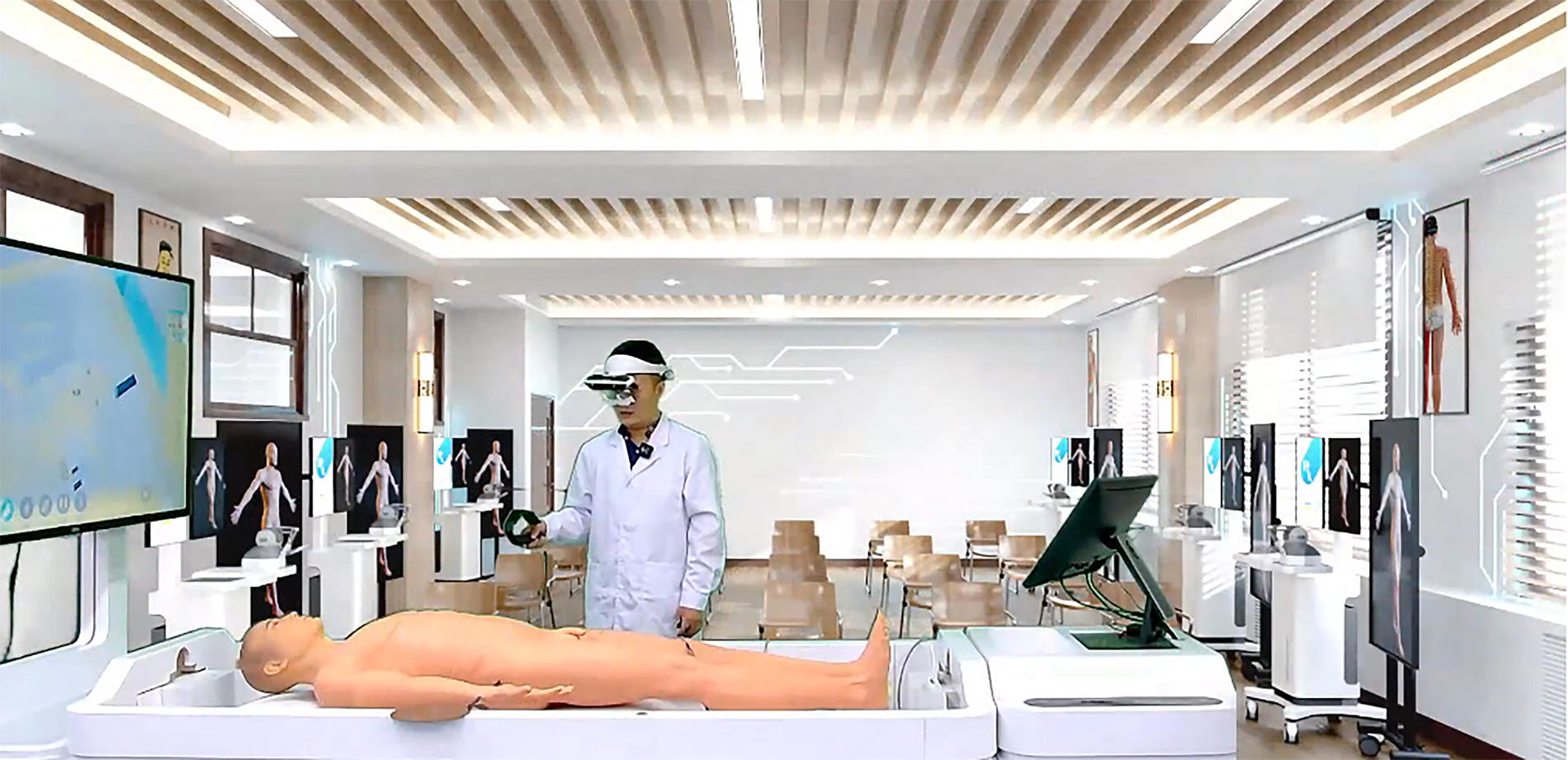
The whole-body acupuncture simulator training system. (Demonstration: Shuguang Y.).
Classroom teaching
Develop a high-quality curriculum to enhance the educational experience in the classroom
Enhance the development of online open courses, leveraging platforms such as Massive Open Online Courses (MOOCs) and Xuetang Online, to facilitate the widespread adoption of blended teaching practices. Encourage the implementation of inquiry-based, discussion-based, and PBL methods, with a particular emphasis on incorporating bedside teaching in clinical courses. Currently, the institution has developed four national first-class courses, seven provincial first-class courses, two provincial ideological and political demonstration courses, two provincial applied undergraduate demonstration courses, one virtual simulation project under the Ministry of Education’s “Western Travel Plan,” two international MOOCs, one provincial innovation and entrepreneurship education demonstration course, two provincial excellent courses for international students in China, and one online course exported to Indonesia by the Ministry of Education.
Adhere to the integration of science and education and create high-quality classrooms
Focus on incorporating scientific research findings into educational practices and disseminating them through teaching materials, classroom instruction, and student comprehension. Drawing upon the scientific principles of acupuncture and moxibustion, this study advocates for the establishment of robust foundational knowledge and quality enhancement through the utilization of open scientific research platforms, including molecular biology, electrophysiology, acupuncture, and chronobiology. Furthermore, the implementation of a two-way teaching approach, characterized by innovation in learning and learning in innovation, is proposed. This approach incorporates multidisciplinary, interdisciplinary design, research-based teaching methods, and practical learning strategies. At the same time, the scientific research achievements are transformed into virtual simulation experiment teaching projects, covering “Meridian and Acupoints,” “Acupuncture and Moxibustion Therapy,” “Tuina Manipulation,” “Experimental Acupuncture,” “Evidence-based Acupuncture,” 13 and other professional core courses. Developing experimental projects in acupuncture and moxibustion, including meridian acupoint positioning, purulent moxibustion, practical moxibustion, stilt method training, force penetration simulation experiments, and independent innovation design based on emergency models, among other transformational projects.
Embrace the concept of digital intelligence to foster the development of intelligent classrooms
By leveraging virtual and real integration and digital intelligence empowerment as the foundation, our focus will be on enhancing the development of a curriculum informatization teaching platform. This platform will facilitate the integration of acupuncture and Tuina practices, emphasizing the cohesive relationship between theory and practical application. Currently, 10 professional online courses have been successfully completed, representing 71.4% of the total number of core professional courses. The enhancement of wisdom contributes to the enrichment of educational practices, facilitating the creation of seven virtual simulation projects that leverage both online and offline modalities, as well as the integration of virtual and real-world components. Developing a comprehensive clinical case database is essential, encompassing typical cases of prevalent clinical diseases in acupuncture and Tuina, challenging clinical diseases in acupuncture and massage, as well as instances of erroneous clinical diagnosis and treatment in acupuncture and Tuina therapy. Enhance conventional classroom settings by incorporating innovative teaching methods such as flipped classrooms, split classrooms, and rain classrooms. Integrate essential and challenging concepts from theoretical courses into clinical practice, facilitate student discussion and communication through case analysis, and foster the development of clinical practice skills from foundational knowledge and skills. Ultimately, this approach aims to elevate students’ proficiency in syndrome differentiation and treatment. In the realm of practical ability training, educators facilitate students in articulating uncertainties and challenges encountered in theoretical studies. 14 This is achieved through the implementation of PBL and bedside teaching methodologies, wherein students autonomously gather data, engage in group discussions to analyze issues, and subsequently utilize teaching laboratories, scientific research platforms, and virtual simulation projects to conduct verification experiments, comprehensive design experiments, or innovative experiments. The ultimate goal of this approach is to foster students’ capacity for independent critical thinking and cultivate their awareness of innovation and development.
CONCLUSION
In the contemporary era of advanced technology, the integration of modern information technology and artificial intelligence has been incorporated into the field of acupuncture and moxibustion education. 15 The acquisition of foundational knowledge in classical studies serves to strengthen proficiency in acupuncture and moxibustion techniques while also fostering the development of clinical diagnostic skills through a comprehensive analysis of rationality, prescription, and acupoint selection. This approach aims to cultivate a well-rounded understanding of TCM, integrating both general and specialized practices, emphasizing theoretical knowledge alongside practical skills in acupuncture and Tuina therapy, and promoting innovation and entrepreneurial acumen through interdisciplinary collaboration.
Footnotes
ACKNOWLEDGMENTS
The authors express their gratitude to Chengdu Wisdom Digital Medical Technology Co., Ltd. for collaborating on the development of a series of acupuncture virtual simulation equipment with Chengdu University of Traditional Chinese Medicine.
AUTHORS’ CONTRIBUTIONS
Sha Y., J.G., and D.C. were equally involved in data collation. Shuguang Y. and F.Z. were equally involved in conceptualization and visualization of this article. The first draft of the article was written by Sha Y., and the figures are supported by Sha Y., J.Z., Y.T., F.Z., and Shuguang Y. All authors commented on subsequent versions of the article. All authors read and approved the final article.
AUTHOR DISCLOSURE STATEMENT
No financial conflicts of interest exist.
FUNDING INFORMATION
This study was supported by the