






Abstract
Deliberate fire setting on school properties and during high bush-fire danger periods in susceptible regions of Australia is disturbing [1], particularly when children and adolescents are thought to be to blame. Estimates of the proportion of fires caused by children and youth are unreliable and need to be interpreted with caution [2, 3]. Nevertheless, reports published by fire and police authorities throughout Australia indicate that approximately 20% of fires are attributed to juvenile fire-setters [1]. Similarly, child fire-setting in the US has been identified as a serious problem [4] with almost half of all structural fires being attributed to children [2]. Childhood fire setting has been identified as a serious community problem thought to be characteristic of an advanced conduct disorder. The identification of offenders is not always straightforward; not all children who set fires are caught, and not all fires are reported.
The prevalence of childhood fire interest and fire setting has predominantly been studied in clinically referred or incarcerated children and adolescents. Kolko and Kazdin [5] reported prevalence rates of fire setting and match play in samples of young children ranging from 34.7% to 52% for psychiatric inpatients and from 19.4% to 24.4% for clinic outpatients, respectively. As previously noted, uncertainty remains about the actual numbers of children with fire interest and fire-setting behaviours and it is possible that these reports significantly misrepresent the extent of genuine prevalence.
Sakheim and Osborn [6] used a predictive model to differentiate characteristics of fire setting that placed firesetters either into a severe or non-severe category. They argued that the distinction is important because nonsevere- risk fire-setters may be treated in the community with counselling, fire safety education and social skills training, whereas severe-risk fire-setters require accurate diagnosis and psychiatric intervention. Their sample was a group of children and adolescents in out-of-home-care with a history of clinical and social problems. Of the 180 children and adolescents comprising the sample, 75 were grouped as severe-/high-risk and 105 as minor-/low-risk fire-setters. The former group, defined by deliberate, planned and repetitive fire-setting actions, had set an average of 5.3 fires with deliberate harm intended whereas the latter group had set an average of 2.5 fires without deliberate intent.
The association of fire setting with other antisocial behaviours is well documented and fire setting in young people appears to be characteristic of an advanced conduct disorder. In an important study by Forehand et al. [7], 36 incarcerated male youths meeting criteria for a diagnosis of Conduct Disorder (CD) were categorized into one of three groups: those with a fire-setting history (n = 12); those with no fire-setting history but matched CD symptoms of the former group (n = 12); those with no firesetting history and fewer CD symptoms than subjects in the other two groups (n = 12). Notably, measures of antisocial behaviour and personal skills were similar for youths with CD symptoms with or without a firesetting history. On the other hand, a significant difference was found on the same measures between youths with and without severe CD symptoms. These results suggest, as the authors assert, that interventions for fire-setters need to be targeted to groups at risk for conduct problems generally rather than fire setting alone.
Similarly, elevated rates of conduct disordered behaviour were found in an Australian sample of 5- to 16-year-old fire-setters [8], however, this study also found elevated rates of emotional disorders. The authors concluded that fire setting is associated with a mixed clinical picture of widespread psychopathology.
The above indicates that some sort of balance between the specifics of fire setting and the generalities of antisocial behaviour may be needed when communities seek to prevent juvenile fire setting. Specifically, targeting inappropriate fire setting in children while ignoring the common context of antisocial behaviour in which it occurs would be naïve and overly simplistic. That is, many firesetters are severely antisocial and would not be expected to change via simplistic fire-education programmes. On the other hand, trying to reduce juvenile fire setting by reducing antisocial behaviour would be overly broad in its approach. Not all fire setting is attributable to antisocial youth and being able to identify youths with abnormal patterns of fire interest and behaviour, regardless of their other problems, would be advantageous.
This is exemplified by the landmark intervention study by Adler et al. [9] in which fire-setters attended a combination of education by fire-fighters and a behaviour modification programme. All participants showed significant decreases in fire setting with no advantage attributable to the active interventions. After collapsing across interventions, however, the authors showed that improvements in fire setting over time were associated with lower levels of general adjustment problems. They recommend that brief community intervention may be appropriate for fire-setters without other major problems, but fire-setters with significant adjustment problems will require more intense management.
Contemporary approaches to child aggression and antisocial behaviour emphasize early identification and treatment [10]. Interventions that take place once these extreme behaviours have been established are generally expensive to implement and of limited effectiveness, giving emphasis to the importance of identifying key-risk factors early. Thus, the ability to screen children for behaviour problems early is appealing. Such an approach requires some estimates of normative rates of fire setting and related behaviours in the normal population. The aim of this study was to: (i) assess the measurement of fire interest, fire setting and related behaviours; (ii) provide normative data on these behaviours; and (iii) examine relationships between early fire setting and child and parental adjustment, in a large community sample of young boys and girls aged 4–9 years.
Method
Participants
The sample consisted of 1359 4- to 9-year-old children (Mean age = 6.27, SD = 1.12) recruited from 21 elementary schools in Brisbane, Australia's third largest city. The schools were chosen by the state educational administration to represent the full range of inner-city and suburban locations of differing socioeconomic status. The state facility informs school principals in the given region of the project and principals respond on behalf of their school if they wish to participate. Unfortunately, resulting rates of participation at the school level is not disclosed to researchers and so we are unable to report on these data. The number of schools that did agree does represent a majority of those located in the chosen region. Of the families that agreed to participate, total family income ranged from <$20 000 (3.2%), $20 000–30 000 (8%), $30 000–70 000 (50%), to over $70 000 (38%). Education in parents ranged from elementary school (1%) through a mode of ‘finished high school’ (25%), to university educated (20%). The majority of families were two caregivers; 13% were sole parents. The average number of siblings reported by the children was 1.45 with 84% of children having two or fewer siblings. The majority of families were Caucasian of European descent; minorities of Asian, Indigenous and Pacific Island cultures were also present (<10%). Children were divided by gender and age into four groups: 4- to 6-year-old boys (n = 404), 7- to 9-year-old boys (n = 302), 4- to 6-year-old girls (n = 398) and 7- to 9-year-old girls (n = 255). There were no differences between these groups on any of the demographic measures or participation rates.
Permission to conduct research was obtained from the Griffith University Human Research Ethics Committee and from Education Management Systems. The test battery was distributed through the schools to all children within the relevant age ranges and sent home to parents. Information sheets and consent forms were included explaining the nature of the research and the requirements of the participants. Completed questionnaires were sent to the university in self-addressed envelopes with return rates ranging from 32.5 to 74.8% across schools (Mean = 67.3). To check whether variations in return rates were associated with sample characteristics, we examined means, SDs and ranges, of all demographic and child and parent adjustment measures, on a school-by-school basis. Participation rates did not correlate with mean education of parents (mother r = 0.01; father, r = 0.02) or family income (r = − 0.03) across schools. Further, mean school levels of antisocial behaviour (r = 0.03) and fire setting (r = 0.008) did not correlate with participation rates, indicating that parents with low socioeconomic status and/or with relatively high levels of child behaviour problems were not underrepresented in the sample.
Materials
Parents completed the seven-item fire interest history screen developed by Kolko and Kazdin (1988). The Fire History Screen (FHS) was adapted from the Schedule for Affective Disorders and Schizophrenia for School-Aged Children Form P by adding three items intended to broaden the definition of fire setting incidents. A number of prevention trials using the FHS have supported its reliability and validity [4, 11]; no studies have been able to test convergence between reports on the FHS and actual fire-setting behaviour; however, a number of studies have shown good convergence between parent and child reports, testretest stability of reports and sensitivity to change in response to interventions [4]. The time frame for reporting is the last 12 months. In the current sample, alpha reliability analysis indicated five items formed a unified scale as follows:
Does your child like fires? (Yes, No) Does your child play with matches? (Yes, No) Has your child burned something or set anything on fire? (Yes, No) What was burned? (Qualitative, not scored) How many times has your child set a fire? (Frequency count) How serious were the damages? (five-point scale: minor to severe)
Child adjustment was measured by parent report using the method described and validated in Dadds et al. [12] that combines items from the Antisocial Process Screening Device (APSD) [13] and the Strengths and Difficulties Questionnaire (SDQ) [14]. This use of combined SDQ and APSD produces a comprehensive measure of child adjustment that includes the more severe end of antisocial behaviour. It has been validated in a large Australian [12] and UK samples, for which high genetic risk for both psychopathy and antisociality (in the children with high psychopathy) was demonstrated when measured this way [15]. Using the Dadds et al. [12] system, five factors are measured: Antisocial, Callous-unemotional, Hyperactive, Emotional Problems and Peer Problems.
The Alabama Parenting Questionnaire (APQ) [16] was completed by the child's primary caregiver. The APQ consists of 42 items scored on subscales: parental monitoring and supervision, inconsistent punishment, corporal punishment, positive parenting, involvement and other discipline practices. Factors were reduced to Positive Parenting and Negative Parenting for this study. Previous work has examined and confirmed the reliability and validity of the APQ with community samples of young children [17]. The Stress, Anxiety and Depression Schedule [18] is a 21- or 42-item self-report instrument designed to measure the three related negative emotional states of depression, anxiety and tension/stress. It has considerable psychometric status as a brief adult measure of these negative affective states [19]. The 21-item version was completed by the primary caregiver. Finally, the Cruelty to Animals Inventory [20] and the Thrill and Adventure Seeking Scale [21] are two established and psychometrically sound measures that characterize extreme behaviour and personality related to chronic antisocial behaviour. They were completed by the primary caregiver.
Two subsamples were selected to participate in follow-up assessment at 12 months. Of the initial 1358 children, 900 were randomly selected to complete time 2 parent report measures of the SDQ and APSD. Seven hundred and eighty (86.7%) completed and returned these measures. Of these, 450 were randomly selected and contacted by telephone in order to be interviewed regarding the child's adjustment. Interviews were completed for 328 (72.9%) of this sample. Interviewers used the Diagnostic Interview Schedule for Children, Adolescents and Parents (DISCAP) [Holland D, Dadds MR: unpublished), a semistructured interview that produces DSM-IV [22] diagnoses and symptom severity ratings of symptoms on a 1–7 scale. Both categorical diagnoses and the severity ratings show high interrater reliability [23]. Interviewers were several clinical psychologists who had extensive training in the DISCAP. Twenty five per cent of interviews were conducted by two interviewers, positioned on separate telephone lines and kept blind to each other's written notes and diagnoses, in order to check interrater reliability of diagnoses. Given the use of a community sample in the current study, our primary outcome measure was the 1- to 7- point continuous variable of symptom severity, calculated for externalizing disorders of conduct disorder and oppositional defiant disorder, and internalizing disorders (social phobia, specific phobia, generalized anxiety disorder, separation anxiety).
Results
Table 1 presents overall prevalence rates reported by parents to questions from the FHS. Parents of boys reported significantly higher rates of fire interest χ2 (1, n = 963) = 50.42, p < 0.05, match play χ2 (1, n = 963) = 23.65, p < 0.05 and fire setting χ2 (1, n = 963) = 11.92, p < 0.05 than parents of girls. In addition, higher rates were reported for older boys aged 7–9 years compared with boys aged 4–6 years for fire interest χ2 (1, n = 493) = 12.07, p < 0.05; match play χ2 (1, n = 493) = 8.74, p < 0.05; and fire setting χ2 (1, n = 493) = 7.60, p < 0.05. Differences were not found between age groups for girls. Notable is the overall low rates of match play and fire play. Clearly, the vast majority of children in these age groups do not show an interest in such behaviour, and match play is only present in 5.0% of boys in the highest-fire-interest group, 7- to 9-year-old boys.
Prevalence rates of fire interest and behaviour in 4- to 9-year-olds
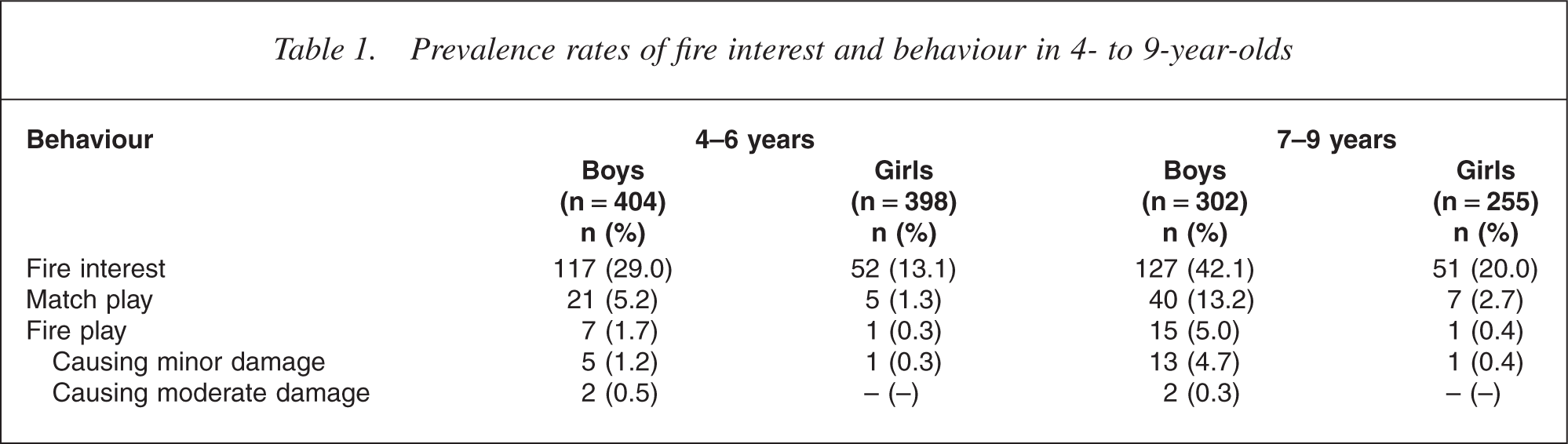
Table 2 shows means, SDs, alpha reliabilities and cut-offs for the top 5% of children on FHS total scores. The FHS shows acceptable measurement reliability for all ages and genders. Reflecting the very low frequencies of fire behaviour in the sample is the low cut-off scores. For younger boys and all girls, any single rating of match play or firesetting behaviour places the child in the top 5%. For older boys, a score of 3 or more qualifies for top 5%. Thus, for the older boys they must show fire interest, match play and fire setting.
Means, standard deviations and internal consistencies for the five-item Fire History Questionnaire
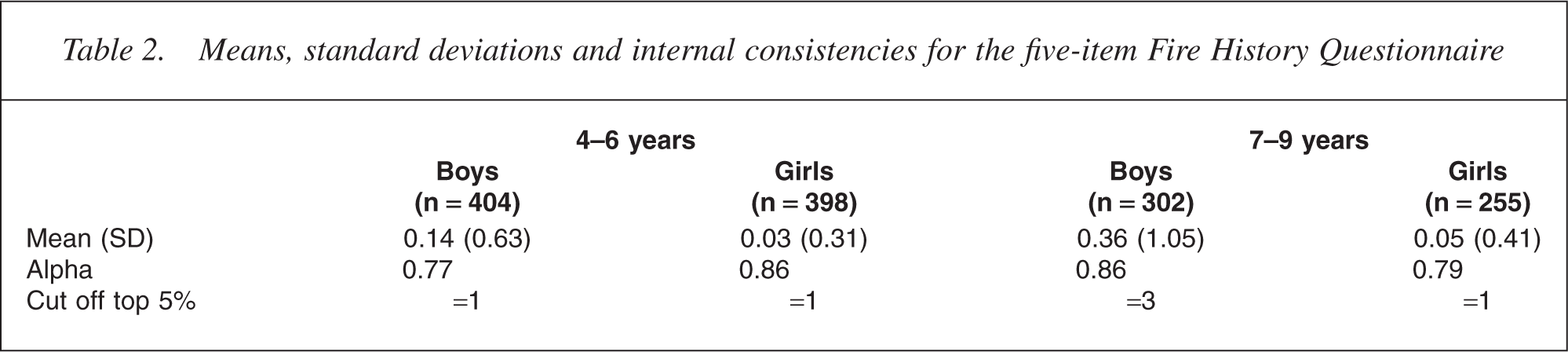
Table 3 shows a comparison of fire-setters and comparison children on the measures of child and family adjustment. Children were classified into ‘fire-setters’ if they scored in the top 5% of fire scores for their age and gender. The dependent measure shown is mean rank of the firesetters versus comparison children in the overall sample. Differences between rank are tested by Mann–Whitney U-tests, a non-parametric test of significance for highly skewed data where uneven sample sizes occur. There were no differences for age groups within each gender, so results are presented only broken down by gender.
Comparison of child and family adjustment variables between fire-setters and non-fire-setters with Mann–Whitney U-tests
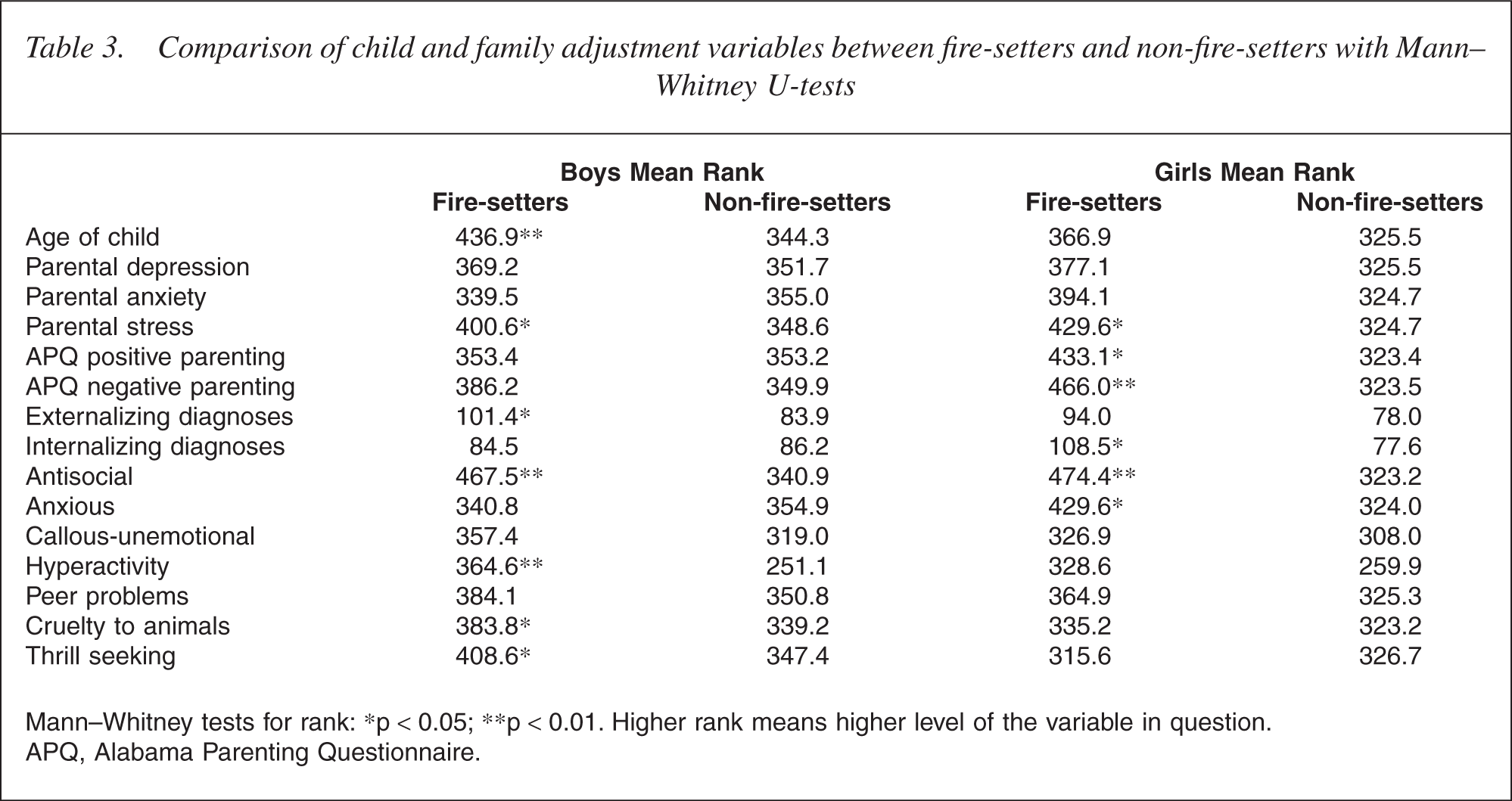
Mann–Whitney tests for rank: ∗p <0.05; ∗∗p < 0.01. Higher rank means higher level of the variable in question.
APQ, Alabama Parenting Questionnaire.
For boys, fire setting was associated with increasing age, parental stress, antisocial behaviour, hyperactivity, cruelty to animals and thrillseeking temperament. For girls, fire setting was associated with higher levels of parental stress, both positive and negative parenting, antisocial behaviour and problems with anxiety/depression.
Discussion
The modified FHS was a useful measure for identifying early fire interest and fire-setting behaviour in Australian children. The scale can be added to form a reliable fire score, or individual items provide qualitative information about the specifics of each child's fire behaviour. At only five items, the scale may be useful for screening of large populations.
Rates of fire interest and match and fire play were quite low in the current sample. Only 5% of children were reported by their primary caregiver to engage in any match or fire play at all. As expected, rates were much lower than previously reported for clinic referred or inpatient samples and similar to those reported for community samples. Prevalence rates for non-referred children in Achenbach's [24] normative data for the Child Behaviour Checklist range from 0% for girls to 3% for boys aged 4–11 years. The finding that 2.5% of boys aged 4–6 years rising to 6.5% of boys aged 7–9 years with a similar trend for fire interest and match play indicates the need for early identification of fire interest and associated features. This indicates that identifying children who engage in match play and other fire behaviours would be unlikely to produce high false positives, that is, sample large numbers of children with negligible risk for problems.
Examination of differences between the small numbers of children engaging in fire behaviour and their comparison peers showed a range of children and parental factors. For both boys and girls, antisocial behaviour and parental stress were common and expected characteristics. For boys, hyperactivity, thrill seeking and cruelty to animals were also significant. These characteristics underscore the relationship of fire setting to a range of behavioural and temperamental characteristics of children that are increasingly being shown to predict chronic antisocial behaviour (e.g. [20, 25, 26]).
Also consistent with emerging literature was the finding that girls show different characteristics associated with the development of antisocial behaviour. Specifically, female fire-setters also evidenced higher internalizing problems such as anxiety and depression. Curiously, they also evidenced higher levels of both positive and negative parenting. A relationship to negative parenting would be expected, but it is difficult to interpret the higher levels of positive parenting occurring in parallel. Given the lack of evidence for females playing a role in significant fire-setting events, these findings may not have as much prognostic value as those for males. For the most part, fire setting is a problem affecting boys. This trend was observed to remain stable between age groups.
The findings draw attention to the low rates of fire play in normative samples and underscore the importance of early warning signs of antisocial behaviour in young children, especially boys. A brief modification of the FHS was found to be useful in identifying these traits through parent report in the early years. The ability to screen children for behaviour problem potential is appealing and clearly, selection of children and families for whom preventive strategies can have a substantial impact is desirable. Several limitations inherent in the use of the screen in this study should be noted. First, how well the current sample represents the larger Australian population and various geographical, ethnic and socioeconomic groups within it, is unknown. Second, although the FHS has been shown to produce good agreement between parent and child reports, its sensitivity and specificity in predicting actual fire-setting behaviour is unknown. Future research is required to conduct studies, preferably longitudinal, of the ability of the brief screening measures to inform early intervention detection and intervention programmes.