






Abstract
Several familial and non-familial environmental factors are supposed to interact with genetic dispositions, both in the development of schizophrenia and that of antisocial behaviour [1, 2]. Florid psychotic symptomatology and comorbid substance use are generally accepted to be important determinants for the development of aggressive behaviour in patients suffering from schizophrenia [3–6]. However, little is known about the way genetic and certain social and familial factors may interact in the development of offending behaviour in these patients.
A considerable body of literature points to an association between advanced paternal age and later development of schizophrenia in offspring [7–10]. The socioeconomic status of the family of origin is also of importance, with an increased risk of schizophrenia being reported in association with parental unemployment and lower parental income [11]. The loss of one or both parents seems to be a non-specific environmental stressor increasing the vulnerability to major mental disorders in general [12–16]. Furukawa et al. concluded that childhood parental loss per se is not pathogenic for schizophrenia, but exerts influence on the expression of symptoms [17]. The potential association between schizophrenia and sibship characteristics like sibship size, birth order, birth intervals of siblings has been repeatedly investigated. However, the results of this research are divergent: while some studies found an over-representation of schizophrenia among first- or early born male children [18–21], others reported increased rates of schizophrenia among last-born children [22, 23], among younger children [24], only children [25], or among twins [26]. Recently, Pedersen et al. found children with half-siblings to be at an increased risk for schizophrenia [25]. In contrast, some studies reported no [27] or a primarily culture-dependent influence of birth order on the development of schizophrenia [28].
This is evidence for genetic influences in the different forms of antisocial and criminal behaviour [2, 29]. However, results of adoption studies indicate that the genetic burden of children of offending parents was only expressed if a child was adopted away into a dysfunctional familiar environment [30]. Countless studies on the association between social environment and later criminality reported higher rates of violent behaviour among members of lower social classes (e.g. [31, 32]). Aside from socioeconomic factors in general, family structures were also found to have an impact on the development of antisocial personality traits. Independent of study design, most studies came to similar results: later offenders are growing up more frequently in structurally incomplete families [31,33–35]. Only a few studies dealt with an association between number of siblings or birth order and criminal behaviour. Among offenders, Göppinger [31] found high rates of subjects with five or more siblings. In contrast, Kemppainen [21] reported an over-representation of only children among male offenders. In an early German study on sex offenders, 38% were first-born and about one-third were without siblings [36]. Krakowski and Czobor [37] found that violence against others was associated with having a history of foster home placement.
Aim
In schizophrenic offenders, the interactions between socioeconomic status and family structures have not been investigated until now. To examine the relevance of these factors in the development of criminal behaviour in patients with schizophrenia, we chose a four-group design encompassing healthy non-offenders, nonschizophrenic offenders, schizophrenic non-offenders, and schizophrenic offenders.
Method
Subjects
The schizophrenic offender group consisted of 103 male inmates of the Justizanstalt Göllersdorf, Austria's central high security institution for the treatment of mentally ill offenders [38]. The patients were between 18 and 62 years of age, and all had been found not guilty by reason of insanity. The severity of their index offence was classified according to Taylor [39] (for details see also Stompe et al. [5]). The 103 non-schizophrenic offenders were recruited from a large correctional institution in Vienna. Subjects with major mental disorders were excluded. The 103 schizophrenic non-offenders were drawn from the consecutive admissions to the Psychiatric University Clinic Vienna and an affiliated rehabilitation centre for patients suffering from chronic schizophrenia. Patients with a history of violence (documented in case files and by interviews of patients and collaterals) were excluded. The healthy non-offending group consisted of 103 male inmates without a history of violence and without any axis 1 diagnosis. Their social origin corresponded with that of the Austrian general population [40]. The non-schizophrenic offenders, the schizophrenic non-offenders as well as the healthy non-offenders were matched with the schizophrenic offenders for age (±2 years), the non-schizophrenic offenders additionally for the severity of the index offence.
Measures
All subjects were informed about the aims of the study and gave their written consent. The Structured Clinical Interview for DSM-III (SCID-I) [41] was administered by TS and GO-S. Family structures were investigated by use of a modified version of the Socialization Report (SOREP), a semistructured instrument originally developed for the documentation of socialization patterns in transcultural studies [28], which delivered an interrater reliability for 20 subjects (10 patients, 10 controls) ranging between kappas of 0.86 and 1.00. The SOREP contains four sections: section 1 describes the parental social status and the subjects' education and actual employment status. This section also documents the existence of offending and/or mentally ill family members. Section 2 deals with the family structure between birth and age 18, the subject's age at parental loss, the type of parental loss, and possible new partnerships of the care-giving parent (Fig. 1).
Diagram of possible developments of parent relationship.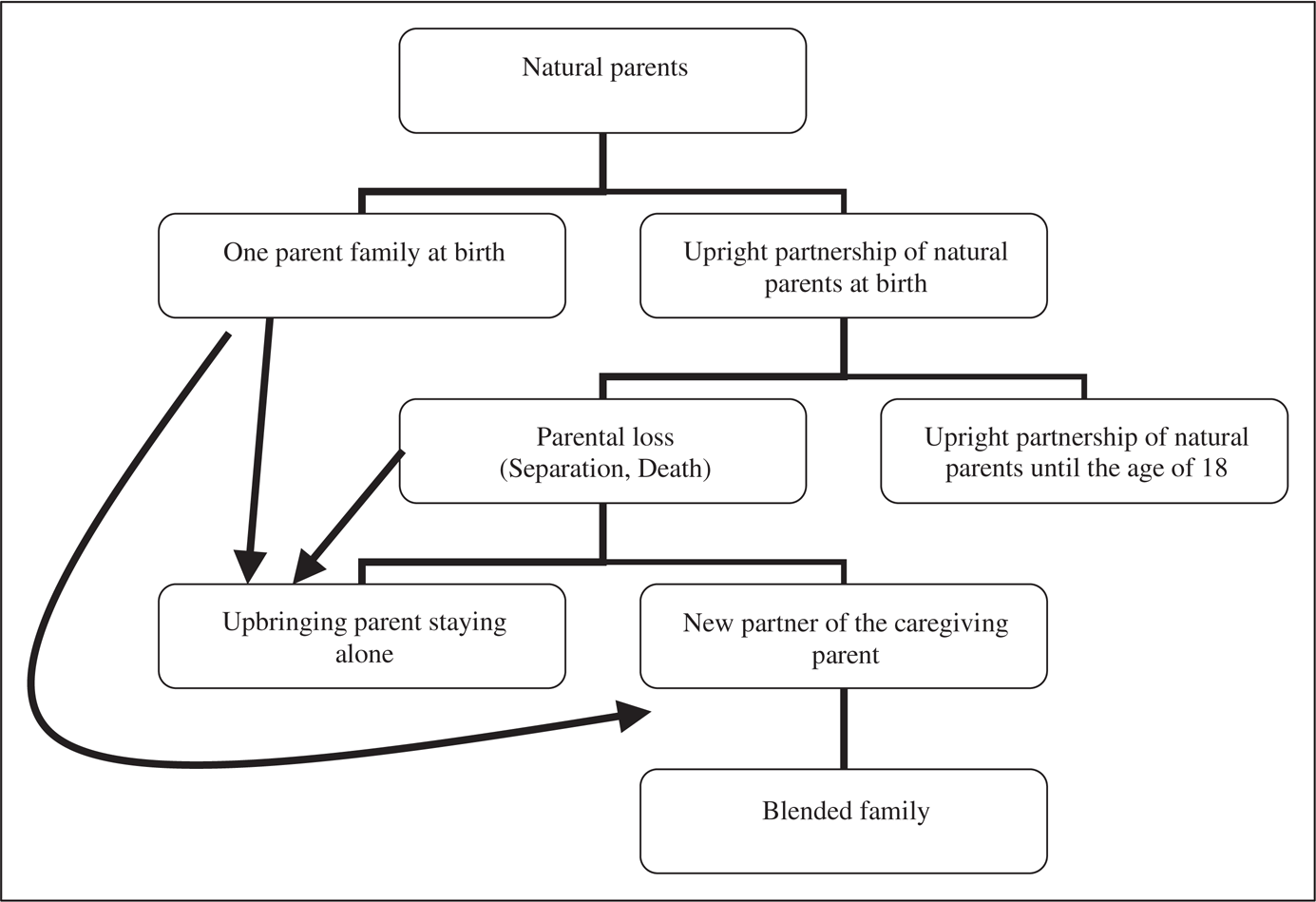
A blended family is defined as a common household comprising the subject, one natural parent, his or her new partner, and step- and/or half-sibs [42]. Section 3 of the SOREP deals with sibling structure and birth orders, and section 4 documents stays in foster homes for more than 1 year during three different periods of life (0–5 years, 6–10 years, 11–15 years of age).
Statistical analysis
Statistical analyses were conducted by means of the Statistical Package for the Social Sciences, version 12.5. Chi-square tests and one-way
Results
The parental age at birth of the four groups showed no significant differences (Table 1). The socioeconomic status of the family of origin of non-schizophrenic offenders, schizophrenic non-offenders and schizophrenic offenders differed statistically significantly from that of the Austrian general population represented by our healthy nonoffending sample. Patients suffering from schizophrenia as well as offenders grew up more frequently in lower social class families. More than 11% of the offenders (with and without schizophrenia) were born by women living without partners. Parental loss due to permanent separation of the parents or death of one or both parents was found statistically significantly more often in both offender samples and – with nearly the same frequency – in the non-offending schizophrenic sample (healthy non-offenders 17.5%, non-schizophrenic offenders 39.8%, schizophrenic non-offenders 32.0%, schizophrenic offenders 45.6%, chi-square=20.5, p<0.001).
Among the schizophrenic as well as among the offending groups, the main reason for parental loss was permanent separation, mostly from the father (healthy non-offenders 13.6%, non-schizophrenic offenders 34.0%, schizophrenic non-offenders 27.2%, schizophrenic offenders 40.8%, chi-square=20.3, p<0.001). Both offender groups were also more often confronted with new partners of the remaining natural parents and especially with half- and step-sibs (blended families). Schizophrenic patients reported a parental loading with schizophrenia – in offenders twice as high as in non-offenders. High rates of offending parents were found in offending subjects with and without schizophrenia. So, the schizophrenic offender group exhibited a double familial burden, with schizophrenia as well as with criminality (Table 1).
Sociodemographic characteristics, family status and family burden of the parental generation of healthy non-offenders (n=103), non-schizophrenic offenders (n=103), schizophrenic non-offenders (n=103), and schizophrenic offenders (n=103) before age 18
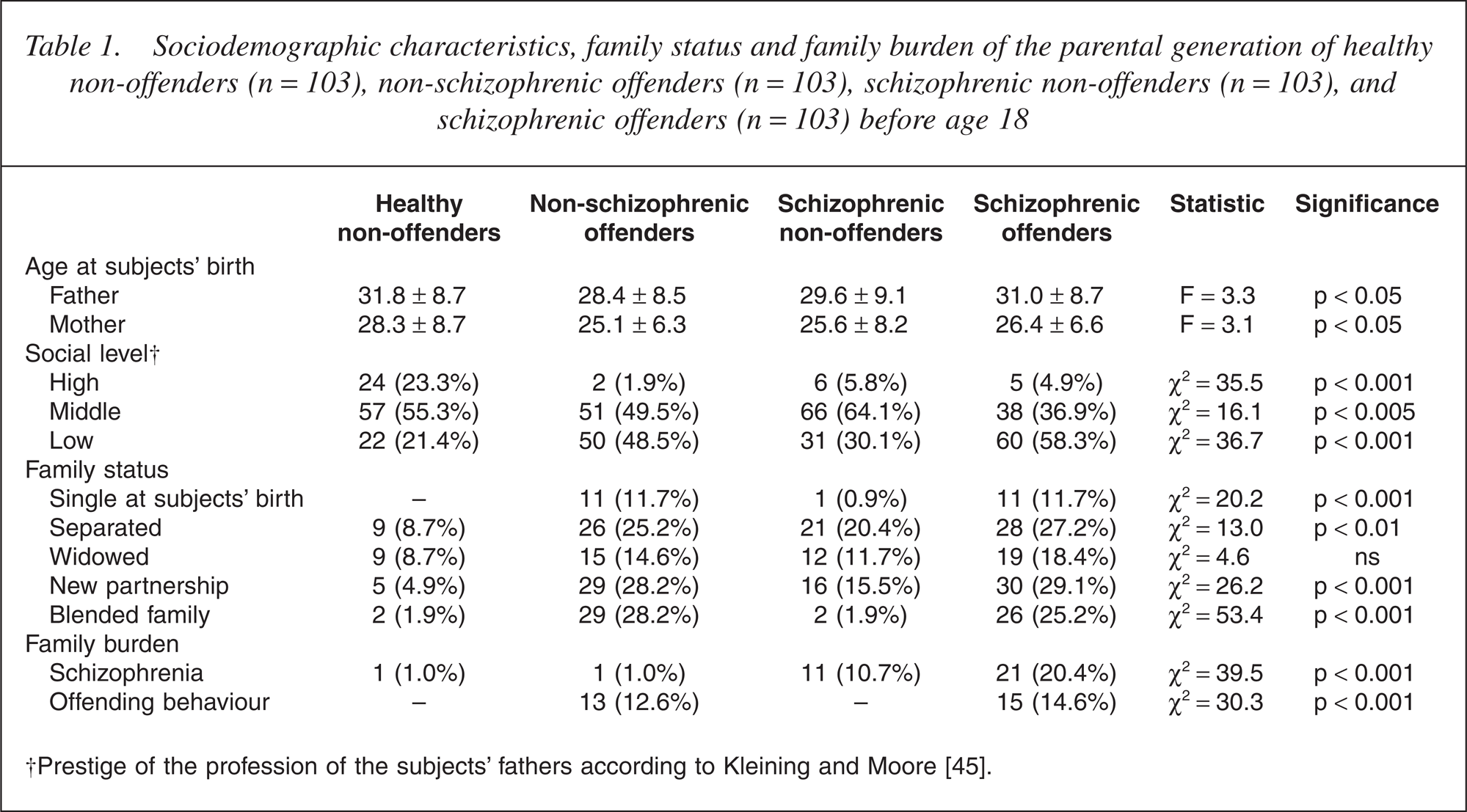
†Prestige of the profession of the subjects' fathers according to Kleining and Moore [45].
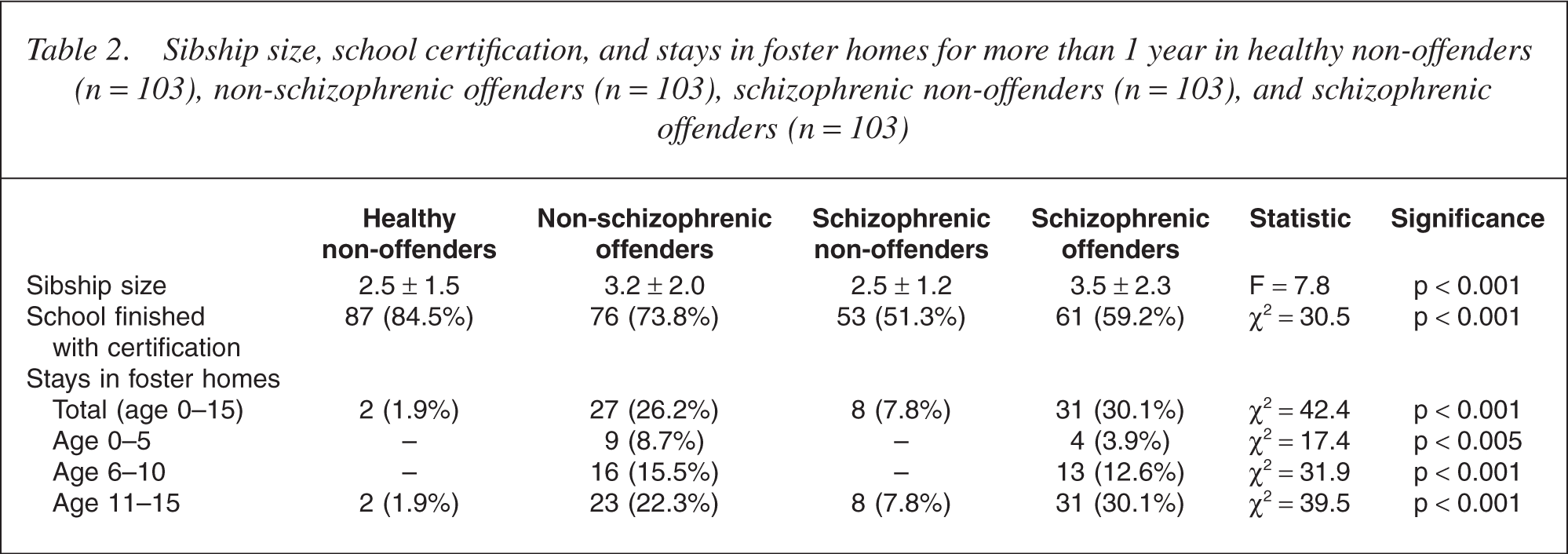
Later offenders (schizophrenic and non-schizophrenic) grew up in larger sibships compared with non-offending subjects (Table 2). The healthy subjects completed secondary schooling more often than those with schizophrenia. A high rate of later schizophrenic as well as nonschizophrenic offenders spent more than 1 year in foster homes.
Sibship size, school certification, and stays in foster homes for more than 1 year in healthy non-offenders (n=103), non-schizophrenic offenders (n=103), schizophrenic non-offenders (n=103), and schizophrenic offenders (n=103)
Birth order was analysed by use of the Greenwood-Yule method, which compares the observed distribution of birth positions with that to be expected if all birth positions within a given sibship size would be equally represented [22, 28]. The observed and the expected distributions of birth-orders of both offender groups differed from the non-offending groups having less in the middle position and more first-borns (Table 3).
Birth order – excluding single children and multiple births – in healthy non-offenders (n=78), nonschizophrenic offenders (n=81), schizophrenic non-offenders (n=83), and schizophrenic offenders (n=90)
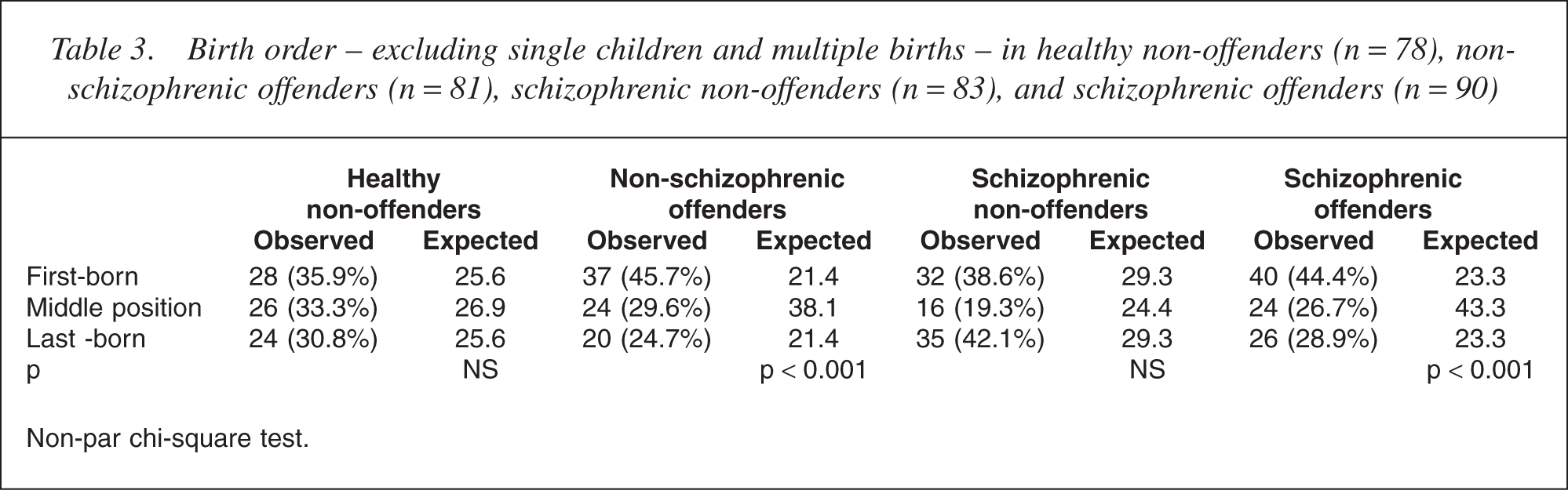
Non-par chi-square test.
In a second step, those variables showing statistically significant differences in univariate statistics were entered into a discriminant analysis. Table 4 shows the within-groups correlations of each predictor variable with the canonical variable. The items blended family, stays in foster homes, lower social level of origin, and offending family members had the largest correlations with factor 1, the item schizophrenic family members had a positive, the item school finished with certification a negative correlation with factor 2. Factor 3 was correlated positively with upper social level of origin and negatively with middle social level of origin. However, the discriminative power of factor 3 is too low to differentiate between the four groups (Wilks' Lambda=0.945).
Structure matrix of canonical discriminant analysis
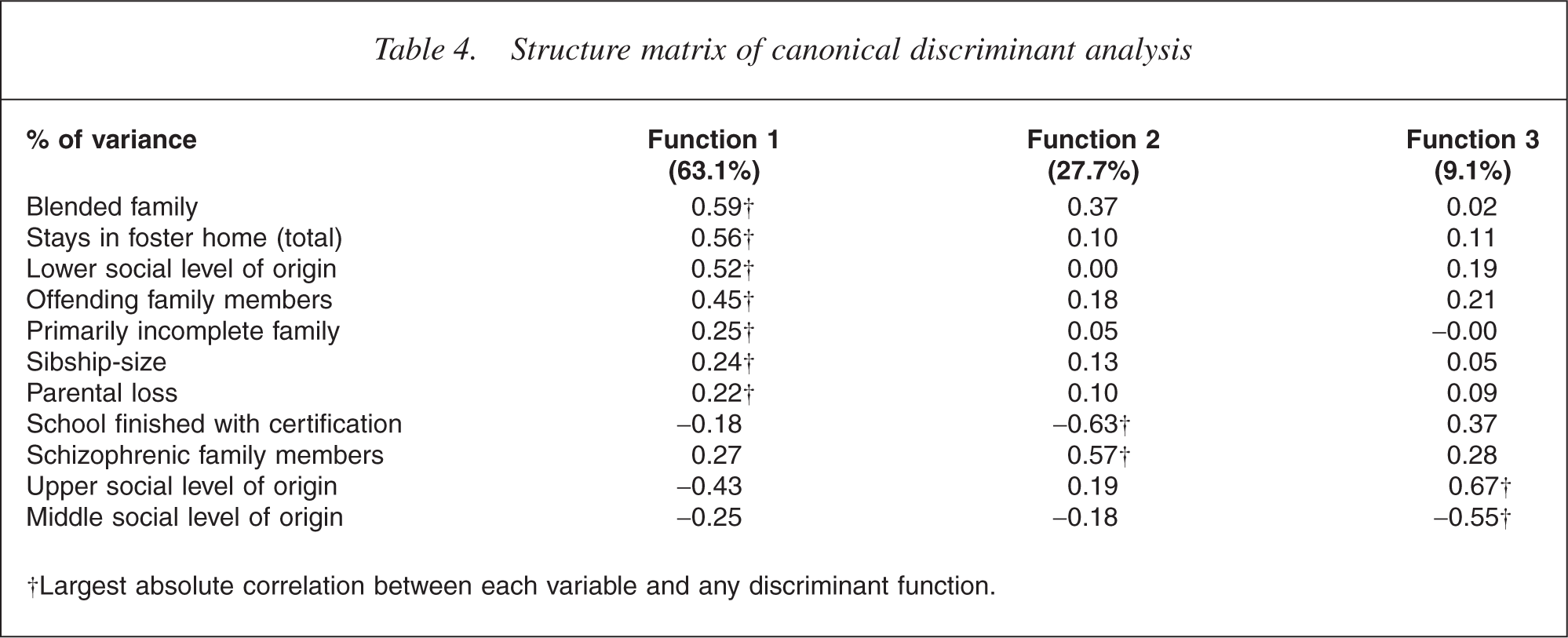
†Largest absolute correlation between each variable and any discriminant function.
Table 5 shows the means of the canonical variables by group. Function 1 clearly discriminated the offending from the nonoffending subjects, function 2 the healthy from the schizophrenic subjects.
Functions at group centroids (canonical discriminant analysis)
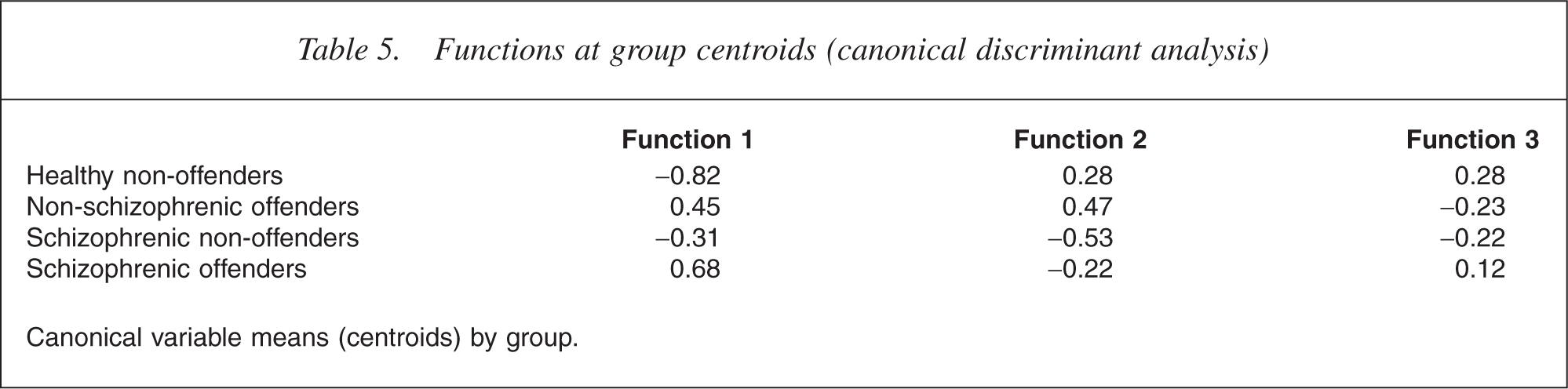
Canonical variable means (centroids) by group.
Discussion
Family, twin and adoption studies have confirmed that in addition to genetic factors, there are important environmental determinants of both the development of schizophrenia and of violent behaviour [1, 2]. The aim of our study was to investigate which of these factors play a major role for the development of offending behaviour in patients with schizophrenia. Offenders, whether schizophrenic or non-schizophrenic, were more likely to come from the lower socioeconomic classes. Those with schizophrenia, irrespective of their offending histories, and non-schizophrenic offenders had more frequently experienced parental loss during childhood and adolescence (Table 1), usually involving the permanent separation from the father. The lack of a stable father–son relationship may – as an unspecific factor – contribute to a dysfunctional personality structure conducive to schizophrenia as well as antisocial behaviour. Being brought up with half- and/or step-sibs in a family blended or totally separated from both parents, also increases the probability of later offending behaviour in subjects both with and without schizophrenia, supporting previous claims that such disruptions in family structure predispose to criminal behaviour [30, 31,33–35].
As expected [1], parents suffering from schizophrenia were found almost exclusively in the schizophrenia cohorts (Table 1). The finding that the family burden with schizophrenia was twice as high in the schizophrenic offender group (20.4%) compared with the schizophrenic non-offender group (10.7%) can be interpreted in two ways: on could assume either that the higher genetic loading in offending patients with schizophrenia is an expression of the ‘severity’ of the illness pointing to a more direct relationship between disease and violent/ offending behaviour, or that living with a parent suffering from schizophrenia increases the probability of neglect and the exposure to general criminogenic factors. Stays in foster homes for more than 1 year – as a consequence of the loss of at least one parent or as an indicator of a problematic familial situation – exhibited a similar effect. According to the data presented in Table 2, finishing school without qualifications is associated with the later development of schizophrenia. This finding can be tentatively interpreted as the expression of uncharacteristic premorbid affective-cognitive disturbances, in some cases as a consequence of a prodromal state of schizophrenia [43].
Our results confirm those authors who found an association between larger sibships as well being a first-born child and later criminal behaviour [21, 31] (Tables 2,3) and replicate the finding [28] that birth order does not increase the vulnerability for schizophrenia. In contrast to Kemppainen [21] we could not find any differences between offenders and non-offenders concerning the number of single children (healthy non-offenders 25.2%, non-schizophrenic offenders 21.4%, schizophrenic nonoffenders 19.4%, schizophrenic offenders 12.4%, chisquare =?5.5, NS). Being the eldest son in a large sib-row may increase the pressure to become independent from the family very early. A reduction of the duration of adolescence decreases the potential to develop a mature personality [44]. The result may be a subject prone to underlie antisocial influences.
Discriminant analysis produced two canonical factors (Table 4). The first one separated offenders from nonoffenders independent of the presence of schizophrenia (Table 5). This factor primarily includes items concerning the parental family status, offending behaviour in family members and – with less statistical power – sibship size. The second factor separated patients with schizophrenia from non-schizophrenic subjects independent of offending behaviour. The central item ‘family members with schizophrenia’ represents the genetic load, while all other family items had no major significance for the development of schizophrenia.
In conclusion, we were not able to identify specific patterns of socialization characterizing schizophrenic offenders. However, our results show that certain unfavourable familial conditions, like lower social class of origin, offending behaviour in the parental generation, loss of the father, a new partnership of the remaining parent, growing up in blended families, larger sibships and stays in foster homes, all seem to promote the development of offending behaviour. The challenge is to provide more and better focused services for the early support of a high-risk group, prone to schizophrenia as well as to offending behaviour.