



Abstract
This study assesses the environmental and social impacts of a modified softwood produced using radiata pine sourced from New Zealand or Chile. The LCA found that differing forestry and transport burdens associated with each location broadly cancelled each other out, giving overall product footprints that were very similar. Boiler gas and phenol-formaldehyde resin were the biggest emitters of GHG emissions, and normalization highlighted toxicity impacts as significant, largely due to the resin input. SLCA hotspots analyses suggest that the forestry sector in Chile has more potential social risks than the equivalent sector in New Zealand. However, each sector scored poorly in different social aspects making it difficult to recommend a sector without introducing subjective judgements. Combining LCA with SLCA is still novel, but this study found it added useful insights into a broader range of impacts associated with sustainable production, especially given the similarity of the environmental LCA results taken alone.
Keywords
Introduction
Wood modification
As a natural renewable resource, wood is a non-toxic, accessible, and relatively inexpensive biomass-derived material. In recent years, an increasing awareness among policymakers and society at large about climate change and the depletion of natural resources has influenced the building sector, driving a higher demand for sustainable and renewable building materials, in particular wood (Messmar and Chaudhary 2015). Previously, the limitations of wood such as its dimensional change in varying moisture environments, and susceptibility to insect attack or decay, have been addressed through a strategic choice of wood species, chemical treatments and good design (Spear et al. 2021). Modification of sawn timber has been rare from a historical perspective, however, growing environmental awareness has led to a rising interest in alternative wood modification processes, such as acetylation, furfurylation, and thermal treatment (Gérardin 2016). The term timber modification is given to a range of treatments that change the physical and/or chemical make-up of the timber to improve on one or more of the timber's properties. Timber modification falls into two categories, one being active modification that reacts with or chemically changes the timber (e.g. chemical modification, thermal treatments), and the second being a change to the physical properties of the timber as a whole but not the chemical structure (e.g. impregnation treatments) (Ormondroyd et al. 2015). The subject of wood modification has gained commercial interest, mainly due to the growing demand for more environmentally benign wood treatments (Gérardin 2016), greater use of locally sourced timber species (Candelier et al. 2016), increasing concern among consumers over illegal logging (Gamache and Espinoza 2017), and restriction of conventional biocidal products used for wood preservation (Jones et al. 2019). Modification of wood can alter its properties in several ways such as by increasing dimensional stabilization, reducing fungal growth, increasing hardness and fire resistance, protection against weathering and improving its overall strength and decay-resistance (Lahtela and Kärki 2015). This study will assess the environmental impacts of a modified softwood applied with phenol-formaldehyde (PF) resin.
PF resins are widely used in the wood industries as adhesives. This relatively low molecular weight resin interacts with hydroxyls in wood forming hydrogen bonds and if in the cell wall, it plasticises improving dimensional stability, decay resistance and mechanical properties. (Stefanowski et al. 2018)
Life cycle assessment
Life cycle assessment (LCA) is a tool for analysing and quantifying the environmental impacts of a product, process or activity throughout its lifetime or lifecycle (Roy et al. 2009). LCA provides a comprehensive approach to evaluate the overall environmental burden of a product or, more generally, of the function which the product is designed for (United Nations 1996). LCA consists of a clear framework from the current ISO Standards 14040 and 14044 which have four main components when using the methodology; ‘Goal and Scope Definition’, ‘Inventory analysis’, ‘Impact Assessment’ and ‘Interpretation’ (International Organization for Standardization 2006; ISO 2006). The basic principles examine all of the inputs and outputs during each stage of the lifecycle of a product from; extraction and processing; manufacturing, transport and distribution; use, reuse and maintenance; recycling; and final disposal, otherwise known as ‘from cradle to grave’ (Huang and Parry 2014). LCA is concerned with effects that contribute to global problems such as global warming, as well as more localized problems that can affect human and ecological health such as toxic emissions using one of several impact assessment methods. This methodology enables legislative bodies, such as government and non-government organizations, to assess and compare the environmental impacts their product or process has on the globe (Curran 2016), thus supporting environmental accountability and management in an approach to help producers move towards more sustainable production systems. This type of analysis is increasingly important to producers who see consumers and policymakers drive a move towards more sustainable production, and in particular, a de-carbonization of production systems (Skinner et al. 2016).
Comparative LCAs of wood-based products
There have been many comparative LCA studies of wood products, especially within construction (Werner and Richter 2007; Lolli et al. 2015; Skullestad et al. 2016; Liang et al. 2020) and wood waste management (Morris 2016; Hossain and Poon 2018). However, there has been little attention to LCA studies of modified wood (Hill et al. 2021; Candelier and Dibdiakova 2020; Ferreira et al. 2018) and few studies have explicitly assessed the effect of timber provenance on the overall environmental performance of wood products (e.g. González-García et al. 2009; Mirabella et al. 2014; Valente et al. 2014; Chen et al. 2019). Chen et al. (2019) conducted an LCA of cross-laminated timber (CLT) in Washington, USA comparing different transport, mill location and wood species scenarios. Their results showed that the location of lumber suppliers was partly responsible for influencing the total environmental impacts of CLT; concluding that manufacturers could achieve up to 14% reduction in GWP by sourcing lumber locally and using lighter wood species. González-García et al. (2009) used LCA to assess the impacts of mode of transport and fuel type on the delivery of timber from various forest plantations to mill. The study found that a combination of different transport methods and a reduction in imports would be the most favourable method from an environmental perspective. This paper builds on this to consider energy inputs from different national grids, in addition to transport burdens, in assessing the overall environmental performance of a modified wood produced in the UK from different sources of imported timber.
Social life cycle assessment
While uptake of environmental LCA has thrived in the past 15–20 years, social LCA (SLCA) is a much newer approach. It is presented as the most effective technique to assess the social impacts of products throughout their life cycle (Huarachi et al. 2020) and is of growing interest, with case studies published for products such as cut roses (Franze and Ciroth 2011), tomatoes (Andrews et al. 2009), laptop computers (Ekener-Petersen and Finnveden 2013) and more. This ties in with a growing focus on societal aspects of sustainability more broadly, as reflected in the UN's Sustainable Development Goals (UN General Assembly 2015), at least 11 out of 17 of which have a social dimension to them.
Social topics per stakeholder group (Goedkoop et al. 2020).
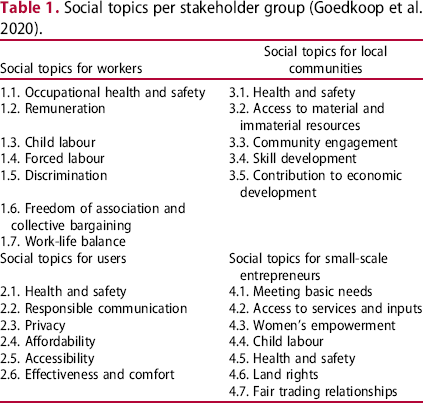
SLCA's potential to influence positive change is perhaps demonstrated by the success of the Fairtrade Foundation which was established in 1992. By offering consumers guarantees around working conditions and pay for growers of mainly commodity crops, the foundation has given farmers and workers in the developing world better prices, working conditions, local sustainability and fair terms of trade, all social importance which improve communities’ quality of life and the local economy (Fairtrade Foundation 2020). These fairtrade labels have provided customers the decision support about the social impacts of the products they buy influencing the customers’ decision, consequently leading to improved social conditions (Nelson and Pound 2009).
Guidelines to SLCA methodology were most notably set out by UNEP/SETAC (2009) and practical application of the technique was then further developed and defined by Parent et al. (2010). In SLCA, the third phase of the analysis, the social lifecycle impact assessment (or SLCIA), is not yet fully established. There are two main approaches that are named type I and type II, the definitions of these two are not set in stone and vary according to SLCA researchers and practitioners. However, Sureau et al. (2020) highlight two main differences, the first one being the use of impact pathways or cause–effect chains in the analysis, which is typical for type II SLCIA. In type II SLCIA, practitioners consider the link between two or more phenomena or events in the assessment (e.g. the use of an input or the exposure to certain working conditions in a production process and health impact on workers). Whereas, in type I LCIA, performances and collected data are compared with performance reference points (PRP) (e.g. the number of hours worked per worker weekly is compared with the statutory working time) (Parent et al. 2010). The PRP ‘may be internationally set thresholds, goals or objectives according to conventions and best practices etc.’ (UNEP and SETAC 2009). SLCA databases use these PRP for high-level product category assessments and screening the social hotspots from the sector and country level, instead of a particular product chain (Wu et al. 2014).
SLCAs of wood-based products and generic social hotspot screening
While there is a growing interest in SLCA, there have been very few SLCA case studies on wood-based products or social impacts of the bioeconomy more widely. One of the most important steps in SLCA is selecting the relevant indicators and impact categories (Mair-Bauernfeind et al. 2020). Impact categories and sub-categories are different social topics and are the basis of an SLCA (UNEP and SETAC 2009). With the continued search for standardizing the methodology and limited wood-based studies, this leads to few recommendations on choosing the most relevant impact categories and indicators for assessing bio-based product systems (Hasenheit et al. 2016; Rafiaani et al. 2018; Siebert et al. 2018a, 2018b; Touceda et al. 2018). Besides using recommendations provided by the UNEP/SETAC guidelines (2009) and the ISO standards, inputs on relevant social issues can be identified by referring to previous literature with a similar research focus (Höglmeier et al. 2015). However, Mair-Bauernfeind et al. (2020) note that the lack of SLCAs for bio-based products as well as the fact those are still in its infancy, makes the identification of relevant social aspects challenging. There are some studies available that deal with social impacts of wood-based products (Siebert et al. 2018a, 2018b; Touceda et al. 2018) and the social impacts of the bioeconomy (Hasenheit et al. 2016; Rafiaani et al. 2018), though, the study from Rafiaani et al. (2018) shows the most common social indicators that relate to the bio-based economy. These social indicators included health and safety, food security, income, employment, land and worker-related concerns, energy security, profitability, and gender issues. Therefore, this study will take inspiration from Rafiaani et al. (2018) when deciding which social indicators and impact categories to analyse.
In terms of generic social hotspots analysis or hotspot screening studies, there are few cases (Di Noi and Ciroth 2018; Hannouf and Assefa 2018; Herrera Almanza and Corona 2020) and nothing specific to any wood-based products. Di Noi and Ciroth (2018) used the hotspot screening approach to compare two Country Specific Sectors (CSS) of the mining sector in Finland and Portugal, this allowed the high and very high social risks to be identified. The aim of the study was to understand the impacts of the mining sector in two regions and encourage their project partners to progress onto the next stage of work, focusing on the primary data collection at site-specific level for a future case study. Generic social hotspot analysis is an accessible way to identify and compare potential social risks (using the activity variable) with more than one CSS. This approach can derive recommendations for political actors and the findings from the initial generic hotspots analysis can be the basis for a more detailed study at a site-specific level, having understood the probable dominant social risks within that sector.
The aim of this paper is to analyse and compare the environmental and social impacts of using radiata pine wood to produce a modified softwood product from two different regions, New Zealand, and Chile. The environmental impacts have been assessed using a comparative LCA and the social impacts have been assessed using an SLCA, more specifically a generic social hotspots analysis. This study will present both sets of results, identifying the environmental and social hotspots of producing this modified softwood. It will also attempt to bridge the environmental and social findings to form a conclusion on how influential the source of softwood could be and recommend which provenance would be most responsible to use.
Materials and methods
Modified softwood production
The radiata pine wood used to make the finished modified wood product is sourced from FSC-managed plantations in New Zealand and Chile, and manufactured in Barry, South Wales. The softwood is graded and met to the required dimensions and any defects or waste wood are sent to a local biomass power plant. The manufacturing stage involves a patent-pending impregnation process that treats the softwood with a formulated PF resin. A vacuum/pressure impregnation cycle is then used to impregnate the softwood, which is weighed pre and post-impregnation to establish the theoretical uptake. The PF resin condenses to produce a large chemically stable molecule ‘locked’ into wood at a molecular level. Any excess PF resin is then fed back into their closed-loop system with very little waste. The small amount of waste that does originate from this resin condensation process is fed into a spent liquor tank and is collected via a specialized hazardous waste company. After impregnation, resin-impregnated packs are dried in a compartment kiln with monitoring and control of temperature and relative humidity and airflow. Once kiln-dried, the softwood is then cured in a reactor which enables close control of temperature and pressure, to ensure resin cure temperature has been achieved. All pieces in production packs are visually graded against the selling grade and are then ready for distribution (Stefanowski et al. 2021).
Lifecycle assessment
Goal and scope
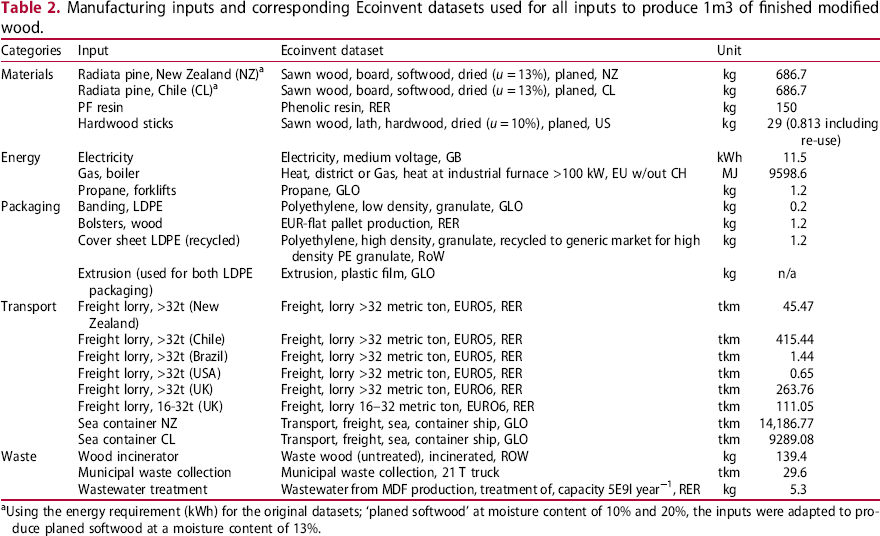
The LCA considered the production of modified softwood on a cradle-to-factory gate boundary, accounting for all the significant materials, transport, energy use and packaging inputs up to the point of hand-over to the customer (Figure 1). Primary production data was provided by the manufacturer and compiled into a balanced material and energy inventory (Table 2). These inputs were then used to model the lifecycle stages (Figure 1) and then paired with the most relevant lifecycle inventory (LCI) datasets from Ecoinvent v3 (Wernet et al. 2016) (Table 2). Impacts were assessed using the ReCiPe 2016 v1.1 (H) midpoint method (Goedkoop et al. 2018). The declared unit of the study was 1 m3 of finished modified softwood with a 13% moisture content and an average product density of 650 kg m−3. The calculation rule to obtain the biogenic carbon content followed the EN 16449:2014 Wood and wood-based products (EN 16449: 2014).
System boundary of the modelled modified softwood production process. The dotted line shows the cradle-to-gate processes of modifying raw softwood into modified softwood. Manufacturing inputs and corresponding Ecoinvent datasets used for all inputs to produce 1m3 of finished modified wood. Using the energy requirement (kWh) for the original datasets; ‘planed softwood’ at moisture content of 10% and 20%, the inputs were adapted to produce planed softwood at a moisture content of 13%.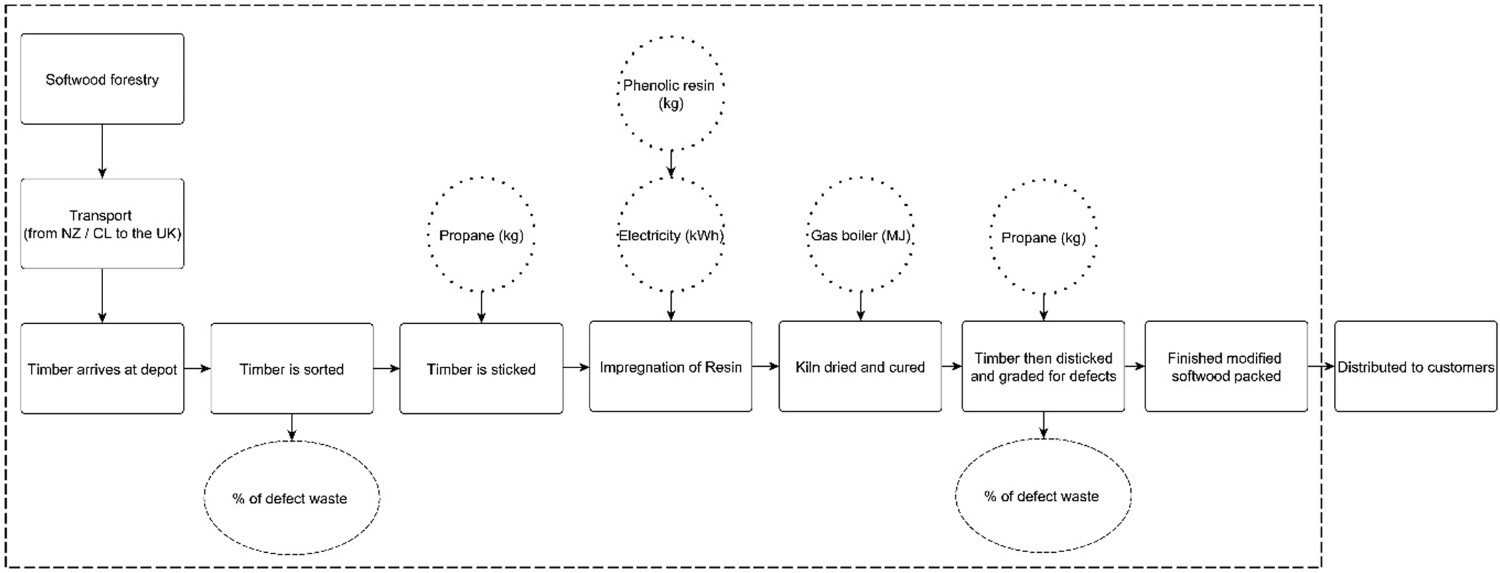
Materials
Radiata Pine wood – Data for the production of radiata pine wood from New Zealand and Chile included all upstream forestry operations and was based on ‘Sawn wood, board, softwood, dried, planed’, with average European production and harvesting techniques. However, electricity inputs were altered to the provenance of the sawmills i.e. New Zealand and Chile electricity grid. Furthermore, the moisture content was altered to reflect the radiata pine at the start of the manufacturing process (13%). This involved altering the upstream dataset; ‘Sawn wood, board, softwood, raw, dried (u = 10%)’, where the quantity of all inputs and outputs were reformed to reflect the process of a softwood planed beam with a moisture content of 13%. This approach gave the best representation of planed radiata pine wood (from each provenance) with the correct moisture content. The PF resin used for the modification process was based on the dataset ‘Phenolic resin’ with average European production and energy inputs.
Hardwood sticks – The hardwood was sourced from Brazil (mix of Angelim, Cumaru, Ipe and Eucalyptus, all FSC certified) which is transported to the USA where the wood is manufactured into the hardwood sticks. The data for the hardwood sticks included all upstream forestry operations and was based on ‘Sawn wood, lath, hardwood, dried, planed (u = 10%)’, with average Rest of World production and harvesting techniques. However, electricity inputs were altered to the USA grid and moisture content was assumed to be 10%.
Energy – The electricity dataset for processing the modified softwood was specific to ‘Electricity, medium voltage, GB’ and as the production site is at an industrial scale, the gas dataset was based on ‘Heat, district or Gas, heat at industrial furnace EU w/out CH’. The remaining energy input is propane, lifting the wood and heavy materials is done by using forklifts which are fuelled by propane; therefore the ‘propane’ dataset was used.
Packaging – The banding used as packaging is low-density polyethylene (LDPE), so the dataset was based on ‘Polyethylene, low density, granulate’, with average global production and energy inputs. The cover sheet is made from recycled LDPE and since there is currently no recycled LDPE dataset available in Ecoinvent, a proxy dataset was used; ‘Polyethylene, high density, granulate, recycled’, with average Rest of World production and energy inputs. It was also assumed that both plastics were extruded, so the ‘Extrusion, plastic film, GLO’ dataset was added to the banding and cover sheet datasets to give an accurate representation of the LDPE inputs. Another component in the packaging phase was the use of bolsters to hold the wood, these are similar to a typical pallet thus the ‘flat pallet’ dataset has been used with average Europe production and energy inputs.
Transport
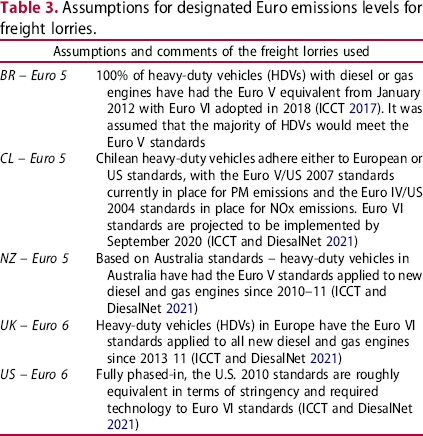
Assumptions for designated Euro emissions levels for freight lorries.
Softwood transportation
Calculations of distances from New Zealand to UK.
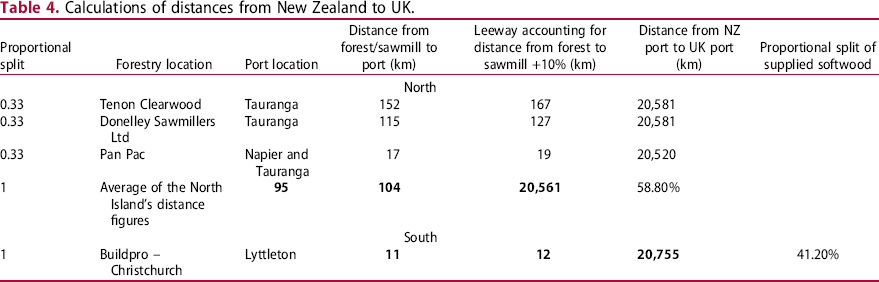
Chile – Forest plantations were situated in Mulchen, in the Bío Bío Region of Chile. The export port was assumed to be Puerto San Antonio, Chile's largest and busiest port on South America's west coast (Cogoport 2020). The distance from the sawmill to the port is 605 km (including 10% leeway) which is a realistic distance for a large freight lorry to travel. The distance from Puerto San Antonio to the UK port was 13,509 km.
SLCA
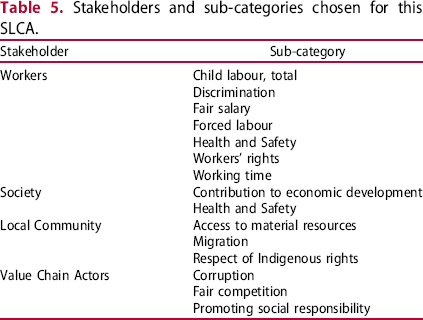
Stakeholders and sub-categories chosen for this SLCA.
Generic social hotspots analysis
The main goal of conducting generic social hotspots analysis is to detect potential social risks in the supply chain of a CSS. According to Almanza and Corona (2020) a social hotspot is a location and/or activity in the lifecycle where a social issue and/or social risk is likely to occur. They are unit processes located in a region where a problem, a risk, or an oppurtunity may occur related to a social issue which is considered a threat to social wellbeing or that may contribute to its further development (Herrera Almanza and Corona 2020). Generic social hotspots analysis does not cover many of the potential beneficial impacts but mainly provides information regarding where it is more likely to find controversies and where problems in human and worker rights compliance are more likely to be found, this may help identify the biggest improvement potentials (UNEP and SETAC 2009). Conducting a generic hotspots analysis at a sectoral level can be known as a ‘Top-down analysis’ which allows screening of global supply chains through SLCA databases. This makes identifying social hotspots and social risks at a meso (sector) and macro (country/global) scale possible (Mancini et al. 2018).
PSILCA database and SLCI
Even after the publication of the methodological guidelines (UNEP and SETAC 2009), SLCA is still considered to be in its infancy, even with the number of published studies have significantly increased in the last few years (Petti et al. 2018). Like environmental LCA, data collection is a crucial step in performing an SLCA and in order to support assessments at a national or sectorial level, and also to highlight potential social risks, generic databases have been developed (Mancini and Sala 2018). The two main databases that have been developed are the Social Hotspots Database (SHDB) (Benoit-Norris et al. 2012), and the Product Social Impact Life Cycle Assessment (PSILCA) database (Ciroth and Eisfield 2016). Both represent a significant contribution for generic assessment of social hotspots and the utilization of software in SLCA such as SimaPro (for SHDB) and OpenLCA (for both, SHDB and PSILCA) (Ramos Huarachi et al. 2020). PSILCA, used in this study, uses a multi-regional input/output database to develop indicators on social impacts. Inspired by the UNEP and SETAC (2009) guidelines, the indicators describe 25 social and socio-economic topics which cover 4 stakeholders (Workers, Society, Local community and Value chain actors) (PSILCA 2020).
To conduct the social hotspot screening, the processes need to be defined which for this study is the logging and manufacturing of radiata pine wood (softwood). However, there is currently no SLCI datasets for softwood in New Zealand or Chile, thus, the focus was extended to Forestry. ‘According to the Food and Agricultural Organization (FAO), the forest sector includes all economic activities that primarily depend on the production of goods and services from forests’ (Mancini et al. 2018). These economic activities include the growing and logging of timber, transport of logs within the forest and also activities such as the commercial production and processing of non-wood forest products and the subsistence use of forest products (Lebedys 2004). Although the forestry sector creates employment and can benefit the economy, there are some negatives such as illegal logging and land grabbing which can have both environmental and social impacts on a region. Forestry also has the highest rate of non-fatal accidents among the European raw materials sectors, which is higher than the mining, manufacturing of metals and non-metallic minerals sectors (Mancini et al. 2018). These social issues as well as others (Table 5) have been assessed in the hotspots screening analysis to see which sub-categories are most at risk and identify the social hotspots.
Data has been analysed from PSILCA on a sectorial level, accordingly, a generic social hotspots analysis has been conducted to gather insights and comparisons of the social performance of the Forestry (Industries) sector in New Zealand and Chile. This software assesses the indicators by assigning different risk levels depending on the value of the indicator. In this instance, there are six levels distinguished: no risk, very low risk, low risk, medium risk, high risk and very high risk. As social data is often of qualitative nature and, therefore, difficult to access, organize and evaluate, and also inherently subjective, Activity variables are crucial for the quantification of a social risk. They ‘reflect the share of a given activity associated with each unit process’ (UNEP and SETAC 2009) and therefore quantify the respective social indicators related to the product system. Currently ‘worker hours’ are the basic activity variable used in the PSILCA database, i.e. the time workers spend to produce a certain amount of product in the sector (PSILCA 2020). ‘Worker hours’ are related to 1 USD of process (or sector) output and in the context of the two countries under study, the Forestry (NZ) sector needs 0.00184 working hours to produce 1 USD output, while the Forestry (CL) sector needs 0.03155 working hours. Worker hours are used in the impact assessment method which allows the risk assessment for every indicator to be normalized into Medium Risk Hours (MRH) which assigns different factors to the different risk levels (Herrera Almanza and Corona 2020). This process is a vital component to interpret the results, support decision-making and make it possible to compare multiple CSSs (Goedkoop et al. 2020). A cut-off of 1E − 06 was applied in the calculations to prevent the links from the selected CSSs to other sectors from becoming too large (PSILCA 2020). The PRP used to estimate the risk levels are based on international conventions and standards, expert opinions and PSILCA's developer's evaluation (Herrera Almanza and Corona 2020).
Results
LCA results
GHG emissions
GHG emissions by input (per m3 of modified softwood) of radiate pine from New Zealand and Chile.
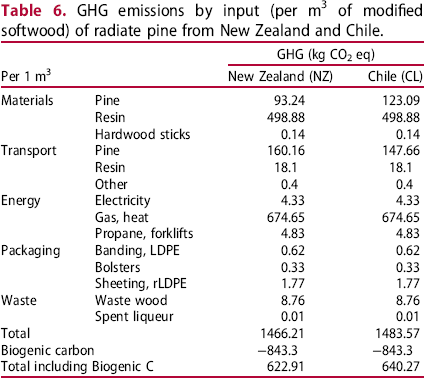
As illustrated in Figure 2 there are two main environmental hotspots that contribute to a large share of the overall GHG emissions in both scenarios. The energy usage of the gas-fired boiler makes the largest contribution (674.7 kg CO2 eq m−3) at 46%, followed by the PF resin (498.9 kg CO2 eq m−3) at 34%, these two processes alone contribute to around 80% of the total GHG emissions. However, as manufacturing was still at an experimental stage when data was collected, the amount of natural gas needed to produce 1 m3 of the finished product was not fully established. This meant taking an average gas usage figure over 112 days in operation. The PF resin is also an extremely high figure due to the large amounts needed to produce this modified softwood (150 kg per 1 m3), but these figures remain the same no matter the provenance of the wood. In both scenarios, the transport figure makes a fair contribution to the total (between 11% and 12%), closely followed by the raw pine wood (between 6% and 8%), although overall they compare similarly, there are still some slight differences.
Comparison of GHG emissions associated with the production of 1 m3 of modified softwood.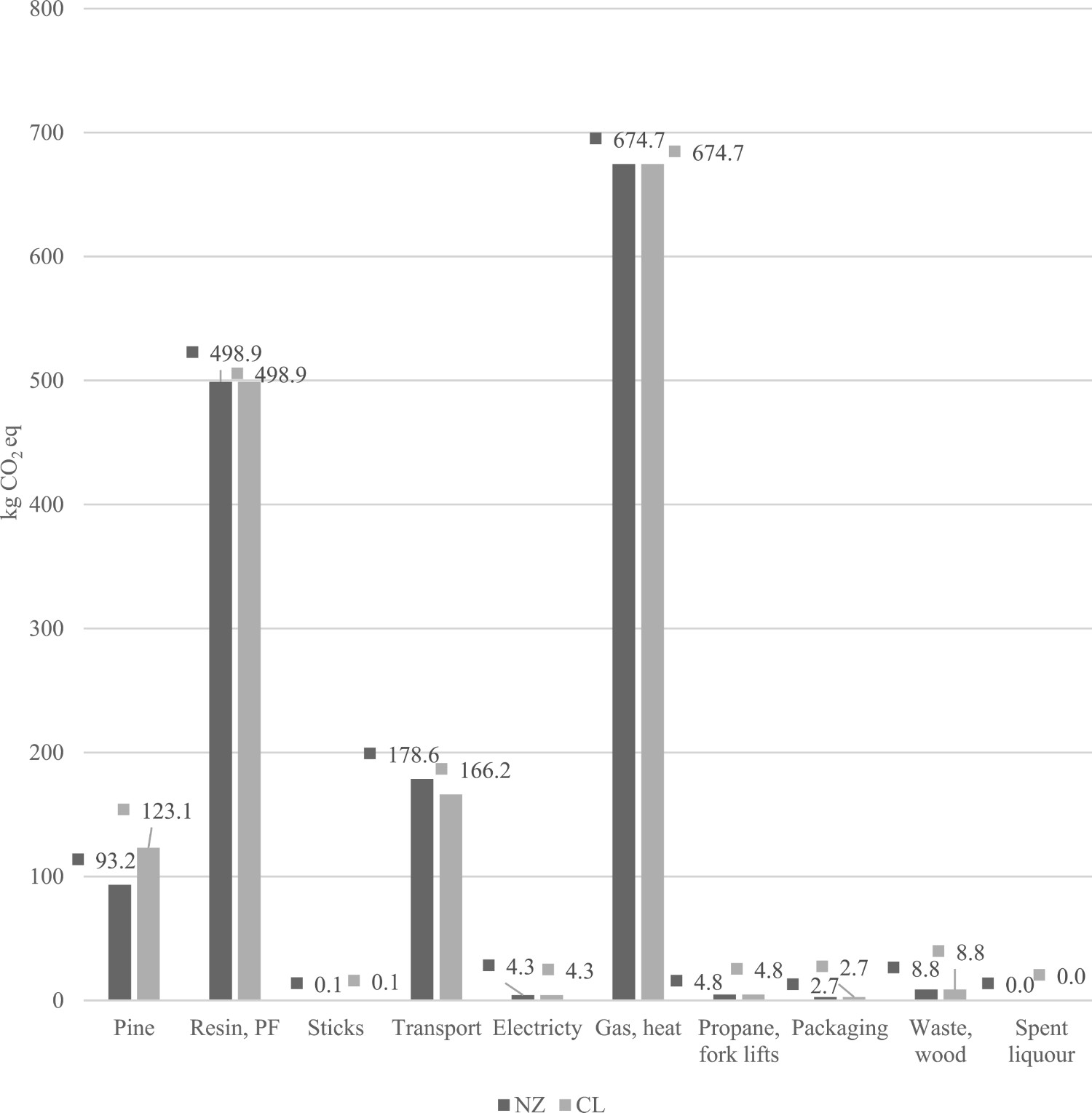
The main aim of this investigation was to compare whether the provenance of softwood influences the GHG emissions, and from the findings, the only differences are the Pine and Transport results. Figure 3 displays how the New Zealand pine (93 kg CO2 eq m−3) performs noticeably better than the Chilean sourced material (123 kg CO2 eq m−3). Whereas the transport totals favour sawn wood from Chile (166.2 kg CO2 eq m−3) over New Zealand (178.6 kg CO2 eq m−3) as there are less distances from the Chilean sawmills to the UK depot. The first part of the journey (sawmills to port) is shorter in the New Zealand scenario (66.2 km) emitting 4.1 kg CO2 eq m−3, compared to that with the greater distance in the Chile scenario (605 km) emitting 37.6 kg CO2 eq m−3. However, the second trip (international port to UK port) is where the major differences lie, cargo shipping from New Zealand emits 133.2 kg CO2 eq m−3 compared to 87.2 kg CO2 eq m−3 in the Chile scenario.
Comparison of GHG emissions of the ‘Pine’ and ‘Transport’ inputs associated with the production of 1 m3 of modified softwood.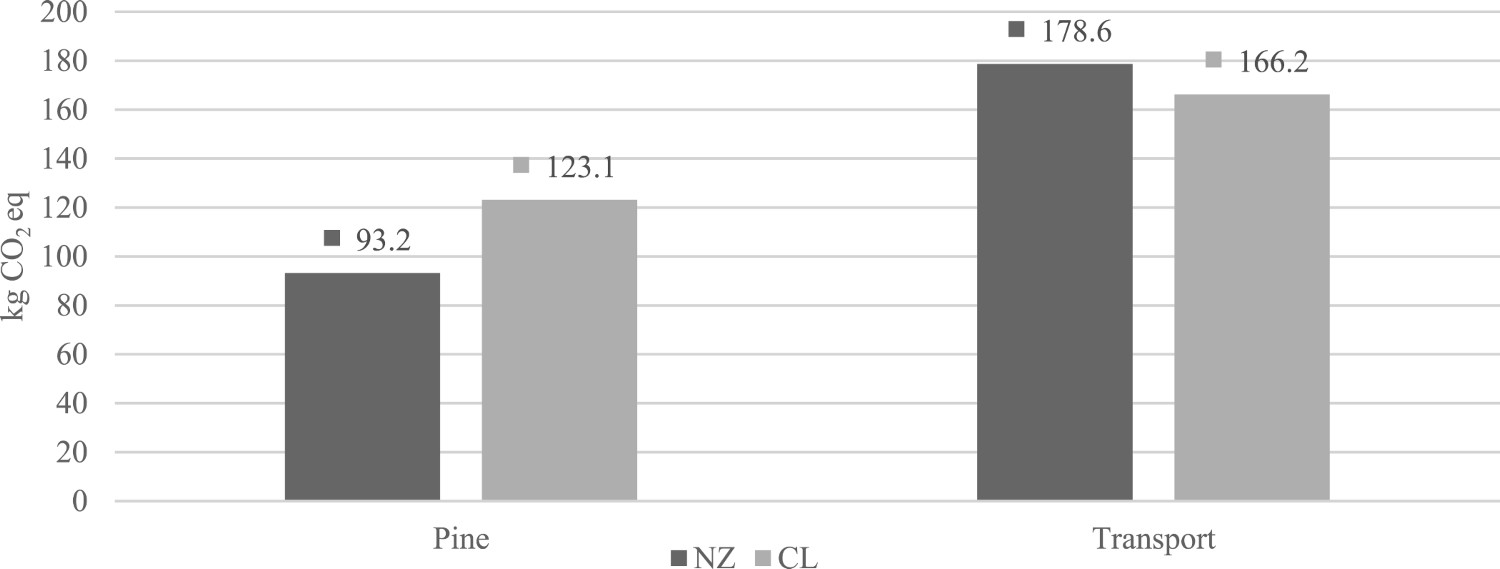
The remaining components in this LCA are minor in terms of GHG emissions; electricity, hardwood sticks, propane, packaging, and waste only contribute to 1.4% of the total emissions. Even though the hardwood for the sticks is sourced from Brazil, they are very durable and are estimated to be reused 36 times before replacements hence the very low GHG emissions. Out of the minor inputs, the waste wood contributes the most at 0.6% (8.8 kg CO2 eq m−3), this is due to the average waste fraction of pine wood being 23%, which is then sent to a third-party wood disposal company. However, there is a potential of using this waste wood as biofuel if a biomass boiler was implemented, which could reduce the total gas usage and improve the overall GHG emissions.
Normalized results
According to the ISO 14044 Standard on LCA, normalization is defined as ‘calculating the magnitude of category indicator results relative to reference information’, which produces a single numerical score to identify ‘important’ impact categories, interpret and communicate the impact results (ISO 2006). Using normalization in LCA is optional but it aids in a better understanding of the relative magnitude of each indicator result of the product(s) under study (Pizzol et al. 2017). Through the normalization treatment, Figure 4 compares the selected environmental impact categories of modified softwood from New Zealand and Chile. As there are limited variables in the study the trend across the impact categories is very similar between the two provenances of wood, with New Zealand performing slightly better overall. The most relevant impact categories are marine ecotoxicity at 46–48 points, and freshwater ecotoxicity at 29–30 points, compared to that with GHG emissions with a score of 0.18 points. Lesser impactful categories, but still relevant scores, are human carcinogenic toxicity (both around 13 points), human non-carcinogenic toxicity (both around 5 points) and terrestrial ecotoxicity (3–4 points). The environmental hotspot of all these highlighted impact categories is the PF resin, which is by far the largest scoring input in the whole process. In both provenances, the PF resin contributes around 70% to marine ecotoxicity and around 80% to freshwater ecotoxicity. In terms of GHG emissions, the headline figures are that of the high emissions from the gas-fired boiler which are much greater than the remaining inputs, specifically the radiata pine and transport. However, when referring to the normalized scores, the gas-fired boiler contributes very little and could be considered a lesser influential input. Excluding GHG emissions and fossil resource scarcity, both the raw softwood and transport inputs have higher scores over the gas-fired boiler across the remaining environmental impact categories, which could potentially move the focus away from the gas.
Normalization results associated with the production of 1 m3 of modified softwood.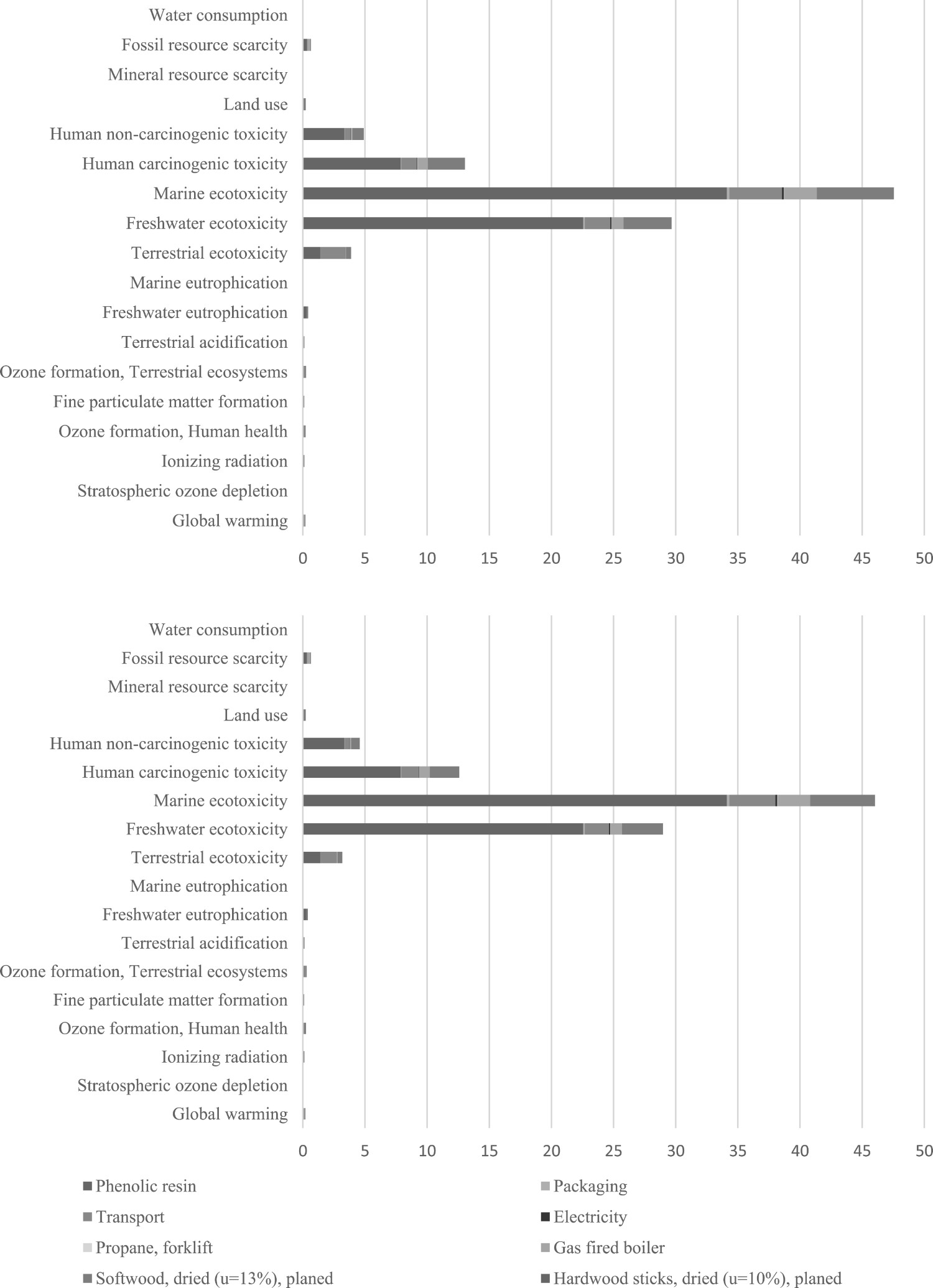
SLCA results
Using the ‘Social Assessment’ tab in PSILCA, the initial sectoral SLCA screening assessment enabled the identification of those high and very high social risk levels linked to the forestry sector in New Zealand and Chile. Both countries present a Very high risk for ‘Trade union density’, and perform poorly in ‘Living wage average, per month’ where a very high (New Zealand) and high (Chile) risk can be identified. Although there is no data for Chile regarding ‘Gender wage gap’, the risk level for New Zealand is recorded as high. Overall ‘Fair salary’ and ‘Trade union density’ emerged as important issues for the forestry sector in both countries. However, other noticeable social impact categories are ‘Non-fatal accidents’ (in the workplace) in Chile and ‘Respect of indigenous rights’ in the New Zealand sector. The full documentation and explanation of social risks and impact categories in the database are available in the PSILCA manual (PSILCA 2020).
Weighted method results
The sectoral screening assessment is a useful tool to identify potential risks and using the ‘Social Impacts Weighting Method’, these risk values are put into meaningful and comparable results. Figure 5 displays the life cycle contribution to social impacts for 1 USD out of the Forestry sector (New Zealand and Chile). These results are normalized figures from the ‘Impact Analysis’ section in the PSILCA database, which uses the activity variable to quantify the social risks of the social impact sub-categories and are expressed in Medium Risk Hours (MRH).
Social Impact sub-category analysis of Forestry (NZ) and Forestry (CL) per $1 USD output.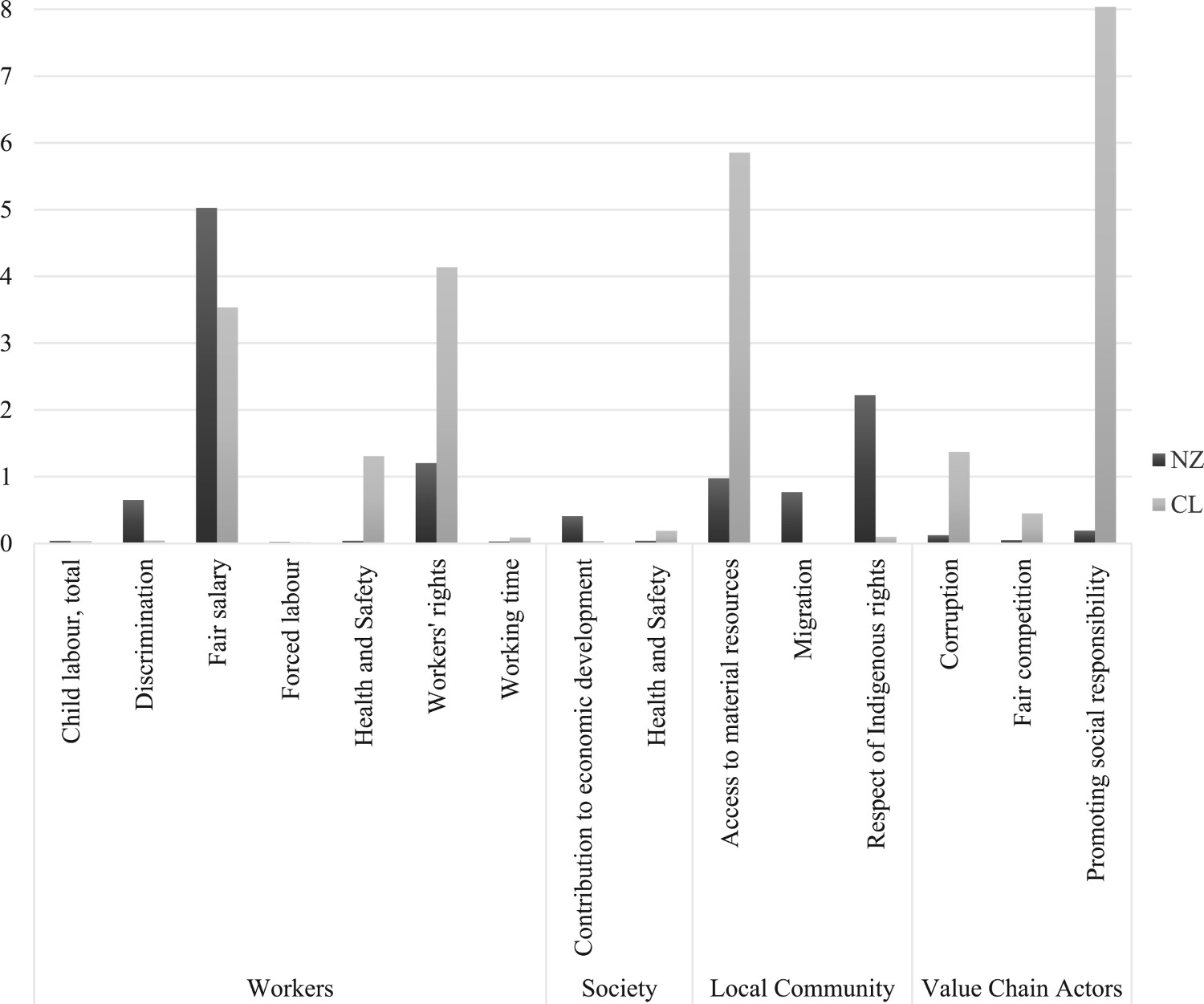
Overall, the Chile forestry sector has the more visible social sub-categories at risk with the highest scoring social risk being ‘Promoting social responsibility’ at 8.04 medium risk hours (MRH). This sub-category examines, to what extent social responsibility is taken seriously and assured by companies/organizations, specifically relating to human rights, labour, work environment, and anti-corruption within the workplace. The most contributing process to this sub-category is the ‘Forestry (CL)’ sector itself, which is then followed by ‘Forestry Products (CL)’, ‘Extraction of petroleum, gas, coal and uranium (AR)’ and ‘Business services (CL)’ (Industry and Commodity) (Figure 6). New Zealand on the other hand performs significantly better at 0.19 MRH indicating this sector had efforts in place to achieve this goal. The Forestry sector in Chile also performs poorly in ‘Access to material resources (other than water)’ at 5.9 MRH. This high figure stems from the indicators; ‘Biomass consumption’ and ‘Minerals consumption’. These indicators from the PSILCA database assess the risks of conflicts, poverty and resettlements due to the exploitation of resources that are basic for the life and economy of local communities and organizations (Herrera Almanza and Corona 2020). Both followed a similar trend to ‘Promoting social responsibility’ in terms of the social hotspots, with the main contribution coming directly from the ‘Forestry (CL)’ sector, followed by ‘Forestry products (CL)’.
The upstream sectors that are the highest contributions to ‘Promoting social responsibility’ for product systems of Forestry (CL).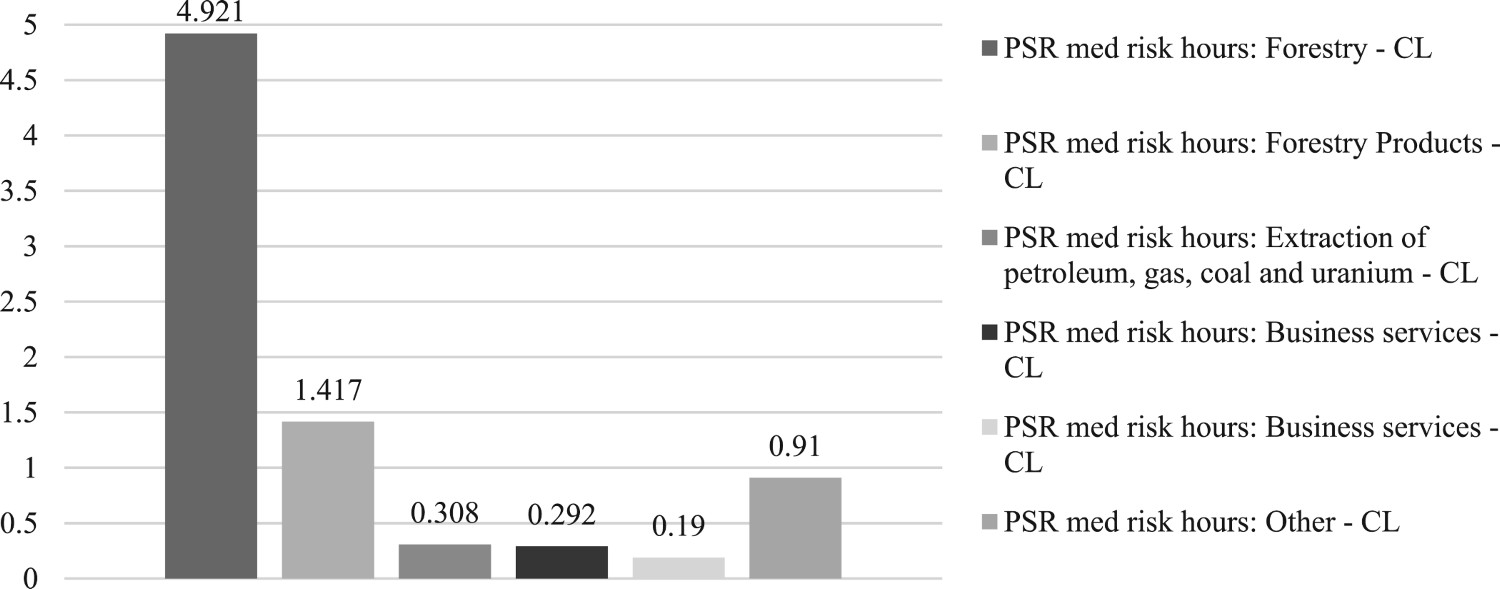
Where both CSSs perform poorly is the sub-category ‘Fair salary’, a higher amount of MRH can be detected in New Zealand recording at just over 5 MRH compared to 3.5 MRH in Chile. Conferring to the definition from UNEP the following three indicators are considered regarding ‘Fair salary’: ‘Living wage, per month’, ‘Minimum wage, per month’ and ‘Sector average wage, per month’. In terms of Forestry (NZ), this high ‘Fair salary’ score correlates to the sectoral social screening assessment as the ‘Living wage, per month’ was scored as a Very high risk, which was a similar case for Forestry (CL) with the ‘Living wage, per month’ assigned to a High risk. According to Blombäck et al. (2003), forestry workers are generally below the average wage compared to other industries, and some countries have a high level of migrant workers in the forestry sector who are often prepared to work for wages below the minimum wage level. This could be truly specific to the forestry sector in New Zealand in particular, with a high score in ‘Fair salary’ and a noticeable score in ‘Migration’. This is a key area of concern for the workers in these CSSs and appears to be a known social issue for the Forestry sector as a whole.
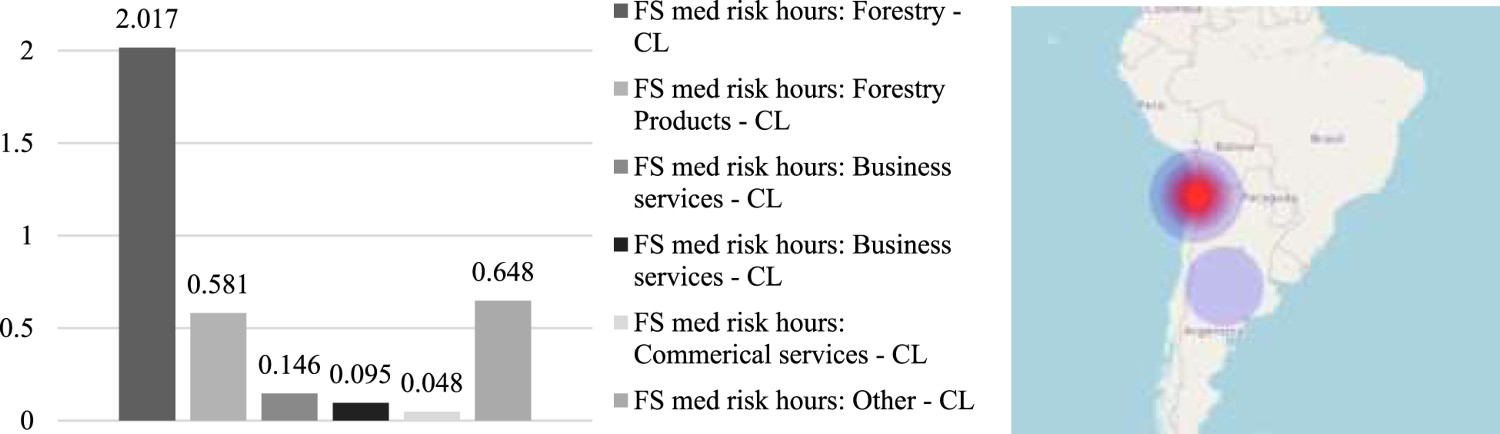
Figure 7(a) illustrates that the social hotspots for ‘Fair salary’ in New Zealand are the ‘Services to forestry (NZ)’, ‘Forestry (NZ)’, ‘Logging (NZ)’ and ‘Road Freight Transport (NZ)’ (Industry and Commodity). These hotpots are all closely related to the forestry sector in New Zealand with little impact further upstream, this follows a similar trend to nearly all of the social impact sub-categories assessed in this CSS. Most of the social risks along the supply chain are localized to New Zealand with very minor inputs in Australia, USA and China which primarily relate to the process of ‘Wholesale trade’ (Figure 7(b)). The bar chart may not be clearly identifying the hotspots, but this is due to the high amount of direct and in-direct links (process links) the Forestry NZ sector has (11,517) compared to the Forestry CL sector (5997). With more process links and a low cut-off (1E − 06), additional insignificant social risks are identified further along the supply chain, but the social hotspots remain the same. Refer to the PSILCA manual for the full documentation and explanation of process links and cut-off criteria (PSILCA 2020). The most contributing processes to ‘Fair salary’ in Forestry (CL) are ‘Forestry (CL)’, ‘Forestry Products (CL)’, ‘Business services (CL)’ (Industry and Commodity) and ‘Commercial Services (CL)’ (Figure 8(a)). As there are less process links in the Chile sector, the category, ‘Other’ appears much lower. As with many of the impact categories in Chile, the risk of ‘Fair salary’ along the supply chain is localized to Chile itself, with a very minor risk to Argentina and USA (Figure 8(b)).
(a) The upstream sectors that are the highest contributions to ‘Fair salary’ for product systems of Forestry (NZ), (b) social hotspots (including direct and in-direct links) in the supply chain of Forestry (NZ) for the impact category ‘Fair Salary’. (a) The upstream sectors that are the highest contributions to ‘Fair salary’ for product systems of Forestry (CL), (b) social hotspots (including direct and in-direct links) in the supply chain of Forestry (CL) for the impact category ‘Fair Salary’.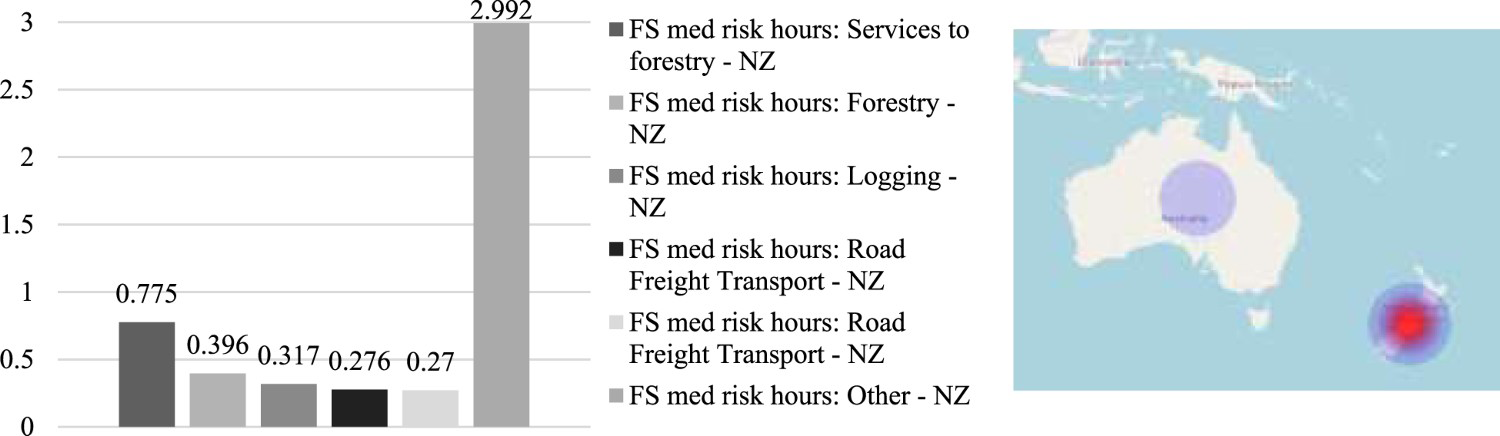
Another similarity between these two CSSs is that ‘Workers’ rights’ performed poorly. This sub-category is aggregated from two indicators: ‘Association and bargaining rights’ and ‘Trade unionism’. In both New Zealand and Chile, the MRH are very low for ‘Association and bargaining rights’ (around 0.06 MRH). However, ‘Trade union density’ is an area for concern with both sectors assigned to a Very high risk level in the screening assessment and high MRH. Chile has a higher score of 8.2 MRH which is a major social risk. Like much of the impact categories in Chile, the most contributing processes to this indicator are the ‘Forestry (CL)’ and ‘Forestry Products (CL)’, with smaller inputs from ‘Business services (CL)’ (Industry and Commodity). Although New Zealand's score is lower (2.4 MRH), it can still be regarded as a social risk as it is a high score specific to this sector (PSILCA 2020). The majority of the contribution to this impact category comes from ‘Services to forestry (NZ)’, followed by ‘Forestry (NZ)’, ‘Logging (NZ)’ and ‘Road Freight Transport (NZ)’ (Industry and Commodity).
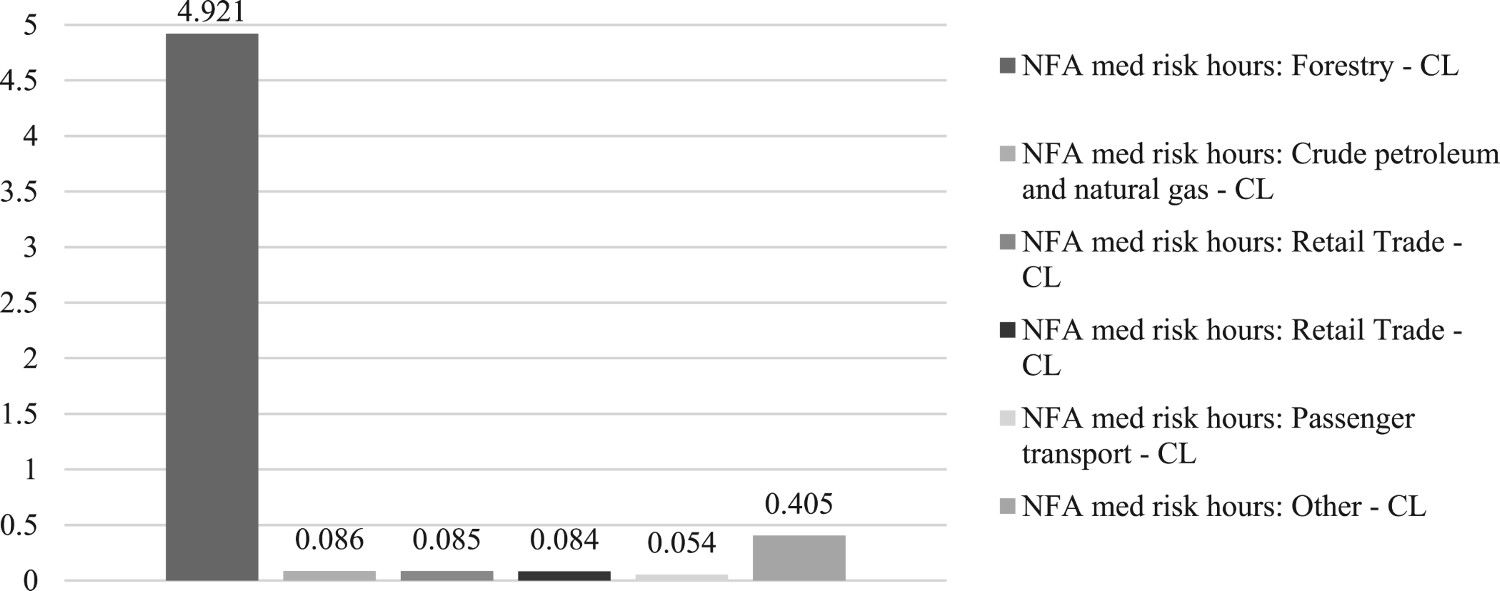
While the aggregated score for the sub-category ‘Discrimination’ in New Zealand is low (0.7 MRH), the social hotpots analysis indicated that ‘Gender wage gap’ is one of the higher scoring indicators, scoring 1.9 MRH. Along the whole supply chain, this social risk is only found in New Zealand with the social hotpots specifically related to the forestry sector, with minor impact outside this. As there is no data regarding Forestry (CL) it cannot be analysed or compared. The sub-category ‘Respect of indigenous rights’ is another area where New Zealand performs significantly worse over Chile with a score of 2.2 MRH compared to 0.09 MRH. The social hotspots to this indicator follow a similar trend to ‘Fair salary’ with little to no difference in the contribution of the processes (Figure 9). The aggregated score for ‘Health and safety’ of the Workers’ is not a key hotspot for Forestry (CL) at 1.3 MRH, however, the indicator ‘Non-fatal accidents’ is a certain social risk scoring 5.6 MRH. Taken from the raw values in the PSILCA database, the Chilean Forestry sector has on average 4096 non-fatal accidents per 100,000 employees each year, compared to New Zealand's rate of just 200 (PSILCA 2020). This high number of non-fatal accidents in the Chile sector may not come as much surprise with forestry being a high-risk job and one of the most dangerous activities (Ackerknecht 2015). This is supported in the social hotspots (Figure 10), with the largest contribution coming from the ‘Forestry (CL)’ sector itself, and very little impact on sectors in Argentina. However, these findings indicate how respectable the forestry sector in New Zealand performs in the ‘Non-fatal accidents’ impact category.
The upstream sectors that are the highest contributions to ‘Indigenous rights’ for product systems of Forestry (NZ). The upstream sectors that are the highest contributions to ‘Non-fatal accidents’ for product systems of Forestry (CL).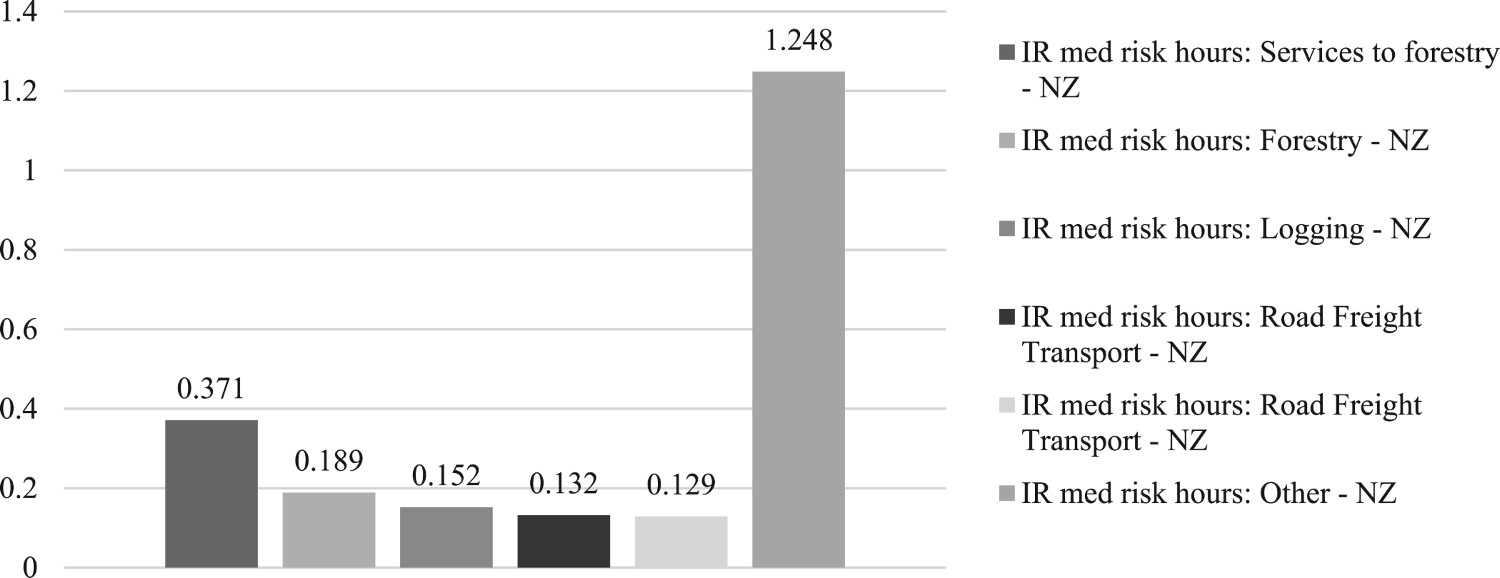
These results may not give you a clear answer as to which country performs better overall, but they provide food for thought by highlighting the potential risks that each CSS holds as well as identifying areas that perform well. This hotspots screening approach can also be an initiative, having a good foundation for a more in-depth study at the company scale level.
Discussion
LCA
In terms of GHG emissions, there was little difference between the two products with modified wood produced from radiata pine grown in New Zealand performing marginally better than that from Chile as modelled (a difference of just 1%, or 17.4 kg CO2 eq m−3). As the processing of modified wood is the same irrespective of where the pine is sourced, the environmental hotspots are the same in both cases. The gas-fired boiler nearly makes up half of the total GHG emissions as it is the main source of energy in the manufacturing stage. Processes such as kiln drying require a lot of energy which could indefinitely influence the results, especially as there are no renewable alternatives involved such as a biogas boiler. As the gas usage figure was at an experimental stage, this could be a worst-case scenario and by maximizing the economies of scale of production, a more realistic figure could be identified and bring the GHG emissions total down. Furthermore, if energy monitoring equipment was used for individual machinery, then specific hotspots could be identified to understand which part of the manufacturing phase is most impactful.
The PF resin is the second most impactful input for GHG emissions, the dataset itself from Ecoinvent is not a heavy emitter of GHG emissions (per kg) but with the large amounts needed for this modified softwood, this influences the results considerably. There are just two differentiating inputs in this LCA, the Pine and Transport. Emissions for the New Zealand pine are noticeably lower which is primarily due to the lower carbon intensity of the New Zealand electricity grid mix relative to that of Chile. According to the Ministry of Business, Innovation and Employment (MBIE), much of New Zealand's grid mix is made up of renewable energy. The three main generators of renewable electricity being: hydroelectricity, geothermal, and wind and in fact, non-renewable sources (coal, oil and gas) only make up around one-quarter of New Zealand's electricity supply (MBIE 2021). This equates to a low global warming potential of 0.0978 kg CO2 eq per kWh of electricity (medium voltage) in Ecoinvent (v3.6). Whereas Chile's electricity grid mix is predominantly made up of fossil fuels (51%) with the majority of that coming from coal (Global Change Data Lab 2021). This equates to a global warming potential of 0.6028 kg CO2 eq per kWh of electricity (medium voltage) in Ecoinvent (v3.6). Emissions from the Transport favour pine from Chile, as the total distance to travel is 14,497 km compared to New Zealand at 21,048 km. In both scenarios, the pine wood dataset makes up well under 10% of the overall GHG emissions and the transport makes up a larger portion, contributing between 11% and 12% of GHG emissions. The emissions from transport are nearly twice as impactful in the New Zealand scenario than the pine wood (6.36% compared to 12.16%) which could be expected with an efficient electricity grid and the large distance from New Zealand to the UK. When comparing the two scenarios, the GHG emissions almost cancel one another but in the end favour radiata pine from New Zealand. The remaining inputs in this LCA contribute minimally to the GHG emissions total, emphasizing the dominance of the gas-fired boiler and PF resin and highlighting the two areas that need improving.
Referring to the normalized scores, the impact categories related to ‘toxicity’ and ‘ecotoxicity’ were by far the highest scoring, which was dominated by the PF resin. These high scores in the ecotoxicity/toxicity categories could be anticipated, owed to the large quantities of PF resin used per 1m3 of finished modified softwood. Phenolic compounds exist in water bodies due to the discharge of polluted wastewater as well as a result occurring due to natural phenomena. The chemical is known to be toxic and inflict both severe and long-lasting effects on both humans and animals (Anku et al. 2017). Even when compared to the gas-fired boiler the PF resin plays the biggest role across the most relevant environmental impacts categories, indicating where efforts must be oriented in order to reduce the overall impact of the modified softwood.
In both scenarios, the environmental hotspots remain the same, with the concern coming from the natural gas and the PF resin during the manufacturing stage. The provenance of wood makes less overall difference to the environmental profile of the two scenarios, with lower GHG emissions from NZ grid electricity usage being largely balanced out by lower emissions from transport inputs in the Chilean scenario. This underscores the importance of considering SLCA impacts when aiming to reach an informed decision on the overall sustainability of each scenario relative to the other.
SLCA
The social hotspots analysis conducted with the database PSILCA gives an indication of the main social risks at the macro level as well as identifying where in the lifecycle these risks are likely to occur. Overall, more social impact sub-categories in the Forestry CL sector are at risk as well as the risks in general scoring much higher than that of the Forestry NZ sector, indicating the Chilean forestry sector has generally poorer social conditions across the stakeholders, specifically the ‘Workers’ and ‘Value chain actors’. However, each sector has certain social sub-categories that perform better than the other and from an initial view, there is not an obvious gap between the two. Furthermore, SLCA can be viewed as subjective when comparing the various social impact sub-categories. For example, Forestry CL performs significantly worse than Forestry NZ in the ‘Promoting social responsibility’ and ‘Access to material resources (other than water)’ sub-categories. Yet, these could be viewed as lesser important social issues than ‘Fair salary’ and ‘Discrimination’, in which the Forestry NZ sector scored higher in both categories. The high score in the ‘Fair salary’ sub-category means that the workers in these CSSs are at risk of not having the income needed for a decent living, i.e. the monthly wage to cover the necessary living costs of an individual or family including nutritious food, water, shelter, clothing, healthcare, and transport. The high score for ‘Gender wage gap’ in the Forestry NZ sector could be anticipated as according to the New Zealand Government the overall gender pay gap for 2021 was reported to be at 9.1% and with little change in the last five years (New Zealand Government 2021). Furthermore, in most countries, female employees receive a lower wage than their male counterparts in the forestry sector where the difference could be between 2% and 33% (Blombäck et al. 2003). Both CSSs perform poorly for the indicator ‘Trade unionism’ relative to their overall social performance, but Chile has a far higher social risk meaning there is the potential that employees are not allowed to organize in trade unions to further and defend the interest of the workers. Trade unionism in Chile went through a period of not very conducive to its development in the 1970s and 1980s, re-emerging with the return to democracy in the late 1980s, which led to relatively successful wage negotiations in the 1990s (Gonzalo 2011). This late adoption of trade unionism could be related to the high score of the Chile sector. ‘Respect of indigenous rights’ is another social risk for Forestry NZ identified in the PSILCA database. Although New Zealand has established national policies to facilitate engagement with the indigenous population, there has been reports of these policies being insufficient which may be contributing to health inequity for Māori (the indigenous Polynesian people of mainland New Zealand), correlating to the findings from PSILCA (Ferdinand et al. 2020).
When identifying the social hotspots, the majority of the contribution to the impact categories in Forestry NZ are directly and indirectly related specifically to the ‘Forestry’ sector i.e. ‘Services to forestry (NZ)’, ‘Forestry (NZ)’, ‘Logging (NZ)’ and ‘Road Freight Transport (NZ)’ (Industry and Commodity). This means that much of the social impacts are related to the forestry sector with very minor impacts further upstream. In terms of Forestry CL, a considerable amount of the impacts is related to the ‘Forestry’ sector i.e. ‘Forestry (CL)’ and ‘Forestry Products (CL)’, which are the sectors most at risk. However, there are minor impacts upstream to processes such as ‘Business services (CL)’, ‘Commercial Services (CL)’ and ‘Extraction of petroleum, gas, coal and uranium (AR)’. Thus, the forestry sector in Chile could potentially have a more widespread impact across other sectors outside of forestry.
SLCA is an emerging methodology and with data often being that of qualitative nature, identifying a better performer can be difficult. Though, from these findings, the New Zealand forestry sector appears to have less of a social impact overall with many of the social impact sub-categories scoring lower than the Chile sector. This does not mean the New Zealand sector performs well, as there are high scores in a few concerning categories such as ‘Fair salary’ and ‘Respect of indigenous rights’ etc. However, as the Chile forestry sector performs worse across much of the social impact sub-categories compared to New Zealand, it cannot be recommended in this study.
Conclusion
This study analysed and compared the environmental and social impacts of a modified softwood using timber from New Zealand and Chile, which was achieved by conducting a comparable LCA and an SLCA in the form of a social hotspots screening analysis. In terms of the GHG emissions, the results were very similar with the difference being only around 1% of the overall totals. Lower emissions associated with Chilean transport inputs were largely balanced out by emissions savings with NZ grid electricity. Natural gas and PF resin usage during the manufacturing stage were the two main contributors, with provenance of the softwood being of lesser overall impact. Initiatives to reduce GHG emissions associated with this modified wood product should therefore focus on gas and resin efficiencies for maximum effect. The similarity of the environmental performance of products using wood from the two locations underscores the importance of considering SLCA impacts when aiming to make an informed decision about broader product sustainability.
The results from the social hotspots analyses could be considered more insightful but still not definitive. As both CSSs perform poorly on different aspects of the SLCA and there is no definitive answer, it could be challenging to recommend a sector as it depends on which social impact categories are considered more important. Neither of the forestry sectors perform perfectly as there are social issues in both but overall, the forestry sector in New Zealand scores lower across many of the social impact sub-categories in the impact analysis and also has fewer social issues affected within this sector. It is important to note that the SLCA findings are from an average of the forestry sector in the respective countries in this study and are not related to the specific sawmills. Yet this screening analysis sets a good foundation for a more comprehensive SLCA at a site-specific level, to gain a more in-depth understanding of these social impacts. Finally, this was an important project as it helped create a dialogue to convey the potential of combining an LCA and SLCA to gather a better understanding of the sustainability of this modified softwood. As such, it may act as a foundation to develop this type of assessment for future studies.