



Abstract
The aim of this work was to improve the surface properties of cp-Ti Grade 2 and β-Ti alloy TNTZ (Ti-29Nb-13Ta-4.6Zr) for biomedical applications. A hybrid surface treatment consisting of shot peening and chemical etching was conducted. Subsequently, the physicochemical properties and topography of the modified surfaces were analysed. Microhardness measurements of the shot-peened samples revealed a great increase in the surface hardness to the similar level as can be achieved for the ultrafine-grained and nanostructured materials. Roughness tests and microscopic observations showed significant topographical differences, depending on the material and modification process involved. Moreover, in this paper we demonstrate the influence of the substrate and treatments on the wettability. Obtained results confirmed that designed hybrid modification of Ti Grade 2 and TNTZ has significant potential for biomedical applications.
Keywords
Introduction
Biomedical materials must meet specific requirements that vary with how they are applied. Some of those requirements can only be met by metallic materials. This is due to their properties such as good corrosion resistance, high static and fatigue strength, and fracture toughness [1–4]. However, there are other requirements, as well, including biocompatibility, bioactivity, and non-toxicity [2,3]. Only a few groups of metals, therefore, can be used in biomedicine. One of them is titanium and its alloys, which are characterised by a relatively low density and an excellent strength-to-weight ratio [1–3,5,6]. In biomedicine, they are used to manufacture orthopaedic and dental implants, artificial heart stents, and bone fixation materials [2–5,7,8]. The most widely used titanium material is two-phase (α+β) titanium alloy: Ti-6Al-4V [2–4,7,8]. Unfortunately, the presence of aluminium and vanadium in it can adversely impact human health. These chemical elements are potentially toxic and, when released in the body, can lead to diseases of the nervous system [7,9–12]. So, the search is ongoing for biomaterials that would meet the requirements without being detrimental to human health. Alternatives to Ti-6Al-4 V alloy include commercially pure titanium (cp-Ti) and β-titanium alloys, which contain only non-toxic chemical elements and demonstrate satisfactory biocompatibility [4,8,13–15]. Moreover, β-alloys are characterised by a lower Young's modulus, more similar to that of human bone, which prevents bone atrophy and the loosening of the implant associated with it [11,13,14,16,17]. Among these alloys, Ti-29Nb-13Ta-4.6Zr, also called TNTZ alloy, is of particular interest. This novel β-alloy has been widely investigated in the literature due to its great promise for biomedicine, a result of its very low Young's modulus, good corrosion resistance, biocompatibility, and relatively high phase stability during further manufacturing processes [18–20]. However, for both commercially pure titanium and TNTZ β-alloy, there is still a need to improve their mechanical properties, and surface condition [8,21].
The surface of biomaterials plays an essential role in implant acceptance and integration [5,8,22–30]. This is the region of first contact between an implant and the environment of the human body, and so the surface of the biomaterial should encourage osteoblast cell adhesion and proliferation, inhibit infections through an antibacterial effect, and prevent abrasive wear of the implant [15,30,31]. These properties and interactions depend on the surface topography and physicochemical conditions. Two of the most important factors are roughness and wettability [8,30,32–34]. These should be optimised to both favour osteoblast cell attachment and prevent adhesion by bacteria. Studies indicate that roughness, not only on the micro-scale but also on the nano-scale, can be crucial for implant acceptance and integration [35–39]. Modifications of the roughness, then, should be carried out on both these scales to improve osteointegration. For wettability, two ranges should be considered: hydrophilic and hydrophobic. So far, no optimum value of the wettability of biomaterials has been determined [8,40,41], and different studies [30,40–46] present a more favourable influence of one or the other range. Therefore, there is still a need to characterise wettability in terms of biomedical application.
Currently, different surface treatments are being investigated in order to achieve optimal topography of biomedical titanium. Among them are mechanical, chemical, and electrochemical treatments or their combinations. Some of them are already commercially applied, such as treatment based on Micro-Arc Oxidation (TiUniteTM) or SLA (sandblasting with large grit and acid-etching) treatment (NanoblastTM) [47,48]. While both methods provide good biological response [49,50], recent in vivo studies revealed enhanced bone integration of the SLA-modified titanium surface compared with the oxidised samples [47]. The SLA method is one of the hybrid surface modification composed of two steps: (i) mechanical treatment, and (ii) chemical treatment [8,22,24–26,30,33,34,51,52]. These methods are useful for modifying surface features and properties, and both can be easily carried out due to their simplicity and low cost. Additionally, combination of these techniques results from the need to clean off particles remaining from the mechanical treatment [53]. Two-step mechanical–chemical treatment that includes shot peening followed by chemical etching, is an effective method for modifying roughness at the micro- and nano-scales, which can promote osteointegration and biological response [8,21,30,35,54]. Moreover, due to the mechanical stress it introduces, shot peening also has the potential to improve hardness in the surface region and increase a biomaterial's wear resistance [55]. As mentioned, the hybrid surface treatment (e.g. SLA) of commercially pure titanium has frequently been investigated and applied, but there is a lack of study on the hybrid modification of β-titanium TNTZ alloy. The literature discusses mechanical surface treatments, such as ultrasonic nanocrystal surface modification (UNSM) [56,57], or the magnetorheological fluid magnetic abrasive finishing process [58,59]. However, according to our knowledge, no study reports on a combination of mechanical and chemical modifications for this alloy, which could be advantageous in biomedical applications. The impact of hybrid treatment on the properties of TNTZ alloy is still unknown, then, as is the effect of different modification conditions. As mentioned, TNTZ alloy has great potential in biomedicine, especially due to its low Young modulus, close to the human bone. As a novel alloy, it is constantly investigated and there is still a need for its further characterisation and also surface optimisation in order to enhance its biomedical properties.
Hence, the main aim of this research was to investigate the influence of a hybrid surface modification that includes shot peening followed by chemical etching on the surface properties of β-phase titanium alloy Ti-29Nb-13Ta-4.6Zr (TNTZ). The additional aim of this study was to compare the effect of the surface treatments obtained for the TNTZ alloy with the results received for commercially pure titanium (Ti Grade 2), a common material used in implantology.
Materials and methods
Surface modifications and samples designations.
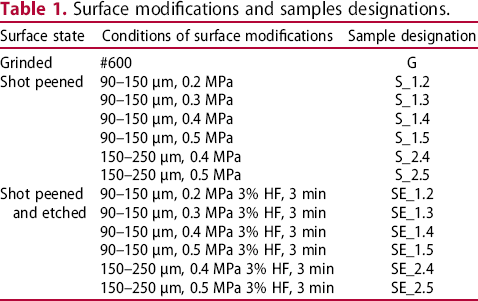
Hardness tests of the shot-peened and reference samples were conducted using a Falcon 500 hardness tester with a Vickers indenter at a load of 1.96 N (HV0.2). The hardness was measured on the modified surfaces. The roughness of the tested samples was qualitatively analysed by microscopic observations using Hitachi SU8000 and Hitachi SU70 Scanning Electron Microscopes (SEM) and quantitatively tested using a Wyko NT9300 optical profilometer for various scan areas. The Ra parameter, which determines the arithmetic mean deviation from the roughness profile, was selected to characterise the samples’ roughness. Surface wettability was measured with the sessile drop method, using a DataPhysics OCA 25 goniometer, and distilled water as a standard liquid.
Results and discussion
Microhardness after shot peening
The effect of shot peening on the microhardness value of both Ti Grade 2 and TNTZ alloy is presented in Figure 1 and Table 2, respectively. For both materials, Ti Grade 2 and TNTZ alloy, there was a significant improvement in hardness after the shot peening. The results obtained for various peening conditions do not differ considerably from each other within a given material. Therefore, the changes in the tested modification parameters did not significantly alter the hardness of the peened materials, which confirmed limited possibility to alter surface mechanical performance of α and β Ti-based materials by adjusting shot peening parameters. Therefore, the parameters of the shot peening should be selected mainly considering their effect on the surface morphology and physicochemical properties. An increase in the hardness of the surface region can be associated with work hardening and grain boundary strengthening processes. During the shot peening process, the ceramic balls striking the surface can introduce a grain refinement and increase the density of dislocations [60]. This leads to an improvement in the mechanical properties of the surface region [55,61]. To characterise the ability to increase strength for the modified surface region of Ti Grade 2 and TNTZ alloy, the hardness obtained can be compared with the results for the same materials after the cold-rolling process, reported elsewhere [62,63]. It turns out that the values measured for the TNTZ alloy surfaces after shot peening are very close to those presented for the ultra-fine-grained state after a large plastic deformation process, and are even higher in the case of Ti Grade 2 (Table 2). This confirms significant dislocation strengthening induced by shot peening and demonstrates its effectiveness in obtaining a nanostructure in the surface region [61]. Consequently, this study revealed that shot peening is a simple and low-cost technique of grain refinement, which makes it promising method for industrial application. TNTZ alloy, whose microhardness in the initial state is lower than that of Ti Grade 2, also shows a smaller increase in hardness after shot peening (Table 2). This may be associated with the higher degree of strengthening in Ti Grade 2 than in TNTZ alloy. Similar results were obtained for these materials in their entire volume after large plastic deformation through a cold-rolling process [64]. These differences in the strengthening rate were explained by the various lattice structures of α and β titanium phases (hcp and bcc, respectively) [64]. As in the bcc structure, close-packed directions lie in multiple slip planes, and the possibility of cross-slip increases, which facilitates dislocation motion and does not favour dislocation strengthening or grain refinement. In the case of the hcp structure, intersections of dislocations and the formation of grain boundaries are enhanced due to the presence of fewer slip systems [64]. Due to that, dislocation movement is inhibited and results in greater strengthening, which may be the reason for the higher hardness of Ti Grade 2. Still, the achieved hardness increase for both Ti Grade 2 and TNTZ alloy should be advantageous in terms of improved wear resistance and therefore greater longevity of the biomaterial. Future studies should considered the effect of proposed mechanical treatment on the tribological properties of both materials.
Influence of shot peening on the microhardness of Ti Grade 2 and TNTZ alloy.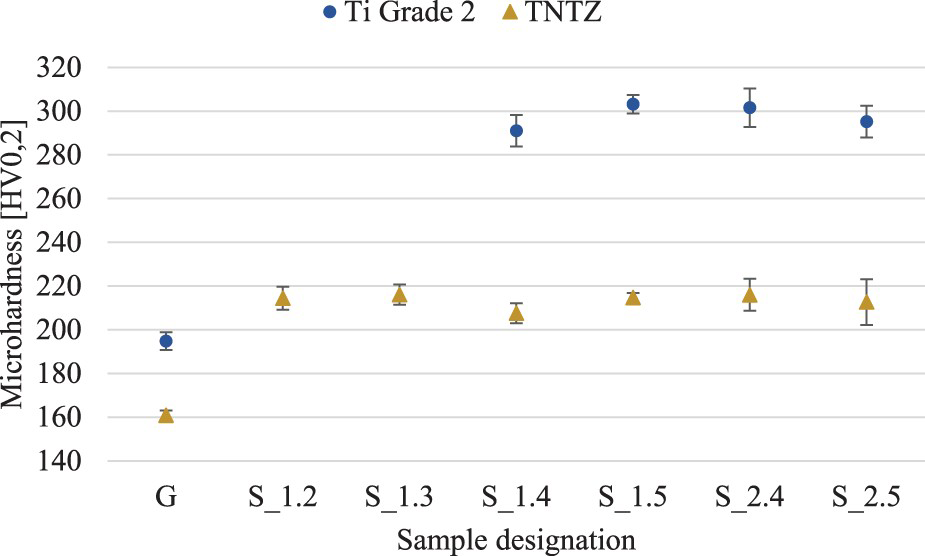

Topography of the modified materials
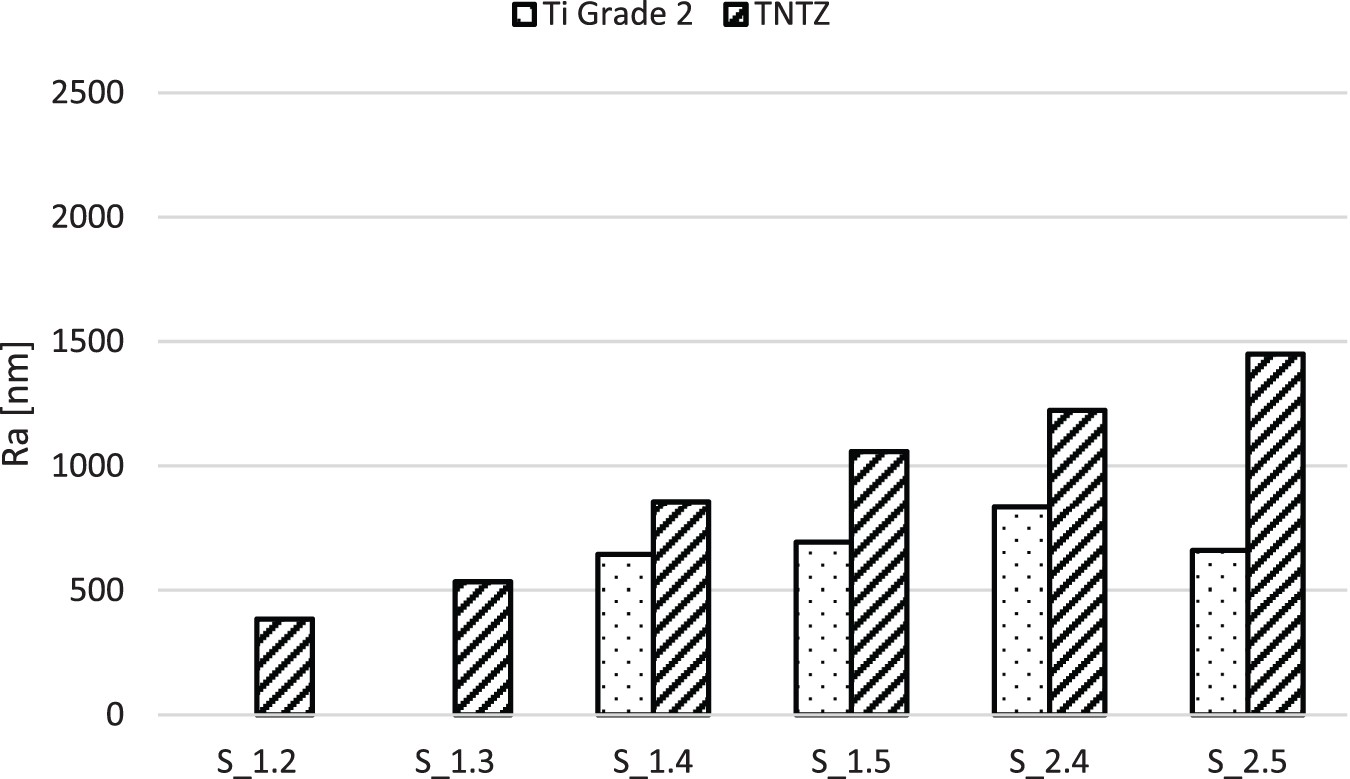
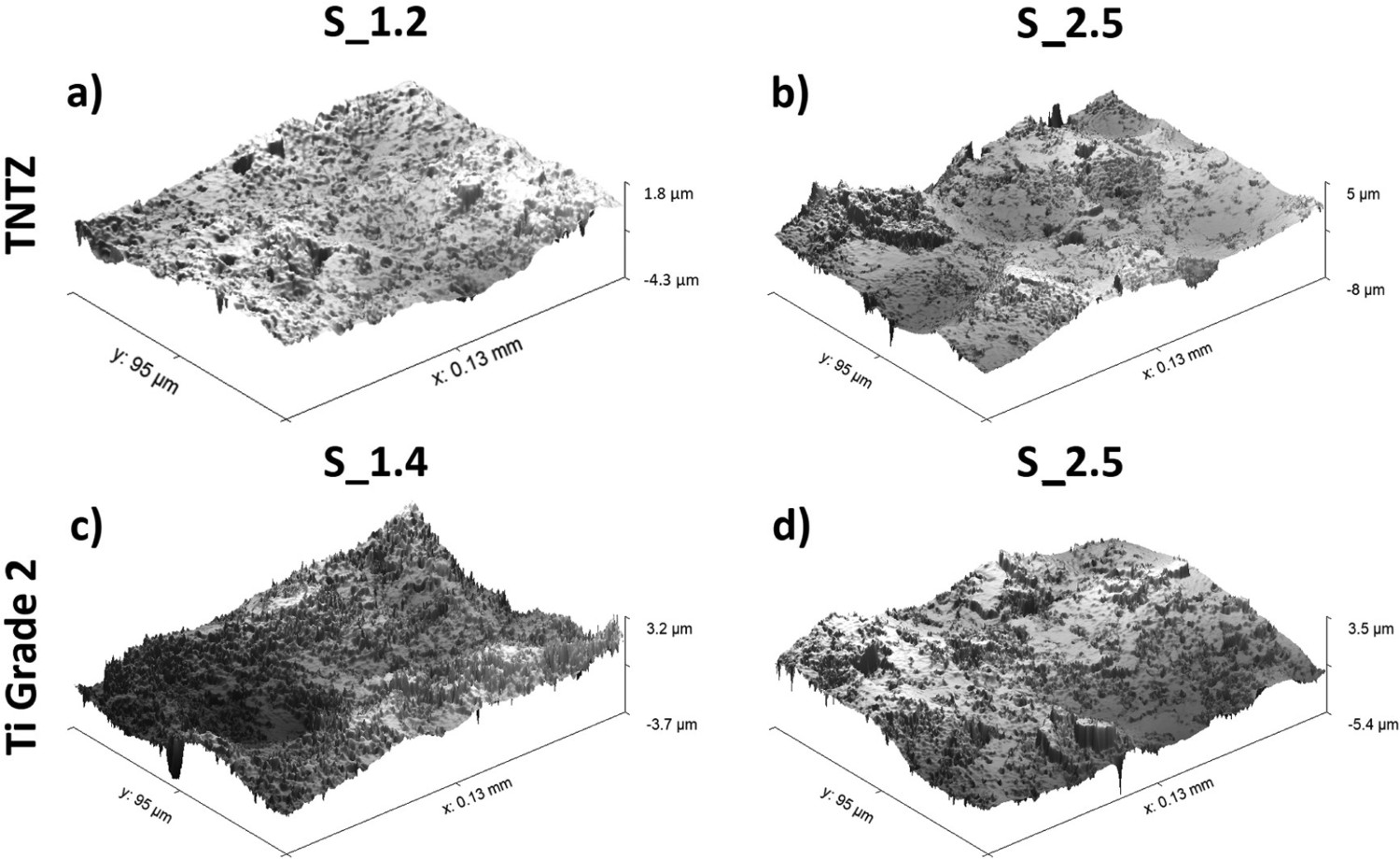
Shot-peened TNTZ alloy and Ti Grade 2 surfaces are shown in SEM images in Figures 2 and 3. Roughness results, represented by the parameter Ra (the arithmetical mean deviation from the roughness profile), are shown in Figure 4. The results are given for a sampling area of 94.9 × 126.5 µm. Topography profiles of the shot-peened surfaces are presented in Figure 5. It can be observed that, regardless of the treatment conditions, shot peening results in significant changes in morphology. Under the impact of the ceramic shot, craters and delamination formed on the surface. Based on both the SEM images and the measured Ra parameter, it results that the shot peening affects TNTZ surface morphology to a greater extent. The intensity of peeling off as well as the size and number of craters increased with shot size and applied pressure, as did the roughness of the peened TNTZ surfaces (Figure 5). For higher pressures also unfavourable cracks and larger delamination were formed on the surface (Figure 3b). This may have been the result of the lower hardness of this β-alloy and its easier deformability [64]. For the TNTZ alloy, a correlation between the shot peening conditions and roughness was observed, as the Ra parameter increases with both: shot size and process pressure (Figure 4). In the case of Ti Grade 2, there was no such correlation; the results obtained were close to each other and only for the S_2.5 sample was there a significant increase in roughness. From the topography results and microscopic observations, it can be noticed that for the TNTZ-peened with higher pressures (above 0.3 MPa), the deformation level introduced resulted in an undesirable peeling of the surface and a large increase in roughness. This may have been caused by the material's lower hardness and higher deformability. As already mentioned, surface condition is crucial in biomedical applications. For example, it is important when the modified surface acts as a substrate for further coating deposition. As in the case of the adhesion of coatings to the substrate, the detachment of material flakes can have a number of adverse effects on the human body and can contribute to implant failure [68,69]. Moreover, excessive roughness can also adversely affect osteointegration and the prevention of bacterial adhesion [8,28,70,71]. Decreasing peening pressure to 0.2 MPa allowed to limit unfavourable cracking and cavities, which indicates on the high potential of transferring this treatment to the industry.
SEM images of shot-peened (a, b) TNTZ alloy S_1.2 sample and (c, d) Ti Grade 2 S_1.4 sample. SEM images of shot-peened (a, b) TNTZ alloy and (c, d) Ti Grade 2 S_2.5 samples. Results of the Ra parameter (scanning area: 94.9 × 126.5 µm) for shot-peened TNTZ alloy and Ti Grade 2. Topography profiles of shot peened (a, b) TNTZ alloy and (c, d) Ti Grade 2.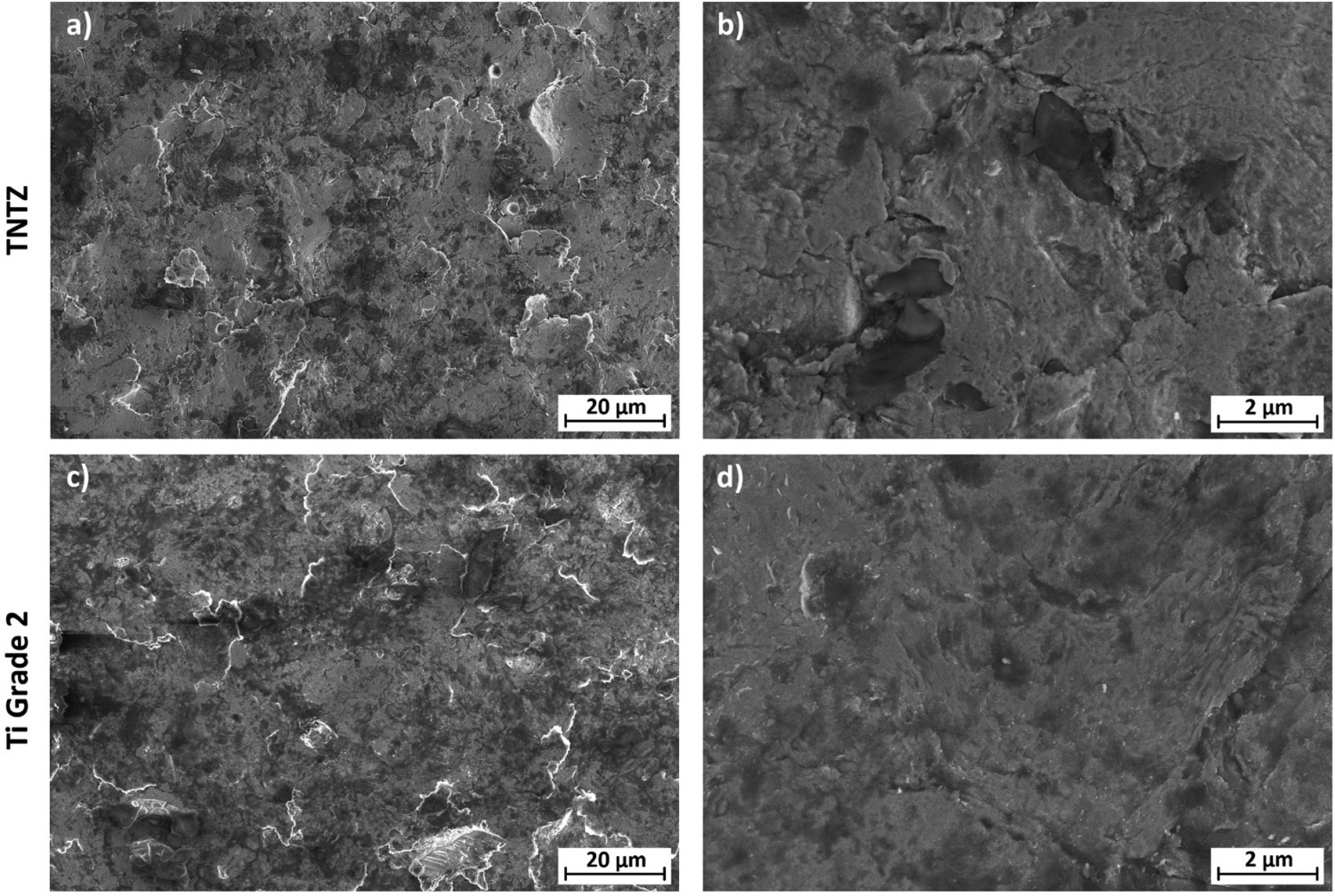
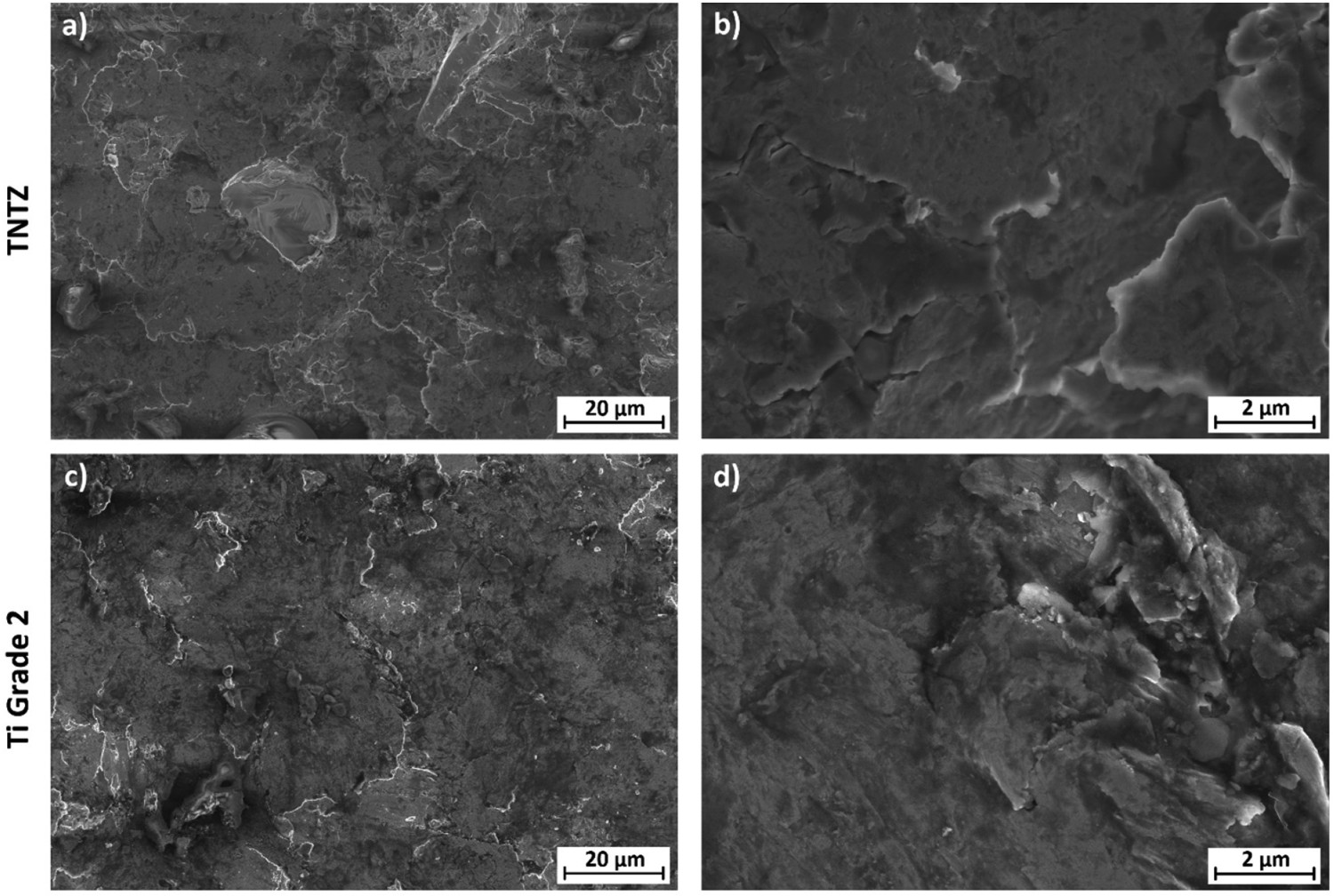
In implantology, further modifications of mechanically treated surfaces frequently involve chemical etching [8,52,54,72]. This method not only permits further changes in a material's surface topography; it also results in the removal of contaminations and residues after shot peening [53,72]. The results obtained for the Ti Grade 2 and TNTZ alloy surfaces after shot peening and chemical etching are shown in Figures 6–9. It can be observed that the roughness of the TNTZ alloy significantly increased after etching (Figure 8), while for Ti Grade 2 it remained in a similar range, differing significantly only for the 2.4 and 2.5 samples. Moreover, chemical etching allowed to develop surface topography at the micro- and nanoscales. While for Ti Grade 2 more sharp-edged cavitates with a plate-like morphology were visible (Figure 6d, 7d, 9c, d), the surfaces of the TNTZ consisted of more rounded and oblate craters (Figure 6b, 7b, 9a, b). In case of both materials, etching allowed to eliminate surface peeling. However, this process was more effective for Ti Grade 2. Differences between the two materials may arise from their different topographies in the shot-peened state (Figure 5), as well as from their chemical compositions with different oxides on the surface [19,63].
SEM images of shot-peened and etched (a, b) TNTZ alloy SE_1.2 sample and (c, d) Ti Grade 2 SE_1.4 sample. SEM images of shot-peened and etched (a, b) TNTZ alloy and (c, d) Ti Grade 2 SE_2.5 samples. Results of the Ra parameter (scanning area: 94.9 × 126.5 µm) for shot-peened and etched TNTZ alloy and Ti Grade 2. Topography profiles of shot-peened and etched (a, b) TNTZ alloy and (c, d) Ti Grade 2.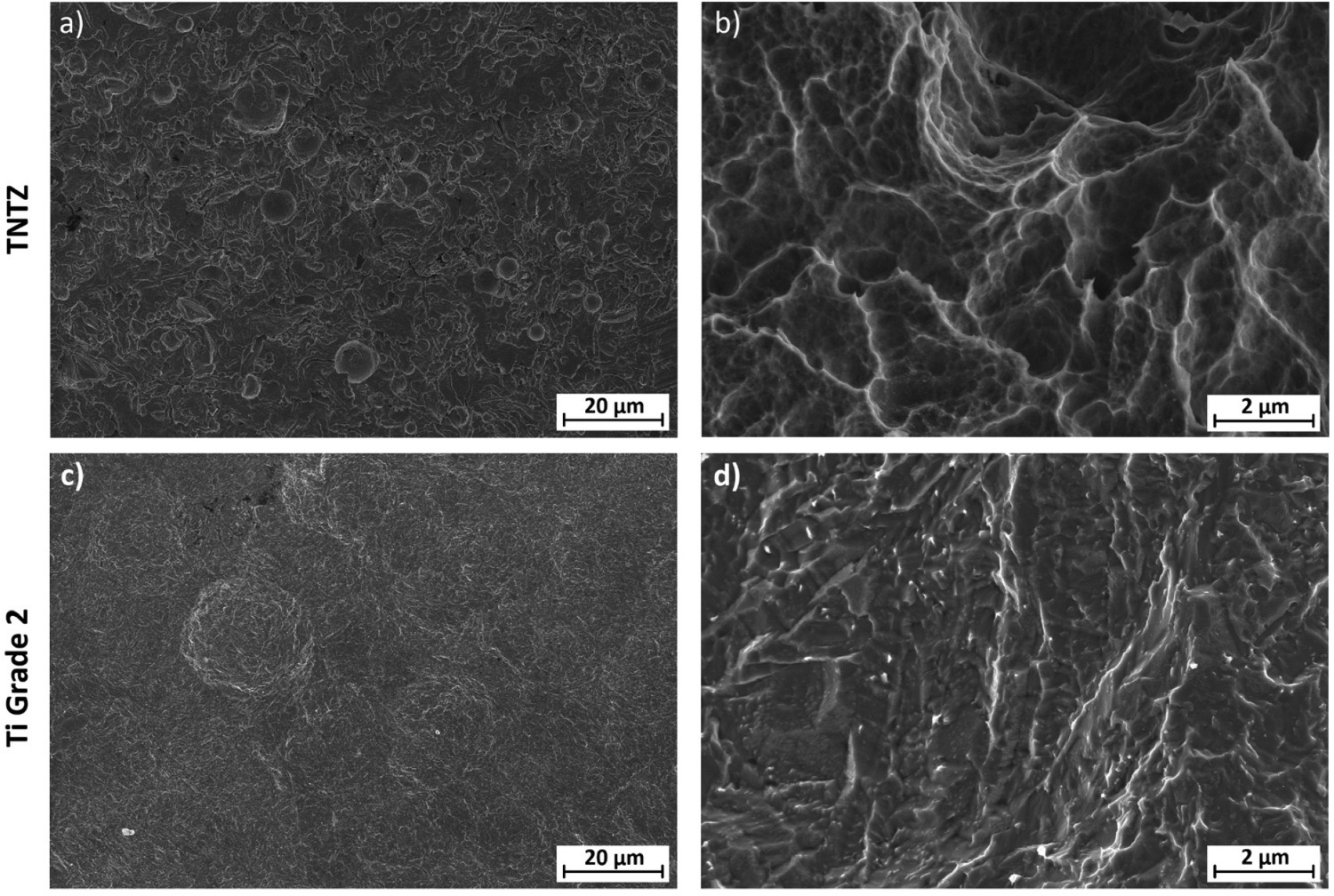
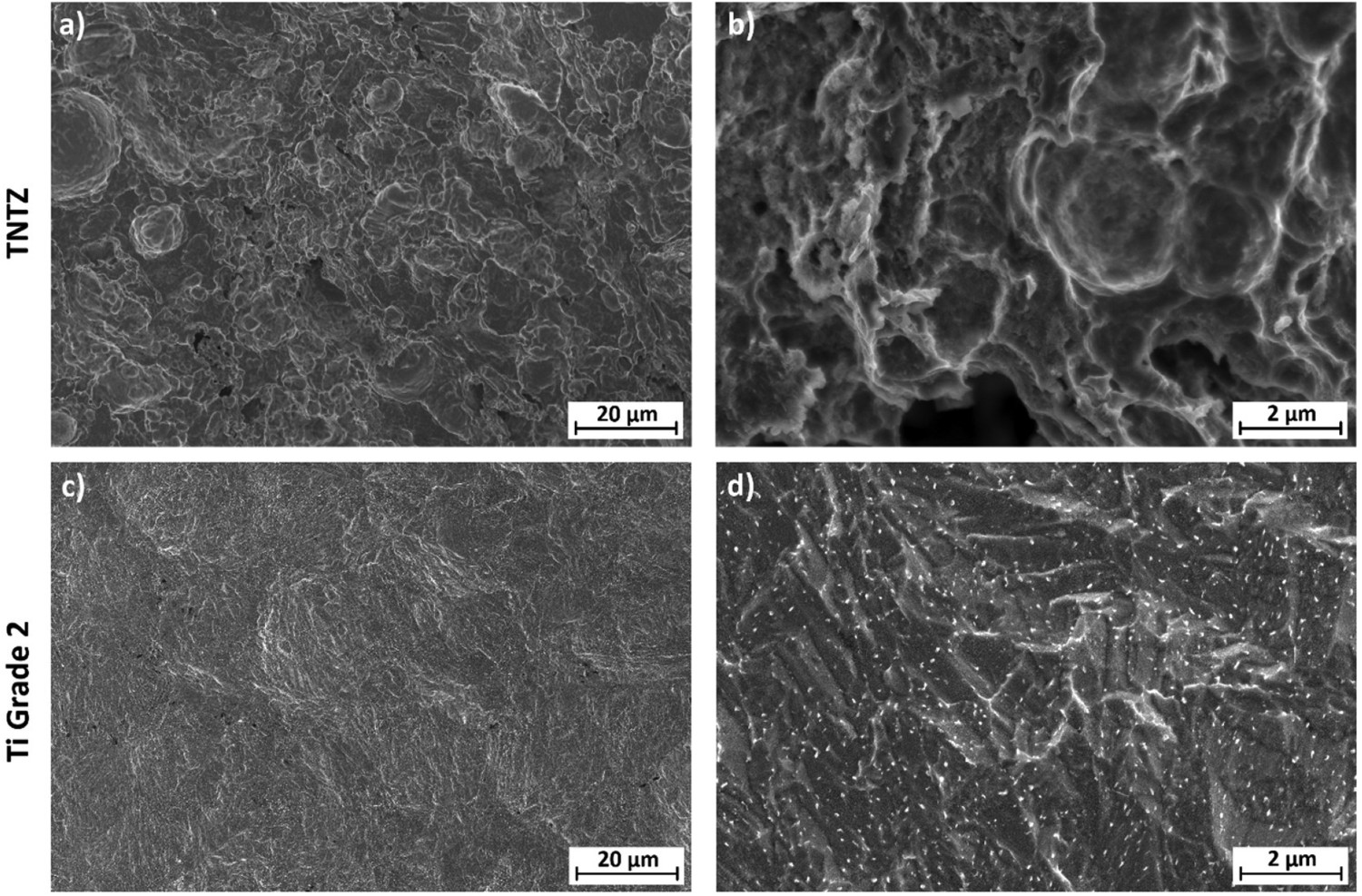
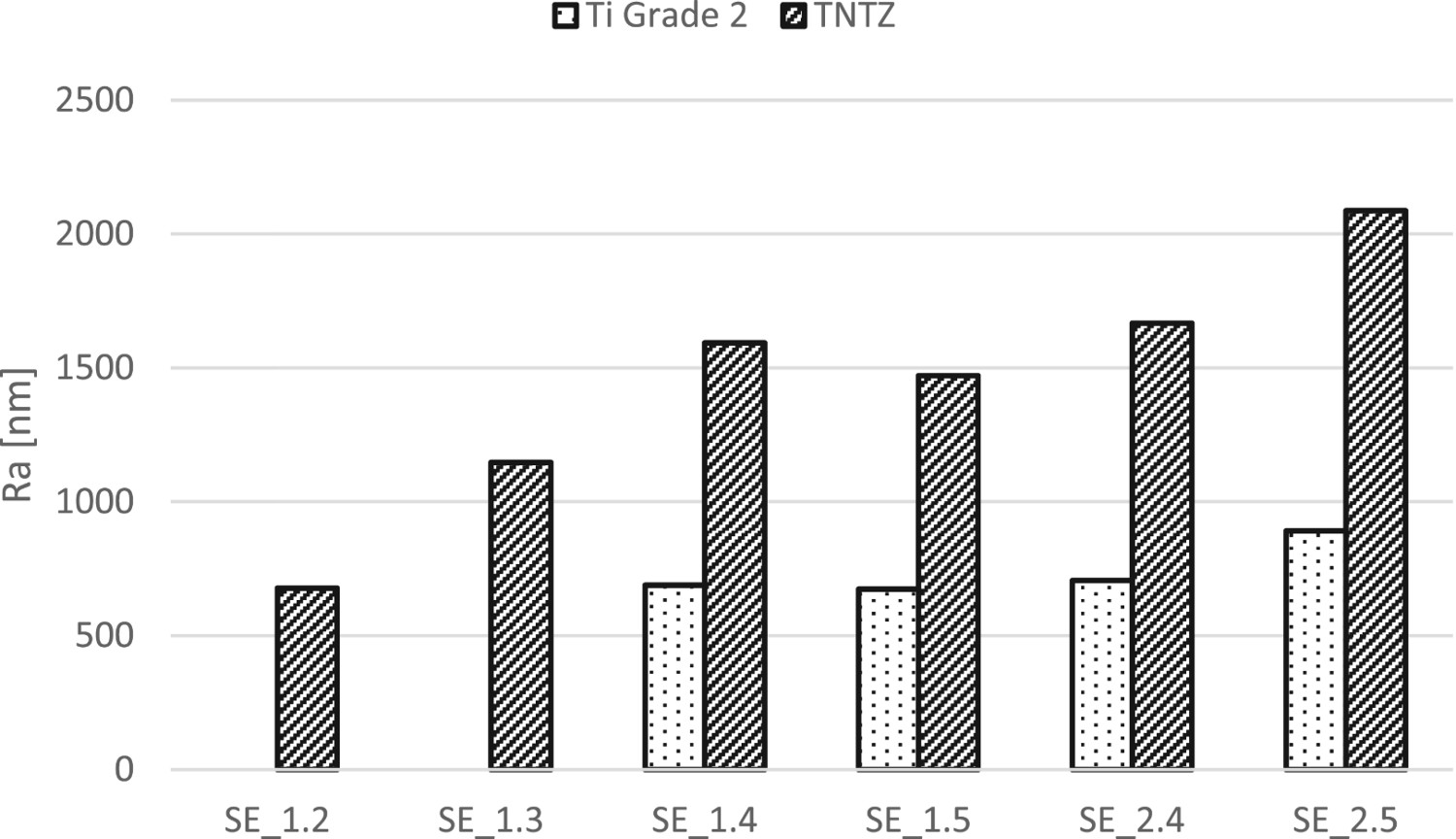
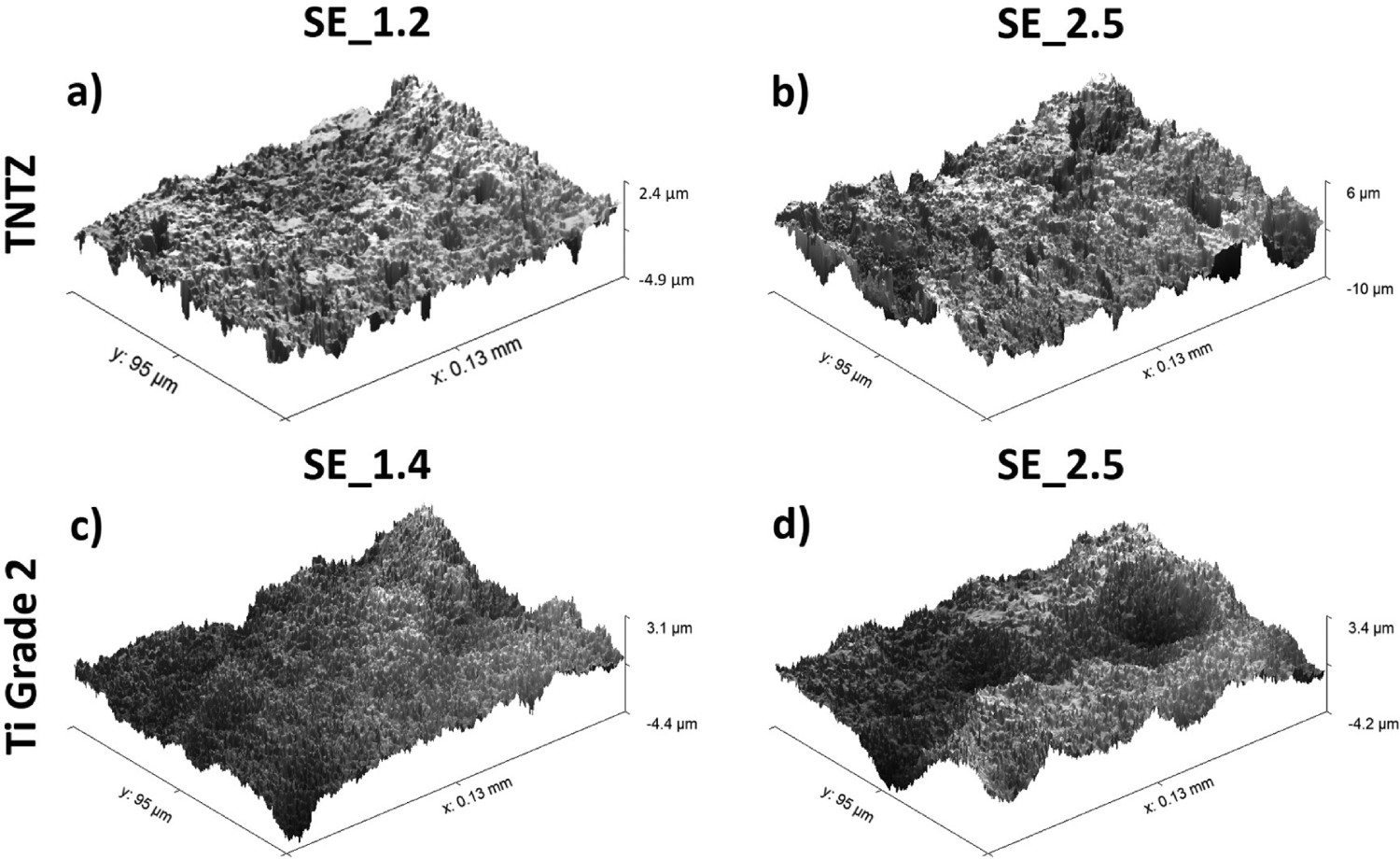
When analysing the obtained roughness results, the SEM images of the modified surfaces and topographic profiles presented, it can be observed, that in the case of the TNTZ alloy, the optimum conditions among the hybrid modifications performed were a smaller shot size and lower pressure, corresponding to the SE_1.2 sample, due to the limitation of unfavourable defects and uniform distribution of surface irregularities (Figure 9a). In the case of Ti Grade 2, all the samples showed a similar roughness and surface morphology, apart from the SE_2.5 sample, which had a significantly higher Ra value and whose topographic profile exhibited large craters on the surface (Figure 9d).
Wettability
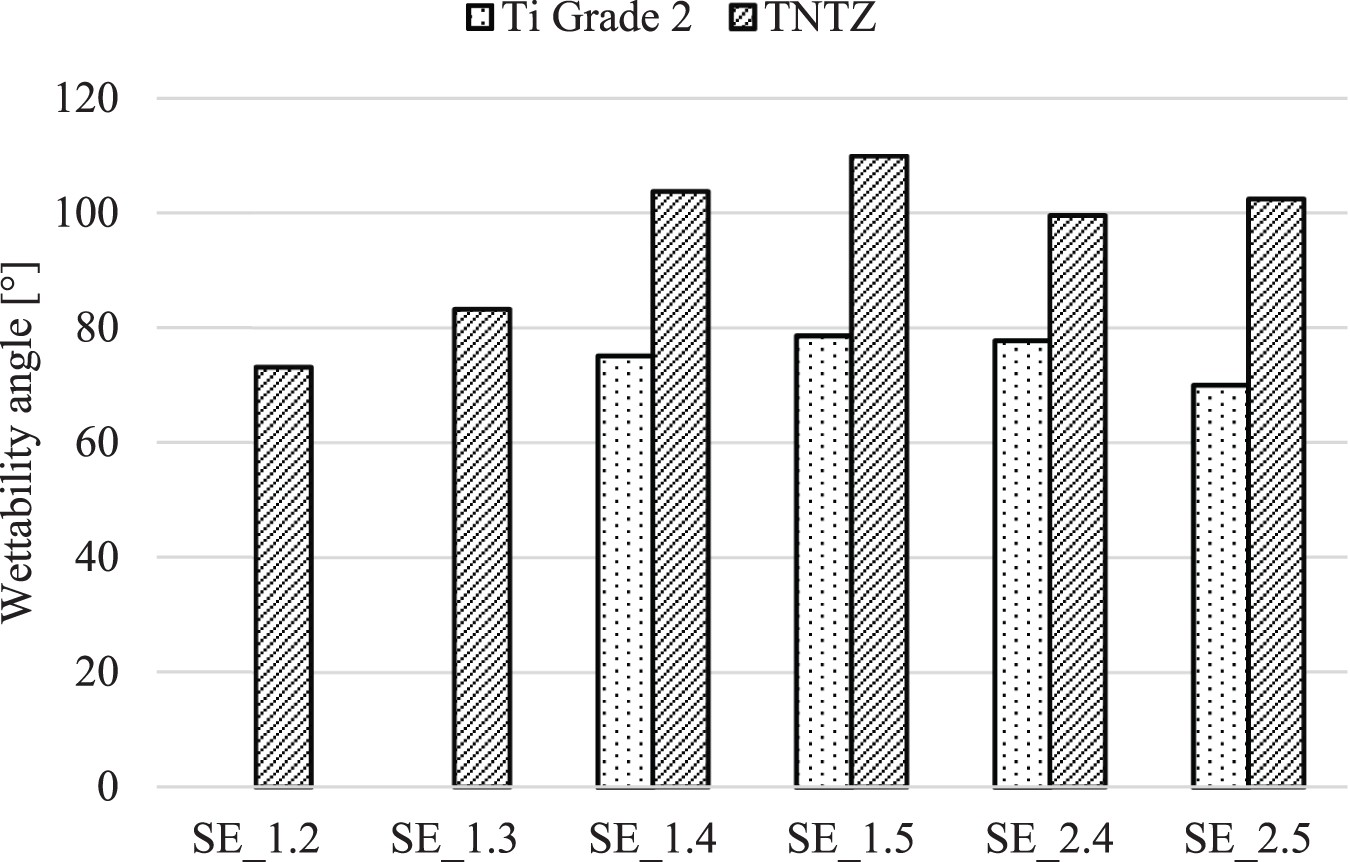
The results of the wettability tests are presented by wetting angle, in the form of graphs, in Figures 10–11. Regardless of the modification condition, the wettability of both peened materials, Ti Grade 2 and TNTZ alloy, remained in the hydrophilic range (Figure 10). The etching of the peened surfaces substantially increased the contact angle values of both materials, and to a greater extent for the TNTZ alloy (Figure 11). This may have been the result of not only the topographical modification, but – more likely – of chemical changes that occurred during contact with hydrofluoric acid e.g. due to the changes in the content of oxides with different stoichiometry [19,63]. Despite the decrease in wettability for the hybrid-modified samples compared to the peened states, the Ti Grade 2 surface remained within the hydrophilic range, while TNTZ proved more hydrophobic, except for samples SE_1.2 and SE_1.3, which also show more hydrophilic character. Although no optimal wettability range has yet been established, literature data can be found [41,45,63] that confirm good biological response and favourable osseointegration for the surfaces with similar level of wettability to those presented in this study. However, future cell culture studies are needed to confirm the biological performance of the newly-developed hybrid-modified surfaces of TNTZ alloy.
Wettability of shot-peened TNTZ alloy and Ti Grade 2. Wettability of shot-peened and etched TNTZ alloy and Ti Grade 2.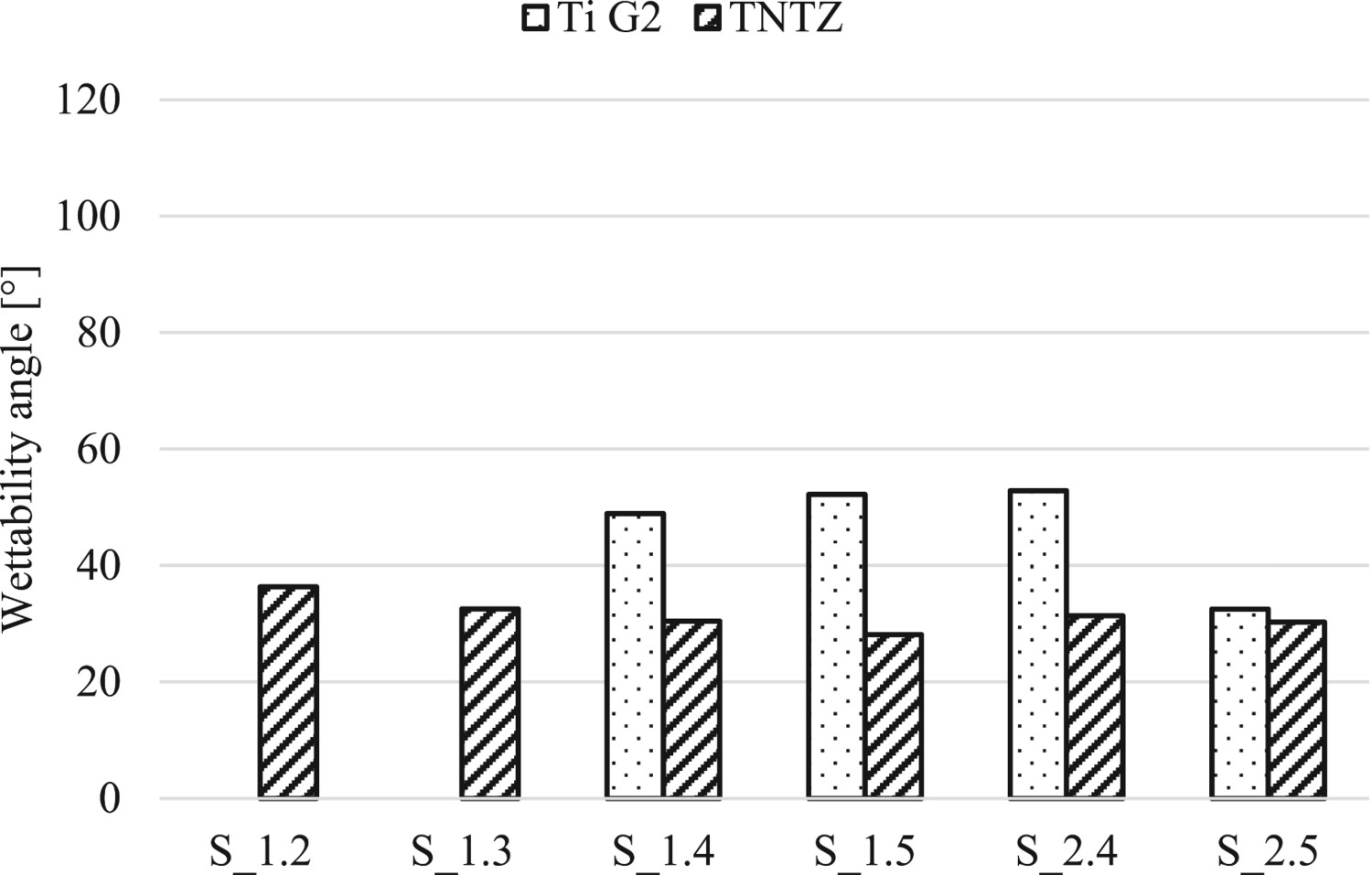
Conclusions
A hybrid surface modification consisting shot peening and chemical etching was successfully carried out for Ti Grade 2 (α-phase) and TNTZ (β-phase) alloy. Investigations of the treated surfaces indicated significant differences in the mechanical properties and topography of the substrate materials. Based on the presented research, the following conclusions can be drawn:
Shot peening of Ti Grade 2 and TNTZ alloy resulted in a strengthening of the surface region and made it possible to obtain hardness at a level corresponding to the ultrafine-grained structure. The increase in hardness was significantly higher for Ti Grade 2, reaching as much as 55%, which indicates a greater strengthening of the commercially pure titanium than was the case with the TNTZ alloy, for which the percent hardness increase was about 30%. Moreover, for both materials mechanical properties were independent from shot-peening parameters, and maximum hardness value was achieved already at the lowest applied pressures. Chemical etching significantly increased the wetting angle (decreased the wettability) of the shot-peened surfaces of Ti Grade 2 and TNTZ alloy, and the increase was greater for the TNTZ alloy. Along with the differences in the topography of the modified surfaces, this could indicate different etching mechanisms for both materials. For Ti Grade 2, shot peening conducted with the pressure of 0.5 MPa, with the shots of diameter: 150–250 μm and further acid etching, resulted in the greatest surface roughness and the highest level of wettability amongst all of the tested hybrid treatments. However, this sample is also characterised by non-uniform topography with the appearance of larger craters. Considering all factors (hardness of surface region, roughness, wettability, topography profile, and morphology), sample treated with the following parameters: (i) pressure: 0.5 MPa, (ii) shot diameter: 90–150 μm showed the highest potential in the enhancement of biological response of Ti Grade 2. For TNTZ alloy, shot peening with the pressure of 0.2 MPa and with the shots of diameter: 90–150 μm allows to obtain crack-free surface with the level of surface hardness similar to those as can be obtained after bulk large plastic deformation treatments. Moreover, further acid etching allows to obtain the highest level of wettability compared to the etched TNTZ surfaces that were shot-peened with higher pressures. This indicates on the necessity of performing TNTZ surface mechanical treatments with lower pressures compared to Ti Grade 2.
Footnotes
Disclosure statement
No potential conflict of interest was reported by the author(s).