



Abstract
There has been a rapid increase in the number of Chinese international students around the world in the past few decades. Australia and Hong Kong, two distinct host societies that receive Chinese international students, have participated in this increase. Many Chinese students from Asian countries have gone to Australia to further their studies since 1986, when the new educational export policy of the Australian government was introduced [1]. The number of overseas students in Australia increased 52.3% from 2001 to 2005, while the number of Chinese international students in Australia from mainland China, Hong Kong, Macau and Taiwan increased 185.9% during the same period [2, 3]. In 2005 the 76,502 Chinese international students in Australia from these four areas accounted for 33.5% of all overseas students in Australia in that year [3].
Hong Kong has attracted more and more Chinese students from mainland China since the handover of Hong Kong to China in 1997. The number of newly admitted mainland students in Hong Kong universities increased 128.6% from 2001 to 2005 [4]. Universities in Hong Kong regard mainland China as a fertile ground from which to recruit students and these students are expanding the academic influence of Hong Kong [5]. An understanding of the psychological adaptation of Chinese international students will enable the host education and service providers to better address the needs of these students.
International students are commonly regarded to be a population that is at high risk for psychopathology or poor mental health due to the various risk factors that the students experience in the process of cross-cultural adaptation [6]. A risk factor is defined as a condition that increases the likelihood that a person will develop adverse health outcomes [7]. The major risk factors that international students face are acculturative stressors. Acculturative stress is the response of individuals to life events, which originates from intercultural contact, when these events surpass the capacity of individuals to manage [8]. In this sense, acculturative stressors are the conflicts and difficulties that arise from the process of acculturation [9]. For Chinese international students the acculturative stressors include (i) language-related issues, such as difficulties in speaking English and in understanding spoken English [10], slang, jokes, idioms, common vocabulary, and topics of conversation [11], and a lack of confidence in using English in daily life [12]; (ii) academic issues, such as difficulties that are related to coursework, research, and teaching assistantships [13]; (iii) psychosociocultural issues, such as limited social contact, difficulties in making friends, homesickness and loneliness [14], discrimination [15], cultural difference, [16] and lack of independence [12]; (iv) financial issues [14]; and (v) other issues, such as political concerns [16]. Among these acculturative stressors, it is well documented that language proficiency is vital for successful integration into mainstream society. Language deficiency, which is highly related to social efficacy in interacting with host nationals [17], not only causes communication difficulties [15] but also impairs the academic work of international students [16].
The relationship between acculturative stress and mental health in migration research has been given much attention in the past few decades. Berry et al. proposed a model of acculturative stress in which acculturative stressors may result from varying experiences of acculturation, and varying levels of acculturative stress may become manifest as a result of acculturative stressors [18]. Hovey and King extended the model of acculturative stress of Berry et al. [18] to illustrate that acculturative experience may lead to varying levels of acculturative stress, and that a high level of acculturative stress can result in significant levels of depressive symptoms and suicide ideation [19, 20]. Their model was supported by empirical studies of various migrant populations [21, 22].
However, studies have also found that a subgroup of a high-risk population can develop and maintain normal and healthy psychological functioning with no sign of psychopathology. The concept of resilience has thus been developed and is defined as a personal trait or process of bouncing back from, overcoming, surviving, and/or successfully adapting to a variety of adverse conditions or life stresses [23]. Positive adaptation in adverse situations is related to a large number of environmental and individual protective factors [24], which refers to those factors that can mitigate the negative impact of adverse conditions [25]. Meaning of life is one of the protective factors that were identified by resilience researchers [23, 24]. Meaning of life has been defined as “the cognizance of order, coherence and purpose in one's existence, the pursuit and attainment of worthwhile goals and an accompanying sense of fulfilment” [26]. Wong developed the Personal Meaning Profile (PMP) to measure the sources of a meaningful life, which included achievement, religion, relationship, self-transcendence, self-acceptance, intimacy and fair treatment [26]. Kinner et al. analysed 238 quotations from 195 eminent people in the USA regarding their beliefs about the meaning of life and found a number of general themes, such as “Life is to be enjoyable” and “We are here to serve or worship God” [27].
The concept of meaning of life contains both culturally specific and universal elements [28]. A cross-cultural comparative study showed that the most important sources of meaning in life for Australians were participation in personal relationships and leisure activities, personal growth and meeting basic needs, findings that were consistent with those of Canadians [29]. However, some studies of Asian populations reported other culturally specific factors that were related to meaning of life. For example, Lin found that Chinese people also try to seek life meaning from family, the pursuit of purpose, being close to nature and leading an authentic life [30]. It seemed that meaning was framed in relation to others, society, and nature in a Chinese context.
There appears to be a strong link between meaning of life and negative dimensions of psychological well-being. A study of caregivers of patients with Parkinson's disease reported that the attainment of personal meaning and purpose had a negative association with anxiety, depression and hostility, while an existential vacuum was positively correlated with these three negative affects and predicted 30.8% of the total variance of negative affect [31]. Similarly, Recker also found that personal meaning was a significant predictor of depression in community and institutional elderly [32]. In addition, adequate meaning of life was found to significantly distinguish the resilient from the maladaptive group in school adaptation among Korean adolescents [33]. However, very few studies have been conducted to investigate this relationship in the context of acculturation for migrant populations.
Few studies have compared the similarities and differences of the psychological adaptation of a single group of migrants in different host societies. Differences in the host community context have been found to affect the acculturation process [34]. For example, Ghuman found that the South Asian adolescents in Australia showed a lower level of acculturation than did their counterparts in Canada or England [35]. He explained that at the time of his research in 1998, the sociopolitical climate of Australia was anti-Asian. Hence, it appears that the acculturation process in different locations and contexts is contextualized rather than homogeneous.
The purpose of the present study was to compare the psychological adaptation between Chinese international students in Australia and mainland Chinese students in Hong Kong. Specifically, this study had three objectives: (i) to compare the acculturative stressors that are experienced by Chinese international students in Australia and Hong Kong; (ii) to compare the psychological adaptation outcomes, in terms of negative affect, between the two groups; and (iii) to investigate the predictive effects of different domains of acculturative stressor and meaning of life on negative affect between the two groups.
Methods
Procedure
Ethical approval was obtained from the Human Research Ethics Community at the University of Hong Kong and from the University of Melbourne. An invitation letter was then sent out to students to describe the purpose and explain the confidential and voluntary nature of the study. The letter was distributed by email to mainland Chinese postgraduate students who were studying at six universities in Hong Kong. In Australia, with the help of the international student office, the invitation letter was sent out by email to those international students at the University of Melbourne who came from mainland China, Hong Kong, Macau, Malaysia and Singapore. At the same time, hardcopies of the questionnaire were also sent to the mailboxes in student dormitories in Hong Kong. Hardcopies of the invitation letter were posted on the notice boards on the University of Melbourne campus. The questionnaire was in Chinese. A souvenir was sent to the students who completed the questionnaire. The data were collected from September to December in 2005 in Hong Kong and from June to September in 2006 in Australia.
Participants
The sample size of the participants was calculated according to the following formula [36]:

where n = sample size, z = standard error that is associated with the chosen level of confidence, p = estimated variability in the population, q=(100–p), and e = acceptable error.
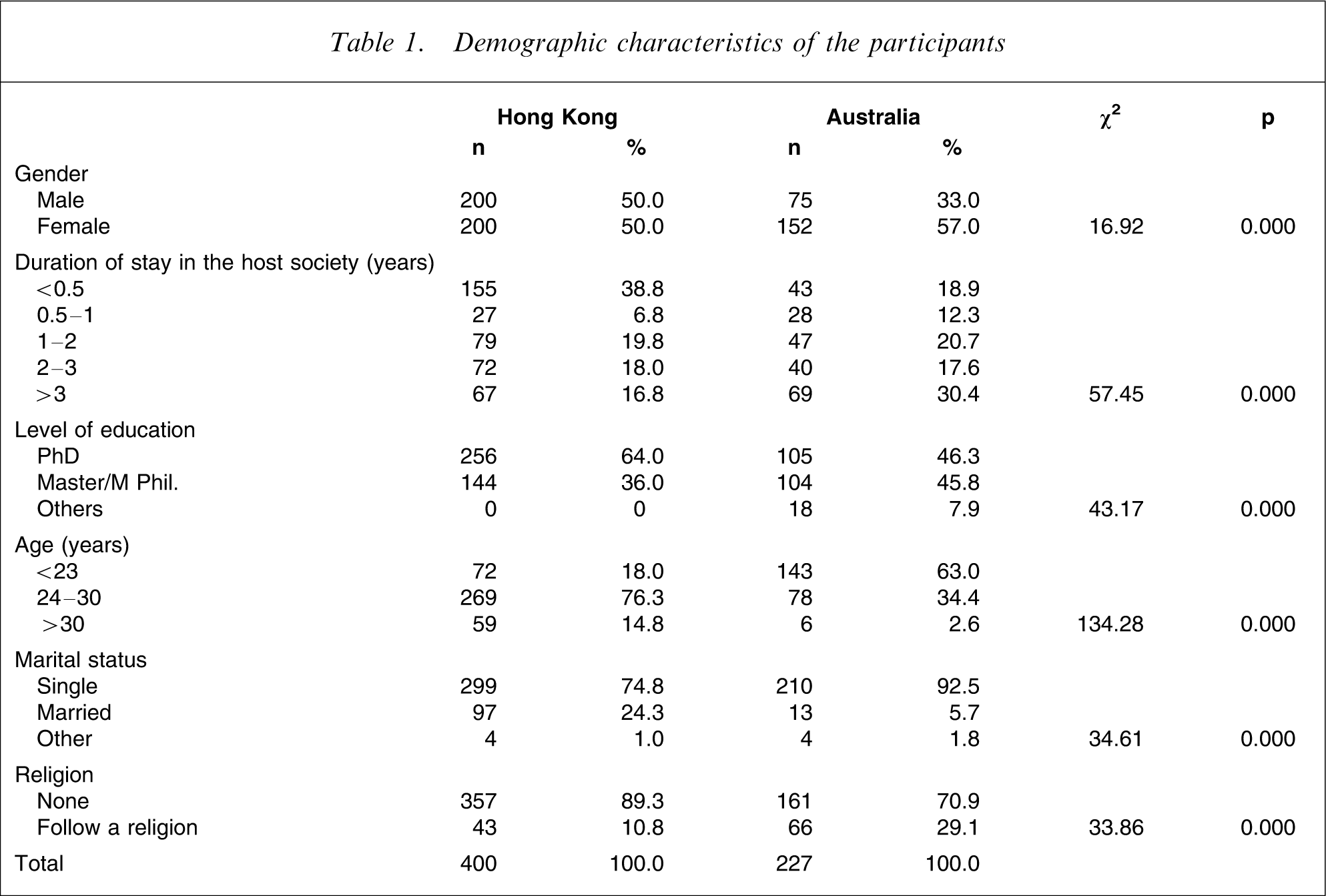
We identified a confidence interval of 95% with a corresponding Z score of 1.96. We were uncertain about the variability of the population under study so we used the 50–50 “worst case” approach, which means the greatest variability in the total population [36]. The acceptable error was assumed to be +/ − 4%, which implies 96% accuracy in the estimation of the total population of this sample. Accordingly, the sample size was calculated to be approximately 600. A total of 627 participants completed the questionnaire. Four hundred participants were mainland Chinese students who were studying at six universities in Hong Kong, and 227 were Chinese international students who were studying at the University of Melbourne in Australia. The majority (85%) of the Australian sample came from mainland China and Hong Kong. The demographic characteristics of the participants are shown in Table 1.
Demographic characteristics of the participants
Measures
Acculturative Stressor Scale for Chinese Students
The 18-item Acculturative Stressor Scale for Chinese Students (ASSCS) was developed by the researchers to measure the acculturative stressors that are experienced by Chinese international students in their daily lives in the host country/area. Fourteen mainland Chinese postgraduate students were interviewed about their adjustment problems in Hong Kong. A total of 100 items were generated from the in-depth interviews. Eighty-four items were retained by expert and wording checking, and was initially validated in a sample of 189 mainland Chinese postgraduate students in Hong Kong for item selection. Eighteen items were retained by item analysis, which was further validated in this study. Four factors were suggested by exploratory factor analysis: language deficiency; cultural difference; academic work; and social interaction. Participants were asked to what degree they had experienced or were experiencing the adjustment problems in the host country/area that were listed on the scale. The responses were rated on a 4-point Likert scale (0 = not at all, 1 = a little, 2 = moderate, 3 = a lot). A higher score indicated a higher level of the acculturative stressor. The ASSCA was validated among 400 mainland Chinese postgraduate students in Hong Kong and 227 Chinese international students in Australia. Cronbach's alpha and the Guttman split-half reliability of the ASSCS were 0.88 and 0.85, respectively. The reliability of the four subscales ranged from 0.70 to 0.81 for Cronbach's alpha and from 0.65 to 0.74 for the Guttman split-half reliability. The average inter-item correlation of ASSCS was 0.30 with a range of 0.11 to 0.56. The ASSCS score was found to be positively correlated with General Health Questionnaire (GHQ-12) and negatively correlated with life satisfaction.
Chinese Personal Meaning Profile
The Chinese Personal Meaning Profile (CPMP) was developed on the basis of the PMP of Wong [26] to assess the sources of meaning in life among Chinese populations [30]. The original CPMP consists of 87 items and 12 subscales. Items with a factor loading <0.45 were excluded and a 55-item CPMP with 10 factors was formed for this study. Participants were asked to indicate to what degree the items described the sources of a meaningful life in their own lives. Responses were rated on a 7-point Likert scale (from 1 = not at all to 7 = a great deal). A high score indicated a high level of meaning in life. Cronbach's alpha was 0.96 and the Guttman split-half reliability was 0.92 for the 55-item CPMP in the present study. The CPMP score was found to be positively and significantly correlated with the Purpose in Life Scale (PLS) and Satisfaction with Life Scale (SWLS).
Chinese Affect Scale–Negative Affect Subscale
The Chinese Affect Scale (CAS) was developed for Hong Kong Chinese people [37]. It includes 20 items and two subscales: Positive Affect Subscale (PAS) and Negative Affect Subscale (NAS) [37]. The NAS was used in the present study to measure negative affect among Chinese international students in Australia and Hong Kong. It includes 10 items, such as sad, depressed and helpless. Participants were asked to indicate how they had felt in the past month. All of the items were rated on a 5-point Likert scale (from 1 = very slightly or not at all to 5 = extremely). Cronbach's alpha for the NAS was 0.83 for the student sample and 0.88 for an adult sample. The 2 week test–retest reliability of the NAS was 0.75, and the 1 month test–retest reliability was 0.71. The NAS was found to be positively correlated with neuroticism, negative self-appraisal, stress and pessimism.
Data analysis
The absolute value of the skewness and kurtosis of all of the tested variables was in the range of 0.05–1.01 and 0.05–1.80 in the Hong Kong sample, respectively, and in the range of 0.02–0.87 and 0.08–0.74 in the Australian sample, respectively. The ranges were <2 for skewness and <7 for kurtosis, which suggests a normal distribution of the variables [38]. To compare the differences of emotional adaptation outcome and its predictors between the Hong Kong and Australian sample, a multivariate analysis of covariance (MANCOVA) was performed. The results suggest that there were significant differences in the demographic variables of gender, age, level of education, marital status, religion and duration of stay in the host society between the Australian and Hong Kong samples (Table 1). Because these variables might influence emotional adaptation in acculturation, they were controlled as covariates in the MANCOVA. Hierarchical regression analyses were performed to assess the independent predictive effects of the variables of demographic factors, the different domains of acculturative stressor, and meaning of life on negative affect. Path analysis was also conducted to test the mediating effect of meaning of life in relation to acculturative stressor and negative affect.
Results
Mean differences between the Hong Kong and Australian sample
The result of the MANCOVA was significant (F = 3.43, df = 16/604, p = 0.000). The univariate F-test showed that the two groups differed significantly in terms of negative affect (F = 4.49, df = 1, p = 0.035), acculturative stressor (F = 18.64, df = 1, p = 0.000), the four factors of acculturative stressor (F1=6.51, df1=1, p = 0.011; F2=16.07, df2=1, p = 0.000; F3=6.45, df3=1, p = 0.011; F4=28.45, df4=1, p = 0.000), and five factors of meaning of life (Table 2). Pairwise comparison showed that the Australian sample had a higher level of negative affect and experienced a higher level of acculturative stressor than the Hong Kong sample. In terms of meaning of life, no group difference was found on the total score of meaning of life between the two samples, but the Hong Kong sample was found to seek more meaning from acceptance and contentment, relationship, being close to nature and leading an authentic life, fair treatment and intimate relationships than did the Australian sample.
Group differences in acculturative stressor, meaning of life, and negative affect
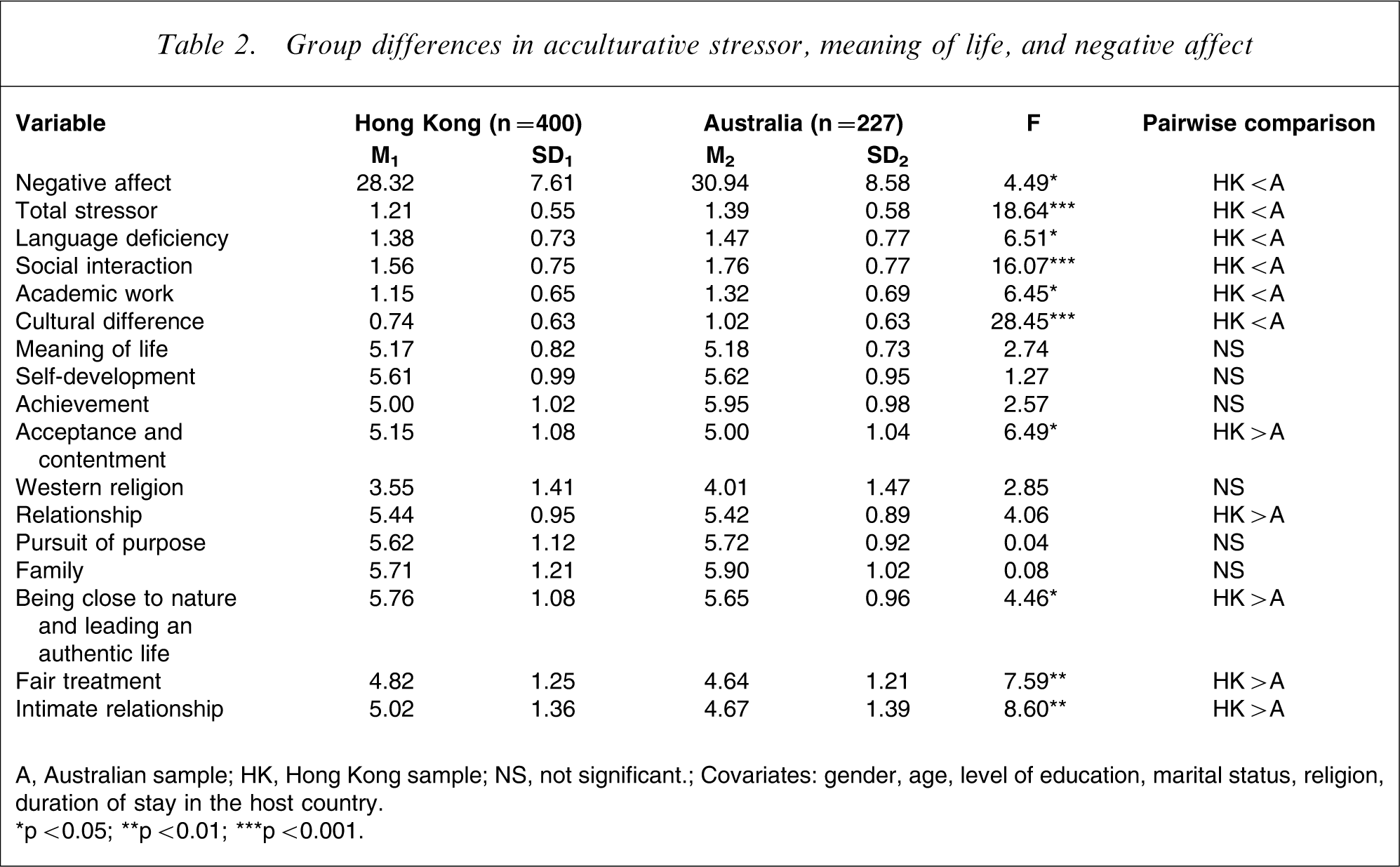
A, Australian sample; HK, Hong Kong sample; NS, not significant.
Covariates: gender, age, level of education, marital status, religion, duration of stay in the host country.
∗p < 0.05; ∗∗p < 0.01; ∗∗∗p < 0.001.
Predictors of negative affect in acculturation
Hierarchical regression analyses showed that the demographic factors had no significant predictive effect on negative affect within either the Hong Kong or the Australian sample (Table 3). The four domains of acculturative stressors (language deficiency, social interaction, academic work, and cultural difference), taken together, and meaning of life accounted for, respectively, 23% and 1% of the total variance of negative affect in the Hong Kong sample, while two domains of acculturative stressor (language deficiency and academic work) and meaning of life predicted, respectively, 17% and 2% of the total variance of negative affect in the Australian sample. Language deficiency and academic work positively predicted negative affect in both samples. Social interaction and cultural difference had a positive impact on negative affect in the Hong Kong sample but no such effect was found in the Australian sample.
Hierarchical regression analysis of the effects of demographic factors, acculturative stressors, and meaning of life on negative affect
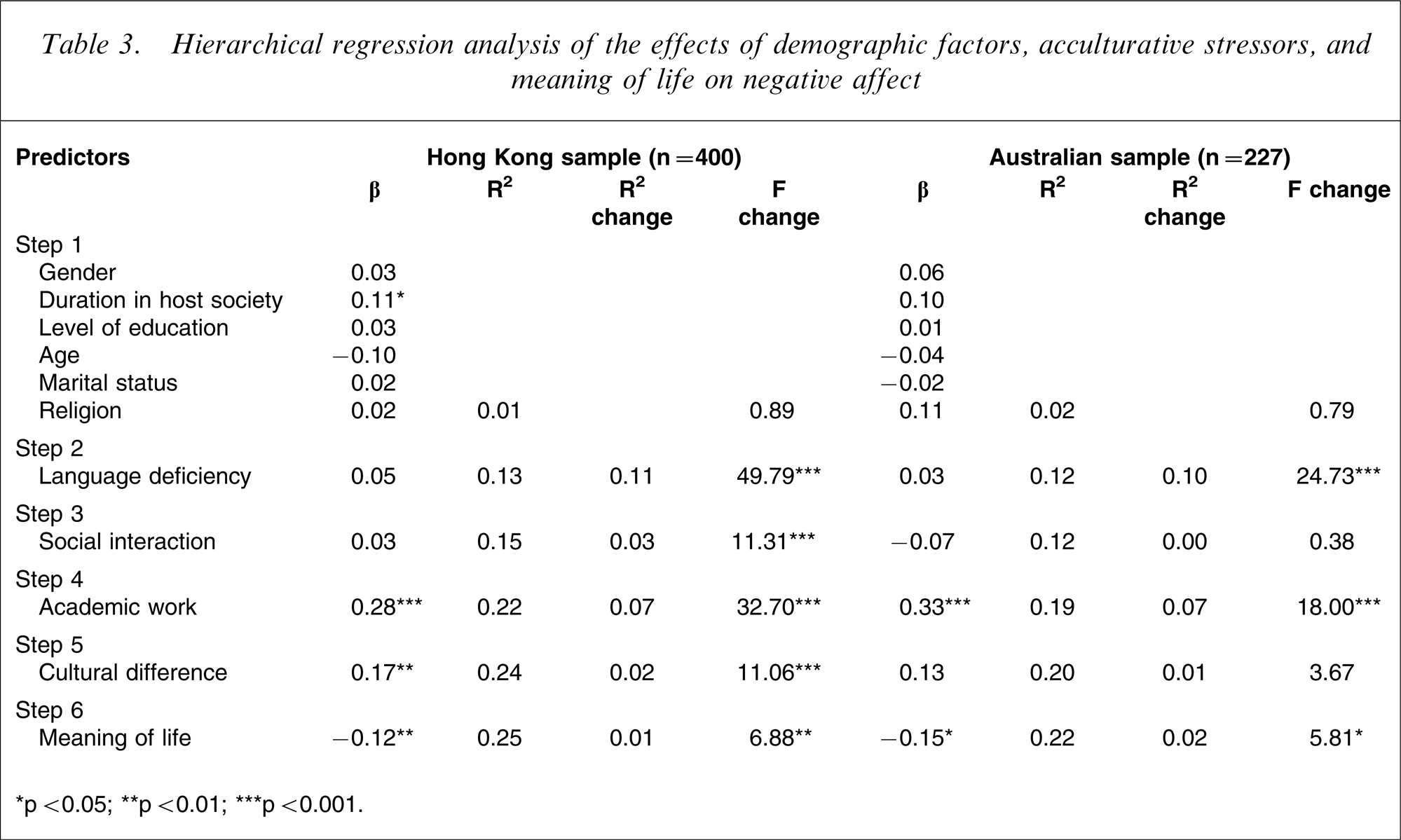
∗p < 0.05; ∗∗p < 0.01; ∗∗∗p < 0.001.
Mediating effect of meaning of life in relation to acculturative stressor and negative affect
The mediational model of meaning of life in relation to acculturative stressor and negative affect was tested using the procedure of Frazier et al. to identify the mediating effect of meaning of life [39]. The effect was tested separately for the Hong Kong and Australian sample. Significant correlations among varialbles were found in the two samples for mediational analysis (see Table 4). It was demonstrated that acculturative stressors contributed to negative affect through both direct and indirect pathways in the Hong Kong sample (Figure 1). The beta weight was 0.443 (p = 0.000) when acculturative stressor was regressed alone on negative affect. When meaning of life was included in the model, the resulting beta weight was still significant (p = 0.000), but it went down slightly to 0.417, which suggests that meaning of life serves to partially mediate the relationship between acculturative stressor and negative affect, although to a small extent. This model explained 20.8% of the total variance of negative affect. The direct effect of acculturative stressor on negative affect was also found in the Australian sample (β = 0.336, p = 0.000), but no mediating effect of meaning of life in relation to acculturative stressor and negative affect was found in this sample.
Mediating effect of meaning of life in relation to acculturative stressor and negative affect in the Hong Kong sample. ∗p < 0.05, ∗∗∗p < 0.001.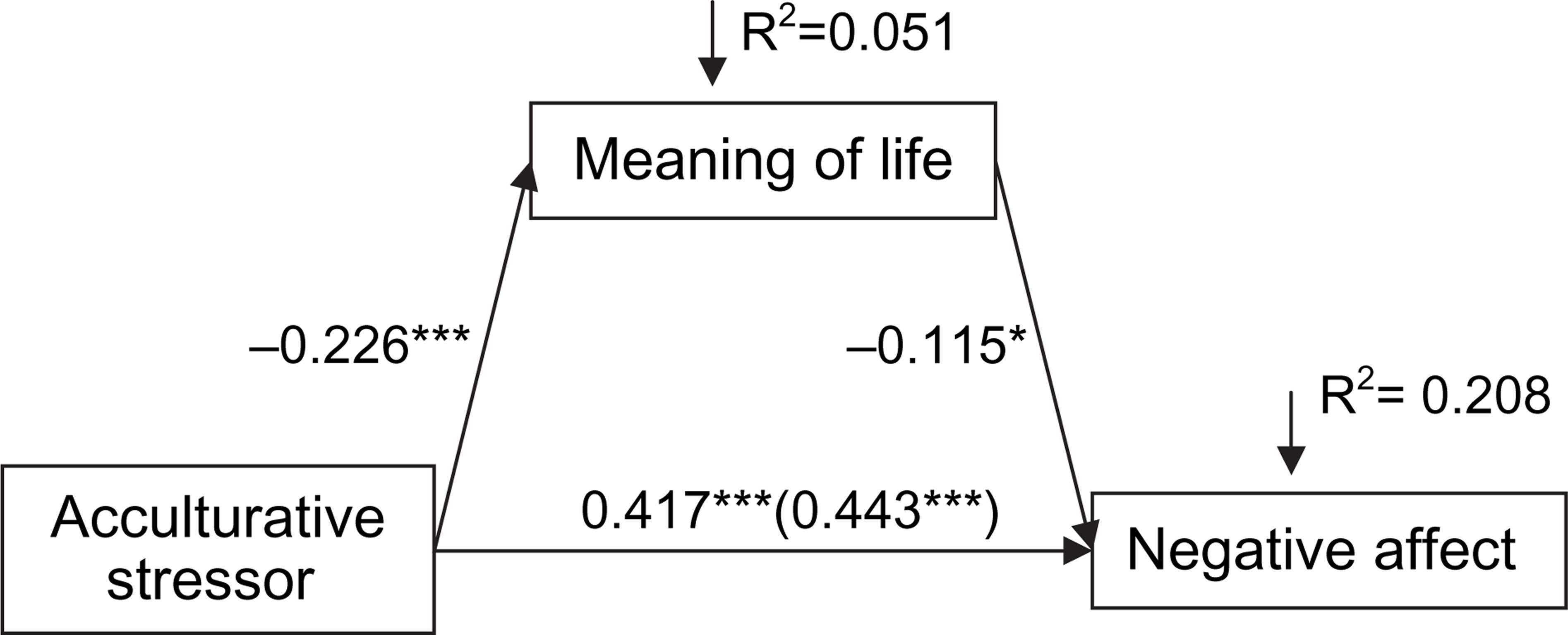
Intercorrelations among acculturative stressor, meaning of life and negative affect
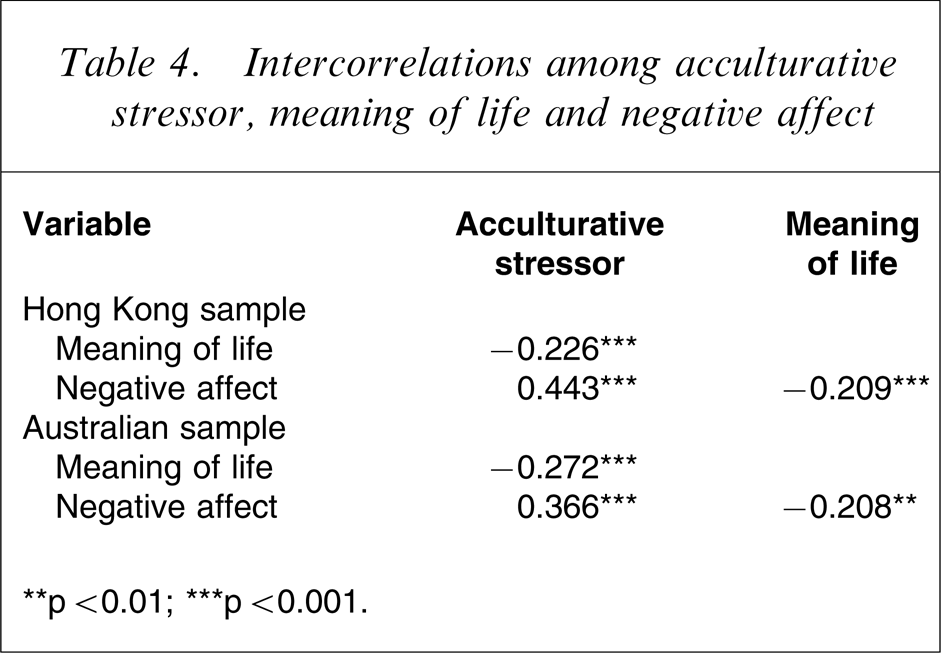
∗∗p < 0.01; ∗∗∗p < 0.001.
Discussion
The aim of the present study was to explore the predictive effects of acculturative stressor and meaning of life on negative affect in the context of acculturation and to compare these effects between Chinese international students in Australia and Hong Kong.
Differences in acculturative stressor and negative affect between the two groups
The present study found that the Chinese international students in Australia experienced a higher level of acculturative stressor than did the mainland students in Hong Kong in language deficiency, academic work, social interaction and cultural difference. In addition, they were also found to have a higher level of negative affect than their counterparts in Hong Kong. There are three possible explanations for these results. First, the cultural distance between Australia and China is greater than that between Hong Kong and China. The findings verified the supposition of the impact of the cultural distance between the host country and the country of origin on acculturative stress [40]. The greater the cultural distance, the more difficulties the students experience in the host society [41], and the greater their stress [42]. Second, language deficiency was found to be significantly correlated with academic work (rA=0.55, p = 0.000; rHK=0.44, p = 0.000), social interaction (rA=0.68, p = 0.000; rHK=0.61, p = 0.000), and cultural difference (rA=0.51, p = 0.000; rHK=0.45, p = 0.000) in both samples, which indicates that language deficiency not only influences the academic work of international students but also affects their social life and how well they understand or integrate into the host culture. This is consistent with the previous findings that host language proficiency plays a central role in the acculturation process [15–17]. The correlation coefficients between language deficiency and academic work, social interaction and cultural difference were greater in the Australian sample than those in the Hong Kong sample. This indicated that the influence of this factor was much greater in Australia than it was in Hong Kong. In Australia, English is the only language that Chinese international students can use to communicate with Australians not only in class but also in their everyday life. In contrast, in Hong Kong, English serves as a second language for both the mainland Chinese students and local Chinese. Many mainland Chinese students started to learn Cantonese when they first arrived in Hong Kong. In addition, more and more Hong Kong Chinese are learning Putonghua since the handover of Hong Kong to China in 1997. Therefore, mainland Chinese students in Hong Kong could communicate with the locals not only in English but also in Cantonese or Putonghua, which facilitated their adjustment to their academic work, social life and cultural understanding.
Finally, meaning of life was found to partially mediate the positive impact of acculturative stressor on negative affect in the Hong Kong sample, but not in the Australian sample. Although a direct effect of acculturative stressor on negative affect was found in both samples, the magnitude of this relationship was greater in the Hong Kong sample than in the Australia sample. This indicates that acculturative stressor had a greater positive impact on negative affect in the Hong Kong sample than it did in the Australia sample. However, because of the mediating role of meaning of life, the positive impact of acculturative stressor on negative affect was partially mediated by meaning of life in the Hong Kong sample. In contrast, no such effect was found in the Australian sample, which resulted in the higher level of negative affect that was experienced by Chinese international students in Australia.
Acculturative stressor as a major risk factor for Chinese international students
Acculturative stressor was found to be a significant predictor of negative affect for the Chinese international students in Australia and Hong Kong. Consistent with previous findings, acculturative stressor had a strong positive association with negative emotional outcomes, such as depression, anxiety and suicide ideation [22, 43, 44]. Language deficiency is a common and major risk factor for Chinese international students in Australia and Hong Kong as they try to adapt to the host society. Although the local language in Hong Kong is Chinese (Cantonese), almost all of the courses in the Hong Kong universities are taught in English, and students were required to write their theses in English. Most of the mainland Chinese students learned English as a second language in China before they came to Hong Kong, but they found that they lacked proficiency in English and were not confident in their English-language skills in their studies and daily life [45], especially their listening and speaking skills. Their situation was similar to that of the Chinese international students in Australia, an English-speaking country [17, 46]. The English language problem is a common adjustment issue that is faced by Chinese international students who are studying in countries in which English is the main instruction language used [10–12]. The language problem was found to have a positive impact on negative affect within both samples. This supports the previous finding on migrants in English-speaking countries, that low English language proficiency is a major predictor of poor adjustment and mental health [47].
Like all international students, the Chinese students in Australia and Hong Kong faced academic issue. The major task of international students, unlike that of other migrant populations, is to pursue higher education in the host society. The majority of the participants in the present study were graduate research students who were required to complete a thesis or dissertation within a defined period of time. Thus, whether they can graduate on time becomes one of the major concerns. The stressor of academic work arises due to the differences in educational systems between the host country and country of origin. Li summarized three differences between Chinese and Western university education systems, namely, depth versus broadness, introduction to theory versus hands-on experience and authoritarian versus independent learning [as cited in 13]. The education system in China emphasizes the ability of students to absorb knowledge rather than the development of new knowledge. Thus, when Chinese students enter a Western university they find that as graduate students they not only lack training in research skills and exposure to current research in the related field [48], but also that some knowledge that they have learned in China is out of date [49]. In addition, Chinese students are not usually good at group discussion or in-class presentations because these are not emphasized in the education system in China. The universities in Hong Kong are similar to Western universities in these aspects because they have followed the British tradition of university education for almost 100 years. Therefore, it is not surprising that academic issues became another major adjustment problem that was potentially stress-inducing for the Chinese international students in Australia and Hong Kong and accounted for an increased negative affect in both samples. This result is consistent with the previous finding that perceived academic progress acted as a significant predictor of mental health, in terms of anxiety, stress and depression, of the international students at the University of Melbourne [50].
Social interaction and cultural difference were found to be the other two risk factors that increase negative emotion in the process of acculturation. Migration involves separation from social networks in the homeland and re-establishing a new network in the host community [51], unfulfilled expectations [52], and experiencing cultural shock due to lack of knowledge of the host culture [13]. These issues are big challenges for international students. Any one of them can cause frustration and psychological distress [52, 53]. However, social interaction and cultural difference were found to be risk factors for the mainland Chinese students in Hong Kong, but not for the Chinese international students in Australia. It is surprising that Chinese students experienced more stressors of social interaction and cultural difference in Australia than did their counterparts in Hong Kong (Table 2), but no significant contribution to negative affect was found for either of them in the Australian sample. It may be related to the motivation of individuals to become acculturated into the host society. Previous research has shown that migrants who prefer separation to integration as their acculturative strategy face less acculturative stress [54]. Another set of our data showed that Chinese international students in Australia used a significantly higher level of separation strategies than their counterparts in Hong Kong to cope with the acculturative stressors (F1, 619=9.05, p < 0.01). Thus, the perceived levels of stress caused by social interaction and cultural difference are higher, yet the actual impact on negative affect may not be significant. More cross-cultural comparative studies need to be conducted to test this finding and investigate how environment and personal factors influence the psychological adaptation of Chinese students in two or more host societies in future research.
Meaning of life as a protective factor (i.e. mediator) for mainland Chinese students in Hong Kong
The present study found that meaning of life partially mediated the relationship between acculturative stressor and negative affect in mainland Chinese students in Hong Kong. However, no such effect was found in Chinese international students in Australia. Although it is difficult to explain why meaning of life played a mediating role only in the Hong Kong sample, the findings of the present study indicated that mainland Chinese students in Hong Kong were able to derive more meaning from a variety of sources, such as acceptance and contentment, relationship, being close to nature and leading an authentic life, fair treatment and intimate relationships than did the Chinese international students in Australia. Acceptance and contentment have often been found to enhance individuals’ psychological well-being [55]. Fair treatment rather than discrimination is expected to facilitate a sense of belonging to the host community. Also, relationships with others, especially an intimate relationship, are an important source of social support and was found to be a protective factor against depression for young adults [56]. Moreover, these sources of meaning in life reflect the social values of a collectivist society, such as that of mainland China and Hong Kong, of ingroup harmony, intimate relationships, and organization of concentric circles, which have been associated with the reduction of the stress level of everyday life [57]. In contrast, the subordination of ingroup goals to personal goals, self-reliance, and competition are the most important characteristics of an individualist society [57]. Coming from a collectivist society, Chinese students may find many value conflicts and disorientation in finding life meaning and purpose in an individualist society, such as Australia, which may dilute the protective function of meaning of life on emotional well-being.
Theoretical and practical implications
The present study has both theoretical and practical implications in the area of acculturation and mental health. With regard to the theoretical implications, this study enhanced the resilience research in the context of acculturation for migrant populations. As shown in the literature review, the research paradigm in the health and mental health field has shifted from a problem-focused to a strength-based orientation. Although great attention has been paid to resilience research in the past three decades, research on resilience in the context of acculturation is still in its infancy. Guided by the resilience framework, future studies should focus more on protective factors rather than on risk factors, and especially focus on protective mechanisms of how the protective factors work to promote positive adaptation outcomes in the process of acculturation.
This study also provided significant implications for the practice of counselling and social work. Guided by the resilience framework, interventions for international students will benefit from two ways of helping students adapt well in host communities. On the one hand, counsellors and social workers can reduce the risk factors faced by international students; namely, by enhancing their English-language proficiency, broadening their social networks, solving their academic difficulties, and interacting more with the host culture. On the other hand, it is more important to enhance the individual and environmental protective factors of students. Helping international students find meaning in their lives when they are living in the host society and enhancing their sense that their lives are meaningful and purposeful should greatly improve the emotional well-being of the students. Finally, the results also indicate that international students are not a homogenous group. The cross-cultural adaptation of international students varied according to the characteristics of the host society. Therefore, it is important for counsellors and social workers to design culturally specific and tailor-made intervention programmes for international students in different host communities.
Limitations
The limitations of the present study should be kept in mind. First, due to ethical issues, the participants in Australia were recruited from the University of Melbourne, and the generalization of the findings to the total population of Chinese international students in Australia is therefore limited. Second, the present study used a cross-sectional rather than a longitudinal research design. Therefore the causal relationships among the variables were not able to be determined.
Footnotes
Acknowledgements
The authors would like to express our appreciation to the Graduate School in the University of Hong Kong and the International Student Office in the University of Melbourne for their help with the data collection work for this study. This study was supported by 2006 Endeavour Australia Cheung Kong Award.