




Abstract
Research on suicide-related media contagion effects has had a long and controversial history in the social sciences. The seminal work in this topic area dates back into 1974, when Phillips, a US sociologist, found evidence of significantly increased suicide rates after the publication of suicide stories on the title page of the New York Times. His study demonstrated a dose–response relationship between newspaper distribution and the quantity of the effect [1]. Phillips introduced the term ‘Werther-effect’ for this phenomenon, referring to historical narratives describing a ‘suicide-epidemic’ among young men after the publication of Goethe′s novel The sorrows of the young Werther (1774) [2]. In Goethe′s book, the protagonist commits suicide by shot in the head after he faces the loss of his adored love Lotte.
Even though a following suicide epidemic could never be empirically verified [3], there are several historical sources describing single cases of young men who died by suicide with the same motives, using the same suicide method and partially with Goethe′s book near their suicide sites [3] – a phenomenon that is understandable only by acknowledging the historical significance of this book in the context of contemporary suicide debates. These debates were often found to connect people's struggle against social conventions in a deeply hierarchically structured society with the justification of suicide, tending to glorify the suicidal act [4].
In the years after Phillips’ seminal study, empirical evidence of copycat suicides was also found in European countries [5–7], and it could be shown that there was a higher probability of copycat suicides after non-fictional portrayals of suicide than after fictional stories [8], and that stories in newspapers were more apt to be a model for imitation than stories on TV [8]. Furthermore, some research results suggested that significant increases in suicides were not only due to a bringing forward of suicides that would have happened anyway [5] – a hypothesis that was originally formulated by Durkheim in his basic work on suicide entitled Suicide (1897) [9]. Quite the contrary to Durkheim's narrow definition of ‘imitation’, which emphasized imitation as a process of simple contagion from individual to individual [10], empirical evidence was accumulated that imitation could also take place on a broader level, and that some media portrayals could thereby lead to additional suicides that probably would not have occurred without publication [5].
On the basis of these results, the question of whether there was also a preventive potential achievable by influencing mass media reporting became a main topic of interest in suicide prevention in the 1980s. In Austria, probably the first country worldwide, media guidelines for reporting on suicides were introduced in 1987 [11–13]. Since then, the aims have been (i) to reduce overall suicide numbers in Austria (Figure 1), and (ii) to prevent suicides and suicide attempts on the Viennese subway, which increased sharply between 1982 and 1987 (Figure 2). The prevention of suicides on the subway was defined as a specific aim because these incidents in public were of exceptional interest for the mass media and seemed to boost reporting on suicides in the Austrian media [13].
Numbers of suicides in Austria before and after the introduction of media guidelines, 1946/47–2004/05. Significant impact of the intervention on Austrian suicide numbers (t = −2.32, df = 54, ∗p = 0.02). Suicides on the Viennese subway before and after the introduction of media guidelines, 1982/83–2004/05. Highly significant level change of suicides (t = −4.44, df = 19, ∗∗∗p < 0.001) after the introduction of the guidelines and an additional moratorium on the reporting of subway suicides. Year 0: year 1987/88, the first year after the implementation of media recommendations.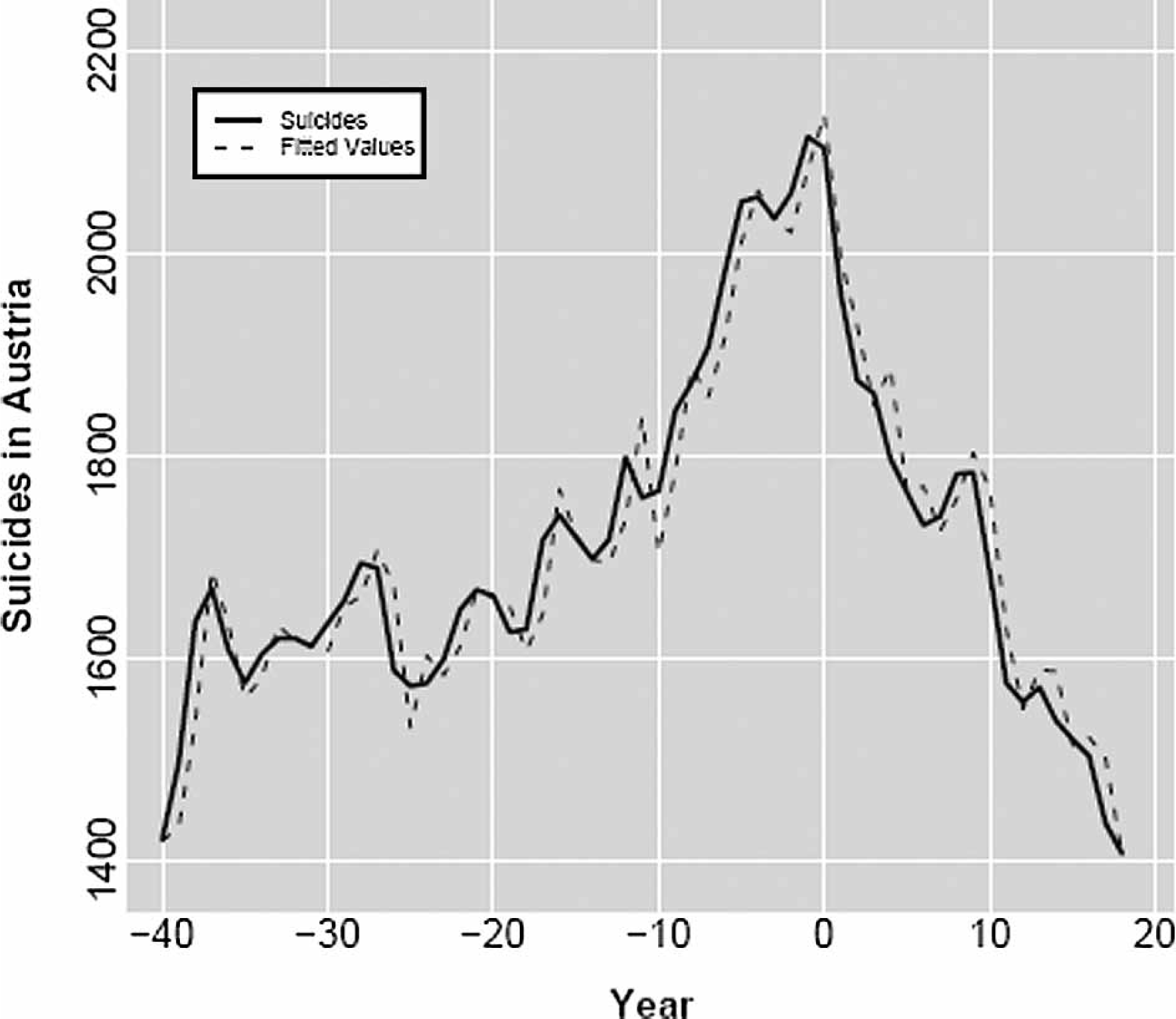
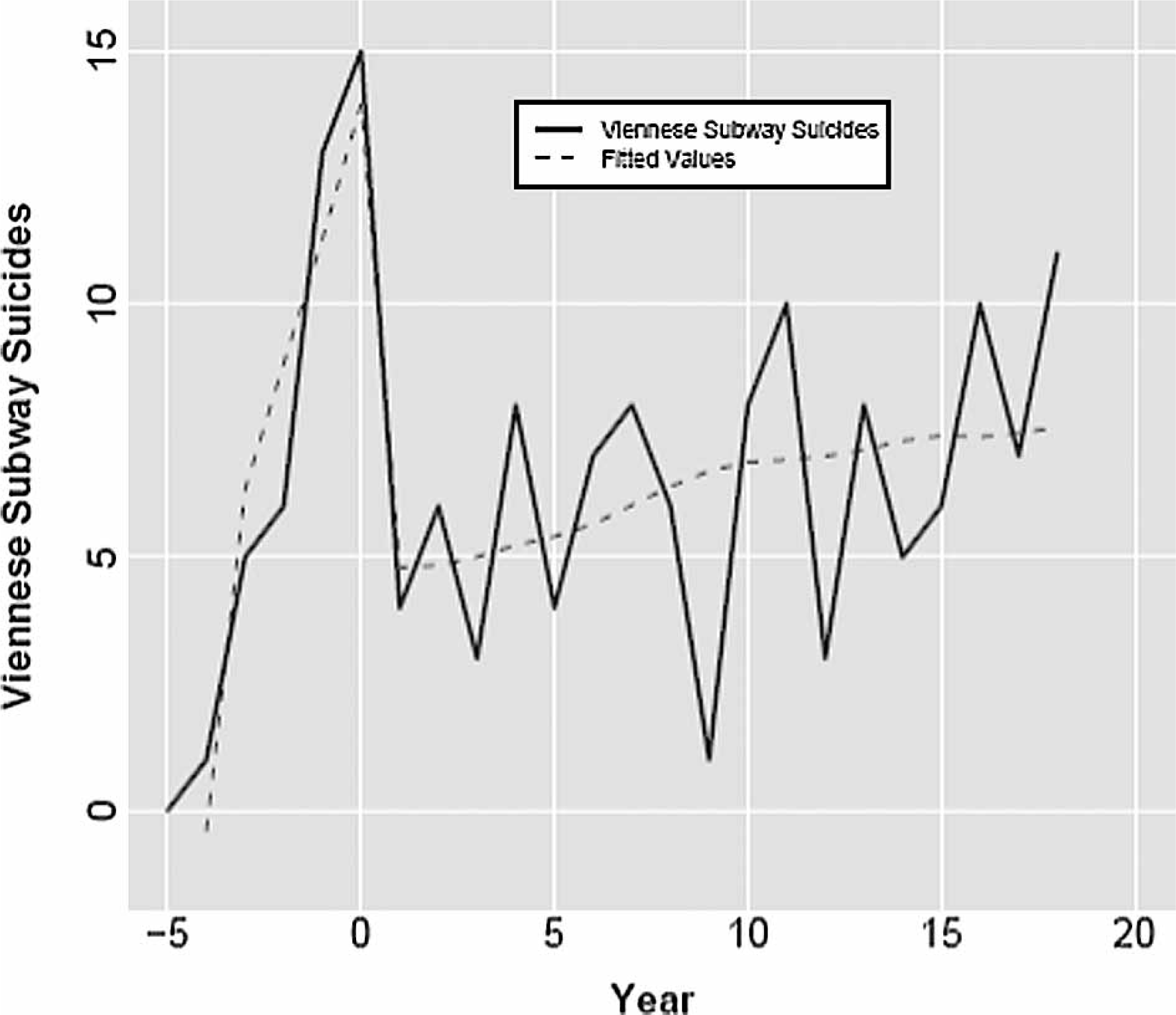
The first study on the impact of the guidelines on subway suicides and suicide attempts showed a sharp decrease of >80% within 6 months and stable suicide numbers until 1992 (Figure 2) [11].
On the basis of these results and encouraged by the World Health Organization's decision to list ‘toning down press reports’ among the six basic steps of suicide prevention in 1993 [14, 15], many countries have introduced media guidelines for reporting on suicides since then [16]. Within the scientific discussion on their impact, considerable efforts have been made to examine the relationship between reports and public knowledge and attitudes about suicide [17], to test the actual quality of media portrayals of suicide [18], and the impact of media interventions on the quality of reporting [19, 20]. However, up to now very little work has been done internationally that explicitly evaluates the impact of guidelines on overall suicide numbers [21, 22].
Methods
Since mid-1987, reports of the largest Austrian newspapers and the Austrian Press Agency have been monitored and guidelines have been repeatedly reissued to the Austrian media. Given its aim of reducing suicides on the Viennese subway, the Wiener Linien (the operating company of public transport in Vienna) arranged a moratorium on the reporting on subway suicides with some of the collaborating media and additionally promoted the guidelines in Vienna.
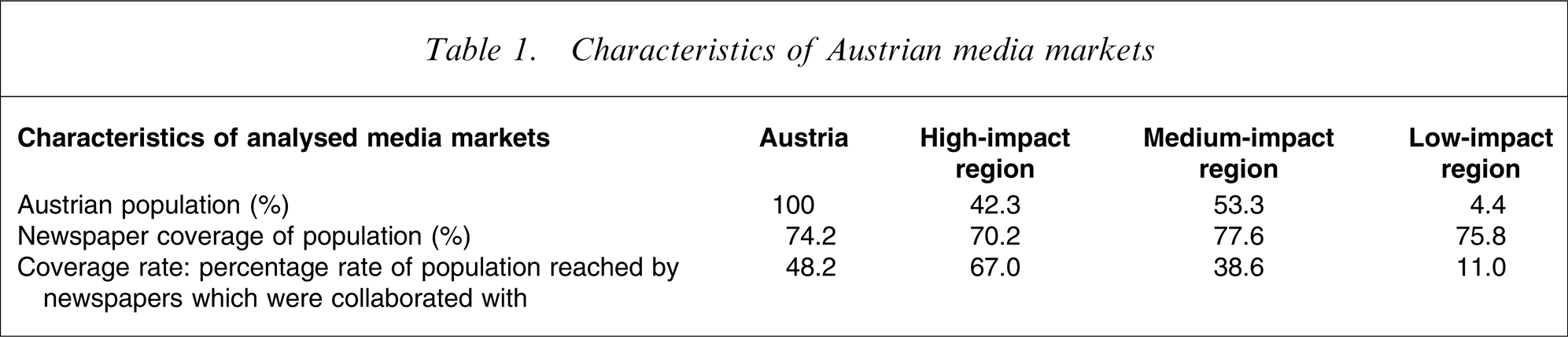
On the whole, newspapers reaching approximately 50% of the Austrian population were collaborated in the intervention (Table 1).
Characteristics of Austrian media markets
Current publications on biomedical methodology provide a framework for a quality assurance of evaluations of natural experiments [23]. On the basis of this framework, different methodological approaches for testing the aims of our experiment were applied:
Overall suicides
For an evaluation of the nationwide impact of the guidelines, we analysed Austrian suicide data from mid-1946 to mid-1987 in order to detect important features of the time series [24]. An intervention term that satisfied the assumptions of a permanent and abrupt impact of the guidelines was modelled, following the methodology proposed by McDowall [25]. Afterwards, an impact assessment model, containing the ARIMA model identified on the basis of the preintervention time series and the binary intervention term, was used to test the possible impact of the guidelines [25].
In addition, to provide a more detailed insight into the efficacy of our intervention, Austria was divided into three areas according to regionally differing coverage rates of the collaborating media, and the impact of the guidelines was tested for each area separately:
In the first region, which included approximately 42% of the Austrian population, newspapers reaching 67% of the population were monitored during the intervention. Thus, this area was hypothesized as a ‘high-impact media-market’. In the hypothesized ‘medium’ and ‘low-impact’ media-markets, which covered approximately 53% and 4% of the population, the guidelines were repeatedly reissued to newspapers reaching approximately 39% and 11% of the population, respectively (Table 1).
In order to test intermediate impacts of the intervention on the quality of media reporting, we obtained the numbers of headlines of suicide reports using either the expression ‘suicide’ or ‘self-murder’ between 1981 and 1993 from the Austrian Press Agency (original search terms in German: Suizid, Selbstmord and Freitod). This qualitative feature should be avoided whenever possible according to the guidelines. By applying a Mann–Whitney U-test, we compared its use in the time period of 5 years before and after the introduction of the guidelines. Additionally, to test the possibility of a relationship with the actual numbers of suicide, we correlated this qualitative aspect with suicide numbers in the same time period.
Suicide data for this study were obtained from Statistics Austria. Media Analysis Austria provided us with data on regional newspaper coverage rates.
Subway suicides
For a test of our aim of reducing Viennese subway suicides we applied a linear regression model that is appropriate only for time series that are not significantly autocorrelated. Annual subway suicide data since 1982, when the second suicide on the Viennese subway happened, were analysed. Regression coefficients corresponding to a level shift immediately after the implementation of the guidelines, and to a change in slope were calculated, following the methodology proposed by Neter et al. [26].
Because there is evidence that the numbers of subway suicides are strongly influenced by the growth of the subway system and the corresponding increase in availability of the suicide method [27], we included the annual passenger numbers as a controlling variable.
In order to analyse the possible impact of the moratorium on the quantity of reports, all reports on subway suicides since mid-1986 were obtained from the Austrian Press Agency.
Data on subway suicides and passengers carried were provided by the Wiener Linien.
Results
Overall suicides
In the analysis of the preintervention Austrian suicide data, an ARIMA (2,1,0) model turned out to be the best fitting and parsimonious option [24].
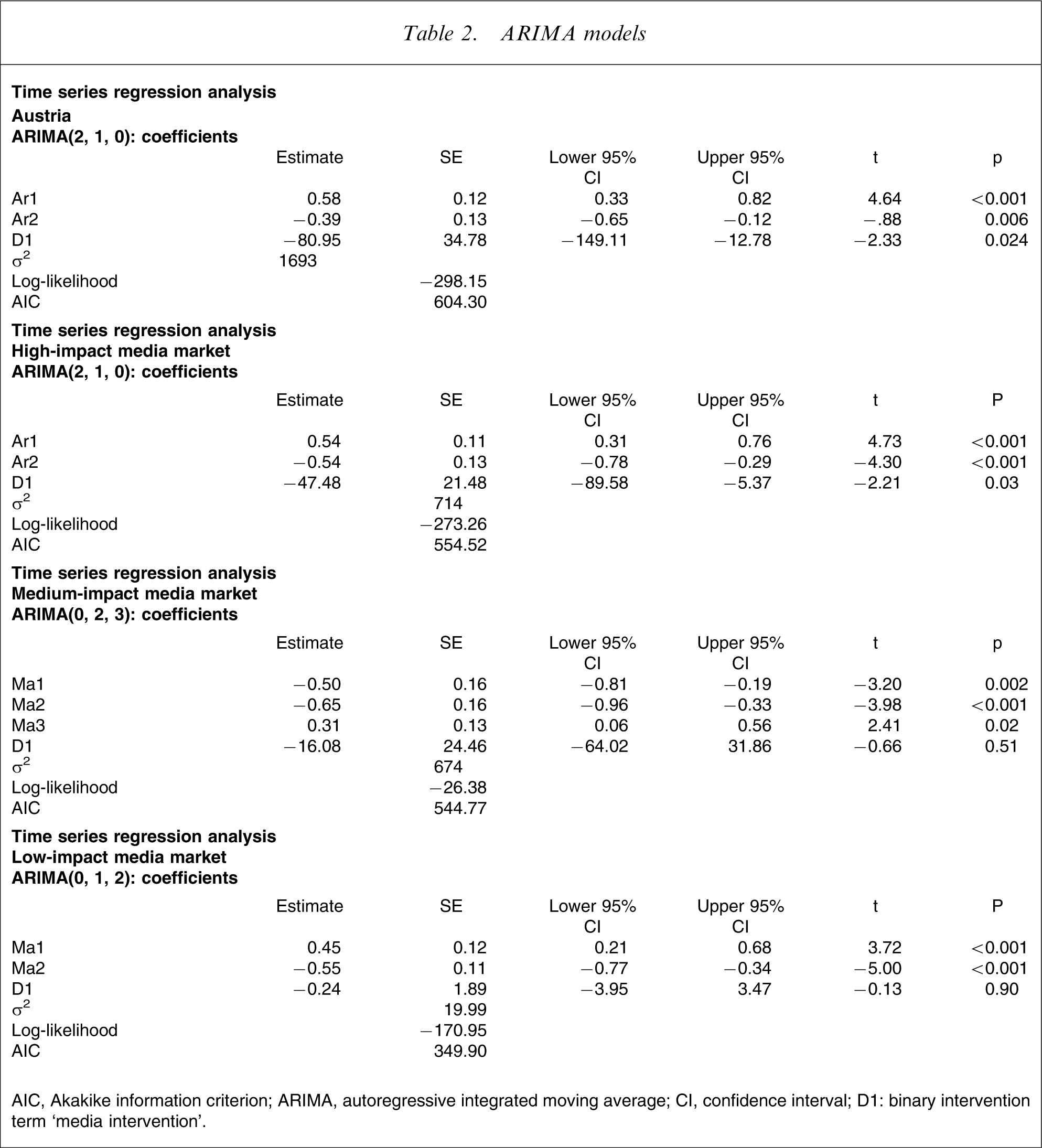
The impact assessment model showed a significant level shift of suicides in Austria in the year following the introduction of the guidelines, corresponding to a permanent, annual decrease of 81 suicides (95% confidence interval (CI): −149 to −13; Figure 1; Table 2).
ARIMA models
AIC, Akakike information criterion; ARIMA, autoregressive integrated moving average; CI, confidence interval; D1: binary intervention term ‘media intervention’.
This impact was particularly due to a significant effect of the guidelines on the high-impact media market: in this region the impact of the guidelines was calculated as an annual reduction of 47 suicides (95%CI: −90 to −5; Table 2).
There was neither any evidence of a significant impact of the guidelines on the hypothesized medium-impact media market (ARIMA (0,2,3)), nor on the low-impact media market (ARIMA (0,1,2); Table 2).
In the analysis of an intermediate impact of the guidelines on the quality of media reporting we tested the use of the words ‘suicide’ and ‘self-murder’ in the headlines of suicide reports by the Austrian Press agency by applying a Mann–Whitney U-test. A comparison of the 5 years before and after the introduction of the guidelines showed a very significant decrease, in line with the media recommendations (W = 25, p < 0.008).
Furthermore, this qualitative feature strongly correlated with the actual numbers of suicides in Austria (Spearman's ρ: S = 30, ρ = 0.82, p < 0.006), demonstrating a causal chain between media guidelines, the quality of reporting and suicide numbers (Figure 3).
Scatterplot of numbers of articles using ‘suicide’ or ‘self-murder’ in headlines versus number of suicides in Austria. Very significant correlation of suicides and the number of articles using the word ‘suicide’ or ‘self-murder’ in their headlines (Spearman's ρ: S = 30, ρ = 0.82, ∗∗p < 0.006) and very significant decrease of this qualitative feature (W = 25, ∗∗p < 0.008∗∗) in the 5 years after the implementation of the guidelines compared with the 5 preceding years.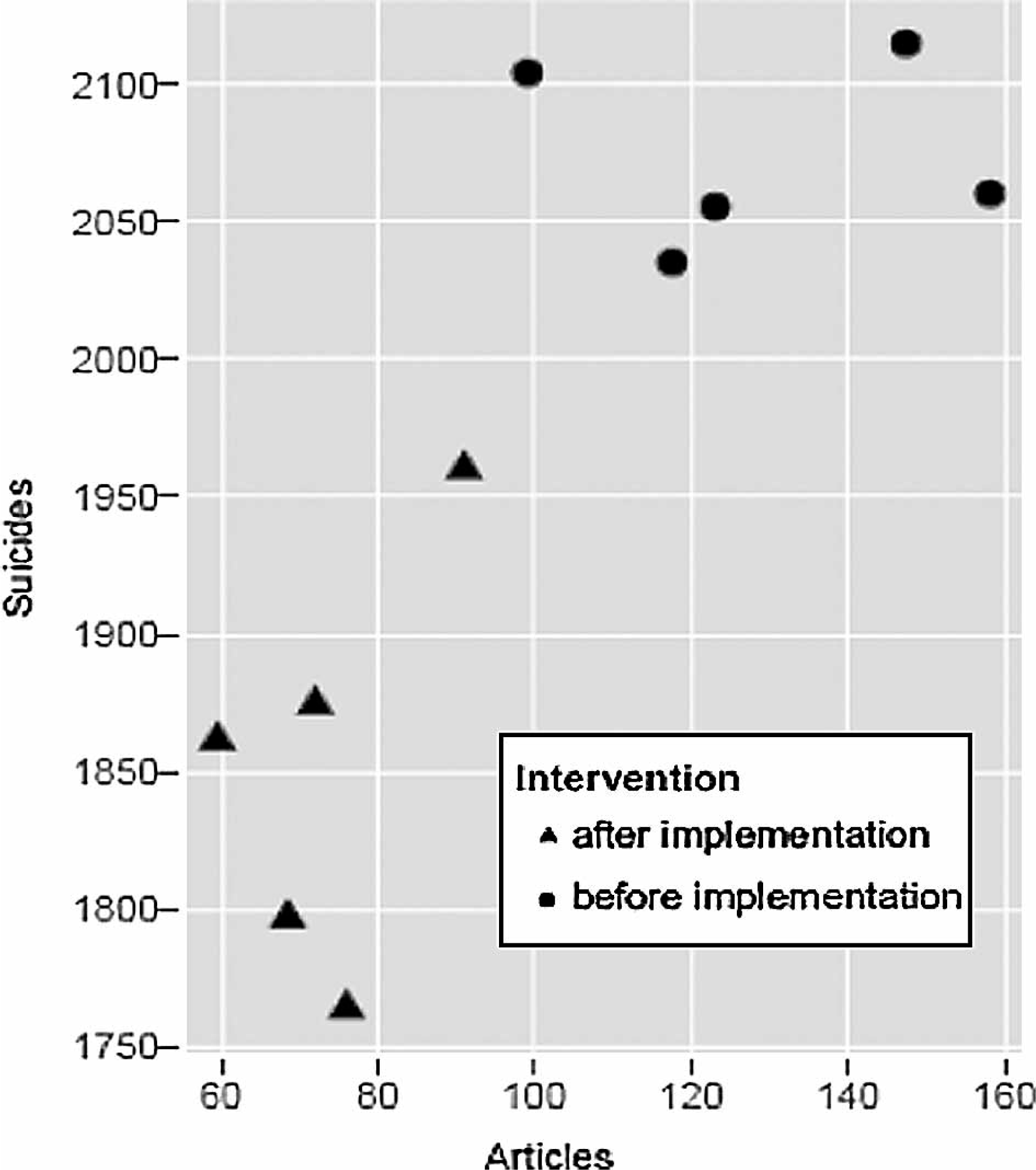
Subway suicides
The correlation of subway suicides with the media intervention and the passenger numbers was significant at the 0.001 level. The t-tests were highly significant for each variable (Table 3). A total of 47% of the variances of subway suicides could be explained by the model (multiple R2=0.54; adapted R2=0.47).
Linear regression model
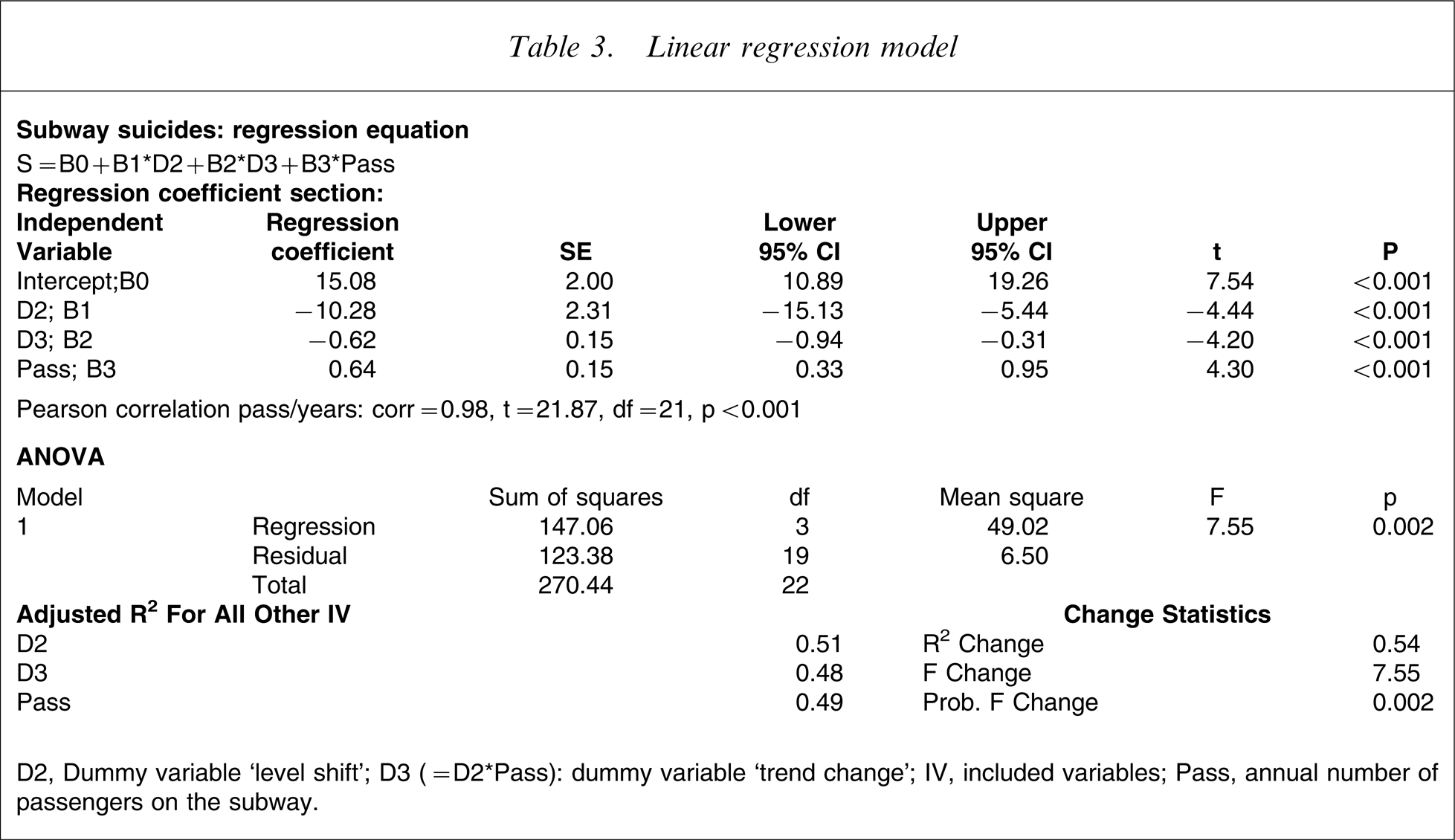
D2, Dummy variable ‘level shift’; D3 (=D2∗Pass): dummy variable ‘trend change’; IV, included variables; Pass, annual number of passengers on the subway.
The implementation of the guidelines was followed by an immediate decrease of approximately 10 subway suicides (95%CI: −15.1 to −5.4). Afterwards, the numbers of incidents increased approximately 62 suicides less (95%CI: −93 to −31) on an increase of 100 million passengers than would be expected without any trend change. Because passenger numbers and the number of years in the observational period were highly correlated (Table 3), this result could also be interpreted as a trend change of approximately 3.4 suicides (95%CI: −5.0 to −1.8) per year (Figure 2).
The impact of the availability of the suicide method, represented by the numbers of passengers, changed clearly after the introduction of the guidelines. It was calculated as an increase of 64 suicides (95%CI: 33–95) on an increase of 100 million passengers before the media intervention, and as a corresponding increase of 0.2 suicides (95%CI: −0.02 to 0.46) afterwards. Remarkably, there was no significant trend in subway suicides after the introduction of the guidelines, even though the annual passenger numbers doubled from 222 to 427 million between 1987 and 2005.
Corresponding to the sharp decrease of subway suicides, also the quantity of reporting showed a decrease, giving hard evidence of an impact of the voluntary moratorium on the reports on subway suicides (Figure 4).
Numbers of reports on subway suicides by the Austrian Press Agency. Almost complete compliance of the media with the voluntary moratorium on the reporting on subway suicides, indicated by a decrease from 18 articles in the year before the implementation of the guidelines to seven articles in the 18 following years. Year 0: year 1987/88, the first year after the implementation of media recommendations.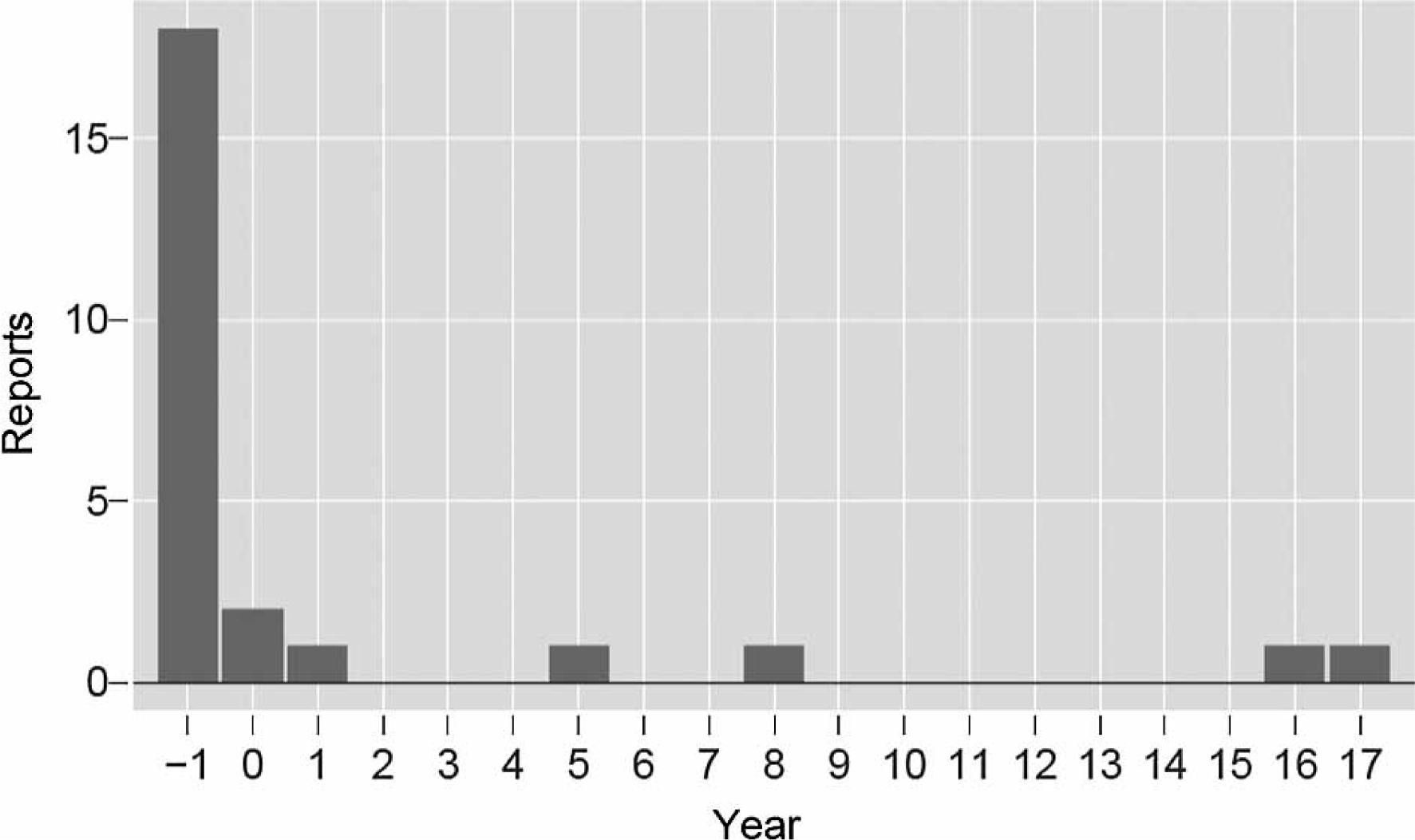
Discussion
Overall suicides
One of the most important reasons for choosing ARIMA modelling for processing Austrian suicide data was strong autocorrelation of the residuals, which would lead to invalid results if left uncorrected [24]. For the analysis of autoregressive and moving-average autocorrelative processes in a time series, trends should be removed. After differencing Austrian preintervention suicide data, an augmented Dickey–Fuller (DF) test confirmed stationarity (DF = − 3.98, lag order = 3, df = 58, p < 0.021).
By adding two autoregressive and one moving-average component, the Box–Ljung statistic and an inspection of the autocorrelation function (ACF) and partial autocorrelation function (pACF) plots of the ARIMA (2,1,0) model showed that there was no significant spike remaining at any lag, indicating a good fit of the model. The graph of the rescaled residuals resembled that of white noise, giving no indication of a non-zero mean or a non-constant variation. An inspection of the probability-probability-plot (PP-plot) showed that the data were normally distributed, which is a further assumption of the ARIMA process [24]. The s2 (s2=1693) and the Akakike information criterion (AIC = 604.3), which should be as low as possible, confirmed our model choice. The assumptions of ARIMA processing were also satisfied by the three regional models.
Similar to studies that found a dose–response relationship between newspaper distribution and the numbers of imitational suicides [1, 7], the impact of the media guidelines was particularly due to a reduction in the area with the highest coverage rates of the compliant media and showed a suggestive dose–response relationship across regions in degree of exposure of the population to these media. There could be a threshold value of coverage that must be reached by an intervention to achieve a significant effect. The deducible need for collaborating with the most influential media was further supported by our practical experience that newspapers with smaller circulation numbers in some cases clearly stated that, for competitive reasons, they would only be able to follow the guidelines if the most dominant competing media would also do so.
A limitation of our analysis was the lack of a matched no-intervention comparison group. However, the different subgroups found were of similar demographic composition, they were subject to similar national public health strategies, but differences between their media markets were big, and gave us the opportunity to analyze effects of different coverage rates of our intervention (Table 1).
In our analysis we limited the impact assessment strictly to an abrupt level change reaching its maximum within 1 year after the implementation of the guidelines. This restriction to a constant annual effect was supported by our experience that journalists working on reports on suicides usually changed their field of responsibility relatively fast, because they were often at the beginning of their job ladder [12]. Therefore, a gradual, increasing annual impact over several years seemed not plausible.
A further point that needs to be discussed is the possibility of confounding variables, which could have had an additional impact on suicidal behaviour in Austria. It is remarkable that the suicide numbers were not maintained after a drop within 1 year after their introduction – which would be the most plausible hypothesis for an impact of the guidelines if there were no other contributing factors in the observation period. In contrast, they continued to decline by approximately 35% until 2005. For this observation different factors could be co-responsible. First, there is some literature on ecological analyses that controversially discusses a possible relationship between changes on the labour market and suicide numbers [28–31]. In our analysis, the inclusion of data on unemployment rates between 1956 and 2005 [32] in our ARIMA model did not indicate a significant relationship.
Another possibly contributing factor to the continuing decrease of suicides in Austria could be the increasing prescription numbers of antidepressants, which are reflected in their sales figures. The role of antidepressants in suicide prevention is a controversially discussed issue [33–38], and especially the introduction of the first generation of selective serotonin re-uptake inhibitors (SSRIs), which took place in Austria in late 1989, was sometimes shown to be correlated with suicide rates [37, 38]. A correlation between sales figures of antidepressants from 1991 to 2003 and suicide numbers showed indeed a very significant result (Spearman's ρ: S = 660, ρ = − 0.81, p < 0.002), which needs further investigation. Nevertheless, the introduction of SSRIs could neither explain the trend change in overall suicides mid-1987 nor the abrupt level change of subway suicides. Sales figures of antidepressants were obtained from IMS-Health Austria (Vienna, Austria).
In the present analysis of the impact of the guidelines on the quality of reporting we could show a very significant change of reporting after the introduction of the guidelines, reflected in the reduced use of the words ‘suicide’ and ‘self-murder’ in the headlines of reports on suicides in the 5 years before and after the implementation of the guidelines. Furthermore, there was a very significant correlation between suicide numbers in Austria and this qualitative feature during the same time period. These results clearly increased the plausibility of the argument that there was a causal chain between the implementation of media guidelines, changes in reporting and the decrease of suicides.
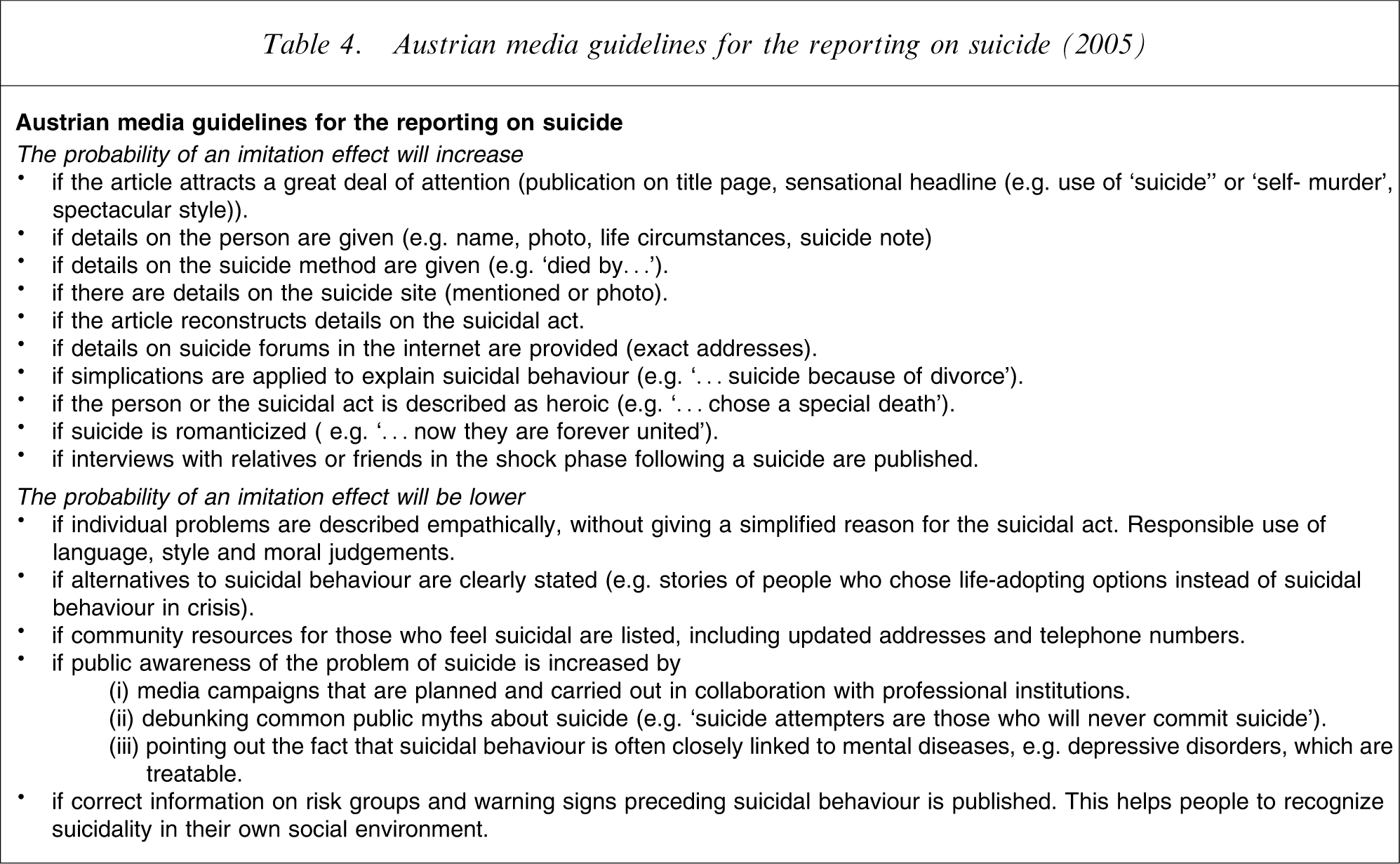
One limitation to our analysis of intermediate impacts was its restriction to the measurement of one single indicator of responsible reporting. Given the fact that there are many qualitative and quantitative features of media reports hypothesized as having an impact on imitative behaviour [12, 18, 20], our results were not necessarily representative for the overall quality of reporting. An overview of all the different qualitative features listed in the latest edition of the Austrian guidelines is given in Table 4.
Austrian media guidelines for the reporting on suicide (2005)
Furthermore, the analysed material from the Austrian Press Agency served as basic information source for compliant, but also for noncompliant newspapers. It can only be hypothesized that compliant media processed this information more responsibly than other newspapers which were not included in the intervention.
A further limitation to this analysis was its restriction to the time period of 5 years before and after the implementation of the guidelines. This restriction was necessary because of some considerable changes on the Austrian media markets following this time period, which could lead to biased results in a direct comparison.
Subway suicides
A linear regression analysis for modelling time series data is valid only if the regression assumptions are satisfied. One of these assumptions is linearity of the parameters [26]. A visual control of the data showed no signs of non-linearity (Figure 2). A Bonferroni outlier test (max. r-student = 2.65, df = 18, p = 0.38) [26] and an inspection of the quartitlequartile-plot (QQ-plot) indicated that there were no outliers in our data.
According to a Shapiro–Wilk test of the residuals (W = 0.95, df = 23, p = 0.36) and the QQ-plot, the residuals were normally distributed, which is a further assumption of the linear regression model [26].
Further common problems in time series data are autocorrelation and heteroscedasticity. The Durbin–Watson value (DW = 2.48, p = 0.57) lay within the inconclusive region of the test, but by applying a Ljung–Box-test of the residuals (χ2=2.28; lag = 1, p = 0.13) and an inspection of the ACF and pACF plots we could rule out significant autocorrelation in subway data. A visual control of the residual plots and a Goldfeld–Quandt test against heteroscedasticity (GQ = 2.44; df1 = 8, df2 = 7, p = 0.13) indicated that the present data were homoscedastic [39].
Viennese subway suicides had an abrupt level shift after the introduction of the guidelines, which accounted for approximately 75% of subway suicides in the preceding year and did not show a significant trend afterwards. This effect size could be partially ascribable to the moratorium between the Wiener Linien and the editors-in-chief of the main Austrian newspapers, which led to a nearly complete and immediate restriction of reports on subway suicides by the Austrian Press Agency (Figure 4), leaving only little possibility of transporting models of this suicide method that could be identified with. For overall suicide numbers, a similar effect size could not be expected: First, the intervention was based on direct approaches and repeated, educational advertising and discussions which did not result in a fundamental quantitative reduction of reporting. Second, preventing specific suicide methods and reducing overall suicide numbers are two quite different approaches: While the sharp decrease of subway suicides could have been accompanied by a compensating shift to other suicide methods [13], the analysis of an impact of the intervention on overall suicide numbers demonstrated that the implemention of media guidelines also contributed to the reduction of overall suicide numbers.
Beside the prevention of subway suicides, a further aim of the media guidelines was the reduction of subway suicide attempts. In our evaluation we focused only on subway suicides because not all suicide attempts were registered by the local authorities. However, there was also a decrease of registered subway suicide attempts observable after the introduction of the media guidelines [11–13]. If they were added to suicides, generating a dependent variable covering all registered suicidal behaviour on the subway, this model accounted for approximately 53% of the variances (multiple R2=0.60; adapted R2=0.53) of registered incidents.
On the whole, our results clearly support the hypothesis that the media guidelines have had an impact on the quality of media reporting and on suicidal behaviour in Austria.
Lessons for other countries
In our experience, there are some critical points that should be considered already in the planning phase of an intervention to achieve efficacy.
First, guidelines for the media achieve more compliance if they are composed by an interdisciplinary team, including psychosocial professions, but also media specialists. In that way, media professionals who are asked to voluntarily realize the recommendations in their reports are already involved from the beginning of the intervention.
The content of the guidelines should be clear and understandable to people who are not specialists in suicide prevention. Ambiguities in their content should be avoided. It is conducive to better understanding if practical examples for each recommendation are given. An overview of the contents of the current Austrian guidelines are given in Table 4. In some countries, short versions and long versions of media guidelines have been implemented [40]. Thereby, journalists who are pressed for time can get quick access to the most important information, and if there is further interest in warning signs of suicidality, risk groups and the role of identification in imitative behaviour, a long version is available. It has turned out to be useful to put the guidelines online and to give exact contacts such as experts willing to comment on story lines [40, 41].
In Austria, the guidelines were primarily distributed by sending them to journalists and editors-in-chief after the publication of articles on suicide. A contact normally included a comment on the quality of the current article, an offer of further discussion, as well as the latest version of the guidelines. In addition, the Austrian Society for Suicide Prevention has repeatedly organized symposia on the issue to inform on the contents of the guidelines and to offer a broad discussion forum. In recent years, these symposia were closely related to international activities around World Suicide Prevention Day.
We clearly encourage other countries to implement similar media guidelines for the reporting on suicides, because collaboration with the mass media has turned out to be a promising way of preventing suicides by imitation in Austria.
Footnotes
Acknowledgements
The study was made possible by funding from the Austrian Academy of Sciences (grant number 70036). The authors wish to thank Markus Strauss for analysis assistance, and to acknowledge the continuing activities in communicating the content and aims of the guidelines to the media by members of the Austrian Society for Suicide Prevention (ÖGS).