






Abstract
Mucuna pruriens seeds contain levodopa, a dopamine precursor that composes the standard treatment to manage symptoms of Parkinson’s disease. Also known as velvet bean, this plant is often involved in cases of intense pruritus after contact with the hair that grows on its beans. This case report describes the effects in a 58-y-old woman after ingestion of 5 raw seeds of M pruriens on Reunion Island, a French tropical island territory close to Mauritius, in the Indian Ocean. About 40 min after ingesting the plant, the patient showed adverse digestive symptoms such as nausea, vomiting, and abundant diarrhea followed by a state of confusion, hallucinations, and amnesia. She was brought to the emergency department. After medical examination, her vitals were normal, and only her nausea lingered. The poison control center was contacted by the medical team. The plant, previously well described and known by the patient, was later picked from the garden and reviewed by the Indian Ocean toxicovigilance department. Expert botanists confirmed the plant species to be M pruriens. The patient ate the raw seeds after reading articles on the Internet, without confirming whether the seeds should have been cooked before consumption. This case highlights that ingesting raw, unprepared M pruriens seeds can cause severe digestive symptoms, possibly accompanied by neurologic disorders.
Introduction
Mucuna pruriens is a leguminous plant belonging to the Fabaceae family and is commonly known as velvet bean or cowhage in English and poils à grater in French. It is an annual climbing plant that can reach 15 m in length and is widespread in tropical and subtropical regions of the world, such as Reunion Island.
Each 10 to 13 cm pod (Figure 1) is covered by a multitude of stinging hairs when young (less when older) that cause intensely itchy dermatitis after cutaneous contact. The symptom is caused by a histamine-independent itch mediator, mucunain. 1 -3 Pods are longitudinal and curved and contain around 4 to 6 seeds each (Figure 2). Seeds contain levodopa, a nonprotein phenolic amino acid that is used as the standard treatment to manage symptoms of Parkinson’s disease.4,5
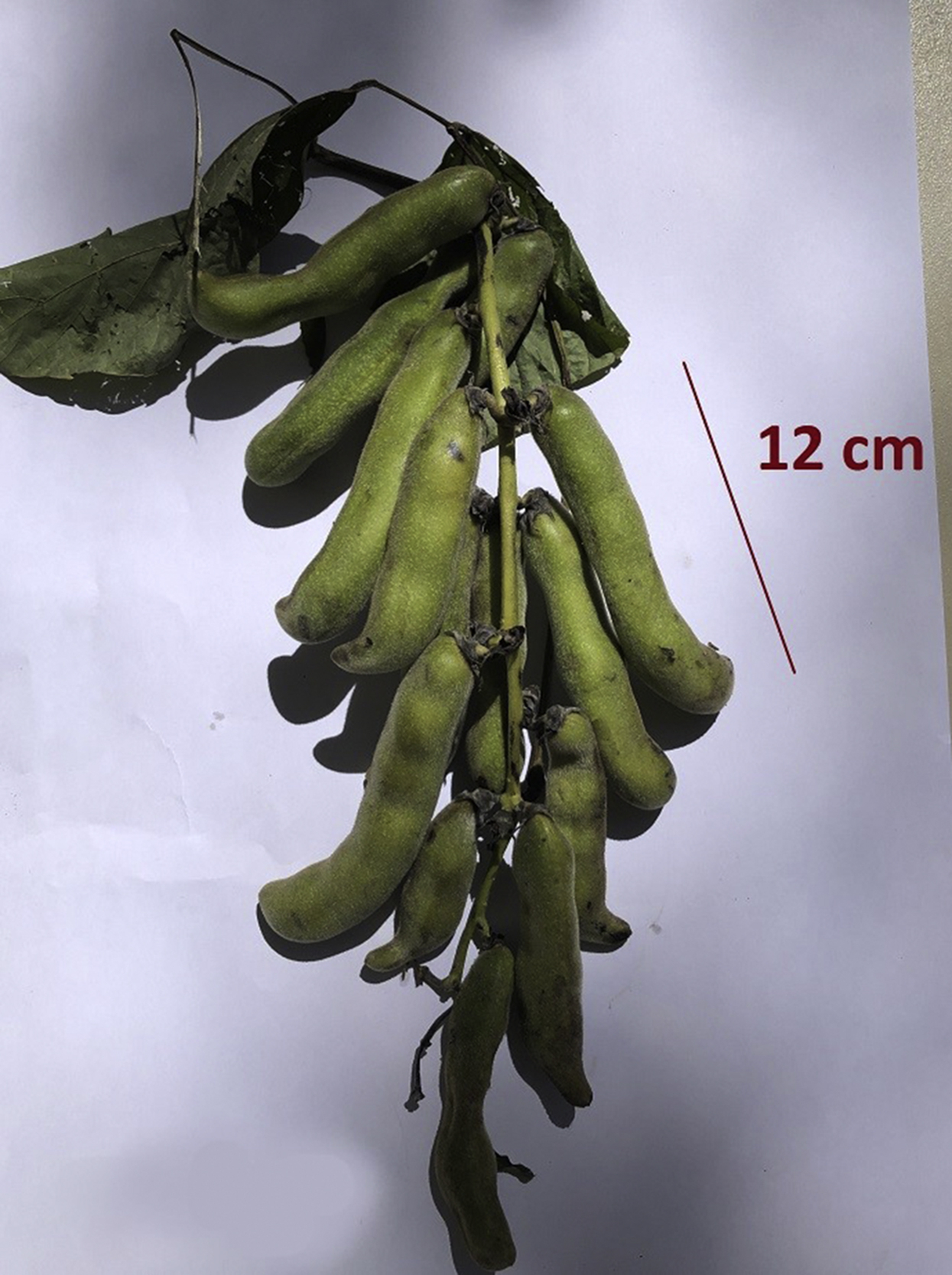
Mucuna pruriens pods. Reunion Island. 2020. Photo by A. Maillot.
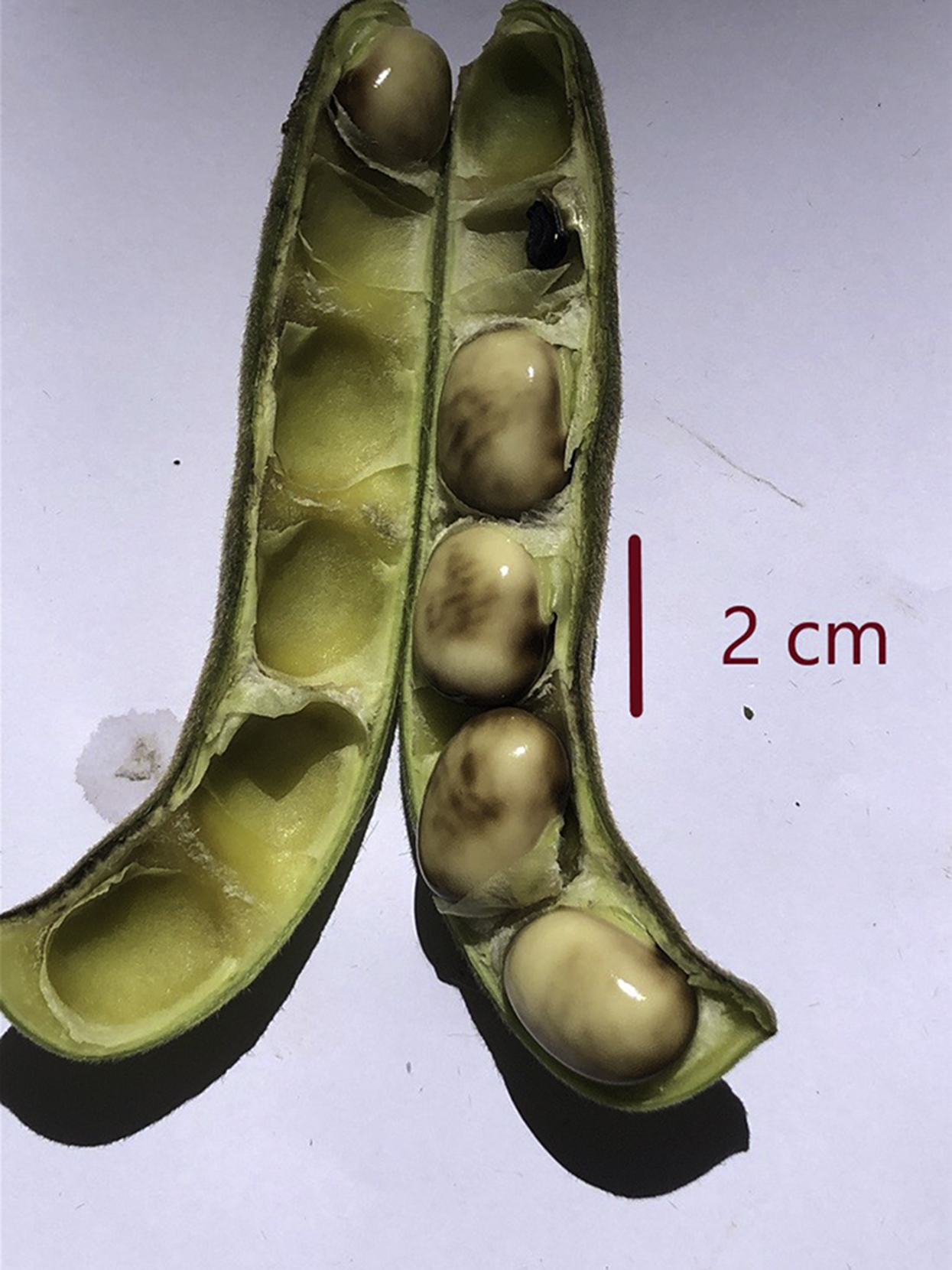
Mucuna pruriens seeds. Reunion Island. 2020. Photo by A. Maillot.
Acute poisoning by plant ingestion in humans is rarely described in the literature but can occur, as our case illustrates.
Case Description
A 58-y-old woman with no medical history was driven by her relative to the emergency room with severe vomiting, profuse episodes of diarrhea, mental confusion, a hallucinatory episode, and anterograde amnesia.
Digestive symptoms, quickly followed by neurologic disorders, appeared approximately 40 min after ingestion of 5 freshly picked seeds of M pruriens, which the patient meticulously chewed (Figure 2). She was driven by her relative to the emergency room 2 h after the ingestion. The patient’s vitals were recorded as blood pressure 160/80 mm Hg, heart rate 63 beats·min-1, a percutaneous oxygen saturation of 99% on room air, and blood sugar 7.9 mmol·L-1 (normal range before meal 4.0–7.0 mmol·L-1). Her weight was 56 kg (body mass index 24.9 kg·m-2).
A neurologic examination showed a conscious woman with a Glasgow Coma Scale score of 15. She was still nauseated without vomiting on observation. Auscultation was normal. The emergency physician called the poison control center for an expert opinion. Owing to levodopa present in seeds, the toxicologist advised clinical monitoring until the patient became completely asymptomatic, which occurred 3 h after admission. Given her rapidly improving condition, electrocardiogram and blood tests were not performed. She was discharged at the end of the clinical monitoring.
Subsequently, the referring medical toxicologist asked the Indian Ocean toxicovigilance department located on the island to fully investigate the intoxication. One week after the event, the patient was only slightly tired. Some pictures and a piece of the plant that was growing in her garden were directly collected on site the same day we visited her, with the patient’s consent. The patient knew how to recognize this plant because it had been growing in her garden since childhood, and she had been told about the risk of pruritus after contact with the beans’ hair.
After submission of the photos and sample to a group of French botanical experts working with French poison control centers, M pruriens was clearly identified. The patient was questioned regarding the circumstance of exposure, the involved agents, and her symptoms, and all her responses were consistent with the emergency department record. We learned that the patient was tempted to taste the plant, as it was growing in her garden, after reading web pages about M pruriens seeds and their alleged benefits in protein and memory boost. She told us the seeds were hard to chew and had an astringent, unpleasant taste.
Discussion
The genus Mucuna includes about 150 species that grow easily in a warm and humid climate; thus, Reunion Island is an optimal place with its subtropical climate. In a traditional medicine context, M pruriens has many uses around the world, such as in Ayurvedic medicine in India.6,7 M pruriens seed is rich in crude protein, more than other classic legumes.8,9
The Internet offers access to a plethora of information. In our case, the patient did not follow the recommended process for removing antinutritional factors that are usually found in raw legumes. Antinutritional factors are defined by chemical compounds synthesized in plants that interfere with the absorption of nutrients (eg, proteins, vitamins, and minerals).10,11 These chemical compounds compromise digestion and cause adverse events that depend on the part and quantity of the plant ingested. Some animal species (ruminants) are more likely to digest certain raw plants without showing serious adverse reactions owing to their capacity to digest antinutritional factors. This is not the case for humans and this particular plant. The main antinutritional factors in M pruriens include tannin, trypsin inhibitors, soponins, and alkaloids. The patient failed to note that although the plant is widely recognized and used around the world, the quantity of levodopa and other toxic antinutritional factors must be reduced by boiling before ingestion because they are water soluble. For example, soaking a raw seed of M pruriens for 15 h and boiling for 90 min can reduce the levodopa concentration by 70% compared to the dried seed. 12
The ingestion of crude M pruriens seeds can lead to digestive and neurologic disorders as described in this case report. These symptoms can be induced by levodopa; the same symptoms are currently noted with drugs used to treat Parkinson’s disease. 13 -16 Digestive disorders can also be induced by other antinutritional toxins, such as tannins and saponins. In 1989, an outbreak of acute poisoning after M pruriens ingestion in Mozambique was reported. 17 Water shortage and famine were at the origin of toxic psychosis. Levodopa toxicity was also described in a 27-y-old woman in 2013 after ingestion of M gigantea. 18
Without an antidote, in the event of levodopa overdose, health care remains supportive. Because M pruriens seeds contain many antinutritional factors and an estimated concentration of levodopa around 5%, 12 blood pressure should be monitored for a few hours because hypertension or hypotension can occur with levodopa overdose. 14
One of the major difficulties in toxicology is identification and evaluation of the agent causing the intoxication, especially with plant poisoning. In this particular case, determining the cause of the event was possible owing to available information such as the time of onset of the adverse event combined with suggestive semiotics, pictures of the toxic agent from the patient, and access to the actual plant for later confirmation.
Conclusions
We report a case of moderate poisoning after chewing and ingestion of raw M pruriens seeds on Reunion Island in April 2020. Fortunately, even with intense digestive and significant neurologic adverse effects, the intoxication was not fatal. However, blood pressure should be monitored for a few hours given the risk of hemodynamic instability caused by levodopa. It seems useful to keep in mind that raw seeds should be kept out of reach of children and persons with impaired judgment when M pruriens is commonly found in fallow fields or less often in private gardens on Reunion Island. This case illustrates, once again, that “natural” does not always mean “safe.”
Footnotes
Acknowledgements
Author contributions: Drafting of the manuscript (AM, CS, AM); critical revision of the manuscript (AM, CS, AM); approval of final manuscript (AM, CS, AM).
Financial/Material Support: None.
Disclosures: None.