






Abstract
Flood conditions present dangers for canoe camping, with the highest risk for injury or death related to water submersion of paddlers. Other hazards can exist at high water stages as well. This essay discusses preparation for risks associated with canoe travel during record flood conditions in Alabama’s Mobile-Tensaw River Delta. It examines the unique aspects of paddling through submerged forests, route detours necessitated by flooding, potential encounters with dangerous wildlife, and the case of a stinging ant attack on a paddler who unexpectedly comes in contact with a displaced ant colony.
Introduction
The Mobile-Tensaw Delta is the second largest delta in the contiguous United States. Located entirely in southwest Alabama and encompassing 777 km2 (300 mi2) (Figure 1), it is a 64 km (40 mi) long serpentine tangle of crisscrossed rivers, bayous, and creeks, with land masses accessible primarily by boat. The Delta has long been a fascination of E.O. Wilson, famed biologist and University Research Professor Emeritus at Harvard, whose childhood was spent in nearby Mobile, Alabama. Wilson articulated similarities between the Amazon and the Mobile-Tensaw Delta: “The Amazon to me is the Delta writ large. It is a miniature wilderness, exotic, mysterious and had the reputation of being impenetrable.” 1 Wilson’s description may explain why, despite its juxtaposition to a large metropolitan area, few but the most accomplished outdoor enthusiasts enter the Delta. Biting insects, alligators, water moccasins, black bears, and feral swine are all possible wilderness encounters. This lack of human intrusion creates a pristine and convenient wilderness located along the highly populated US Gulf Coast. Indeed, Wilson said it is one of “the few places where you can leave the city and head into the wilderness in less than an hour.” 1 For the last 19 y, I have regularly camped, canoed, and explored the Delta. In 2020, a wilderness medicine senior elective expedition presented unprecedented challenges.
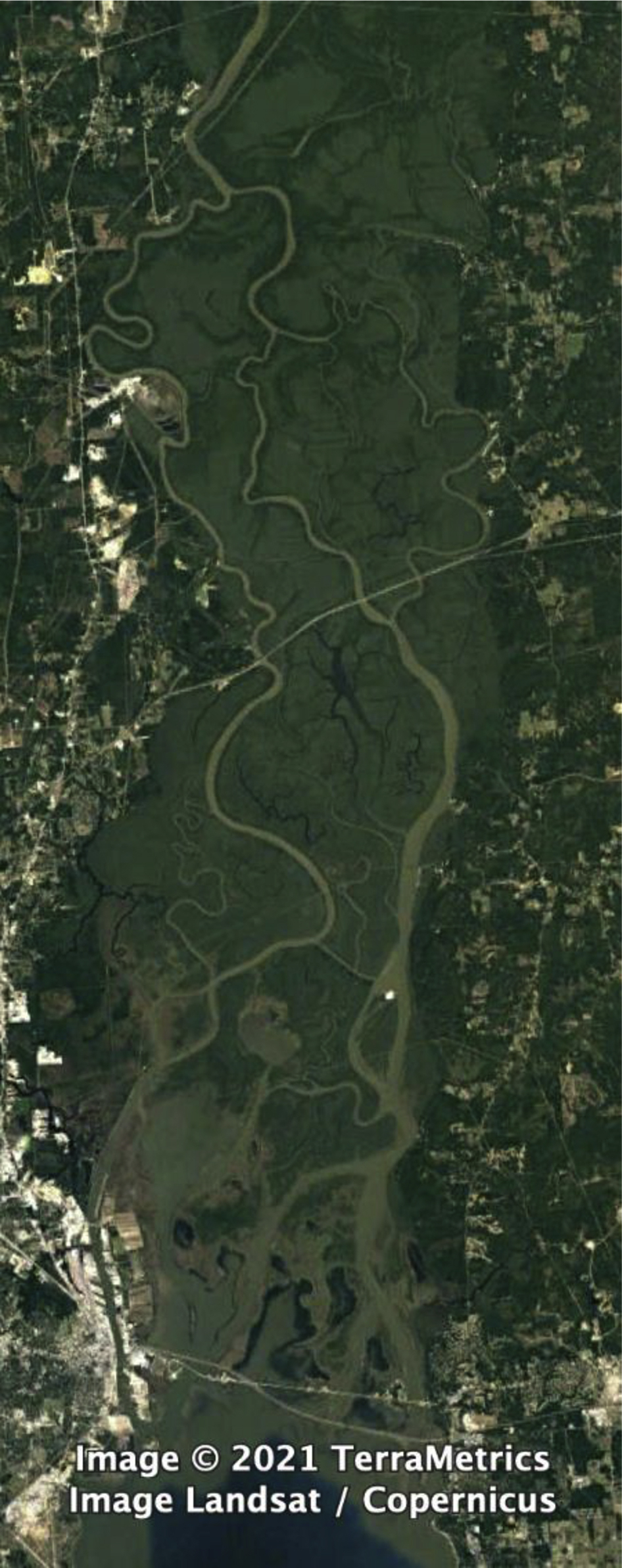
Partial aerial view, Mobile Tensaw Delta. Photo courtesy of Google Earth Pro.
The Mobile-Tensaw Delta serves as a classroom for Alabama medical students completing their elective. Our February 2020 class faced a river system in flood stage. According to the United States Geological Survey (USGS) national water information system (February 2020), we were soon to experience one of the highest water levels in 40 y. In good water conditions, a lack of land-based campsites presents difficulties for Delta camping. However, flooding of this magnitude exacerbates the problem, covering the forest floor with 3 to 6 m of water (Figure 2), diminishing options, and consolidating wildlife such as feral swine (Sus scrofa) in high-ground spaces near the Mobile-Tensaw Delta (Figure 3). We were made acutely aware of this danger by campsite owner Luke Adams, who repeatedly warned of “wild hogs” on his property. An additional hazard of navigating the Delta at flood stage includes unavoidable routes bringing paddlers in close proximity to the tree canopy, which during high water may harbor stinging insects and snakes (Figure 4). Although the majority of the latter are nonpoisonous, cottonmouth water moccasins (Agkistrodon piscivorus) often bask in the branches of dead trees overhanging the water 2 and can drop into boats when startled.
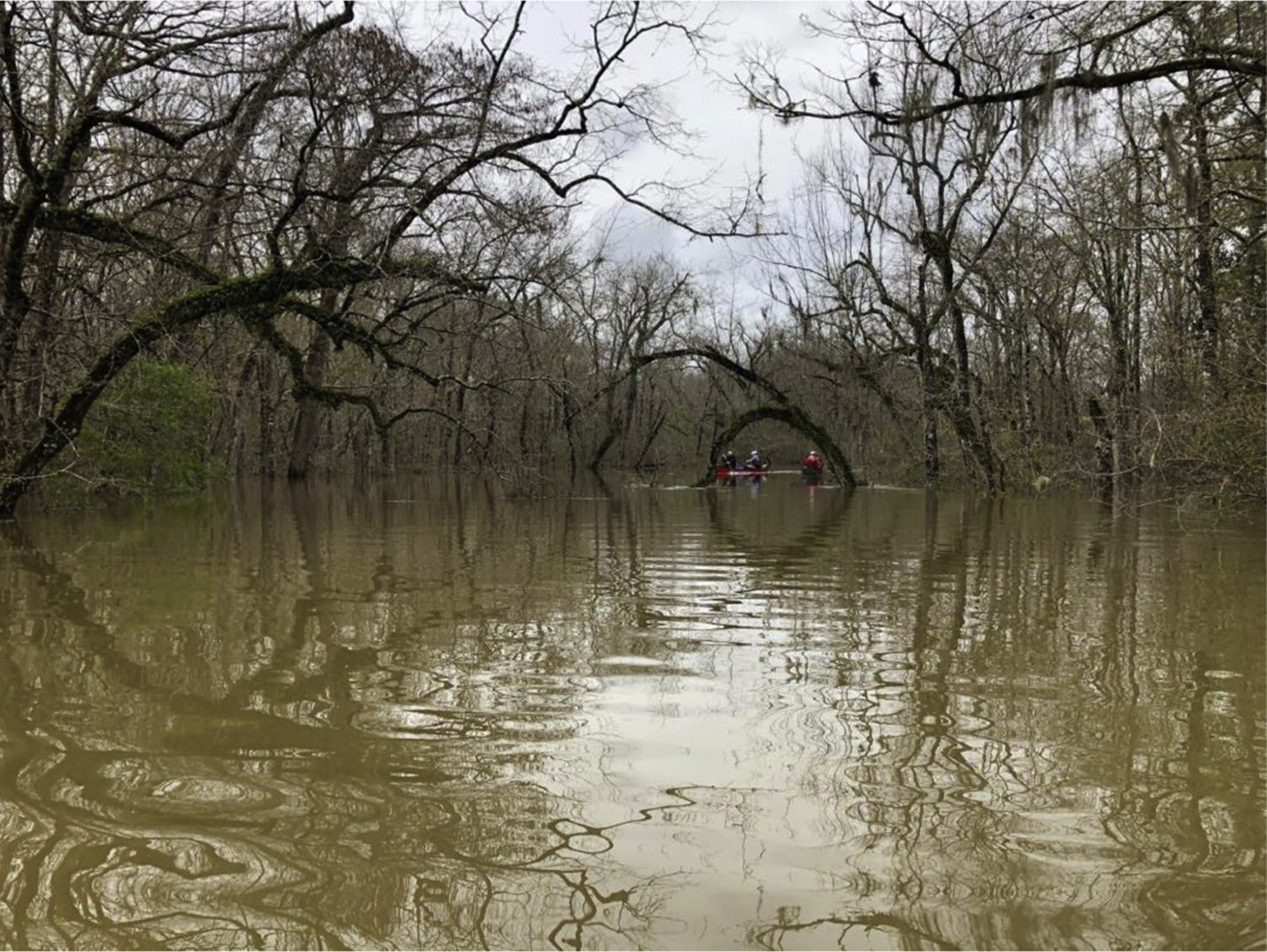
Forest in flood. Photo courtesy of Lynn Yonge.
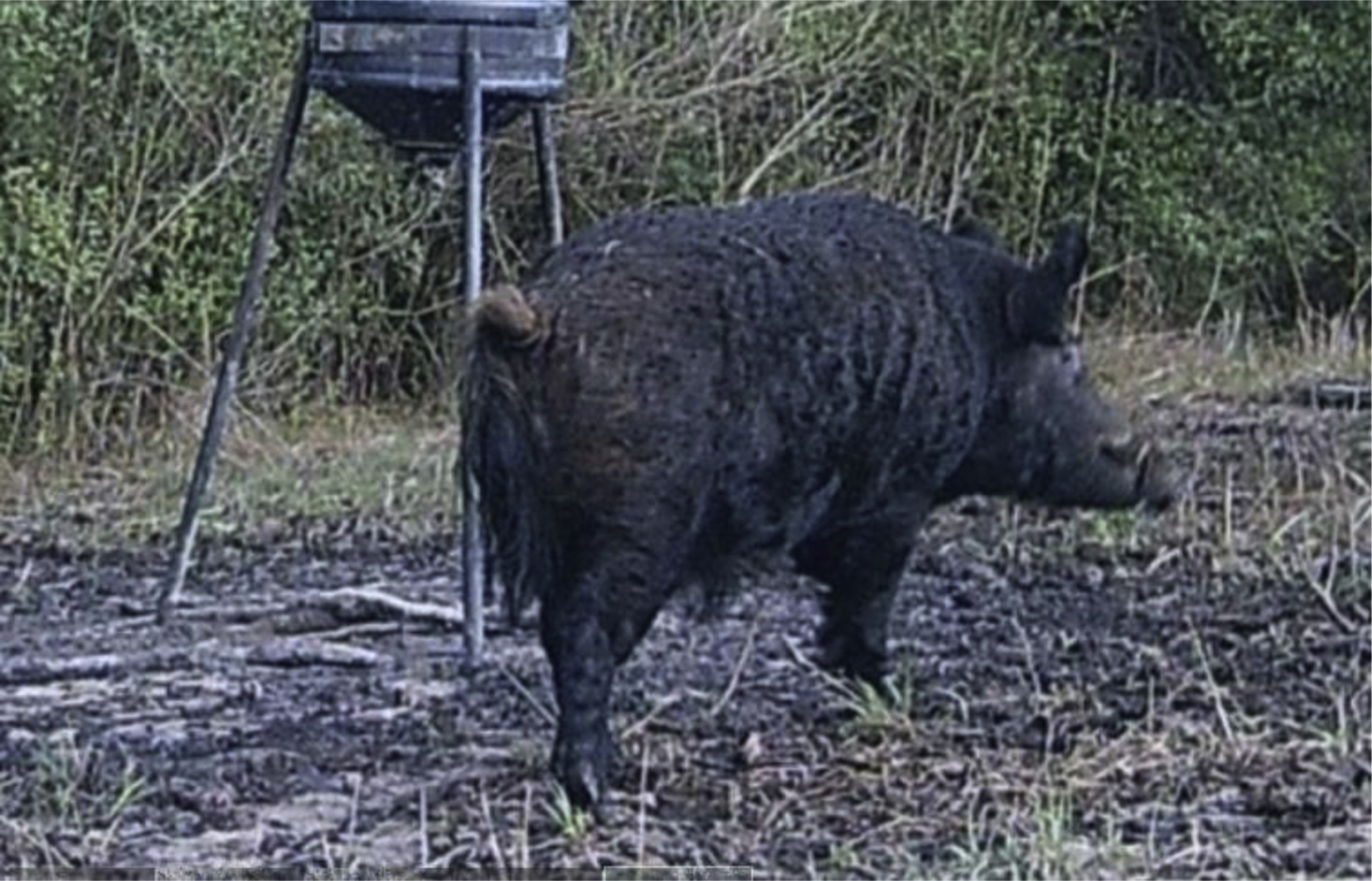
Game camera photo of feral swine in vicinity of training campsite. Photo courtesy of Larry Yonge.
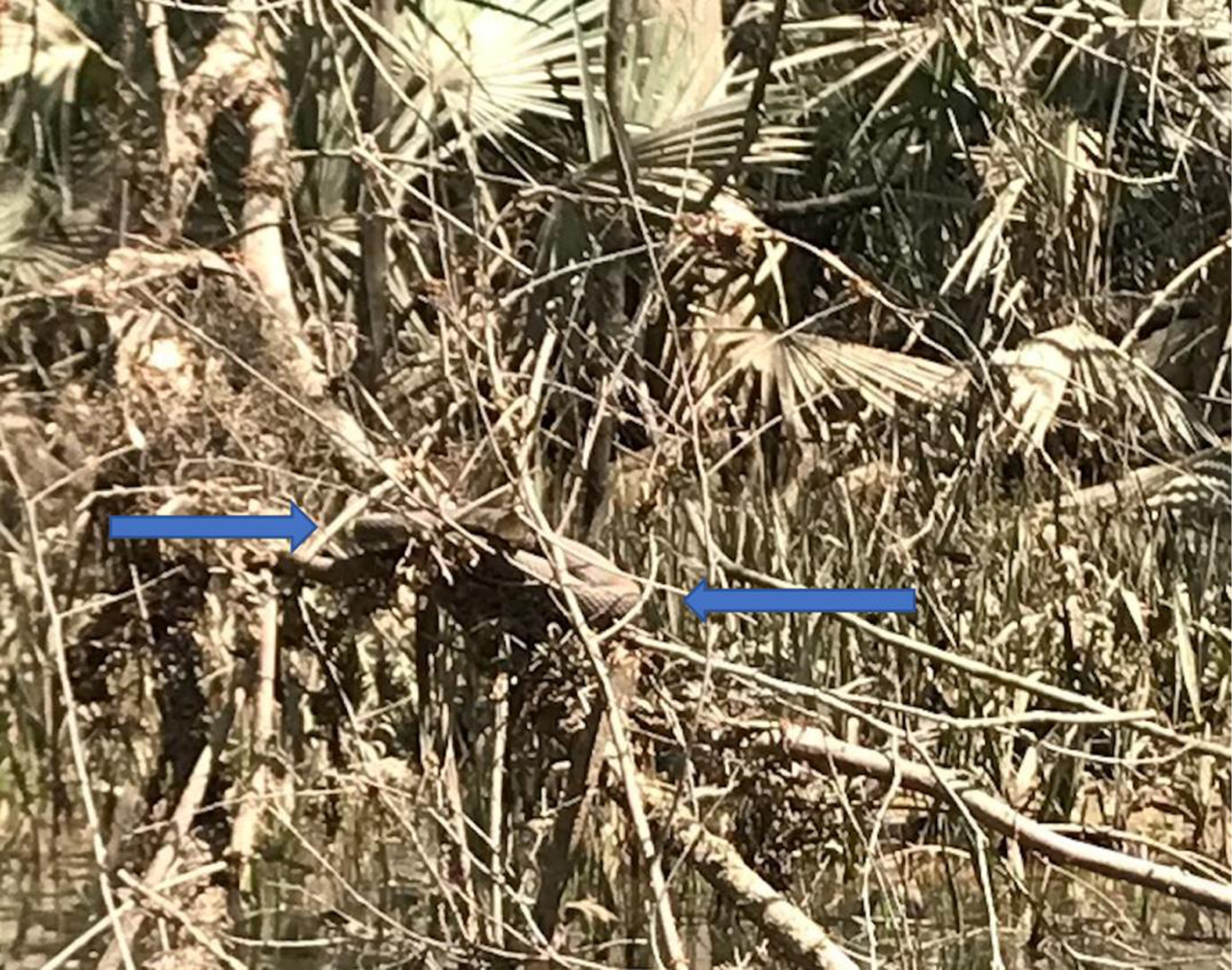
Snake in tree. Photo courtesy of Cori Yonge.
Preparations and decision-making for canoe travel during flood conditions will be discussed, as well as feral swine as an invasive species and fire ant rafts that occur during flooding. I hope this information will help others prepare for high water canoe travel in comparable ecosystems.
Preparation
In preparing for this course, we screen all students for medical issues. We assess their ability to swim and then require personal flotation devices as conditions warrant. Before the expedition, we have students spend 2 weekends camping, where instruction includes basic outdoor skills, map and compass use, paddling techniques, and a 20-h wilderness first aid training course. This time allows instructors to assess student boating skills and outdoor abilities.
Our curriculum included lectures on moving-water safety excerpted from the American Red Cross Small Craft Safety Program. 3 Flooding of any river from winter rains increases the risk of drowning due to the formation of strainers and potential immersion in cold water. 4 We taught avoidance of strainers and foot entrapment and practiced victim rescue techniques and how to right a capsized canoe. Canoe maneuvering in a current was simulated by racing through an obstacle course in a man-made lake. Boating partners were assigned to ensure at least 1 paddler in each craft is proficient, with the experienced canoeist assigned to the stern for the first 2 d of travel. Canoe convoy spacing, the importance of maintaining visual contact between boats, and paddle signal communication for river directions and warnings were all drilled in the weekends before departure.
The Expedition
The 2020 flood provided multiple challenges for our crew of 12 students and 2 instructors. In the weeks leading up to the expedition, we monitored the USGS Alabama River levels daily to determine whether the water would fall below 9.1 m (30 ft) (Figure 5). In the event levels remained high, we visited various put-in points to ascertain unpredictable currents, obscured landmarks, and the extent of submersion of several strategic campsites (Figure 6).
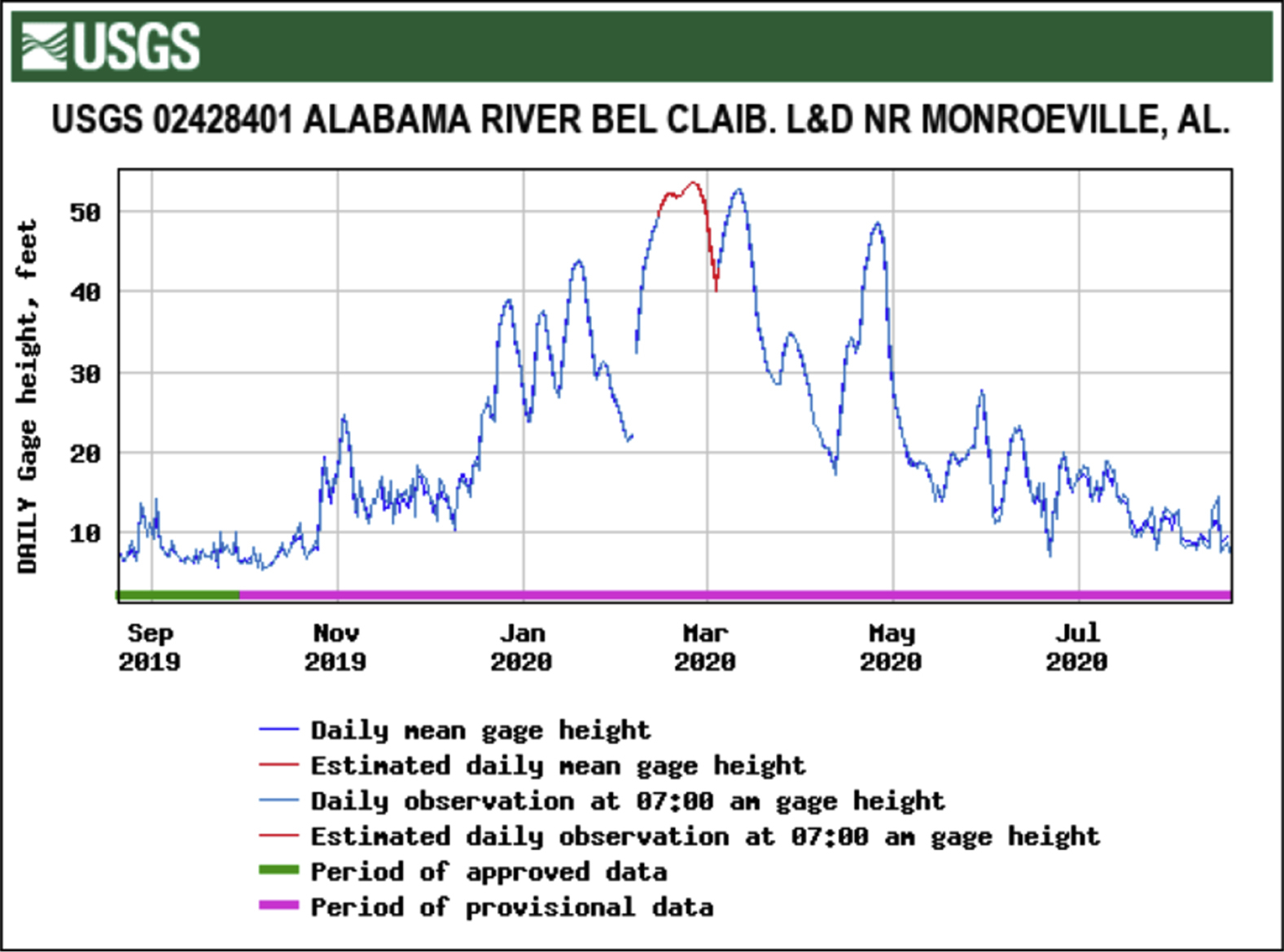
US Geological Survey water levels rising during February 2020. Graph courtesy of US Geological Survey.
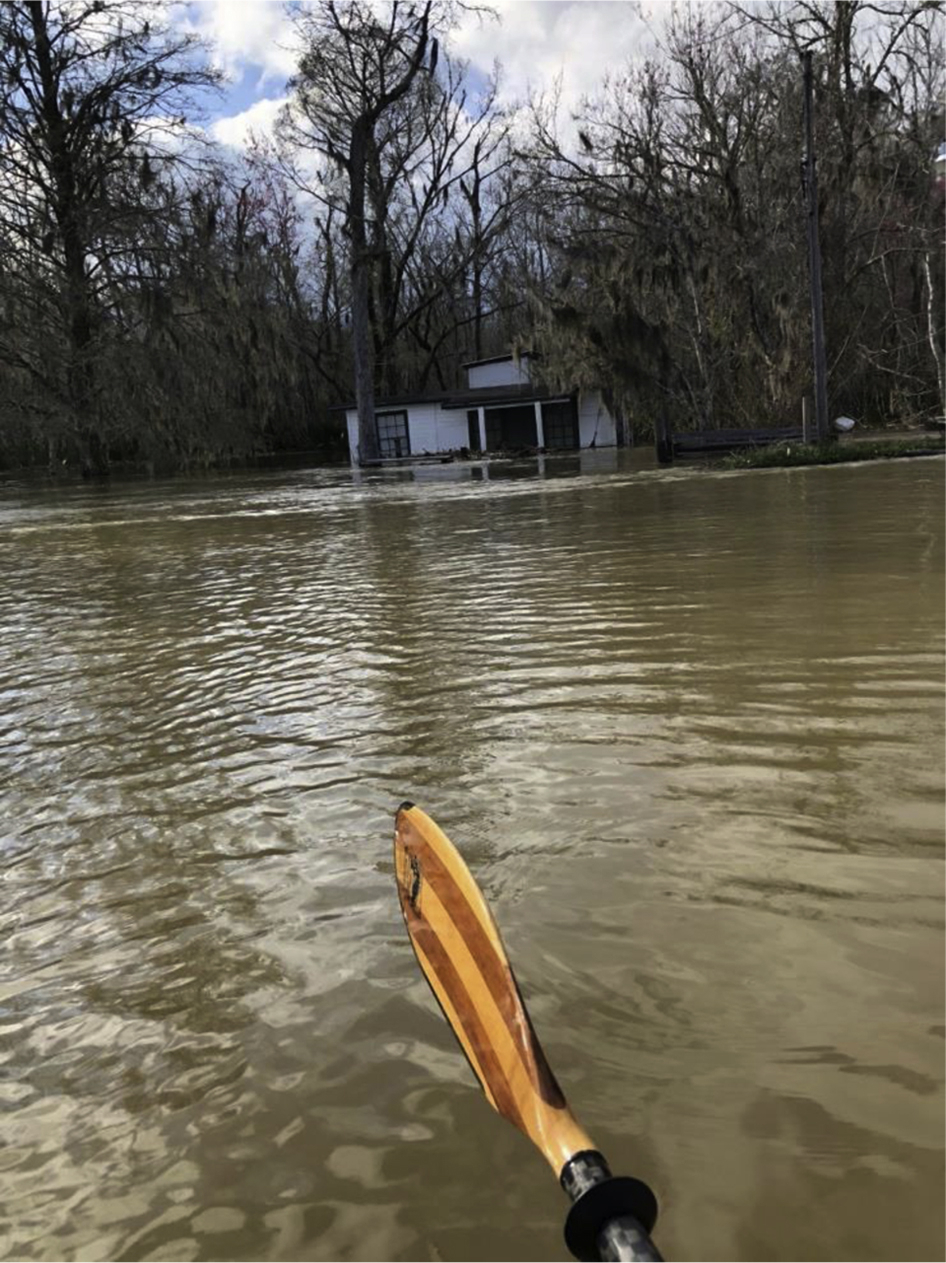
Flooded campsite. Photo courtesy of Lynn Yonge.
The instructors conferred regularly about whether to cancel the expedition. In the Delta, rapids are rare when rivers and creeks overflow their banks. Venturi effects are diminished when the constricting effects of riverbanks are eliminated by submersion. Although we could experience Class II white water 3 in the main river channels, we would more commonly travel in the safer zones of water moving slowly through heavily wooded forests.
Years of well-maintained river notes and reconnaissance told us our first river island campsite was under 6.1 m (20 ft) of water, which forced us to cleave approximately 24 km (15 mi) from our 80.5 km (50 mi) itinerary. Choosing to launch at a downriver access point, our team paddled over a submerged roadbed until we found the bridge marking entry to a body of water known as Globe Creek, an established Delta starting point. During flood conditions, the natural banks of small creeks feeding the larger Delta rivers overflow, making it difficult to recognize their normal course. Thus, it was necessary to rely on multiple methods of navigation to negotiate the high water. The most basic method involved following the current downstream until we located a recognizable landmark. Global positioning system navigation devices are standard on student river expeditions, but the United States Geological Survey topographic maps are preferred because their larger size is superior to the receiver’s small screen. The tools are often combined, with the global positioning system generated track superimposed on the topographic map to determine a location.
Ant Encounter
Delta flooding provides opportunities to paddle directly through submerged forests, allowing shortcuts between waterways. This can be advantageous when trying to avoid wind or waves in wide bodies of water but can create other risks. On day 2, we paddled overland through a tract of woods laden with small-diameter saplings that were 4.6 to 6.1 m (15–20 ft) tall. We spotted 2 cottonmouth water moccasins suspended and intertwined in branches 46 cm (18 in) above the water. Moments later, an ant colony fell from a small tree, enveloping a medical student. The student initially described seeing hundreds of ants on her left arm. Peeling off winter outer layers, the student discovered more ants underneath her clothing. She called for help when the ants began biting her neck, upper back, and scalp. With the assistance of 2 other canoes to stabilize the boat, the student stripped down to her underwear, rinsed the ants from her body, and then redressed. Once settled, she administered Benadryl and hydrocortisone cream from her personal first aid kit and ate caffeinated jellybeans to counteract the sedative effect of the antihistamine.
After collision with the tree, the canoe partner in the stern described the ants as small, black, and definitely in a single big mass. She provided a photo similar to what was observed (Figure 7) and pointed out they had to have fallen from or been shaken out of the branches of the small tree we were working our way past.
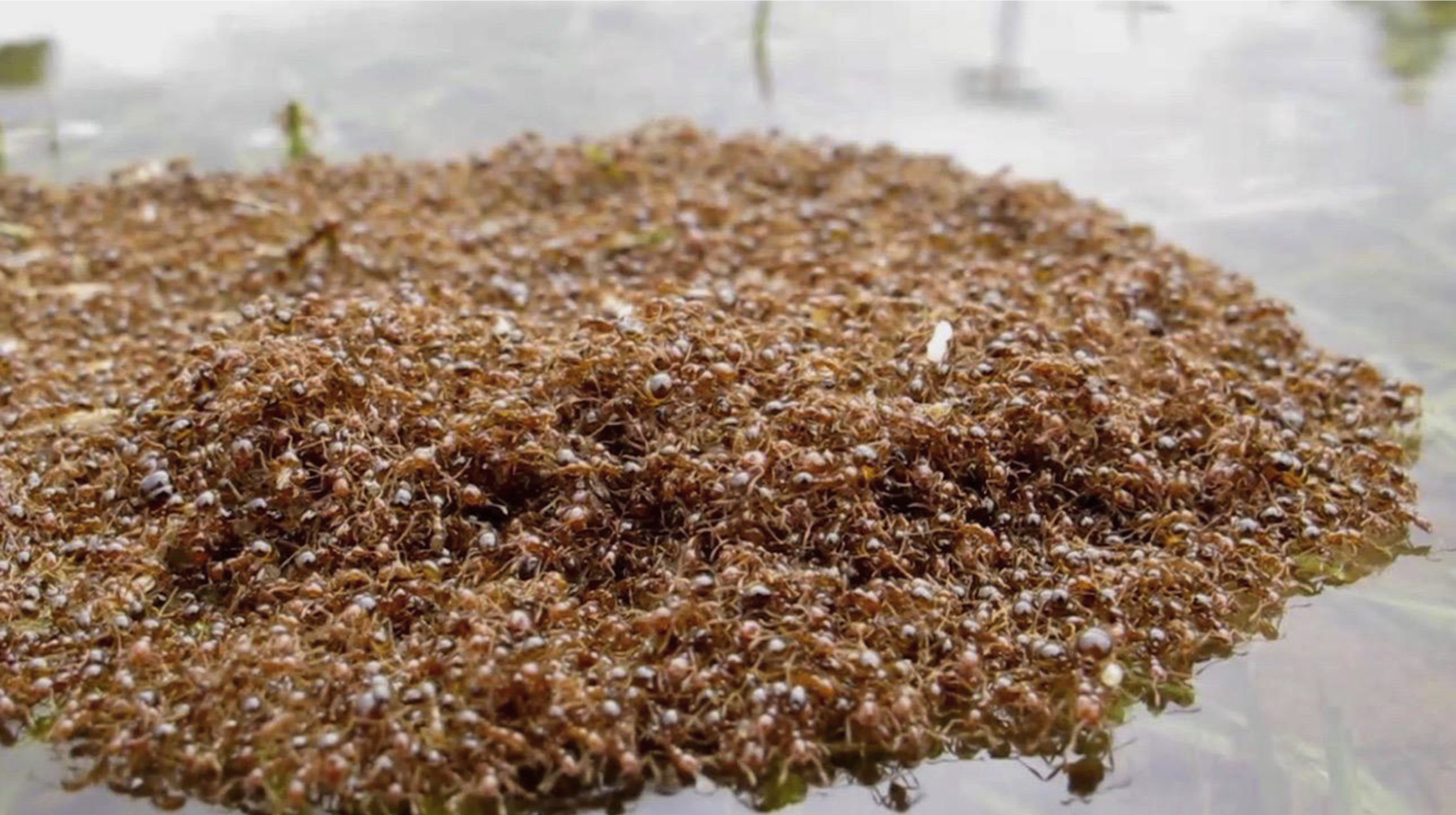
Floating fire ant colony. Photo courtesy of Ben Raines.
The chaos associated with a paddler standing and disrobing in a canoe to rid herself of stinging ants made accurate identification of the species an afterthought. On further reflection, I realized this incident exemplified a danger for which other expeditions in similar ecosystems should prepare. In this environment, students are routinely reminded to look up in trees to spot poisonous snakes or hornet nests, but before this event they were never warned about ants.
I contacted Dr. John McCreadie, medical entomologist at the University of South Alabama in nearby Mobile, to provide detailed information regarding the behavior of the ants and the location of the encounter. He shared this information with medical entomologists at the University of Georgia and Clemson University. In written correspondence (August 2020), all 3 agreed that the offending species is most certainly a type of fire ant. All believe the fire ants formed a raft and drifted to the tree, where the student made contact. Fire ant is a general term used to describe ants that deliver a painful sting and is the common name for several species of ants in the genus Solenopsis. There are 16 members of the Solenopsidini ant tribe in Alabama. 5 Although no sample of the ants was collected, the clearly dark color (Figure 8) of the offending insects narrowed the species list further. It is believed the offending ants could be one of several Solenopsis species or a hybrid imported fire ant listed as one of the common pest ants regularly encountered by humans: Solenopsis invicta x richteri. 6 From a wilderness medicine perspective, one should remember that Solenopsis invicta occupies much of the southern United States and is responsible for 95% of North American clinical cases. 7 Wilson is credited with discovering the first imported fire ant colony in the continental United States, in Mobile, in 1942. 8
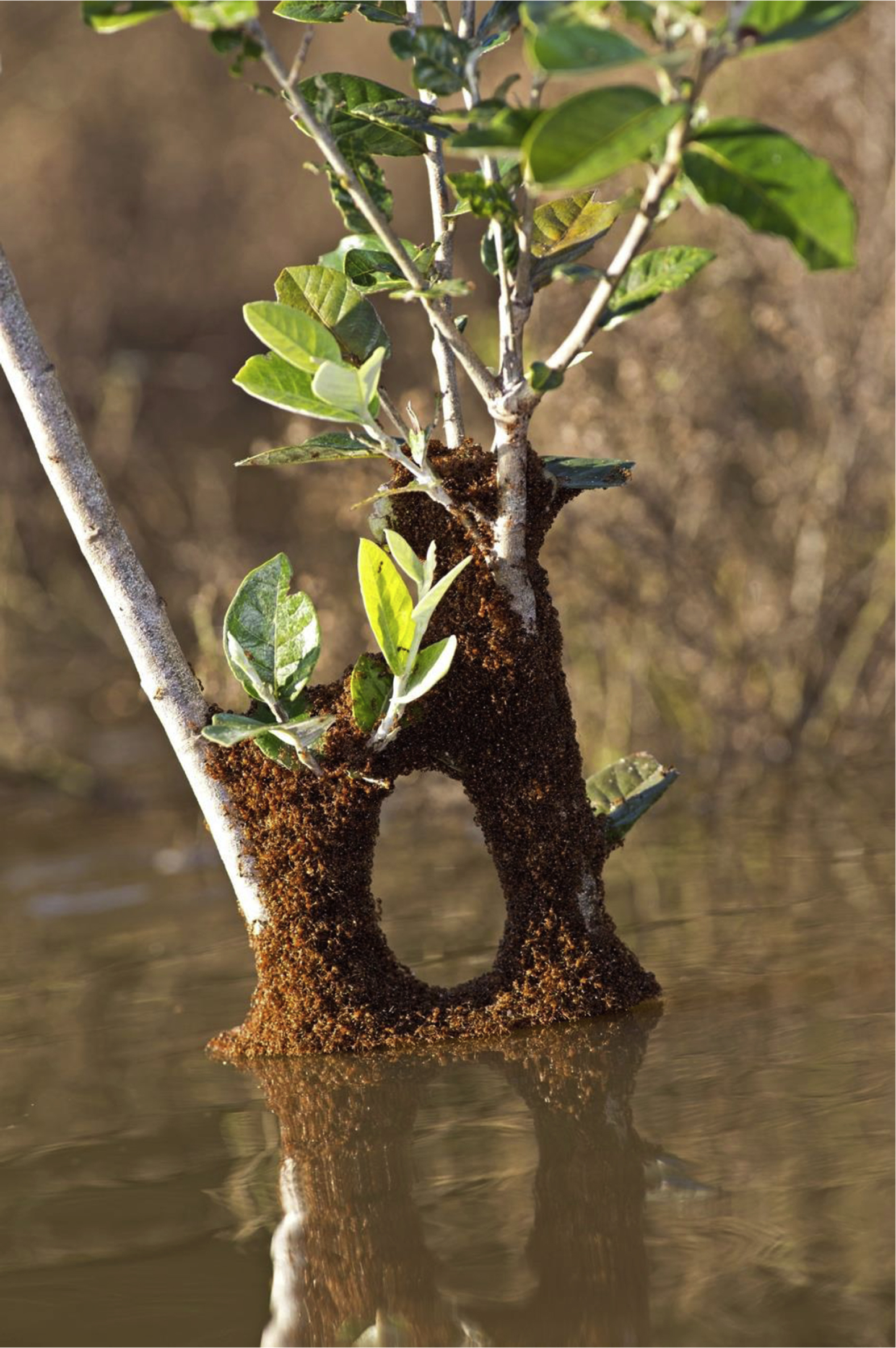
Fire ant raft climbing tree during flood. Photo courtesy of SciencePhotoLibrary.
Although we cannot be sure of the genus and species of the offending ants, I believe it is worth knowing more about the behavior of the most likely suspect. The area of the ant attack was flooded with winter rains at record levels. During flooding, an entire fire ant colony can emerge from its nest and form a free-floating, amoeba-like ball (Figure 7). Research at the Georgia Institute of Technology in 2011 established this mechanism of ant survival. 9 In floods, fire ants build a waterproof, flexible fabric of ants (called ant rafts) by clamping their mandibles and claws onto one another. Ant bodies are moderately hydrophobic, and this cooperative action traps air in the lower levels of the ant mat to provide oxygen to the colony. The ants systematically trade places to keep the queen alive and afloat until the colony is safe. Although we can find no documentation of any similar incidents of ants dropping from trees, the scientists consulted theorize the ants were living in the tree until the flood receded. According to Wilson, ant rafts will float until they come into contact with any stationary object above flood level, including a tree branch. 8 They will stay in place until a mound can be re-established in the soil.
The behavior and toxicity of fire ants in flood conditions is also of interest to healthcare workers involved with disaster relief after floods and hurricanes. Dr. Linda Bui, an entomologist at Louisiana State University, was impressed by bands of unexplained rashes on the legs and abdomens of victims who waded through floodwaters during Hurricane Katrina. Bui described seeing “literally fire ant stings on top of fire ant stings.” Victims presented with classic wheal and flare response 10 to ant venom from hundreds of stinging ants. Bui later coauthored an article documenting that fire ants develop larger venom sacs in flood conditions, a finding that could explain why fire ants deliver more venom during flooding. 11 In fact, fire ants deliver 87% more venom during flood conditions compared to normal conditions. 12 They are also able to sting their victims repeatedly by anchoring themselves with their jaws while they sting. This allows them to remove their stinger, rotate, and sting again. A single ant can sting multiple times in a few moments. 12 Because the ants are anchored, the best way to dislodge them is to rub them off, 13 as submerged ants will hold onto their target.
Ant venom is a protein of alkaloid nature that generally causes the formation of the fluid-filled vesicles characteristic of fire ant stings. 14 Fire ants are included in the order Hymenoptera 15 and their stings have been known to occasionally cause anaphylactic reactions. Fire ant venom is unique with the exception of 1 protein that shows limited cross-reactivity with a vespid allergen. 14 The Vespidae family includes yellow jackets, hornets, and wasps. Individuals who are allergic to vespids should be cautious about exposure to fire ants. This danger can be amplified by their tendency to sting en masse and become more defensive during flood conditions. 12
Our student experienced the classic hymenoptera sting symptoms of instant pain, wheal and flare reaction, and variable edema. 15 Allergy is the most serious aspect of hymenoptera stings. Anaphylaxis and related syndromes from this source are relatively common outdoor wilderness emergencies. 15 An estimated 0.4% of the US population shows some degree of clinical allergy to insect venoms, and 40 to 50 deaths are reported annually. 15 Fatal anaphylaxis to fire ant stings has been reported, 15 including the 2016 case of an Alabama woman who died from anaphylaxis secondary to multiple fire ant stings. 16 Considering the number of stings our student received, we were fortunate she did not have hymenoptera allergy and develop symptoms of a systemic allergic reaction.
The student’s self-administered postencounter therapy of oral antihistamines likely lessened itching. 15 Topical steroids were of doubtful value. Oral corticosteroid therapy is most effective in reducing inflammation and swelling after ant stings. 14 Had her condition worsened, both oral prednisone and epinephrine for anaphylactic reactions were available in the instructor first aid kit. 15 Large local reactions to insect stings can be mistaken for cellulitis. These reactions are characterized by severe swelling (20–25 cm), developing over 24 to 48 h. Antibiotic therapy is not needed for local reactions. 14 Breaking fire ant blisters should be avoided 15 because skin infections are fairly common after ant bites. Topical and oral antibiotics should be available in the event of secondary cellulitis.
Feral Swine
We planned to camp the next 2 nights in areas with well-documented herds (sounders) of feral swine (Figure 3). Feral swine are an invasive species known to decimate natural areas, pollute streams and water sources, 16 and compete with native species for food. Their diet consists of small mammals as well as turkey, quail, and reptile eggs. The hazard feral swine impose on the Delta ecosystem is so large there are neither bag limits nor a designated hunting season for them. The Alabama Department of Conservation and Natural Resources quotes studies suggesting 80% of a population must be removed just to keep the populations from continuing to grow. 17 The Alabama Department of Conservation and Natural Resources encourages a multifaceted approach to control swine sounders, including carrying a firearm on private property in the event there is an opportunity to remove one. 17 Lethal methods are often the most practical and widely used for feral swine control. 18 The owner of the property on which we camped our second night routinely traps and harvests feral swine to reduce damage to his sensitive natural ecosystem. This hunting minimized our exposure because feral swine learn to avoid hunting pressure. 18 Feral swine will attack humans without provocation 19 and are the animal I fear most in the southern forest. In preparation for the expedition, we coached students to keep food in locked containers and out of their tents and to back away slowly and climb a tree 20 if they encountered a feral hog. Injuries from wild boar attacks generally involve soft tissue lacerations to lower extremities from sharp canine incisor tusks (Figure 9).
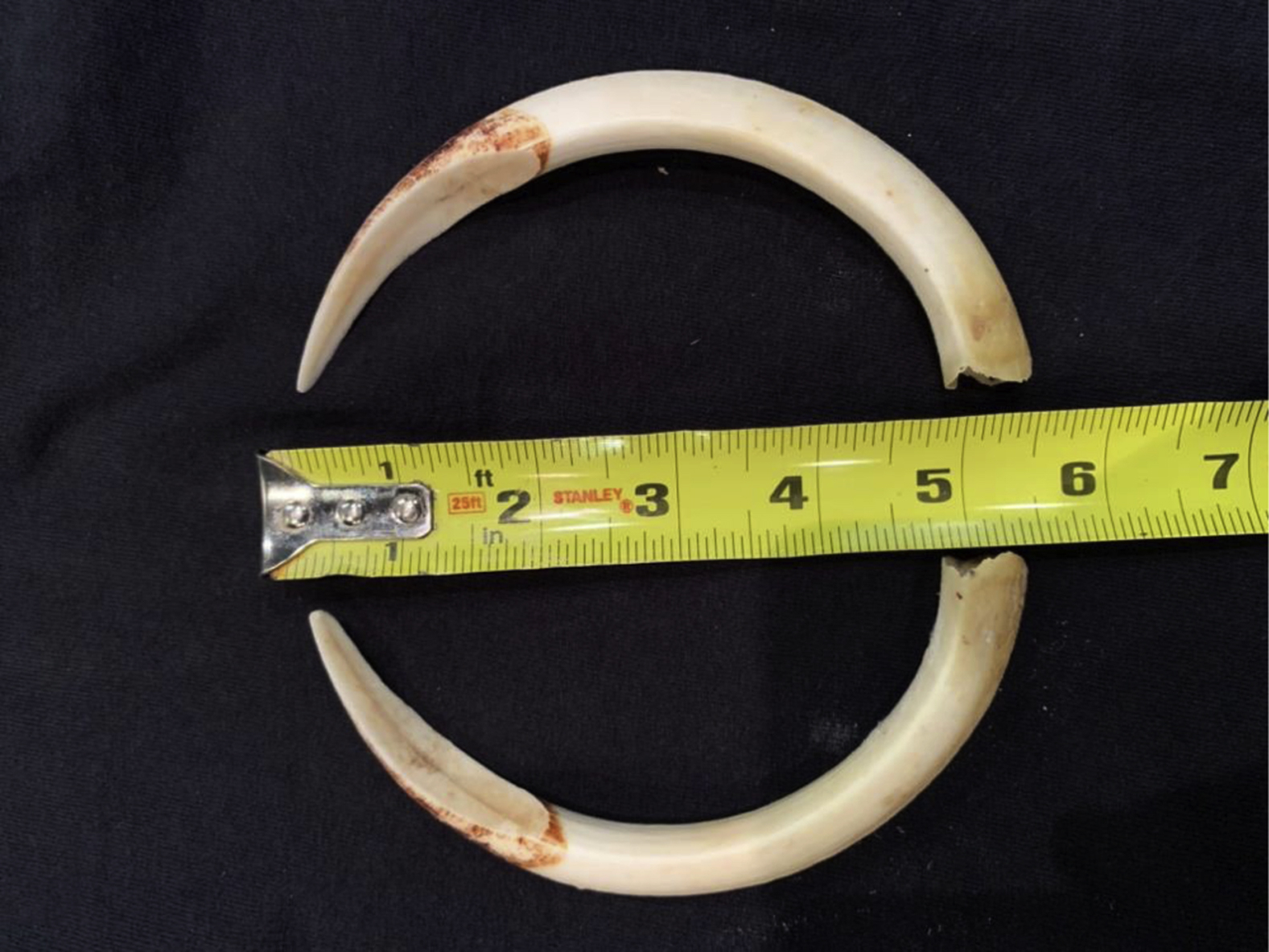
Feral swine tusks. Photo courtesy of Luke Adams.
Potentially lethal lacerations can occur on other parts of the body if the victim falls while trying to escape. Feral swine are known to attack ferociously and repeatedly with their sharp tusks. 19 Although rare, fatalities from wild boar attacks have been known to occur. 21 Although we saw signs of feral swine at our campsites, no sightings occurred during the trip.
Railroad Bridge Obstruction
Our last significant challenge was perhaps one of the most serious I have encountered while canoeing. With flooding at a 40-y high, we were unaware there was not enough vertical clearance to paddle beneath the CSX railroad bridge crossing the Tensaw River (Figure 10). Had we not left the main river currents north of the bridge and sought safe passage via a forest route, flood currents would have swept us under the structure, capsizing our canoes. As we approached the bridge, I scouted the area, gauged the space below the bridge as inadequate for canoe passage, and communicated the danger by radio to other crew members. We turned west, paddled along the mounded track, and found an unmarked underpass deep in the forest. From there, we paddled underneath the track and were able to rejoin the Tensaw River channel moving south. Portaging canoes across an active railroad was not considered. By using this alternate route for downriver passage, we avoided reversing course in flood currents and ending our trip prematurely.
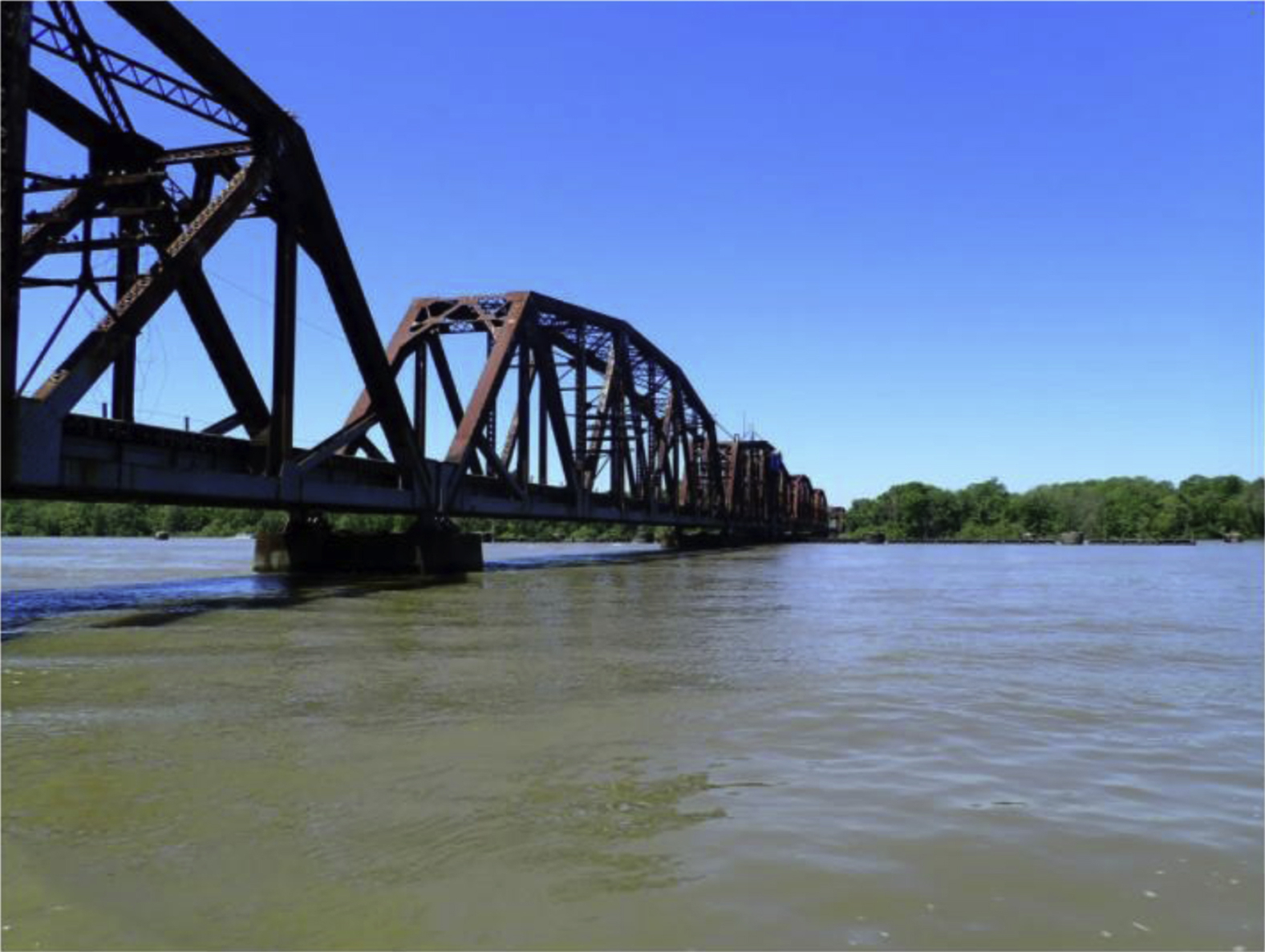
CSX Railroad crossing Tensaw River. Photo courtesy of Amy Karras,
Conclusions
Canoe camping expeditions have inherent outdoor risks no matter the ecosystem. Instructor experience, moving-water safety training, radios for communication, and attention to native and invasive animal and insect species are vital to ensuring group welfare. Flood conditions do not necessitate postponing an expedition, but care in advance of departure should be taken to avoid obstacles. Despite our best efforts to gather information about the Mobile-Tensaw Delta in flood, we did not foresee 2 of the dangers we encountered: fire ants in trees and a railroad trestle with inadequate vertical clearance. These unknown perils could have placed any expedition and its members in jeopardy. Therefore, it is imperative not only to be trained for expected hazards but also to carry a well-equipped first aid kit for the unexpected and to possess the confidence to pause, reassess, and search for alternative, safer routes.
Footnotes
Acknowledgements
Acknowledgments: Thanks to Raymond Maguire, MD, for his many years of volunteering to teach these senior electives. His quick thinking helped our student stabilize the boat while she changed clothing. Thanks to my wife, Cori Yonge, for her copyediting.
Financial/Material Support: None.
Disclosures: None.