






Abstract
Introduction
Because of the growing popularity of mountain tourism, the number of injuries related to mountain activities has increased rapidly. The regional volunteer search and rescue team (Tatra mountain rescue team [MRT], Poland) anticipates future increases in injuries and accidents.
Methods
An analysis was performed on Tatra MRT incident reports for the years 2012 through 2013. These reports include information on the mechanism of injury, weather conditions, and demographic data of the injured tourists. The data were provided by the operation supervisor of each search and rescue mission. The study group consisted of 844 reports (median age 37 y, range 18–90 y). The analysis was designed to determine whether features such as age and sex of the injured tourist were correlated to the injury mechanisms (as identified by the rescuers) or their National Advisory Committee for Aeronautics − International Committee for Alpine Rescue (NACA ICAR) score.
Results
Our study of the Tatra MRT data revealed that age and sex are risk factors for the rate and severity of injuries in the mountain environment. Injured men were more likely to require resource-intensive search and rescue missions and usually had a worse NACA ICAR score (P = 0.041). The age analysis showed that older people are more likely to sustain a serious injury (3–7 NACA ICAR score). However, the most common rescue scenario involved younger males (20–40 y) at a higher altitude (>1500 m, P < 0.001).
Conclusions
Sex and age are associated with the mechanisms and severity of injuries in the mountain environment. They should be considered in the development of appropriate prevention and response programs. Further studies are needed to confirm the results.
Introduction
The popularity of mountain tourism has been increasing in the past few years. Mountain tourism is a broad term because it refers to all wilderness off-road traveling activities (excluding cave rescues, aerial crashes, and bike crashes in this article). This trend is observed in the data of Tatra National Park, where the number of tourists annually exceeds 3 million (an increase of 48% in past 14 y). 1 Tatra National Park is located in the Polish Tatra mountains (highest peak Rysy, 2499 m) in the central-southern part of Poland, and it covers an area of 212 km2. According to the audit of the supreme audit office in Poland, the increased interest in mountain tourism, especially among inexperienced tourists, results in a higher incidence of injuries. 2 In recent years, the volunteer search and rescue (SAR) organization in the Tatra mountains (Tatra mountain rescue team [MRT]) has reported an increase in accidents due to “the lack of experience (lack of knowledge of the rules of safety concerning mountain travel or being in the Tatras for the first time) as well as recklessness of the tourists” (ie, ignorance of the trails or choosing trails not appropriate for their physical capabilities). 2 Similar observations of the relationship between lack of preparation and injury rates were made by MRTs in Great Britain and Italy. 3 –5
Although information regarding the age and sex of injured tourists appears in MRT reports quite often, a limited number of publications have analyzed the relationship between these features and the potential causes and outcomes of mountain injuries. The primary aim of the study was to review Tatra MRT SAR events during a 2-y period (2012–2013) for relationships between tourist age and sex and the mechanisms of injury and reasons for SAR identified by Tatra MRT rescuers (to assess whether these variables should be considered in future prevention programs). The secondary aim was to describe other factors associated with mountain-related injuries, such as weather or modes of transportation, with relation to age and sex.
Methods
Analysis was based on Tatra MRT records from 2012 and 2013. The data contain reports (written statements) given by the operation supervisor after every SAR mission. Each report consists of personal data of the victims, accident circumstances, and description of the injury (all terms in a fixed accident report card). Additionally, it contains a description of the resources used during the SAR mission (ie, number of rescuers involved and type of equipment used, including mode of transport). Among other information, rescuers recorded the elevation where the SAR mission took place (2 options were available: below or above 1500 m). To assess the severity of the trauma, rescuers used the 7-degree National Advisory Committee for Aeronautics (NACA)−International Committee for Alpine Rescue (ICAR) score. A higher score is associated with worse condition of the patient: 1 is considered mild injuries without any need for acute medical care, and 7 is defined as death on site or after unsuccessful resuscitation (Table 1). The NACA score allows for categorization of the victims’ condition and enables statistical reviews of the type of injuries and illnesses treated by the MRT rescuers. 6 The score has proved its usefulness to evaluate prehospital care in various countries.6,7
NACA ICAR score description with reference to the study group
NACA ICAR, National Advisory Committee for Aeronautics − International Committee for Alpine Rescue.
Number of patients for which NACA ICAR score was recorded.
Depending on the length of a mission and the number of rescuers involved, Tatra MRT defines 3 types of SAR operations: expedition, action, and intervention. An expedition is defined as a search or rescue mission (with transportation) that involves at least 3 rescuers and lasts > 3 h. An action is a rescue mission that requires transportation of the victim and involves at least 2 rescuers being in action up to 2 h. An intervention is a single rescuer action without need for transportation that lasts a short period of time and mainly involves basic first aid.
When a mission was defined as an expedition, a detailed handwritten statement was prepared by the operation supervisor. Missions that required advanced medical procedures by a qualified emergency medical technician or physician were also reported in detail. In all other cases, no detailed report was made.
Rescuers reported the events that led to the trauma and necessitated a SAR mission. They could identify more than 1 probable mechanism of injury. The most common included ground-level fall, illness (sudden deterioration of health that is not due to any external injury), lack of abilities (missing skills necessary for safe participation in mountain tourism activities, as assessed by the rescuers), and inadequate equipment (eg, lack of proper shoes, clothing, ice axe, or crampons). Further mechanisms included falling from height (greater than own height) and getting lost.
Analyses were done with the use of Microsoft Excel (Microsoft Corporation, Redmond, WA) and Statistica versions 12 and 13.3 (TIBCO Software, StatSoft, Palo Alto, CA). Results were considered statistically significant at P < 0.05. Because of nonnormal age distribution, basic statistics included median, range, and interquartile range (IQR). Frequencies were defined with numbers or percentages. Tests used in the analysis included Shapiro Wilk test, Kolmogorov-Smirnov test, Mann-Whitney U test, χ2, Fisher exact test, and Kruskal-Wallis one-way analysis of variance. The study was approved by the Jagiellonian University ethics committee (ap.nr. 1072.6120.259.2018).
Results
The study group consisted of 844 reports (median age 37, range 18–90, IQR 27–53 y) comprising 434 men and 395 women (in 15 cases the sex was not mentioned). The median age distribution was similar in both sexes (36; IQR 27–51 vs 27–53 y, respectively). Data excluded from analysis include duplicate records of the action already reported (when there was more than 1 rescue team involved), cases of tourists < 18 y old, and a significant lack of data (missing information on age, sex, and mechanism of the injury or reasons for SAR). A total of 817 out of 844 analyzed reports contained information on the type of activities the victims were engaged in prior to the injury. A majority of the SAR reports involved hiking activities (n = 676 cases; 80%), rock climbing (n = 37; 4%), off-piste skiing (outside the designated ski lift area; n = 33; 4%), or ski touring (n = 21; 3%). Other activities were classified as missions outside the area of standard operations of Tatra MRT (ie, cooperation with emergency medical technicians or police [n = 17; 2%], cave accidents [n = 4; 0.5%], paragliding [n = 4; 0.5%], and bike injuries [n = 3; 0.4%]).
The analysis showed that younger people are significantly more likely to be injured because of a lack of abilities (median age 32 vs 38 y; P < 0.001), inadequate equipment (median age 34 vs 37 y; P = 0.008), falling from height (median age 32 vs 37 y; P = 0.036), or getting lost (self-reported or other sources) in the wilderness (median age 34 vs 37 y; P = 0.021). Older tourists were significantly more likely to experience a trauma or be evacuated as a result of an illness (median age 40 vs 35 y; P = 0.009) or a ground-level fall (median age 39 vs 35 y; P = 0.003; Table 2).
Mechanisms of injury identified by MRT rescuers in reference to age (y) of the tourists
IQR, interquartile range; MRT, mountain rescue team.
Number of valid records.
Younger tourists (median age 34 vs 41 y) were much more likely to be injured while hiking at higher elevations above sea level (> 1500 m, P < 0.001; Figure 1).
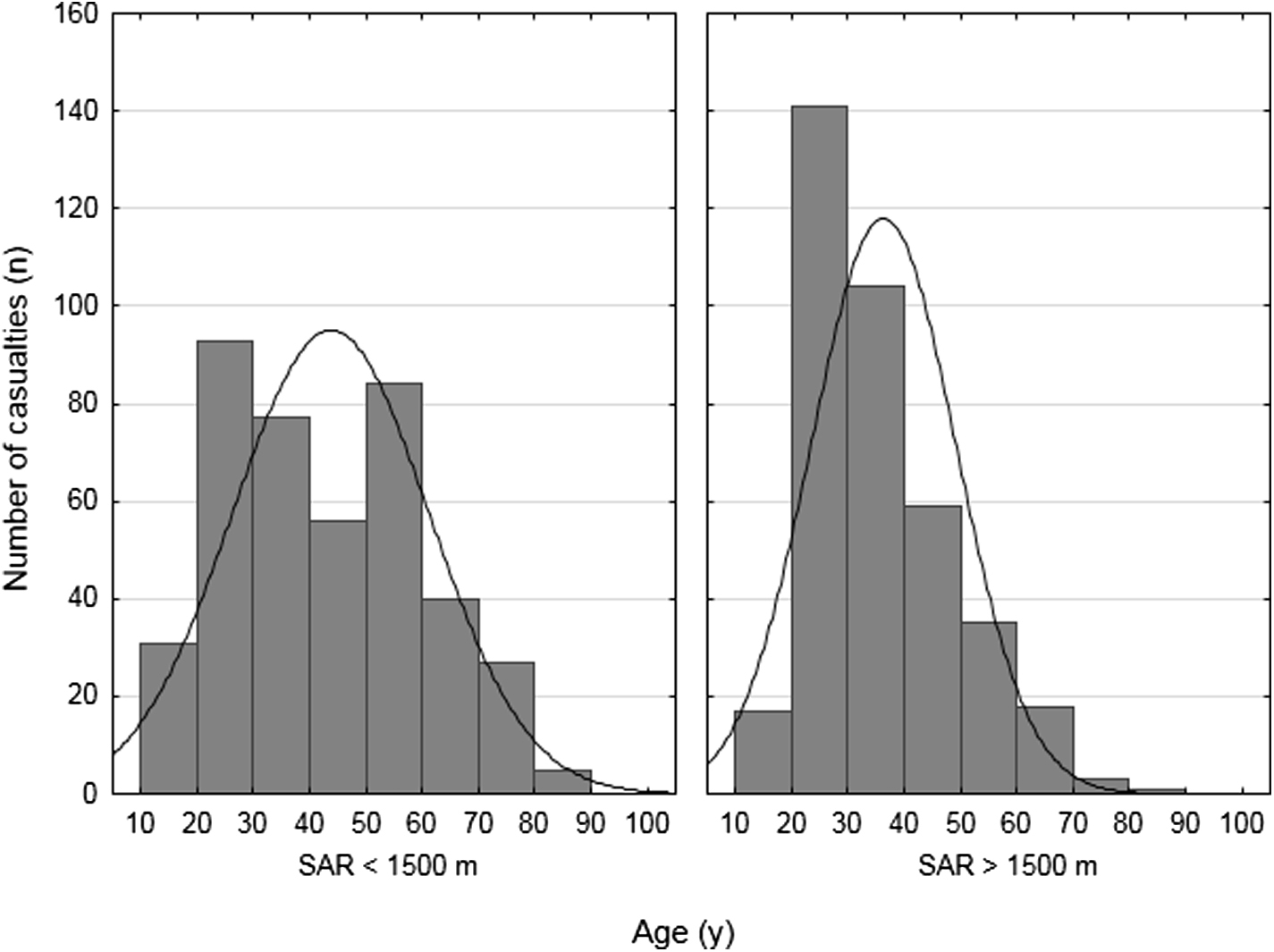
Search and rescue incidence in age groups in reference to the elevation of the terrain (below and >1500 m above sea level).
The majority of the reported SAR missions in the study period (n = 844) were classified as an expedition (58%) or action (39%). The type of the operation was not associated with the age of the victims because median age was similar in all 3 types of missions (37 y for expedition and 36 y for action and intervention). Of all expedition-level SAR missions, 59% involved a male victim. This demonstrates that men were significantly more likely to require longer, resource-intensive operations involving more rescuers and equipment (P = 0.026).
The analysis of the sex of the tourists showed significant differences in the possible injury mechanisms leading to SAR missions (Table 3). Men were significantly more likely to sustain an injury as a result of their lack of abilities (P = 0.019) or fall from height (P = 0.002) and were lost (P = 0.046) more frequently than women. Women had ground-level falls (P < 0.001) more often than men (Table 3). This may be associated with the fact that most accidents involving women took place below the height of 1500 m (218 women vs 187 men) rather than above (155 women vs 217 men); 67 reports cards were missing altitude information.
Mechanisms of injury identified by Tatra mountain rescue team rescuers divided by sex
NACA ICAR SCORE
Complete information on the NACA ICAR score was available in 632 reports (Table 1). Further analysis of the injuries described in Tatra MRT reports revealed significant differences regarding the health status of the victims at evacuation completion (on the basis of NACA ICAR) and their sex and age.
Kruskal-Wallis one-way analysis of variance test implementing age and NACA ICAR score proved that the probability of severe injury (NACA ICAR ≥3, hospital treatment indicated) rose with the age of the subjects (P = 0.041; Figure 2).
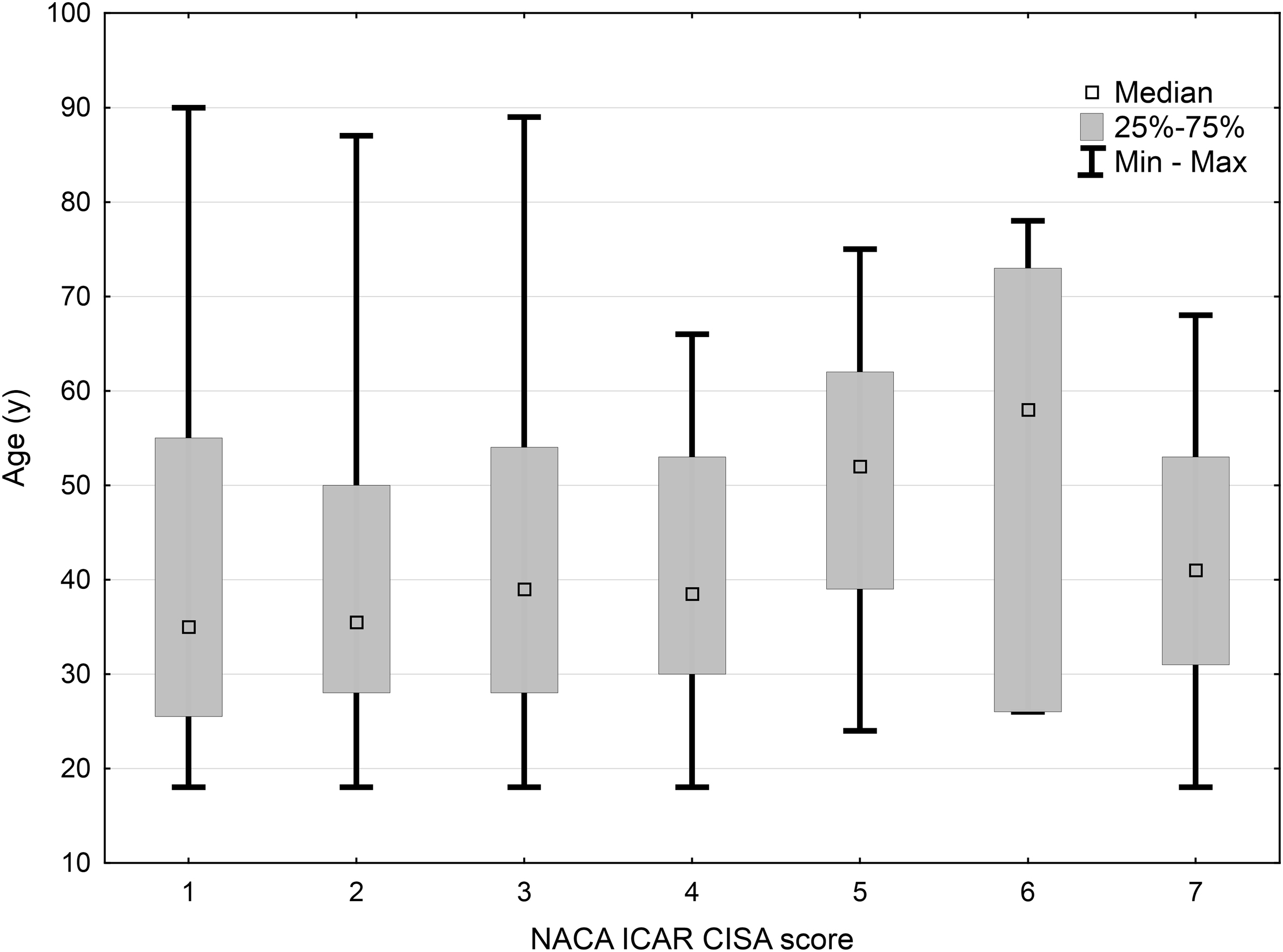
National Advisory Committee for Aeronautics − International Committee for Alpine Rescue score in reference to the age of injured tourists.
The χ2 test showed that the sex of the tourists was associated with the severity of the NACA ICAR score: Male sex was significantly associated with higher values (P < 0.001; Figure 3). This result was confirmed when types of injuries were taken into consideration. It appears that women sustained joint injuries more frequently than men (ie, strains or dislocations, P < 0.001; or fractures, usually of the lower limb, P = 0.046). Men more frequently sustained chest (P < 0.001) or pelvis (P = 0.006) injuries than women. All of the aforementioned differences were statistically significant. Complete information on the type of trauma and injured body parts analyzed in the study group is presented in Table 4.
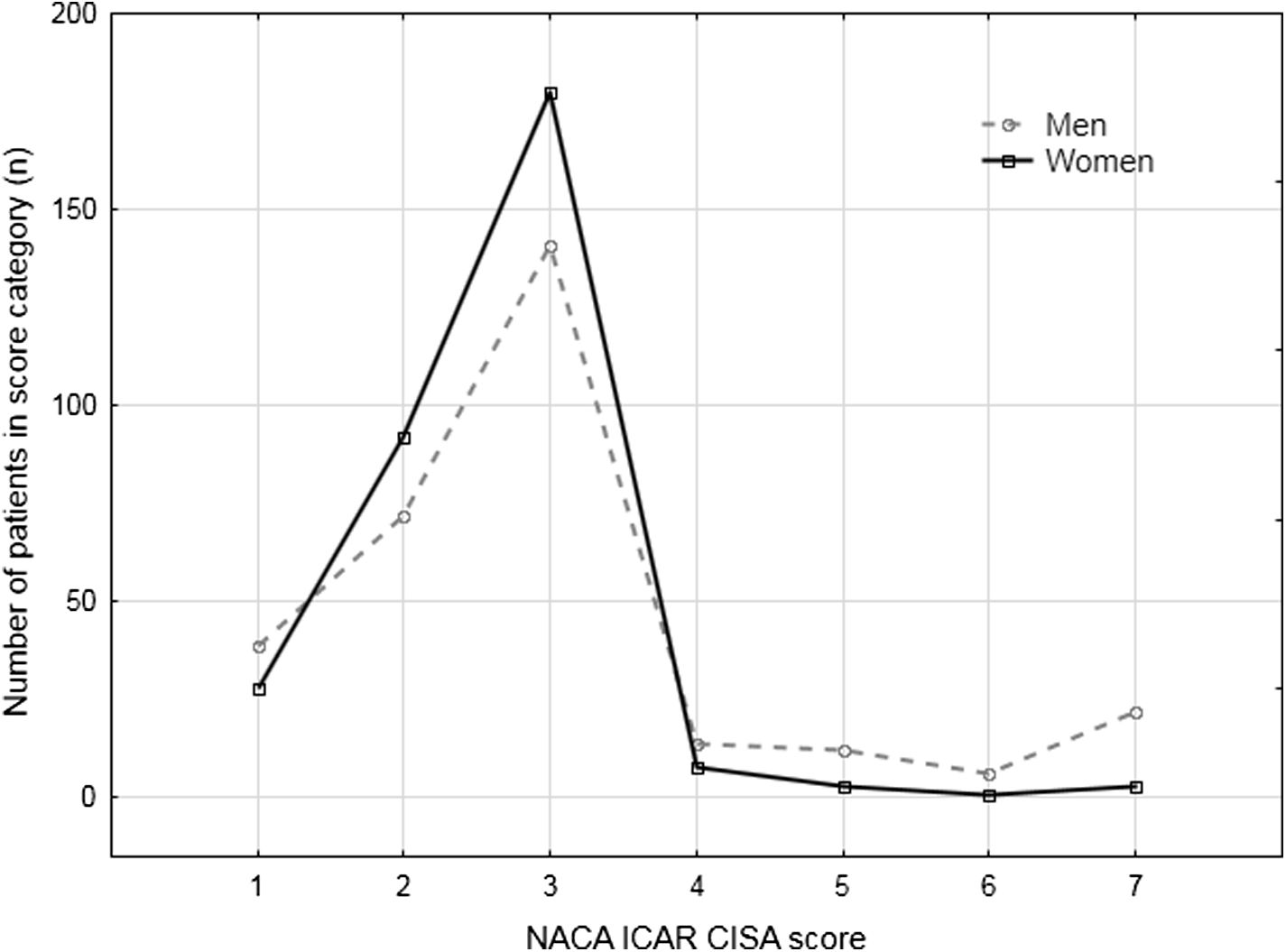
National Advisory Committee for Aeronautics − International Committee for Alpine Rescue score in reference to the sex of the injured tourists.
Type of injuries and injured body parts as identified by Tatra mountain rescue team rescuers divided by sex
TRANSPORTATION AND WEATHER
SAR missions in the study period involved a variety of physical resources, including different modes of transportation. In some cases victims requiring transport or assistance were more likely to be older (ie, tourists requiring sled or stretcher were ≥ 9 y older: median 45 vs 36 y, P < 0.001), but there was no correlation between the age of the injured tourists and other types of transport (helicopter, 4 × 4 car) used by the rescue team. A significant difference was observed in the sex of the tourists and the type of transportation used. Men were more likely to require an evacuation using the helicopter (n = 164/276; 59% of cases, P = 0.004), regardless of the elevation of the SAR mission. Women were more likely to be transported by car (n=222/399; 56%, P < 0.001). Other forms of transportation including akia/stretchers (used 103 times during the study period), snowmobile/quad (64 times), cable car (7 times), or other (ie, by foot with the rescuer guidance, 23 times) were not statistically significant in reference to the sex of the tourists.
Rescuers reported that SAR missions including male victims were more likely to be associated with poor weather conditions such as fog and heavy snowfall (P = 0.003 and 0.013, respectively).
Discussion
The recent data regarding tourist activity in the Tatra mountains of Poland present a substantial increase in the interest in this form of tourism. To minimize the risk of mountain-related injuries, prevention programs are necessary. Preparation of such programs requires identification of injury risk factors and understanding of their relationship.8,9 Our study results suggest that age and sex are important factors for mountain trauma and therefore should be taken into consideration when prevention programs are implemented (targeting those at high risk).
Our results on the age and sex of the tourists are partially consistent with studies from other countries. According to a French study, age was considered a crucial factor. The relationship between age and need for SAR mission was directly proportional. The number of injuries was greater in the > 50-y-old age group and was associated with the highest risk of death (7 in NACA ICAR). 10 The authors of the study attribute this to demographic changes and increased popularity of the Mont Blanc region (referred by the authors as mass hiking). At the same time the French study group was overall older than the one in this article. Italian researchers confirmed in their study (20-y period) that the age group with highest injury risk was 45 to 55 y, but tourists aged 25 to 35 y were also at high risk. 5 A study of elite mountaineers in the Alps identified the 30 to 39 y age group as having the highest death rate. 11
Our study shows that older people were more likely to sustain an injury below a height of 1500 m (median age 41 vs 34 y) and to receive higher NACA ICAR scores. According to the study from Denali National Park, as the climbers age, their need to be rescued increases by 3% every year. 12
Mechanisms that were typically associated with younger age include lack of abilities, inadequate equipment, getting lost, and fall from height. Similar observations were made in the French, Scottish, and Italian studies. 5 ,10,13,14 The results on the relationship between mechanisms of injury and age were consistent with the data on the altitude where injuries were reported. Reaching higher elevation requires greater knowledge, skills, and experience, as well as more advanced equipment (often not carried by beginners).
The analysis regarding the sex of the injured tourists proved that the most resource-intensive SAR operations (involving the use of a helicopter, which may increase the cost of the mission up to 6 × and require increased manpower, as observed in expeditions) were associated with male sex. 2 The difference between men and women regarding helicopter use was significant regardless of whether the SAR mission took place below or above 1500 m. A Scottish casualty study points out that of all major traumas (n=12; >15 points in injury severity scale) reported in their study period (1998–1999) were sustained by men. 15 According to the data from Canada, France, New Zealand, United States, and Germany, men generally more often require SAR missions than women, both in terms of casualties and fatalities. 16 –21 Analysis of the available publications revealed that male predominance ranges from 61 to 80%. 10 ,19,20 In our study period of 2 y, 22 of 25 fatalities were men (88%). The result was similar to the death rate found in a study in the Slovakian High Tatras over a period of 25 y, where men also represented 88% of cases. 22
Male prevalence observed over the height of 1500 m was also noted in a higher NACA ICAR score (≥4) and in the specific mechanisms of the injuries (observed by Tatra MRT rescuers), such as fall from height, lack of abilities, and getting lost. The importance of inexperience, in terms of mountain-related injuries, was highlighted previously in the literature.10,23 At the same time, the authors of the French study point out that male activities tend to be intense and therefore carry higher risk of injury and death in comparison to female activities. 10 The leading mechanism for female injuries in our study was ground-level falls. Slips and falls are mentioned in a majority of SAR-related studies as a leading cause for an injury. 4 ,5,10,14,16–18,20 To the best of our knowledge this is the first study that shows the correlation of female population and ground-level falls in a mountain area.
LIMITATIONS
Most of the limitations of this study come from its retrospective nature and the inconsistencies observed in the reports that were initially collected for a different purpose. Although MRT rescuers are taught how to properly fill in the report card, there were cases when some information was omitted by the person filing the document. Another limitation concerns the supposed mechanisms of the injury as reported by the rescuers. These data are subjective and are likely to have recall bias, interoperator variability, and confirmation bias (highly mountain-savvy rescuers may assume that the less-experienced tourists were injured because of lack of skill even before evaluating an event). Report cards often do not contain data on the exact altitude at which the SAR mission took place. Another limitation was that the data used in the analysis were limited to individuals over the age of 18 y. For legal reasons, it was established that the authors would need permission from a minor’s legal guardian to use the information contained in the report card. Because this was a retrospective study, a follow-up after such a period of time would be impossible. Because of the small size of particular groups of activities (eg, climbing, biking) during the injury occurrence, detailed statistical analyses (regarding sex and age) were not performed by division into these groups because the result would achieve a low value of methodologic correctness. Furthermore, the small number of victims with NACA ICAR scores of 4–7 may be considered a limitation. Additional studies on a larger group size including a longer time period is required to perform such analysis. Although information on the number of tourists visiting Tatra National Park is available, there is no detailed information on the different types of activities practiced by those tourists. The final limitation of the study comes from the fact that Tatra MRT does not collect data on what happens to victims after transfer to the ambulance or hospital.
Conclusions
We analyzed 844 SAR missions for the period of 2012 to 2013 and recognized that age and sex are associated with different injury mechanisms and reasons for SAR. Therefore, those factors should be considered in the development of prevention programs. Younger tourists were more likely to be involved in SARs because of their inexperience and lack of proper equipment, whereas older people needed rescue assistance for illness or a ground-level fall. The male population was associated with longer, more expensive SARs (often requiring the use of a helicopter). Another difference was observed in terms of possible causes or reasons for SAR: Men were more likely to fall from height and to be inexperienced (lacking abilities and more easily becoming lost in the wilderness), and women were more likely to sustain an injury as a result of a ground-level fall. Poor weather conditions (fog, heavy snow) during SAR operations were associated with the male victims. Additional studies with longer observation periods in different geographic areas are required to confirm the results and to analyze the topic in more detail.
Footnotes
Acknowledgments
The authors offer special thanks to Sylweriusz Kosinski from MRT Tatra for thoughtful feedback on this paper and Stan Kielczewski for help with the translation.
Author Contributions
Study concept and design (JA); obtaining. funding: N/A; acquisition of data (JA, KB) analysis of the data (AK, JA); drafting of the manuscript (JA, AK); critical revision of the manuscript (JA, AK, KB); approval of final manuscript (JA, AK, KB).
Financial/Material Support
None.
Disclosures
None.