






Abstract
Introduction
Guests and guides partaking in helicopter and snowcat skiing (collectively known as mechanized skiing) are exposed to numerous natural winter hazards that can result in injury or death, but detailed quantitative risk estimates are currently lacking. This lack represents a considerable barrier for evaluating existing risk management practices and implementing evidence-based improvements.
Methods
We collected historical incident and exposure information from mechanized skiing operations in Canada to perform a retrospective risk analysis. Our analysis dataset includes 713 incidents that resulted in injuries or fatalities among guests or guides during a total of 3,258,000 skier days from the 1970 to 2016 winter season.
Results
Overall risk of death from natural winter hazards in mechanized skiing was 18.6 fatalities per million skier days (1997–2016). Although the risk of death from avalanches decreased substantially over the entire study period, avalanches remain the largest contributor to the overall risk of death (77%), followed by tree wells and other non–avalanche-related snow immersions. The risk of death from avalanches in snowcat skiing is about half of that in helicopter skiing, but other snow immersion fatalities are more common. The risk of major injury to guests is primarily associated with other falls and collisions. The risk of major injury for guides is higher in snowcat skiing than in helicopter skiing.
Conclusion
We recommend the design of an industry-wide incident and near-miss reporting system to support evidence-based improvements of safety practices.
Introduction
Travelling in mountainous winter backcountry terrain is inherently risky; recreationists such as backcountry skiers, mountain snowmobilers, and snowshoers expose themselves to various natural winter hazards that can result in accidental injury or death. Examples of these hazards include snow avalanches, tree wells, cliffs, glacier crevasses, natural obstacles, challenging travelling conditions that can lead to injuries through unintended falls, and harsh environmental conditions that can lead to hypothermia, frostbite, or dehydration. Several studies have estimated risk of death rates for recreational backcountry activities. 1 –5 However, whereas fatalities are generally well documented, obtaining reliable backcountry use information for the denominator in the risk calculation is extremely difficult because of the open-access nature of these activities. Hence, direct backcountry use observations 5 generally do not provide sufficient spatial coverage for meaningful risk estimates. Although large-scale population surveys on outdoor recreation6,7 or indirect use observations2,5 can offer general insight about the level of participation in backcountry activities, these estimates are generally associated with large uncertainties. Getting a complete picture of the risk involved in winter backcountry travel, including the risk of injury, is further challenged by the possibly large number of unreported incidents.
In commercial helicopter and snowcat skiing, professionally trained guides lead groups of paying skiers and snowboarders down pristine and uncontrolled skiing terrain that is remote and only accessible via helicopters or snowcats. In Western Canada, records of guest skier days for this type of backcountry skiing—commonly referred to as mechanized skiing—date back to the 1960s and represent a unique, direct, high-quality measure of exposure for risk calculations. However, although avalanche accidents resulting in fatalities are well documented, 8 –12 fatalities from other causes and severe injuries have so far not been collected systematically at the industry level. Hence, a comprehensive quantitative assessment of the risks in mechanized skiing has not been possible. This lack of quantitative understanding represents a considerable barrier for evaluating existing risk management practices and impedes the improvement of backcountry safety protocols within the mechanized skiing community.
The objective of this study is to address this knowledge gap by 1) collecting a comprehensive dataset of historic incidents in mechanized skiing that resulted in fatalities or severe injuries; 2) computing the risk of death and injury from these hazards; and 3) exploring differences in these risks between helicopter and snowcat skiing and between guests and guides.
Methods
INJURY AND FATALITY INFORMATION
For this study, we focused on injuries and fatalities that resulted from natural winter hazards during skiing. This includes incidents related to snow avalanches, collisions with natural objects (eg, trees, boulders), glacier crevasses, tree wells, 13 other non–avalanche-related snow immersions (eg, deep powder snow), 13 falls from a height (eg, skiing over a cliff or into a moat), and other falls (eg, simple skiing error).
Main data sources included existing publicly accessible accident databases and publications (eg, Avalanche Canada's avalanche accident database 14 and “Avalanche Accidents in Canada” publications of the Canadian Avalanche Association 8 –12), existing records of HeliCat Canada (trade association of mechanized skiing in Canada), relevant fatality investigation reports of the British Columbia Coroner Service (BCCS), and relevant anonymized worker compensation claim records of WorkSafeBC (British Columbia's worker compensation board). If permission was granted, we also examined the available operational incident and injury records of individual operators (electronic databases or paper records) and/or scanned their historic InfoEx 15 submissions (private daily information exchange among avalanche safety operations in Canada) for incident information with a series of keywords (injury, injured, hospital, clinic, medical, helicopter, damage, loss, destruct, accident, incident, suffer, harm, hurt, crash, collapse, demolish, severe, hypothermia, conscious, passed out, resuscitation, respiration, burial, involved, involvement) and recorded anecdotal information on incidents from operation staff. Online media reports were used to complement available information but were never used as the sole information source. An evaluation of the study protocol by the office for research ethics of Simon Fraser University concluded that the study was exempt from a full ethics review in light of the public accessibility and nature of the data.
All incident records were entered into a database for analysis. Key database fields included date of incident, identifier of commercial operator, type of operation (helicopter, snowcat, or both), incident type, type of patient (guest or guide), incident description, and severity of injury. We considered any employee, paid or unpaid, in a leadership role during skiing at the time of the incident as a guide. In addition to senior guides explicitly leading guests, this definition also includes tail guides bringing up the rear of groups and apprentice guides. All skiers not in a leadership role at the time of the incident were classified as guests, regardless of whether they were paying clients or not.
Severity of injury was classified as minor, major, or fatal based on the available information. In the case of worker injuries, the differentiation was based on the reported recovery period as defined by WorkSafeBC's classification profile for “Serious Injury Claim” (L Scarlett, personal communication, May 2017): Any injury resulting in a recovery period of 50 or more days was classified as a major injury, whereas injuries with shorter recovery periods were classified as minor.
Whereas the fatality records were complete because they need to be investigated by law, 16 and WorkSafeBC records offer a reliable industry-wide perspective on worker injuries, 17 the amount and detail in guest injury records varied substantially among operators. To ensure a meaningful dataset for calculating the risk of major injury for guests, we assigned data quality (DQ) ratings using a 4-level scale ranging from high (1) to low (4) to each operation and season based on the character of the available incident records. The highest quality rating (DQ1) was assigned to operations with systematic incident recording procedures/systems that included incidents at all severity levels. Other operations with incident records at all severity levels were given a DQ2 rating. Operations with only individual documented cases (often more severe cases) received a DQ3 rating, and operations with only anecdotal incident information were rated as DQ4. This DQ rating of an operation could change from year to year depending on the available information.
We classified guest injuries as major when they resulted in completely torn tendons (eg, Achilles tendon) or ligaments (eg, anterior cruciate ligament), substantial fractures (eg, limb, ankle, jaw, spine), or major dislocations (eg, hip) or required resuscitation. Examples of injuries we considered minor include bruises, minor fractures (eg, finger, toe), sprains, or lacerations. If the information was insufficient to identify the nature of the injury with confidence, its severity was classified as unknown.
EXPOSURE INFORMATION
We used skier days, representing the number of skiers exposed to backcountry hazards for the duration of 1 ski day, to describe exposure. Guest skier day numbers for seasons before 1995 were available as industry-wide summary estimates (W Bruns, personal communication, May 2017). Since the 1995 season, HeliCat Canada has maintained a database of guest skier days by operation and season for its members. Guest skier day information from non–HeliCat Canada members was requested directly from operations. In a small number of cases in which we were unable to obtain information on guest skier days from operations for individual winters (eg, records lost, company no longer exists), we filled the data gaps by linearly interpolating the number from the available records of adjacent seasons. The resulting exposure information for each operation and winter season was entered into the database along with information on operation type (helicopter, snowcat, or both).
To properly assess the risk in mechanized skiing, the exposure of guides must be taken into account. Because no systematic records of guide skier days are available for the industry as a whole, guide exposure needed to be derived from guest skier days. However, group size and guest-to-guide ratios have changed over time and vary among operators. Configurations range from small groups of 2 to 3 guests with 1 guide to large groups of 11 guests with 1 or 2 guides. Inquiries with industry experts revealed that a 6-to-1 ratio would be a meaningful average guest-to-guide ratio for the entire industry and study period (I Tomm, personal communication, April 2017). However, to account for the uncertainty associated with this estimate, we also calculated guide exposure for 4-to-1 and 8-to-1 guest-to-guide ratios to provide low and high boundaries for our risk estimates.
RISK CALCULATIONS
Our risk analysis was divided into 4 main research questions for which we had sufficient high-quality data to produce insightful results: 1) risk of death from avalanches for the entire study period (1970–2016 winter seasons); 2) risk of death from natural winter hazards from 1997 to 2016 winters; 3) risk of major injury for guides from natural winter hazards from 2007 to 2016 winters; and 4) risk of major injury for guests from natural winter hazards in helicopter skiing from 2007 to 2016 winters.
Risk estimates were calculated by dividing the number of patients with injuries of a specific severity by the number of skier days for the operation type (helicopter, snowcat, or both), patient type (guest, guide, or both), and time period in question. In calculations for which we were confident that our dataset was comprehensive and covered the entire industry (eg, risk of death, risk of major injury for guides), the calculated risk estimates describe the true risk for the entire industry without requiring confidence measures from inference statistics (eg, confidence intervals, P values for comparisons). Although the uncertainty originating from our guest-to-guide ratio estimate was integrated into the analysis by calculating risk values with low and high guest-to-guide ratios, the resulting ranges cannot be interpreted as statistical confidence intervals, and statistical comparisons are not possible. In calculations for which our dataset was incomplete (eg, guest injuries), we limited the data included in our risk calculations to operations and seasons with DQ1 ratings. We then extrapolated the derived risk estimates to the entire industry by calculating 95% confidence intervals for population proportions using the Clopper-Pearson method.
18
Because the total number of skier days is finite and our DQ1 data sample typically represented a substantial portion of the total number of skier days, we were able to decrease the size of our confidence interval by applying the finite population correction

In addition to missing incident data, limited information on the severity of injuries introduced considerable uncertainty to our major injury risk estimates for guests. To address this issue, we calculated guest morbidities twice: First, we only included incidents that were conclusively classified as major injuries. These estimates and associated confidence intervals provide lower bounds for the risk of injury for guests. Second, we calculated the risk by including injuries of both major and unknown severity. This second set of estimates provides an upper bound for the risk of major injury for guests because it assumes that all injuries of unknown severity could have been major.
The entire analysis was performed in R, 20 and we used the binom.test function for calculating 95% confidence intervals before applying the finite population correction manually. Risk of death estimates are expressed in daily micromorts (mM), 21 which describes the number of fatalities per million exposure units (ie, skier days). Similarly, the risk of major injury is indicated in daily microprobabilities (mP), which is the number of injuries per million skier days.
Results
Our data collection efforts produced a dataset of 713 incidents between the 1970 and 2016 winter seasons that involved 96 fatalities, 229 victims with major injuries, 181 victims with minor injuries, and 282 victims for whom the severity of injury could not be classified (Figure 1). The number of incident records increased considerably over time, which reflects both the growth of the industry (Figure 2) and the more diligent incident recordkeeping in recent years. The overall number of guest skier days during this period was 2,793,000. Using a 6-to-1 guest-to-guide ratio, our best estimate of the total exposure of the Canadian mechanized skiing industry between 1970 and 2016 was 3,259,000 skier days with a possible range of 3,142,000 to 3,491,000 (8-to-1 and 4-to-1 ratio, respectively).
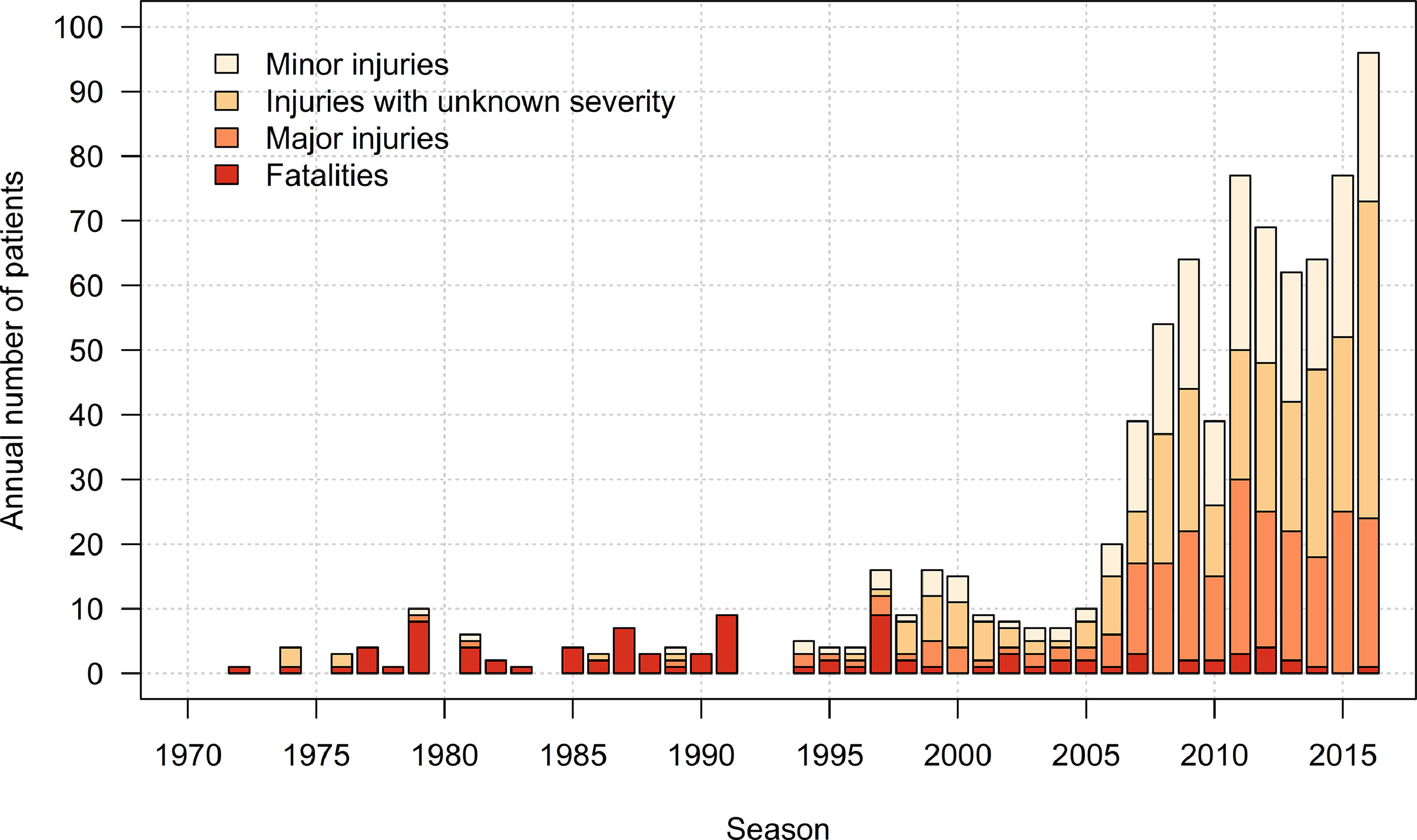
Collected fatality and injury data. Number of patients records in complete dataset per season and injury severity.
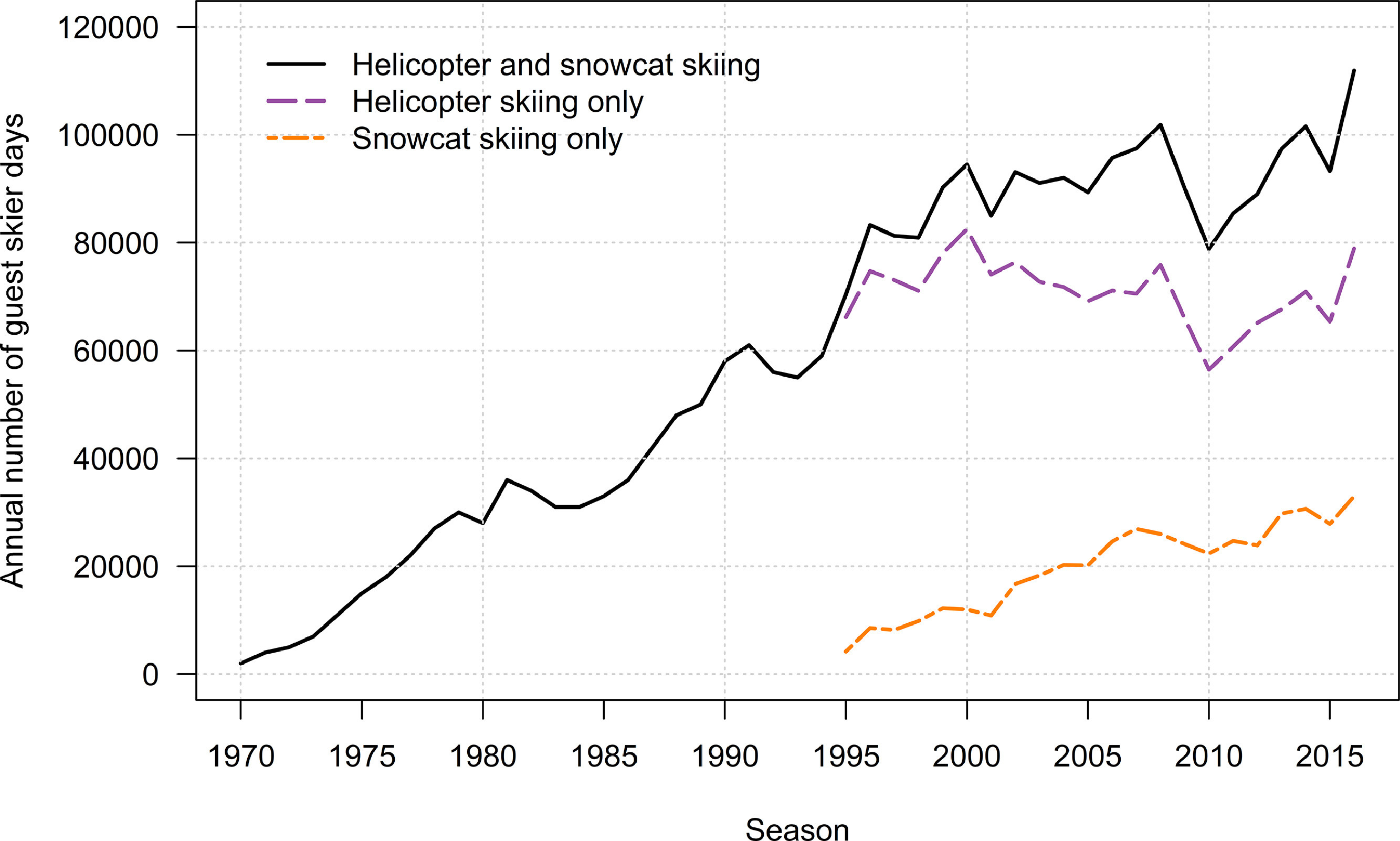
Collected exposure data. Guest skier days for Canadian mechanized skiing industry as a whole, helicopter skiing alone, and snowcat skiing alone.
RISK OF DEATH FROM AVALANCHES (1970–2016)
Files of the BCCS and records in the avalanche accident database of Avalanche Canada indicate a total of 44 avalanche accidents with 81 fatalities in the Canadian mechanized skiing industry between the winters of 1970 and 2016. Seventeen accidents (39%) had multiple fatalities, and the maximum number of fatalities in a single accident was 9. Seventy-one fatalities (88%) were guests and 10 (12%) were guides. The resulting average risk of death from avalanches in mechanized skiing in Canada for the entire study period is 24.9 mM (6-to-1 guest-to-guide ratio) with an estimated range of 23.2 to 25.8 mM (4-to-1 and 8-to-1 guest-to-guide ratios, respectively). However, we observed a dramatic reduction in the risk over time (Figure 3). The risk of dying from avalanches was 85.1 mM (79.4–88.3) in the 1970s, but this was reduced to 12.0 mM (11.2–12.4) in the 2000s, which represents a reduction by a factor of 7.1. The risk in the current decade (ie, since 2010) is marginally lower at 10.4 mM (9.7–10.8) (overall reduction factor: 8.2). Although this decreasing trend is present in the risk of death from avalanches for both guides and guests, there was an unusual peak in the risk for guides in the 1980s (81.3 mM; 54.2–108.4) owing to 5 separate accidents resulting in 1 guide fatality each. This is the only decade when the risk for guides was substantially higher than that for guests. Although our best overall estimate of the risk of death from avalanches for guides is lower than that for guests (21.5 [14.3-28.6] vs 25.4 mM), the uncertainty in our guest-to-guide ratio precludes the conclusion that guides have a lower risk of mortality from avalanches.
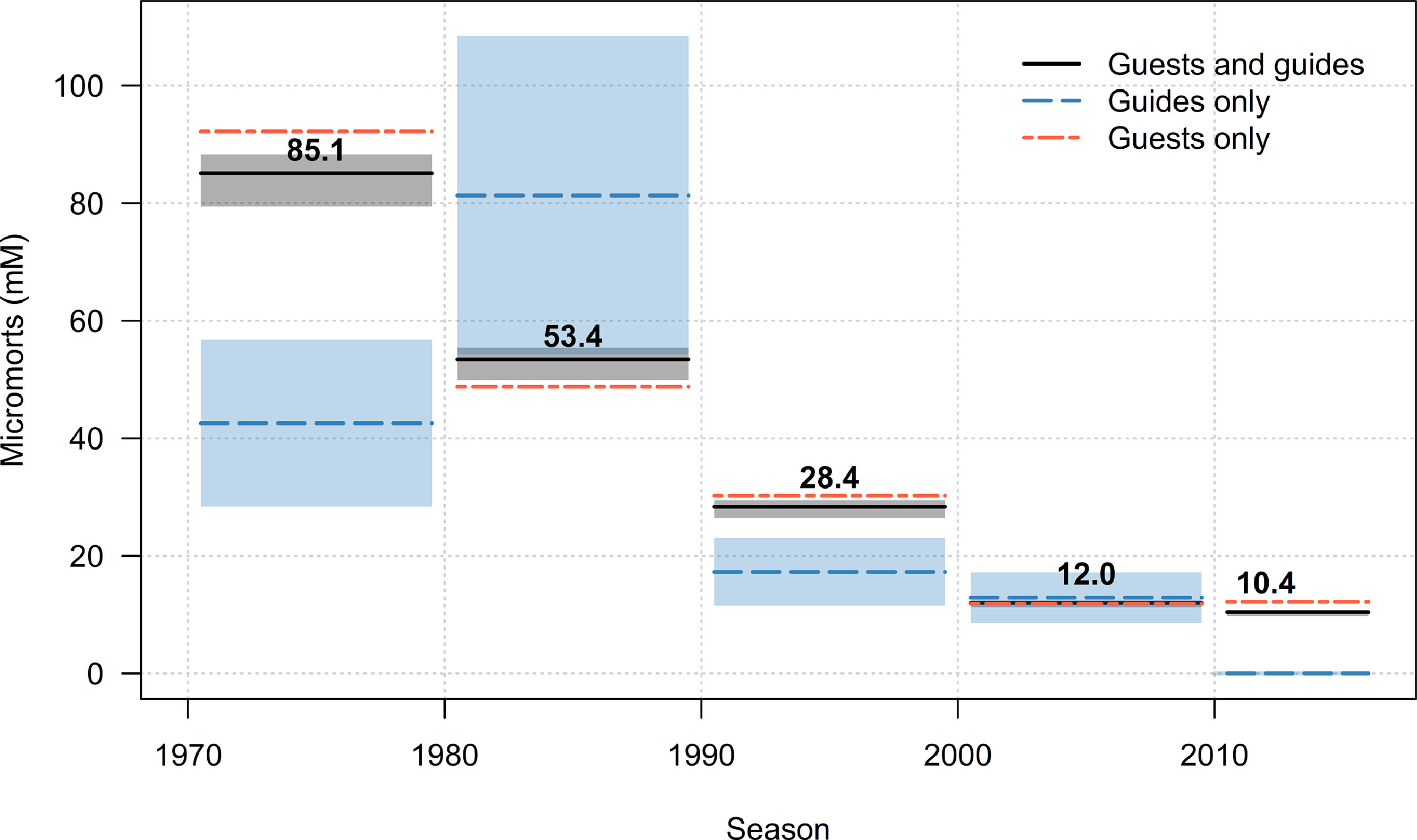
Decadal risk of death from avalanches. Risk of death from avalanches for each decade for guests and guides combined (black line), guests only (red line), and guides only (blue line) using a 6-to-1 guest-to-guide ratio. Shaded squares indicate the possible range of risk estimates due to uncertainties in the guest-to-guide ratio (4-to-1 to 8-to-1).
RISK OF DEATH FROM NATURAL WINTER HAZARDS (1997–2016)
Records of the BCCS indicated a total of 40 accidental fatalities from natural hazards in the mechanized skiing industry in the 20 winters between 1997 and 2016. Thirty-one (77%) fatalities were associated with avalanche involvements, 5 (13%) were tree well incidents, 3 (7%) were other non–avalanche-related snow immersion incidents, and there was 1 (3%) crevasse incident. Five (13%) of these fatalities were guides and 35 (87%) were guests. Based on a 6-to-1 guest-to-guide ratio, this resulted in an overall risk of death of 18.6 mM for the entire industry (see Table 1 for the risk values based on the other guest-to-guide ratios). The hazard specific risks were 14.4 mM for avalanches, 2.3 mM for tree wells, 1.4 mM for other non–avalanche-related snow immersions, and 0.5 mM for crevasses.
Risk of death (1997–2016) from all natural hazards in daily micromorts
NA, not applicable.
Values in brackets indicate risk values for 4-to-1 (lower value) and 8-to-1 (higher value) guest–guide ratios. These additional estimates are not relevant for the guest-only estimates.
Contributions to total risk of death (ie, column sums) shown in parentheses.
A comparison between helicopter and snowcat skiing operations (Table 1) revealed that the risk of death in snowcat skiing was slightly lower than that in helicopter skiing. The biggest difference between the 2 industry segments was that the risk of death from avalanches in snowcat skiing was roughly half as large as that in helicopter skiing (8.1 vs 16.3 mM). Furthermore, although helicopter skiing did not have any reported fatalities associated with other non–avalanche-related snow immersions, this type of hazard was responsible for 6.1 mM or 37% of the overall risk of death in snowcat skiing. The overall risk of death in snowcat skiing was roughly the same as the risk of death from avalanches in helicopter skiing.
Consistent with the analysis of the risk from avalanches, guides exhibited a slightly lower overall risk of death than guests (16.3 vs 19.0 mM), but the difference is not big enough to overcome the uncertainty originating from our guest-to-guide ratio assumption. Although the magnitude of risk of death from avalanches was comparable for guides and guests between 1997 and 2016 (13.0 [0.7–17.4] vs 14.7 mM) and accounted for similar proportions of the overall risk (80% vs 77%), no guide fatalities were associated with tree wells or other non–avalanche-related snow immersions.
RISK OF MAJOR INJURY AMONG GUIDES (2007–2016)
Records from WorkSafeBC between 2007 and 2016 showed 104 major guiding injuries from natural winter hazards that resulted in recovery periods of 50 d or longer. Based on this definition and a 6-to-1 guest to guide ratio, overall risk of major injury for guides was 659 mP (Table 2). Fifty-seven percent of the risk was associated with other falls, and 28% was due to collisions. All other causes were responsible for less than 10% of the overall risk of injury. However, the contributions of the different hazards and the total number of guides with major injuries varied considerably from season to season (Figure 4). This variability is caused by differences in seasonal conditions and the relative rareness of incidents associated with avalanches, falls from height, and tree wells.
Risk of major injury for guides (2007–2016) from all natural hazards in daily microprobabilities
Contributions to total risk of major injury (ie, column sums) are shown in parentheses.
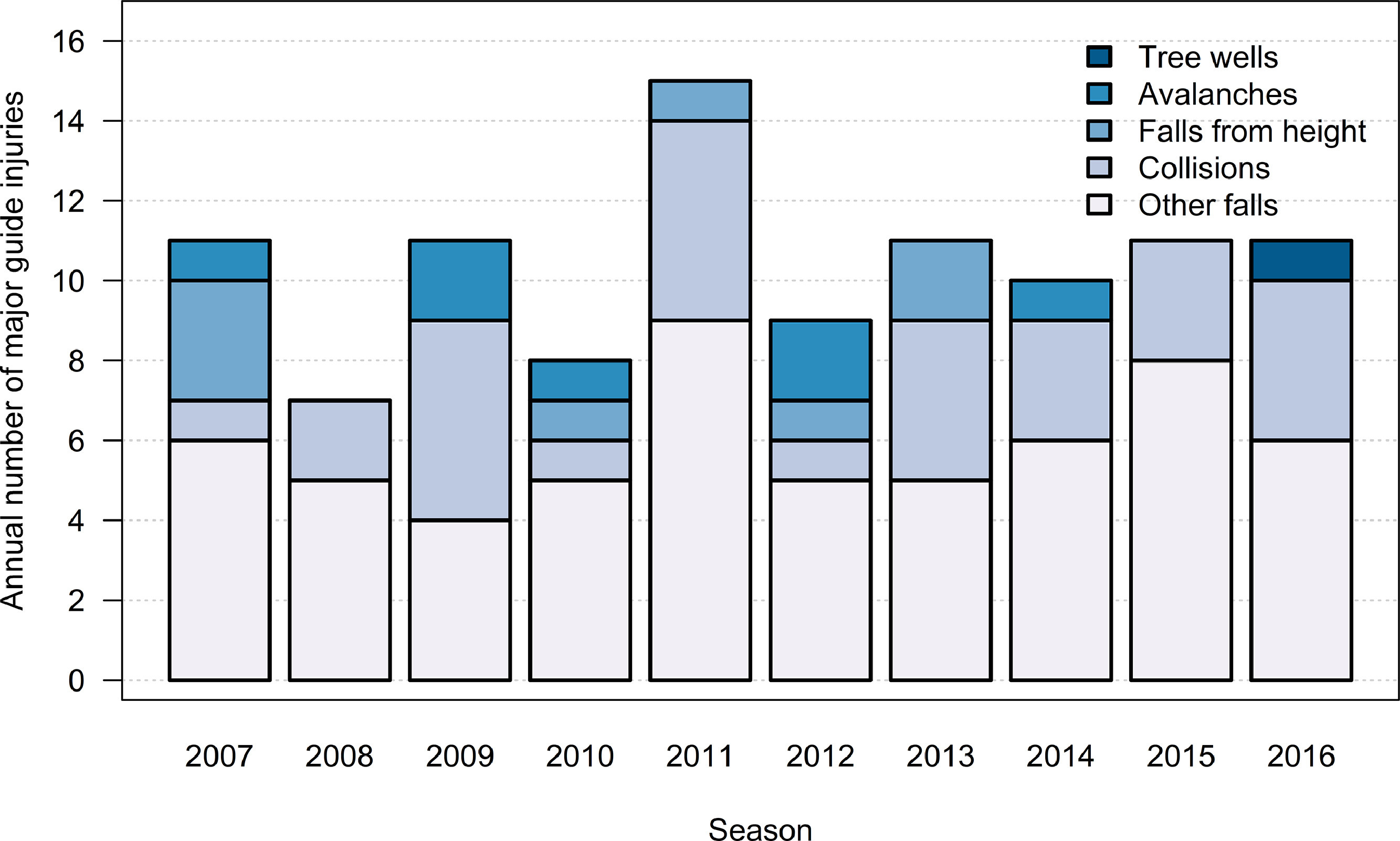
Annual number of incidents resulting in major guide injuries.
A comparison between helicopter and snowcat skiing (Table 2) showed that the risk of major injury was substantially higher among snowcat guides than among helicopter skiing guides (+45%). This difference was primarily associated with higher risks of injury from other falls (+60%), collisions (+33%), and falls from height (+52%).
RISK OF MAJOR INJURY AMONG HELICOPTER SKIING GUESTS (2007–2016)
In comparison to fatality records and guide injury information, reliable guest injury records were only available from select helicopter skiing operations. However, the data sample was substantial and covered 65% of the overall guest skier days in helicopter skiing for the winter seasons 2007 to 2016 (seasonal range, 13–76%). Because we were unable to collect sufficient data from snowcat skiing operations for this analysis, the following results only apply to the helicopter skiing sector.
Overall, our dataset consisted of 82 patients determined to have sustained a major injury and 204 patients with injuries of unknown severity. Based on injuries classified as major, we derived a lower bound of 186 mP (95% CI 162–214) for the overall risk of major injury from natural winter hazards for guests (Table 3). Similar to the situation for guides, the primary contributors to the risk for guests were other falls (61%) and collisions (29%). The upper bound for the overall risk of major injury for guests, which included injuries with both major and unknown severity, was 647 mP (95% CI 574–695). The contribution percentages from the different natural winter hazards for the upper bound estimates were not substantially different from those for the lower bound estimates.
Lower and upper bound for risk of major injury among helicopter skiing guests from all natural hazards in daily microprobabilities (2007–2016)
95% confidence intervals are shown in brackets and contributions to total risk of major injury (ie, column sums) in parentheses.
Discussion
The results presented in this study provide an overview of the risk of death and major injury from natural winter hazards in mechanized skiing in Canada.
RISK OF DEATH
Snow avalanches are the primary source of risk of death in mechanized skiing, responsible for roughly three quarters of all fatalities. Tree wells, other non–avalanche-related snow immersions, and crevasses are the causes for the remaining a quarter of fatalities. We attribute the dramatic reduction in the risk of death from avalanches from the 1970s to the 2000s to continuous improvements in avalanche education, avalanche risk management procedures, and avalanche incident response practices in the industry (eg, better understanding of avalanche hazard, introduction of guest pack with shovels and probes). The decrease during the last decade has only been marginal, which might indicate that the industry is approaching the limit of avalanche risk control given current understanding and technology.
The observed differences in the risk of death between helicopter skiing and snowcat skiing are likely related to differences in terrain use. Whereas helicopter skiing predominantly takes place in large, open alpine and glaciated terrain, snowcat skiing usually takes place at the tree line and below. This explains the higher risk of death from avalanches and crevasses in helicopter skiing. We suspect that the higher risk of death from other non–avalanche-related snow immersions in snowcat skiing is potentially related to snowcat skiing operations being able to operate during heavy snowfall when helicopter skiing operations have to shut down because of unsuitable flying conditions. The comparison between guests and guides highlights that tree wells and other non–avalanche-related snow immersion do not contribute to the risk of death for guides whereas they represent a substantial portion of the risk of death for guests. This means that raising awareness and skills around tree wells and non–avalanche-related snow immersion might have considerable potential for reducing these types of fatalities among guests. Our results show that the risk of dying in an avalanche and the risk of dying in mechanized skiing in general does not differ between guides and guests, but this comparison rests heavily on our guest-to-guide ratio assumption.
RISK OF MAJOR INJURY
The causes of major injuries are very different from the natural winter hazards causing fatalities. Although avalanches, tree wells, and snow immersions are the main causes of fatalities, they are responsible for less than 10% of major injuries. Other falls and collisions account for roughly 90% of all major injuries. This highlights that the outcome of avalanche, tree well, and snow immersion incidents is typically binary: Victims either walk away unhurt or they die, with limited middle ground.
Substantial differences were observed in the risk of major injury for guides between helicopter and snowcat skiing. Although the contribution of the different hazards is comparable, the magnitude of the injury risk is substantially higher in snowcat skiing. Similar to our explanation of the observed pattern in the risk of death, we attribute this difference to the fact that relative to helicopter skiing operations, snowcat skiing operations spend more time skiing at the tree line and below. Forested terrain is more complicated to navigate and has more obstacles that can lead to other falls and collisions. Furthermore, snowcat ski guides might be skiing in conditions with flat light and/or heavy snowfall more frequently because snow cats do not have the visibility requirements that helicopters need to operate. Limited visibility may make it more difficult for guides to judge terrain and skiing conditions and therefore lead to more frequent other falls. Furthermore, cat ski guides generally do not have the option of being picked up higher up on a run if skiing conditions are challenging at lower elevations. The observed differences in the risk of major injury between helicopter skiing guides (584 mP) and guests (186 to 647 mP) should be interpreted with caution because they are likely caused by the different definitions used for injury severity in the 2 analyses and the considerable uncertainties in the guide skier day and guest injury data.
LIMITATIONS
Even though the individual analyses included in this study focused on time periods for which we were confident in having high-quality datasets, several data challenges limit our ability to provide deeper insight. Having more detailed guide skier day records is instrumental for estimating guide risks more accurately. However, the effect of this limitation on the overall risk estimates was limited because guide skier days make up a relatively small portion of the overall skier days. Furthermore, this limitation did not influence the estimated contributions to risks from different hazards because these proportions are unaffected by exposure.
Although the fatality datasets collected in this study were complete and WorkSafe BC records were a reliable source for guide injury records, we encountered considerable variability in the recordkeeping of incidents across the mechanized skiing industry. Rating the quality of available operational records allowed us to use the most reliable data sources for our analyses, but the inconsistent quality of the data prevented us from offering more detailed insight and calculating more precise injury risk values across the entire industry. Furthermore, the guest and guide injury datasets requiring different definitions for identifying major injuries and the aforementioned uncertainties around guide skier days precluded direct quantitative comparisons of the risks for guests and guides.
Conclusions
Our analysis provides an overview of the risks of death and major injury from natural winter hazards in mechanized backcountry skiing in Canada and offers insight into current and past trends and patterns. The simultaneous availability of fatality, injury, and exposure data allowed the calculation of risk estimates at a higher accuracy than typically seen in other outdoor recreation risk studies. The present results offer meaningful order of magnitude estimates. However, more diligent industry-wide documentation of guide skier days and incidents resulting in injuries is required to provide more meaningful insight. We therefore encourage the development of an industry-wide incident and near-miss reporting system to offer even deeper insight and provide the necessary foundation for targeted, evidence-based improvements in risk management practices in the industry.
Footnotes
Funding
MW was supported for this work by a Mitacs Accelerate fellowship in partnership with HeliCat Canada.
Acknowledgments
We thank HeliCat Canada for providing historic incident information and all of the mechanized skiing operations that allowed us to access their operational incident records. We also thank Lorne Scarlett from WorkSafeBC as well as Chico Newell and Tej Sidhu from the British Columbia Coroner Service for providing data for this study. Additional thanks go to 3 anonymous reviewers who provided valuable comments that substantially improved the quality of the manuscript.
Author Contributions
Study concept and design (MW, PH, SF); obtaining funding (MW, PH); acquisition of data (MW, PH); analysis of data (MW, PH); drafting of the manuscript (PH); critical revision of manuscript (MW, PH, SF); approval of final manuscript (MW, PH, SF).
Financial/Material Support
The NSERC Industrial Research Chair in Avalanche Risk Management at Simon Fraser University (SFU) is financially supported by Canadian Pacific Railways, HeliCat Canada, the Canadian Avalanche Association, and Mike Wiegele Helicopter Skiing. The SFU Avalanche Research Program is further supported by Avalanche Canada and Avalanche Canada Foundation.
Disclosures
PH reports grants from HeliCat Canada during the conduct of the study as well as outside the submitted work. MW was supported for this work by a Mitacs Accelerate fellowship in partnership with HeliCat Canada. SF has nothing to disclose.