





Abstract
Introduction
Carrying standard safety gear (beacon, probe, and shovel), planning a route of descent, and recreating with companions can help to mitigate the risk of injury or death resulting from avalanches in the backcountry. The goal of this study was to identify factors associated with performance of these safety practices.
Methods
A convenience sample of backcountry skiers and snowboarders was surveyed in 2016 at the backcountry gates of Jackson Hole Mountain Resort. Each participant was surveyed on characteristics including skill level, sex, age, prior avalanche education, and residency in the Jackson Hole area. Safety practices were also measured against avalanche hazard forecasts. Correlations were assessed using Fisher's exact testing.
Results
A total of 334 participants were surveyed. Factors associated with carrying avalanche safety gear included higher expertise, being a resident of the Jackson Hole area, and prior avalanche education. Factors associated with having a planned route of descent included higher expertise and being a resident of the Jackson Hole area. Factors associated with recreating with companions included younger age and lower expertise. Sex had no association with any of the surveyed safety practices. Participants were less likely to carry avalanche safety gear on low avalanche hazard days.
Conclusions
Certain individual characteristics of backcountry skiers and snowboarders are associated with increased frequency of adherence to recommended safety practices. These findings suggest that particular categories of backcountry recreationists may benefit from further avalanche safety education. The results of this study could help direct future educational efforts among backcountry recreationists.
Introduction
Backcountry alpine snow sports, such as skiing and snowboarding, are popular forms of recreation among outdoor enthusiasts. With these sports, however, come inherent risks, including the danger of being injured or killed in an avalanche. Time is of vital importance in the rescue of victims buried in an avalanche. Survival if completely buried without traumatic injuries may be as high as 94% if rescued within 10 min, but the rate drops precipitously to 24 to 44% in 35 min and continues to decline thereafter. 1 Mortality is due predominantly to asphyxia beneath the snowpack, providing only a brief window of time for rescue.2,3
To mitigate the risk of morbidity and mortality, several pieces of avalanche safety gear have been developed. Beacons (also known as transceivers), probes, and shovels are considered standard avalanche safety equipment. Beacon use has been demonstrated to significantly reduce time to rescue with a corresponding reduction in mortality. 4 Other avalanche safety gear includes avalanche airbags, which are designed to prevent complete burial, and the AvaLung, which is designed to delay asphyxiation by redirecting exhaled gases away from inspired gases in complete burial.5,6
Companion rescue is paramount because a buried avalanche victim will usually asphyxiate before search and rescue agencies can arrive. 7 For that reason, backcountry recreationists must maintain knowledge and skill in the use of avalanche safety gear, as emphasized in Wilderness Medical Society practice guidelines on snow burial accidents. 8 These skills and their regular rehearsal will allow companions to initiate a search immediately after an avalanche has occurred, making companions critical elements in reducing the mortality risk of a buried avalanche victim.
Previous survey data on snow sport recreationists demonstrate variable rates of adherence to recommended safety practices. Practices previously surveyed have included recreating with companions, participation in avalanche safety courses, and carrying standard safety equipment. Performance of these practices has shown association with several different factors, including sport of choice and experience level.9,10 In a 2014 survey of backcountry snow sport recreationists in Utah and Wyoming, the majority of participants reported carrying standard safety equipment (beacon, probe, and shovel) and having previously attended an avalanche safety course. 11 Despite survey findings of relatively high rates of performance of safety practices, Jekich et al reported in 2016 that avalanche fatalities have steadily risen over the last 6 decades. 12 They suggest that this is likely due to overall rising rates of participation in backcountry recreation, which, by definition, exposes recreationists to higher avalanche risk than in-bounds snow sports.
This study seeks to build on the growing body of literature assessing the adherence of backcountry snow sport recreationists to behaviors that improve chances of survival in an avalanche scenario. Those practices include carrying standard safety equipment, recreating with companions, and planning routes of descent. With this knowledge, the snow sport recreation community can better focus education, advertising, and regulation to decrease morbidity and mortality among backcountry sports participants.
Methods
This study was an analysis of data obtained through a survey (Appendix 1) conducted by Teton County Search and Rescue Foundation (TCSARF), the nonprofit arm of Teton County Search and Rescue, which is a division of the Teton County Sheriff's Department. Questions included in the survey were determined by consensus between the leadership of TCSARF and Backcountry Zero, a community-led program in Jackson Hole with the mission of reducing backcountry fatalities through educational outreach.
The survey was conducted at the backcountry gates of Jackson Hole Mountain Resort, located near Jackson, Wyoming. Jackson Hole Mountain Resort contains 8 backcountry gates through which skiers and snowboarders may exit the resort to access backcountry terrain. Two volunteers administered the survey over 5 d each during the months of February and March 2016. The volunteers worked individually for 3 h each day. Time of day and day of week were varied to diversify participant population. The survey was conducted on each day of the week at least once, with participants being surveyed on Tuesdays twice and Saturdays three times. Although survey dates were recorded, specific times at which the surveys were conducted were not recorded. Survey questions were asked of the participants, and the volunteers recorded and submitted responses through an electronic survey application. The survey was a convenience sample of skiers and snowboarders aged ≥18 y preparing to exit the resort through one of the backcountry gates. Though these gates are easily accessed by several lifts at the resort, the terrain beyond the gates is not avalanche-controlled; therefore, those travelling beyond the gates have increased risk of avalanche exposure. The backcountry routes range from intermediate to expert terrain. The number of people leaving the resort by way of the backcountry gates is not monitored or recorded.
Data analysis consisted of comparing individual characteristics and safety practices for association by 2-sided Fisher's exact testing with alpha set at 0.05. Individual characteristics assessed were age, sex, local resident or visitor, expertise level, and previous avalanche education. Safety practices consisted of recreating with one or more companions; carrying a beacon, shovel, and/or probe (together referred to as “standard avalanche safety gear”); and having a planned route. Association with avalanche hazard forecast was also evaluated in this way. All statistical analyses were performed using SAS software (version 9.4; SAS Institute Inc, Cary, NC). The institutional review board of the University of Utah approved this study.
Historical avalanche forecast information was accessed through the Bridger Teton Avalanche Center website (
Results
During the survey period, the resort hosted 261,502 lift patrons overall. The total number of patrons exiting through the backcountry gates was not measured, nor was the number of patrons who declined participation. Of the patrons exiting through the backcountry gates, a total of 334 respondents participated in the survey. Eight of the 334 surveys were missing one or more response. Data from these partial surveys were included in applicable analyses. The remainder contained responses to all questions.
The number of participants in each age category was as follows: 47 (14%) were 18 to 24 y; 87 (26%) were 25 to 30 y; 56 (17%) were 30 to 35 y; and 141 (43%) were 35 y and older. Regarding sex, 217 participants (66%) were individual males or in male-only groups; 11 participants (3%) were individual females or in female-only groups; and 102 participants (31%) were in mixed-sex groups. On the subject of self-assessed level of expertise, 70 (21%) rated themselves as novices; 59 (18%) rated themselves to be intermediate; and 200 (61%) rated themselves as experts. Regarding location of residency, 219 (66%) reported being local residents of the Jackson Hole area, and 114 (34%) reported that they were visiting from out of town (no qualifying boundaries were defined). Lastly, when asked about prior participation in a formal, multiday avalanche awareness course, 249 (75%) reported having participated in such a course, and 82 (25%) reported having had no such training.
When surveyed about avalanche safety gear, 295 (88%) reported carrying beacons, 289 (87%) reported carrying shovels, and 287 (86%) reported carrying probes. On other safety practices, 281 (85%) reported recreating with companions, and 168 (50%) reported having a planned route for descent through the backcountry terrain.
Expertise level, residency status, and previous participation in an avalanche safety course were the major factors associated with adherence to safety practices (Figures 1, 2, and 3). Level of expertise was the only factor found to have associated differences in all safety practices surveyed. Higher expertise showed increased likelihood of carrying standard avalanche safety gear (P<0.001 for all gear) and with having a planned route for descent (P<0.001). Expert participants, however, were more likely to enter the backcountry without companions (P = 0.022). Being a resident of the Jackson Hole area was associated with carrying avalanche safety gear (P<0.001 for all gear) and with having a planned route (P<0.001), although it had no association with recreating with companions (P = 0.522). Previous participation in an avalanche safety course was also associated with carrying avalanche safety gear (P<0.001 for all gear), but it showed no association with route planning (P = 0.977) or with recreating with companions (P = 0.979).
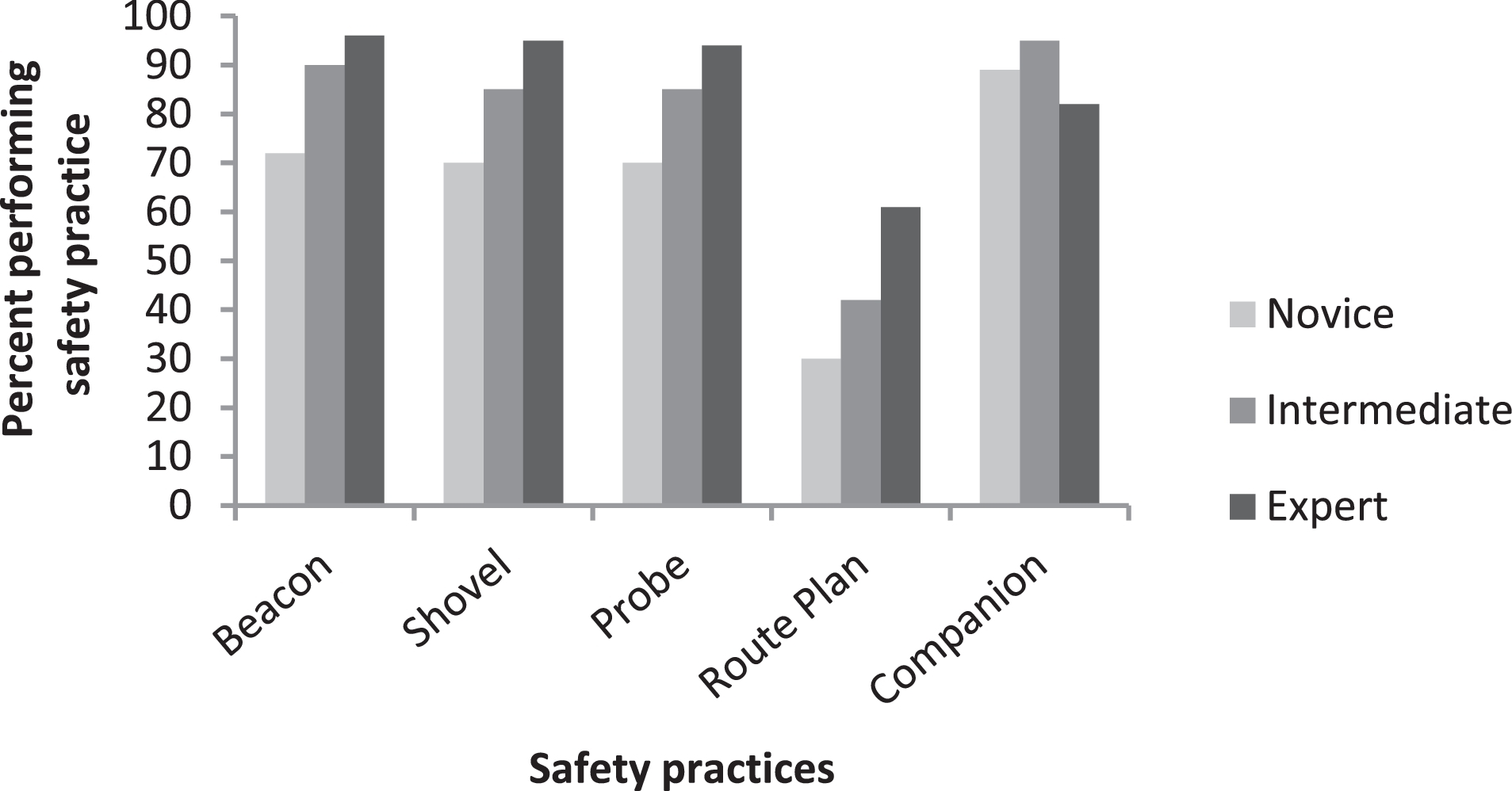
Safety practices by level of expertise. Expertise subjectively self-determined by respondents.
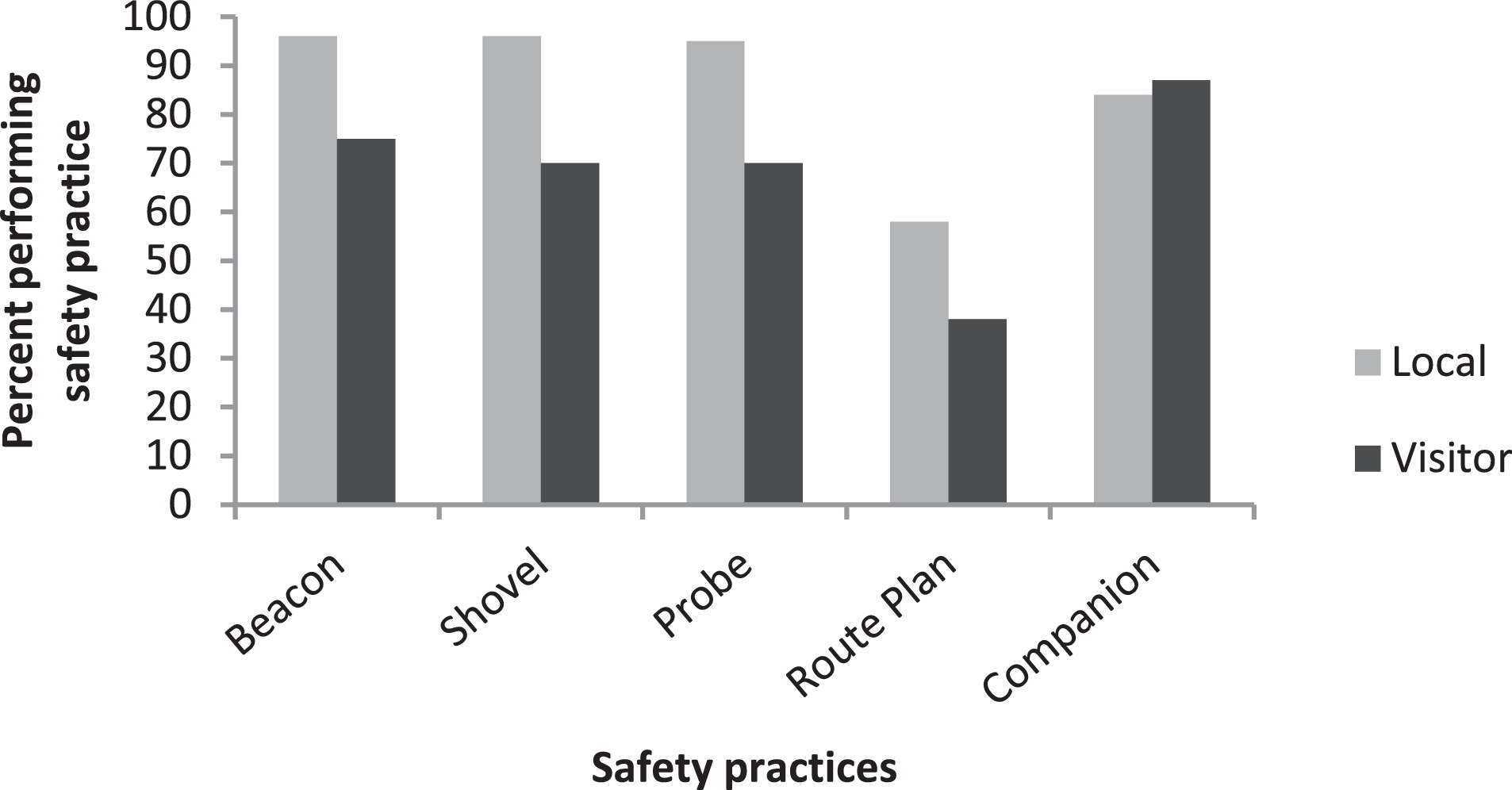
Safety practices by residency. Local indicates residence in the greater Jackson Hole area. No strict boundaries were defined.
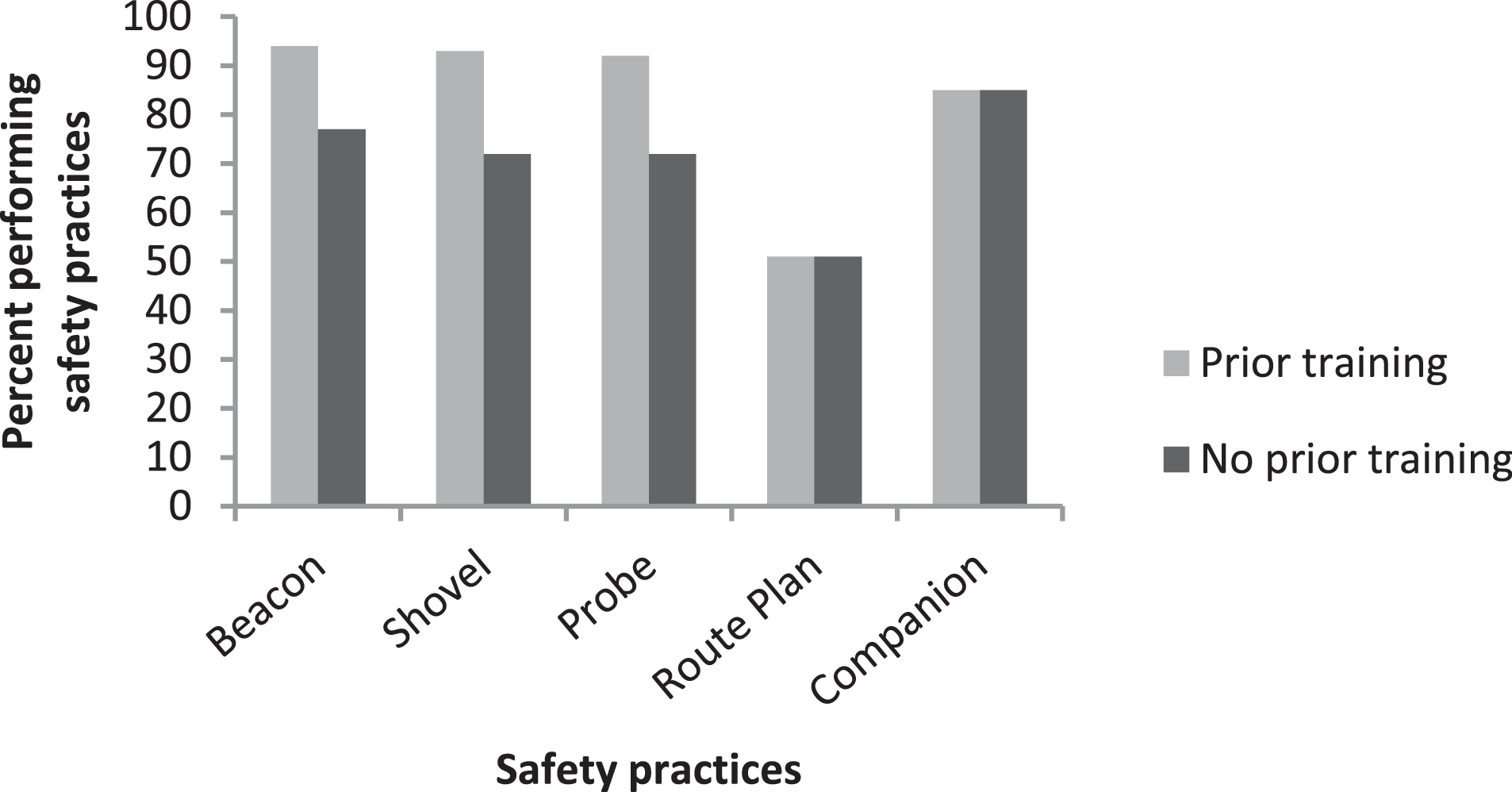
Safety practices by previous participation in an avalanche safety course.
Age and sex showed less impact on participant safety practices (Figures 4 and 5). Most notable is that those in the 35+ y category were less likely to recreate with companions (P = 0.001). Otherwise, participants in the 30 to 35 y category were less likely than other age groups to carry shovels and probes (P≤0.008 for both). Age was not significantly associated with carrying beacons (P = 0.055) or planning routes (P = 0.410). Sex (ie, male, female, or mixed group) showed no association with any of the surveyed safety practices: carrying safety gear (P≥0.052 for all gear), having a planned route (P = 0.833), or recreating with companions (P = 0.706 when “mixed group” is excluded).
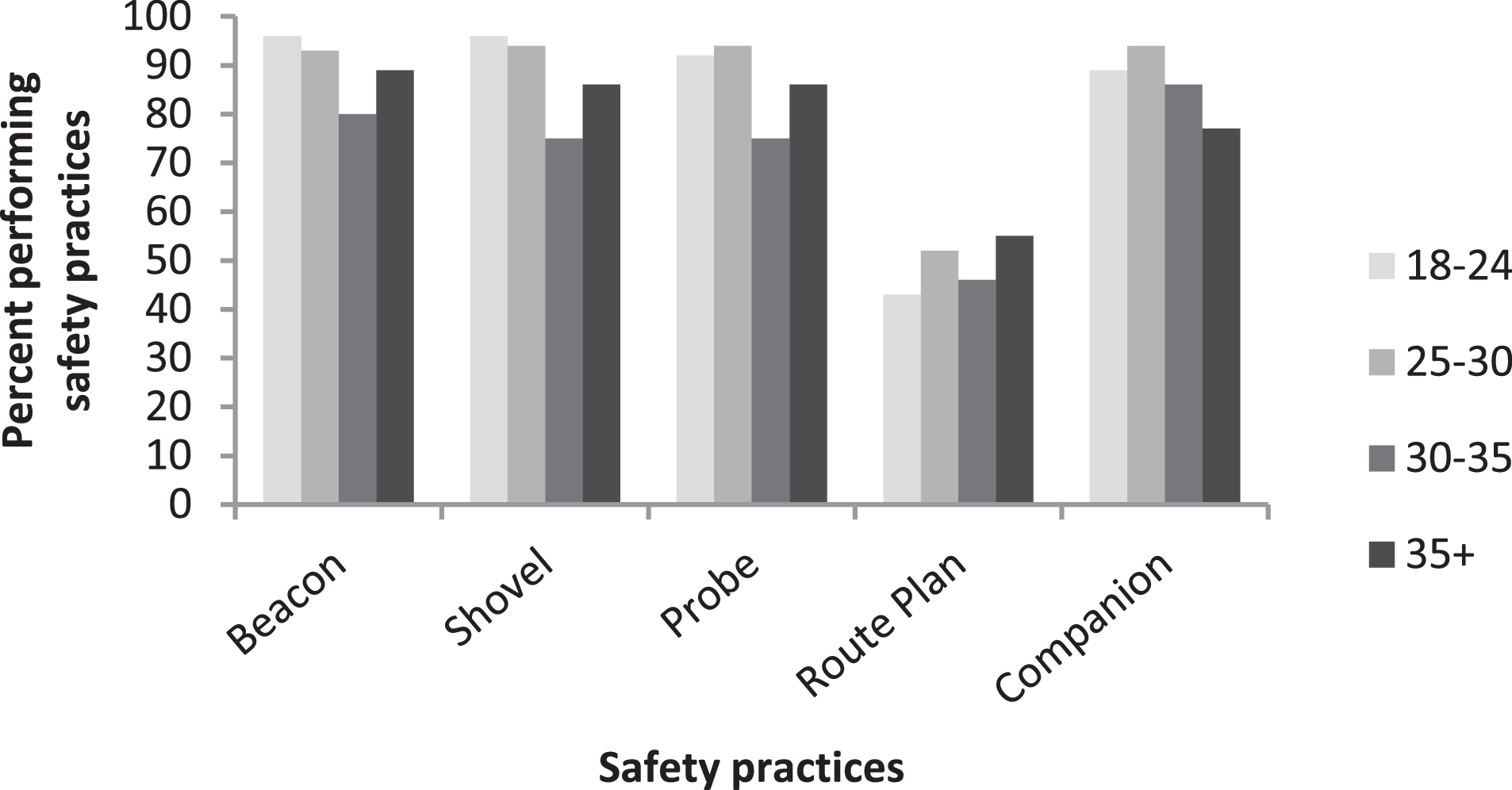
Safety practices by age. All ages shown in years.
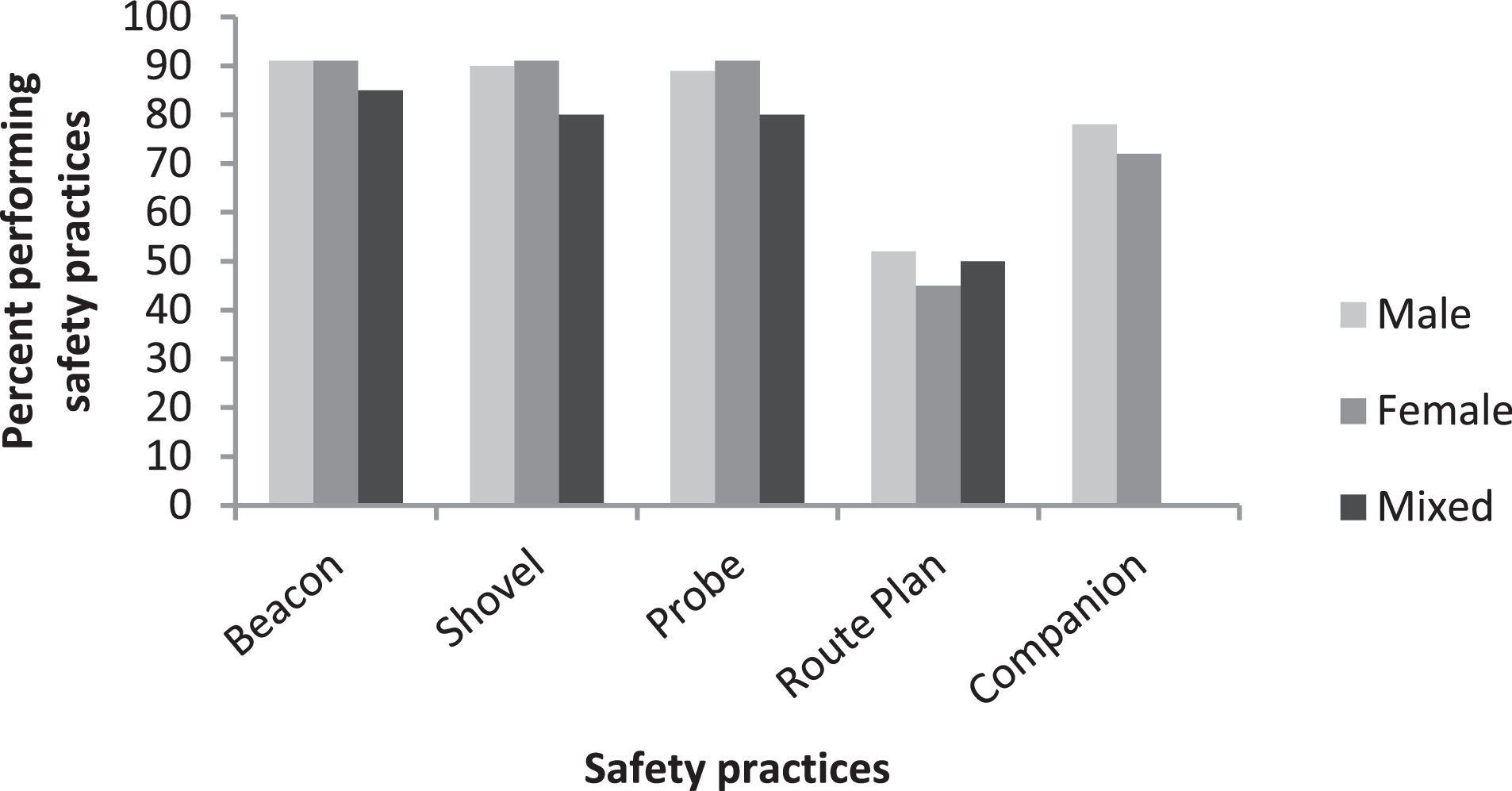
Safety practices by sex. Mixed group omitted from companion analysis.
Forecast avalanche conditions did show some correlation with performance of safety practices. Of the days on which the survey was administered, 3 were forecast as having low avalanche hazard, 4 were moderate, and 3 were considerable. No surveyed days were forecast as high or extreme hazard. Seventy-six participants (23%) were surveyed on low hazard days, 102 (30%) on moderate hazard days, and 156 (47%) on considerable hazard days. Participants surveyed on low hazard days were less likely to carry standard safety gear (P<0.001 for all gear). Further, participants on moderate hazard days were less likely to have a planned route of descent (P<0.001). No forecast avalanche hazard showed significant correlation with recreating with companions.
Discussion
This study found that significant differences in avalanche safety practices were associated with several individual characteristics among survey respondents. Overall proportions of survey participants carrying standard safety gear, recreating with companions, and having previously participated in avalanche preparedness courses were similar to numbers previously reported from surveys conducted in Utah, Wyoming, and Italy in 2006, 2011, and 2014. 9 −11 This study differs from previous reports in that it sought associations of safety practices with participant background information, such as demographics and level of expertise, in a North American setting. In 2014, Procter et al reported the results of their survey of safety practices in Italy, which evaluated associations between safety behaviors and additional background information of backcountry recreationists. 10 Similar to our findings, their survey found increased likelihood of carrying standard safety equipment among those with higher levels of expertise. That study also found that younger participants were more likely to carry standard safety equipment, with the age of 50 y being an apparent inflection point. Our results did not demonstrate a clear pattern for the influence of age on carrying safety gear; however, our survey did not separate age ranges beyond 35 y, potentially failing to demonstrate this distinction.
The basis for the effect of residency in the Jackson Hole area on the practice of carrying safety gear is unclear. This increased likelihood may be due to high rates of ownership of standard gear among area residents, ease of borrowing gear from other local residents, or greater awareness of the potential hazards of the Jackson Hole area. Also interesting is the observation that, despite meeting the definition of “out-of-bounds” from some previous studies, preparedness among participants in our survey more closely aligned with the purely backcountry skiers and snowboarders in those surveys. For example, in the 2007 study by Silverton, only 36% of out-of-bounds skiers carried beacons, whereas 98% of backcountry skiers did so, compared with the 88% of respondents in our survey. 9 The contrast between our respondents and those of previous surveys may be due to the perceived difficulty of Jackson Hole terrain or easier access to safety equipment among our participants. Finally, the exact influence of age as demonstrated by our data is uncertain. Specific questions raised include why older and more experienced participants were more likely to enter the backcountry without companions and why participants aged 30 to 35 y were less likely to carry shovels and probes. Older participants recreating without companions raises the concern that more experience and higher comfort levels in the backcountry may lead to increases in some unsafe behaviors. Conversely, this tendency among older and more experienced participants may reflect inadequacy of such surveys in assessing risky conduct, as expert recreationists may perceive that the presence of others actually increases their risk of avalanche exposure. Furthermore, regarding participants aged 30 to 35 y, it is unclear whether the failure to carry safety gear that was identified in our data is representative of the age group as a whole or is anomalous to our limited dataset.
No group demonstrated 100% compliance with any single practice. Although our study did not address reasons for not engaging in recommended safety practices, a survey of backcountry recreationists in Utah conducted in 2006 addressed reasons for not carrying particular safety equipment. Cost of equipment was reported as a consideration in 70% of cases, making expense the predominant factor. 9 Cost, however, is not a probable contributor to entering the backcountry without companions or failing to preselect a route for descent. Addressing the barriers preventing full compliance with safety recommendations among all groups may result in decreased mortality among backcountry snow sport recreationists. 4 The results of our study may provide guidance to resorts, search and rescue organizations, and other institutions in future efforts to assess those barriers and to educate backcountry sports participants on avalanche preparedness. TCSARF and Backcountry Zero are expected to continue surveying winter recreationists leaving Jackson Hole Mountain Resort through the backcountry gates in upcoming seasons, further informing their own efforts and better elucidating the results obtained through the data presented here.
Finally, the data obtained through this survey suggest that avalanche hazard forecasts are both observed and considered by those using the backcountry access gates at the Jackson Hole Mountain Resort, showing lower likelihood of carrying safety gear on days of low hazard forecast. A 2008 study by Rainer et al found that 67% of avalanche emergencies occurred during moderate and considerable hazard forecasts, with no avalanche emergencies during low hazard forecasts. 13 These results support the continued publication and use of these forecasts as tools in preparing for backcountry recreation. The basis for fewer recreationists planning routes of descent on moderate hazard days is unclear, but there may be a preference for visually assessing conditions beyond the gate before selecting a plan of action on those days.
STUDY LIMITATIONS
The population surveyed was restricted to a convenience sample of recreationists at a single mountain resort with limited hours of voluntary surveying, potentially limiting general applicability. The absence of data regarding the number of recreationists declining participation or otherwise not surveyed during the survey periods further limits applicability by creating uncertainty regarding how well the data represent the target population. The survey questions were limited in scope to maximize participation, although this resulted in omission of components that may have offered greater insight into decisions regarding safety practices. The response options did not separate age categories beyond 35 y, limiting the ability to more finely discern differences among age groups. This study restricted its inquiries to standard safety equipment, and it did not assess the use of other devices, such as avalanche air bags and the AvaLung. Additionally, this study did not seek to correlate survey results with number of search and rescue missions, overall search and rescue resource utilization, avalanche-related deaths, or other outcomes implicitly connected to failure to comply with recommended safety measures. Doing so in future studies may better inform allocation of private and public resources in communities with backcountry snow sport recreation. Lastly, surveys were not conducted on days forecast as high or extreme avalanche hazard. Including these days in future surveys would assist in assessing the need for further education and interventions among recreationists active in high-risk conditions.
Conclusion
This study identified participant factors associated with avalanche safety practices among backcountry skiers and snowboarders in the Jackson Hole area of Wyoming. Lower skill level, not having previously participated in an avalanche preparedness course, and being a visitor to the area were all associated with lower likelihood of carrying standard avalanche safety gear. These results support findings of previous studies while adding to the North American literature by assessing association with demographic information. Our findings suggest the need for further education among various groups of backcountry snow sport recreationists. Public and private entities should use this information to target future educational efforts for backcountry skiers and snowboarders, especially in the Jackson Hole area.
Footnotes
Acknowledgments
The authors thank Laine Smith and Tori Anderson for their assistance in data collection. The authors thank John Meyers, MD, Jesse Pines, MD, Paige Kulie, MPH, and Melissa McCarthy, ScD, for their assistance in manuscript review and data analysis. The authors also appreciate material support provided by Jackson Hole Mountain Resort and Kate's Real Food.
Author Contributions: Study concept and design (TBN, WRS, ARW); obtaining funding (WRS, ARW); acquisition of the data (WRS, ARW); analysis of the data (TBN, ACH); drafting of the manuscript (TBN, ACH); critical revision of the manuscript (TBN, ACH, WRS, ARW, SEM); approval of final manuscript (TBN, ACH, WRS, ARW, SEM).
Financial/Material Support: Lift passes were provided to volunteers by Jackson Hole Mountain Resort (Jackson, WY). Energy bars provided by Kate's Real Food (Victor, ID) were distributed to participants.
Disclosures: None
Supplementary Material
Supplementary data are available in the online version of this article at
References
Supplementary Material
Please find the following supplemental material available below.
For Open Access articles published under a Creative Commons License, all supplemental material carries the same license as the article it is associated with.
For non-Open Access articles published, all supplemental material carries a non-exclusive license, and permission requests for re-use of supplemental material or any part of supplemental material shall be sent directly to the copyright owner as specified in the copyright notice associated with the article.
