






Abstract

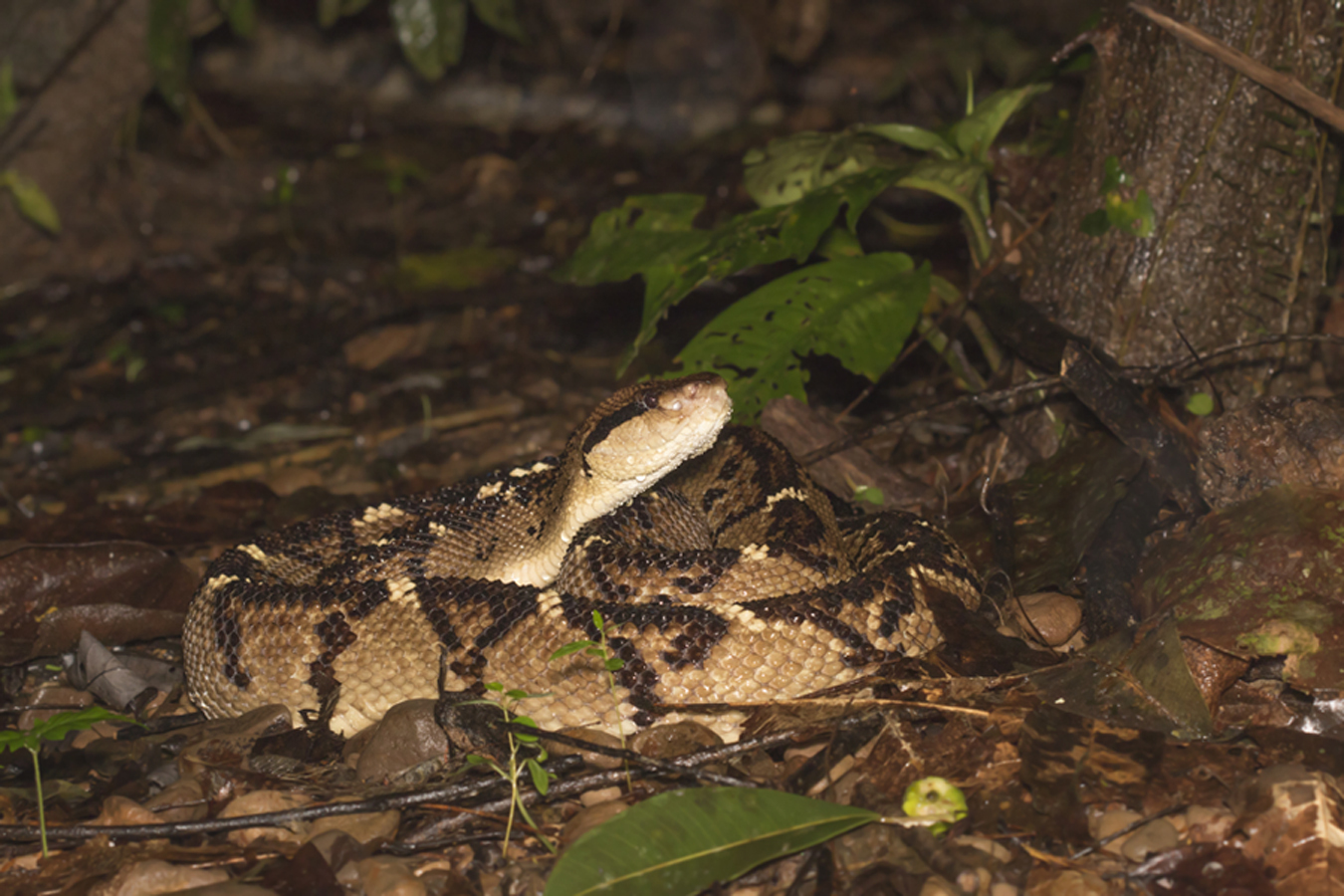
Equally feared and respected, an elusive Central American bushmaster sits and waits for a meal to come along in the Kekoldi Indigenous Reserve, Costa Rica.
Lachesis stenophrys, one of America’s longest pit vipers, is one of the few egg-laying vipers and is one of the most unique snake species of the world. 1 The genus Lachesis comprises 4 species: Lachesis muta, Lachesis stenophrys, Lachesis melanocephala, and Lachesis acrochorda. 2 L stenophrys and L muta attain similar sizes. 1 They all possess a potent cocktail of peptides to envenomate their prey. 1 Bushmasters are attractively patterned and have distinctive dragon-like scales. 1 Dark, diamond-shaped markings cover their ridged back. They deliver a highly potent venom that causes local tissue destruction. Due to systemic hematotoxicity, untreated bites can be fatal.1,3 The aggressive nature of these snakes is overstated, but cases of bushmaster bites during ecotourism activities have been reported. 3
Bushmasters are widely persecuted across their primary forest habitat. This, together with the destruction of the Central American rainforest, makes it a threatened and rarely sighted snake. Within the same region, as bushmaster numbers have been decimated, Fer-de- Lance or Terciopelo (Bothrops asper) numbers are increasing. Terciopelo is a locally ubiquitous ambush-type predator that is highly venomous. It causes more snakebites than any other venomous snake in the area, with frequent encounters near human dwellings. Interestingly, the replacement of one highly venomous snake by another much more abundant one may be an associated response to human impact on the environment.
This particular bushmaster was found on a rainy night during a walk through the rainforest in the Limon province of Costa Rica during the dry season. It was waiting in an ambush-like position 2 m away from a slow running stream. The snake was calm but observant of our movements.