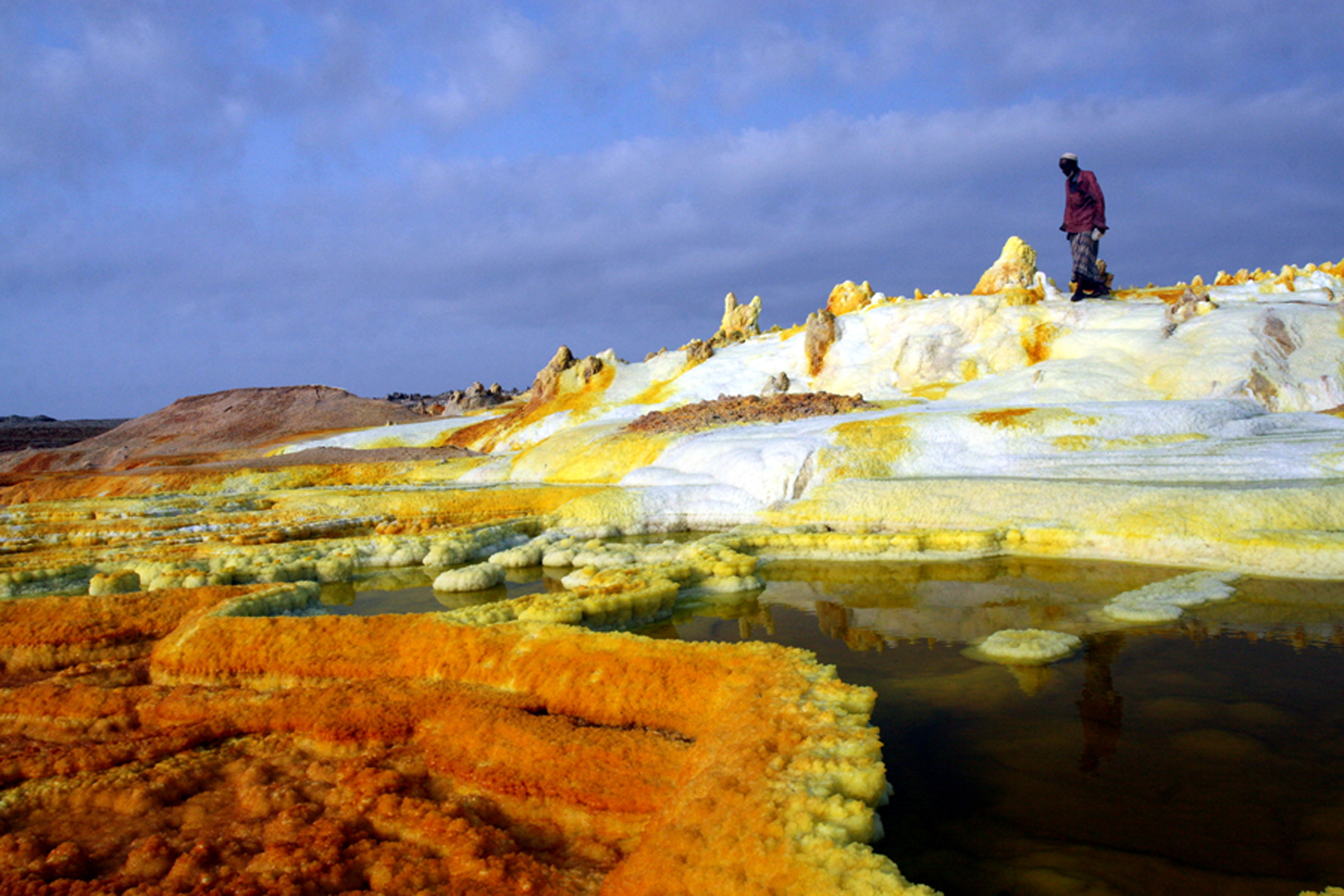
The Dallol Volcano (14°14’13" N 40°17’53" E, 85 m below sea level) is an explosion crater in the Danakil Depression in northern Ethiopia and is located in one of the hottest and most remote places on Earth.1 Surrounded by vast salt and sulphur plains and featuring geysers, puddles of boiling mud, and bright acidic pools, the crater has become an important ecotourism attraction of the Afar regional state. Exposure to extreme temperatures and the ceaseless wind, which the local Afar nomads call hahaita-harrur or fire-wind, triggers dehydration, high sweat salt losses, and heat stress. Heat injuries and hyponatremia are potentially life threatening in this hostile environment.2,3 On overnight stays in the Danakil, we used evaporation pans to chill our drinking water and oral rehydration salt to prevent dilutional hyponatremia.4 Photograph by Raf Aerts, MSc, PhD.
References
1.
FazziniM.BisciC.BilliP.The climate of Ethiopia. In: BilliP. ed. Landscapes and Landforms of Ethiopia, World Geomorphological Landscapes. Dordrecht, The Netherlands: Springer Netherlands, 2015, 65–87.
2.
SedgwickP.E.WortleyG.C.WrightJ.M.AsplundC.O RobertsW.UsmanS.Medical clearance for desert and land sports, adventure, and endurance events. Wilderness Environ Med2015; 26, S47–S54.
3.
PryorR.R.BennettB.L.O’ConnorF.G.YoungJ.M.J.AsplundC.A.Medical evaluation for exposure extremes: heat. Wilderness Environ Med2015; 26, S69–S75.
4.
BackerH.D.ShopesE.CollinsS.L.Hyponatremia in recreational hikers in Grand Canyon National Park. J Wilderness Med1993; 4, 391–406.