






Abstract
Objective
Residence at Zhongshan Station (69°22′24″S, 76°22′40″E) for over 1 year exposes winter-over members to marked changes of light−dark cycle, ranging from the constant daylight of polar days to the constant darkness of polar nights, in addition to geographic and social isolation. This extreme photoperiodic environment may increase the risk of sleep disturbances and circadian desynchrony. The aim of this study was to investigate the circadian rhythm and sleep phase of Chinese winter-over expeditioners at Zhongshan Station.
Methods
This study was conducted on 17 healthy male participants before departure from Shanghai and during residence at Zhongshan Station for 1 year (before winter, mid-winter, and end of winter). Sequential urine samples over 48 hours were obtained, 6-sulphatoxymelatonin in urine was assessed, and the circadian rhythm was analyzed by a cosine curve-fitting method. Participants’ sleep parameters were obtained from wrist actigraphy and sleep logs. Morningness-Eveningness Questionnaire and Seasonal Pattern Assessment Questionnaire were completed.
Results
The acrophase of 6-sulphatoxymelatonin rhythm, sleep onset, sleep offset, and mid-sleep time were delayed significantly (P < .05) in Antarctica relative to departure values. The subjects had greater eveningness preference (P < .05) in mid-winter in Antarctica. The Global Seasonality Score and the prevalence of subsyndromal seasonal affective disorder increased (P < .05) during winter.
Conclusions
Our results indicate that during polar nights Chinese expeditioners experienced the following problems: delayed circadian rhythm and sleep phase, later chronotype, and incidence of subsyndromal seasonal affective disorder. An appropriate combination of artificial bright light during dark winter months and a strict social schedule are recommended in a winter-over station in Antarctica.
Introduction
Residing in Antarctica for over a year exposes human beings living in the research stations to extreme climate and photoperiods, in addition to geographic and social isolation. At the Chinese Zhongshan Station (69°22′24″S, 76°22′40″E), researchers live for nearly 2 months of the winter with exclusively artificial light (<200 lux) instead of a natural light−dark cycle. In contrast, daylight exposure is possible at all times of the 24-hour day during the summer. Light−dark cycle is the predominant zeitgeber for synchronizing or entraining human circadian rhythm to the 24-hour day. 1 Therefore, the unusual photoperiodic environment, especially the total absence of sunlight for extended winter periods, may increase risks of circadian desynchrony and sleep disturbances of winter-over members and thus do harm to physical and mental health. The success of polar expedition missions depends on a finely entrained circadian system, which can only be achieved with optimal background illumination. Thus, knowledge of circadian status during temporary Antarctic residence is important.
Studies reported that winter-over expeditioners at Halley Bay (75°S) 2 –5 and Dome Fuji (77°S) 6 showed a delay of the circadian rhythm (assessed using plasma melatonin or urinary 6-sulphatoxymelatonin) from summer to winter. Kennaway and Van Drop 7 found that the circadian rhythms of 4 Greenpeace subjects without scheduled duty in Antarctica free ran in winter, while Griffiths et al 8 reported that the 6-sulphatoxymelatonin (aMT6s) rhythm of 7 volunteers was persistent throughout the year at Rothera Point, Adelaide Island (67°S). A general trend of sleep problems (eg, late sleep timing, low sleep efficiency) among overwintering expeditioners was found at Antarctic stations. 9 –11 Sleep problems were associated with circadian rhythm abnormalities, primarily delayed rhythm, which can be due at least partly to insufficient exposure to light at the appropriate time.12,13 Although seasonal affective disorder (SAD) does not appear to be very prevalent in Antarctica, subsyndromal seasonal affective disorder (S-SAD) was reported at 3 US research stations.14,15 Rosenthal et al 16 described SAD as a syndrome characterized by symptoms of depression, sleep disorder, increased appetite, weight gain, fatigue, and decreased sociability. S-SAD is a condition in which individuals who do not meet criteria for major affective disorder nevertheless experience mild dysfunction and vegetative changes similar to those found in SAD. 17
The literature on Antarctic medicine regarding circadian rhythm and sleep during prolonged stay are almost all from United States, Great Britain, Germany, France, Australia, Japan, and India. Those existing findings may not directly be generalized to the Chinese because of differences in the station environment (latitude, period of total darkness, severity of physical environment), intensity and length of the isolation period (at Zhongshan station, time is spent mainly indoors during the long, dark winter because of the limited outdoor lighting), demographic features (all Chinese winter-over members are male and most are married), and sociocultural background. 18 An investigation on cross-cultural differences at 5 Antarctic stations belonging to 5 countries (United States, Russia, Poland, India, China) suggested that cultural background is associated with psychological adaptation. 19 Due to the absence of studies with the Chinese population, the aim of this study is to investigate the changes in circadian rhythm and sleep of expeditioners wintering at Chinese Zhongshan Station.
Methods
Study Participants
The participants were 17 healthy male members (age range 23–54 years; mean ± SD 36.2 ± 9.5 years) of the 27th Chinese Antarctic Expedition who wintered over at Zhongshan Station as scientific and support personnel. All participants were given pre-Antarctic and snow–ice training, such as learning about the polar geographic and climatic conditions, getting physical exercise, improving field skills in cold and snow, and getting acquainted with team members, so that they could better adjust to environmental uncertainty in Antarctica.
The 27th Chinese Antarctic expedition left Shanghai, China, on November 11, 2010 by the Xue Long ship and reached Zhongshan Station on December 5, 2010. The summer team members started their return journey on February 26, 2011, leaving behind the 17 winter-over members. After a 15-month residence at Zhongshan Station, the winter-over crew left Antarctica on March 5, 2012, along with the next expedition’s summer team members, and reached Shanghai in April 2012.
The study protocol was approved in advance by the Chinese Arctic and Antarctic Administration and was conducted in accordance with the standards of the Declaration of Helsinki. Ethical permission was given by the ethics committee of Peking Union Medical College. Written informed consent was obtained from each participant after the study objectives and data collection procedures had been fully explained.
Location and Climate
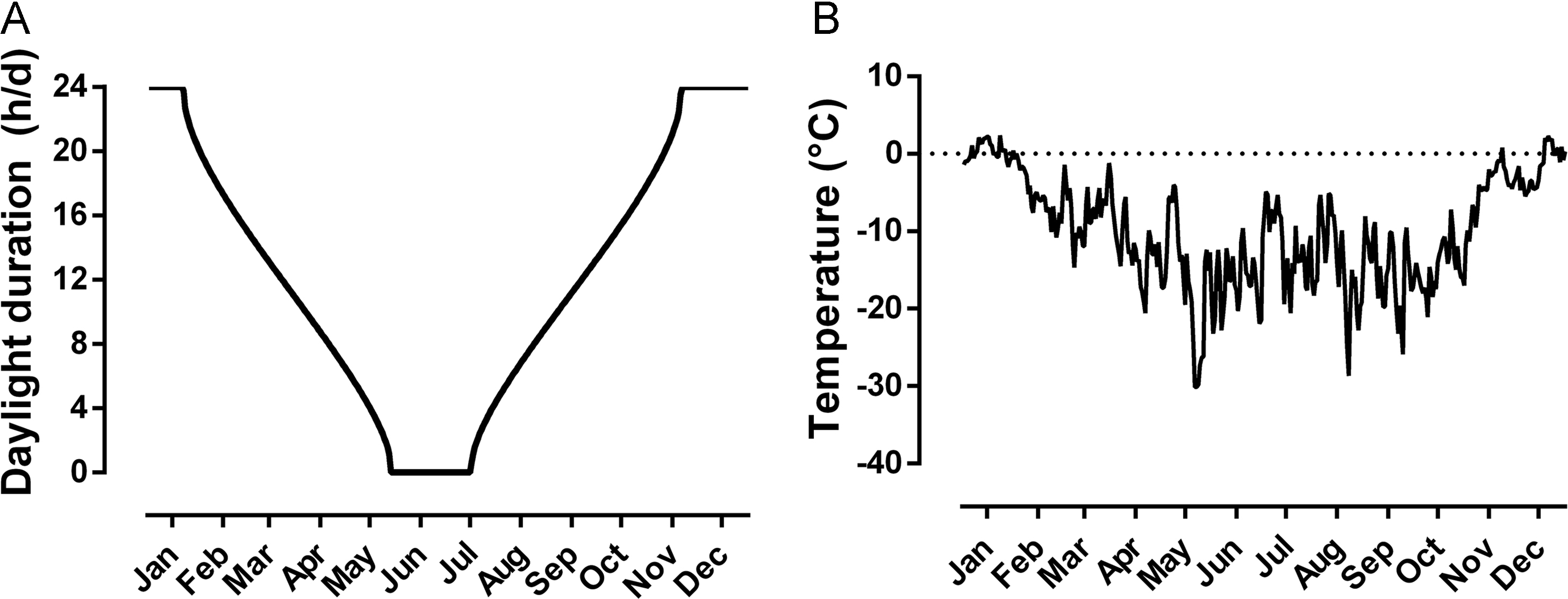
Zhongshan Station is within the Antarctic Circle and on the Larsemann Hills of Princess Elizabeth Land, East Antarctica, at 69°22′24″S, 76°22′40″E. The lowest air temperature in 2011 was −30.1°C. The continual day time is 62 days (the sun did not set from November 21, 2010 to January 21, 2011), and the continual night time is 58 days (the sun did not rise from May 29, 2011 to July 15, 2011).
The duration of sunshine and daily temperature at Zhongshan Station in 2011 is shown in Figure 1.
Study Protocol
Urine samples collection
Sequential urine samples were obtained every 3–4 hours (longer when asleep) for 48 hours from 17 subjects at 4 time points. Baseline sampling was performed in Shanghai before departure to Antarctica, followed by 3 sampling time points in Antarctica in March 2011 (before winter), July 2011 (mid-winter), and October 2011 (end of winter). Urine was passed into individually labeled, 15-mL plastic centrifuge tubes and immediately stored at −80°C. No preservative was added. Urine aliquots were transported, frozen, and sent back to a laboratory in Beijing for analysis.
Measurement of aMT6s and creatinine
The major melatonin metabolite, aMT6s in urine, which has been proven to be a good indicator of melatonin production and a reliable marker of circadian phase,20,21 was assessed with a commercially available kit (IBL, Hamburg, Germany) using a competitive enzyme-linked immunosorbent assay (sensitivity: 1.7 ng/mL; intra-assay variation: 4%–9%; interassay variation: 9%–12%). The absorbance of each sample was read at 450 nm in a microtiter plate reader (MULTISKAN MK3; Thermo, Waltham, MA). Urinary creatinine was analyzed on an automated biochemical analyzer (Olympus AU2700, Center Valley, PA). Urinary aMT6s levels were expressed as nanograms aMT6s per mg creatinine to adjust for variation in the diluteness of urine and duration between consecutive samples. 22 –24 A chronobiological analysis of those aMT6s 48-hour time series data was made by single cosinor method using the Matlab software package R2012a (7.14.0.739) 1984–2012 (The MathWorks, Natick, MA).25,26 In this model, a cosine function curve is fitted to the data by a least squares procedure (Figure 2), and the circadian rhythm phase is defined by the time at which the curve reaches its highest value or acrophase. The significance of the derived circadian rhythms was evaluated by the zero amplitude test. The minimal level of significance accepted was P < .05.
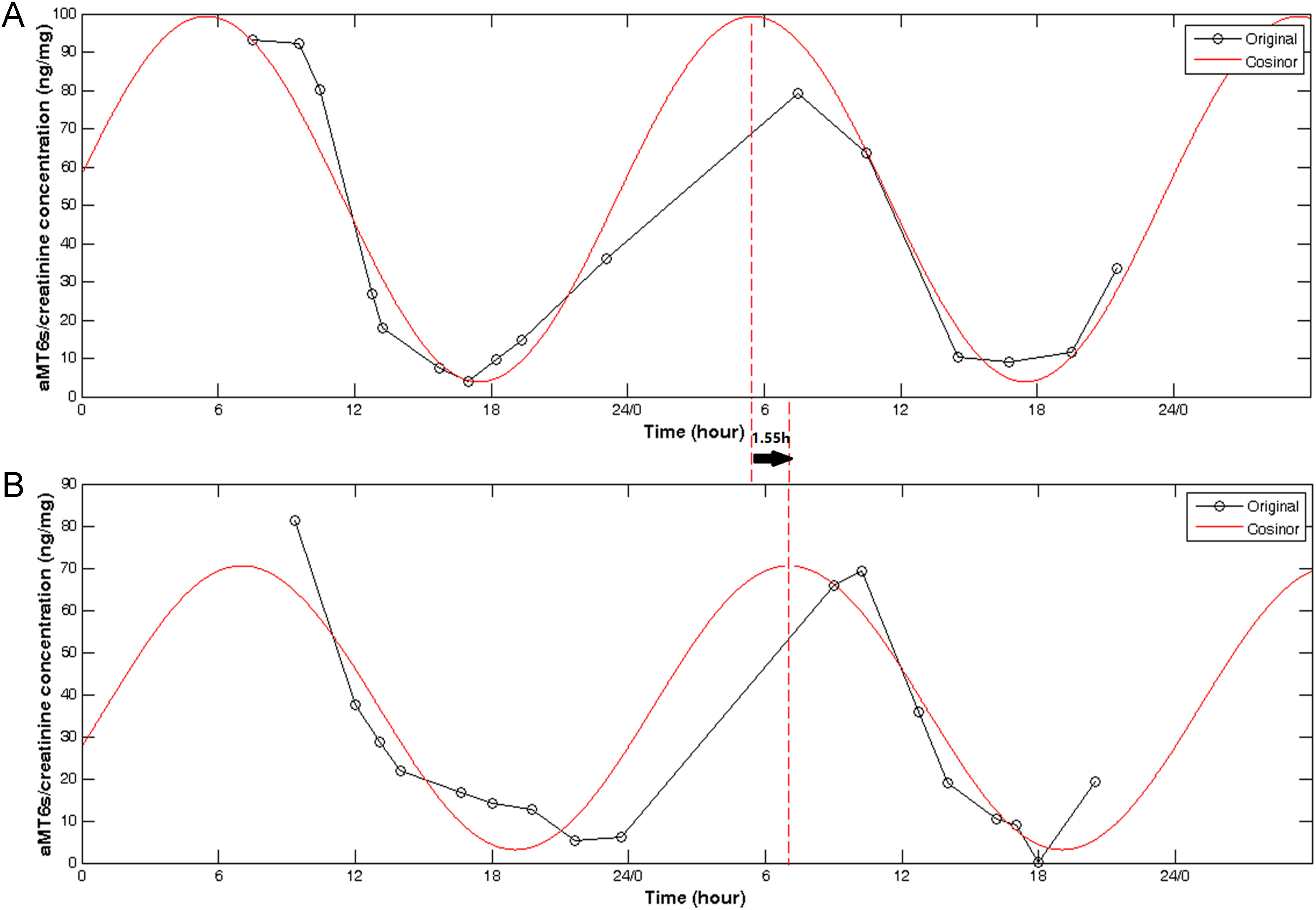
Estimating circadian rhythm by least squares fitting function to aMT6s 48-hour time series data. Example with 24-hour cosine function (continuous red line), fitting to separate aMT6s values of a winter-over expeditioner before departure (A) and at Zhongshan Station in mid-winter (B). The x-coordinate of vertical dash line represents the time at which the curve reaches its highest value or acrophase. No urine sample was collected during sleep periods.
Actigraph assessment of sleep parameters
We used the Octagonal Basic Motionlogger Actigraph (Ambulatory Monitoring Inc, Ardsley, NY), which can be worn like a watch and is equipped with an event maker button. Participants were instructed to wear the actigraph on their nondominant wrist for at least 14 consecutive days at 4 periods: November 2010 (departure from Shanghai), March 2011 (before winter), July (mid-winter), and October (end of winter), removing it only for showering. They were asked to press the event marker button on the actigraph each night when they began trying to fall asleep (bedtime) and again when they got out of bed each morning (wakeup time). They were also asked to keep a sleep log of bedtime, wakeup time, and naps for the duration of actigraphic monitoring.
The actigraph detects and records continuous motion data by means of a battery-operated wristwatch-size microprocessor that senses motion with a triaxial piezoelectric accelerometer. It was initialized with ACT Millennium software (version 3.10.0.3; Ambulatory Monitoring Inc, Ardsley, NY) for zero-crossing mode to collect data in 1-minute epochs. Data from the actigraph were downloaded to a computer using a special interface unit and were interpreted using ACT Millennium software. Bedtime and wakeup time were determined from participant-entered event-button marks combined with sleep logs. The Cole-Kripke algorithm was used in Action-W software (version 2.3.13, Ambulatory Monitoring Inc) to score each epoch as sleep or wake.27,28 The sleep parameters assessed were listed in Table 1.
Sleep parameters from actigraphic monitoring
Morningness-Eveningness Questionnaire
The subjects completed the Chinese version of the Horne and Ostberg Morningness-Eveningness Questionnaire (MEQ) 29 in Shanghai (departure) and in Antarctica (mid-winter). The MEQ has been widely used in chronopsychological research to measure self-rated preference for the morning versus the evening hours with satisfactory reliability. 30 The MEQ consists of 19 multiple choice questions, each with 4 or 5 response options. Some example questions are the following: What time would you get up if you were entirely free to plan your day? What time would you go to bed if you were entirely free to plan your evening? At what time of day do you usually feel your best? Their sum gives a score ranging from 16 to 86, with a lower score corresponding to preference for evening types. Individuals who spontaneously wake up early in the morning, are more active during the first part of the day, and tend to go to bed early in the night belong to the morning type. In contrast, evening-type individuals find it difficult to wake up early and tend to be more active late in the day.
Seasonal Pattern Assessment Questionnaire
The subjects completed the Chinese version of Seasonal Pattern Assessment Questionnaire (SPAQ) in Shanghai (departure) and in Antarctica (mid-winter). The SPAQ 31 is an instrument for investigating mood and behavioral changes with the seasons. The central feature of the SPAQ has 6 items that measure seasonal variations in mood, social activities, appetite, sleep, weight, and energy, each being scored from 0 (no change) to 4 (extremely marked change). The sum of the 6 items yields the Global Seasonality Score (GSS) from 0 to 24. Another scale evaluates the extent to which seasonal changes are seen as a problem (ie, none, mild, moderate, severe, or disabling). These 2 scales are used together to classify whether the subject has SAD, S-SAD, or neither. A higher score indicates a higher degree of seasonal variation in physiological and social activities within the seasons. Criteria for S-SAD require that subjects have a GSS of 10 or greater and experience seasonal change as no more than a mild problem, or a GSS of 8 or 9 and experience seasonal change as at least a mild problem. 32
Statistical Analysis
The comparisons between values of aMT6s rhythms and sleep parameters with their respective baseline were performed using repeated measures analysis of variance followed by Bonferroni method, which corrected the multiple comparisons. The comparisons between questionnaire scores were performed using paired samples t tests for data with a normal distribution and Wilcoxon signed-rank test for data with a skewed distribution. All data were entered into SPSS version 20.0 software for Windows (SPSS Inc, Chicago, IL) for statistical analyses. Significance was accepted at P < .05.
Results
Circadian Rhythm
Among the 17 participants, 11 provided sufficient urine collections with significant cosinor fits during the study course. Six provided very few or mislabeled urine samples, and their data were excluded.
For expeditioners (N = 11) at Zhongshan Station, the acrophase of aMT6s/creatinine rhythm delayed significantly during residence in Antarctica (F[3] = 11.988; P < .001) (Figure 3). Compared with the baseline level of 5.31 ± 0.26 hours in Shanghai, the acrophase increased to 7.02 ± 0.50 hours, delayed by 1.71 hours (P < .05) in March 2011 at Zhongshan Station, while it reached 7.83 ± 0.47 hours, delayed by 2.52 hours (P < .01) in polar nights. The acrophase still delayed to 7.28 ± 0.54 hours (P < .05) until the end of winter. For example, Figure 2 shows the delay of aMT6s circadian rhythm in 1 expeditioner. His acrophase changed from 5.50 hours before departure (A) to 7.05 hours at Zhongshan Station in mid-winter (B).
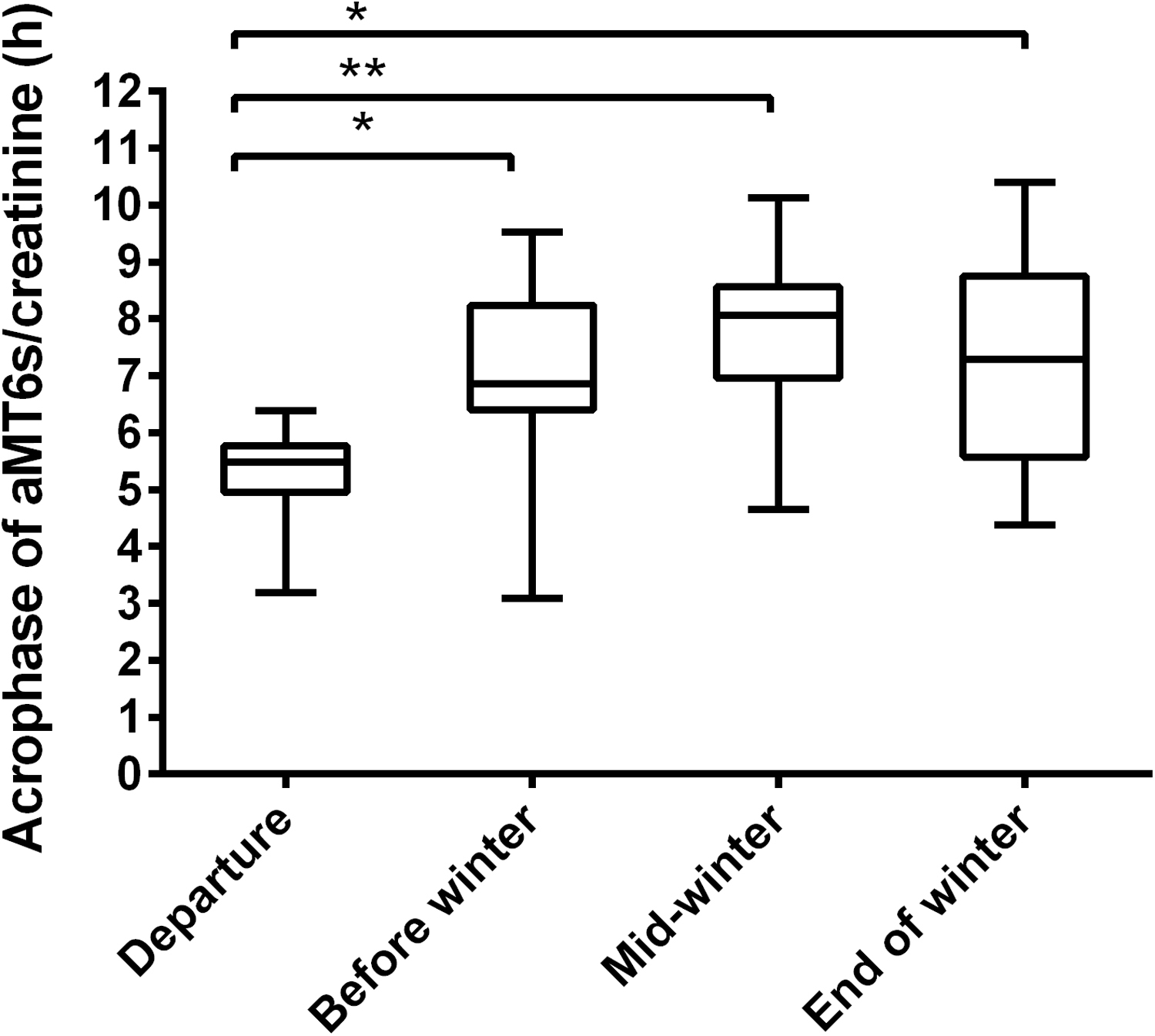
Box plot with median (central horizontal line), quartiles (the edges of closed box), and ranges (bars) for acrophase of aMT6s/creatinine. *P < .05, **P < .01 compared with the departure value.
Sleep Parameters
Among the 17 participants, 11 provided sufficient actigraphy data and sleep logs during the study course. Actigraphy data of 4 participants were missing due to mechanical trouble. The data of 2 night shift workers were excluded. Any days when greater than 1 hour of data was missing were removed from the analysis.
A clear delay in sleep timing, including sleep onset (F[3] = 4.833; P < .01), sleep offset (F[3] = 8.553; P < .001), and mid-sleep time (F[3] = 7.537; P < .001) of expeditioners (N = 11) was evident through the residence in Antarctica (Figures 4A−C). When compared with departure, the mean sleep onset was 1.46 hours later in mid-winter (P < .05); the mean sleep offset was 1.39 hour and 1.80 hour later and mean mid-sleep was 1.13 hour and 1.63 hour later (P < .05) in March (before winter) and mid-winter (P < .05), respectively. No significant differences in total sleep time, sleep efficiency, or sleep latency were seen (Figures 4D−F).
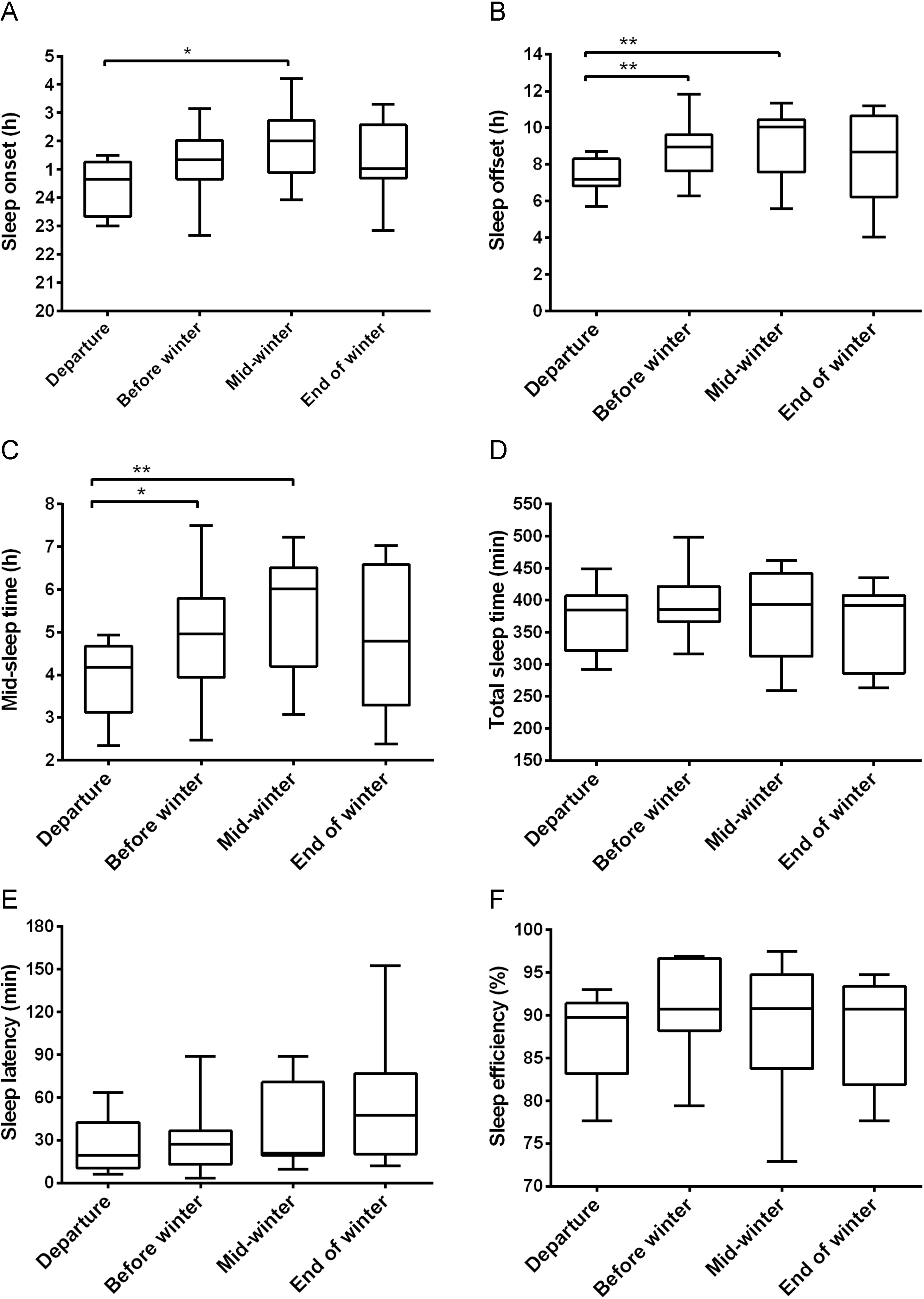
Box plot with median (central horizontal line), quartiles (the edges of closed box), and ranges (bars) for sleep parameters: (A) sleep onset, (B) sleep offset, (C) mid-sleep time, (D) total sleep time, (E) sleep latency, (F) sleep efficiency. *P < .05, **P < .01 compared with the departure value.
The Outcomes Of Physiological Instruments
Among the 17 participants, 16 completed the MEQ, while 15 completed the SPAQ.
The group average MEQ score decreased from 51.38 ± 8.08 (departure baseline) to 48.19 ± 7.12 in mid-winter at Zhongshan Station (t = 2.253, df = 15, P < .05), suggesting that the preferred timing of behavior changed during prolonged residence in Antarctica. Given that low scale scores on the MEQ indicate eveningness, 33 there were more evening preferences or later chronotypes in polar nights (Figure 5).
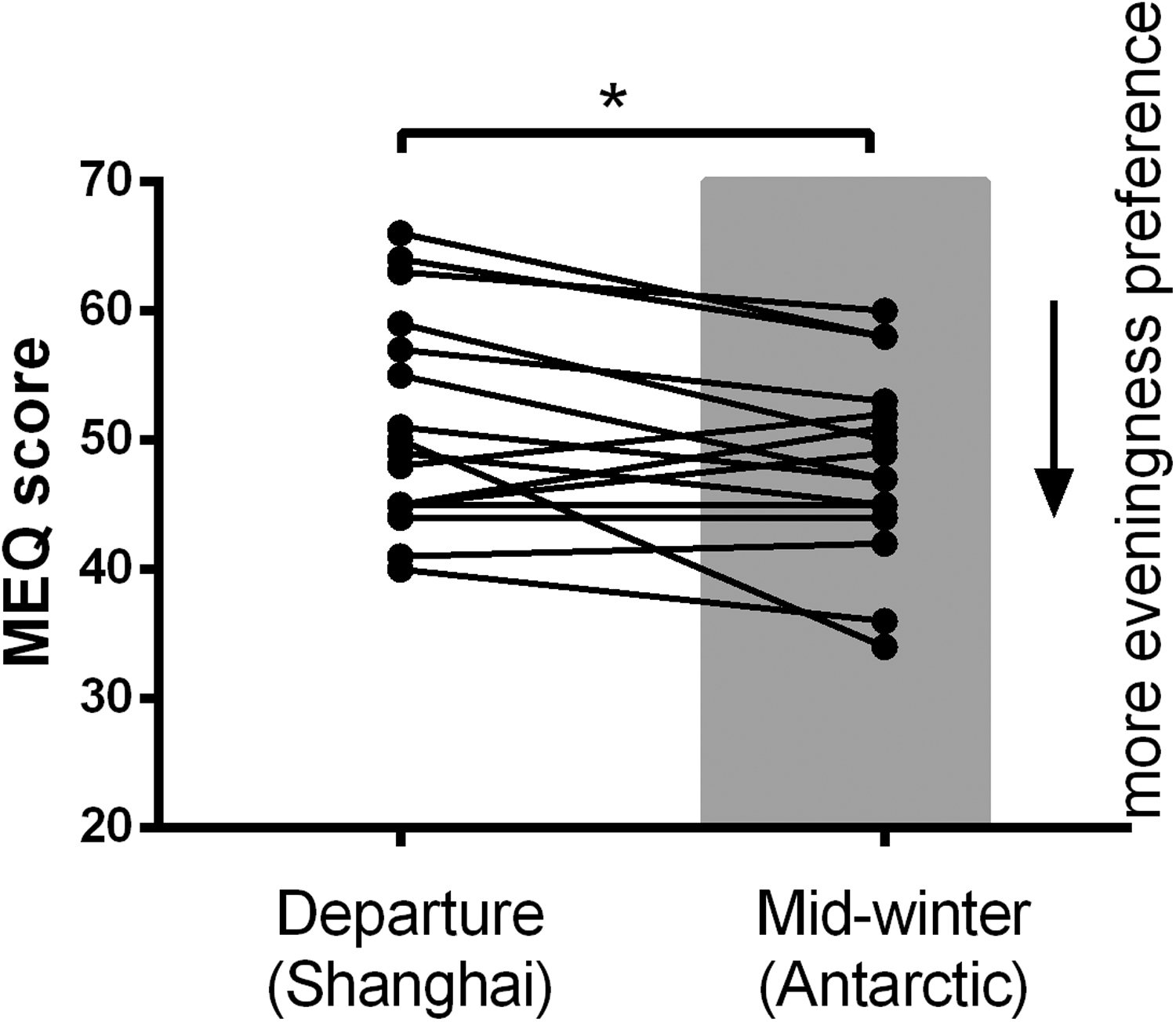
The decrease in Morningness/Eveningness Questionnaire total score of Chinese winter-over expeditioners in mid-winter (gray area) compared with departure value. *P < .05 by paired t-test.
The GSS elevated significantly from 3.79 ± 3.14 (departure baseline) to 6.71 ± 1.94 in mid-winter (Z = −2.579, df = 14, P < .05), indicating the higher seasonality during the polar nights (Figure 6). Among the 15 subjects who completed the questionnaire, 2 met the criteria for S-SAD in Antarctica whereas none did before departure.
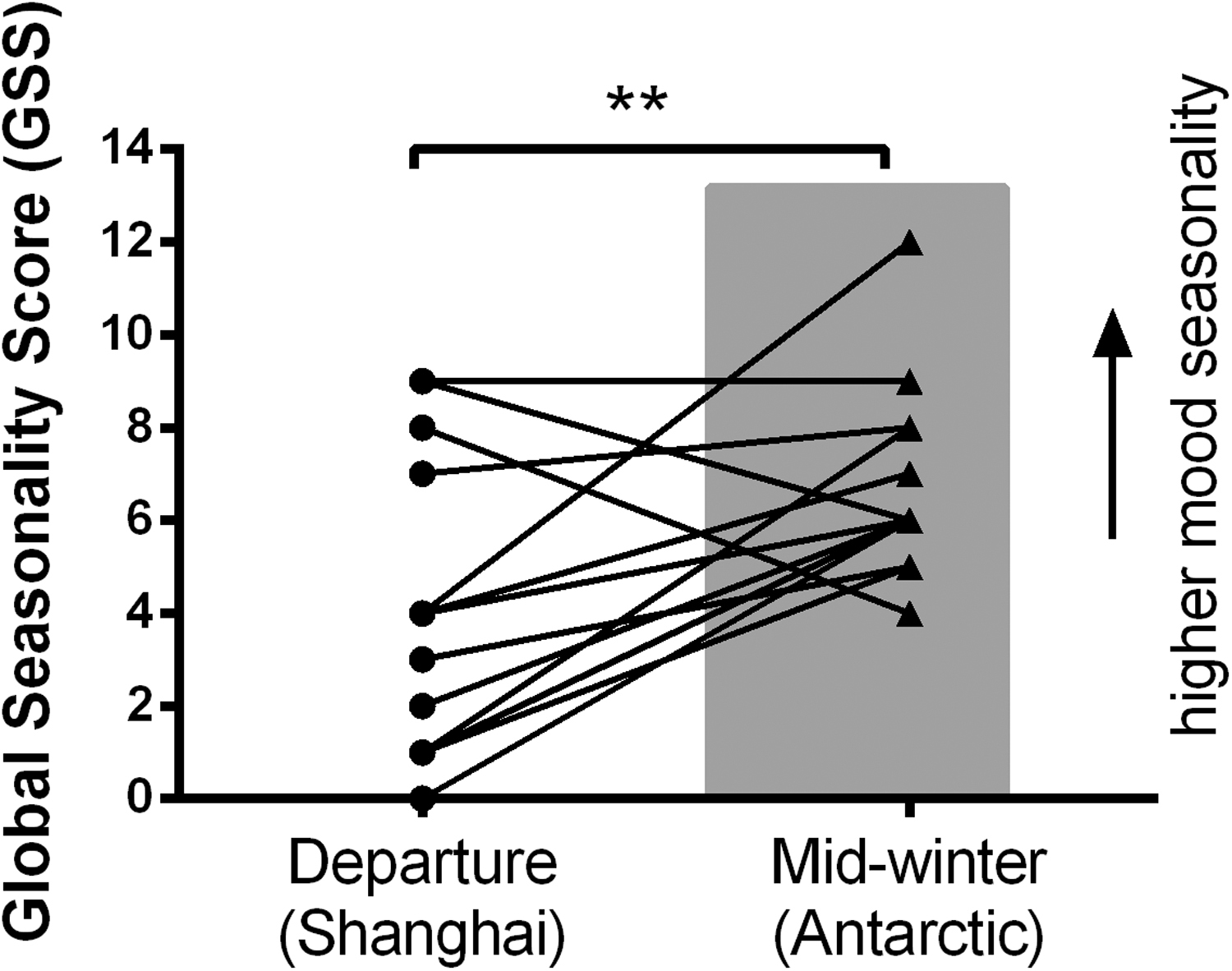
The increase in total score of Seasonal Pattern Assessment Questionnaire of Chinese winter-over expeditioners in mid-winter (gray area) compared with departure value. **P < .05 by paired t-test.
Discussion
To our best knowledge, this is the first study on changes of circadian rhythm and objective sleep variables of Chinese winter-over expeditioners during prolonged Antarctic residence.
During the summer months, the light intensity outside at Zhongshan Station exceeds 1000 lux, while it is almost at an undetectable level in winter, and most lighting devices in internal workplaces generate an illumination that is rarely greater than 200 lux. In a controlled environment without scheduled sleep and activity, between 200 and 1000 lux light (measured in the angle of gaze, full 12-hour photoperiod) is required to maintain circadian phase. 34 The obvious delay in circadian rhythm of our subjects during the winter period, consistent with previous studies on other Antarctica stations,2,6 may be attributed to the midwinter absence of daylight and insufficient artificial light intensity. In addition, there was a substantial delay of acrophase before winter and at end of winter, which is probably influenced by social cues. Instead of strict schedules, our subjects had spare time on their own after finishing their assignments (eg, they may get up, have meals, and go to bed freely when not conflicting with assigned work). In our study it is supposed that the altered photoperiod with prolonged absence of sunlight acts as a primary zeitgeber in influencing the human melatonin rhythm, and social cues also play an important part.35,36
The obvious winter delay in sleep onset, sleep offset, and especially mid-sleep, which is regarded as the best time point for sleep-based assessments of chronotype, 37 was present in our study, consistent with previous reports on stations of other countries. 38 It is suggested in evidence from normal populations 39 and Antarctic personnel 10 that poor sleep (eg, late sleep timing, lower sleep efficiency) is associated with low illumination. The delayed sleep time of our subjects may be induced not only by the low light levels in winter according to the delayed-phase hypothesis, 40 but also by the free routine schedule, especially in polar nights such as the free vacation or weekends.41,42 Decrements in sleep are often reported in Antarctica, especially at midwinter;9,11 however, our subjects did not experience significant change in total sleep time, sleep latency, and sleep efficiency, consistent with the investigation of Palinkas et al. 43
MEQ scores found a within-subject shift toward eveningness. It is notable that the MEQ score has been correlated with core parameters of human circadian organization, such as sleep timing and melatonin rhythm. 33 The average SPAQ total score of winter-over members significantly increased, indicating more symptoms of depression, sleep disorder, increased appetite, weight gain, fatigue, and decreased sociability. Although our subjects were self-selected, psychologically screened, and well-trained before departure, the result suggests that even clinically normal individuals may experience S-SAD during extended residence in a high latitude environment.
China has 2 winter-over stations: Zhongshan Station is located within the Antarctic Circle with 2-month polar nights and 2-month polar days per year, while Great Wall Station lies in the sub-Antarctic region with milder photoperiodic alteration due to lower latitude. Our previous studies have reported that compared with their counterparts at Great Wall Station, the Zhongshan Station crew experienced increased negative mood (anger, tension, confusion) throughout the winter period, especially in mid-winter. Such increases in negative feelings are some symptoms of winter-over syndrome and S-SAD.44,45
Lewy’s phase shift hypothesis of SAD asserts that lowered average mood in winter is caused by an abnormal delay of circadian phase. Winter phase delay in this article was measured by both delayed aMT6s rhythm acrophase and relative shift toward eveningness on MEQ. Drennan et al 46 and Gaspar-Barba et al 47 proposed that greater eveningness may be a marker for increased depression vulnerability, while the morning chronotype could be protective against depression. We speculate that the delayed circadian phase in our subjects contributed at least partly to seasonal mood variation and might affect their performance, 48 which has yet to be comprehensively evaluated in follow-up study.
Prolonged darkness is only one of the factors resulting in winter depression in Antarctica; 14 there are also the psychosocial aspects such as lack of privacy, monotony of social environment, and less social support. During summer months (December−February), the Zhongshan Station population ranges between 50 and 80 persons. During the winter, the population is reduced to 17 men who monitor scientific research projects and provide support services such as facility maintenance, medical care, cooking, and communication. The Station is physically isolated from the outside world with darkness and weather conditions preventing travel to and from the continent, so that winter-over members are separated and consequently experience varying degrees of emotional deprivation. Personal crises including predictable disease or injures and family issues such as children’s education, or deterioration of marital relations become magnified by the separation and distance. 49 Further research is needed to determine whether the increase in S-SAD prevalence and other negative feelings in winter is more the result of prolonged darkness or prolonged isolation and confinement.
It is essential to define the optimal conditions for maintaining circadian phase in Antarctic residence. At other countries’ stations in Antarctic winter, interventions have been designed to correct or avoid circadian phase delay, such as an hour of bright light exposure in the early morning at British Halley Bay Station, 10 ,50,51 and blue-enriched white light exposure at Concordia Station. 52 Furthermore, it is reported that morning bright light combined with melatonin induced a greater phase advance than either treatment alone. 53 Therefore, the countermeasures, such as proper ambient light in the built environment, appropriate light treatment, supplement of melatonin, and a relatively strict sleep−wake schedule could be introduced at Zhongshan Station. A previous study on Chinese winter-over expeditioners at Great Wall Station revealed that the decrease of plasma tryptophan might relate to the decline of brain serotonin. 54 Tryptophan is converted to serotonin and finally converted to the hormone melatonin. Therefore, supplementation with related food rich in tryptophan (eg, milk) before sleep might help. However, the exact duration of light treatment, the optimal spectral composition of light, and the dose or timing of melatonin to treat circadian desynchrony and maintain optimal sleep require further evidence.
Limitations
Some limitations should be considered. First, the number of subjects is restricted by the limited winter-over volunteers available and their compliance to this strenuous protocol. Second, we could not obtain the complete consecutive data at monthly intervals; to summarize the pattern from valuable and sparse data, we have the 4 representative sample points to present the valid results. Furthermore, the diversity of the instruments and analysis methods employed in the circadian rhythm and sleep by different countries in Antarctica limits a more specific comparison of data. As a sleep instrument, the actigraph is valid for estimating total sleep time and wakefulness after sleep onset in field studies, with some limitations in specificity. 55 To further obtain more accurate sleep quantity and quality, we have undertaken polysomnography—the “gold standard” for measuring sleep during the 29th winter-over expedition at Zhongshan Station.
Conclusions
We report that winter-over expeditioners who reside in Antarctica for over a year experience the following problems during polar nights: desynchronized circadian rhythm, delayed sleep phase, later chronotype, and increased incidence of S-SAD. Since Antarctica is a natural laboratory for long-term investigation into physio-psychological adaptation of a small human group in an extreme environment, our results provide insight into the effect of such unique external circumstances and could provide a reference for interventions in conditions in which light levels are chronically low during daytime and solar light is not available for a prolonged period (eg, circumpolar regions, space missions, submarines) to maintain health, performance, and personnel safety.
Acknowledgments: We acknowledge the 27th Chinese Antarctic winter-over expeditioners at Zhongshan Station for their participation and compliance to this protocol. We also acknowledge the Chinese Arctic and Antarctic Administration and Polar Research Institute of China for their full support of our work on site. We thank Professor Steven W. Lockley and Mr. Jason P. Sullivan for their advice in cosinor analysis.
Author Contributions: Study concept and design (CX); obtaining funding (CX); acquisition of the data (CX, QW, NC, XL); analysis of the data (NC, GC, DS); drafting of the manuscript (NC, CX); critical revision of the manuscript (NC, CX); and approval of final manuscript (CX, NC, QW, XL, GC, DS).
Financial/Material Support: This work was supported by National Natural Science Foundation of China (No. 81071615) and Chinese Polar Environment Comprehensive Investigation & Assessment Programs (CHINARE 02-01).
Disclosures: None.
Footnotes
Submitted for publication March 2016.
Accepted for publication July 2016.