






Abstract
Legend states that the alligator snapping turtle (Macrochelys temminckii) should be handled with extreme caution as it has jaw strength powerful enough to bite a wooden broomstick in half. Tales of bite injuries from what is the largest freshwater turtle in North America exist anecdotally, yet there are few descriptions of medical encounters for such. The risk of infection from reptilian bites to the hand in an aquatic environment warrants thorough antibiotic treatment in conjunction with hand surgery consultation. We present the first case report of a near total amputation of an index finger in an adolescent boy who had been bitten by a wild “gator snapper.”
Introduction
The alligator snapping turtle (Macrochelys temminckii), also known as the “gator snapper,” is the largest freshwater turtle in North America (Figure 1). 1 It inhabits the deeper waters of lakes, swamps, and river systems that drain into the Gulf of Mexico (Figure 2). It is readily distinguished from the common snapping turtle (Chelydra serpentina) by its large head and 3 distinct rows of prominent spiked scutes running the length of its carapace. 2 Like many aquatic Chelonians, it is a predator that responds unpredictably and with aggression when handled. 3 Southern folklore weaves tales of the turtle’s bite as being powerful enough to split a broom handle in two, and the traumatic amputation of fingers from an alligator snapping turtle bite has been purported in legend as well as in the lay press. 4 –6
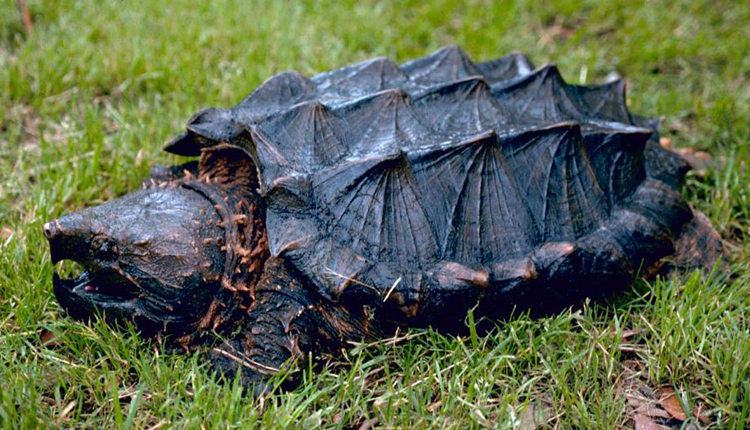
Macrochelys temminckii. Courtesy of the US Fish and Wildlife Service.
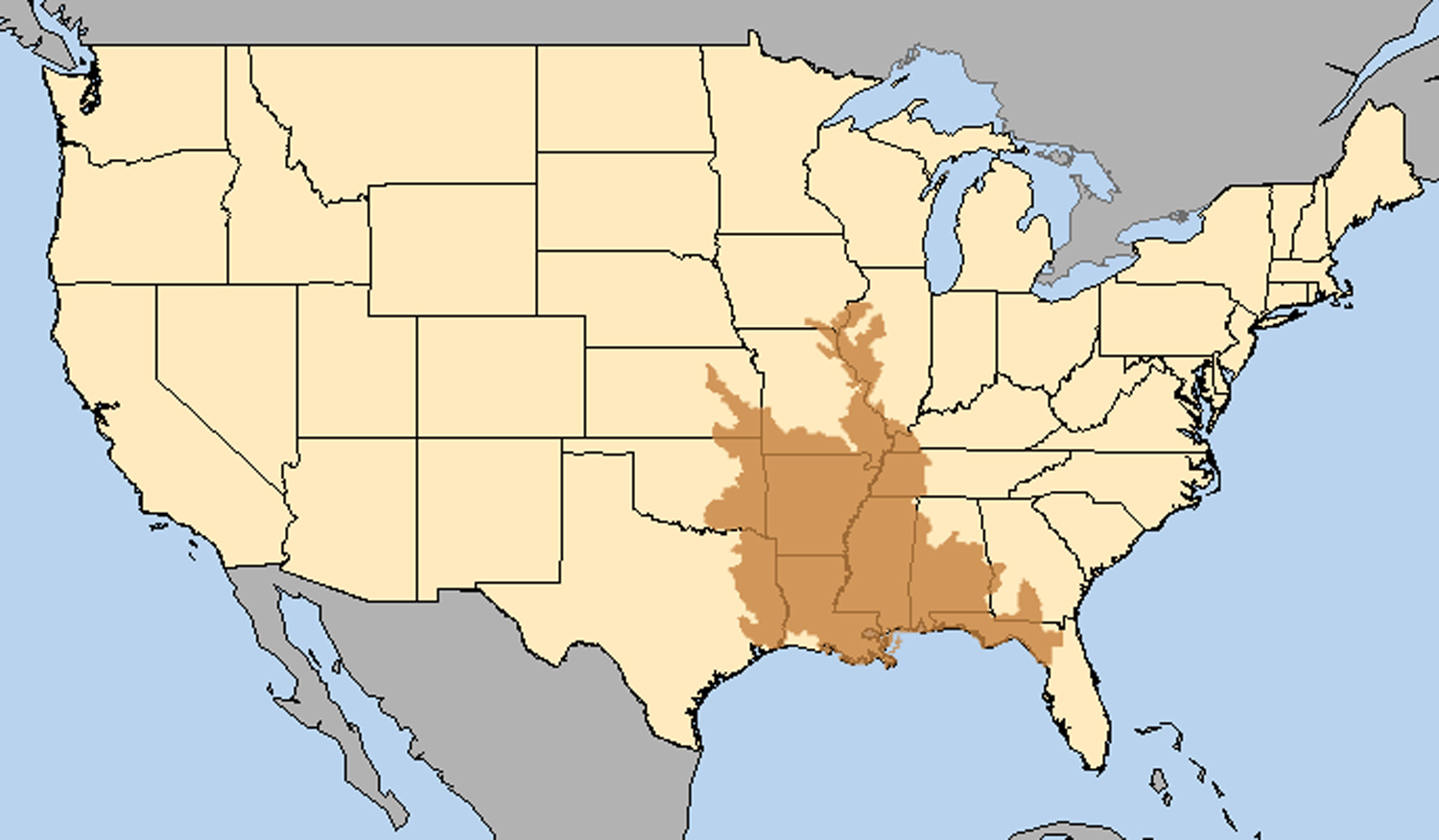
Map of Macrochelys temminckii distribution. Courtesy of the US Geologic Survey; August 22, 2015.
We present the case of a 15-year-old boy who sustained a near total amputation of his second digit from an alligator snapping turtle (M temminckii) bite, which required emergent antibiotics and surgical formalization. The circumstances in which the event occurred share many characteristics of previously reported wildlife encounter–related injuries in the Southern United States, 7 but in this case with permanently disfiguring sequelae. Wounds to the hand from wild animal bites as well as those sustained in aquatic environments are notorious for producing infections that are polymicrobial, highly pathogenic, and potentially life-threatening. 8 –10 Aggressive management of such trauma including wound care and antibiotic prophylaxis is implicated. This is the first case of such an injury we know of to be reported in the medical literature.
Case Report
A 15-year-old right-hand-dominant boy was transferred to our Pediatric Emergency Department from a community hospital for a traumatic injury sustained the same evening in late April. A self-described naturalist, he spotted an alligator snapping turtle in a stream near his home with an estimated 76-cm width by personal report as the specimen was held relative to his torso. He positively identified the species as M temminckii based on specific features including 3 distinct rows of spikes on the carapace. He had lifted the animal from its aquatic environment and endured the near total loss of his left index finger when the turtle snapped at him suddenly with a single bite during his attempt to photograph the animal. He stated that the turtle consumed his finger and neither the turtle nor the digit could be recovered. He applied direct pressure and sought immediate medical attention while achieving hemostasis. At an outside facility he was given a tetanus booster and a dose of cefazolin (1 g) before transfer to our institution.
He arrived with vital signs significant for tachycardia (pulse, 115 beats/min) and a complaint of pain, but was otherwise hemodynamically stable (blood pressure, 124/86 mm Hg; temperature, 36.8°C; respiratory rate, 18 breaths/min; oxygen saturation, 98%). Physical examination revealed an obvious amputation of his left second digit with only the most proximal 1 cm remaining of the proximal phalanx (Figures 3 and 4). The extremity was otherwise neurovascularly intact with a slight range of motion limitation in the remaining digits seemingly because of local edema and pain. Radiographic examination revealed an intact metacarpophalangeal joint and an impressively precise, transverse amputation at the proximal phalanx and no other fracture or foreign body (Figures 5 and 6).
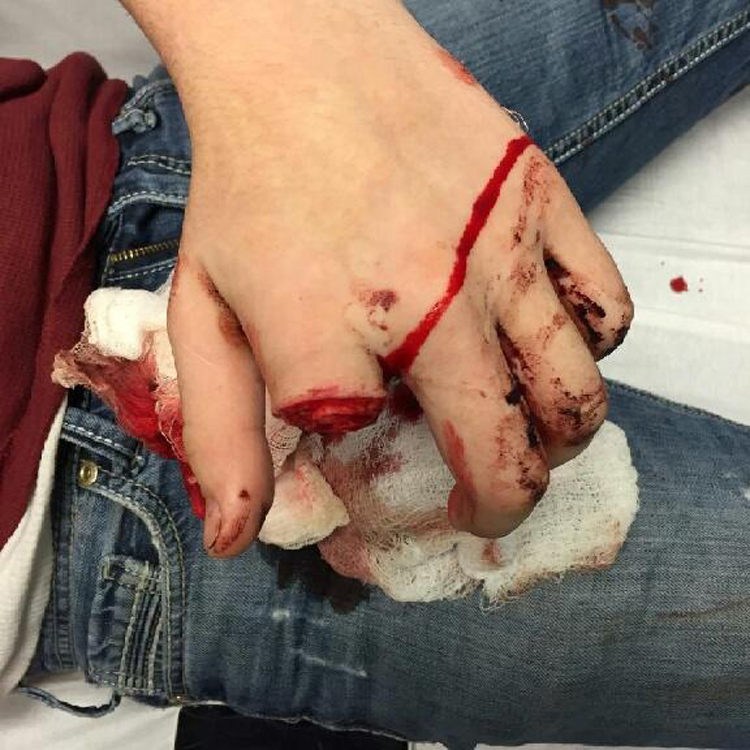
Injury photograph of the hand. Courtesy of J. Andrew Jensen, MD.
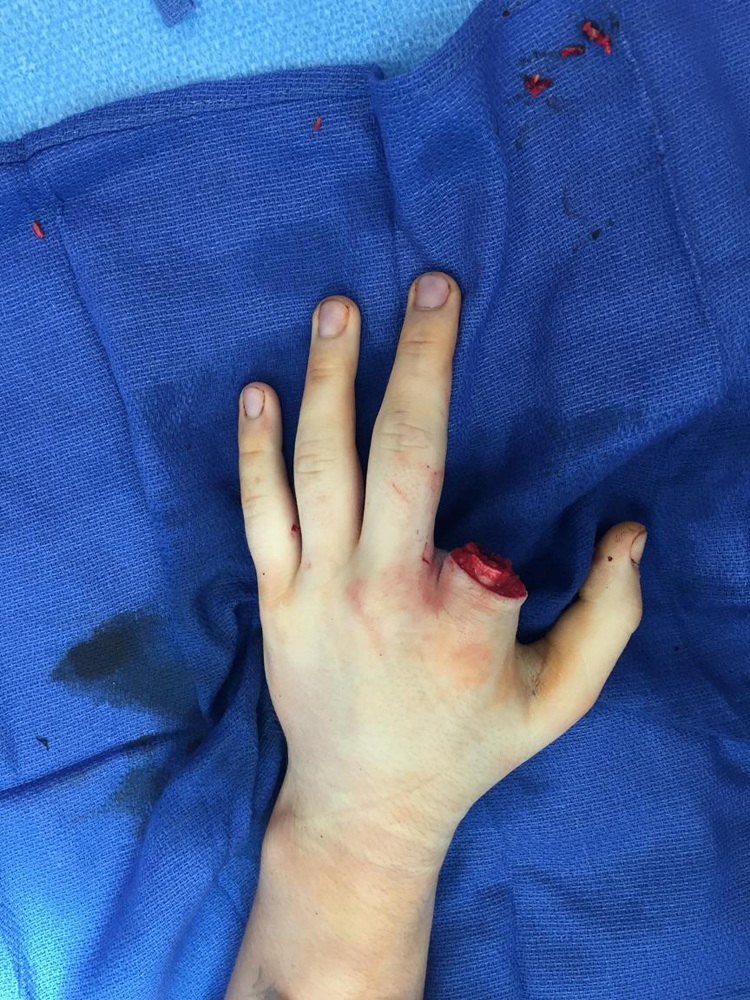
Injury photograph of the hand, preoperatively. Courtesy of J. Andrew Jensen, MD.
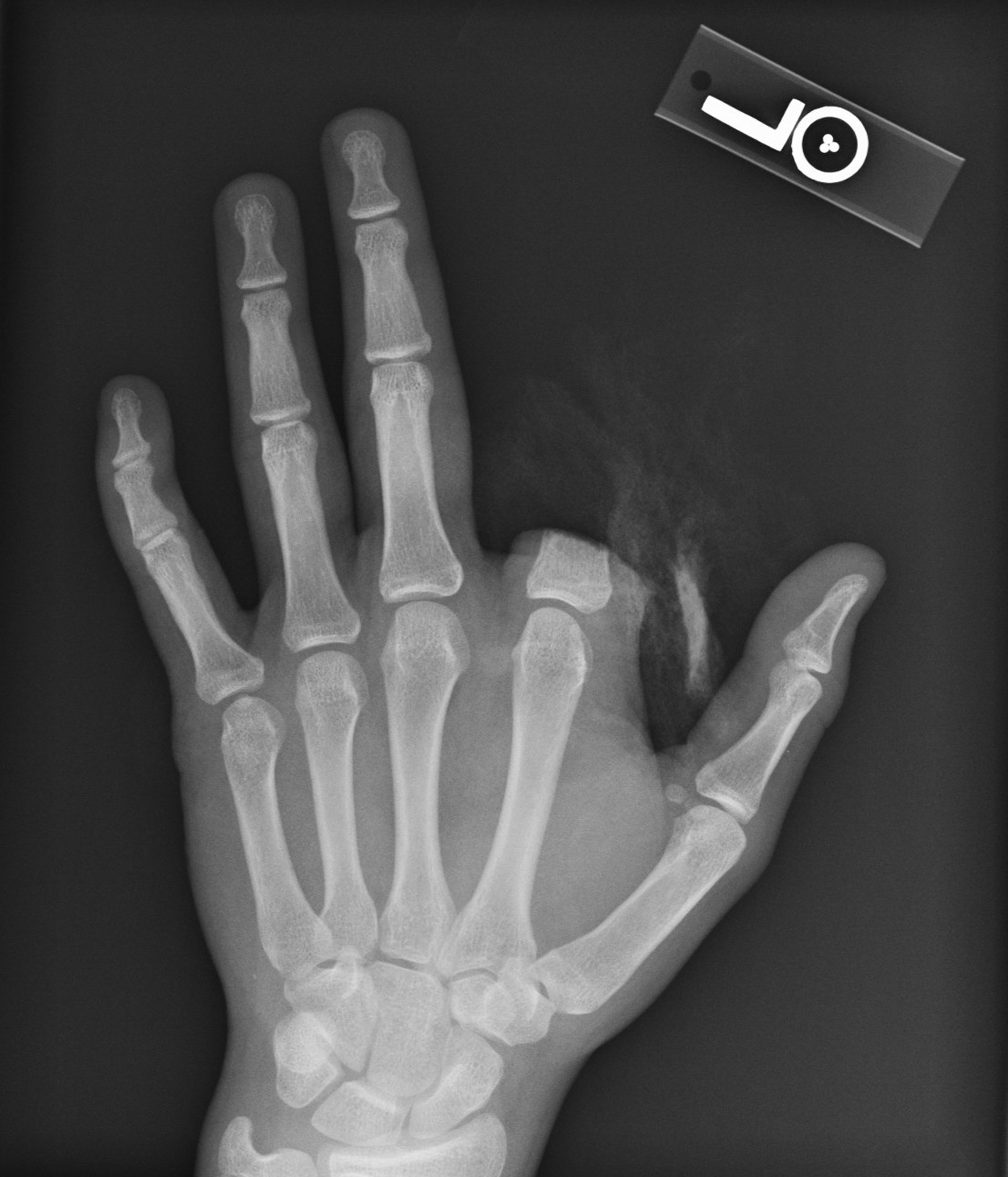
Radiograph of the hand (A/P view).
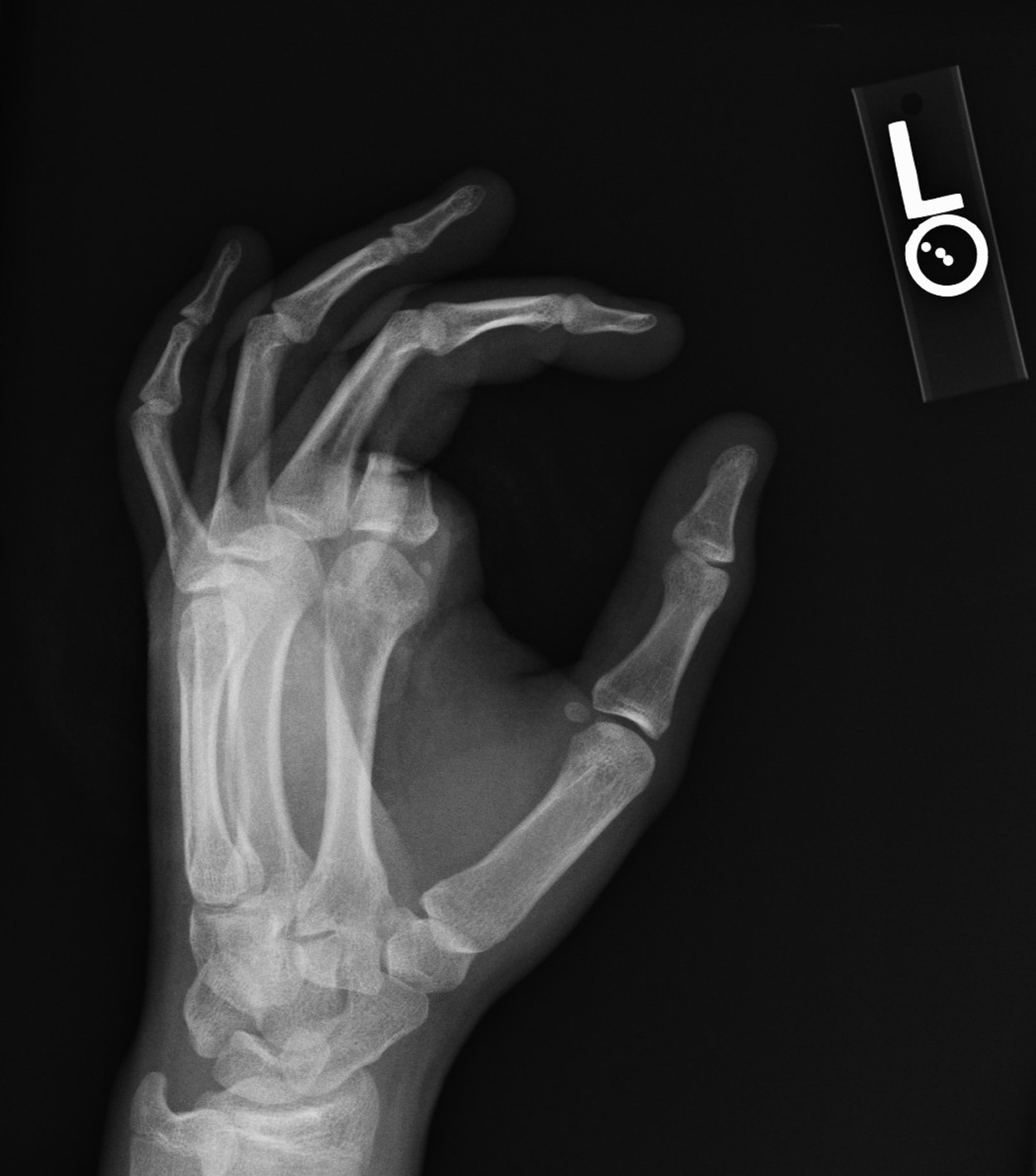
Radiograph of the hand (lateral view).
Orthopedic hand service was consulted, and the patient was treated with intravenous (IV) fluids and fentanyl, which provided adequate analgesia. Antibiotic therapy was initiated, consisting of ampicillin/sulbactam (3 g), gentamicin sulfate (60 mg), and levofloxacin (750 mg). The wound was copiously irrigated with normal saline solution and dressed loosely with Xeroform, Kerlix, and an ACE bandage pending formalization, and the patient was admitted for operative intervention, which took place the next morning. Surgical revision was determined to be the only option for repair as the digit was lost. The proximal phalanx was refined, and skin edges were reapproximated around the remaining bony stump. Operative course was without complication, and the patient was discharged on the day of surgery. During the next 8 weeks, the patient reported difficulty with activities of daily living secondary to handled objects becoming caught on the remaining stump or simply falling through his hand. As a result of these complications, the patient elected to undergo Ray amputation of the second metacarpal as an additional procedure. Although not a common procedure, it is stated to often improve hand function especially in the setting of a functionless, residual digit. 11
Discussion
The alligator snapping turtle is among the largest of nearly 300 Chelonians, and individuals may reach a mass of 113 kg. 12 Although widely distributed in the Southern United States, the species is considered “vulnerable” owing to low population densities, and being aggressive predators, human interaction with them is discouraged.13,14 If animal handling is necessary, creature-specific methods are suggested by veterinarians for the protection of both the handler and animal: the alligator snapper is held with gloved hands on specific, lateral portions of the carapace away from the head, followed by the turtle being allowed to bite down on an object such as a PVC pipe (Figure 7). 3
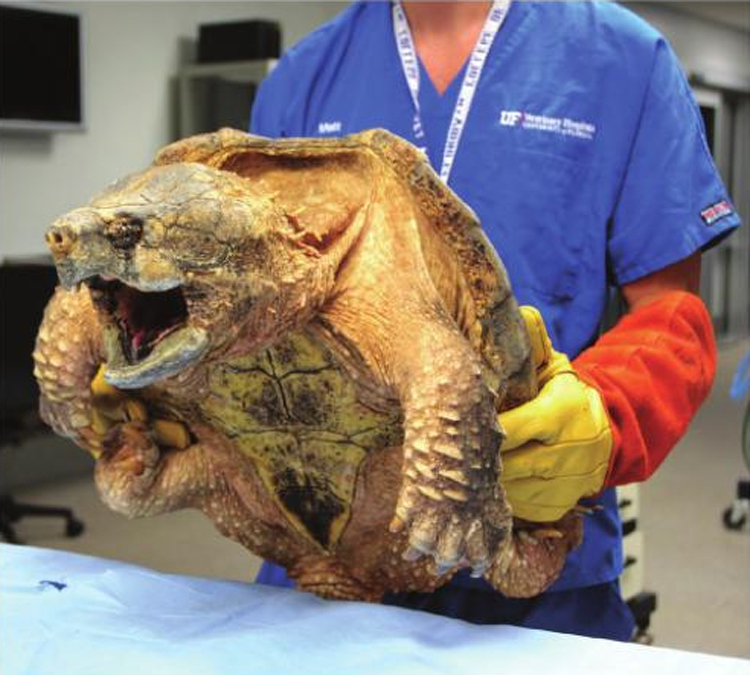
Illustration of proper handling. Courtesy of Animal and Wildlife Immobilization and Anesthesia. 2nd ed. Ames, IA: John Wiley and Sons; 2014.
Unfortunately, children are more likely to be bitten by animals and sustain more severe injuries when bitten. 15 As many as 1% of all pediatric visits to emergency departments during summer months are for treatment of bite wounds, many occurring on the hands.9,16 Finger amputations from bite injuries are thankfully rare, with frequencies of 0.75% among all finger injuries reported for persons 15 years of age and older. 17 In a review of isolated finger injuries in 283 children, only 6% were reported as amputations with none occurring at the proximal phalanx, making this case especially unusual. 18 Because of the vulnerability of multiple, small compartments and joints, bites to the hand are considered to be at especially high risk for infection. 19
It is generally accepted that the bacteriology of bite wounds sustained from exotic animals is inclusive for the oral flora of the creature. 20 As many as 90% of turtles are known to harbor Salmonella species as a component of their enteric microflora, making the handling of both pet or wild turtles an infection risk from either casual contact or bite injuries. 21 –24 In addition, wounds occurring in aquatic environments expose victims to a milieu of invasive aerobic and anaerobic bacteria, and such wounds often yield halophilic bacteria and waterborne pathogens such as Vibrio, Plesiomonas, and Erysipelothrix organisms, notwithstanding other reptile-associated zoonoses including Mycobacteria, Pseudomonas, Aeromonas, and Proteus species. 8 ,25,26
Immediate care of an amputation injury requires direct pressure to the extremity. Care of the amputated digit(s) warrants the digit(s) to be wrapped in moist gauze and placed in a sealed bag on ice but not in direct contact with such to avoid causing a frostbite injury and to increase the chance of a successful revascularization or replant procedure. 27
Small lacerations and punctures may be treated on an outpatient basis; however, debridement of wound edges may be necessary to allow for adequate irrigation, which should be performed under high pressure, a modality that requires appropriate analgesia in the emergency department or potentially operating room to be performed effectively. 19 As a result, this type of injury should be managed aggressively with early consultation of a hand surgeon. 28
All bite wounds warrant consideration of tetanus status regardless of the offending species involved. It is suggested that 3 to 5 days of broad-spectrum, empiric antibiotic therapy be given for high-grade, open injuries, to be started in the emergency department. For gram-positive coverage, administration of a first-generation cephalosporin given IV every 8 hours until 24 hours after wound closure, with levofloxacin and gentamicin for gram-negative coverage, is recommended. 29
Unfortunately, clinical trial data are lacking and fluoroquinolones are not approved for this indication in children, for which either ampicillin/sulbactam or piperacillin/tazobactam, in conjunction with gentamicin, is recommended. 9 To address the risk of clostridial contamination in the setting of certain outdoor injuries, ampicillin, penicillin, or doxycycline has also been encouraged. 30 –32 For penicillin-allergic patients, vancomycin with a fluoroquinolone provides excellent coverage. 29
Patients with overtly infected wounds, which may range from cellulitis to life-threatening necrotizing fasciitis, should undergo wound cultures and be started on antibiotics in the emergency department often to be continued in an inpatient setting as wound severity dictates, possibly for 10 to 14 days of therapy.33,34
Conclusions
The management of animal bites, including those from reptiles, should begin with a customary Advanced Trauma Life Support (ATLS) style assessment. Immediate goals include those necessary to achieve hemostasis, resuscitation via fluids and blood products, and analgesia. A thorough physical examination is required to assess for injuries to soft tissue, vasculature, and nerves as well as to evaluate for the presence of foreign bodies, fractures, and dislocations. This should be augmented with radiographs or ultrasound.
Animal bites, when powerful enough to sever bones and enter joint capsules, require expeditious use of IV antibiotics, and the bacterial milieu known to exist in the setting of injury necessitates a broad approach to antibiotic coverage. Surgical consultation and operative intervention are integral in minimizing infectious risk and maximizing future function. Our patient presented with a unique injury previously suggested in folklore with complete loss of an index finger from a large alligator snapping turtle. This case confirms legend and reaffirms the wisdom that such animals are best left undisturbed.