





Abstract
Objective
The purpose of this study was to determine the epidemiology of injury in Baxter State Park, Maine, and to better tailor search and rescue (SAR) resources, personnel, and training to acute needs in the park.
Methods
We conducted a retrospective review of all SAR incident reports in Baxter State Park from July 1992 through June 2014. For each event, demographics, location, time, activity before the incident, incident details, and evacuation means were recorded and analyzed.
Results
In all, 754 incidents of SAR or medical need were identified. Mean age was 38.9 years; mean age for subjects with fatigue as the primary complaint was 48.7 years. A majority (60.5%) of victims were male. Nineteen fatalities occurred during the study. Traumatic injuries precipitated 51% of SAR incidents, and an additional 30% were initiated for late or lost parties. Slips or falls while hiking were the most common causes of injury (67%), with the lower extremity being the most common injury site (31%). When applicable, 84.4% of acute need occurred while descending, as opposed to ascending, a mountain. Fatigue was the most commonly reported medical emergency, causative in 66% of medical SAR events.
Conclusions
Fatigue is a major factor in SAR events, both as a discreet cause and as a contributor to other injuries. Search and rescue need is more likely to occur during mountain descent, and lower extremity injuries are the most common etiology. Efforts should be focused on training rescuers in lower extremity and fatigue treatment, and more rescuers should be available when many are descending.
Introduction
Outdoor recreational activities continue to gain popularity across the United States, and although these sites attract visitors with a wide range of health statuses, many of the recreational activities that park visitors engage in are risky. 1 –10 Previous research has focused on determining the epidemiology of wilderness search and rescue (SAR) events in national park settings8,9 and in individual states, 2 ,6,7 as well as emergency medical services responses to wilderness emergencies.3,5 Scant data regarding SAR events in wilderness locations in the eastern United States exist. To our knowledge, no published data evaluating SAR incidents in Maine’s unique and remote wilderness are available.
Many visitors to Baxter State Park, home of Maine’s highest peak, aspire to summit the mountain, often underestimating the physical conditioning and supplies necessary for navigating the rugged terrain (personal communication, Ben Woodard, July 2014). Located in northern Piscataquis County, Baxter State Park averages 128,504 visitor-days per year. The demographic characteristics of park visitors follow those of the state, the country’s most aged, with the 51- to 55-year-old age group representing the highest proportion of park visitors (personal communication, Ben Woodard, July 2014). Little is known about the influence of older age on wilderness SAR events, as previously published works typically describe a younger population.1,2 In addition, although existing literature has identified exhaustion or fatigue as a potential cause of injury, the wilderness SAR literature has not described fatigue as it relates to the need for SAR response. 1 –8 It is possible that fatigue plays an important role in precipitating SAR events for Baxter’s unique cohort of older hikers.
In addition, the role of hiking phase (ascending/descending a mountain) is not discussed in currently available wilderness medicine literature. Understanding when park visitors are most vulnerable to hiking-related injuries may assist in planning for potential rescue situations and resource distribution. Therefore, the primary objective of this study was to describe the epidemiology of wilderness SAR events in Baxter State Park’s unique wilderness setting so park rangers and administrators can more efficiently distribute and train personnel within limited educational and operational budgets.
Methods
Study Design
This was a retrospective analysis of Baxter State Park incident report records generated from the inception of record-keeping in July 1992 through study initiation in June 2014. Baxter State Park granted permission for data use, and our Institutional Review Board exempted the study and waived the requirement for written informed consent.
Setting and Subjects
Baxter State Park is a 209,501-acre wilderness area located in Millinocket, Maine. The park is home to Mount Katahdin, with Katahdin’s highest point, Baxter Peak, also being the northern terminus of the Appalachian Trail. The park’s terrain is rugged, consisting of mountainous clusters, multiple bodies of water, hiking and snowmobile trails, hunting and fishing areas, as well as camp sites. There is no electricity or running water in the park and weather conditions are often harsh, with an average temperature of 38.6°F (3.7°C), average annual precipitation of 37 inches, and snowfall possible in any month.
Subjects were park visitors who either required a SAR response from park rangers or directly approached a ranger for medical or evacuation-type support. Incidents of search and rescue for false alarms were excluded.
Study Data
Baxter SAR personnel are required to fill out a report for each incident in which they are involved. Although report format has changed over time, all reports included a prose narrative that provided data for the study. Park rangers logged incidents in several ways. Individual reports were logged when responses for individual hikers were required. When support for parties of hikers was needed, rangers usually logged an individual report for each injured party member. However, when a party required assistance owing to extreme fatigue or being lost, 1 report was logged for the entire group. In our analysis, each person with medical need was logged separately, whereas lost parties were encompassed in a single point. In exhausted-party reports, the event was logged using the demographics of the visitor described as slowing the group down, unless multiple members were explicitly and independently described as fatigued, at which point they were analyzed as individual events.
Data Analysis
Data were analyzed using both Microsoft Excel (Microsoft, Redmond, WA) and IBM SPSS Statistics version 22 (IBM Corp, Armonk, NY) statistical software. Statistical significance was set at an alpha of <0.05. Descriptive statistics were used to describe the characteristics of the population. Frequencies are described using numbers and percentages. Group comparisons were made using the independent samples t test, χ2 analysis, or Fisher’s exact test.
Results
Baxter State Park conducted 750 SAR missions between July 1992 and July 2014. Of these missions, 7 reports described 2 injured persons and 3 were false alarms, yielding data from 754 incidents for analysis. There were 27.4 SAR incidents per 100,000 visitor days during the study period. June through September were the most common months for SAR need (Figure 1). Saturday, the busiest park day, was the most common day of the week for rescue events (Figure 2). The mean age of study subjects was 38.9 years, with more than 1.5 males per 1 female (60.4% male, n = 429). Demographic characteristics are presented in Table 1.
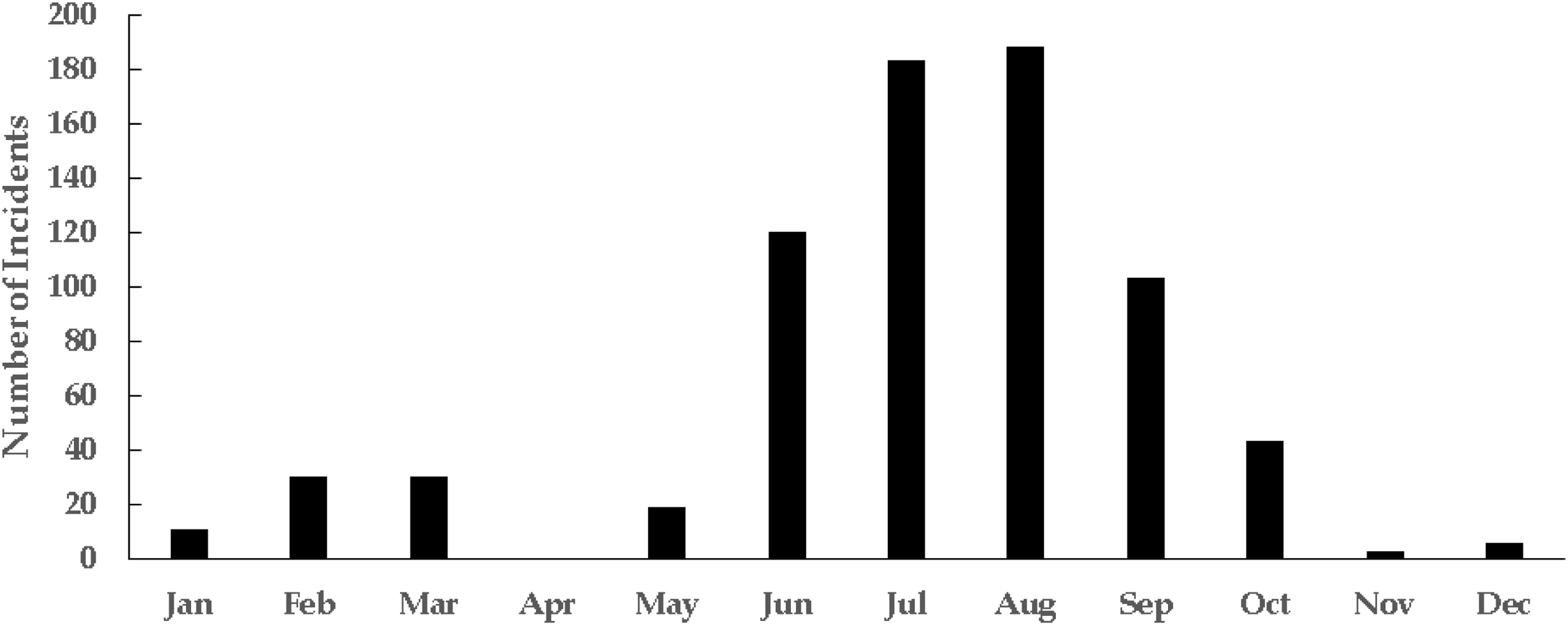
Distribution of search and rescue incidents by month, 1992–2014.
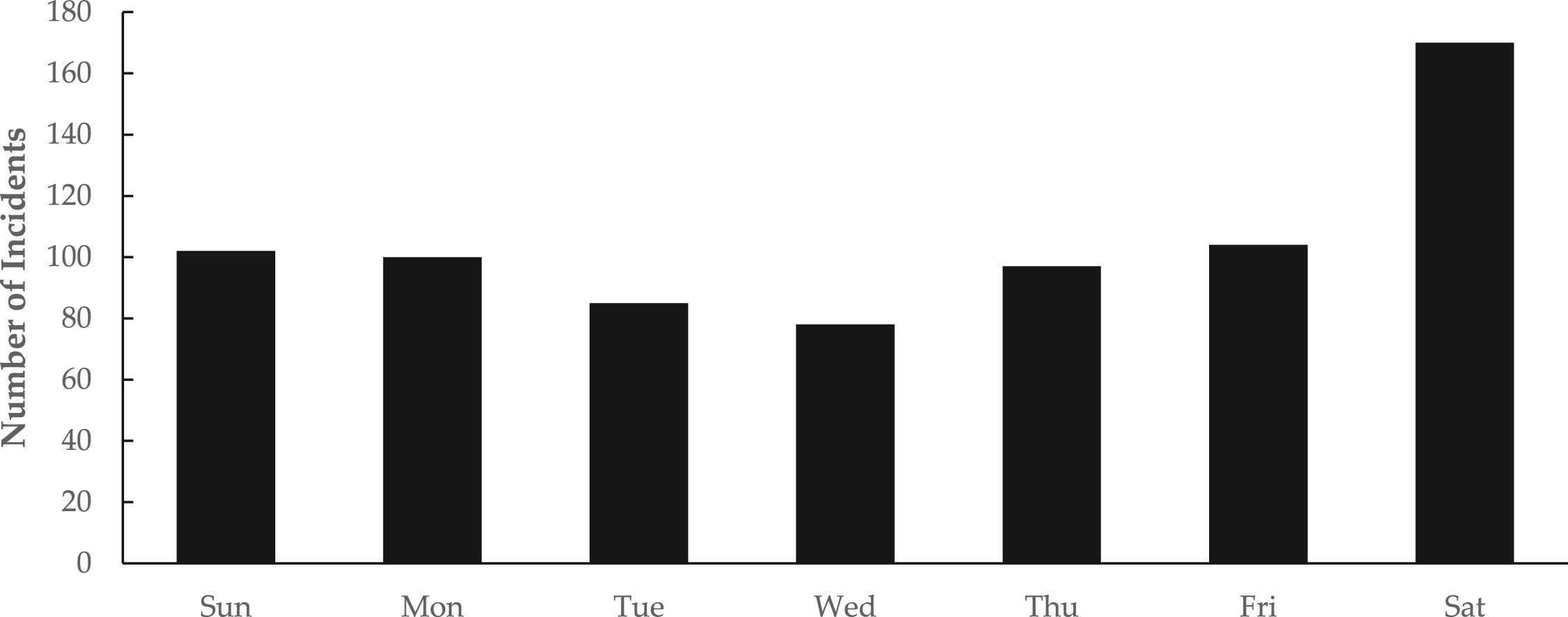
Search and rescue events by day of the week, 1992–2014.
Demographic characteristics of the search and rescue subjects *
Age data were missing in 133 cases (17.6%); sex data were missing in 44 cases (5.8%).
A specific primary cause of the incident was reported for 100% of cases. These are detailed in Table 2. Fifty-one percent (n = 386) of events were precipitated by a traumatic injury. Traumatic injury cause was recorded for 84% (n = 290 of 386) of cases. Of those, injuries resulting from falls or slips represented 66.6% (n = 193), rolled or twisted ankles comprised 16.9% (n = 49), and other mechanisms accounted for 16.6% (n = 48).
Types of search and rescue incidents, Baxter State Park, 1992–2014
Fatigue was the most common medical emergency, with ranger response for extreme fatigue required in 149 cases (19.8% of total cases, 65.9% of medical cases). The mean age of fatigued visitors was significantly higher than that of visitors who were not (46.0 ± 19.7 years vs 37.2 ± 18.5 years, t = −4.704, P < .001). No sex-based difference in the proportion of visitors experiencing fatigue was noted (χ2 = 1.532, P = .216).
Environmental factors or related injuries that contributed to the need for ranger response were documented in 39 cases (5.2%). Details of environmental issues influencing response need are provided in Table 3. The most commonly reported activity visitors were engaged in at the time of SAR overwhelmingly was hiking (Table 4). Whether a recreationalist was ascending or descending a mountain was documented for 29.7% of all cases (n = 224), with descent representing 86.1% (n = 193) and ascent comprising 13.8% (n = 31) (Figure 3).
Environmental factors contributing to search and rescue incidents, Baxter State Park, 1992–2014
Activities leading to search and rescue incidents, Baxter State Park, 1992–2014
Activity information was not documented for 76 search and rescue events.
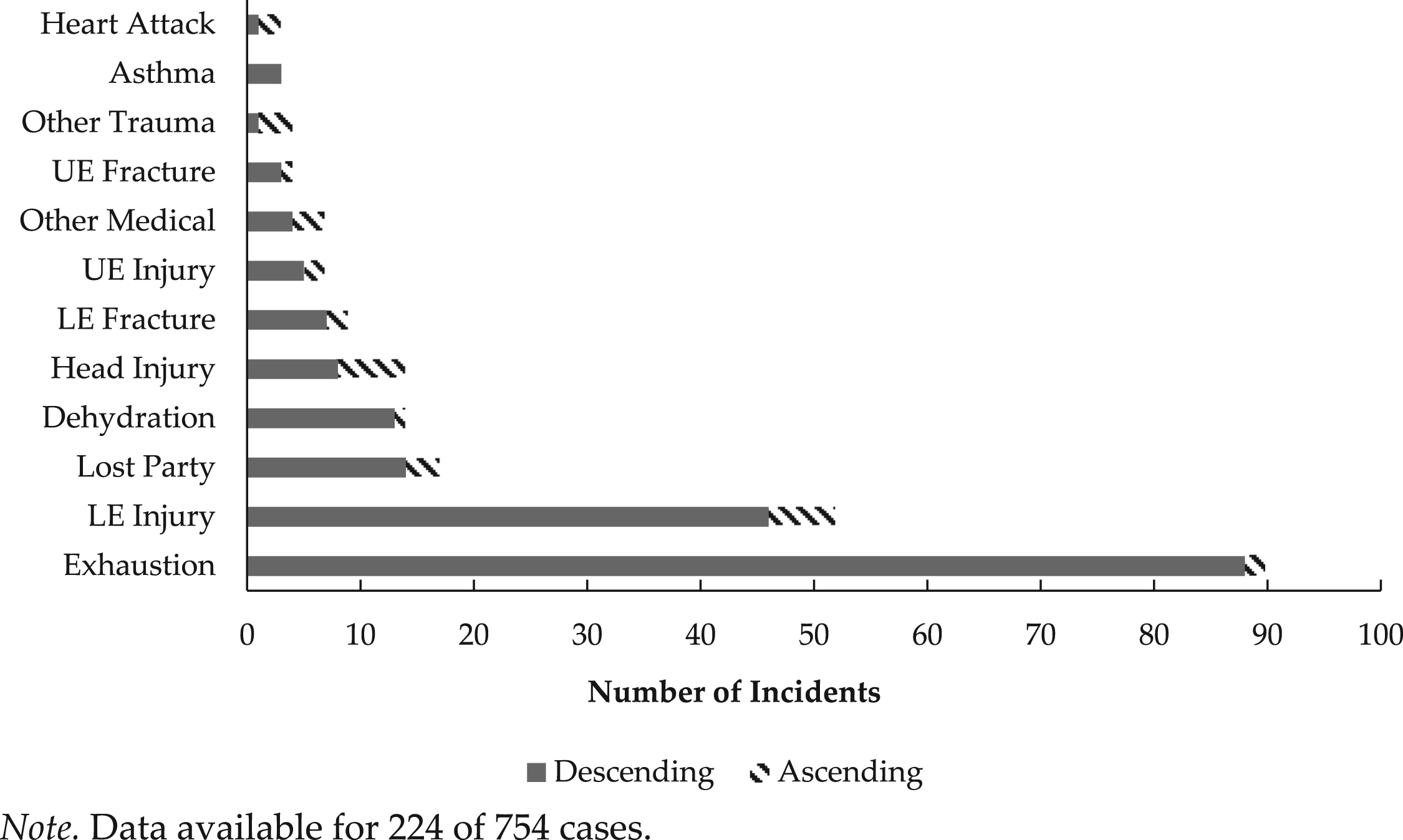
Incident type by descending (solid bars) or ascending (hatched bars) mountain, Baxter State Park, 1992–2014. Data available for 224 of 754 cases. UE, upper extremity; LE, lower extremity.
During the study period, 19 fatalities (2.5% of all SAR responses) occurred (Table 5). Suspected myocardial infarction, documented as “heart attack,” was the most common cause of death (n = 9, 47.3%). The mean age of persons who died in the park was 45.3 years; the mean age of those who survived was 38.7 years (t = −1.474, P = .141).
Fatalities, Baxter State Park, 1992–2014 *
All fatalities (100%) were male park visitors (χ2 = 12.787, P < .001).
The majority (n = 587, 77.8%) of visitors requiring a SAR response were able to be evacuated from incident scenes under their own power either with or without assistance (Table 6). As seen in Figure 4, a change in park policy encouraging visitors with stable injuries or illnesses to walk out of injury scenes preceded a precipitous decline in high-intensity evacuations.
Types of evacuations performed, Baxter State Park, 1992–2014
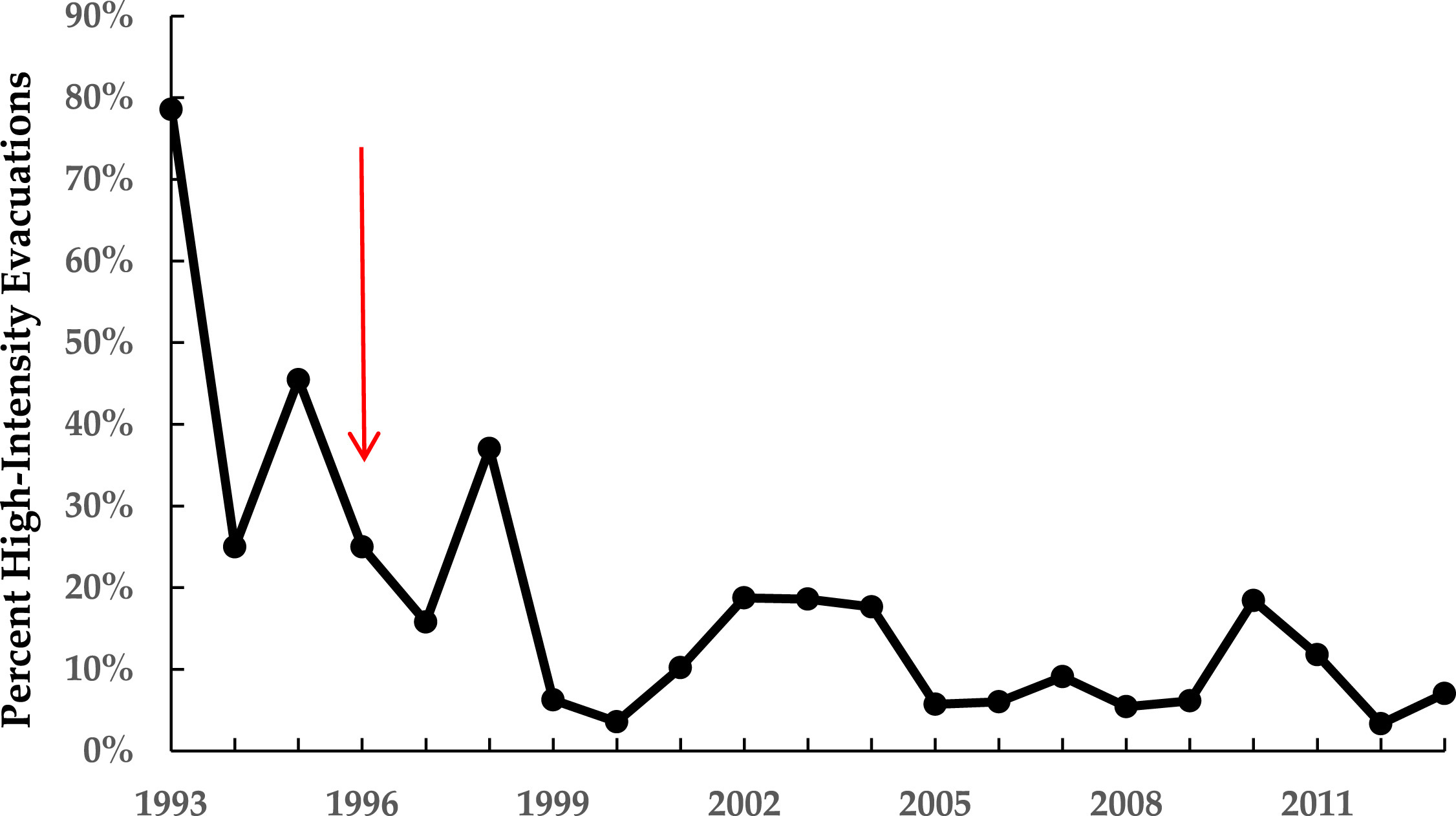
Percentage of high-intensity evacuations, Baxter State Park, 1993–2013. Note: high-intensity evacuations are those that required the use of a helicopter, litter carry, or both resources. The red arrow indicates a change in search and rescue policy whereby visitors who are able are encouraged to walk out of the site under their own power. The proportion of search and rescue cases requiring a high-intensity evacuation effort decreased significantly over time from a high of 79% in 1993 to 7% in 2013 (χ2 = 102.869, P < .001).
Discussion
Consistent with the older demographic of the state, Baxter’s SAR population had a mean age approximately 4 years higher than that reported in other regions 1 ,2,8 in addition to a greater representation of visitors more than 50 years old. 1 –6 Interestingly, fatigue emerged as an important precipitant to SAR events in the park. Approximately 20% of all SAR responses—a full 66% of responses for medical issues—were due to fatigue. Although we had anticipated that fatigued visitors would be older than visitors who were not fatigued, we were surprised by how much older—approximately 9 years—fatigued visitors were. This information may help to target educational interventions regarding the physical stamina, adequate nutrition and hydration, rest periods, and other preparation necessary for older hikers to successfully navigate Baxter’s mountainous terrain.
Other investigators have posited that the peak in afternoon SAR incidents may be partially attributable to late-day fatigue; however, we were surprised to see more than 6 times as many events occurred during mountain descent than during ascent. 2 There are several possible explanations. First, as ascent most often takes place in the morning, the preponderance of descent injuries could be an exacerbation of previously observed afternoon spikes, perhaps a function of increased temperatures and sun exposure. Second, it may be that descending is ergonomically more difficult and harder for hikers to control, with slips and falls more likely to occur regardless of fatigue. Third and most anecdotally observed by Baxter’s rangers, cumulative physical and mental exhaustion are highest during descent, leading to poor foot placement and route choice as well as altered ergonomic technique (personal communication, Ben Woodard, July 2014). That is supported by knowledge from other sports medicine fields, suggesting that physical fatigue alters hip and knee flexion and rotation when landing from jumps, in addition to the effect of mental fatigue on athlete decision making. The overwhelming percentage of exhaustion reported on descent supports this physiologic mechanism of injury and contradicts the notion that exhaustion necessitating SAR would primarily occur at the point of maximum exertion (ie, while ascending). Although future educational initiatives may focus on training rangers to recognize and begin treatment for gravely fatigued visitors, prevention efforts promoting awareness of the dangers and warning signs of exhaustion and the need for adequate nutrition, hydration, rest, and conditioning may help hikers avoid dangerous situations.
As anticipated, the vast majority of Baxter’s SAR events occurred on Saturdays, the park’s busiest day, and from June to mid-October. 1 ,2,7,8 Although the park remains open for day-hiking use, camping is restricted between October 16 and December 1 and again from April 1 through May 14, likely influencing SAR events during those times. Winter season camping is allowed; however, additional documentation of the visitor’s intended route and preparation is required and the use of particular trails or campsites may be prohibited in poor weather conditions. Flexing staffing to these busier times may help to ensure that adequate SAR staff are available when they are most needed.
Despite previous research indicating that medical fatalities are outnumbered by those stemming from trauma, nearly 60% of the deaths documented in this cohort were medically related. 2 ,6,8 Cardiac arrest after acute myocardial infarction was the largest single cause of death observed, accounting for approximately half of the nontraumatic fatalities documented. Although comparison to previous research findings is difficult owing to heterogeneous outcomes, previous researchers have observed few cardiac arrest events and mortality ranging from 4% to 23.4%. 2 ,7,8 The greater proportion of cardiac arrest-related mortality we observed may be due to the generally older age of Baxter State Par visitors or to heavy park utilization by men, who have cardiac arrest with greater frequency than their women counterparts.
Study Limitations
One limitation of this study stems from its retrospective nature and the inconsistencies in documentation that may arise when using data collected for another purpose. For example, we observed that injuries most frequently occurred while hikers were descending a mountain; however, ascent or descent was documented in approximately 30% of cases, rendering it impossible to determine whether this pattern held true for all cases. In addition, between years and even between individual rangers, the acuity threshold for incidents worthy of reporting likely varies, with some persons likely reporting more less-acute events than others.
Conclusion
These data suggest that fatigue is an important factor in precipitating SAR events in Baxter State Park and that this may be exacerbated by the older relative age of park visitors. In addition, we note that SAR is more likely to occur when hikers are descending a mountain and during the park’s busier days and seasons. Future educational efforts should be focused on training rescuers in the initial response to acute myocardial infarction, common extremity injuries, and fatigue prevention and management. In addition, rescuers should be available at times of day many hikers are descending peaks, particularly on Saturdays between June and September when SAR needs are highest.
Footnotes
Acknowledgments
The authors offer special thanks to Baxter State Park administrators Jensen Bissell and Richard Morrill for providing records, park information, and guidance for this study. We thank Dr Samir A. Haydar, DO, MPH, for his thoughtful feedback on several drafts of the manuscript.