






Abstract
The use of coca leaf for medicinal purposes is a centuries-old tradition of the native peoples of South America. Coca products are thought by many laypersons to provide risk-free benefits to users participating in strenuous activities at high altitude. Physiologic studies of coca have increased understanding of its possible mechanism of action as well as its potential impact on high altitude activities. This present work explores the role of coca throughout the history of the Andean peoples and explores whether this ancient remedy has a place in modern medicine. A focused summary of research articles with particular relevance to the field of wilderness medicine is also included to better provide the reader with lessons not only from history but also from another culture.
Introduction
Each year more people are participating in remote wilderness activities and are exposed to the physical and environmental challenges inherent to the backcountry. 1 There were more than 1.1 million visitors to Machu Picchu (altitude 2430 m) in 2013 along with sold-out permits for the high altitude Inca trail. 2 Concurrently, there is mounting interest by the public to eschew synthetic pharmaceuticals in favor of what they perceive to be the benefits of natural or traditional treatments. 3 Coca leaf tea has been anecdotally mentioned by travelers and climbers to South American countries for the presumed symptomatic relief of acute mountain sickness (AMS). The leaf of the indigenous coca shrub (Figure), among its numerous components, includes the stimulant alkaloid cocaine. Its use is widespread both in the distant past and in modern times among native South Americans, especially among those living at high altitude. 4 Even though there are no definitive data supporting coca use for the alleviation of symptoms incurred at high altitude, travelers continue to use this product rather than pharmaceuticals with proven benefits. 5 This work examines the existing knowledge regarding coca leaf products within a historical context and recommends future study of its use at altitude.
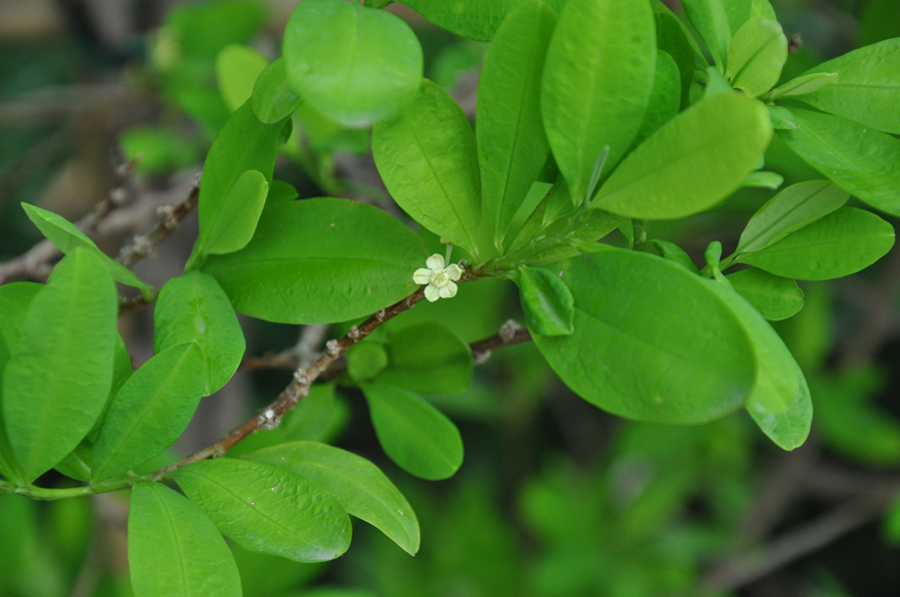
Coca plant. Photo used with permission from Stefano Pagnoni.
Historical Context
Distant Past
Coca grows wild across regions of Central and South America. Archaeological evidence has pointed to cultivation of coca circa 1900 to 1750
The Spanish
Sixteenth century Spanish conquistadors noted that the Incas used coca for a multitude of purposes, including ritual, social, and physiologic uses. 8 The most widely publicized function of the plant is its function in increasing work capacity, including the reduction of bodily fatigue and the alleviation of thirst and hunger. 9 After years of preliminary exploration and military skirmishes, 168 Spanish soldiers under Francisco Pizarro and their native allies conquered the Inca in the 1532 Battle of Cajamarca. 10 Soon thereafter, unsuccessful attempts were made by the Spanish conquerors to eliminate the use of coca in native cultures. 11 Given their lack of success in eradicating coca, the Spanish then began to exploit coca growth. Subsequently, the use of coca became even more widespread throughout the former Incan empire. 12 Shortly after the Conquest, the custom of giving agricultural workers coca leaves as part of their daily wage also began—a custom that persists to this day. 11
Altitude sickness was recognized as early as the sixteenth century by Spanish Jesuit missionary to the Americas, Jose de Acosta. 13 In his tome, “Historia Natural y Moral de Las Indias” published in 1590, he describes the sickness that people experience when traveling to high altitude. He even notes that those who suffered most had come directly from the lowlands and the coast. 14
Western History
By the nineteenth century, coca had made its way into European and United States medicinal arsenals. Interest was prompted by an article written in 1859 by Dr Paolo Mantegazza, an Italian neurologist. 15 Mantegazza had practiced for years in Peru and proposed that coca was capable of reducing fatigue, enhancing mood, and supporting sexual activity. 16 In 1863, Angelo Mariani, a Corsican chemist, created “Vin Mariani,” an amalgam of wine and coca extract. It was soon one of the most popular prescription medications throughout Europe for a wide variety of ailments. 17 Editorials about this medication even made their way into the British Medical Journal in the 1870s. 18
During that era, recommendations for coca were also being advertised in the United States for psychological issues, 19 substantiated by the writings of Sigmund Freud. 20 The potential success of coca in Western medicine is difficult to fully assess, given the lack of enthusiasm in the whole coca leaf after the isolation of cocaine. To this day, physicians and pharmacologists concentrate on understanding cocaine, the purer isolate of the coca shrub, rather than the myriad other pharmacologic compounds found in coca. Of the 14 alkaloids known to be contained in the plant, the bulk of research has been concentrated on the cocaine alkaloid. 21 Scientific knowledge of coca with its plentitude of alkaloids most likely has suffered given the controversy over and fascination with cocaine.
Pharmacology of Coca
Cocaine is the principal alkaloid found in cultivated varieties of coca plants, and is also the most studied and discussed in the literature. On average, whole coca contains 0.6% cocaine in its dried leaves; 22 however, there are 18 other alkaloids that exist within this plant. 23 Although the effects of using coca products are most likely a summation of effects gained from all constituents, the pharmacology of cocaine drives the responses experienced by users. 24 Cocaine is a tropane alkaloid that biologically acts as a serotonin-norepinephrine-dopamine reuptake inhibitor. 25 Organ systems and functions affected by acute and chronic uses of cocaine include psychological, neurological, renal, cardiac, pulmonary, gastrointestinal, obstetrical, and otolaryngological. 26 Historical studies of whole coca have shown that subjects had small increases in temperature, heart rate, blood pressure, and metabolic rate after they were administered coca leaves. 27
Investigations of Coca’s Physiologic Influences
As early as 1970, Hanna28,29 published a series of studies that attempted to capture the influences of coca chewing on cardiovascular and respiratory function during work performance. The first study compared habitual coca users with nonusers during periods of submaximal work. 28 There were some cardiovascular differences seen in the coca user group; however, Hanna believed that the size and design of the study precluded any conclusions being made. A follow-up study was then performed to examine in greater detail the influence of coca chewing on cardiovascular and respiratory function during work performance. 29 Subjects included 7 coca chewers and 5 nonusers who participated in periods of exercise at an altitude of 4000 m on a bicycle ergometer. Mean responses of oxygen consumption, ventilation, heart rate, systolic pressure, and diastolic pressure were measured between the test subjects. Hanna’s final conclusion after the second study was that there was no appreciable difference between the experimental and control groups, and that any real effects of coca chewing on the user resulted from the perception of either less effort being produced or less fatigue being generated rather than actual physiologic changes.
Given the inconclusive evidence of coca’s effects, further studies attempted to address the physiologic role that coca played in the stress-rich environment of high altitudes. Brutsaert et al 30 designed a study exploring the exercise responses of 23 male subjects during submaximal and maximal workloads on a bicycle ergometer at an altitude of 3600 m to examine the work and muscular efficiencies of coca chewers acclimated to high altitude. A physiologic effect was found in those who chewed coca leaf. Although there were no differences between coca users and control groups in oxygen saturation, pulmonary ventilation, or respiratory exchange ratio at any level of work, differences in heart rate, oxygen, ventilatory equivalent, mean net efficiency, and mean delta efficiency were observed in experimental subjects. Mean heart rates both at rest and during periods of submaximal exercise were statistically significantly increased by coca chewing. Mean net efficiency was higher at 1 of the submaximal work levels in coca users compared with control subjects (23.2% vs 20.8%). The mean delta efficiency calculated was statistically significantly lower for exercise with exposure to coca (26.7%) in comparison with exercise performed without coca (28.2%). Although efficiency differences were suggested by the data, it was not entirely clear whether these changes were solely responsible for conferring a work performance benefit. Therefore, the researchers were unable to equate statistically significant data with clinically significant physiologic effects.
In 1996, 2 sets of research studies were performed that examined the effects of coca chewing on maximal and submaximal exercise in habitual coca users.31,32 Maximal aerobic capacity and work efficiency were similar in coca chewers and nonchewers; however, changes were seen in plasma hormonal and metabolic levels. The protocol design of both studies did not allow the researchers to delineate whether adaptations were secondary to acute or chronic, additive effects of coca absorption.
In response to these additional inconclusive physiologic studies,31,32 a group of South American scientists attempted to further delineate hormonal and metabolic responses of naïve coca chewers by studying 12 medical students during incremental exercise on a mechanical bicycle at an altitude of 3600 m. 33 During exercise, oxygen uptake, heart rate, and the respiratory gas exchange ratio were significantly increased in the coca chewers compared with the control subjects. Given these results, the investigators concluded that acute coca chewing could enhance tolerance to exercise. They also conceded that coca chewing may affect glucose homeostasis during exercise.
This same group 34 performed further research on coca’s effects on the fluid regulatory hormone response. Sixteen male subjects who had lived at high altitude for several years volunteered to participate in this study, which examined variables at rest and during 1 hour of cycle exercise at 75% of their peak oxygen uptake. One trial was performed with the subjects chewing a sugarfree chewing gum as the control group, whereas the other was done after the subjects chewed 15 g coca leaves. It was found that coca chewing before exercise resulted in reduced changes in plasma and blood volumes, as well as an enhanced heart rate response during exercise. There was an ability to retain circulating blood volumes during exercise in the experimental group, which was linked to reduced heat transfer from the body to the environment. It was concluded that this increased heat retention associated with coca use could be beneficial in cold environments, such as those as found in high altitude areas of the Andes.
Most recently, Casikar et al 35 were able to make a more definitive conclusion based on their investigation of the effects of chewing coca leaves. Ten adult native male participants were subjected to a standard exercise regimen on a stationary cycle ergometer while at an altitude of 2700 m in Peru. The control group consisted of 4 native adult subjects who performed the same exercise routine without the use any coca leaves. Oxygen saturation, blood pressure, and pulse rate did not show a significant difference between the coca and control groups. However, there was a hyperglycemic response to coca chewing throughout the experiment, leading to a mean absolute and percent change in glucose. The investigators postulated that the ingestion of the coca alkaloids blocked the glycolytic pathway of glucose oxidation at the pyruvate dehydrogenase level, leading to an accumulation of glucose and pyruvate. Under the influence of coca, the body utilizes the beta-oxidation of fatty acids to meet the energy requirement for exercise. The researchers concluded that these biochemical changes would in fact enhance physical performance at high altitude and that these beneficial effects would be felt over a prolonged period of sustained physical activity. 35
It is difficult to formally compare the data outlined above given the variation in study designs and endpoints. Although several of these studies did not indicate that there were statistically significant differences between coca chewers and controls, most investigators still conceded that coca may enhance performance by reducing the perception of work in the user. Effects on the increased stability of glucose homeostasis have been consistently seen across several studies. 32 –35 This biochemical and physiologic response could certainly lend itself to a plausible mechanism of action of enhanced performance at cold, work-intense, high-altitude environments. None of the physiologic studies reviewed noted adverse effects of coca or stated reasons for participant dropout. It could be argued that this body of research offers some credence to this historic native Andean tradition as an effective adjunct to high altitude medicine. The researchers make no recommendations on the above studies; further clinical research is needed.
Coca and Modern Acute Mountain Sickness Research
The past decade has seen the number of international travelers to the South American Andes Mountains double. 36 The majority of tourists to Bolivia, Colombia, Ecuador, and Peru have visited major cities that are above the high altitude mark of 2500 m. Despite these increasing numbers, however, many at-risk travelers remain naïve to the health risks of being at high altitude. Coca products have certainly been noticed by travelers to the Andes, and mention of coca also occasionally makes its way into wilderness medicine literature, but only as anecdotes.
Cusco, Peru, lies at 3400 m, and travelers often ascend to the city from sea level on commercial flights lasting less than 1 hour. Using a cross-sectional survey study utilizing the Lake Louise Clinical Score, Salazar et al 5 found that 48.5% of travelers departing from Cusco reported symptoms consistent with AMS at some point during their time spent in Cusco. Not only was AMS found to be common, but it also adversely affected the travel plans of 1 in 5 persons. Coca leaf products were used by 62.8% seeking to prevent or treat AMS. That number is quite high in comparison with the 16.6% of travelers taking acetazolamide—a drug proven to be efficacious for the prophylaxis of AMS. 37 It is interesting to note that travelers using coca products were more likely to report AMS symptoms. Given the study design, however, no conclusion can be reached that coca was the cause of the AMS symptoms.
As altitude increases, so does the percentage of the population using coca. 38 A convenience sample study was performed at high altitude tourist destinations in Peru and Bolivia. 39 The purpose was to investigate the epidemiology of coca use among foreign travelers, as well as their reasoning and beliefs behind its use. Eighty-nine percent of the 121 subjects took coca throughout their travels. Of those who took coca, 51% reported that it had no noticeable effect and 30% reported desirable effects including elevated mood and an increase in energy levels. Nineteen percent reported undesirable side effects; however, no serious effects were noted nor was there any evidence of dependence on coca. Coca seemed to provide some benefit to travelers and did not pose any serious health risks.
Only a single experimental study has sought to determine the effects of coca on high altitude trekkers. 40 Shackelton et al 40 performed a study in which homeopathic coca preparations (not defined by the researchers) were provided to 11 members of the 1998 Everest Challenge Expedition, with a control group of 13 climbers. The experimental group showed increased overall average oxygen saturation levels throughout the entire ascent, as well as a decrease in survey-reported AMS symptoms. This preliminary research serves as an initial investigation into the use and efficacy of coca during high altitude climbs. Further research is necessary to verify the above results; however, this study does suggest some benefit from an ancient Andean tradition.
Recommendations
The Wilderness Medicine Society practice guidelines for the prevention and treatment of acute altitude illness, 2014 update, 41 includes coca under “other options” for the prevention of AMS and high altitude cerebral edema. This report recognizes that coca is frequently recommended by the local tourist industry and by traveler word of mouth for those visiting the Andes, and that its products are frequently utilized by trekkers. Given the lack of current evidence, however, coca should not be substituted for other proven preventive measures. 41 It is unknown why travelers choose coca over other AMS treatments such as acetazolamide. It is possible that some persons are reluctant to take synthetic medications yet are amenable to trying what they consider to be a natural alternative. It is also possible that travelers may notice the propensity of mountain-dwelling natives to use coca and assume that there is benefit to this traditional medicine. Finally, coca leaves may be more readily available at travelers’ destinations whereas proven treatments such as acetazolamide may not be easily obtained while traveling abroad. More research is necessary to determine if whole leaf coca has a place in modern medicine’s arsenal for the treatment of acute altitude sickness.
Conclusion
Coca has long been viewed in the Andean culture as a remedy for symptoms experienced when traveling or working at high altitude. Despite the common belief in coca as a panacea, scientific research has, at best, shown that it is associated with modest physiologic changes. When a culture has venerated a particular practice for thousands of years, it stands to reason that there may be some functional advantage worthy of investigation. As this work demonstrates, however, despite the historical importance of coca to the Andean people, proven agents should be used for AMS in lieu of coca until more definitive studies are conducted.