






Abstract
Objective
To review cases of bites and contact abrasions in open-water swimmers from California sea lions (Zalophus californianus) and harbor seals (Phoca vitulina richardii).
Methods
Open-water swimmers from a San Francisco swimming club were questioned about encounters with pinnipeds (seals and sea lions) that resulted in bites or contact abrasions. When possible, wounds were documented with photographs. Medical follow-up and treatment complications were also reviewed.
Results
From October 2011 to December 2014, 11 swimmers reported bites by a sea lion (n = 1), harbor seal (n = 7), or unidentified pinniped (n = 3). Ten of the encounters occurred in San Francisco Bay; 1 occurred in the Eld Inlet, in Puget Sound, near Olympia, WA. None of the swimmers were wearing wetsuits. All bites involved the lower extremities; skin was broken in 4 of 11 bites and antibiotics were prescribed in 3 cases. One swimmer, who was bitten by a harbor seal, also had claw scratches. A treatment failure occurred with amoxicillin/clavulanate in another swimmer who was bitten by an unidentified pinniped; the wound healed subsequently with doxycycline, suggesting an infection with Mycoplasma spp. There were no long-lasting consequences from any of the bites. The majority of cases occurred at low tide, and bumping of the swimmer by the animal before or after a bite was common, but no clear tide or attack pattern was identified.
Conclusions
Bites and contact abrasions from sea lions and harbor seals are reported infrequently in open-water swimmers and typically involve the lower extremities. Because of the risk of Mycoplasma infection, treatment with a tetracycline is recommended in pinniped bites with signs of infection or serious trauma. Attempting to touch or pet sea lions or seals is inadvisable and prohibited by the Marine Mammal Protection Act. Swimmers should leave the water as soon as possible after a bite or encounter.
Introduction
The popularity of open-water swimming continues to increase, 1 –3 and swimmers are at risk of contact with marine life. Bites from pinnipeds (seals and sea lions) in humans have been reported in the popular media4,5 and in online medical websites.6,7 One newspaper account reported that 14 swimmers were bitten by a single sea lion in San Francisco Bay over the course of 4 days in November 2006. 5 Pinniped bites and their complications have also been reported in the medical literature in hunters, divers, and marine mammal workers, 8 –18 but medical reports of bites in recreational swimmers are lacking.
In this case series we outline 11 encounters with pinnipeds in open-water swimmers during a 3-year period. Two types of pinnipeds, the California sea lion (Zalophus californianus; Figure 1) and the harbor seal (Phoca vitulina richardii; Figure 2), are common in the western United States and were involved in the encounters. When possible, wounds are documented by photographs. Medical follow-up and treatment complications are also discussed.
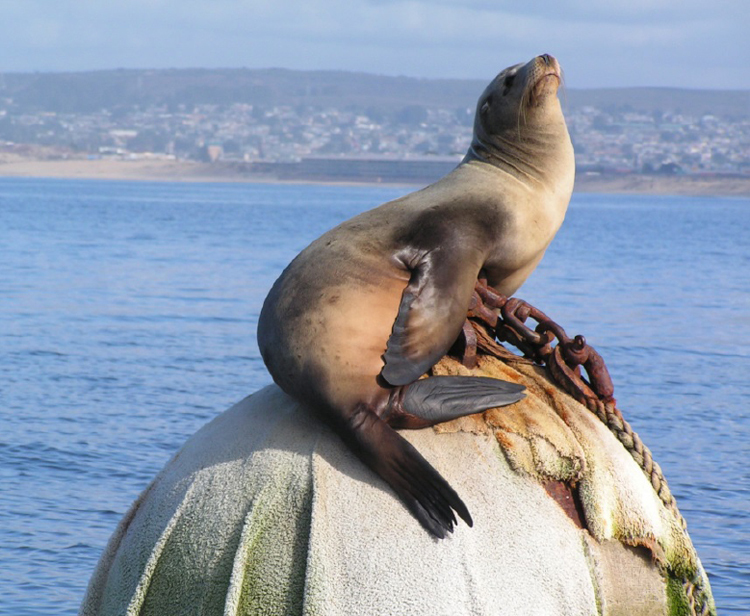
California sea lion (Zalophus californianus). Photo: The Marine Mammal Center.
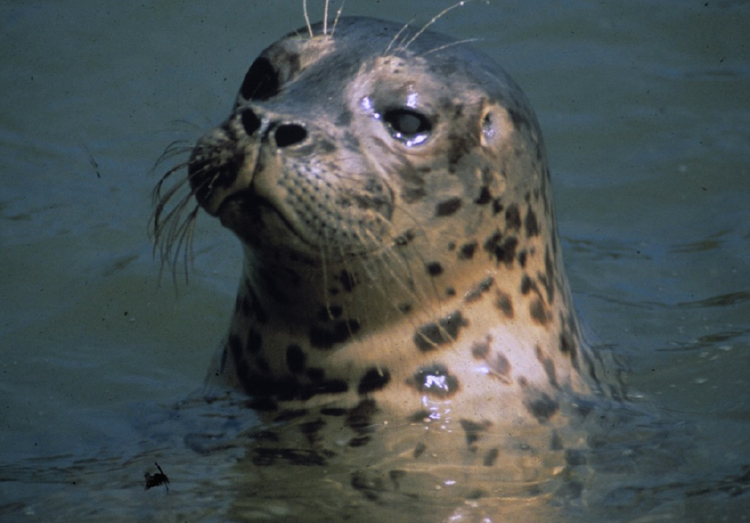
Harbor seal (Phoca vitulina richardii). Photo: The Marine Mammal Center.
Methods
All cases involved swimmers from the San Francisco Dolphin Swimming and Rowing Club. The organization, established in 1877 and now with more than 1300 members, is home to a large group of recreational swimmers who swim in the San Francisco Bay year-round and without wetsuits. The authors of this report are also members or have working knowledge of the club. Tracking of pinniped encounters at the Dolphin Club began after the first encounter mentioned in this report (October 2011) and continued through December 2014. When cases came to the attention of the authors, individual swimmers were approached for an interview.
Each swimmer was asked to openly describe the encounter to the best of his or her memory, without a specific questionnaire or collection device. In general, the authors asked follow-up questions as needed regarding the time and date of the encounter, the location of the encounter, the type of animal involved, the behavior of both animal and swimmer during the encounter, the nature of the injury itself, treatment, and subsequent wound healing or complications.
Data were collected retrospectively, and swimmers provided all information at their convenience, in person or by e-mail, including information about treatment and medical follow-up. Medical records were not reviewed. If the swimmer could not recall sufficient details about the animal involved, the animal was classified as an “unidentified pinniped.”
Tide, water temperature, and other data for the time of each encounter were obtained from National Oceanic and Atmospheric Association websites.19,20 General data pertaining to regional rainfall, water salinity, and domoic acid concentrations were obtained from additional online and other sources. 21 –28
Results
A synopsis of the cases is provided in the Table; additional case details are outlined in the supplemental Appendix. Both the Table and the Appendix provide reference to corresponding figures (Figures 3–7).
Harbor seal: Phoca vitulina richardii; California sea lion: Zalophus californianus.
Swimmer was bumped by the pinniped before or after the bite.
Estimates of dates used for cases 9–11, which were reported several weeks after the events.
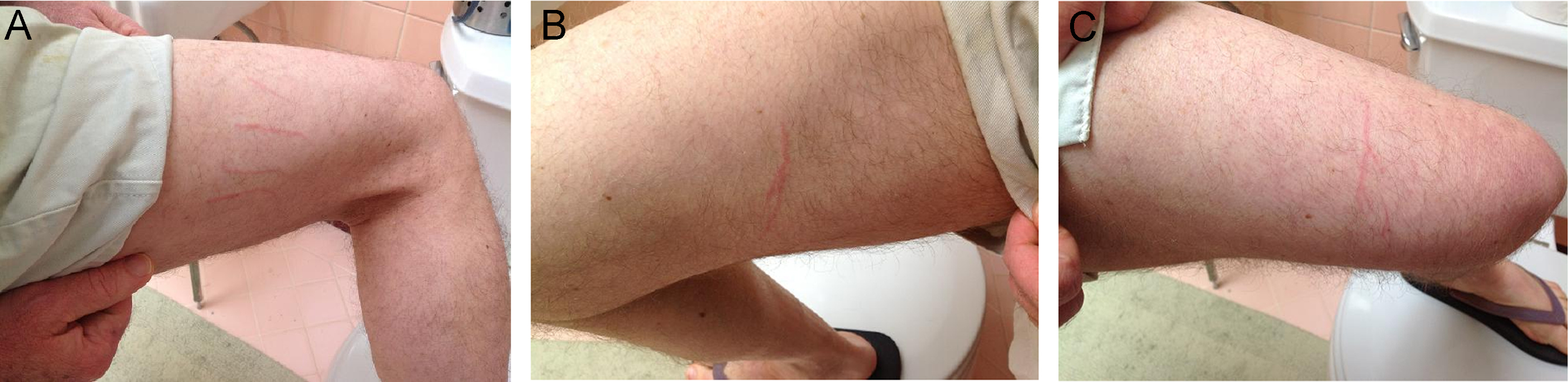
Scratch abrasions after contact with harbor seal. A, Lateral right thigh. B, Medial right thigh. C, Anterior left thigh. (Case 3; 59-year-old man. Photos taken on day of contact [day 0]). Photos: L. Hammack.
In all cases, swimmers were swimming without wetsuits. All bites occurred in the San Francisco Bay, with the exception of 1 bite that occurred in the Eld Inlet, in Puget Sound, near Olympia, WA (swimmer from San Francisco visiting the area). The first pinniped encounter in this series occurred in October 2011. The last encounter was in August 2013, with no further encounters noted through the end of 2014. Skin was broken in 4 cases (cases 1, 6, 7, and 8). Antibiotics were prescribed in 3 cases (cases 1, 7, and 8). Wound or blood cultures were not obtained in any case. One swimmer (case 3), who was bitten by a harbor seal, also had claw scratches. A treatment failure occurred with amoxicillin/clavulanate in another swimmer (case 8); the wound healed subsequently with doxycycline. Wound healing was complete in all cases.
The water temperatures (range, 13.2°C [55.8°F] to 15.7°C [60.3°F]) and air temperatures (range, 10.6°C [51.1°F] to 16.6°C [61.9°F]) during the encounters did not appear to be atypical for San Francisco Bay or Puget Sound. 19 The majority of cases occurred at low tide, and bumping of the swimmer by the animal before or after a bite was common, but no clear tide or attack pattern was identified. Additional details pertaining to regional rain patterns,21,22 water salinity, 19 ,23–26 and domoic acid concentrations in sampled shellfish 26 –28 can be found in the Appendix; no clear abnormalities in these variables that were likely to have contributed to the pinniped encounters mentioned in this report were identified.
Discussion
From our data, unprovoked bites from pinnipeds in recreational swimmers appear to be relatively rare. Eleven cases were reported in a 3-year period, and several cases likely involved the same harbor seal. In 2 of the cases, the bites can be attributed at least partially to human behavior; in 1 case fish bait was thrown in the water with the swimmer between the bait and a sea lion (case 1), and in another, the swimmer purposely touched and petted a harbor seal (case 10). Thus, taken as a whole, our data suggest that spontaneous and unprovoked bites of swimmers by seals and sea lions are not frequent.
Nonetheless, because of the increasing popularity of open-water swimming 1 –3 and because the numbers of pinnipeds in the western United States and San Francisco Bay appear to be stable or increasing, 29 –31 future encounters with seals and sea lions seem inevitable. As mentioned, pinniped bites in swimmers have been reported in the popular media.4,5 Additionally, in a recent study of San Francisco Bay swimmers, 3 contact with marine life was identified as the most common safety concern. Further delineation of the patterns and characteristics of pinniped bites in swimmers is therefore warranted.
Immediate defense of pups or a mate or hormonal changes during the breeding season are possible explanations for aggressive pinniped behavior. The majority of bites occurred within the breeding seasons for both harbor seals (March through May), 29 and California sea lions (May through August). 32 However, no pups or mates were seen by swimmers. Additionally, all encounters occurred away from the typical California sea lion breeding grounds, which are in southern California and Mexico.31,32
Other possible explanations for erratic behavior in pinnipeds include neurological illness (such as meningitis) and other illnesses, particularly systemic infections. 14 ,16,17 Domoic acid (produced by toxigenic algae [Pseudo-nitzschia spp] and subsequently ingested via contaminated prey) can cause brain damage and abnormal behavior in both harbor seals and sea lions.33,34 Although Pseudo-nitzschia spp concentrations in regional water samples were periodically elevated, domoic acid concentrations in regional shellfish samples were not increased around the times of the encounters. 26 –28 Thus, if present, domoic acid toxicity in the pinnipeds involved in our cases would more likely have been chronic (the result of cumulative domoic acid exposure) 34 rather than acute. Identifying animals at risk for erratic behavior from any illness can be difficult because marine mammals may show few signs of clinical disease even when affected. 14
No clear relationships between pinniped encounters and water temperature, air temperature, rainfall, or salinity were identified. The majority of bites in our swimmers occurred at low tide, and bumping of the swimmer by the animal before or after a bite was common. Interestingly, no bumps were reported in bite cases in which the skin was broken. However, the small number of cases in this series precludes a clear identification of a specific tide or attack pattern. Because of the risk of multiple bites, leaving the water as soon as possible after an encounter is advisable, regardless of the attack pattern or water conditions.
Eight of the encounters in our report occurred (or were estimated to have occurred) within a 7-day period in May 2013. Four of these encounters occurred on the same morning (May 15, 2013), all within approximately 1 hour. Given that erratic behavior and bites by pinnipeds are relatively rare, we believe that the same harbor seal was likely involved in these cases. As mentioned, from a prior media report 5 a single pinniped (California sea lion) was suspected of aggressive behavior toward multiple swimmers in 2006. No clear reasons for multiple attacks by a single animal, or specifically for the clustering of encounters in the spring of 2013, are apparent from our data. However, as we have outlined, animal illnesses 14 ,16,17,33,34 (including chronic domoic acid toxicity) 34 or prior contact with humans resulting in desensitizing of the animal 35 may have contributed.
In summary, it seems likely that the majority of cases in this report can either be attributed in part to human behavior (2 cases) or to a single erratic animal, perhaps with an underlying illness, but with no clear reason for aggressive behavior (7 cases). Swimmers should avoid the water if a single animal appears aggressive and refer such cases to local wildlife organizations. Prior contact of marine mammals with humans has been shown to increase the likelihood of future encounters. 35 Purposefully touching or petting seals or sea lions is not only inadvisable but could have harmful consequences to animals and is prohibited under the Marine Mammal Protection Act.35,36
All 11 bites in our series involved the lower extremities, and skin was broken in 4 of 11 bites. Antibiotics were prescribed in 3 of 11 cases; no wound cultures were done—antibiotics were prescribed empirically. Wound healing was complete in all 11 cases. However, more adverse consequences from seal and sea lion encounters are possible. A wide range of systemic zoonoses—infections in animals that have been transmitted to humans—have been reported in humans after contact with pinnipeds, including influenza and other viral infections (eg, calicivirus), brucellosis, leptospirosis, and pulmonary tuberculosis. 10 ,14,16–18 Transmission of these systemic zoonoses from pinnipeds to humans is more likely to occur in persons who work closely with marine mammals on a frequent basis and unlikely to result from brief contacts and bites like those described in our swimmers.
Every swimmer in our report was bitten and was at various degrees of risk for wound infection. Much of the literature pertaining to pinniped bites refers to an entity called “seal finger.” 8 –18,37,38 Seal finger (also called spekk finger—spekk is Norwegian for blubber) has long been used to describe an infection of the fingers in seal hunters8,13 and more recently in marine mammal workers. 8 –12,37 Symptoms include painful swelling around a puncture wound and cellulitis, and in severe cases, infection, immobilization, and destruction of adjacent joints. 8 –13,37 The finger is typically the site of the initial infection; however, adjacent fingers and the entire hand or arm subsequently can become swollen and lymphadenopathy can occur. 8 ,10,12–15,37 The term seal finger has also been used more broadly to include serious cutaneous infections that originate in sites other than fingers (eg, in a case of an initial infection of the palm rather than the finger), 37 and includes infections of knife or other wounds 8 ,10–18,37 (eg, those incurred during pinniped necropsy or skinning, or handling of pinniped pelts), in addition to infections resulting specifically from pinniped bites. 8 –18
Sources vary as to which organisms can cause seal finger. 14 –16,18,38 However, a diverse and growing body of evidence and opinion suggests that Mycoplasma infection is a likely cause in a majority of cases. 11 –18,38 In particular, a novel species, Mycoplasma phocacerebrale, which was first identified in seals, 39 has been isolated in a case of seal finger. 11 The incubation period of seal finger after a bite typically ranges from hours to 3 to 4 days, 9 ,11,17,38 but longer incubation periods (up to 15 to 21 days) may occur. 8 ,12–15,38 Wound cultures to isolate Mycoplasma 11 ,12,15,38 or molecular-based systems such as polymerase chain reaction and enzyme-linked immunosorbent assays to identify Mycoplasma 38 are often recommended for cases of seal finger. However, because of its small size, Mycoplasma cannot be visualized with routine microscopy, and culture from a wound is difficult. 38 Because of the risk of Mycoplasma infection, therapy with a tetracycline should not be delayed in cases of serious infection after pinniped bites. 9 –15,17,37,38
A treatment failure with amoxicillin/clavulanate in 1 of our swimmers who was bitten by an unidentified pinniped (case 8), with subsequent rapid and complete healing with doxycycline, suggests a possible infection with Mycoplasma and reinforces the use of a tetracycline as first-line therapy for seal or sea lion bites with signs of infection. Although the foot rather than the hand was involved and there was no specific joint injury, the swelling and infection course were generally consistent with previously reported cases of seal finger. 8 –13,37 In particular, this case had swelling and erythema that spread up the dorsal aspect of the foot. Other cases in our series in which skin was broken exhibited minimal signs of inflammation and improved with local wound care alone (case 6) or local wound care with empiric doxycycline (cases 1 and 7), which may have prevented progression of infection.
Although Mycoplasma infection is a potential consequence of pinniped bites, a wide variety of organisms have been found in the mouths of pinnipeds,40,41 and other infections from bites are possible. 9 –18,38,40–44 For example, Pasteurella spp are prevalent in the mouths of pinnipeds, 41 and isolation of Bisgaardia hudsonensis (a member of the Pasteurellaceae family) from a pinniped bite wound in a human has been reported. 42 Infection with Erysipelothrix rhusiopathiae 9 ,10,12–16,18,38,43 (an organism thought to be acquired by pinnipeds from fish in their diet rather than comprising part of the typical pinniped oral flora 14 ,16,43), is characterized by a reddened and often sharply demarcated rash that can be spread across several fingers, 9 ,12–16,38 and the organism has been isolated from pinniped bite wounds in humans. 43 Poxviruses 14 ,16,18,38,44 can also be transmitted through the bite of infected animals and have been isolated from a pinniped bite wound in a human. 44 As mentioned earlier, sources vary as to which organisms are classified as etiologic agents of seal finger, as opposed to contributing to distinct and different diagnoses. 14 –16,18,38 Regardless, because of the possibility of organisms other than Mycoplasma spp, pinniped bite wounds should be examined carefully and followed closely for possible treatment failure. Standard aerobic and anaerobic wound cultures also may be useful to guide therapy.12,15
One of our swimmers (case 3) had scratches that resulted from contact with a harbor seal. Unlike sea lions, harbor seals have long claws 45 and can flex their carpus, allowing them to strike or scratch another seal or human. Because numerous different types of bacteria have been isolated from extraoral sites in pinnipeds, 39 ,40,46–50 there is a large range of infectious possibilities from such a scratch. 9 –18,38–40,43,46–50 The swimmer in our series washed the affected scratch areas with soap and warm water and experienced complete wound healing without antibiotic therapy. Although our swimmer’s case is unique and there are no specific data on seal scratches in swimmers, a tetracycline (to cover Mycoplasma spp) could be considered as a reasonable first-line treatment option in more severe cases. As with bites, wound cultures of severe scratches may be helpful to guide therapy.
Rabies has never been described in a California sea lion or harbor seal.14,51 The only reported case of rabies in a marine mammal was in a ringed seal from Norway in 1981, when there was a concomitant outbreak of rabies infections in arctic foxes. 51 Methicillin-resistant Staphylococcus aureus (MRSA) has been isolated from pinnipeds, 52 but transmission of MRSA from pinnipeds to humans has not been reported. Infection with Vibrio spp could be considered in the differential diagnosis of infections after pinniped scratches or bites, 13 and Vibrio spp have been found in extraoral sites of pinnipeds.49,50 However, we are not aware of a case in which Vibrio has been isolated from a pinniped bite wound in a human, and large reviews do not list Vibrio infection from pinniped contact as a substantial human health risk. 14 ,16,18 Similarly, cutaneous mycobacterial infections 9 ,10,12–14,16 (particularly from atypical species, including Mycobacterium marinum14,16) could be included in the differential diagnosis of skin infections after pinniped contact, but we are not aware of a clear case in a human after a pinniped bite. Although in large studies Clostridium tetani has not been isolated from pinnipeds, 46 –49 given the ubiquitous nature of this organism, including its presence in marine sediment, 53 vaccination against tetanus is warranted.
This report has several limitations. First and foremost, our informal collection methods from a single swim club did not allow for the calculation of a pinniped bite incidence in swimmers. Other cases may have occurred in the 3-year time interval that did not come to our attention and were not reported in this series. Blood or wound cultures were not obtained from any swimmer, including those who received antibiotics. Without specific culture data, we cannot be certain that Mycoplasma was the organism responsible for the infection in the swimmer who failed treatment with amoxicillin/clavulanate—despite the rapid improvement noted after initiation of doxycycline. However, given that Mycoplasma spp have been isolated or suspected in prior cases 11 –13 and the longstanding success of empiric tetracycline therapy, 9 –13,37 we agree with current recommendations that encourage a tetracycline as first-line therapy after serious pinniped bites. 12 –15,17,38 All data were collected retrospectively and details were clarified often days or weeks after the encounter. Thus, recall bias may have featured prominently in the study overall.
More specifically, the identification of the type of animal involved in our cases was challenging and based on each swimmer’s best recollection of what was often a brief and stressful encounter. Sea lions were presumed to have been the California sea lion (Zalophus californianus) 31 and not the Steller sea lion (Eumetopias jubatus),54,55 which is less common in Puget Sound 54 and rarely seen in San Francisco Bay. 55 The swimmers in this study all swam without wetsuits or fins, which could have provided protection from bites or scratches. The 3 swimmers who took doxycycline all reported that they took the drug for 2 weeks; 2-week therapy has been used in prior cases,11,13 and is the lower duration in some treatment recommendations,13,17 although a longer duration of 4 to 6 weeks is often recommended. 9 ,12,14,15,38
Conclusions
Reports of bites and contact abrasions from sea lions and harbor seals are relatively rare in open-water swimmers and typically involve the lower extremities. The majority of cases in our series occurred at low tide, and bumping of the swimmer by the animal before or after a bite was common, but no clear tide or attack pattern was identified. All bites and scratches should be cleansed with soap and warm water, and vaccination against tetanus confirmed or provided. Because of the risk of Mycoplasma infection, treatment with a tetracycline is recommended in pinniped bites with signs of infection or serious trauma. Attempting to touch or pet sea lions or seals is inadvisable and is prohibited by the Marine Mammal Protection Act. Swimmers should leave the water as soon as possible after a bite or encounter.
Footnotes
Acknowledgements
The authors gratefully acknowledge The San Francisco Dolphin Swimming and Boating Club for general nonfinancial support; Jerry Borchert (Washington State Department of Public Health) for Puget Sound domoic acid data; Andrew Chang (Smithsonian Environmental Research Center), Matt Ferner and Mike Vasey (both, San Francisco Bay National Estuarine Reserve and San Francisco State University), Marcel Losekoot (UC Davis Bodega Marine Laboratory), and Adam Paganini (Romberg Tiburon Center for Environmental Studies and San Francisco State University) for water salinity data access and interpretation; Tom Hunt (Dolphin Club) for review of tide conditions; Deborah Martin (Mills-Peninsula Health Services) for library services and reference acquisition; and John Nuckton and Steve Schatz (Dolphin Club) for data interpretation and manuscript review.
Supplemental Appendix
Case Details
Case 1—Sea lion bite, 49-year-old man. October 11, 2011; 7
A 49-year-old man was swimming alone at dusk approximately 400 m offshore. As he approached a local municipal pier, fishermen began throwing unused bait into the water at the base of the pier. The swimmer was between a large sea lion and the bait and was subsequently bitten once in the region of the right lateral knee and calf. The bite resulted in puncture wounds, which clearly broke the skin, on both the anterior and posterior surfaces of the right lower extremity below the kneecap. The bite was sudden, with no prior bump or warning. There was no subsequent contact after the initial contact, and the sea lion did not appear to follow the swimmer to shore.
The swimmer swam to shore and washed the wound with warm water and soap. He was subsequently seen in a local emergency room where he received additional local wound care without sutures and where oral doxycycline was prescribed. Oral doxycycline was taken for 14 days. Wound healing was complete and without complications.
Case 2—Unidentified pinniped bites, 52-year-old man. May 9, 2013; 6
A 52-year-old man was swimming alone 50 m from shore on a course parallel to the shore when he was suddenly bitten multiple times on the distal left foot by an unidentified pinniped. Skin was not broken. After the bites, the swimmer rolled on his back and swam backstroke. While the swimmer was on his back, the pinniped dove and surfaced underneath the swimmer, which resulted in the swimmer being lifted partially out of the water. After this contact, the animal appeared to follow the swimmer from approximately 10 m away but swam away as the swimmer approached shore. The region of the bites had minimal bruises and abrasions. The area was washed with soap and warm water and the swimmer did not seek medical attention. Wound healing was complete and without complications.
Case 3—Harbor seal bite with claw contact scratches, 59-year-old man. May 10, 2013; 6:45
A 59-year-old man was swimming alone 300 m from shore when he was suddenly bumped by a harbor seal. The seal reportedly appeared playful and brushed against the swimmer several times before diving and moving away. The swimmer had several scratches on the lateral and medial surfaces of his right thigh (Figures 3A and 3B) from the contact and a single scratch on the anterior surface of his left thigh (Figure 3C). During the encounter, the seal also bit the swimmer on the left ankle, but the bite did not result in skin puncture. The swimmer washed the affected areas with warm water and soap and did not seek medical attention. Wound healing was complete and without complications.
Note that unlike sea lions, harbor seals have long claws 45 and can flex their carpus (Figure 4), allowing them to strike or scratch another seal or human.
Cases 4–7—Harbor seal bites. Four individuals: case 4: 54-year-old woman; case 5: 30-year-old woman; case 6: 43-year-old man; case 7: 78-year-old woman. All on May 15, 2013; approximately 8:00–8:30
A large group of approximately 10 to 15 swimmers was swimming along a marked course parallel to shore, on a morning in May 2013. Four individuals reported bites from a harbor seal, all to the lower extremities (calf, ankle, or foot). Only 1 seal with a similar appearance was seen. Several who witnessed the behavior of the seal reported that they thought it appeared to be playful. The bites all occurred within an hour, and all swimmers left the water soon after being bitten.
Two of the 4 individuals (cases 4 and 5) reported bites in which the skin was not broken (case 4: left ankle and lateral edge of right foot; case 5: medial left foot). They washed the affected areas with warm water and soap and did not seek medical attention. Wound healing was complete and without complications.
Skin was broken in the bites of cases 6 and 7. In case 6 the individual washed the wound (lateral left ankle: Figures 5A and 5B; bite abrasion also on medial left ankle, not shown) with soap and warm water and did not seek medical attention. Wound healing was complete and without complications. The swimmer in case 7 initially washed the affected areas (dorsal right foot; lateral right calf: Figures 6A and 6B) with soap and water and subsequently was seen in a local emergency room. Additional wound care without sutures was applied, and oral doxycycline was prescribed. Oral doxycycline was taken for 14 days. Wound healing was complete and without complications.
The swimmers in cases 5 and 6 reported that they were bitten only once. The swimmer in case 4 reported multiple bites to both lower extremities. The swimmer in case 7 reported 2 distinct bites.
The seal followed the swimmers in cases 4 and 7 into shallow water but did not follow the swimmers on land. In the other cases, the seal appeared to break contact and swam away before the swimmers reached shallow water.
The swimmer in case 5 reported bumping by the seal both before and after the bite. After being bumped once initially she swam toward shore with no signs of the seal following; several minutes later she received multiple bumps both before and after a single bite. The other swimmers reported only minimal contact (brushing, soft bump) either before or after their bites.
Case 8—Unidentified pinniped bite with treatment failure, 61-year-old man. August 15, 2013; 7:30
A 61-year-old man was swimming with another swimmer in the Eld Inlet, in Puget Sound near Olympia, WA, when he was bitten twice by an unidentified pinniped.
After swimming for approximately 30 minutes, the swimmer stopped and was treading water near a buoy (approximately 25 m from shore) when the animal surfaced approximately 3 m away. The animal dove and came under the swimmer, who was still treading water, and bit the swimmer on the lateral edge of the right foot, including the fourth and fifth toes (Figure 7A). A few seconds later the animal surfaced a short distance away and again looked at the swimmer, before again diving and biting the swimmer a second time, also on the outer edge of the right foot. The swimmer received no contact other than the bites; he was not bumped before or after. According to the swimmer, the animal was swimming erratically and appeared to be agitated.
The swimmer swam to shore with no further contact, and the animal did not appear to follow the swimmer. The swimmer went directly to a local emergency room for care. There he received wound care that included 4 spaced sutures. Additionally, oral amoxicillin/clavulanate was prescribed.
Despite completion of a 10-day course of oral amoxicillin/clavulanate, erythema and tenderness of the affected areas persisted, with mild erythema spreading superiorly along the dorsal aspect of the foot (Figure 7B). The patient again sought medical assistance. Because of concern for Mycoplasma spp, which are not covered by amoxicillin/clavulanate, oral doxycycline was prescribed empirically. The wound improved rapidly after initiation of doxycycline (Figure 7C). After a 14-day course of doxycycline, wound healing was complete with no further complications.
Additional Partially Reported Cases
Several weeks after their encounters, 2 additional swimmers reported bites from a pinniped. One swimmer reported a single encounter; the other swimmer reported 2 separate encounters. Although the swimmers were not certain of the exact dates of the bites, they provided best estimates of the dates and times of the encounters. Skin was not broken in any bite.
Case 9—Unidentified pinniped bite, 64-year-old woman. Early July 2013 (estimated date: July 1, 2013, at approximately 7:30
A 64-year-old woman was swimming alone 50 m from shore when she was suddenly bumped by a large pinniped. She was bumped several times before she was bitten once on the medial surface of the right foot and ankle and bumped further several times after the bite as she swam to shore to exit the water. The animal followed and continued to bump the swimmer until the swimmer reached shallow water near shore. The animal did not follow the swimmer on land.
Bruising without a break in the skin was reported. The swimmer washed the area with warm water and soap and did not seek medical attention. Wound healing was complete and without complications.
Case 10—Harbor seal bite after touching or petting harbor seal. 47-year-old man. May 2013 (estimated date: May 10, 2013, at approximately 2
A 47-year-old man was swimming alone when he stopped to rest near a buoy, approximately 50 m from shore. He was treading water when a small seal surfaced within arm’s reach. The swimmer made eye contact with and regarded the seal for approximately 10 to 20 seconds. The seal did not move and did not appear to be agitated or aggressive. After roughly 10 to 20 seconds of staring at the seal, the swimmer reached out and touched the seal on the head with his hand.
Immediately after being touched by the swimmer, the seal dove underwater for several seconds before resurfacing in the same location, again within arm’s length of the swimmer. The swimmer again regarded the seal for several seconds before reaching out and again touching the seal on the head with his hand. After this second contact, the seal dove again. Shortly after the seal dove, the swimmer felt a single sharp bite on the lateral edge of his right foot. The seal surfaced a few meters away and appeared to look at the swimmer before diving and swimming away with no further contact.
Skin was not broken, and there was minimal bruising. The swimmer washed the area with warm water and soap and did not seek medical attention. Wound healing was complete and without complications.
Case 11—Multiple bites and bumps from harbor seal, 47-year-old man. May 2013 (estimated date: May 15, 2013, at approximately 3
The same swimmer described in case 10 reported an additional encounter with a seal. He was swimming alone approximately 50 m from shore on a course parallel to the shore when he was suddenly bumped and bitten multiple times on both lower extremities (calves). Bumping and biting persisted as the swimmer swam to shallow water. The seal did not follow the swimmer on land. Skin had mild bruising but was not broken. The date is an estimate based on the swimmer’s best recall, and the encounter may have occurred later on the same day as the encounters described in cases 4–7. Skin was washed with soap and warm water, and the swimmer did not seek medical attention. Wound healing was complete and without complications.
Rainfall,Salinity,And Domoic Acid Concentrations
Rainfall, salinity, and domoic acid levels were not specifically measured or tracked for this report, and we relied on online and other sources 19, 21 –28 for information about these variables. What follows is a general assessment based on available data; further study would be needed for definitive conclusions about these variables and their potential relationships to pinniped encounters.
It did not rain in San Francisco on the days of any of the pinniped encounters in San Francisco Bay 21 ; on the day of the encounter in the Eld Inlet, a modest amount of precipitation (0.1 inch) was recorded in Olympia, WA. 22 Drought conditions were present in San Francisco in the 2012–2013 rain season (July 2012 through June 2013) with only 16.61 inches and 60 days of rain reported. 21 The majority of pinniped encounters in our report occurred in San Francisco during this time period. However, during the following 2013–2014 rain season, even less rain in San Francisco was reported (12.54 inches and 42 days of rain), 21 and only a single pinniped encounter (on July 1, 2013, the first day of the 2013–2014 rain season) was brought to the attention of the authors.
Water salinity values at the times of the encounters (from Alcatraz [San Francisco Bay] and Carr Inlet [Puget Sound] buoys) were in a relatively narrow range: 29.2 to 31.619,23 (note: no Alcatraz salinity data were available for the encounter on October 11, 2011). In general, these values (and daily tidal variations in salinity on the days of the encounters) were not atypical. None of the encounters occurred in winter, when salinity in San Francisco Bay was typically lower than in other seasons, 23 –25 and there has been a trend toward increased salinity in the western San Francisco Bay since 201124,25 (with a trend in decreased rainfall, and more apparent in the winter and spring). However, as with rainfall, no clear relationships between general annual or seasonal salinity 19 ,23–26 and the encounters in either San Francisco Bay or Puget Sound were apparent.
Although Psuedo-nitzschia spp (the algae that produces domoic acid) concentrations were variable, California State and Washington State domoic acid concentrations in sampled shellfish (as reported by the California and Washington departments of public health and the Puget Sound Ecosystem Monitoring Program [PSEMP]) 26 –28 were not abnormal either around the times of the encounters or overall in 2013.