





Abstract
Mountain sporting activities are an increasingly popular practice that exposes mountaineers to a high risk of adverse events. This report describes a unique case of recovery in an austere environment that involved explosives. In June 2012, a 52-year-old man ascended a cliff tower in the Eastern Alps, Italy. A landslide occurred, and a boulder crushed the climber against a large stone located farther down the cliff, causing compression of the lower limbs and the pelvis with consequent severe musculoskeletal trauma. The National Alpine and Cave Rescue Unit (NACRU) arrived and proceeded with stabilization of the injured climber, which took 6 hours and involved a difficult extrication supported by the Cave Rescue division of NACRU. Unfortunately, during transport to the trauma center of Borgo Trento, Verona, the patient exhibited signs of progressive traumatic shock because of crush syndrome, hypovolemia, and acidosis, which led to cardiac arrest and death. Based on an extensive literature review, this report was determined to be the only one of a mountain rescue using explosives for the extrication of a victim in the Northeast Italian Alps. This case describes how a rescue in austere environments can represent a high-risk situation, and it shows how improvisation and cooperation between rescue teams are crucial for a successful recovery.
Introduction
Some of the best climbing cliffs in Europe are located in the Eastern Alps in Italy. Most are not difficult, so a growing number of people visit each year, not all of whom are expert climbers. Regardless of the cliff’s grade, rock climbing is associated with a high risk of injury for climbers.1,2 A case is presented of the rescue of an injured climber using innovative techniques, such as a mini-charge of explosives, during the extrication of the accident victim in the Northeast Italian Alps.
Rescuers are often involved in dangerous environmental situations that expose them to high risks during operations. 3 The ability to adapt to varying environmental conditions and situations is one of the skills required in a qualified rescue team, and it is essential for the success of the rescue. In addition, in an austere mountain environment, a longer recovery time is required compared with traditional salvage protocols. The evaluation of an injured person takes place under difficult conditions, with only basic diagnostic procedures and a limited set of therapeutic options available.3,4 The ability to achieve optimal outcomes under these conditions is the result of a combination of teamwork, improvisation, and training. This report describes the intervention of a helicopter-transported medical team and the use of explosives as an example of how the recovery of an injured person in mountainous terrain can be complex and dangerous for both the patient and rescuers.
Case Report
In June 2012, a 52-year-old man went to the Eastern Alps (Italy), which are approximately 1600 m above sea level, to climb a Grade III route on a rock tower (Figure 1). The weather conditions were good, with clear skies, unlimited visibility, and mild temperatures. At approximately 2:30
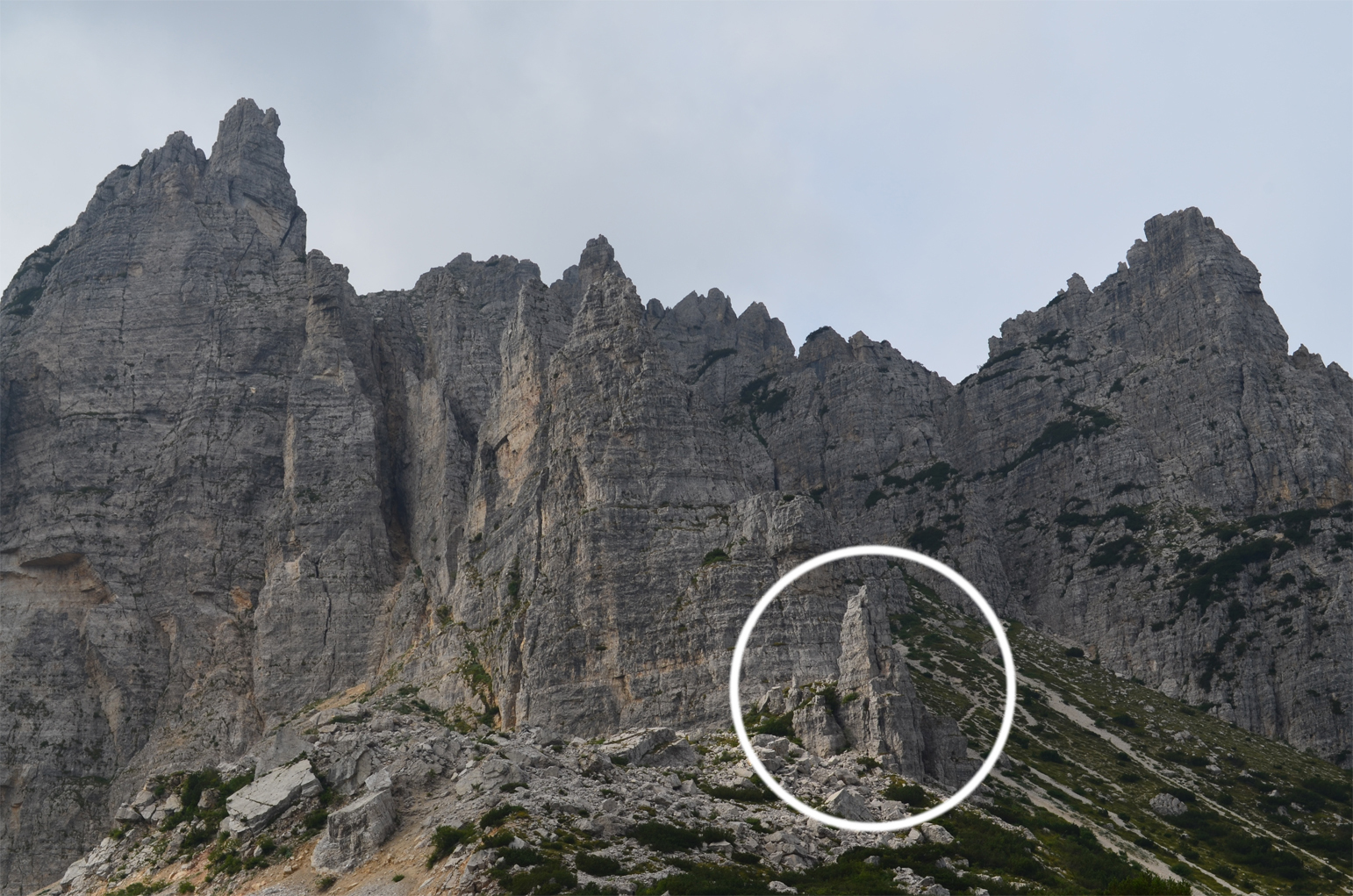
View of mountain group and tower rock in the white circle.
After an aerial survey, the rescue team members disembarked from the helicopter and quickly built rigging to hold the rock wall above the patient to prevent further collapse (Figure 2). At 3:15
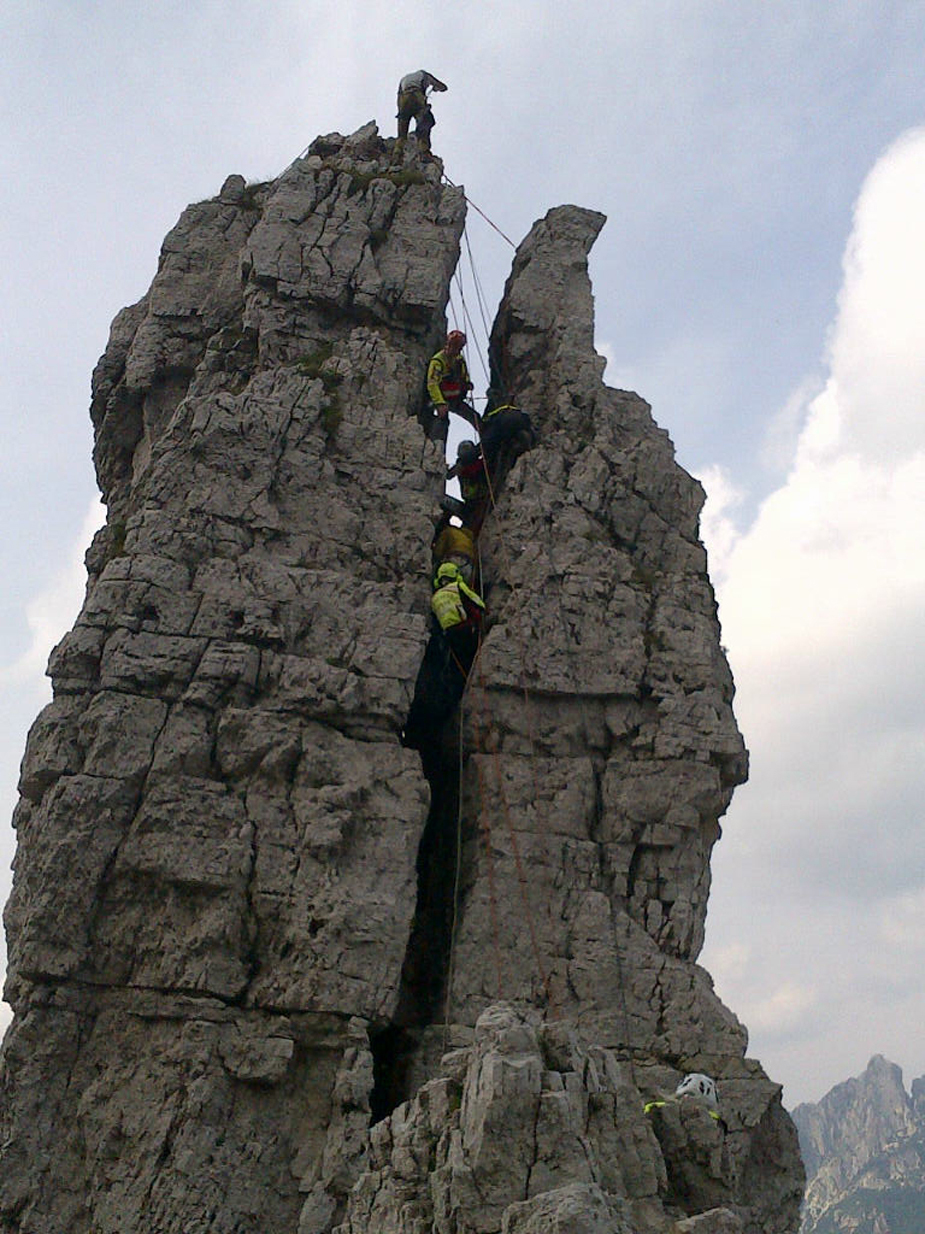
Security procedures of the accident site.
The patient’s helmet had been removed, and a cervical collar had been placed. The pelvis was not completely trapped, and the prehospital team was able to apply a pelvic binder. Oxygen was delivered through a face mask at 4 L/min. An IV catheter was placed, and fluids were infused. The patient received 1500 mL of crystalloid solution, 2000 mL of colloids (Gelofusine), and 300 mL of glucose 5% infusion. Fentanyl, morphine, and ketamine were used for pain management. IV fluids were warmed with an IV fluid warmer sack, and a thermal blanket was used to reduce heat loss.
Simultaneously, the rescue team attempted to remove the boulder using a block and tackle, but they were unsuccessful. Another attempt involved the use of winches, but the excessive weight of the rock made the operation impossible (Figure 3). The ineffectiveness of numerous attempts to move the rock prompted NACRU to request support from the Cave Rescue division. This elite division of NACRU specializes in the wilderness rescue of victims trapped in cave environments. After they arrived at 6:45
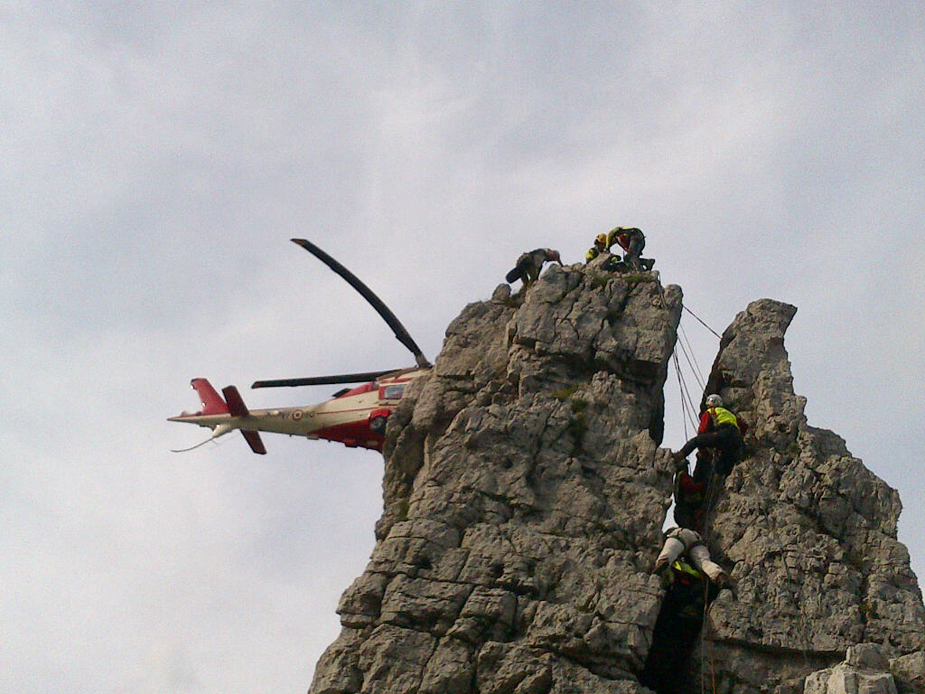
First attempt at extrication of the victim.
Detonation was accomplished using blasting fuses, which enabled the technicians firing the charges to move to a safe distance before the explosions took place. The medical staff climbed down behind a rock tower at a distance of 10 m from the victim. The medical procedures were stopped for 5 minutes, although IV infusion was continued. The patient was aware of the potential risk of the operation and gave his consent. The explosions removed about 80% of the rock mass. The remaining rock was then removed with ice axes and maces. The rescue operation took more than 6 hours to complete.
After extraction, the patient’s respiratory difficulties and decreased level of consciousness warranted endotracheal intubation. The patient was ventilated with an artificial maneuver breathing unit bag, immobilized with a vacuum mattress splint, and loaded into the aircraft, which departed at 09:05
After arriving at the trauma center, arterial blood gas (ABG) analysis indicated metabolic acidosis (pH, 7.01; P
Discussion
This case represents a unique alpine rescue in which explosives were used to release the trapped patient. The main problem faced by rescue teams is the difficulty of establishing a standard situation in a wilderness environment that allows for the use of conventional guidelines or protocols. Many peculiar variables make every rescue unique, such that rescuers must contemplate alternative options for action. The success of the operation may depend not only on the clinical condition of the patient, as in traditional settings, but also on other factors that may be human or environment-related. This case study presents the following main variables for an effective rescue.
Environmental Context
The episode highlights how recovery of an accident victim in the wilderness may delay the adoption of appropriate standards of care. 5 The outcome for the patient may have been improved by rapid transport to a medical facility. Delayed hospitalization from accidents in extreme environments is a major problem for patients injured in the wilderness. To address this problem, the creation of protocols concerning medical treatment in alpine or cave rescue operations is essential.
Medical Context
Compression of the climber’s lower limbs for more than 6 hours resulted in a plausible crush syndrome (CS). CS represents the systemic manifestation of muscle cell breakdown, with the release of contents such as myoglobin into circulation, leading to metabolic derangement and acute kidney injury. 6 Massive crushing of the lower limbs reinforces the suspicion of CS in this case, although CK was not measured. Creatinine, a reliable marker of kidney function, was 1.67 µmol/L, and its slow production makes its rise small and late in the case of an acute injury. 7 The syndrome became evident after the extrication of the victim, and was confirmed by ABG analysis performed at the hospital. This showed significant metabolic acidosis, likely the main cause of the patient’s death.
Early aggressive resuscitation in the prehospital setting, before extrication, is recommended to reduce the complication of CS. 8 –10 In this case, the medical team performed the most aggressive resuscitation compatible with the safety of the team and accounting for the difficulties of working on a rock face and the awkward position of the patient. Moreover, an immobilized patient is more difficult to examine and treat than an ambulatory patient. These factors might have complicated the administration of fluids and medicines, and ultimately the success of the rescue. Additionally, it has been shown that hypothermia can increase the risk of complications, especially when associated with metabolic acidosis and coagulopathy. 11 Unintentional hypothermia is defined as a body temperature below 35°C, and it is a common condition encountered in a wilderness setting, not only in the winter, but in any season. 12 In this rescue, the medical staff attempted to avoid hypothermia with warm fluids and a thermal blanket, but it is possible that the prolonged immobility associated with the ambient temperature drop (the tower rock is covered by shade every afternoon) led to hypothermia.
Rescuer Training
The rescuers must have specific training in mountain medicine, management of critical patients, and search and rescue techniques to understand and work safely in an austere environment. All-season training is essential for seasonal rescue differences, and the rescuers must complete specific training to improve their ability to operate in mountainous environments in both winter and summer.
The continuing education program is another important component of any rescuer training program. The minimal requirement for alpine skills should be competence in climbing rock and ice, ropework and belaying techniques, and knowledge of alpine hazards such as avalanches and rock and ice falls. 3 The curriculum should also consider specific helicopter training with didactic and practical sessions. 13
The emergency healthcare team that performed this rescue was composed of an emergency physician and a nurse who had completed additional training beyond that of ordinary providers on a helicopter rescue team. This included practical and didactic sessions concerning patient transport in wooded, rocky, and snowy environments; avalanche rescue; safety and self-rescue; and loading and unloading procedures with stationary rotorcraft, in hovering with a winch in single and doubles, and boarding of patients with a winch. Furthermore, this elite team included an alpine guide for technical aspects of mountain operations.
Interagency Teamwork
Another issue is the coordination between different organizations: when rescue time is critical, a lack of coordination between the different team members may result in late hospitalization. Nevertheless, the integration of multiple agencies is often difficult and time-consuming. As demonstrated by this case, early activation of the cave rescue team might have decreased the extrication time. Cooperation among different medical and nonmedical workers is another important factor for the prehospital emergency treatment of patients and for the safety of the team.
Improvisation
Practitioners of wilderness medicine must combine specialized training, resourcefulness, and improvisation. There were significant issues in patient care in this case, as standard medical protocols had not been designed to provide an appropriate rescue in a hostile environment, but designing protocols to anticipate all potential situations is difficult. This resulted in the need for substantial improvisation by the rescue teams during the extrication of the victim in this complex situation. The use of explosives was a good example of the ability to adapt to using unconventional rescue techniques.
Conclusions
Training, teamwork, and improvisation, as well as the environmental context, are crucial to the success of rescues in austere wilderness conditions. If the environment cannot be modified, the other factors should be constantly improved to provide more efficient rescue service, including the consideration of alternative approaches such as the innovative use of explosives. In conclusion, by presenting this case report, future rescue teams involved in dangerous situations in an austere context could learn new methods of improvisation and unconventional recovery techniques to improve the outcome of victims and the success of rescue operations.
Footnotes
☆
Disclaimer: The contents of the article are the author’s sole responsibility. They do not represent the views of the Azienda Ospedaliera Universitaria Integrata of Verona or its staff. Any inquiries related to the contents of this article and all permission to cite should be addressed to the author.