






Abstract
Whereas those who live in the native ranges of the large feline carnivores are well aware of the risks of cat and human encounters, North Americans and Europeans are increasingly exposed to exotic animals through travel, ecotourism, leisure pursuits in rural areas, occupational exposure, zoo and animal park visits, wild habitat encroachment at the urban-wildlands interface, and contact with exotic pets. In encounters during which persons have been severely injured, lapses in animal management protocols, lack of appropriate adult supervision, and intoxication have been reported. Unlike common domestic pets that have lived in close association with humans for thousands of years, no matter where individual large felines may have been raised, they remain wild carnivores with strong prey-drive and territorial instincts. The emergency management of large felid attacks is similar to that of other major trauma: stabilization; management of significant orthopedic, neurologic, vascular, and soft tissue injuries; antibiotic coverage provided for the number of organisms that inhabit their mouths and the potential for tetanus and rabies; and early management in survivors of likely posttraumatic stress disorder. We must actively explore responsible measures globally that can be taken to ensure biologically appropriate, ethical, safe, and sustainable conservation of these large carnivores in both their natural habitats and captivity.
Introduction
Americans keep more animals as pets than any other country. Commonly, this involves dogs, cats, birds, horses, and fish. In 2006, 37.2% of households owned 1 or more dogs (72.1 million), and 32.4% owned cats (81.7 million). 1 In the last several decades, an increasing variety and number of exotic animals have also become popular as pets. 2 The United States is the largest importer of wildlife worldwide. According to US Fish and Wildlife Service data, more than 650 million animals were imported legally into the United States between 2003 and 2007 for zoos, exhibition, food, research, game ranches, and pets. 3 As these exotic animals become difficult for owners to handle, many are voluntarily or involuntarily relinquished to animal welfare organizations and dealers. News agency reports highlight a number of exotic animal attacks and animal welfare organizations being pressed beyond their capabilities to handle the increasing number of large, potentially dangerous animals they receive. Lapses in animal management protocols, inadequate facilities, lack of appropriate adult supervision of children, and intoxication have been implicated in these occurrences.
Data collected by The Humane Society of the United States, a large animal rescue organization, suggest that fewer than 400 of the estimated 5,000 to 7,000 captive tigers in the United States are held at facilities accredited by the Association of Zoos and Aquariums. Despite the passage of the Captive Wildlife Safety Act in 2004 and bans on exotic animal ownership in 19 states, that would suggest that the remaining tigers, as well as other large felines, are housed at unaccredited breeding facilities, roadside and traveling zoos, private menageries, and game farms. Unaccredited facilities pose a threat to the community owing to a higher likelihood of fatal attack or injury occurring in these facilities or by animals that escape, create a significant burden for law enforcement and emergency response agencies, and jeopardize sanctuary and conservation efforts.4,5 Between 1990 and 2011, more than 300 dangerous incidents involving large feline carnivores were reported in 44 states. Four children died and dozens of others lost limbs or suffered other traumatic injuries. Sixteen adults were killed, and more than a hundred were mauled. 4
Between 1990 and 2010, 172 large feline carnivores also escaped, with an unclear number of these animals recaptured or killed; and 94 captive large felines were killed. 4 In 2011, the Big Cat Rescue database, another large animal welfare organization, indicated that 75% of all attacks were reported in the United States. 5 Although not providing data on numbers of incidents, the US Department of Agriculture (USDA), which has jurisdiction over exotic animal care in the United States, has issued a number of statements and instituted changes in procedure that would support concerns raised by animal welfare organizations about these issues. In February 2000, the USDA issued a position statement, Large Wild and Exotic Cats Make Dangerous Pets, stating that “Large wild and exotic cats such as lions, tigers, cougars, and leopards are dangerous animals. The USDA Animal and Plant Health Inspection Service (APHIS) believes that only qualified, trained professionals should keep these animals, even if they are only to be pets. Care and handling of these wild and exotic cats should be left to trained professionals who have the knowledge and means to maintain them properly. APHIS’ Animal Care (AC) program is responsible for enforcing the Animal Welfare Act, which includes regulating and inspecting exhibitors of wild and exotic animals. AC personnel have seen too many instances where wild and exotic cats kept by untrained people have not only harmed people but suffered themselves due to poor care.” 6
In 2013, the Animal and Plant Health Inspection Service petitioned to amend the Animal Welfare Act to prohibit public contact with large and exotic cats, bears, and nonhuman primates and define a “sufficient distance” that must be kept from these animals by the public. This petition also addressed the prevention of public handling or early separation of immature species from their mothers. Comments from the public were due October 4, 2013. 7 The USDA also initiated more stringent inspection requirements for large felid carnivore enclosures in August 2013. 8 On July 29, 2013, Senator Richard Blumenthal of Connecticut introduced Bill S.1381, The Big Cats and Public Safety Protection Act. This bill would amend the prior Lacey Act Amendments of 1981 to prohibit private possession of large and exotic cats except at certain facilities, such as accredited zoos. Bill S.1381 would require a person who currently possesses a large and exotic cat to register with the USDA to be able to keep it. Except at accredited zoos and research and educational institutions, this act would outlaw the breeding of any large and exotic cat. This bill is being reviewed by the Senate Committee on Environment and Public Works. 9
Globally, injuries caused by animals are responsible for thousands of deaths annually. Large feline carnivores pose major threats to humans in their native habitats, despite dwindling populations due to loss and degradation of habitat, diminishing natural prey populations, poaching, illegal wildlife trade, “canned hunting,” and other threats to their survival.10,11 For those who are unaware of this industry, “canned hunting” refers to game farms or hunting ranches that breed and raise animals or buy exotic animals so that hunting enthusiasts can pay for a guaranteed kill and trophy.12,13
Much of what we know about large-carnivore attacks on humans is derived from case reports and small cases series regarding the management of injuries that occurred. Both wild and captive felid attack data are incomplete and suffer from significant flaws in collection, as such, available numbers vary widely. This article will review the threat posed to humans by large and exotic cats in both the wild and captivity, discuss the evaluation and management of large feline carnivore attacks, and discuss these interactions in the setting of the public health and conservation issues raised.
Methods
Articles and book chapters published from 1950 through 2013 were searched using Medline and the PubMed, MD Consult, CINAHL (Cumulative Index to Nursing and Allied Health Literature), JSTOR (Journal Storage), Cochrane, and Google Scholar databases. An extensive electronic search strategy was also developed to obtain information available on the Web. MeSH (Medical Subject Heading) key words and terms used in the searches were as follows: big cat, felid, feline, lion, tiger, leopard, cheetah, mountain lion, puma, jaguar, wild, wilderness, captivity, zoo, circus, canned hunting, game ranch, attacks, injuries, trauma, management, occupational, communicable diseases, zoonotic, zoonoses, environmental microbiology, bacterial infections, rabies, infection, infectious, microorganism, pathogens, pathogenic, occupational exposure, occupational health, incidence, prevalence, epidem*, occurrence, prevalence, exposure, etiology, emerging, risk factors, risk assessment, and conservation.
Relevant articles, papers, and online resources were selected by screening the titles (first step), abstracts (second step), and entire articles (third step) retrieved through the database searches, with further articles retrieved from references in the initial sources (fourth step). Electronic sites utilized included state, national, and international fish and game and health agencies; national injury data; international, national, and municipal newspapers; and data collected by large conservation and animal welfare and rescue organizations. The search results were evaluated for usefulness, reliability, and applicability to the topic, based on the authors’ experience in the evaluation and management of animal attacks, emergency medical care, environmental medicine, and animal rescue and conservation.
Discussion
Tigers (Panthera Tigris )
Among large feline carnivores, tigers remain the most frequent killers of humans worldwide. In the 19th and early 20th centuries, tigers killed approximately 34,075 persons in the Indian subcontinent, and entire villages were abandoned because of their predation. 14 In the 20th century, one source conservatively estimated that tigers killed approximately 12,600 persons, 15 and another stated that 600 to 800 human deaths occur per year from tiger attacks in Asia, with the most occurring in India. 16 Most large predatory animals can, and will, scavenge human carcasses or occasionally pursue humans as prey; however, true “man-eaters,” that is, individual animals that incorporate human flesh into their regular diet, are rare. Tigers may become man-eaters because of illness or injury, advanced age, or loss of natural prey and habitat. Tigers also may kill a villager collecting water or wood, fishing, or attempting to protect flock animals, and finding it relatively easy, may lose their natural fear of humans. Unlike some well-described leopards and lions, however, it is rare for tigers to prey exclusively on humans. 17 In 2010, 3062 tigers were noted to exist internationally in the wild in 13 countries. India, which reported a population of 3642 wild Bengal tigers in 2001, now estimates, after the use of improved survey methodology, that the population numbers between 1100 and 1200.18,19 It is estimated that tigers have lost more than 40% of their habitat in the past decades, with remaining wild populations increasingly forced into close contact with local human populations. 20
Captive tigers in privately owned facilities, zoos, and circuses and other animal acts periodically injure and kill their attendants. That was perhaps best publicized in 2003, when Roy Horn, of the famous Las Vegas “Siegfried and Roy” act, was critically injured by a veteran 7-year-old, 600-pound white tiger in the middle of a show. 21 In 2003, Nyhus et al 22 published an analysis of 30 international media sources and other documents (1998–2001), documenting 59 incidents involving people injured or killed by captive tigers globally. In the United States, 7 people were killed and at least 27 were injured, an average of 2 fatal attacks and at least 9 nonfatal attacks per year. All but 1 fatal attack in the United States occurred in situations where tigers were privately owned or held in private facilities. Forty-two percent of the victims were classified as visitors. 22
Lions (Panthera Leo )
Lions usually do not hunt people; however, some occasionally injure or kill hunters, local inhabitants, and rarely those on safari, in their natural ranges (Figure 1). In general, lions are thought by experienced wildlife biologists and hunters to be less dangerous to humans than tigers or leopards. In the literature, estimates of attacks vary quite widely, which may in part reflect lack of resources to collect data in rural areas where attacks often occur. One investigator noted that analysis of available 20th century data conservatively estimated that lions have killed 552 people in their natural African and Asian habitats, and another estimated that lions are responsible for 300 to 500 human deaths per year. 16 Man-eating lions have been well publicized, 23 –29 including the 2 brothers in Tsavo, Kenya, and were initially reported to be responsible for 130 deaths during a 9-month interval in 1898 during the building of the British East African Railroad; 23 however, a newer, more rigorous study substantiated only 3 deaths. 24 Lone, old, injured, or ill lions may find humans on foot easier prey than their traditional diet. 29 –31 Scarcity of traditional prey, or prey feeding on crops near human habitation, also appear to drive dietary specialization on humans. 24 In 2006, the International Union for the Conservation of Nature (IUCN) estimated that lion populations have declined by at least 30% in recent decades and the species’ geographic ranges in Africa and Asia (Gir Forest in India) have shrunk by as much as 82%, providing increasing human-lion interface. 32
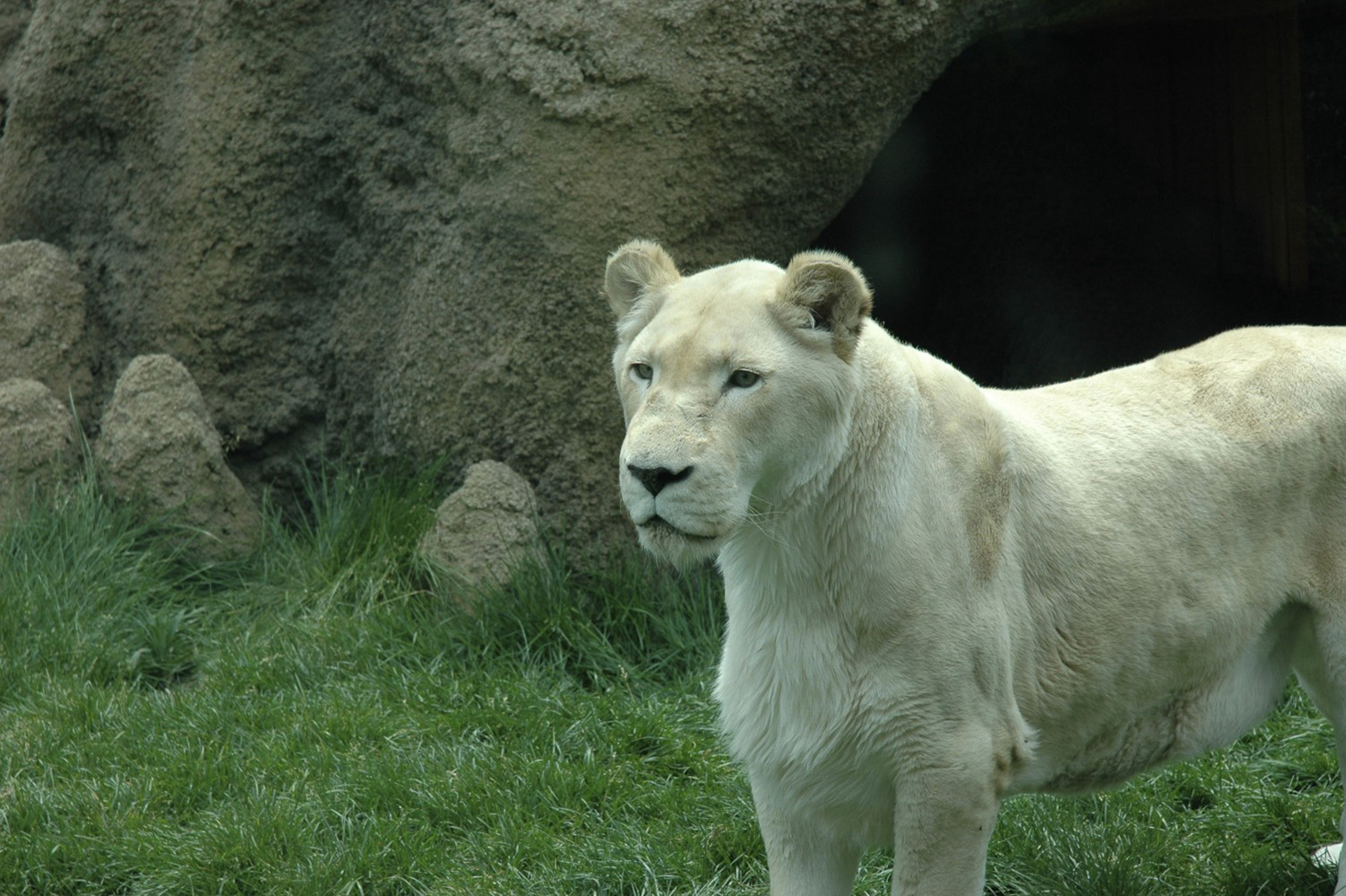
Zoo lioness alerting as an intoxicated person jumped the outer perimeter fence of the lion enclosure. Within one minute of this picture she, and two other lionesses, had raced across the enclosure to the inner perimeter fence. Picture courtesy of Dr Suzanne M. Shepherd, Department of Emergency Medicine, Hospital of the University of Pennsylvania.
Periodically, workers or visitors to zoos, circuses and animal acts, animal sanctuaries, or privately owned facilities are injured or killed by lions. A 2013 incident, in which a 4-year-old male African lion escaped a holding pen and attacked and killed a young worker as she was cleaning his enclosure at a California wildlife sanctuary, illustrates this risk. 33 The worker died quickly of a broken neck, and additional injuries were inflicted post mortem.
Leopards (Panthera Pardus )
Leopards may attack when wounded, trapped, or cornered, with mauling much more common than death. Whereas leopard attacks were more commonly reported in India during the late nineteenth and early twentieth centuries, 34 attacks in India are still relatively common, and in some regions of the country, leopards kill more humans than all other large carnivores combined. 35 Exact worldwide numbers are unclear, with one researcher noting approximately 400 leopard-related deaths per year in Africa and Asia, 16 and another reporting an estimated 840 deaths in the 20th century. 15
Attempts at reducing human-leopard conflict have proven difficult. As with the other large cats, attacks increase during periods of drought and when the leopard’s natural prey becomes scarce. Shrinking leopard habitat and growing human populations also contribute to increasing leopard-human interactions. Translocation—the capture, transport, and release of “problem leopards”—has proven ineffective, expensive, and often fatal to the cat, and may increase aggressiveness toward humans among translocated animals.36,37 A number of leopards have been publicized as notorious man-eaters. Perhaps the most infamous, the Panar man-eater, was a male Indian leopard responsible for at least 400 fatal attacks on humans in the early 20th century. 38 Some experts believe that once a leopard has killed and eaten a human, they are likely to persist as man-eaters. Leopard attacks on humans tend to occur at night, and often close to or in villages. 15 A number of fatal attacks have also occurred in zoos and in homes with pet leopards. 39 Before the antibiotic era, victims of leopard attacks more often died of wound infections rather than from the attack itself. 16
Cheetahs (Acinonyx Jubatus )
In contrast to available data on the other large African and Asian feline predators, cheetah attacks on humans are rarely reported. In reported incidents, limited injuries have been found. Durrheim and Leggett 31 extensively reviewed press reports of injuries after tourist contacts with carnivores and other mammals in South Africa and documented 21 incidents over a 10-year period, including 5 injuries from lions and 1 from a leopard, but none from a cheetah. 31
Jaguars (Panthera Onca ) and Mountain Lions (Felis Concolor )
In the Americas, 2 kinds of large felid carnivores—jaguars and mountain lions—pose threats to humans in their natural habitats. The jaguar has the strongest bite power of all the large cats. 40 Jaguars are usually stalk-and-ambush predators rather than chase predators. They have been very rarely reported to attack humans in the wild. 41 In domestication, attacks on keepers at small zoos42,43 and on a trainer in an animal menagerie have been reported. 44 These attacks resulted in critical injuries in 2 cases, with death from neck and spinal cord injury in a third case. These reports highlight the severity of injury produced and the problems inherent with maintaining these large carnivores appropriately and safely in captivity.
Mountain lion (cougar, puma) attacks have been reported in North American parks, recreation areas, and regions where human habitation encroaches on their native habitats. In the 20- to 100-mile home ranges of mountain lions, pets, small children, lone cyclists, joggers, and hikers may be considered fair game by these large, powerful, agile, and intelligent predators. 45 Both increases and decreases in natural prey populations relative to human habitation may affect mountain lion populations, hunting patterns, and ranges. Mountain lions may stay longer in human-occupied space if they have access to food, water, or shelter. Over the last 2 decades, increasing numbers of mountain lion-related deaths and injuries, as well as transmission of zoonotic illness, have been reported, with 8 of the authenticated 17 deaths reported in the last century from cougar attacks. 46 –49 Numerous lay reports are supplemented by a California Department of Fish and Wildlife report that verified 15 mountain lion attacks on humans in that state between 1986 and 2013. 50 Few medical reports address the incidence and management of such occurrences. 10 ,51,52 A 2009 study, which reviewed 110 years of human attacks, challenged conventional wisdom regarding standing still and facing the cat, appearing larger by waving arms, and speaking firmly; suggesting, instead, that remaining immobile may be interpreted by a mountain lion as a sign of vulnerability or that a human is unaware of its presence or incapable of escaping. 53
Large Cat–Inflicted Injuries
Significant trauma, including neurologic and major vascular injuries, and zoonotic infections are well-recognized sequelae of large cat attacks (Figure 2). A review of the literature reveals that injuries from a large cat bite tend to fall into one of several patterns. Large cats are highly evolved in their roles as apex terrestrial predators. They possess excellent hearing, acute vision in both light and dark conditions, and an excellent sense of smell. Thirty permanent teeth are present, with upper teeth overlapping lower, canines are long (8 cm in adult lions), sharp, and durable, and carnassial teeth are well developed for slicing bones and tendons. Their jaws are very strong: jaguars, tigers, and lions have been estimated to exert more than 1000 pounds per square inch bite strength. 54 This combination allows large felid carnivores to securely bite and then twist and tear their prey. It also allows head bites to easily fracture the skull and penetrate the intracranial vault in both children and adult humans. Their paws are large and flexible, with long and very sharp claws, which provide excellent traction, prey capture, and tearing and self defense. They are large—the largest Bengal tiger on record weighed 857 pounds—highly muscular, fast, and extremely agile.
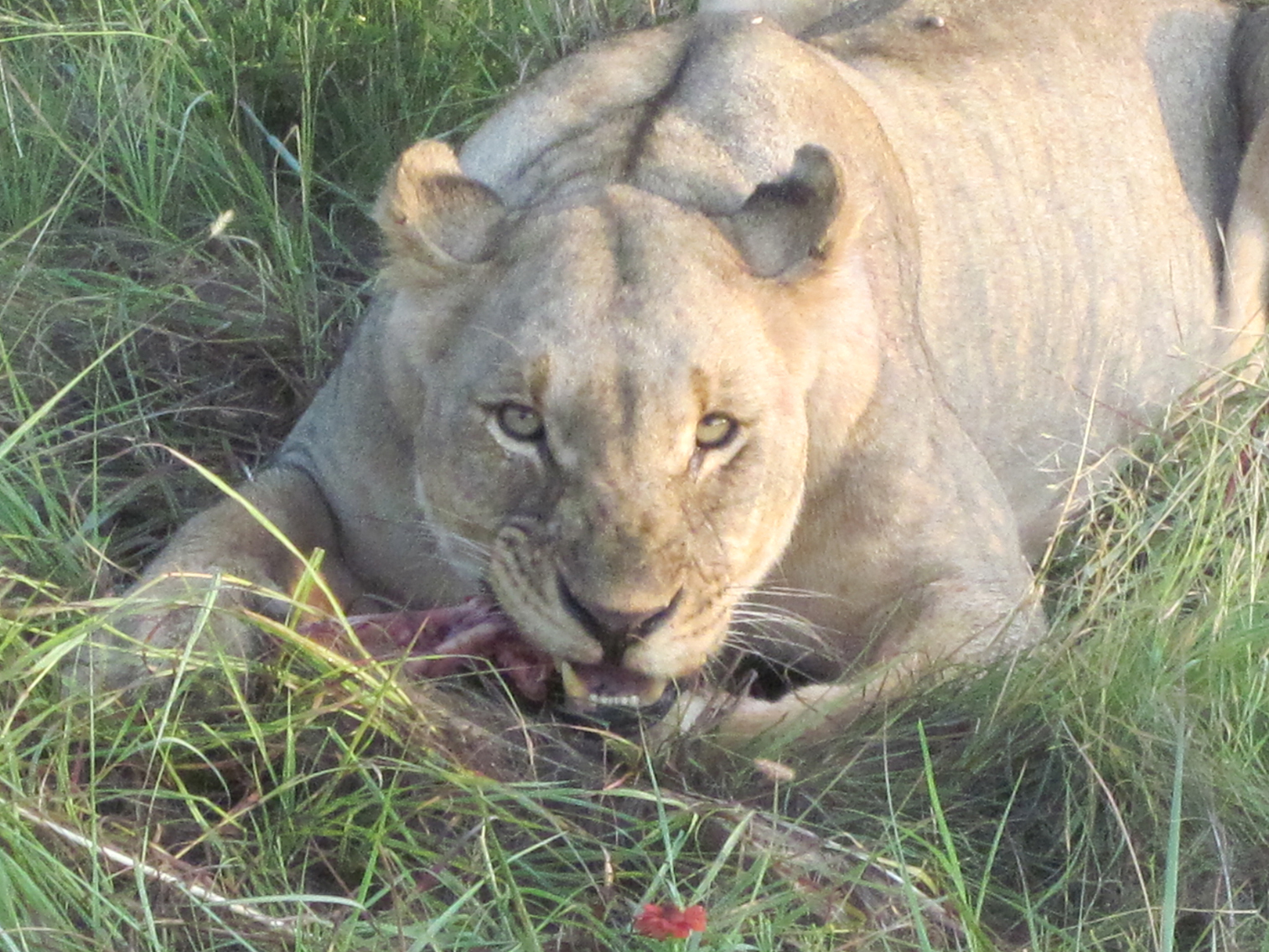
Lioness eating. Picture courtesy of Dr Dana Kozubal, Department of Emergency Medicine, Temple University Hospital.
Injuries observed will depend on both the circumstances and the terrain of the attack, the size, defensive weapons, and habits of the prey, and on the individual attacking animal. 55 In the wild, some large cats such as the tiger, the leopard, and the mountain lion commonly ambush their prey from behind, biting the victim’s neck, throat, and occiput. 49 ,56–62 Proprioceptive receptors in the teeth and jaw allow large cats to align their teeth between the victim’s cervical vertebrae, fracturing the vertebrae and severing the spinal cord as the neck is hyperextended. 59 A bite to the throat allows the predator to suffocate the prey, bringing death relatively quickly and painlessly. Cheetahs and lions, hunting largely agile ungulates in the savannah, more commonly attack the throat, strangling their prey and crushing the larynx or twisting the head and snapping the neck of larger prey as they run. 55 The variety of methods of attack potentially used by large felid carnivores are well illustrated by the jaguar, which alters its attack depending on prey and locale. It often employs the deep throat bite and suffocation technique common to other large felid carnivores; however, it has also been reported to bite through the shell of large turtles, leap onto the back of larger animals and sever the cervical vertebrae, twist and dislocate the neck of running prey, or bite and directly pierce through the temporal bones of the skull with its canine teeth, piercing the brain.63,64
Reported Injuries During Human Attacks
A number of reports document similar findings in humans who have been the victims of attacks by large cats. Persons who were attacked in an open space by large cats have sustained significant injuries to the neck, head, torso and extremities, often resulting in immediate death or loss of limb. Jugular veins and carotid arteries may be lacerated or severed, causing rapid exsanguination. 56 ,60,65
One report described a person who sustained a skull fracture after a single blow from a tiger’s paw. 66 Kohout et al 61 reported fractures of the first and second cervical vertebrae, spinal cord laceration, and vascular and pharyngeal injury in a 33-year-old man attacked by a tiger. Weins et al 56 reported a cervical spine fracture and pharyngeal injury in a 28-year-old male victim of a tiger attack. Burdge et al 67 described a comminuted, open, first cervical vertebra anterior arch fracture with paralysis and the development of purulent meningitis in an 11-year-old child within 24 hours after being bitten in the back of the occiput and neck by an adult Bengal tiger. Papadopoulos et al 68 reported the presentation of posttraumatic syrinx and tethered cord more than 25 years after the patient was bitten in the neck by a Bengal tiger. Loefler 55 described his experience with 20 victims of lion attacks who sustained a variety of serious injuries, including 5 persons who were bitten in the neck, sustaining bilateral neck penetration by the teeth in all cases, jugular injury, compound fracture of a vertebral body, and tracheal, laryngeal, and pharyngeal injury. He noted that, in his experience, leopard attacks were more frequent than lion attacks and more likely to result in more superficial anterior neck injuries. He also described 2 persons injured by cheetahs, who sustained arm and hand injuries. 55 Hazani et al 69 described deep hand lacerations and a serious scalp degloving injury requiring microsurgical reconstruction in a male hiker attacked by a mountain lion. Burdge et al 67 also described the delayed presentation of a septic open shoulder dislocation and deep forearm and leg lacerations of a Masai tribesman injured by a lion when, in a traditional test of manhood, he attempted to fight it single handed with a spear, long knife, and shield. People who have reached through a cage to pet or feed an animal have sustained upper extremity injuries of varying severity, ranging from complete arm avulsion to partial avulsions, fractures, and polymicrobial tenosynovitis of the hand, as in the case of an upper arm avulsed at the humerus reported by Lazarus et al. 70 Multibacterial infection, such as that resulting from the contamination of wounds by oral flora in 5% to 30% of leopard attack survivors, often complicates recovery. 62
Management of Large Felid Attacks
At the scene, emergency medical services and the local police or sheriff should be immediately notified to address injuries promptly and secure the area. Early determination of the proper level of care that will be required is crucial, so that expeditious and appropriate evacuation and transport can be arranged. The extent of scene treatment will depend on the rapidity of evacuation to an appropriate medical facility: the earlier the victim receives appropriate stabilization and management, the better the outcome. The victim should not be moved, if possible, owing to the high potential for spinal cord injury. However, if the victim and others remain at risk from the animal, movement to a safe area is wise. Keep the victim warm. If possible, providers should be gloved because of potential exposure to rabid animal saliva around and in wounds. Control bleeding with direct pressure; tourniquet application should be limited to the control of massive bleeding. If available, and if transport will not be delayed, a large bore intravenous line should be started and normal saline administered. Immobilize the spine if head, neck, or back are injured. Splint large wounds and suspected fractures. If significant transport delay is anticipated, wounds should be cleansed and vigorously irrigated at the scene to reduce bacterial and viral contamination. Potable water, preferably boiled, is adequate for wound irrigation, and regular soap possesses some bactericidal and virucidal activity. Foreign material should gently be removed with a soft, clean cloth or sterile gauze. After cleansing, cover wounds with a clean, dry cloth. If an appendage or limb has been amputated, and if retrieving it poses no risk to rescuers and medical personnel, it should be collected for transport with the victim to address possible reimplantation. Unfortunately, many of these limbs or appendages will have been mauled beyond salvage.
Although reports are limited, literature is available to aid the prompt emergency evaluation and treatment of initial injuries by these exotic cats and their sequelae. Initial care of victims follows the principles of major trauma evaluation. Although bite or claw marks are more evident and may seem on initial survey to be superficial, they may overlay areas of extensive tissue injury or loss, open fractures, neurovascular trauma, airway injury, and intracranial and spinal cord penetration. 52 ,59,66 Evaluation may require plain radiographs, computed tomography (CT), or magnetic resonance imaging for evaluating bone, joint, and spine or thoracic or abdominal injury. Computed angiography is particularly useful for evaluating potential carotid or vertebral artery injury, as these bites often involve the head and neck. Intravenous contrasted CT or CT angiography is also useful in evaluating major injuries involving the chest, abdomen, and extremities, as major injuries here may place patients at risk for acute and severe shock. Management of significant injuries may require exsanguination protocol blood availability and rapid operative management, with damage control surgery and consideration of reimplantation of salvageable limbs.
Later sequelae may include major infections and neuromuscular, vascular, and renal compromise. Furthermore, the risk to the provider of zoonotic illness, including rabies, must be considered and appropriate universal precautions followed. Varying areas of tissue loss, degloving injury, and crush may be present. Because of the increased likelihood in these wounds of contamination, retained foreign body, deep tissue and musculoskeletal involvement, clotted blood, and devitalized and necrotic tissue, all bites should be irrigated vigorously, employing a virucidal agent if available. They should be explored carefully, and appropriately debrided in the emergency department, trauma resuscitation area, or operating suite. At least one center has advocated that all patients should be explored in the operative setting because relatively small puncture wounds and lacerations may overlie significant bony injury, neurovascular injury, airway injury, and tissue contamination.66,71 Compartment syndrome may follow significant crush injuries to the extremities. Vigorously clean puncture wounds and meticulously search them for foreign bodies and debris. These wounds should not be sutured. The decision to close superficial wounds should be made on the basis of cosmesis, function, and infection risk factors, as is the case with other animal bites. Reimplantation, delayed primary closure, and grafting decisions will be made when more severe wounds are carefully evaluated under optimal conditions by the management team.69,72 Obtain deep wound cultures and cultures of debrided tissues intraoperatively, but complete results of culture and sensitivity testing may not be available for a week or more.
Infections from large cat bites may result in the rapid development of cellulitis, abscesses, tenosynovitis, septic arthritis, and osteomyelitis, especially with bites to the hand. Meningitis has been reported after head and neck injuries. Septicemia and bacteremic seeding of distant sites have been reported, including the development of mycotic aneurysm.
67
,73,74 Organisms cultured in infections from large cat bites include
Because polymicrobial infections have been reported, treatment with a broad-spectrum antibiotics such as a beta-lactam/beta-lactamase inhibitor combination is considered standard of care for all large cat bites. For patients who are penicillin allergic, data from the 1999 Emergency Medicine Animal Bite Infection Study Group would indicate that a second-generation cephalosporin with anaerobic activity or a combination of a fluoroquinolone and clindamycin may be utilized.
74
Of note, first-generation cephalosporins have not been recommended as sole treatment owing to variable
Standard rabies prophylaxis after exposure, consisting of vigorous wound cleansing and administration of human rabies immune globulin and the initial dose of 4 doses of human diploid cell vaccine (with additional doses administered on days 3, 7, and 14), is currently recommended by the US Centers for Disease Control and Prevention for all large carnivore bites unless the animal has no possible exposure to potential rabies vectors. If available, a virucidal agent (eg, povidine-iodine solution) should be used to irrigate the wounds. If anatomically possible, the full calculated dose of immune globulin should be infiltrated in and around all wounds. If that is not possible, any remaining volume should be administered intramuscularly at an anatomic site distant from that of rabies vaccine administration. 84 ,87,88 If the bitten person is immunosuppressed, discussion with an infectious disease consultant may be helpful, as these patients may not mount an appropriate immune response to vaccine. Tetanus immunization should be assured to be up to date. As per individual state and municipal laws, appropriate state or local public health officials must be notified of the bite and may need to be involved in the decision to administer rabies exposure prophylaxis and whether to conduct rabies testing of the attacking animal. If animal control and law enforcement are not already involved, and the animal is not contained, they should be notified to ensure the safety of the public.
It is important to carefully investigate the circumstances of unobserved human injuries from large animal attack. The treating healthcare provider needs to maintain a high degree of suspicion when inflicted injuries appear to be more severe than would be expected from the attacking animal’s description. Although a large dog can inflict severe human injuries, dogs do not possess the bite and claw power of the large carnivores.46,47 As in the case of a patient we saw in our northeastern US urban emergency department who initially stated that injuries inflicted by his pet tiger were caused by a dog, persons who are engaging in illegal activities may lie to authorities or medical personnel about the incident to protect themselves or an illegally owned animal. Persons attempting self-harm may also place themselves at risk: in at least one instance, a person committed suicide by letting himself into a lion enclosure at the zoo after hours. 89 Careful questioning about the incident may disclose irregularities in the story, potential large animal exposure, further evidence of significant depression or suicidal behavior, or prior episodes of attempted self-harm.
Close follow-up of these injuries is necessary. The severity of wounds inflicted by large carnivores frequently requires extensive reconstructive plastic and orthopedic surgery, neurologic rehabilitation, and physical therapy. The victim of an attack of this magnitude is also at risk for the development of posttraumatic stress disorder (PTSD), which should be addressed proactively by the medical team. PTSD has been studied in tiger, crocodile, and shark attacks in the Sundarban estuary between India and Bangladesh. In addition to classic PTSD symptoms, including flashbacks, dissociative reaction, affective dysregulation, and nightmares reliving the event, this study also illustrated the role of culture in PTSD and the appropriate use of the Diagnostic and Statistical Manual of Mental Disorders, Fourth Edition, cultural formulation outline. 90 It also nicely illustrated traumatic grief in response to a large predator attack: the sudden appearance and rapidity and severity of injury inflicted by these large predators produce intense ensuing feelings of helplessness, powerlessness, life threat, loss of body image, and function in surviving persons, and survivor guilt in family and community members. The bodies of victims of large feline carnivore attacks are often missing, making closure difficult for survivors.90,91 Further data supporting the significant role of PTSD in victims of large animal attacks are provided by studies discussing the management of victims of bear maulings in Calgary, Alberta, 92 and those describing children injured in dog attacks.93,94 These illustrate that symptoms persist for months and improve with appropriate counseling. Critical incident stress debriefing and counseling may also provide significant assistance to friends and family or healthcare providers that may have witnessed the attack or the severity of inflicted injuries. 71 ,95,96
Conclusions and Recommendations
Although large felid carnivore attacks cause exponentially fewer injuries than human conflicts, falls, or other environmental exposures, they have become a not infrequent and potentially preventable cause of significant human morbidity and mortality in the last several decades. Persons who live, work, and pursue travel and recreation at the urban-wildlands interface, and those who may be exposed to the increasing numbers of captive wild felid carnivores internationally, should be carefully educated about the risks inherent to these activities. In the case of mountain lions, several government and wildlife organizations provide helpful information to avoid injury. 97 –100
Healthcare providers should be aware of the spectrum of injury that these large and powerful animals can inflict and the organisms likely to be present in claw and bite wounds. They should appropriately address the psychological sequelae of these injuries. Public health and law enforcement should be involved in the care of the victim and protect the public if an animal, or the facility it was housed in, poses additional threats to the community. We must actively explore responsible measures that can be taken to ensure biologically appropriate, ethical, safe, and sustainable conservation of these large carnivores in both their natural habitats and captivity. All are losing ground rapidly in their natural habitats because of habitat and prey loss, illegal hunting and trapping for the burgeoning international wildlife trade, exotic animal ownership, and exploitation of large carnivores for profit, and retaliatory killing when they prey on livestock. 101 –103
Exotic animals captured in the wild are flowing into the United States. We need to carefully, ethically, and definitively address exotic animal ownership, and the exploitation of exotic animals for profit, in order to ensure the safety of the public as well as that of the animals. As proposed by Löe and Röskaft, 15 we need to develop scientifically sound large international databases on attacks in order to develop better measures to ensure safer human-predator encounters and attack avoidance, and also to provide “best practice” management of attack victims.