






Abstract
A method to evaluate adhesives has been developed and used to reformulate a recently patented adhesive which is based on sugar and citric acid. Factors affecting adhesive performance were uncovered, such as an optimal curing temperature of 60 °C. The addition of maltodextrin and soy protein at optimized levels was shown to nearly double the bonding strength of the adhesive, from 0.46 ± 0.076 to 0.74 ± 0.26 kN, under our test conditions. Also discussed is the potential for this method to be automated using commercially available equipment.
Keywords
Introduction
Adhesives have been an important part of the items used in everyday life 1 since the times when prehistoric man used blood and fish glues for construction of weapons. 2 Early adhesives were naturally occurring materials, such as gums and tree saps that were used with limited modification. In the last 60 years, synthetic adhesives have dominated this multi-billion dollar market with offerings, such as acrylics, epoxies, polyurethanes and phenolic resins.
Use of Biobased Products
However, because of a variety of factors, there has been a modest resurgence of interest in the use of natural materials, where adhesives based on plant oils, 3 –5 fatty acids, 6 plant proteins, 7 –9 rosin, 10,11 and natural latex 12 and rubber 10,13 have all been subjects of recent study. In addition to performing their primary function, in the United States, food-grade adhesives and those used in cosmetics also must adhere to safety and labeling prescribed in the Fair Package and Labeling Act requirements administrated by the US Food and Drug Administration. They must also conform to the code of federal regulations, which requires that every ingredient in the product be recognized as generally safe for use in food and packaging. 14,15
Sugar-Based Adhesives. It has been known for decades that human cells take advantage of the use of carbohydrates' inherent stickiness. 16 Starch-based glues have been used for even longer, 17 where it is common knowledge that a glue can be made by mixing starch with boiling water. A recently invented sugar-based adhesive 18 technology uses a food-based cross-linking polyfunctional acid along with sugar to achieve the desired goal of bonding materials together and then releasing in a controlled manner. Further investigation to broaden the range of application of this adhesive was undertaken with potential applications in food and drug packaging, partially biobased adhesive crayons, 19,20 and consumer friendly general-purpose adhesives.
This study shows a way to increase the bonding strength of this adhesive while continuing to use only edible ingredients. Initial tests of the adhesives using paper strips gave inconclusive results, because almost all of the adhesives bonded more strongly than the tear strength of the paper. A switch to wood substrates helped to obtain more quantitative results by allowing the use of a tensile strength tester that measured the force required to pull apart a substrate that had been bonded in a lap joint fashion. It was not an objective of this study to add to the more than 171 methods for testing adhesives and adhesion accepted by the American Society for Testing and Materials but to find a simple method that, if necessary, could be automated with commercially available hardware.
Materials and Methods
Materials and Instrumentation
Sugar (pure cane; Domino Foods Inc., Yonkers, NY), lemon juice (Real Lemon 100%; Motts Inc., Samford, CT), citric acid (99%; Sigma-Aldrich, St. Louis, MO), maltodextrin (Tate and Lyle Star-Dri-5; Chicago Sweeteners, Chicago, IL), gelatin (Unflavored; Knox company, Parsippany, NJ), soy protein concentrate (70%; Arcon F. Archer-Daniels Midland, Decatur, IL) were all used as received. The substrate sticks (Craft Stix; RS industrial, Buford, GA) were also used as received. The test instrument was an Instron model 4201 tensile strength tester (Norwood, MA), equipped with a 1-kN load cell, running Series IX software. The samples were pulled apart at a rate of 10 mm min−1.
Synthesis of Patented Glue Base
The glue base was synthesized according to the patented procedure. 13 Inside a 400-mL beaker, 30 g sugar, 5.5 g citric acid, 5 g lemon juice, and 37 mL deionized water were combined and heated to boiling for 13 min with the hot-plate temperature of 325 °C using a stir bar at a stirring rate of 400 rpm. This is the patented adhesive that was used as the starting benchmark of this study. Maltodextrin (0–30 g) was then added to the solution and three additional minutes of heating was performed, during which the cloudy solution became a clear viscous adhesive. In some studies, the adhesive was mixed with a soy- or a gelatin-based adhesive.
The soy adhesive was made by mixing together 5 g soy protein concentrate and 37 mL deionized water and heating to 60 °C. Subsequently, 7.5 mL of 1 M sodium hydroxide solution was added, and the heating and stirring was continued for 30 min.
The gelatin/soy adhesive was made by mixing together 5 g soy protein concentrate, 5 g powdered gelatin, and 37 mL deionized water, and heating to 60 °C for 4 min.
Testing the Adhesive
Initially, the adhesive was tested by attaching paper strips to a paper substrate. However, it became apparent that that substrate was not strong enough to differentiate the adhesives. The new method involves coating a 1 inch long section of a halved wooden substrate, which was then overlapped with the second half of a stick, to create a lap joint. These were evaluated using a tensile strength instrument. Multiple tests were performed on every formulation, and the deviation is indicated by the error bars in this report. As a control experiment, a commercially based adhesive (Aqua liquid glue; American Tambow Inc., Lawrencefille, GA) was also tested and found to have a strength of 0.86 ± 0.11 kN.
Results and Discussion
Potential Conversion of the Method to Automation
This was a simple and rapid-test method, which could be made even better with reduced manual manipulation of the samples. An automated sample-handling system in the Instron lineup (Fig. 1) could solve this problem.
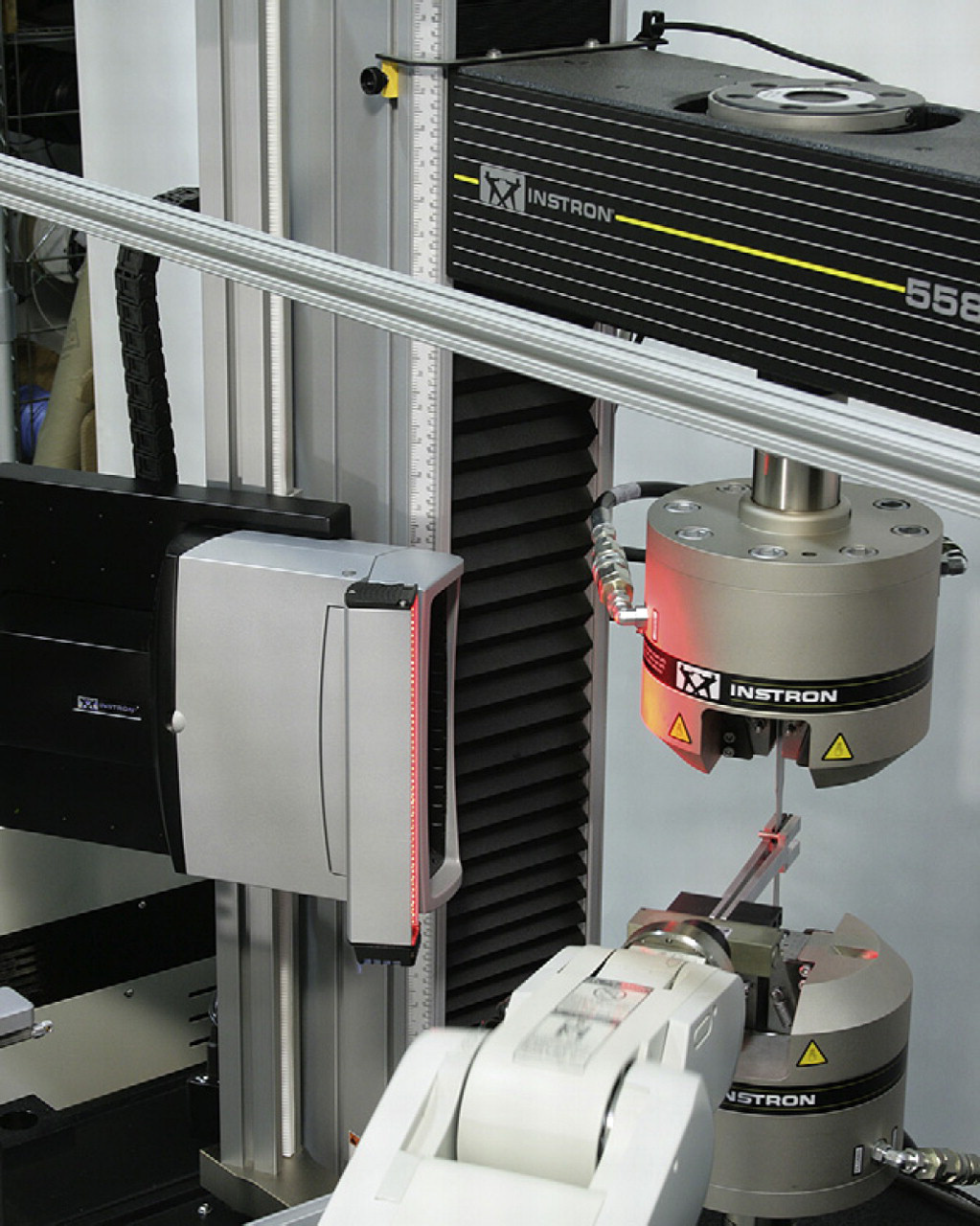
The automated sample-handling system for the Instron tensile strength tester. Photo courtesy of Instron.
Variables for Study
The adhesive was optimized with respect to several variables. These include addition of maltodextrin; heating time; addition of additives, such as soy or soy/gelatin-based adhesives. The effects of the curing time and temperature were also studied.
Addition of Maltodextrin. The originally patented adhesive was tested using this method, with samples dried at room temperature overnight. The resultant strength was less than 0.1 kN. However, the addition of maltodextrin improved the overall strength of the adhesive (Fig. 2) and also allowed the formation of a thicker and more easily applied product.
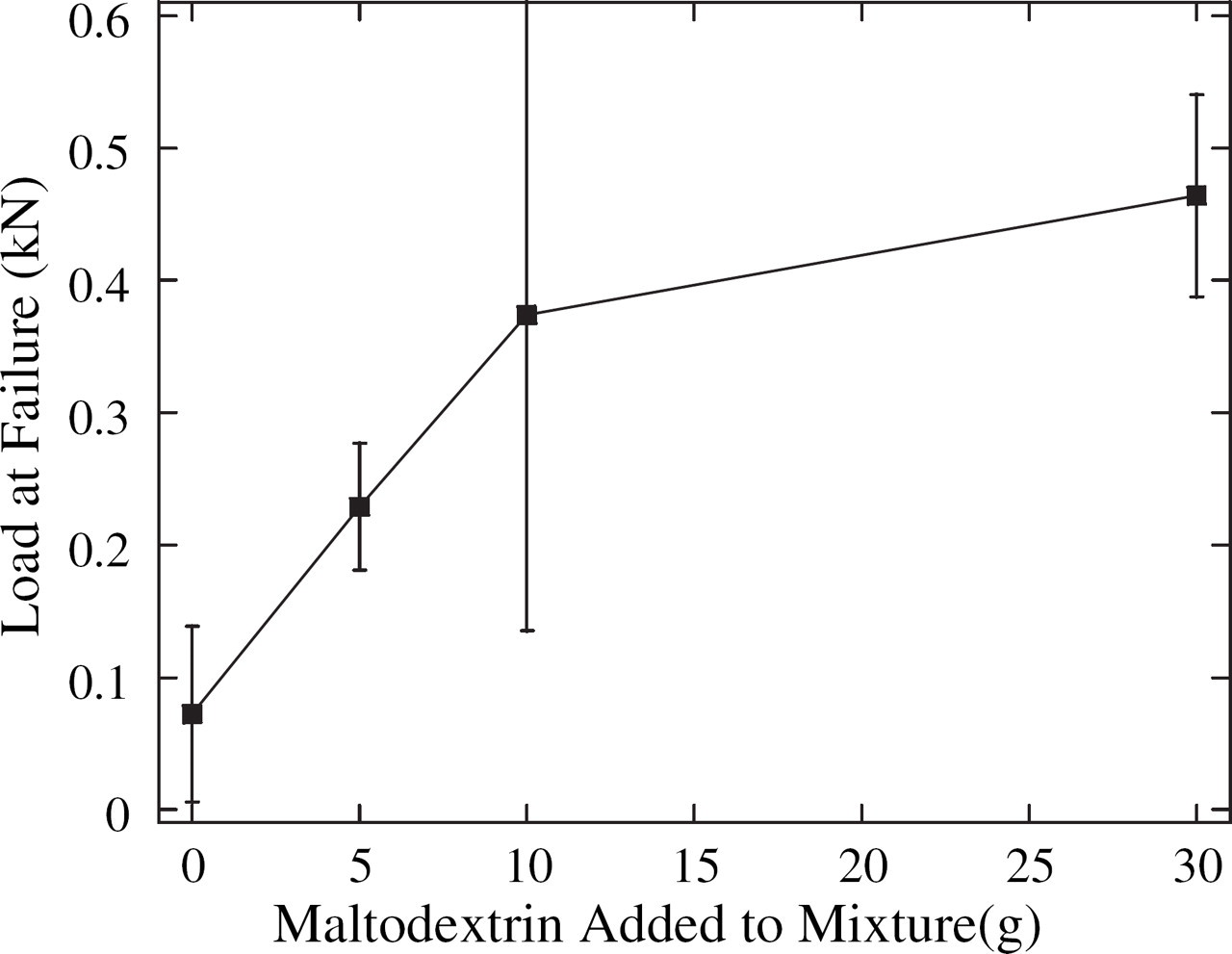
The strength of the sugar-based adhesives as the amount of added maltodextrin was increased. These samples were cured overnight at room temperature.
Heating Time of Sugar Adhesive. One variable that is important is the heating time of the sugar-based adhesive. Adjusting the time by only 2 min has a significant effect in reducing the adhesive quality (Fig. 3).
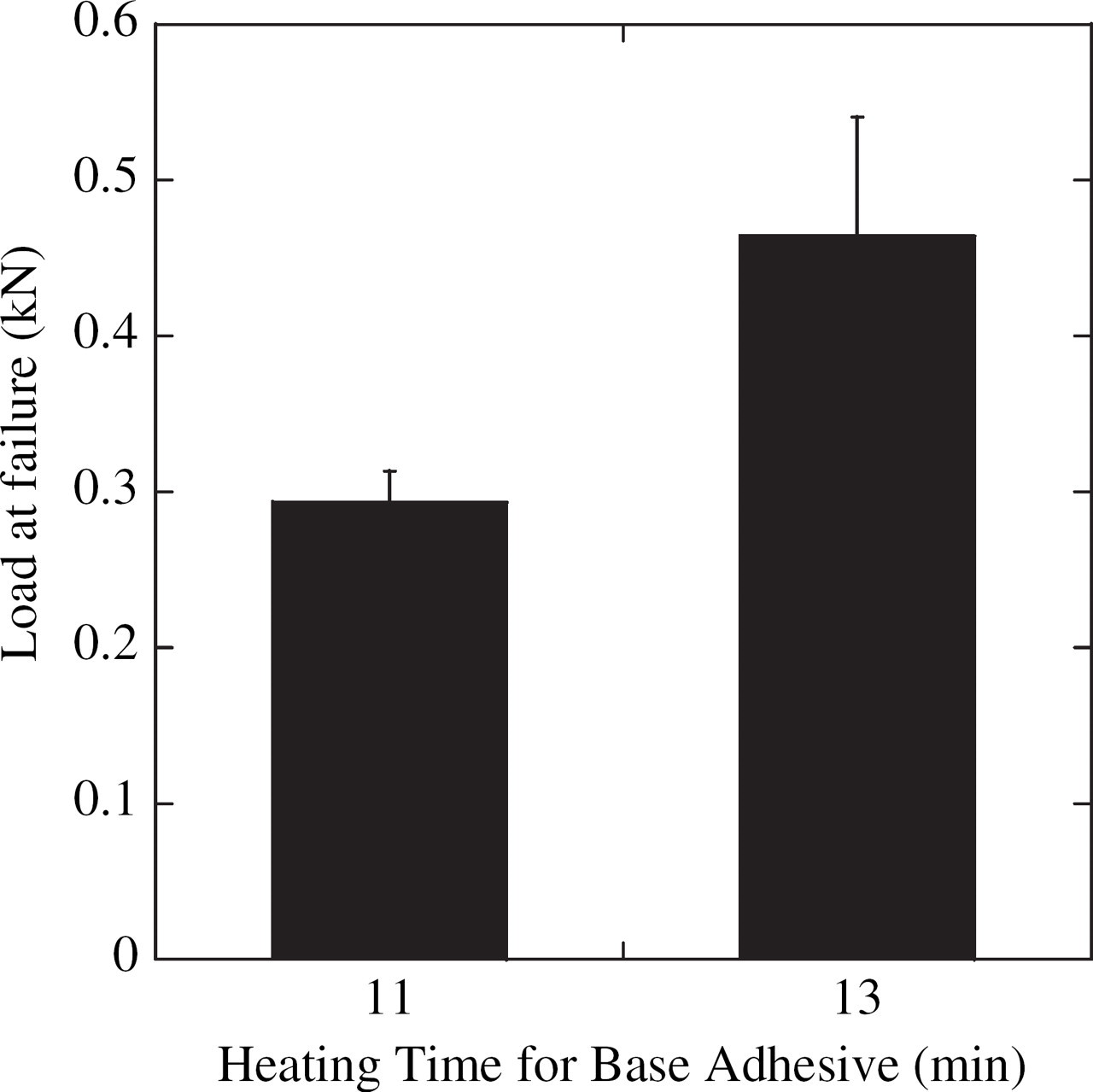
The strength of the adhesive formulated with 30 g of maltodextrin as the heating time was increased.
Addition of Soy Adhesive. A soy-based adhesive was also synthesized and tested giving a strength of 0.34 ± 0.14 kN. Addition of this soy-based adhesive to the carbohydrate-based adhesive showed a slightly negative effect (Fig. 4) in adhesive strength unless optimized curing time and temperature were used. In that case, adhesives with more than twice the bonding strength of the original formulation (Fig. 5) were made while still using only edible ingredients.
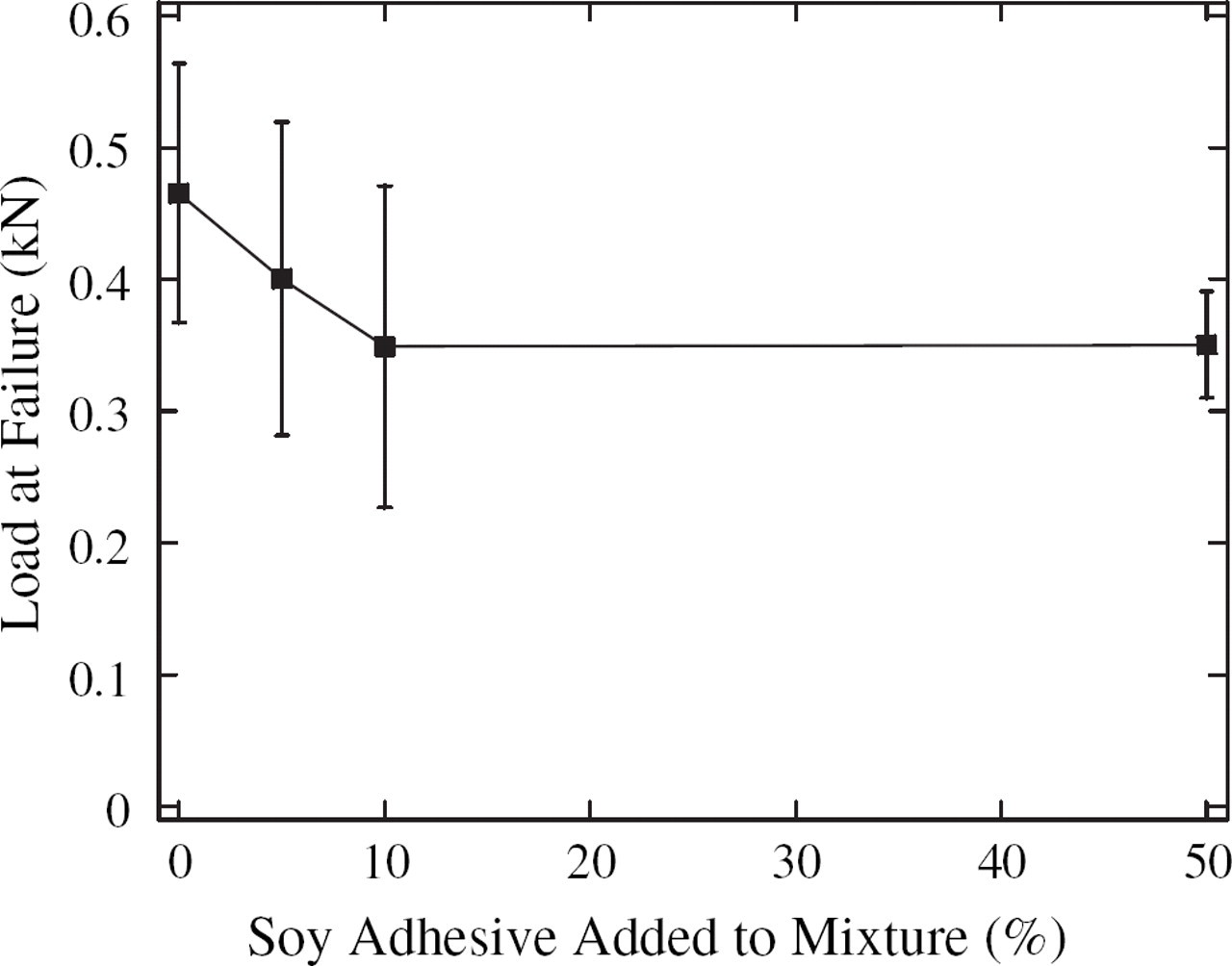
The strength of the sugar-based adhesive when it was combined with a soy-based adhesive. These samples were formulated with 30 g maltodextrin and were cured at 80 °C overnight.
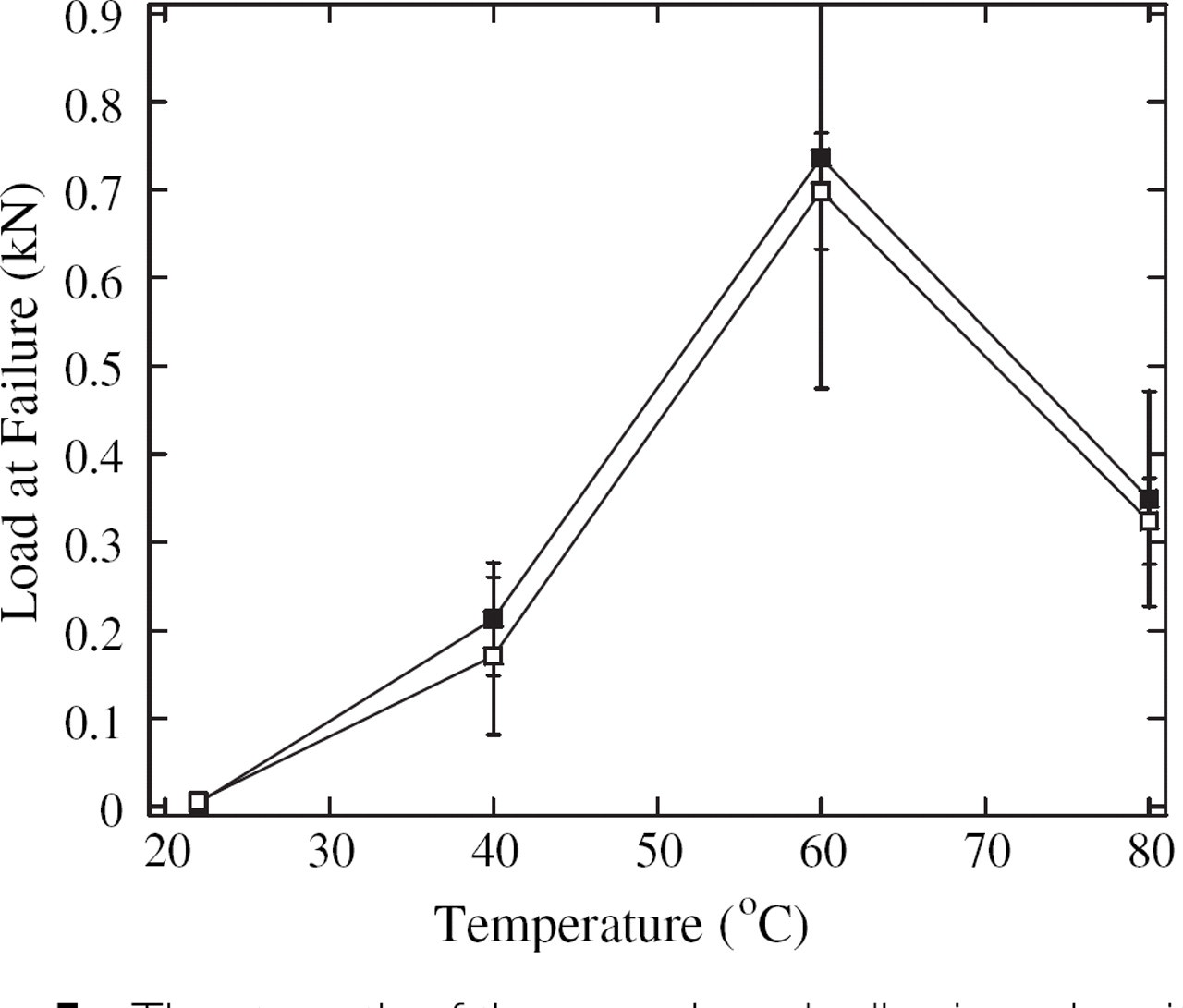
The strength of the sugar-based adhesive when it was combined with a soy-based adhesive, as a function of cure temperature. These samples were formulated with 30 g maltodextrin and 10% (▄) and 20% (□) of the soy-based adhesive, and were cured overnight.
Other Additives. Similar success was found using a gelatinbased adhesive in place of the soy adhesive. In this case, using a 20% mixture with a curing temperature of 60 °C was found to be optimum.
Conclusions
An adhesive based entirely on edible ingredients has been formulated and optimized. Additionally, a new method was developed which has the potential to be automated with commercially available equipment.
Acknowledgments
The authors would like to thank Cynthia M. Ruder, Donna I. Thomas, and Jennifer R. Koch, for sample preparation and analysis. They would also like to thank Richard Goshgarian, product manager, and Carly Kinch, marketing communication coordinator, of Instron, for their time in discussion of sample-handling automation and courtesy photographs.
Competing Interests Statement: The authors certify that they have no relevant financial interests in this manuscript and that all financial and material support for this research and work are clearly identified in the manuscript.