






Abstract
In a marketplace characterised by more demanding and more active customers, both academics and practitioners have become increasingly drawn to the concept of customer engagement (CE). Despite the recognised importance of CE, research in this area remains fragmented with a variety of definitions and conceptualisations evident in the literature. This is concerning, as a lack of alignment may result in misinterpretations, causing further divergence in future research. This paper thus offers a systematic review of the extant literature on customer engagement dated from 2009-2018, reflecting: (i) leading conceptualisations and manifestations of CE, (ii) customer- and firm-related CE antecedents, as well as (iii) CE outcomes from the customer and firm perspectives. Hence, it provides conceptual, methodological and thematic guidance to scholars studying CE. Furthermore, we discuss an extensive list of research priorities, developed based on future-focused contributions of 12 distinguished international experts, providing a strong foundation for shaping CE literature in future.
Introduction
Engagement, and customer engagement (CE) more specifically, has received prolific attention, both from academic as well as practitioner communities. CE was first identified by the Marketing Science Institute (MSI) as a high research priority in 2010, with continued recognition to this date. Indeed, MSI priorities 2018-2020 Tier 1 comprise research on deepening CE with the firm, the use of Artificial Intelligence for better engagement and the use of engagement as a KPI such as for new adopters (Marketing Science Institute 2018). Throughout this time, interest in the concept of engagement has intensified, evident in multiple special issues on the topic and the burgeoning nature of the related literature. Yet, the prolific interest has brought with it a high level of fragmentation, including a variety of definitions and conceptualisations (Harmeling et al. 2017). Such lack of alignment may result in misinterpretations and further divergence in the future.
Furthermore, from a practice point of view, marketing professionals may find it challenging to justify their spending on engagement related activities, given that the returns may occur over time rather than after a specific campaign. On the other hand, failure to invest in customer engagement activities could also mean a reduction in the potential value not only for the firm, but also for the customer. Hence, a unified conceptualisation and measurement of CE, along with an awareness of its criticality and related future trends, will help marketers to overcome this obstacle. To align various perspectives, we build on Islam and Rahman's (2016) systematic literature review of customer engagement research published between 2005 and 2015, to capture the significant acceleration of engagement research in recent years. Specifically, we draw on literature published between 2005 and 2018 in our systematic review of the literature to: (i) clarify the definition of CE; (ii) identify the theoretical lenses that build the foundation of CE research; (iii) outline the manifestations of CE; (iv) consolidate the measurements of CE; and (v) examine the antecedents and outcomes of CE. We also (vi) develop an agenda that is critical for future research in CE. By doing so, we provide conceptual, methodological and thematic guidance to scholars studying CE. The structure of this paper is as follows. First, we outline the method used to address our research objectives, in particular, the process and criteria guiding our systematic review of the existing customer engagement literature. This is followed by a discussion structured around the research objectives for this paper. We conclude with a discussion of the rich opportunities in CE for future research, jointly with established scholars in this field.
Methodology
To achieve our research objectives, we conducted a systematic review of the customer engagement literature. Such a review enables us to identify crucial scientific contributions specific to a field or question (Transfield et al. 2003). The review process itself is “systematic, transparent and reproducible” (p. 209), hence minimising potential biases and errors (Transfield et al. 2003). This is compared to a traditional literature review, which may be skewed by familiarity, availability bias, and implicit preferences of the researcher (Rousseau et al. 2008). Furthermore, a systematic review is particularly effective for identifying and evaluating extensive literatures (Transfield et al. 2003). Following the three-step process as per Crossan and Apaydin (2010), this review comprises (i) data collection, (ii) data analysis and (iii) data synthesis, leading to the reporting of results.
Data collection
To facilitate a comprehensive and unbiased search for relevant articles, the following steps were undertaken: (i) identify search terms, (ii) set temporal boundaries, and (iii) assess the quality of papers (Transfield et al. 2003).
Search terms. Relevant key words and search terms were identified by the authors to scope the study. Specifically, we utilised Scopus, Ebsco and ProQuest to search for customer engag* when in: (i) both title and abstract; or (ii) both abstract and keyword. Further to this, we recognized the emerging trend of research into actor engagement (AE) over the last few years (e.g. Storbacka et al. 2016). To reflect the corresponding broader conceptualisation of engagement, including multiple actors in the network, we also searched for the related term actor engag* using the same search criteria.
Temporal Boundaries. We focused on articles published from January 2005 to December 2018, since very few research papers used the term ‘customer engagement’ prior to that period (Brodie et al. 2011). Searching for customer engag*, a total of 377 papers were identified in Scopus under “Business, Management and Accounting” (fixed field). In addition, 167 papers in EBSCO and 89 papers in ProQuest were found within marketing-related journals specifically. Results for actor engag* include 24 papers in Scopus, 7 papers in EBSCO and 4 papers in ProQuest.
Quality of papers. Only peer reviewed journals were included; that is,
books, conference papers and other forms of publications were excluded from the search.
This approach enabled us to focus on high quality and impactful contributions to the
field. Specifically, we benchmarked articles according to the 2016 Australian Business
Deans Council (ABDC) journal list. Only papers ranked A*, A or B were included in our
review. Furthermore, with regards to impact, papers were only taken into consideration if
they met the following criteria for articles published in specific time periods: 2005-2007: greater or equal to 40 citations, 2008-2010: greater or equal to 30 citations, 2011-2012: greater or equal to 20 citations, 2013-2014: greater or equal to 10 citations, 2015: greater or equal to 5 citations, 2016: greater or equal to 1 citation, and 2017-2018: 0 (i.e. include papers that are not cited).
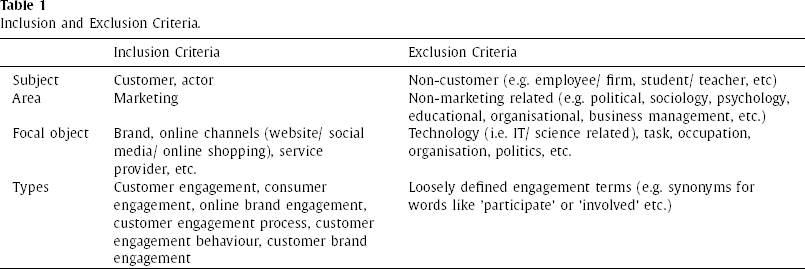
The search and removal of duplicated papers from three databases led to a total of 169 articles, for which the abstracts were downloaded. The abstracts were then distributed amongst the three authors, who considered each paper against the inclusion and exclusion criteria in Table 1. The final sample of papers under review was confirmed as 97 papers.
Inclusion and Exclusion Criteria.
Data analysis and synthesis
As part of the analysis, codes were developed based on (but not limited to) broad recurring themes across the papers under review, in relation to the objectives of this paper: (i) definition of CE; (ii) theoretical lenses; (iii) manifestations of CE; (iv) measurements of CE, as well as (v) antecedents and outcomes of CE. An iterative process involving three authors and a research assistant was utilised to optimise the identification of recurring themes. In the first round, 10 papers were read independently and coded by two authors to establish the first set of codes. These were discussed and agreed upon by the three authors before moving on to the next set of 10 papers where a similar process was undertaken, which led to a refinement of the coding scheme. Once a consensus on the thematic coding was reached on the 20 papers, the remaining 77 papers were divided amongst the four researchers for further coding. We then proceeded to analyse and synthesise the data collected as part of this review (Crossan and Apaydin 2010) leading to the framework development offering conceptual, methodological and thematic guidance to scholars studying CE.
What is customer engagement?
Conceptualisation and definition of CE
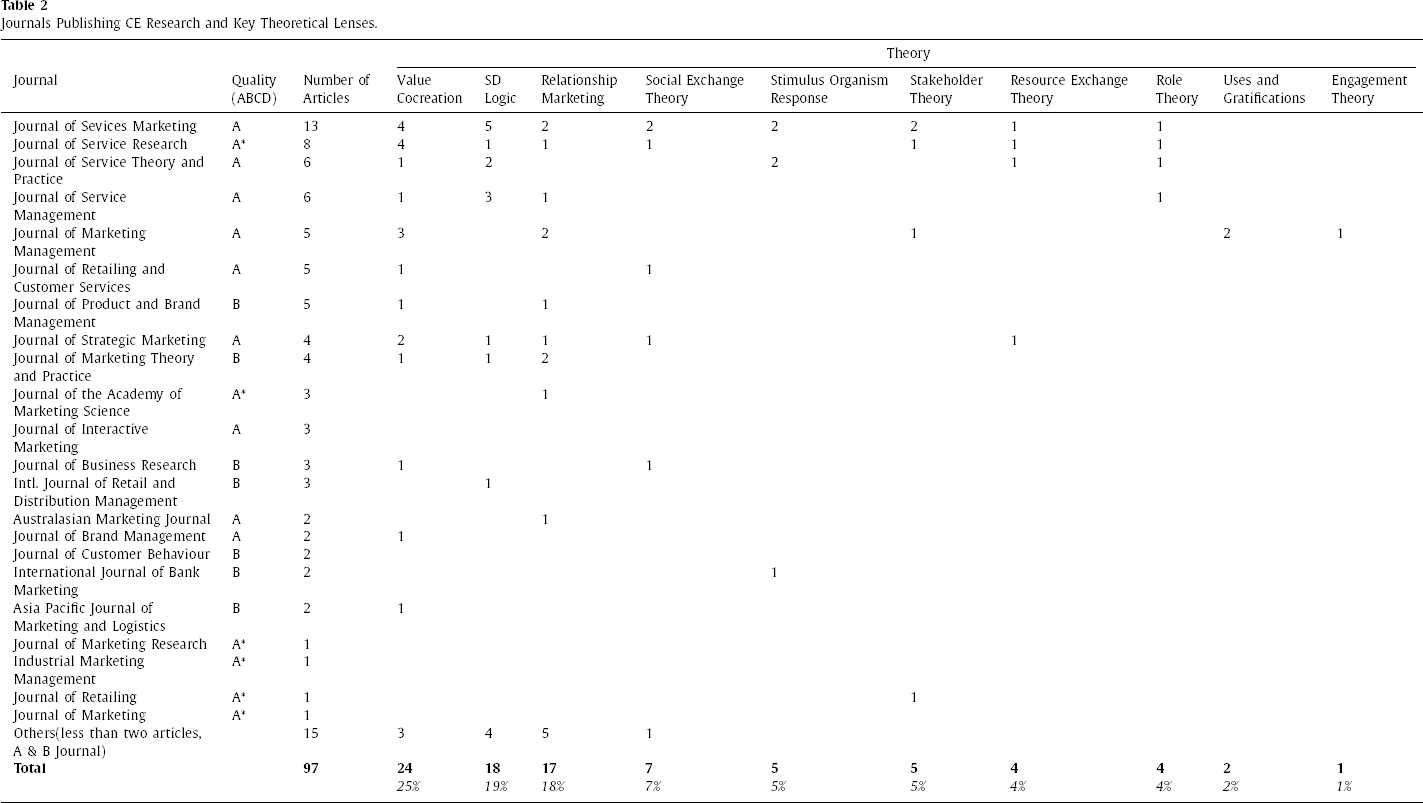
The concept of engagement was introduced into the marketing literature in the early 2000s, with ‘customer engagement’ specifically gathering pace from around 2005 among marketing academics, such as Bowden (2009), van Doorn (2010), Kumar et al. (2010) and Brodie et al. (2011). Notably, research on customer engagement is concentrated primarily within specialised service marketing journals such as the Journal of Services Marketing (13%), Journal of Service Research (8%), and Journal of Service Theory and Practice (6%); see Table 2. It features less prominently in other journals such as the Journal of the Academy of Marketing Science (three papers) and the Journal of Marketing, Journal of Retailing, and Industrial Marketing Management (one paper each).
Journals Publishing CE Research and Key Theoretical Lenses.
To date, customer engagement has primarily been examined from four broad perspectives: (i) as a behavioural manifestation, originating from work conducted by van Doorn et al. (2010); (ii) as a psychological state as per Brodie et al. (2011); (iii) as a disposition to act (e.g. Storbacka et al. 2016); and (iv) as a process including several steps or stages of the customer decision making process (e.g. Maslowska et al. 2016).
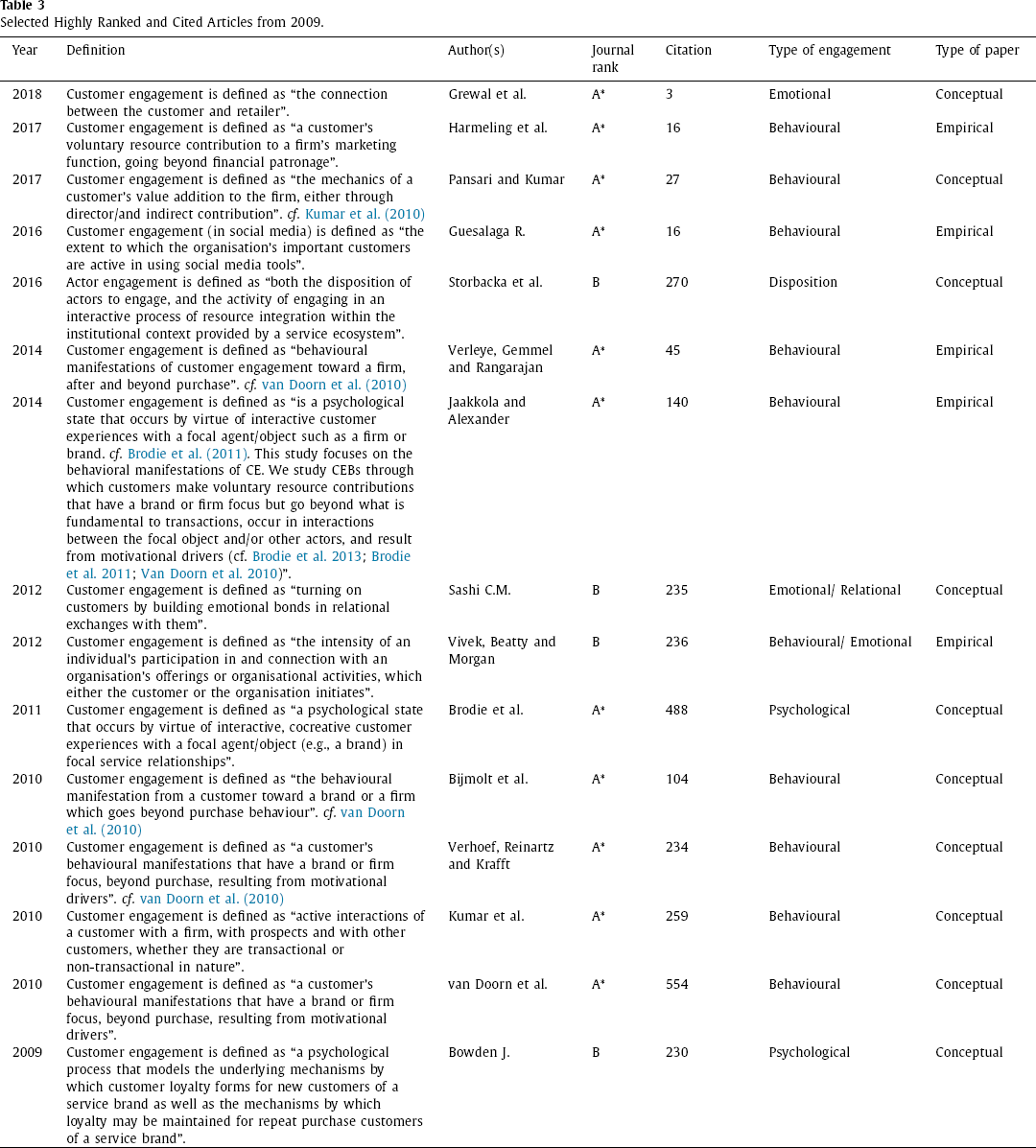
We identified 15 explicit definitions from highly ranked (A* on ABCD ranking) or highly cited (>100 citations) papers (Crossan and Apaydin 2010) featured in top-tiered journals such as Journal of Service Research, Journal of the Academy of Marketing Science, Journal of Retailing and Industrial Marketing Management. As evidenced from the definitions in Table 3, and from our systematic review in Table 4, CE has been predominantly examined from a behavioural perspective (46%). A further 27% of the papers included in this review conceptualise CE as a multi-dimensional construct comprising behavioural, cognitive and emotional engagement, while 4% focused solely on emotional engagement. Though only 3% conceptualise engagement as a disposition, this has been a developing focus over the last four years (e.g. Storbacka et al. 2016; Fehrer et al 2018). Further, several authors (6%) have argued that engagement can refer to a range of phenomena including experiential, attitudinal and behavioural factors, that represent different stages of an engagement process (e.g. Maslowska et al. 2016).
Selected Highly Ranked and Cited Articles from 2009.
Approaches in Examining Customer Engagement.
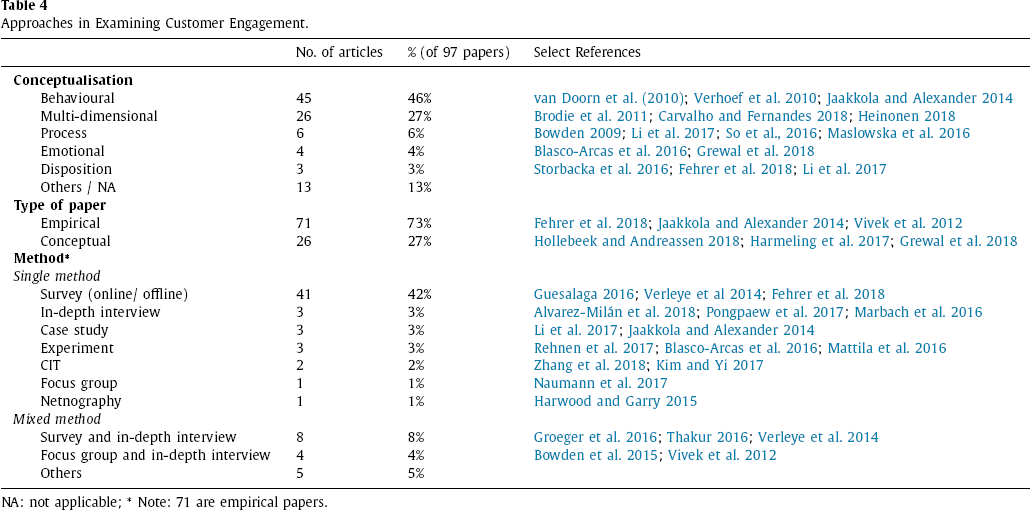
NA: not applicable; * Note: 71 are empirical papers.
Literature focusing on behavioural manifestations commonly refers to ‘customer engagement behaviours’ (CEB). Van Doorn et al. (2010, p. 254) specify CEB as behaviours (that) “go beyond transactions and may be specifically defined as a customer's behavioural manifestations that have a brand or firm focus, beyond purchase, resulting from motivational drivers” (see Table 3). While Kumar et al. (2010) argue that CE should include transactional behaviours, most scholars (e.g. Verhoef et al. 2010; Bijmolt et al. 2010, Jaakkola and Alexander 2014; Verleye et al. 2014) concur with van Doorn et al. (2010) and the Marketing Science Institute (Marketing Science Institute 2010) that customer engagement only involves behaviour that extends beyond transactions, and thus beyond purchase. Since behaviours can be easily observed and measured, this conceptualisation is often utilised by industry practitioners in measuring CE, for example, as customer activities such as online word of mouth, customer reviews, peer-to-peer information sharing and customer-initiated activities with firms (Bolton 2011).
When conceptualised as a psychological state CE reflects a multi-dimensional construct comprising behavioural, cognitive and emotional engagement; Brodie et al. (2011) defining it as “a psychological state that occurs by virtue of interactive, cocreative customer experiences with a focal agent/object (e.g., a brand) in focal service relationships” (p. 260). The authors recognise that customer engagement is non-linear, and does not occur in “an orderly, sequential progression of phases over time” (Brodie et al. 2013, p. 110). Since CE is context-driven, the three dimensions of CE can occur in various sequences (Brodie et al. 2011). For instance, a customer can be emotionally engaged by movie ads or through conversations with friends, before going online to find out more (emotional + behavioural + cognitive engagement). As such, this approach accounts for instances where customers are engaged subconsciously or unintentionally, either cognitively or emotionally, before displaying customer-initiated behaviours. Hence, while behaviour is a critical manifestation of engagement, comprehensive evaluations of CE require recognition of it as a multidimensional construct that includes cognitive and emotional dimensions in addition to behaviours (Carvalho and Fernandes 2018; Heinonen 2018). However, concerns over the concept of a psychological state have been raised by Abdul-Ghani et al. (2019), who suggest that a state may only be momentary and thus not reflective of the enduring concept of engagement implicit in the literature.
An engagement disposition represents an internal state representing a willingness or tendency to engage (e.g. Storbacka et al. 2016, Fehrer et al. 2018). This disposition implicitly leads to behavioural manifestations, such that engagement is represented by both. For example, Storbacka et al. (2016, p. 3009) conceptualise actor engagement as “both the disposition of actors to engage, and the activity of engaging in an interactive process of resource integration within the institutional context provided by a service ecosystem”. Such activities can be assessed through observable engagement behaviours.
Other researchers have recognised that engagement is represented by more than one distinct concept/stage in modelling consumer/actor behaviours or decision-making. In addition to the recognition of cognitive, emotional and behavioural dimensions as identified above (e.g. Brodie et al, 2011), a number of researchers conceptualise engagement as several stages of customer decision making, thus adopting a ‘process’ type model that does not restrict engagement to one particular stage, but includes a range of interactions and experiences; for example, with a brand or firm (Maslowska et al. 2016; Verleye et al. 2014).
While engagement research has matured over the last decade, no single conceptualisation or definition of customer engagement has emerged. Instead, this review suggests that there are four primary streams of conceptualisations in the literature to date (i.e. CE as a behavioural manifestation, psychological state, disposition and process), which should be recognized and understood by engagement scholars and practitioners.
Theoretical lenses underlying customer engagement
Three interrelated core theories emerged from the review as building the foundation for CE research – relationship marketing, service-dominant (SD) logic, and value cocreation. Of the 97 papers, value cocreation was noted as a theoretical foundation in 25% of the articles, followed closely by service dominant (SD hereafter) logic and relationship marketing at 19% and 18% respectively. Together, they comprise 62% of the research papers included in this review (see Table 2).
While the SD Logic represents abstraction at a metatheoretical level, engagement has been argued as representing a mid-range theoretical level that is of great interest and relevance to practice, partly because of its observability (Brodie et al. 2019). Jaakkola et al. (2018) explain how SD Logic and engagement theorising processes inform each other: ‘metatheories inform managerial practice by offering a lens to view the general logic of markets’ (p. 583). Further research on the process and implications of engagement across layers within the ecosystem will be critical for practitioners generating engagement strategies involving multiple stakeholders across platforms.
Other theories relevant to CE identified in our review include social exchange theory (7%), stimulus organism response (5%), stakeholder theory (5%), and resource exchange theory (4%), as outlined in Table 2. These theories relate to the roles of actors within the ecosystem, as well as to the resources that are utilised in exchanges between various actors.
Manifestations of CE
To explore the manifestations of customer engagement – that is, who, with whom, what, how much, when and where it can exist - this systematic literature review focused on extant research in relation to the: focal actor (who); focal object (with whom); valence (what); intensity (how much); level of interaction (when); and context (where), as noted in Table 5. Consideration of such manifestations is crucial as customer engagement can vary across situational conditions and time (Brodie et al. 2011).
Manifestations of CE.
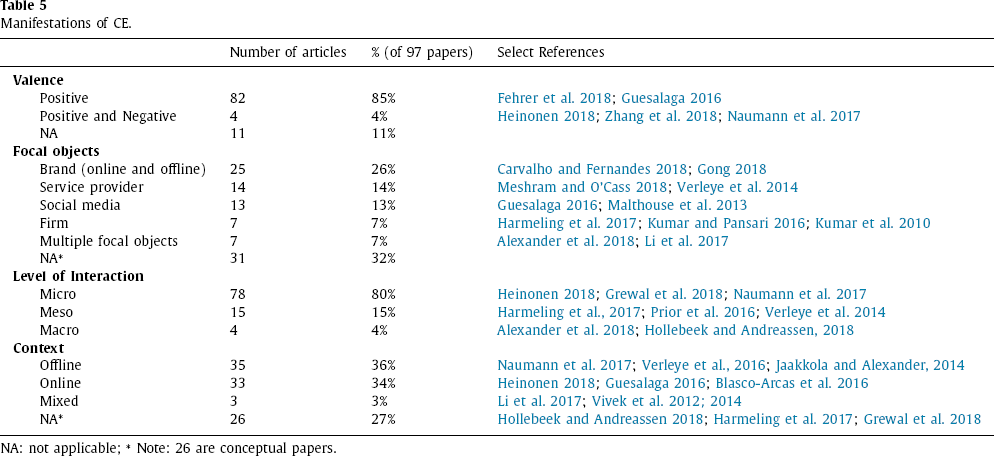
NA: not applicable; * Note: 26 are conceptual papers.
Further to this, researchers are starting to examine customer engagement from the firm's perspective – that is, what firms can do to facilitate customer engagement – often referred to as customer engagement marketing (CEM) (Harmeling et al. 2017). CEM represents “the firm's deliberate effort to motivate, empower, and measure a customer's voluntary contribution to its marketing functions, beyond a core, economic transaction (i.e., customer engagement)” (Harmeling et al. 2017, p. 312). That is, it actively enlists customers to serve as ‘pseudo-marketers’ for the firm (Harmeling et al. 2017, p. 312). This stream of research views CE from a managerial perspective, where CE is initiated by the firm and customer experience is proactively managed (Alvarez-Milán 2018).
Furthermore, engagement is not limited to human-to-human interactions but also extends to machines or human and machine combinations (Storbacka et al. 2016). Customers today are not only becoming more active in interacting and engaging with traditional focal objects such as brands, firms and service providers, but also increasingly with advanced technological interfaces. How firms can effectively engage customers by drawing on technology or digital interfaces is an emerging area of research, including applications to machine learning and robots (e.g. Storbacka et al. 2016) and the internet of things (e.g. Letheren et al. 2019).
Negatively valenced engagement in relation to brands, can be shown through consumers’ “unfavourable brand-related thoughts, feelings, and behaviours during focal brand interactions” (Hollebeek and Chen 2014, p. 63). In the context of services, negative CE can entail feelings of “anger, hatred and stress, which manifest through more constructive coping behaviours such as individual and group complaint behaviour” (Naumann et al. 2017, p. 902). More importantly, negative CE can manifest in ways that affect the wider service community beyond the focal firm, by customers who may seek to recruit others in their cause (Naumann et al. 2017).
The recent shift from exploring CE at a micro dyadic level to a macro level/ network perspective aligns with the developments of SD Logic research. The corresponding adaptation to service systems as a unit of analysis with respect to engagement and on engagement through value cocreation within systems has emerged over the last six years. In line with the trend towards an A2A perspective of engagement within an ecosystem, there is greater recognition that actors do not only influence each other dyadically but also the entire ecosystem, causing ‘ripples’ across levels (Farquhar and Robson 2017). For example, Lariviere et al. (2013) explore how the use of a mobile, networked technology by customers, firms, and others such as non-paying customers, competitors and others can create value simultaneously; they termed this ‘value fusion’. This approach has gained traction, with recent conceptual papers extending the discussion of this concept (e.g. Jaakkola et al. 2018; Brodie et al. 2019).
Methodology
Approach
When examining the methodologies and approaches undertaken to examine CE, the review shows that of the 97 papers under review, 73% of the studies were empirical in nature, while 27% were conceptual papers (see Table 4). Surveys emerge as the preferred method for collecting data pertaining to CE, with 42% of the papers under review using surveys for data collection (Table 4), while 8% utilised a mixed method approach of surveys and in-depth interviews. Qualitative techniques were less represented – only eight papers reported the use of in-depth interviews and/or focus groups, and three employed case studies. While case studies have less commonly been used, they offer opportunities to gain comprehensive understanding of the dynamics within single settings that are representative of real-life situations (Li et al. 2017). Our findings also reveal the use of only three experiments (Blasco-Arcas et al. 2016; Rehnen et al. 2017; Mattila et al. 2016), examining the effect of emotions, motivations and sense of power on engagement, both carried out online. This is surprising in that technology offers innovative ways for researchers to simulate a real-life scenario within a controlled setting; allowing us to further understand the complex and dynamic nature of CE.
Measurement
Although a variety of customer engagement measures abound, few authors have derived their measures based on strict conceptual and operational definitions. Researchers following the behaviourally-focused conceptualisation of engagement have drawn on specific forms of behaviour such as loyalty or word of mouth (e.g. Mattila et al. 2016; Benjarongrat and Neal 2017; van Doorn 2010), with Kumar and Pansari (2016) measuring customer engagement by means of direct and indirect outcomes such as purchase, referral, influence and knowledge value. The latter measure has gained traction across several subsequent studies focusing on engagement behaviours (e.g. Prentice and Loureiro 2018).
Some researchers have used a broader conceptualisation and measure multiple dimensions, including emotional and cognitive aspects as well as behaviours (e.g. Hollebeek et al. 2014); while others establish measures that deepen or extend the recognised three dimensions of engagement. While Dessart et al. (2016) develop seven dimensions comprising enthusiasm and enjoyment (affective), attention and absorption (cognitive), as well as sharing, learning and endorsing (behavioural), So et al.'s (2016) scale comprises identification, enthusiasm, attention, absorption and interaction. Finally, Vivek et al. (2014) derive a customer engagement scale comprising some similar facets yet introduce a stronger social element and recognise both existing and potential customers. Dimensions include conscious attention, enthused participation and social connection. Similarly, Thakur (2016) conceptualises and measures customer engagement arising from six forms of experience including monetary and social facilitation, though these seem to represent customer value rather than engagement per se.
Moreover, research over the last four years has recognised engagement as comprising a disposition, or a tendency to act that is separate to behaviour and reflects a sense of relationship or connectedness (e.g. Jaakkola et al. 2018; Fehrer et al. 2018). Measures will need to be developed or adapted to align with this conceptualisation. Future research is also likely to use secondary data measures readily available through technology in analysing big data, such as when conducting sentiment analysis. This is discussed further in the future research section.
What are the antecedents and outcomes of CE?
Identifying antecedents and outcomes that are commonly associated with CE is relevant to delineating CE from other marketing constructs, thereby establishing what is uniquely CE. Our review findings suggest two types of antecedents: (i) customer-related and (ii) firm-related, as substantiated by Vivek et al. (2012). Likewise, outcomes can be categorised into those associated with the customer perspective, and those experienced by the firm.
Customer-related antecedents of CE
These three factors are cyclical in nature in that they may be both drivers and outcomes of CE (Jaakkola and Alexander 2014), depending on whether the customer is a new or existing/repeat customer (Bowden 2009). This is because customer engagement is non-linear, and does not occur in an “an orderly, sequential progression of phases over time” (Brodie et al. 2013, p. 110). For instance, for existing/repeat customers, factors such as trust, commitment and satisfaction are drivers of CE, as they have experienced the interaction with the focal object and are going back again, building a relationship or establishing a deeper and personal connection with the focal object (Bowden 2009). Conversely, for new customers, these same factors may be outcomes from engaging with a new focal object. Maslowska et al. (2016) further highlight that the effects on different engagement related constructs are not necessarily linear and at the same time may cause different reactions to various actors in the system. Yet, most studies examining the customer engagement process do not indicate or separate new and existing customers. This has important implications for understanding antecedents or outcomes as well as for determining appropriate strategies.
Firm-related antecedents of CE
Firm-led customer engagement activities evident in the literature under review comprise CEM initiatives and social CRM.
Outcomes of CE
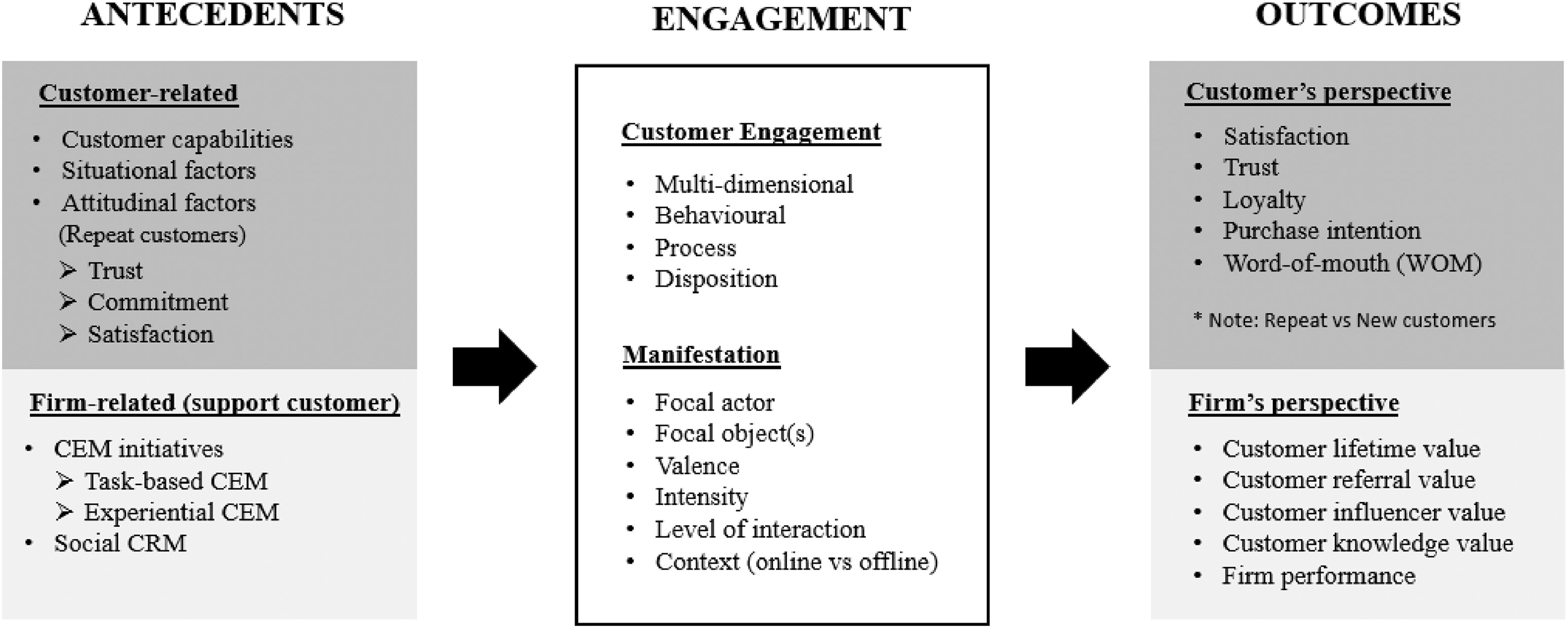
Manifestations, Antecedents and Outcomes of CE
Where do we go from here?
Through our systematic review of the CE literature in the sections above, we have achieved our initial research objectives of (i) clarifying the definition of CE; (ii) identifying the theoretical lenses that build the foundation of CE research; (iii) outlining the manifestations of CE; (iv) consolidating the measurements of CE; and (v) examining the antecedents and outcomes of CE. In doing so, we were able to provide conceptual, methodological and thematic guidance to scholars studying CE. Yet, to move forward, it is also critical to explore what is not known yet about the domain (Briner et al. 2009; Peloza and Shang 2011).
Hence, we invited 15 distinguished international experts within the field of CE and sought their views pertaining the future of research on CE. The objective was to develop forward-looking insights to be used for shaping the CE literature in future. The experts were selected based on purposive sampling – specifically, these academics have published in A and/ or A* journals in the area of customer engagement, and/or have engagement related papers that are highly cited. Furthermore, many of these experts had actively contributed to the special customer engagement stream and sessions on customer engagement at the ANZMAC conferences in 2017-2019. Of the 15 invited experts, 12 contributed their views.
The invited commentary authors were free to reflect and elaborate on points offered as examples by the article authors or to develop their own themes in their suggestions on future research directions. Given that we wanted to encourage the invited commentary authors to address critical issues for future research rather than documenting the status of a particular area, we specifically did not request for references. Upon receiving the invited authors’ inputs (see Appendix A), their responses were analysed using the categorizing process by Lincoln and Guba (1985) to identify recurring themes. Multiple investigator triangulation was then carried out to minimise discrepancies in data (Grove and Fisk 1992), as well as several rounds of negotiations to reach common consensus on the findings (Shah and Corley 2006). Five overarching themes of research priorities emerged from the expert commentaries on the future of customer engagement research, each comprising a range of calls for research. The themes are summarised in Tables 6 to 10, outlining the calls for research underpinning each theme, as well as the respective expert commentary quotes based on which the calls were derived.
Theme 1 - Conceptualisation of CE.
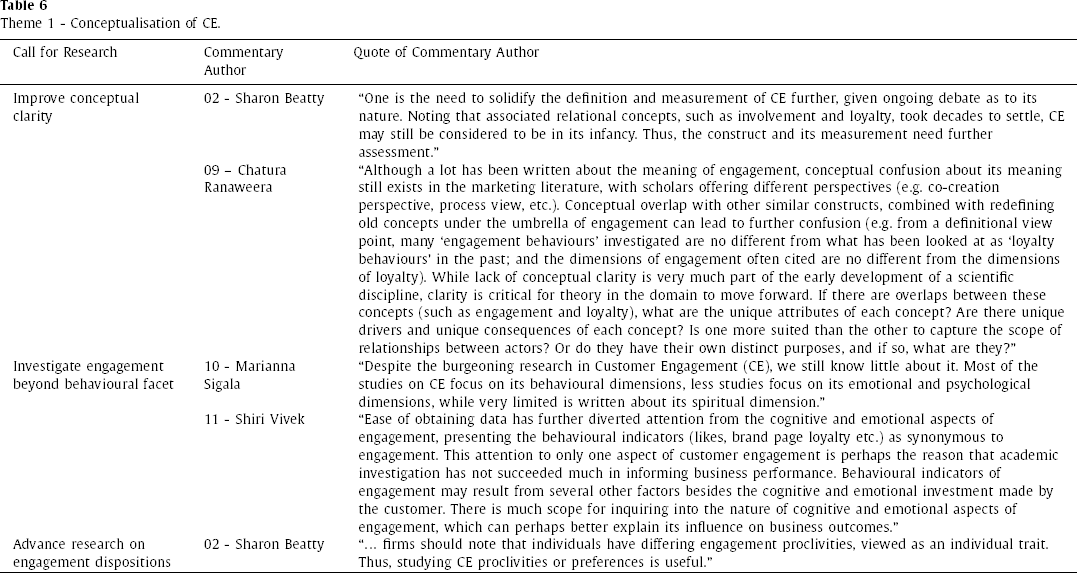
Theme 1: Conceptualisation of CE
The systematic review revealed that engagement has been loosely conceptualised in many of our selected papers, lacking a definition or grounding framework, hampering a clear conceptual and operational definition of CE. Table 6 summarises three key areas of suggested research going forward, based on inputs from the invited authors: (i) improve conceptual clarity; (ii) investigate engagement beyond the behavioural facet; and (iii) advance research on engagement dispositions.
Theme 2: Understanding non-positive forms of engagement
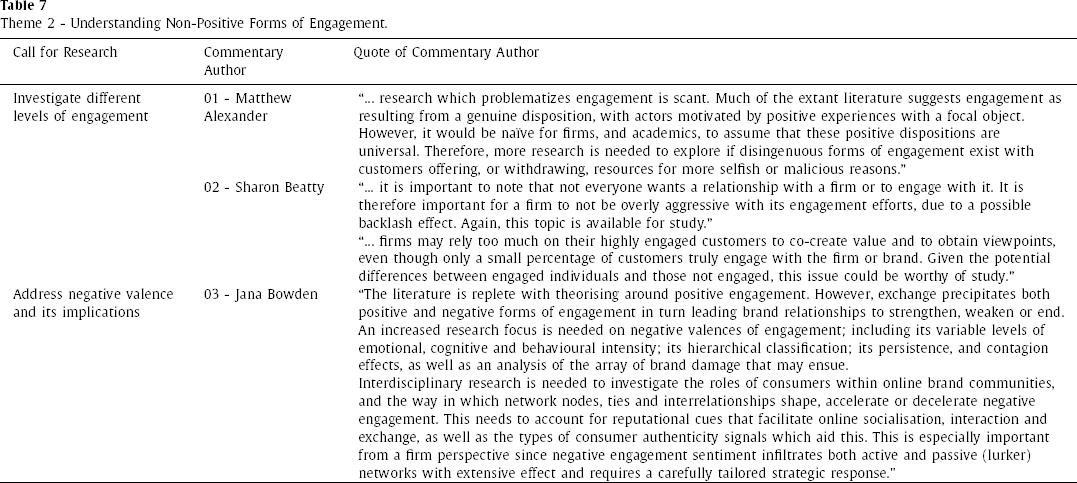
Our review showed that while certain negative or neutral forms of engagement - such as passive engagement, non-engagement, disengagement and negative engagement - were recognised (e.g. Alexander et al. 2018; Naumann et al. 2017), only a handful of papers addressed these forms of engagement. Table 7 identifies two potential areas for future research: (i) investigating different levels of engagement, and (ii) addressing negative valence and its implications.
Theme 2 - Understanding Non-Positive Forms of Engagement.
Theme 3: Zooming out - the wider perspective
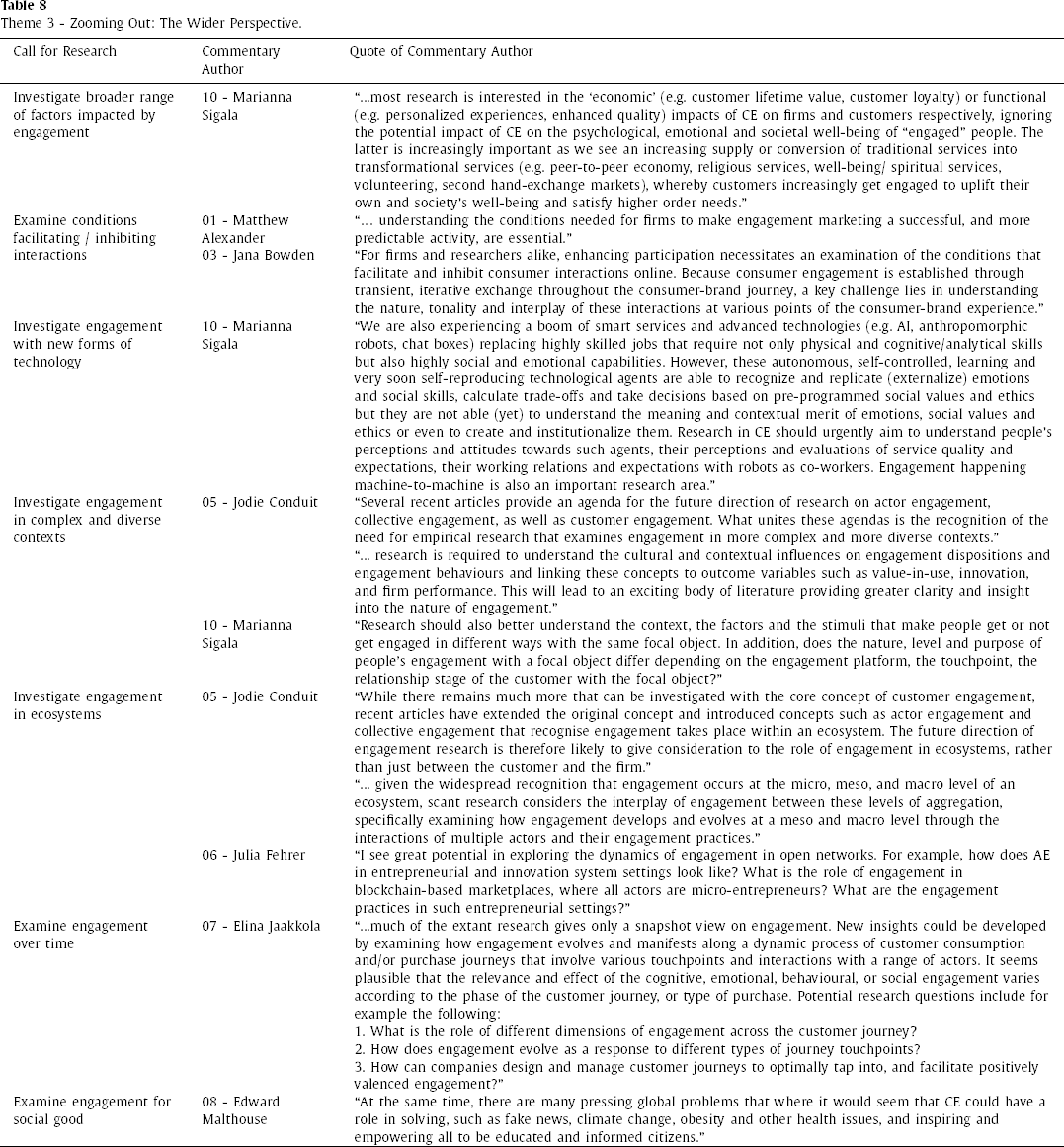
The systematic review indicated a growing recognition to go beyond the dyadic and examine engagement within ecosystems, as well as to study engagement objects and contexts beyond those commonly investigated. In line with this theme, seven future-facing research areas were proposed by invited authors: (i) investigate a broader range of factors impacted by engagement; (ii) examine conditions that facilitate or inhibit interactions, (iii) investigate engagement with new forms of technology, (iv) investigate engagement in complex and diverse contexts, (v) investigate engagement in ecosystems, (vi) examine engagement over time, and (vii) examine engagement for social good (see Table 8).
Theme 3 - Zooming Out: The Wider Perspective.
Theme 4: Methodological approaches of CE
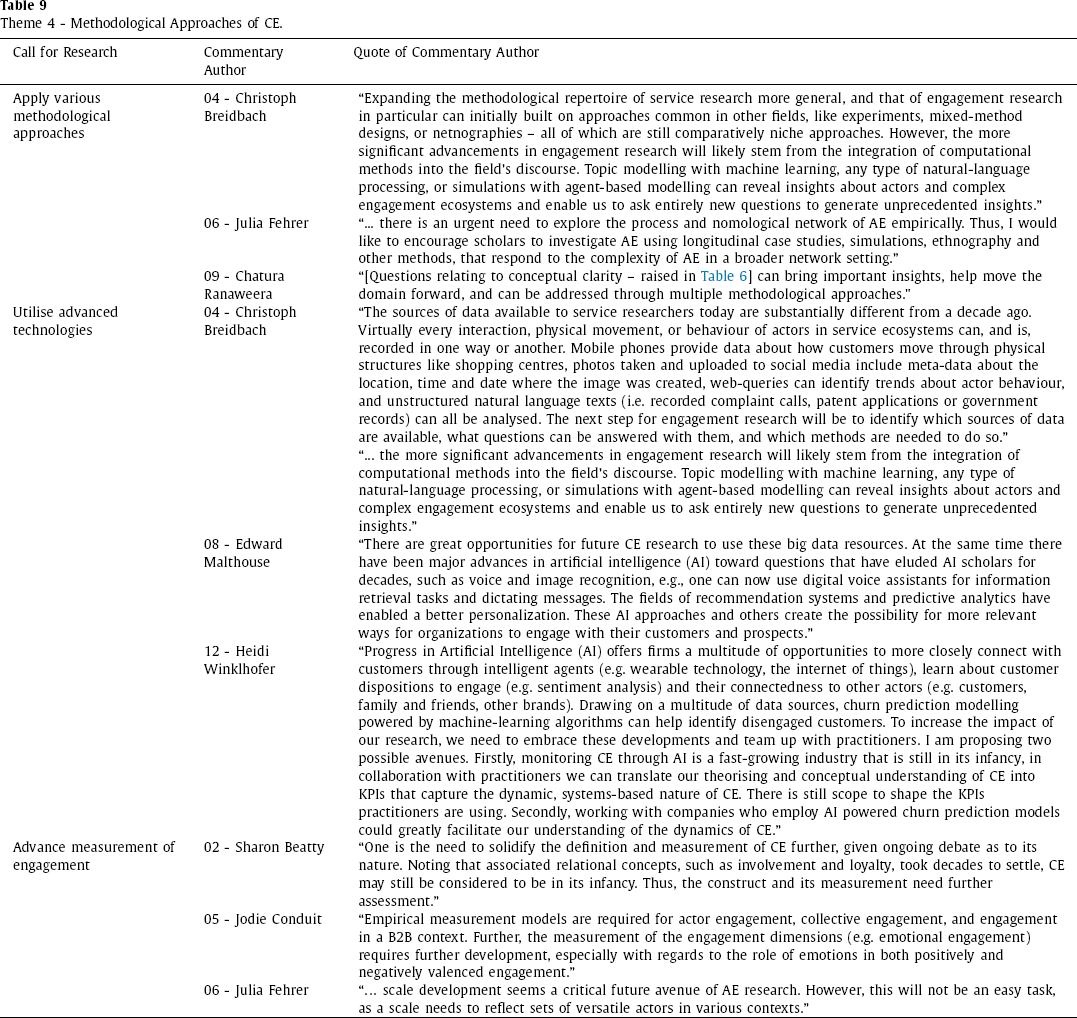
A heavy reliance on surveys emerged from the systematic review. Looking forward, the invited authors indicate two areas that are particularly relevant for the future of CE research: (i) to apply a variety of methodologies in CE research, (ii) to utilise of advanced technologies in data collection, and (iii) to advance measurement of engagement (see Table 9). No doubt the escalating ubiquity and interconnectivity of technology, including smart devices and the development of Artificial Intelligence (AI), is growing the array of data collection opportunities and methodologies for engagement researchers.
Theme 4 - Methodological Approaches of CE.
Theme 5: Theoretical considerations
The need for a broader, inter-disciplinary approach to engagement is an important theme that underlies key insights from this review, for instance, the inconsistent conceptualisation of CE, the lack of an encompassing approach that deals with the non-positive side of CE, and also new forms of data, methodology and data analysis. To prevent a myopic perspective on CE, it is imperative for researchers to not only cross disciplinary boundaries but also to challenge and extend theoretical lenses and mindsets that have built the foundation for CE to date. New perspectives will help advance our ability to understand emerging issues, with all their complexities and dynamism. Table 10 highlights several related areas identified as future research directions.
Theme 5 - Theoretical Considerations.

Conclusion
Much can be derived from our systematic review of the customer and actor engagement literature, as well as from the future research directions summarised above and detailed within each table of commentary. While some future research directions are not yet recognised in the current discourse, others have been noted previously but remain critical for the future development of the field, such as the concepts of A2A engagement across the ecosystem, the impact of new technologies and AI on engagement, advances in measurement and the relevance of engagement to global challenges. As such, this paper offers a useful basis for research on the topic of engagement and related concepts that may evolve as the rapid pace of change and evolution in marketing, management, entrepreneurship and innovation, computer science and technology continue. What will engagement mean in 2050?
Declaration of Conflicting Interest
The author(s) declared no potential conflicts of interest with respect to the research, authorship, and/or publication of this article.
Footnotes
Acknowledgment
We would like to thank our contributors for their invaluable input towards developing the future research priorities as offered in this paper: Matthew Alexander (University of Strathclyde), Sharon Beatty (The University of Alabama), Jana Bowden (Macquarie University), Christoph Breidbach (The University of Queensland), Jodie Conduit (The University of Adelaide), Julia A. Fehrer (The University of Auckland), Elina Jaakkola (University of Turku), Edward C. Malthouse (Northwestern University), Chatura Ranaweera (Wilfrid Laurier University), Marianna Sigala (University of South Australia), Shiri Vivek (Eastern Michigan University) and Heidi Winklhofer (University of Nottingham).