



Abstract

Automated analytical systems have become commonplace in medical laboratories today. Only a few of these systems, however, provide equipment or software to automate procedures such as sorting, aliquoting, and decapping/recap-ping sample tubes before and after analysis. Automating these procedures can make routine work easier, increase operator safety, and simplify laboratory processes. The company PVT, develops, manufactures, and distributes innovative automatic systems and software for medical laboratories, for handling front-end and back-end workflow. Their equipment includes systems for assessing, centrifuging, sample quality, decapping, aliquoting, sorting, and recapping. Individual systems can be connected in various combinations to suit customer needs. Customers include many types of laboratories and blood banks, with approximately 330 systems now operating worldwide.
COMPANY OVERVIEW
PVT started literally in a garage, where now-CEO Michael Ziegler met with Michael Heise and a few laboratory people to discuss the need for an automated system that would go beyond automated pipetting to one that would integrate the entire sample handling and data management system for laboratory operations. The result was the Sample Distribution system VS 250, a fully automated PC-controlled system for distribution of samples and pipetting of fluids.
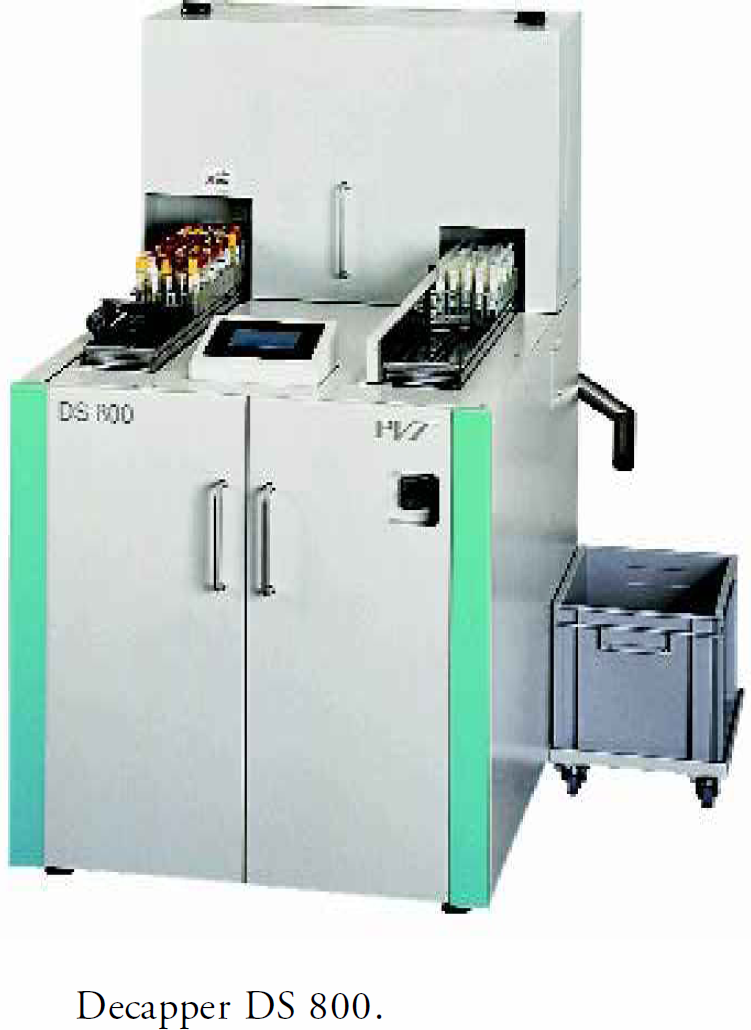
Decapper DS 800.
PVT is headquartered in Waiblingen, Germany, boasts 30 employees at their headquarters and four employees (including sales and service representatives) at their US subsidiary. PVT distributors, who are partners worldwide provide additional sales and service representatives, all well-trained on PVT systems.
PVT scientists realized at the outset that stand-alone systems are preferable to fully integrated systems or total laboratory automation (TLA) in providing optimal flexibility and compatibility with individual analytical systems. PVT's products are varied and innovative, ranging from the Automatic Centrifuge Module ACM to the Recapping system RCS 800 and many others, including sample racks for all types of sample tubes. The success of these products in the world marketplace supports the company's position as a market leader in front-end and back-end automation.
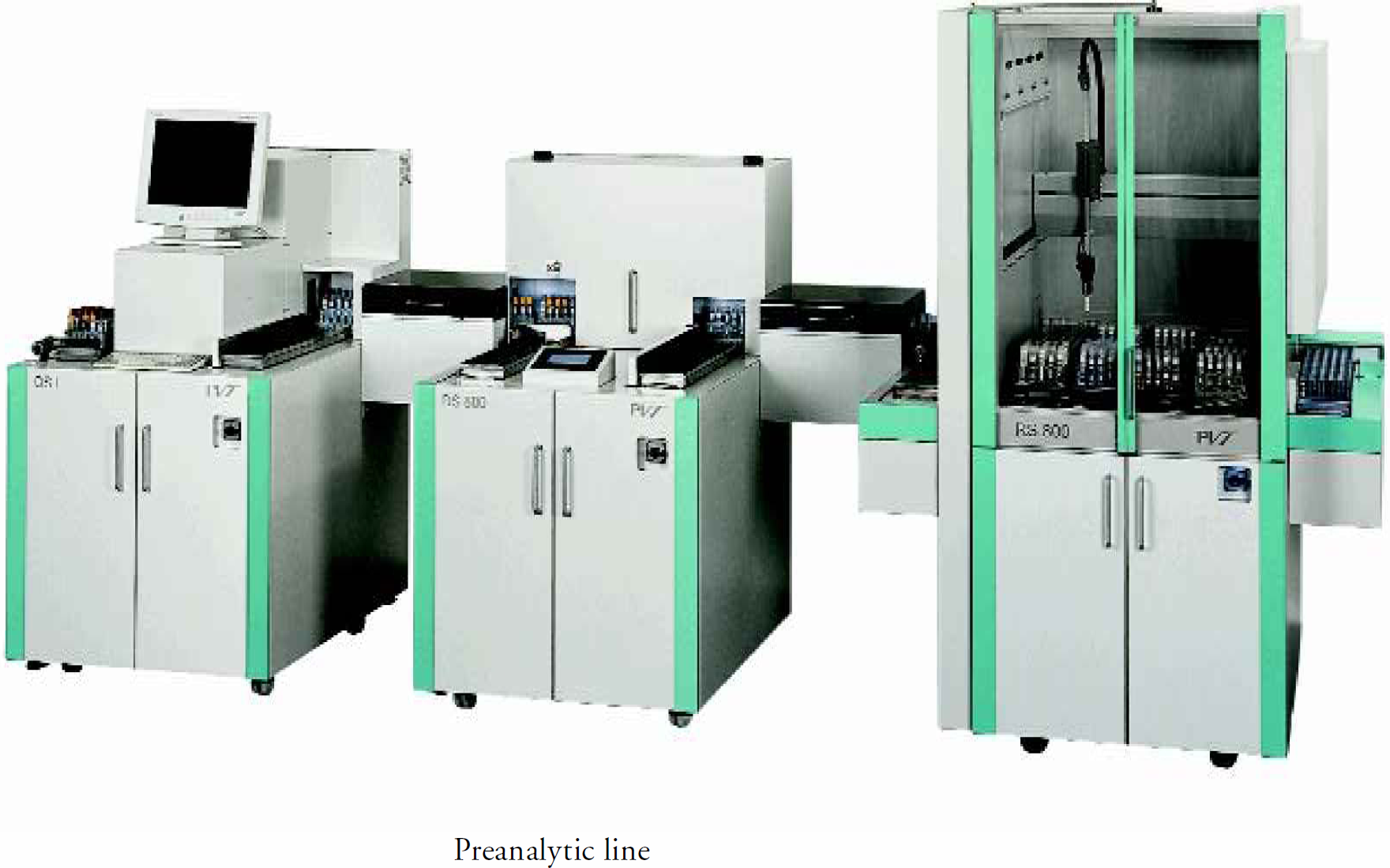
Preanalytic line
With this principle in mind, PVT produced the VS 250 Sample Distribution System as its first product for front-end, automation. Over 140 of these systems now run routinely in laboratories in Germany and many other countries. In 1996, PVT launched the first stand-alone-system, the Decapping system DS 800. That same year, PVT started the development of another sample distribution system, the Aliquoting system VS II. The VS II differed from earlier systems by automatically labeling secondary tubes with a barcode before aliquoting, and then sorting the tubes for analysis by various analyzers or workplaces. The first VS II's (before it went into production) were installed in 1997 and two years later the VS II made the breakthrough.
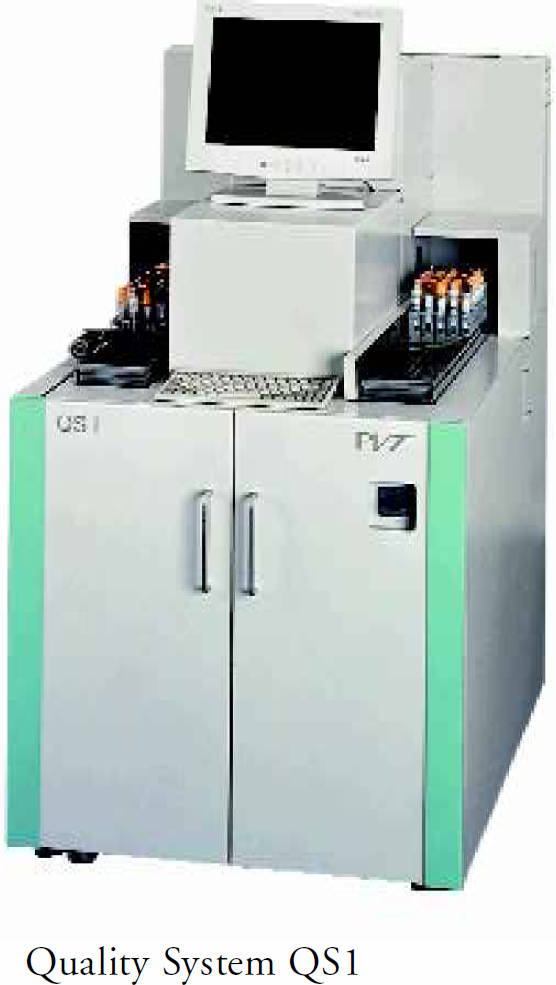
In 1998, PVT developed the Sample Quality system QS I. This device turned out to be a milestone in front-end automation: the first marketable system for quality recognition of primary samples. The QS I automates a very important aspect of pre-analytical concern, namely the presence of sample conditions (such as icterus, hemolysis, lipemia, or clotting) which can profoundly affect analytical results. Photographs of the samples pass through an image processor that detects and interprets sample conditions. Defective samples are flagged, and, if a sorting system is operating, they are sorted out from analysis.
In 1998 and 1999, PVT introduced products for preanalytical use in hematology laboratories: the Sample Distribution system VS P for use with EDTA-anticoagulated blood, and the Sorting system TS-1000. The VS P incorporates a cap-piercing feature (pipetting through the tube cap), mixing module, and reagent addition for hematological testing.
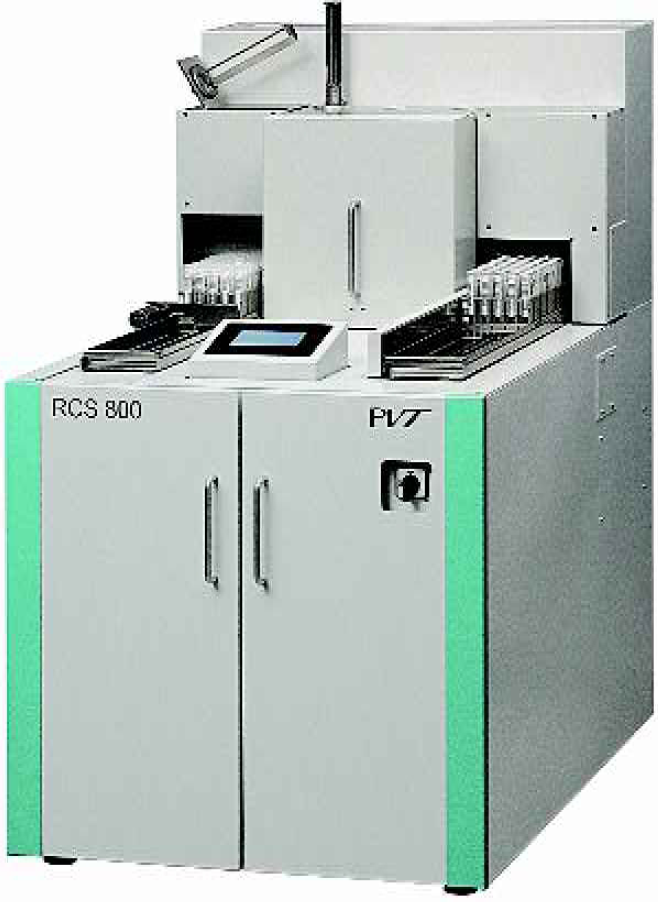
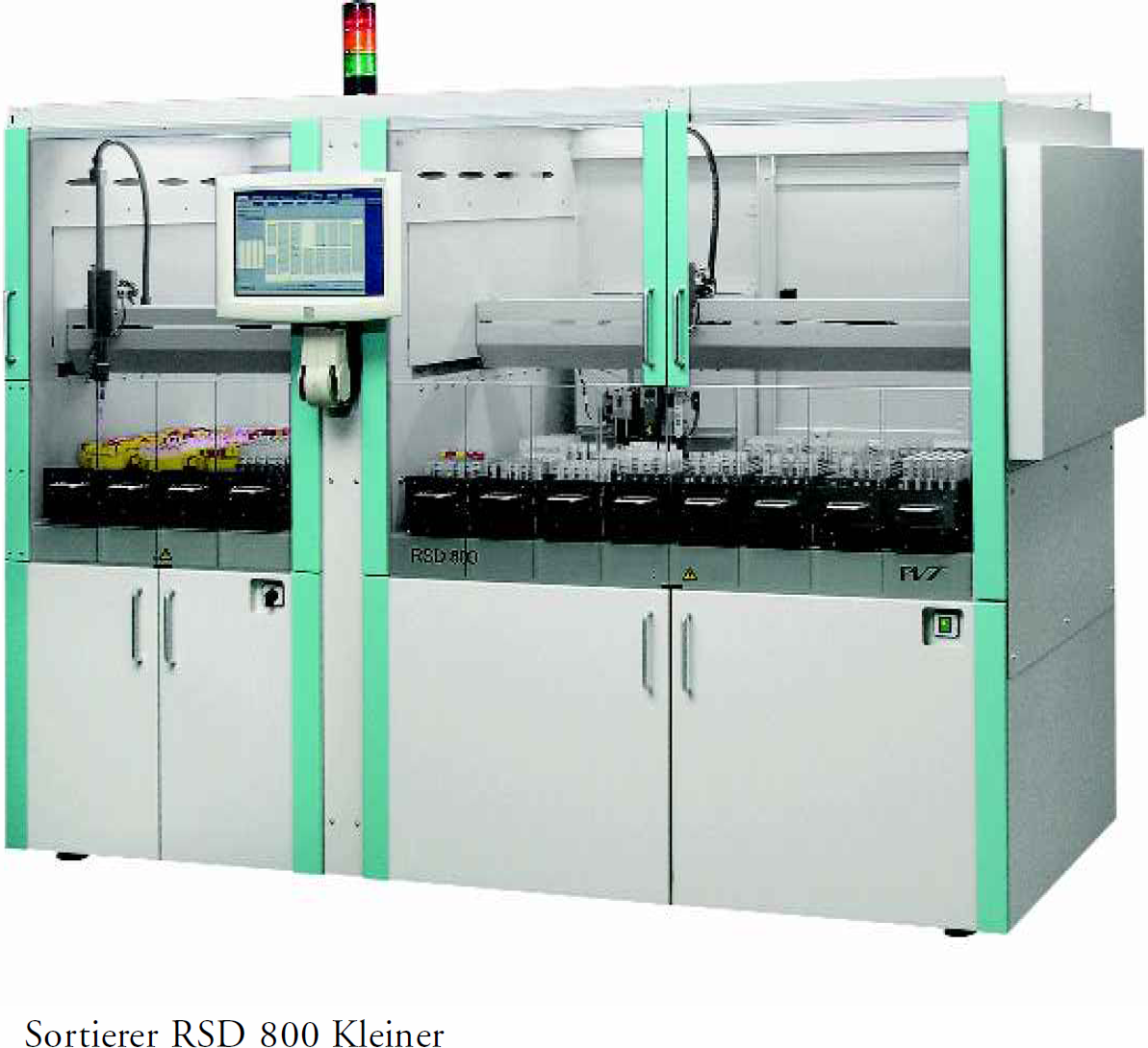
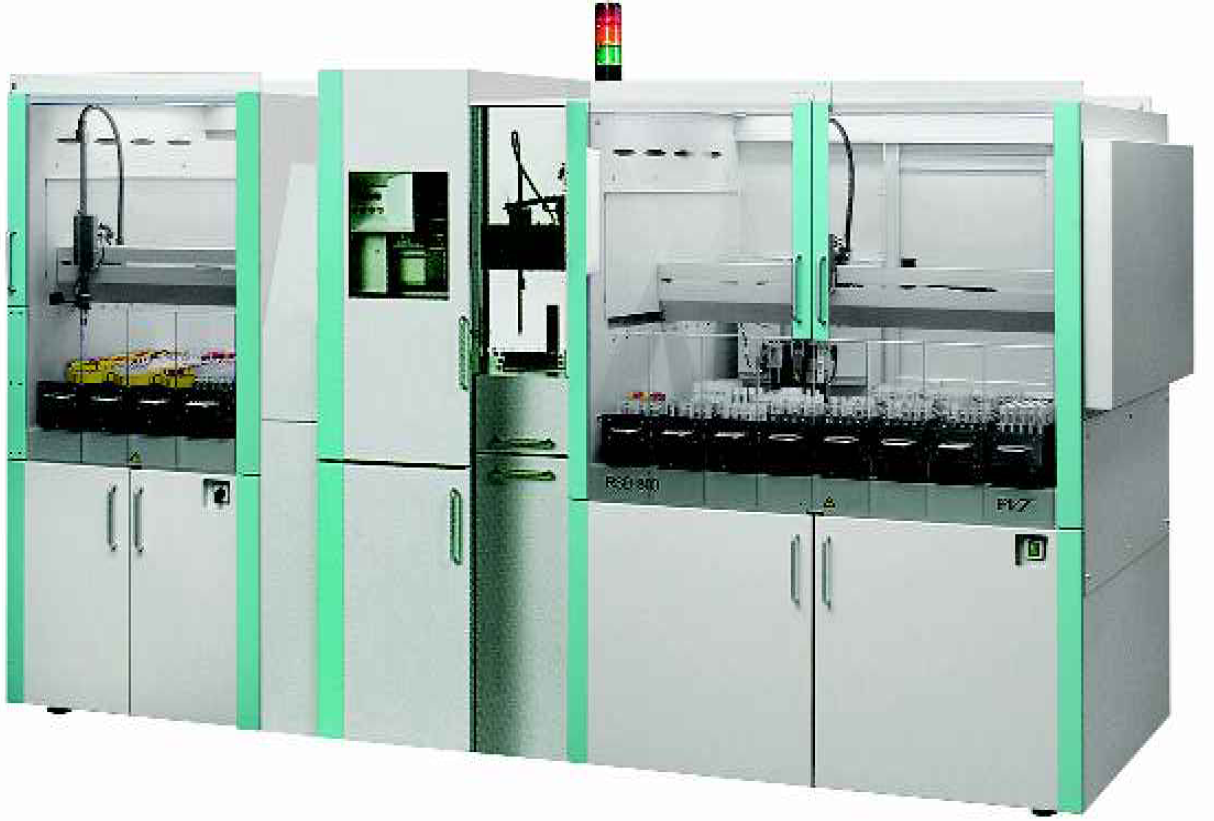
In 2000, PVT introduced the Sorting system RS 800. In 2001 they developed from the above mentioned Sorting system RS 800 and the also mentioned Decapping system DS 800 the RSD 800, a system that decaps and sorts and with the option to add even a recapping module. Also in 2001, PVT brought out another special product, the Recapping system RCS 800 based on recapping with foil rather than with plastic or rubber. The advantages are a tighter closure (allowing transport without leaking), much lower material cost, and the ability to use different sample tube sizes in one run.
In 2002, they launched the Aliquoting system RSD 800A as an “all-in-one” system. The RSD 800A does decapping, barcode labeling, aliquoting and sorting with the possibilities to add a recapping and/or quality unit. If a customer wants to start in small steps with only one single stand-alone-system (for example a decapping system) rather than the “all-in-one” system he can buy later another stand-alone-system and combine these systems through a rack-transport-system. This so-called Preanalytic-Line is variable in choice and combination so you can enlarge the line as much as you want and in the combinations that you need.
In addition to PVT's core competence, the hardware development, online data management is another area of expertise for PVT. Parallel with the development of the VS II system, PVT scientists developed the Silver Server, a system for management of online laboratory data. Data can be drawn from a large number of analyzers and preanalytical workstations.
For both, software and hardware, PVT offers fast and competent support even at weekends or national holidays via telephone or via modem to reduce any downtime. PVT produces the complete software, hardware, and electronic configurations for its products at its headquarters in Waiblingen, Germany. All systems are assembled, tested, and configured in-house using mechanical parts purchased from high quality suppliers. PVT tailors all its products to meet the needs of individual laboratories, by producing flexible components and systems. Therefore, all delivered products are custom-built from standard PVT modules and programmed to meet customer specifications.
The main target of PVT is flexible systems. PVT considers its main competitors to be Olympus, Sarstedt, TECAN/Abbott, Lab-Interlink, and Beckman-Coulter. Since 1992, PVT has enjoyed a collaborative partnership with Roche Diagnostics (formerly Boehringer Mannheim GmbH) for sales and distribution of products, initially the VS 250 System only. When a laboratory purchases a PVT product, Roche provides a laboratory consultant who works with PVT personnel to provide appropriate systems and product expertise. This collaboration has already expanded from the national market to include international distribution, and VS II, DS I, and DS I Plus have been added to the Roche distribution line. In the States about 25 systems of the VS II were sold.
Sortierer RSD 800 Kleiner
Other partners providing distribution and support for PVT products are Sysmex (worldwide); Depex (Netherlands and Belgium); Medi Diagnostici (Italy); Pharmatope Ltd. (Israel); Houm (Norway) and PVT's US subsidiary (PVT LabSystems LLC) in Duluth, Georgia.
PVT guarantees utmost quality and support for customer satisfaction with all of its products. This dedication to quality is illustrated by certification of PVT's Quality Management program by DIN ISO 9001 (a reviewed quality-assurance program). This indicates the company's focus beyond front-end and back-end to overall solutions for medium-size and large-size laboratories, i.e., laboratories handling more than 800 sample tubes per day. Laboratories handling several thousand samples per day, have the option to use the systems in parallel configurations.
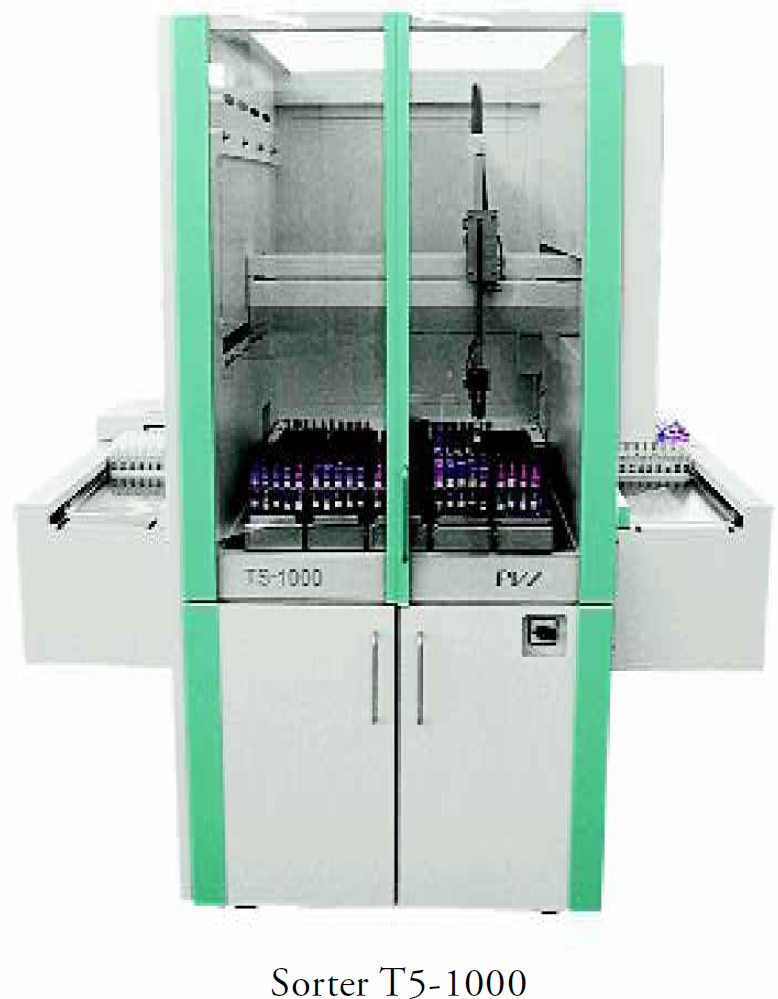
Sorter T5–1000
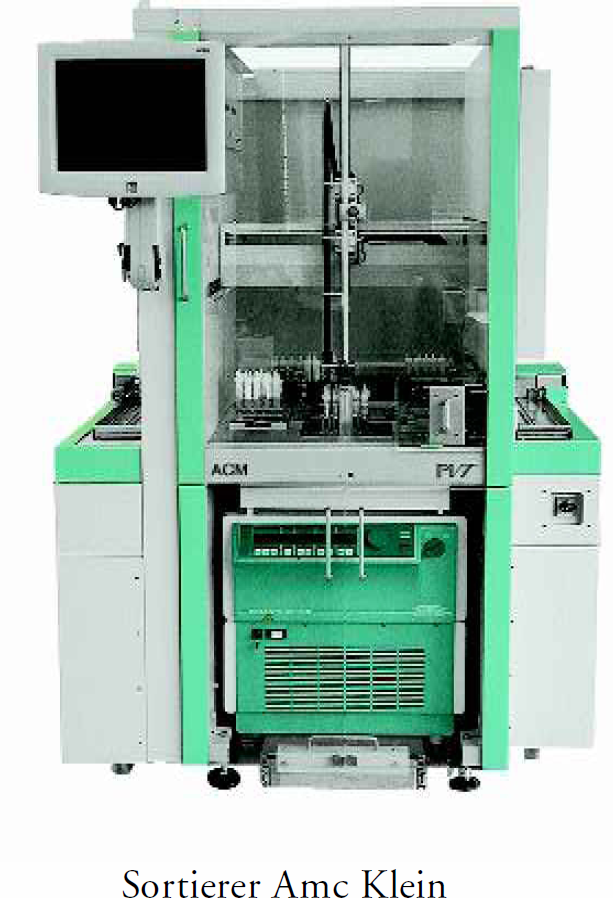
Sortierer Amc Klein
Sortierer RSD800 C
WHY AUTOMATE FRONT-END AND BACK-END WORKFLOW?
The decision to automate preanalytical workflow, as an integrated system, has been described by a simulation model for such an assessment in JALA.2002; 7(2): 89–93. In this study they looked at the economic point of view (for example they had high personnel cost savings of more than 40%) but it was also necessary to look to other advantages than the economic aspect, like reliability and future performance. One important consideration for adding technology to laboratory workflow is return on investment (ROI) but it has also to be said that this concept is difficult to reduce to numerical analysis, since cost savings (e.g., labor, time, or materials) vary among individual laboratories. Nevertheless, many laboratories restrict equipment purchases to those from which the installation costs will be recovered within three years. PVT executives gave us two recent examples where customers have applied this analysis to their purchases of PVT automation:
One customer in Germany purchased a Recapping system to handle their workflow averaging 2,000 samples per day. The Recapping system uses cheaper foil caps, rather than the more expensive plastic ones used when tubes are recapped by hand. The laboratory estimated that savings for labor and materials will enable them to recover the purchase price within 18 months.
By reorganizing and streamlining its workflow, a laboratory handling about 1,200 samples per day can expect to recover the purchase cost for the “all-in-one” RSD 800A in about two to three years.
Other important aspects and advantages of why to automate the workflow are as following:
High throughput to reduce sample-handling time (therefore get results earlier). Error-free workflow to prevent sample loss or analytical errors (reliability) Recurrent sample flow by programmed return of sample tubes to aliquot for multiple analyses Cost effectiveness (labor, time, material)
Elimination of infection risk (operator safety)
Intelligent handling to ensure sample identification Easy sample tracking Handling of all standard tubes within or between runs Online interface to server software for data management from analyzing systems Online service capability via modem to reduce downtime
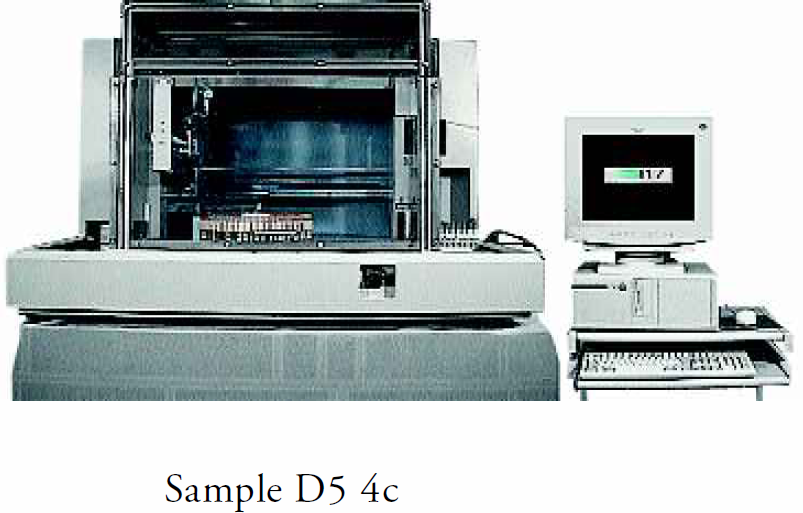
Sample D5 4c
Quality System QS1
Conclusion
Many laboratories today are considering options for front-end-and back-end automation as a way to integrate processes, reduce costs, save time and provide a greater margin of safety for laboratory personnel and the results. PVT is an innovative manufacturer, with a complete portfolio of automated systems designed for this purpose. The company appears to be committed to increased visibility and representation in the US market. It is a big challenge for them to compete in this huge market as successfully as in the other markets. The main advantage of PVT is that it can deliver flexible systems for many kinds of customer demands because of their variable combination systems and because they develop everything in-house. Some readers may have visited the PVT exhibit at LabAutomation in Palm Springs, in January 2002, or have visited their booth at AACC in July 2002 in Orlando, Florida. More information about PVT and can be obtained by visiting their web site at: www.pvtlabsystems.com.