






Abstract
In line with the social investment principle, becoming a parent should lead to more mature behaviour and an increase in conscientiousness, agreeableness, and emotional stability. However, previous research provided mixed results that do not support this idea. Here, we used data from a nationally representative household panel study from Germany (N = 19875) to examine whether becoming a parent relates to personality maturation. Whether a child was born was assessed yearly, and the Big Five personality traits were measured in four waves from 2005 to 2017. We used multilevel analyses to investigate whether personality differs between individuals who will or will not become parents, whether personality differs before and after becoming a parent, and whether these effects vary by gender, age, and living status. In sum, our findings revealed that less open and more extraverted individuals were more likely to start a family, and openness and extraversion both decreased after the transition to parenthood. Some other effects varied by gender, age, and living status. Taken together, our findings suggest that the Big Five personality traits differ before and across the transition to parenthood and that these differences especially apply to openness and extraversion.
Introduction
Becoming a parent constitutes one of the most striking and long-lasting experiences in life. New parents must be available around the clock, respond to their newborn's needs, and adjust their life accordingly (van Scheppingen et al., 2016). How does this major life event relate to personality development? In line with the social investment principle (Roberts & Wood, 2006), having a baby should promote more mature behaviour and lead to an increase in conscientiousness, agreeableness, and emotional stability. However, longitudinal studies concerning the role of childbirth for personality development challenge this idea (Denissen, Luhmann, Chung, & Bleidorn, 2019; Galdiolo & Roskam, 2012; Jokela, Kivimäki, Elovainio, & Keltikangas-Järvinen, 2009; Neyer & Asendorpf, 2001; Specht, Egloff, & Schmukle, 2011; van Scheppingen et al., 2016).
Evidence from related fields suggests that personality development before and after the transition to parenthood might differ between mothers and fathers (Bleidorn et al., 2016; Doss, Rhoades, Stanley, & Markman, 2009; van Scheppingen, Denissen, & Bleidorn, 2018; van Scheppingen, Denissen, Chung, Tambs, & Bleidorn, 2017), younger and older parents (van Scheppingen et al., 2016), as well as parents living with and without a partner (van Scheppingen et al., 2017). However, additional studies are needed to examine the role of gender, age, and living status for Big Five personality differences across the transition to parenthood. Studying these factors might help to clarify why theoretically plausible associations have not been found so far. Here, we used data from a nationally representative household panel study from Germany (N = 19 875) to investigate (a) whether personality differs between individuals who will or will not become parents, (b) whether personality differs in the years before and after becoming a parent, and (c) whether these effects vary by gender, age, and living status.
Personality development across the lifespan
Personality changes throughout life, including young adulthood, a developmental period characterized by many challenges and changes that might trigger adaptational processes. Several studies revealed that young adults became more conscientious, agreeable, and emotionally stable (Bleidorn et al., 2013; Roberts & Mroczek, 2008; Roberts, Walton, & Viechtbauer, 2006), a pattern sometimes referred to as the maturity principle (Roberts, Wood, & Smith, 2005). What factors drive these changes?
In line with endogenous theories such as Five-Factor Theory (McCrae & Costa, 2008), personality should primarily develop due to genetically determined biological factors and intrinsic maturation processes. According to endogenous theories, such factors might affect whether individuals select into specific environments, but environmental experiences themselves should have little impact on personality changes.
In contrast, contextual theories and previous research highlight the role of age-graded major life events for personality development (Asselmann & Specht, 2019; Bleidorn, Hopwood, & Lucas, 2018; Denissen et al., 2019; Specht, 2017; Specht et al., 2011; Specht et al., 2014). Such events typically relate to specific status changes (e.g. from being childless to being a parent) that might modify, interrupt, or redirect an individual's life trajectory (Bleidorn et al., 2018; Denissen et al., 2019; Luhmann, Hofmann, Eid, & Lucas, 2012; Orth & Robins, 2014). In line with the social investment principle (Roberts & Wood, 2006), age-graded major life events should induce changes in social roles, role demands, and behavioural expectations to behave in a more mature way. Personality should develop due to psychological and behavioural investments in these roles (i.e. accumulated experiences in and higher commitment to these roles). Therefore, becoming a parent might lead to an increase in conscientiousness, agreeableness, and emotional stability over time.
Associations between childbirth and personality
A series of previous longitudinal studies focused on changes of the Big Five personality traits before and after the transition to parenthood (Denissen et al., 2019; Galdiolo & Roskam, 2012, 2014; Neyer & Asendorpf, 2001; Pusch, Mund, Hagemeyer, & Finn, 2019; Robins, Grijalva, & Bleidorn, 2019; Specht et al., 2011; van Scheppingen et al., 2016). For instance, Specht et al. (2011) used data from the Socio-Economic Panel (SOEP) Study to examine Big Five personality changes over two waves, spaced four years apart. They did not find that personality differed between individuals who did or did not have a baby in the following years (selection effects). However, individuals who did versus did not experience the birth of a child between both waves more strongly decreased in conscientiousness in the surrounding years (socialization effect).
In a recent study, Denissen et al. (2019) used data from the Longitudinal Internet Studies for the Social Sciences Panel to investigate associations between childbirth and the Big Five personality traits over a period of nine years. They found that parents were less open and less conscientious than non-parents (selection effects). Individuals who experienced the birth of a child during versus before the study were more conscientious and more emotionally stable. They increased in emotional stability before (anticipation effect) but decreased in emotional stability after this experience (socialization effect). In addition, they were less conscientious after their child was born.
Based on data from the Household, Income, and Labour Dynamics in Australia Survey, van Scheppingen et al. (2016) examined personality changes in young and initially childless adults over two waves, spaced four years apart. They found that less open and more extraverted women and men as well as more conscientious women were more likely to become parents at a later point of time (selection effects). Men who remained childless decreased, whereas men who became fathers after both waves increased in openness in the preceding years (anticipation effect). Men who remained childless did not change, but men who became fathers between both waves decreased in extraversion in the surrounding years (socialization effect). In addition, women who remained childless increased, but women who became mothers between both waves did not change in conscientiousness in the surrounding years (socialization effect). However, these socialization effects no longer remained statistically significant after using propensity score matching and accounting for pre-existing differences between parents and non-parents.
Pusch et al. (2019) used data from the German Family Panel (pairfam) to assess whether childbirth in emerging or young adulthood was associated with Big Five personality changes over a period of four years. In their study, more conscientious and more emotionally stable individuals were more likely to become parents in the following years (selection effects). Individuals who experienced the birth of their first child less strongly increased (emerging adults) or more strongly decreased (young adults) in conscientiousness in the surrounding years (socialization effects). In both age groups, becoming a parent was related to a higher decrease in openness (socialization effects).
Another study in a community sample from the Cardiovascular Risk in Young Finns Study examined how becoming a parent was associated with changes in sociability, activity, and emotionality over nine years (Jokela et al., 2009). Findings revealed that more sociable individuals and more active men (but not women) were more likely to experience the birth of a child (selection effects). Emotionality did not change in initially childless individuals who remained childless but increased in those who had children at follow-up (socialization effect). Additional research found that individuals who increased in openness were less likely to have children (Robins et al., 2019), that parents were less open, more extraverted, more agreeable, or more emotionally stable before or after having a baby as compared with non-parents (Galdiolo & Roskam, 2012; Jokela, Alvergne, Pollet, & Lummaa, 2011), that primiparous parents or fathers became less extraverted in the years surrounding the birth of their child (Galdiolo & Roskam, 2012, 2014), or that childbirth was unrelated to personality development (Neyer & Asendorpf, 2001).
In summary, previous findings were mixed. In terms of selection effects, previous research found that personality did not differ between parents-to-be and non-parents (Specht et al., 2011) or that parents scored either higher or lower on specific Big Five personality traits as compared with non-parents (Denissen et al., 2019; Galdiolo & Roskam, 2012; Jokela et al., 2009; Jokela et al., 2011; Pusch et al., 2019; van Scheppingen et al., 2016). With respect to personality changes, there was little support for the social investment principle (Roberts & Wood, 2006). That is, becoming a parent was either unrelated to Big Five personality changes or associated with a decrease in openness, conscientiousness, extraversion, or emotional stability in the surrounding years (Denissen et al., 2019; Galdiolo & Roskam, 2012, 2014; Jokela et al., 2009; Neyer & Asendorpf, 2001; Specht et al., 2011; van Scheppingen et al., 2016; Wiklund, Edman, Larsson, & Andolf, 2009).
Some of these inconsistencies might be explained by methodological differences with respect to study samples and designs, assessment instruments, and statistical approaches. For example, the number and timing of assessment waves varied, and some studies only focused on primiparous parents, whereas other studies also considered multiparous parents. Besides, effect sizes were often small in size, which suggests that personality changes before and after becoming a parent might follow complex and discontinuous trajectories, differ between individuals, and vary as a function of additional individual (e.g. gender and age) and environmental (e.g. living status) factors.
The transition to parenthood relates to many challenges and changes (Doss et al., 2009; Doss & Rhoades, 2017; Hutteman et al., 2014). Being a parent might initially cause distress and therefore lead to a short-term de-maturation but long-term maturation with respect to the Big Five personality traits (Denissen, Aken, Penke, & Wood, 2013; Soto & Tackett, 2015). For instance, new parents might tend to feel insecure, overwhelmed, and exhausted in the first months of having a baby (Bleidorn et al., 2016; Hutteman, Bleidorn, et al., 2014; van Scheppingen et al., 2018) but adapt to their novel role as a parent over time (and with increasing age of their offspring). Therefore, they might be less conscientious, agreeable, and emotionally stable in the first year of parenthood but increase in conscientiousness, agreeableness, and emotional stability later on. Study designs with multiple personality assessments before and after the transition to parenthood are necessary to test this idea, which is rarely the case.
The role of gender
Due to pregnancy-related and birth-related physiological changes as well as gender-specific role expectations, mothers might experience the transition to parenthood differently than fathers (Galdiolo & Roskam, 2014; Jokela et al., 2009; Jokela et al., 2011; van Scheppingen et al., 2016). For example, mothers might suffer from higher emotional disturbances in the early postpartum period (Asselmann, Kunas, Wittchen, & Martini, 2020; Pawluski, Lonstein, & Fleming, 2017; Putnam et al., 2017; Sanchez & Thomson, 1997). Previous research found that especially mothers declined in self-esteem (Bleidorn et al., 2016), self-control (van Scheppingen et al., 2018), and relationship satisfaction (van Scheppingen et al., 2017) or reported serious conflicts with their partner (Doss et al., 2009) shortly after their child was born. Based on these findings, one might speculate whether particularly mothers (but not fathers) tend to be less conscientious, agreeable, and emotionally stable in the first year of parenthood.
The role of age
Moreover, age at childbirth needs to be taken into account. Compared with older individuals, younger individuals might be less experienced but more energetic to cope with novel challenges and changes in their life. Younger individuals are more likely to belong to the first parents in their social network and possibly still have to master a range of other developmental tasks (Bleidorn et al., 2013; Hutteman, Hennecke, Orth, Reitz, & Specht, 2014). In a recent study, Pusch et al. (2019) did not find that the associations between childbirth and personality development varied by age. However, the age range they examined was limited, given that they only focused on the developmental period of emerging and young adulthood. In contrast, van Scheppingen et al. (2016) evidenced that older fathers experienced less positive changes in conscientiousness and agreeableness than younger fathers. Based hereon, one might speculate whether Big Five personality differences before and after the transition to parenthood tend to be more pronounced in younger as compared with older parents.
The role of living status
Because non-traditional family models (including patchwork and single parent families) have gained in importance, not only cohabiting parents but also parents who are living alone need to be considered. In previous studies, associations between childbirth and personality differed for individuals living with and without a partner (Jokela et al., 2011) as well as for planned and non-planned pregnancies (Berg, Rotkirch, Vaisanen, & Jokela, 2013). Moreover, former research found that parents with lower (versus higher) co-parenting support experienced higher distress after the birth of their child (Solmeyer & Feinberg, 2011) and that mothers living without (versus with) a partner more strongly declined in self-esteem around childbirth (van Scheppingen et al., 2017). It is plausible to assume that parents who are living without (versus with) a partner are more likely to be in an unstable relationship or to be single, to not have planned their child, and to receive lower support from their (ex-)partner (Berg et al., 2013; Cairney, Boyle, Offord, & Racine, 2003; Carlson & VanOrman, 2017). However, whether Big Five personality differences across the transition to parenthood vary by living status has not been tested so far.
Methodological challenges
Several methodological challenges need to be taken into account when studying associations between childbirth and personality. First, personality might differ between childless individuals who will or will not become parents at a later point of time. Therefore, selection effects (personality differences between parents-to-be and non-parents) need to be modelled (Jokela et al., 2009; van Scheppingen et al., 2016).
Second, the way parents feel, think, and behave might already change before childbirth, namely, in preparation to this event that rarely happens unexpectedly but usually becomes apparent several months before actually taking place. Therefore, not only socialization but also anticipation effects need to be considered. Because personality changes before and after the transition to parenthood might go in opposite directions, doing so is particularly important. For example, expectant parents might start to prepare for the birth of their child as they approach the event, participate in childbirth classes, furnish the children's room, shop the baby equipment, and so on. After the birth of their child, they might initially feel overwhelmed by the novel situation and neglect other responsibilities beyond their baby. However, whether conscientiousness tends to increase before but is lower shortly after the transition to parenthood can only be tested when personality trait levels before and after the event are clearly distinguished.
Third, parents might experience a cascade of complex developmental changes not necessarily following a linear trajectory. For example, parents might be less conscientious in the first year but more conscientious in the following years of parenthood. Therefore, not only continuous anticipation and socialization effects but also discontinuous short-term and long-term effects after becoming a parent need to be taken into account.
The present study
In this study, we aimed to examine associations between the birth of the first child and the Big Five personality traits and to take into account the role of gender, age, and living status. We used data from the SOEP (N = 19875), a nationally representative household panel study from Germany with ongoing yearly assessments since 1984. In the SOEP, whether a child was born was assessed yearly, and personality was measured repeatedly in 2005, 2009, 2013, and 2017 (Figure 1).
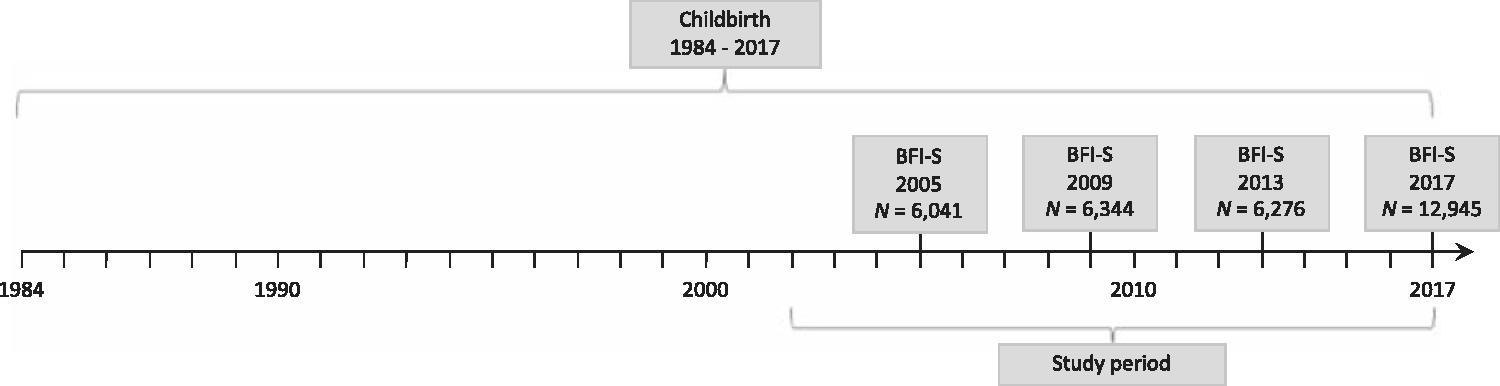
Study design with information on when the birth of a child and personality were assessed. Numbers refer to the final sample, which was considered in the analyses.
In order to be able to model selection effects and nuanced personality differences across the transition to parenthood, we distinguished between (a) parents who experienced the birth of their first child at different time points across the study and (b) non-parents who remained childless throughout the study. In parents, we coded how the birth of their first child was temporarily related to the respective personality assessment in 2005, 2009, 2013, and 2017, respectively (in years and months). We then applied multilevel analyses and combined within-person and between-person information, which provided us with fine-grained information on personality in non-parents as well as parents in individual years and months before and after their first child was born.
In our analyses, we modelled selection effects to examine whether personality differs between parents before the birth of their first child and non-parents. We analysed anticipation and socialization effects to investigate whether individual personality traits tend to increase or decrease in the three years before and three years after the transition to parenthood, respectively. We modelled short-term post-event effects to test for transient short-term personality differences in the first year of having a baby and long-term post-event effects to test for enduring long-term personality differences in the subsequent years of being a parent. We investigated these effects in the total sample as well as separately in women and men, different age groups, and individuals living with or without a partner.
Hypotheses
In line with the social investment principle (Roberts & Wood, 2006), we hypothesized that parents should become more conscientious, agreeable, and emotionally stable in the three years before (anticipation effects) and three years after (socialization effects) the transition to parenthood. However, parents should be less conscientious, agreeable, and emotionally stable in the first year of having a baby as compared with all other years (short-term post-event effects; Denissen et al., 2013; Soto & Tackett, 2015). In addition, we studied selection and long-term post-event effects and tested whether any effects (selection, anticipation, socialization, as well as short-term and long-term post-event effects) varied by gender, age, and living status (with versus without a partner) at childbirth (exploratory analyses). Our hypotheses are not pre-registered but are directly inspired by the social investment principle (Roberts & Wood, 2006) and additional theories in the field (Denissen et al., 2013; Soto & Tackett, 2015).
Materials and methods
Study sample
We used data from the German SOEP Study, a nationally representative household panel study from Germany with multistage probability sampling. The SOEP started in 1984 and is still ongoing. Here, we consider information until 2017, the most recent wave so far. Data are collected yearly, and mostly stem from face-to-face interviews with all adult members of the target households.
The initial sample from 1984 was regularly replenished with new participants. This was done to counteract attrition, to increase the overall sample size, and to allow for detailed analyses of specific sub-samples. Therefore, panel members entered the study in different years, and not all participants provided information on personality in 2005, 2009, 2013, and 2017, respectively. Our statistical approach based on multilevel analyses is able to deal with this missingness. Table S1 specifies how the current sample of analysis (N = 19875, see below) is composed, and how many participants of the initial cohort and individual refreshment cohorts provided information on personality at each wave.
More detailed information on the SOEP (including the sample structure, individual subsamples, and panel attrition) has been previously presented (Goebel et al., 2019; Kroh, Kühne, Siegers, & Belcheva, 2018) and is provided at https://www.diw.de/en/soep. A detailed description of all procedures and measures collected in the SOEP can be found at https://data.soep.de/soep-core. The SOEP data are available from the DIW Berlin after signing a contract on data distribution (https://www.diw.de/en/diw_02.c.222829.en/access.html). A summary of previous publications based on the SOEP data can be found at https://www.diw.de/sixcms/detail.php?id=diw_02.c.298578.en.
Assessment of childbirth
All participants who entered the panel were initially asked how many children they had and when these children were born (year and month). Moreover, participants were yearly asked whether and when (year and month) a child was born in the current or previous year. We combined these data to obtain lifetime information on whether and when participants had experienced the birth of their first child and to distinguish between parents and non-parents in our sample (see below).
Assessment of personality
The Big Five personality traits openness, conscientiousness, extraversion, agreeableness, and emotional stability were assessed in 2005, 2009, 2013, and 2017 with the BFI-S, a short version of the Big Five Inventory (John, Donahue, & Kentle, 1991; John, Naumann, & Soto, 2008; Lang, John, Lüdtke, Schupp, & Wagner, 2011). The BFI-S contains 15 items (three items per trait), labelled from 1 (strongly disagree) to 7 (strongly agree). To maximize the validity of this short scale, heterogeneous items were selected per trait, which explains moderate internal consistencies (Lang et al., 2011). Averaged across all four waves, the Cronbach's alphas in our sample were α = .60 for openness, α = .63 for conscientiousness, α = .71 for extraversion, α = .49 for agreeableness, and α = .62 for emotional stability. The test-retest reliability, convergent validity (compared with the full BFI and NEO-PI-R), and discriminant validity (compared with other validity criteria) were acceptable (Donnellan & Lucas, 2008; Gerlitz & Schupp, 2005; Hahn, Gottschling, & Spinath, 2012; Lang, 2005). The five-factor structure of the BFI-S in the SOEP has been shown to be robust across three different modes of assessment (face-to-face interview, telephone interview, and self-administered questionnaire; Lang et al., 2011). Our study design with information on when the birth of a child and personality were assessed is visualized in Figure 1.
Statistical analysis
Sample set-up
Stata 14 (StataCorp, 2015) was used for the analyses. Openly accessible data analysis scripts are attached in the Supporting Information.
We considered individuals who provided data on at least one BFI-S item in 2005, 2009, 2013, or 2017 (N = 49 933). Because the SOEP started in 1984, but the Big Five personality traits were assessed in 2005 for the first time, we restricted our study period to reach from 2002 (three years before the first personality assessment in 2005) to 2017 (the year of the last personality assessment so far). That is, we only modelled selection effects and personality differences across the transition to parenthood among parents whose first child was born between 2002 and 2017. We built two groups of individuals (see also Figure 1): (i) Individuals who experienced the birth of their first child between 2002 and 2017 (parent sample, N = 6 891) and (ii) individuals who remained childless until 2017 (non-parent sample, N = 16 181). Individuals whose first child was born before 2002 were excluded from the analyses (N = 26 861).
Because a few participants reported the birth of their first child at an implausibly high age, we excluded parents who were older than 50 years when their first child was born (N = 12). The remaining parent sample (N = 6 879) was aged between 17 and 49 years during the first personality assessment in 2005, aged between 18 and 53 years during the second personality assessment in 2009, aged between 18 and 57 years during the third personality assessment in 2013, and aged between 18 and 62 years during the fourth personality assessment in 2017. 1 To ensure a similar age range in parents and non-parents, we excluded non-parents who were older than parents during the first, second, third, and fourth personality assessment (N = 3 185), respectively, which resulted in 12 996 remaining non-parents. Therefore, the final sample (N = 19 875) comprised 6879 (34.61%) parents and 12 996 (65.39%) non-parents.
Sample characteristics
The grand-mean age was M = 32.21 (SD = 10.32) years in the total sample, M = 35.24 (SD = 7.57) years in parents and M = 30.47 (SD = 11.25) years in non-parents. Averaged across all four waves, parents were slightly older than nonparents, t(31,603) = −40.56, p < .001.
There were 9597 (48.29%) women and 10 278 (51.78%) men in the total sample, including 3824 (55.59%) mothers and 3055 (44.41%) fathers as well as 5773 (44.42%) non-mothers and 7223 (55.58%) non-fathers. As evidenced by Fisher's exact tests, a higher percentage of parents versus non-parents was female (p < .01).
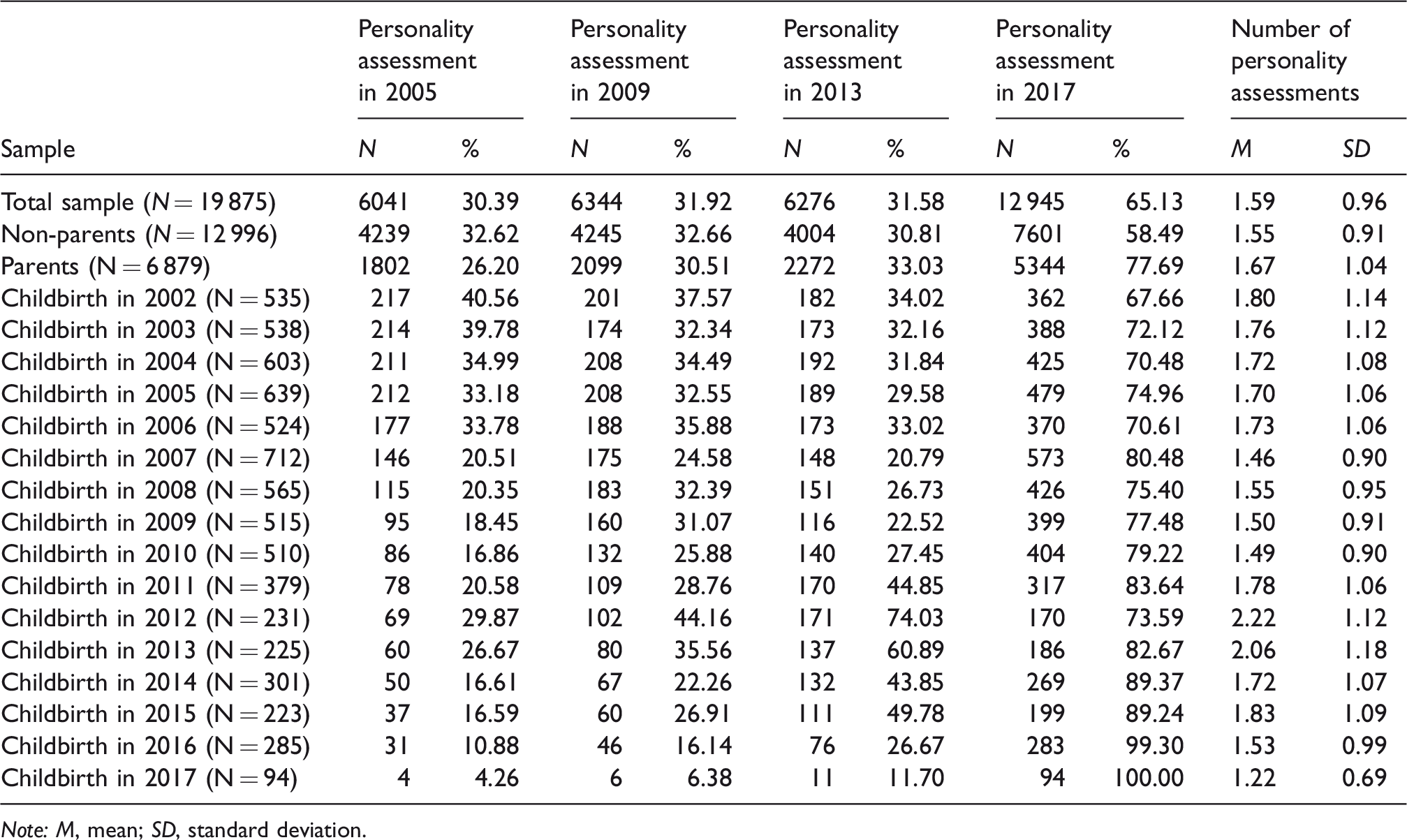
Frequencies and percentages of individuals who participated in the respective personality assessment in 2005, 2009, 2013, and 2017 as well as means and standard deviations for the overall number of personality assessments in the total sample, parents, and non-parents are presented in Table 1. As evidenced by Fisher's exact tests, a higher proportion of non-parents versus parents provided information on personality in 2005 and 2009, but a higher proportion of parents versus non-parents provided information on personality in 2013 and 2017 (p < .01). Parents took part in a slightly higher number of personality assessments than non-parents (p < .01).
Frequencies and percentages of individuals who participated in the respective personality assessment in 2005, 2009, 2013, and 2017 as well as means and standard deviations for the number of personality assessments in the total sample, parents, and non‐parents.
Note: M, mean; SD, standard deviation.
Overall, 13 127 (66.05%) individuals participated in one, 3546 (17.84%) in two, 1421 (7.15%) in three, and 1781 (8.96%) in all four personality assessments. More specifically, 4418 (64.22%) parents took part in one, 1091 (15.86%) in two, 563 (8.18%) in three, and 805 (11.73%) in all four personality assessments, and 8709 (67.01%) non-parents participated in one, 2455 (18.89%) in two, 858 (6.60%) in three, and 974 (7.49%) in all four personality assessments.
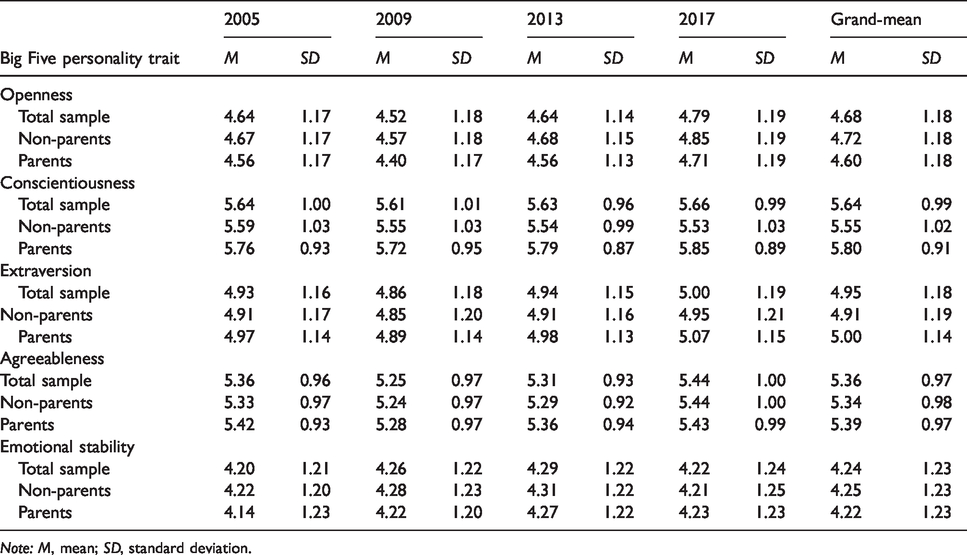
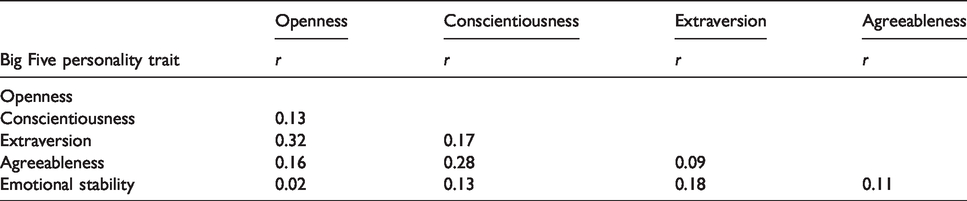
Means and standard deviations for the Big Five personality traits in the total sample, parents, and non-parents are presented in Table 2. Correlations between these traits averaged across all four waves are shown in Table 3. Correlations between these traits in 2005, 2009, 2013, and 2017 are presented in Table S1.
Means and standard deviations for the Big Five personality traits in 2005, 2009, 2013, and 2017 as well as across all four waves in the total sample, parents, and non‐parents.
Note: M, mean; SD, standard deviation.
Correlations between the Big Five personality traits across all four waves.
Analytical approach
Similar to Denissen et al. (2019) as well as Asselmann and Specht (2019, 2020). we used multilevel analyses with measurement occasions (Level 1) nested within persons (Level 2) nested within households (Level 3) to model associations between the birth of the first child and the Big Five personality traits. We built separate models per trait and modelled the effects as fixed effects. Specifically, we simultaneously regressed the standardized score of the respective Big Five personality trait on gender (to account for gender effects), linear, quadratic, and cubic age (to account for age effects), a testing variable (to account for effects due to repeated personality assessments), and different event-related predictors. These event-related predictors coded whether individuals were parents or non-parents and how the time point of the birth of the first child (in parents) was temporarily related to the time point of the respective personality assessment in 2005, 2009, 2013, and 2017 (in years and months). We used these event-related predictors to model selection effects and personality differences across the transition to parenthood (anticipation and socialization effects as well as short-term and long-term post-event effects). Table 4 summarizes how each predictor was defined and coded. Examples hereon are presented in Table 5. Because each analysis refers to an individual hypothesis, we did not adjust for multiple testing (Savitz & Olshan, 1995). However, we set the alpha level at .01.
Description and coding of the considered predictors.
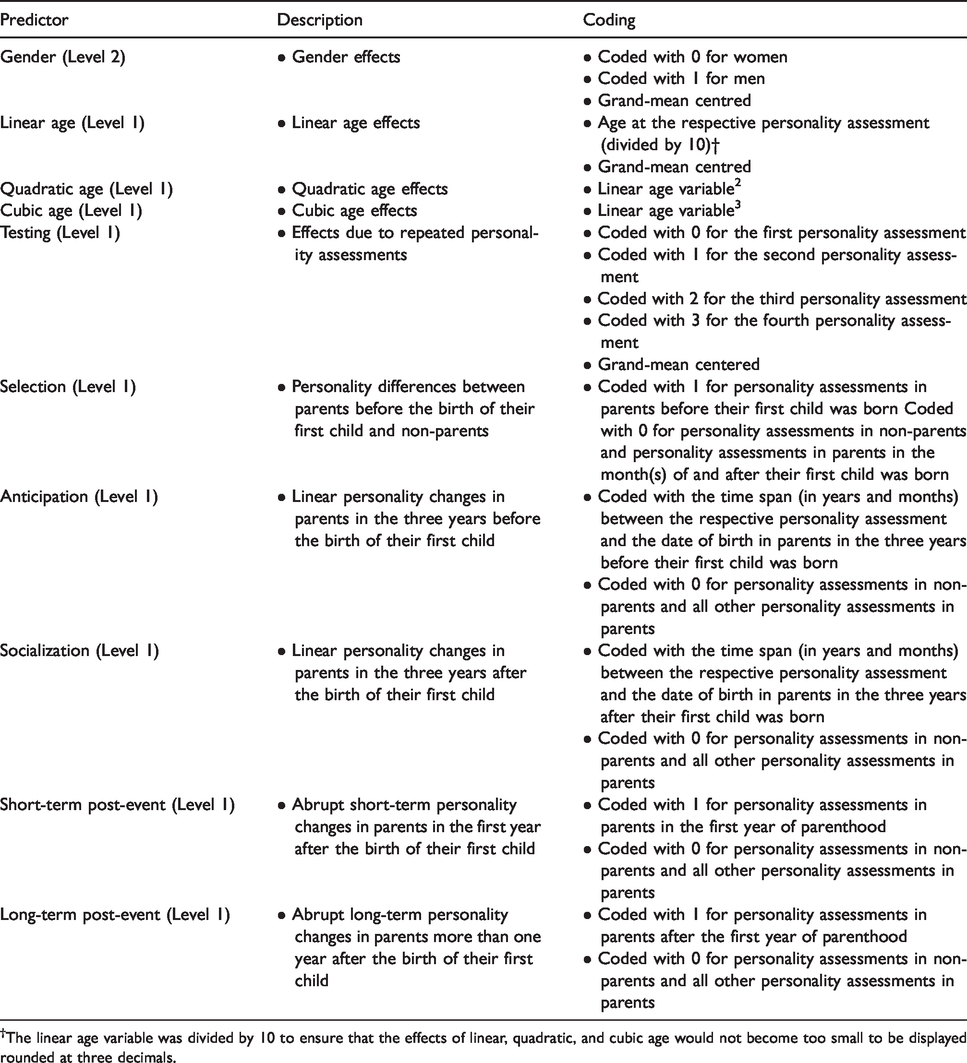
The linear age variable was divided by 10 to ensure that the effects of linear, quadratic, and cubic age would not become too small to be displayed rounded at three decimals.
Examples how the event−related predictors were coded.
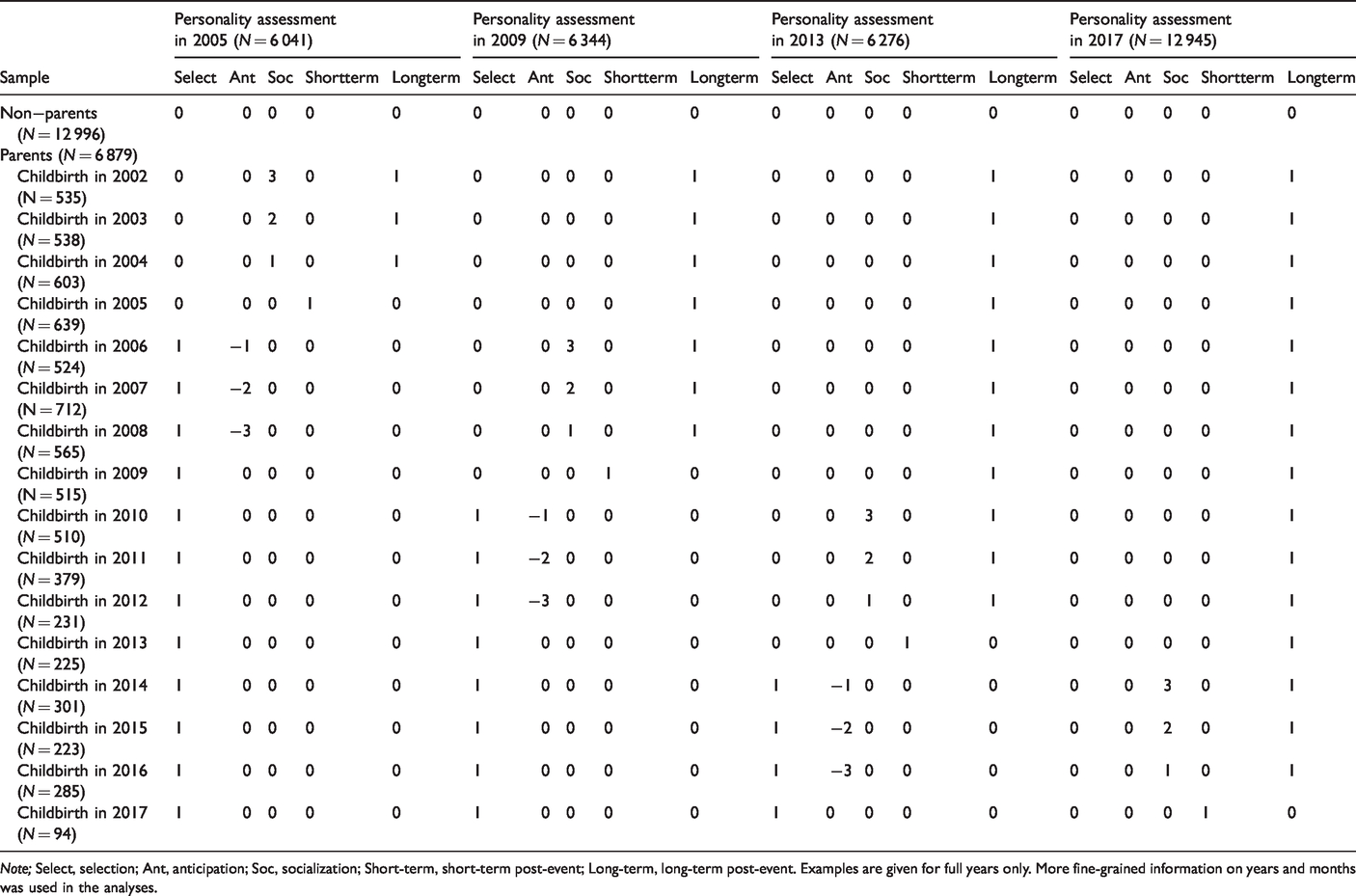
Note; Select, selection; Ant, anticipation; Soc, socialization; Short-term, short-term post-event; Long-term, long-term post-event. Examples are given for full years only. More fine-grained information on years and months was used in the analyses.
Gender differences
To examine the role of gender, we built separate models in women [N = 9 597, including 3 824 (39.85%) mothers and 5 773 (60.15%) non-mothers] and men [N = 10 278, including 3 055 (29.72%) fathers and 7 223 (70.28%) non-fathers].
Age differences
To account for potential age differences, we split the parent sample into three different groups: younger parents, who were aged between 17 and 23 years (15.79%), middle-aged parents, who were aged between 24 and 35 years (67.74%), and older parents, who were aged between 36 and 50 years (16.47%) when their first child was born. We built these groups based on percentiles. That is, younger parents were within the first and second percentile, and older parents were within the ninth and tenth percentile of the parents' age range during the birth of their first child.
Afterwards, we split the non-parent sample into equivalent age groups (aged between 17 and 23 years, 48.95%; aged between 24 and 35 years, 30.06%; and aged 36 years or older, 20.99%, respectively). Because non-parents did not have children, we referred to their age at their first personality assessment. Afterwards, we built separate models in younger individuals [N = 7 447, including 1086 (14.58%) parents and 6361 (85.42%) non-parents], middle-aged individuals [N = 85 67, including 4 660 (54.39%) parents and 3 907 (45.61%) non-parents], and older individuals [N = 3 861, including 1 133 (29.34%) parents and 2 728 (70.66%) non-parents].
Differences between individuals living with and without a partner
We also distinguished between individuals who were living with and without a partner. In the SOEP, participants were yearly asked whether they were married or cohabiting with a partner. In parents, we referred to this information in the year of childbirth. In non-parents, we referred to this information in the year of their first personality assessment. Of the parent-sample, 87.17% were living with and 12.83% were living without a partner at childbirth. Of the non-parent sample, 27.66% were living with and 72.34% were living without a partner during their first personality assessment. We then conducted separate analyses in individuals living with a partner [N = 5 610, including 2 316 (41.28%) parents and 3 294 (58.72%) non-parents] and without a partner [N = 8 956, including 341 (3.81%) parents and 8 615 (96.19%) non-parents]. Because information on participant's living status was missing in a few cases, the sample sizes for these groups are slightly smaller.
Associations between the birth of the first child and personality in the total sample (N = 19 875)1.
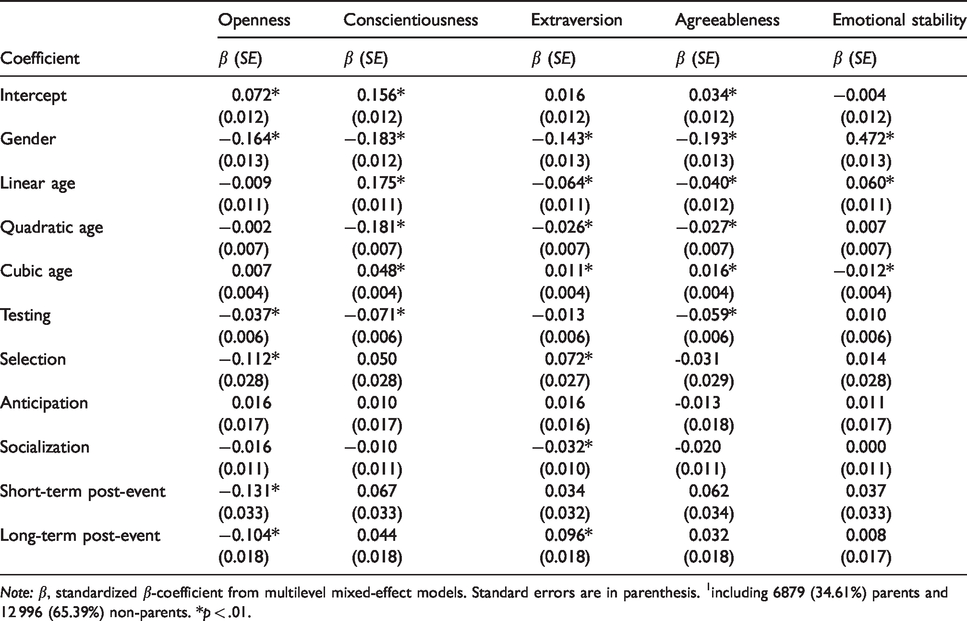
Note: β, standardized β-coefficient from multilevel mixed-effect models. Standard errors are in parenthesis. 1including 6879 (34.61%) parents and 12 996 (65.39%) non-parents. *p < .01.
Results
Control variables
All models were adjusted for gender, linear, quadratic, and cubic age, as well as repeated testing. Most of these variables were associated with the Big Five personality traits, so we included them (Table 6). In terms of gender, we found that men were less open (β = −0.164), less conscientious (β = −0.183), less extraverted (β = −0.143), less agreeable (β = −0.193), and especially more emotionally stable (β = 0.472) than women. With respect to age, our findings revealed that older individuals were more conscientious (β = 0.175 per 10 years older), less extraverted (β = −0.064), less agreeable (β = −0.040), and more emotionally stable (β = 0.060). In terms of testing effects, we found that openness (β = −0.037 per additional assessment), conscientiousness (β = −0.071), and agreeableness (β = −0.059) decreased with repeated testing. Because these effects are beyond the primary scope of this paper, we do not discuss them further.
Associations between childbirth and personality in the total sample
In the total sample (Table 6), significant selection effects on openness (β = −0.112) and extraversion (β = 0.072) indicated that parents were less open and more extraverted than non-parents before their first child was born. Moreover, openness and extraversion differed across the transition to parenthood. In terms of openness, a significant short-term (β = −0.131) and long-term (β = −0.104) post-event effect indicated that parents were less open in the first year and subsequent years of parenthood (Figure 2a). In terms of extraversion, a significant socialization (β = −0.032 per year) and long-term post-event (β = 0.096) effect indicated that extraversion linearly decreased in the first three years of parenthood but was higher after the first year of being a parent (Figure 2b).
Associations between childbirth and personality by gender
Examining the role of gender revealed the following results (Table S3): in women, no selection effects were found (all p-values > .01), indicating that mothers did not differ in their personality from non-mothers before their first child was born. However, openness, extraversion, and agreeableness differed across the transition to motherhood. Specifically, a significant short-term (β = −0.135) and long-term (β = −0.092) post-event effect on openness indicated that mothers were less open in the first year and subsequent years of having a child (Figure 3a). In addition, significant long-term post-event effects on extraversion (β = 0.069) and agreeableness (β = 0.079) indicated that mothers were more extraverted (Figure 3b) and more agreeable (Figure 3c) after the first year of being a mother.
In men, a significant selection effect on openness (β = −0.172) indicated that fathers were less open than non-fathers before their first child was born. In addition, openness, conscientiousness, and extraversion differed across the transition to fatherhood. Specifically, significant long-term post-event effects on openness (β = −0.099) and conscientiousness (β = 0.075) indicated that fathers were less open (Figure 4a) but more conscientious (Figure 4b) after the first year of being a father. Extraversion linearly decreased in the first three years of fatherhood (socialization effect: β = −0.041 per year) but was higher after the first year of being a father (long-term post-event effect: β = 0.124; Figure 4c).
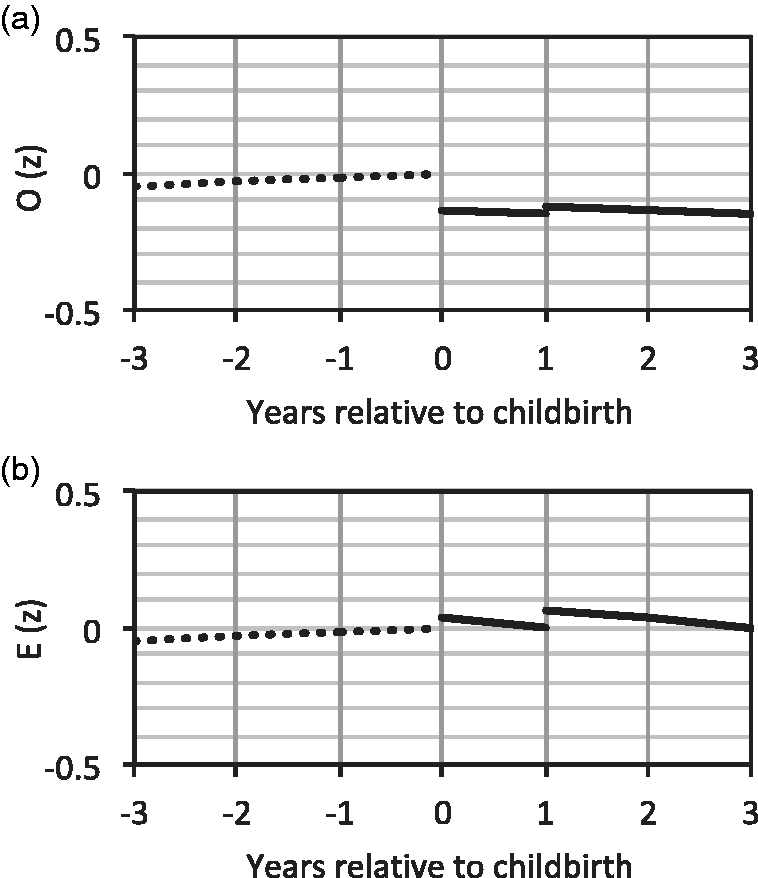
Levels of (a) openness and (b) extraversion from three years before until three years after the birth of the first child in all parents. O, openness; E, extraversion. The first line indicates levels of openness in the three years before childbirth. It is based on the coefficient of the anticipation effect multiplied by the time (in years) until childbirth. The second line displays levels of openness in the first year of parenthood. It is based on the coefficient of the short-term post-event effect and the coefficient of the socialization effect, multiplied by the time (in years) since being a parent. The third line indicates levels of openness in the second and third year of parenthood. It is based on the coefficient of the long-term post-event effect and the coefficient of the socialization effect, multiplied by the time (in years) since being a parent. A continuous line is drawn when any of the effects during the respective time frame reached statistical significance.
Associations between childbirth and personality by age
Studying the role of age revealed the following results (Table S4): in younger individuals, a significant selection effect on openness (β = −0.411) indicated that younger parents (aged between 17 and 23 years at childbirth) were less open than non-parents of their age before their first child was born. Moreover, younger parents were less open after the first year of being a parent (long-term post-event effect: β = 0—.238; Figure 5a). Most notably, younger parents were considerably more conscientious in the first year of having a baby (shortterm post-event effect: β = 0.450; Figure 5b).
In middle-aged individuals, a significant selection effect on openness (β = −0.199) indicated that middle-aged parents (aged between 24 and 35 years at childbirth) were less open than non-parents of their age before their first child was born. In addition, middle-aged parents were less open in the first year (short-term post-event effect: β = −0.220) and subsequent years (long-term post-event effect: β = −0.223) of having a child (Figure 6a). Middle-aged parents were also more conscientious (long-term post-event effect: β = 0.076; Figure 6b) and more extraverted (long-term post-event effect: β = 0.095; Figure 6c) after the first year of being a parent.
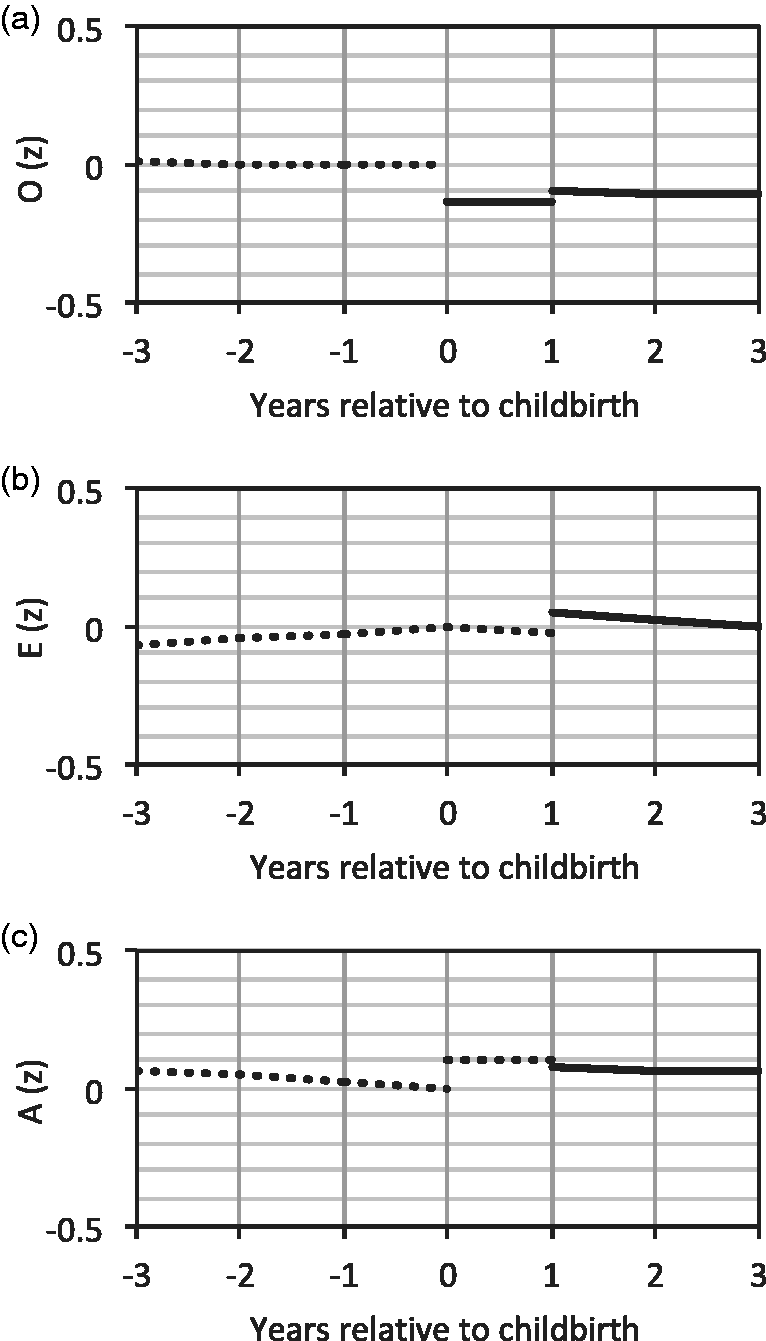
Levels of (a) openness, (b) extraversion, and (c) agreeableness from three years before until three years after the birth of the first child in mothers. O, openness; E, extraversion; A, agreeableness. A detailed description of the figure is provided in Figure 2.
In older individuals, no selection effects were found (all p-values > .01), indicating that older parents (aged between 36 and 50 years at childbirth) did not differ in their personality from non-parents of their age before their first child was born. Furthermore, older parents were less conscientious after the first year of having a child (long-term post-event effect: β = −0.099; Figure 7a) and more emotionally stable in the first year of having a baby (short-term post-event effect: β = 0.193; Figure 7b).
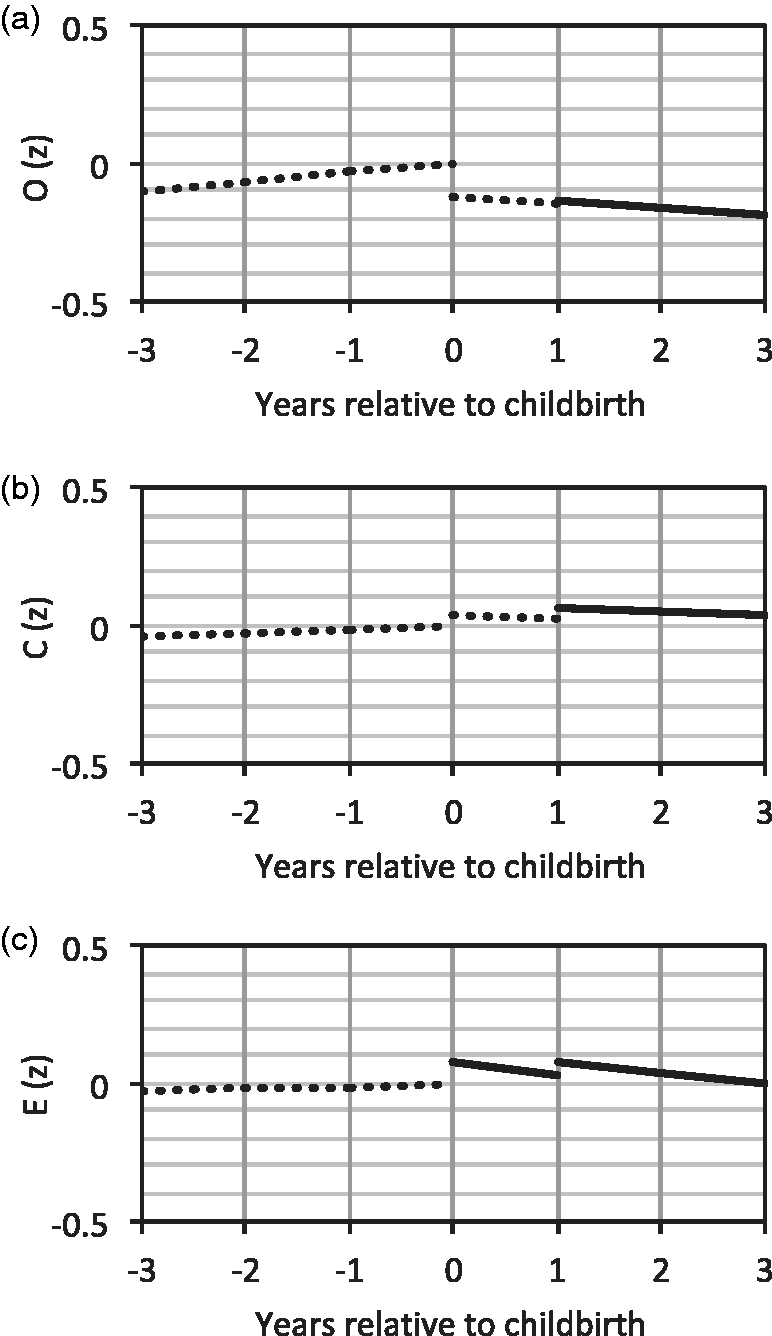
Levels of (a) openness, (b) conscientiousness, and (c) extraversion from three years before until three years after the birth of the first child in fathers. O, openness; C, conscientiousness; E, extraversion. A detailed description of the figure is provided in Figure 2.
Associations between childbirth and personality by living status
Associations between childbirth and the Big Five personality traits in individuals living with and without a partner are presented in Table S5. In individuals living without a partner, no associations between childbirth and personality were found (all p-values > .01).
In individuals living with a partner, significant selection effects on openness (β = −0.101) and emotional stability (β = 0.108) indicated that parents as compared with non-parents living with a partner were less open and more emotionally stable before their first child was born. In addition, parents living with a partner at childbirth were less open in the first year (short-term post-event effect: β = −0.138) and subsequent years (long-term post-event effect: β = −0.155) of having a child (Figure 8a). Finally, they were more agreeable in the first year of having a baby (short-term post-event effect: β = 0.110; Figure 8b).
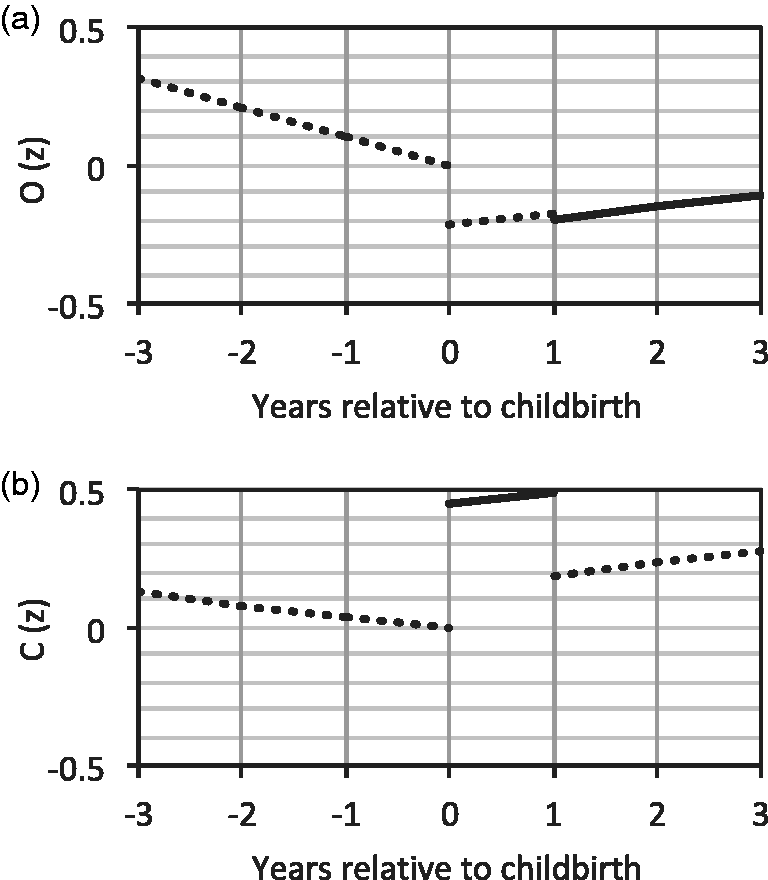
Levels of (a) openness and (b) conscientiousness from three years before until three years after the birth of the first child in younger parents. O, openness; C, conscientiousness. A detailed description of the figure is provided in Figure 2.
Discussion
We used data from a nationally representative sample of adults from Germany to examine whether personality differs between individuals who will or will not become parents, whether personality differs in the years before and after becoming a parent, and whether these effects vary by gender, age, and living status. Our main finding was that becoming a parent was primarily associated with differences in openness and extraversion. Specifically, less open and more extraverted individuals were more likely to start a family, and parents were less open in the first year and subsequent years of having a child than before. Besides, extraversion tended to decrease after becoming a parent.
Our findings on openness are consistent with previous evidence that parents-to-be and parents were less open than non-parents (Denissen et al., 2019; Galdiolo & Roskam, 2012; Jokela et al., 2011; van Scheppingen et al., 2016), that individuals who increased in openness were less likely to have children (Robins et al., 2019), and that parents decreased in openness in the years surrounding the birth of their first child (Pusch et al., 2019). Possibly, individuals who rather follow a traditional way of life and settle down are more likely to decide for a family and become even less open to unconventional ideas and experiences thereafter (Robins et al., 2019). This idea is in line with the corresponsive principle (Roberts, Caspi, & Moffitt, 2003), which assumes that (a) people may select into specific environments due to specific personality traits and that (b) accumulated experiences in these environments may in turn accentuate these traits.
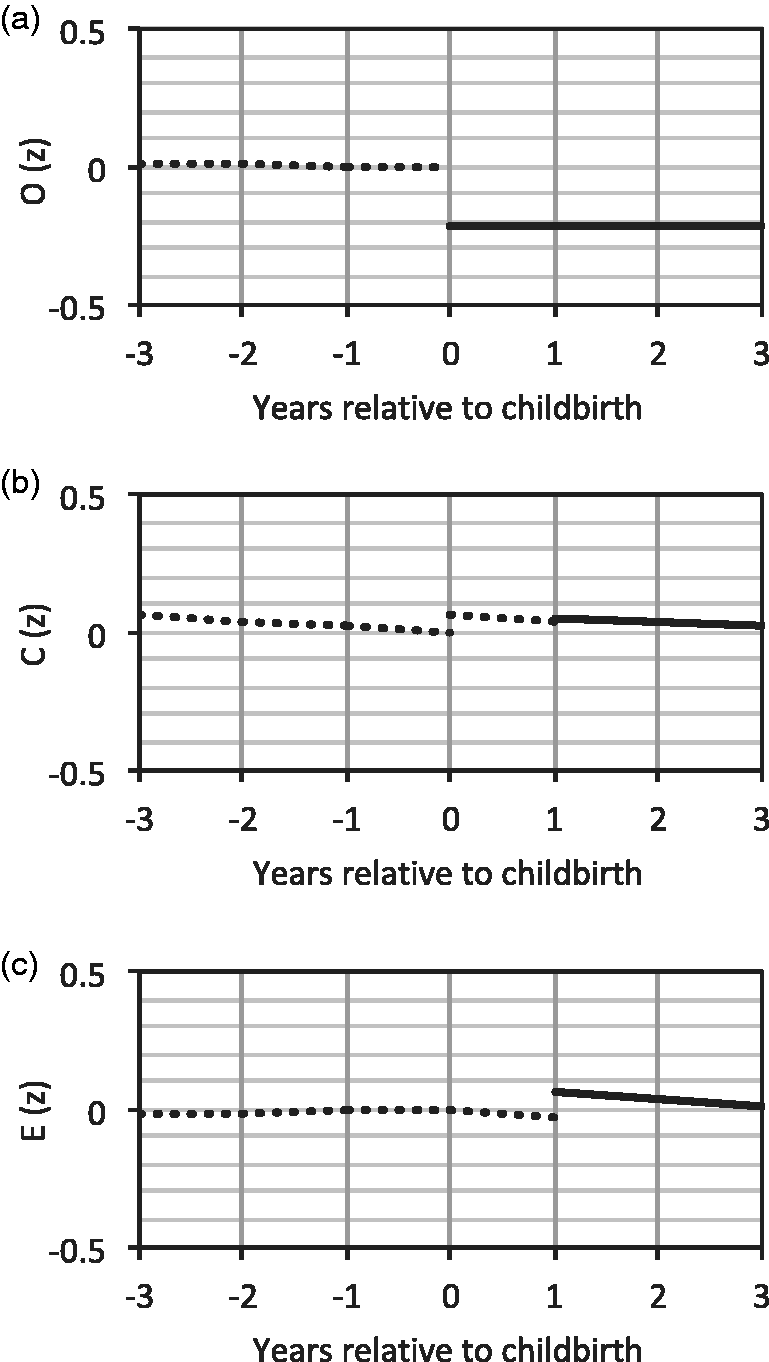
Levels of (a) openness, (b) conscientiousness, and (c) extraversion from three years before until three years after the birth of the first child in middle-aged parents. O, openness; C, conscientiousness; E, extraversion. A detailed description of the figure is provided in Figure 2.
Similarly, our findings on extraversion are in line with previous evidence that more extraverted individuals were more likely to start a family (van Scheppingen et al., 2016) and that parents decreased in extraversion in the years surrounding the birth of their first child (Galdiolo & Roskam, 2012, 2014; van Scheppingen et al., 2016). In this context, it is plausible to assume that more sociable and outgoing individuals are more likely to start a family but that parents have fewer energy and time to socialize with others and thus decrease in extraversion in the first years of parenthood. However, this result is not in line with predictions put forward by the social investment principle (Roberts & Wood, 2006) or corresponsive principle (Roberts et al., 2003).
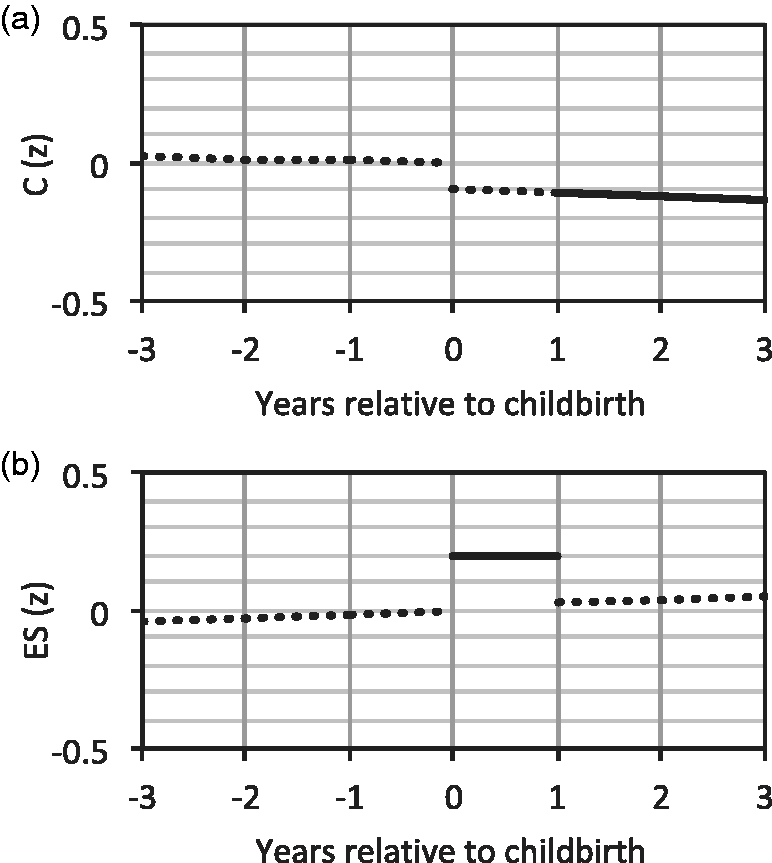
Levels of (a) conscientiousness and (b) emotional stability from three years before until three years after the birth of the first child in older parents. C, conscientiousness; ES, emotional stability. A detailed description of the figure is provided in Figure 2.
The role of gender
With respect to gender, we found that mothers were slightly more agreeable, whereas fathers were slightly more conscientious in the years after their first child was born. Inconsistent with our hypotheses, but in line with traditional gender role stereotypes (Rajadhyaksha, Korabik, & Aycan, 2015), especially mothers might (on average) spend much time with their baby at home, respond to it in a sensitive and warm-hearted manner and therefore behave in a more agreeable way. In contrast, especially fathers might feel responsible to cover their family's living expenses, work harder, and act more reliably in order to manage their family and career at the same time.
The role of age
Examining the role of age revealed that conscientiousness differed across the transition to parenthood but that these differences considerably varied by age at childbirth. Younger parents experienced a transient short-term increase in conscientiousness in the first year of having a baby that diminished in large parts thereafter. In middle-aged individuals, becoming a parent was followed by a slight but enduring long-term increase in conscientiousness in the subsequent years. Older parents were slightly less contentious after their first child was born but more emotionally stable in the first year of parenthood.
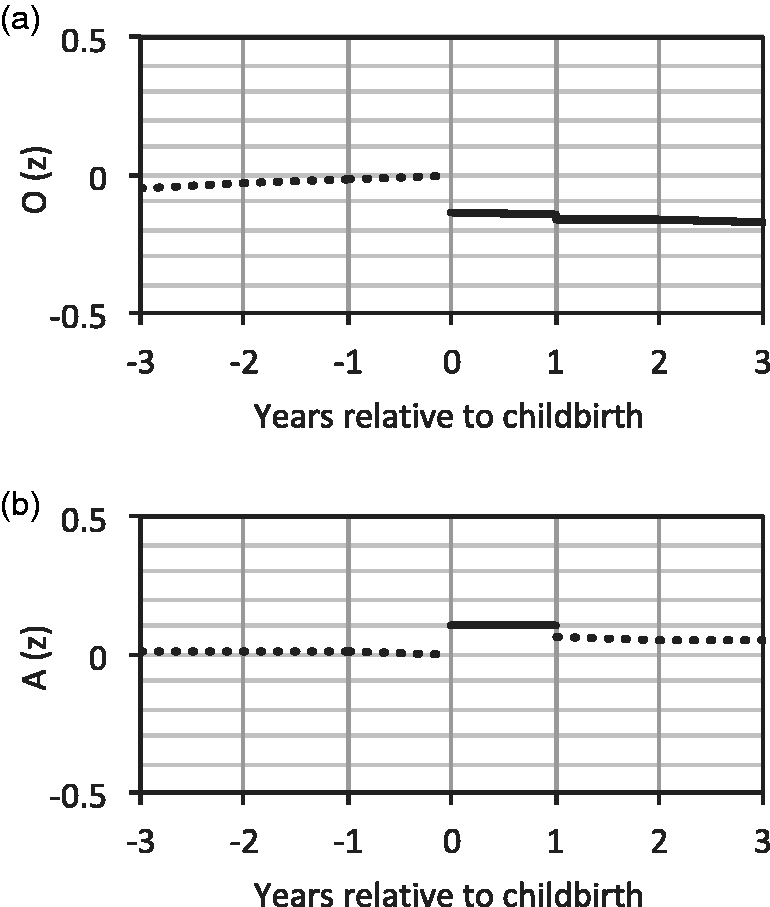
Levels of (a) openness and (b) agreeableness from three years before until three years after the birth of the first child in parents living with a partner at childbirth. O, openness; A, agreeableness. A detailed description of the figure is provided in Figure 2.
Surprisingly, previous research often found that childbirth was associated with a decrease in conscientiousness (Pusch et al., 2019; Specht et al., 2011). Our study considerably adds to this existing evidence and demonstrates that age is an important factor to consider. In line with previous evidence (van Scheppingen et al., 2016), our findings suggest that especially younger parents are more conscientious after the birth of their first child but that this maturation effect only lasts for a short period of time. In contrast, older parents seem to be less conscientious after the transition to parenthood.
How can these findings be explained? One might speculate whether younger parents (on average) have fewer responsibilities before the birth of their first child than older parents (e.g. when not having started to work full-time yet). Therefore, being responsible for a newborn around the clock might lead to a boost in conscientiousness in the first year of parenthood (Bleidorn et al., 2013). In contrast, middle-aged parents might rather balance their existing and novel duties with respect to work and family, leading to a slight but enduring increase in conscientiousness after the transition to parenthood. Finally, especially older parents might often work hard and focus on their career before starting a family (Jokela et al., 2011), which might also explain their unusually high age at childbirth. After starting a family, they might become more relaxed and less ambitious with respect to their job, leading to a slight decrease in conscientiousness but higher emotional stability especially in the first year of parenthood (e.g. when being at home).
The role of living status
Investigating the role of living status revealed that our findings primarily applied to parents who were living with but not without a partner at childbirth. In individuals living without a partner, none of the examined associations between childbirth and personality reached statistical significance. Possibly, parents living without a partner at childbirth were in complex and diverse living situations and the role of childbirth for personality development might have varied by these conditions. [However, please also note that the group of parents living without (versus with) a partner at childbirth was smaller, which impedes to evidence significant effects.]
Summary
In summary, our hypotheses inspired by the social investment principle (Roberts & Wood, 2006) that having a child should relate to an increase especially in conscientiousness, agreeableness, and emotional stability were largely not confirmed. In our models, becoming a parent was primarily associated with differences in openness and extraversion, whereas findings with respect to other traits (e.g. conscientiousness) partially varied by gender and age.
Our findings considerably extend previous research, because we considered nuanced personality differences before and after the transition to parenthood and demonstrated that additional factors, including gender, age, and living status, are important to consider. Interestingly, we did not find any anticipation effects, possibly because personality changes in first-time parents were primarily driven by novel role demands and behavioural expectations on how to behave as a parent.
Strengths and limitations
We used data from the SOEP, a socio-demographically diverse household panel study from Germany with ongoing yearly assessments since 1984. Due to the large sample and repeated assessments of life events and personality, we were able to simultaneously model selection effects as well as continuous and discontinuous short-term and long-term effects on individual personality traits before and after becoming a parent in the total sample as well as separately by gender, age, and living status.
Nonetheless, our study is not without limitations: First, because the SOEP primarily focuses on socio-economic changes, personality was measured with a short scale (BFI-S). Although the BFI-S has been shown to have acceptable psychometric properties (Gerlitz & Schupp, 2005; Hahn et al., 2012; Lang, 2005), it is less reliable than other, more comprehensive measures, which limits a distinction between true differences and measurement errors over time.
Second, because the SOEP was regularly replenished with refreshment cohorts (which entered the panel in different years), not all panel members participated in all four personality assessments conducted so far. In order to deal with this missingness and to be able to model nuanced personality differences before and after becoming a parent based on our data, we distinguished between parents and non-parents. In parents, we coded how the birth of their first child was temporarily related to the respective personality assessment in 2005, 2009, 2013, and 2017. We then applied multilevel analyses and combined within-person and between-person information, which provided us with fine-grained information on personality in non-parents and parents in individual years and months before and after childbirth, although future research would benefit from a greater number of personality assessments that are more closely spaced before and after the transition to parenthood to allow modelling pure within-person trajectories.
Third, parents and non-parents might have differed with respect to a broad range of sociodemographic, individual, familial, social, and environmental characteristics. We did not match both groups with respect to such factors (e.g. by using propensity scores), because we strived to compare a representative group of parents to a representative group of non-parents. However, we simultaneously modelled (a) personality differences between parents-to-be and non-parents as well as (b) personality differences before and after becoming a parent, taking into account potential selection effects.
Fourth, our findings come from a nationally representative sample from Germany and might not be generalizable to other populations outside of Germany.
Conclusions
Our findings suggest that becoming a parent primarily relates to differences in openness and extraversion: less open and more extraverted individuals were more likely to start a family, and openness and extraversion decreased after the transition to parenthood. Other effects partially varied by gender, age, and living status. Mothers tended to be more agreeable, whereas father tended to be more conscientious after the birth of their first child, and especially younger, but not older parents were more conscientious in the first year of having a baby. Finally, our findings were primarily driven by parents living with but not without a partner.
There are several ways to explain our results. In this regard, longitudinal observational studies promise to be particularly useful. Such studies may embed a range of ambulatory assessments to not only measure changes in personality traits but also momentary states across different situations and social roles in parents' everyday life over time (Rauthmann, Sherman, & Funder, 2015; Sherman, Rauthmann, Brown, Serfass, & Jones, 2015).
Footnotes
Declaration of conflicting interests
The authors declared no potential conflicts of interest with respect to the research, authorship, and/or publication of this article.
Acknowledgements
The data used in this publication were made available by the German Socio-Economic Panel Study (SOEP) at the German Institute for Economic Research (DIW Berlin), Berlin.
Supporting information
Additional supporting information may be found online in the Supporting Information section at the end of the article.
Table S1 Sample composition of the total sample and those who provided information on the Big Five personality traits in 2005, 2009, 2013, and 2017, respectively (N = 19 875) Table S2. Correlations between the Big Five personality traits in 2005, 2009, 2013, and 2017, respectively
Table S3. Associations between the birth of the first child and personality in women (N = 9 597)1 and men (N = 10 278)2 Table S4. Associations between the birth of the first child and personality in younger (N = 7 447)1, middle-aged (N = 8 567)2, and older (N = 3 861)3 individuals
Table S5. Associations between the birth of the first child and personality among individuals living with (N = 5 610)1 and without (N = 8 956)2 a partner
Data accessibility statement
This article earned Open Data and Open materials badges through Open Practices Disclosure from the Center for Open Science: https://osf.io/tvyxz/wiki. The data and materials are permanently and openly accessible at  and DOI: 10.1002/per.2269. Author's disclosure form may also be found at the Supporting Information in the online version.
Note
References
Supplementary Material
Please find the following supplemental material available below.
For Open Access articles published under a Creative Commons License, all supplemental material carries the same license as the article it is associated with.
For non-Open Access articles published, all supplemental material carries a non-exclusive license, and permission requests for re-use of supplemental material or any part of supplemental material shall be sent directly to the copyright owner as specified in the copyright notice associated with the article.
