Letter
 Restricted accessLetterFirst published December, 2014pp. E39-E39
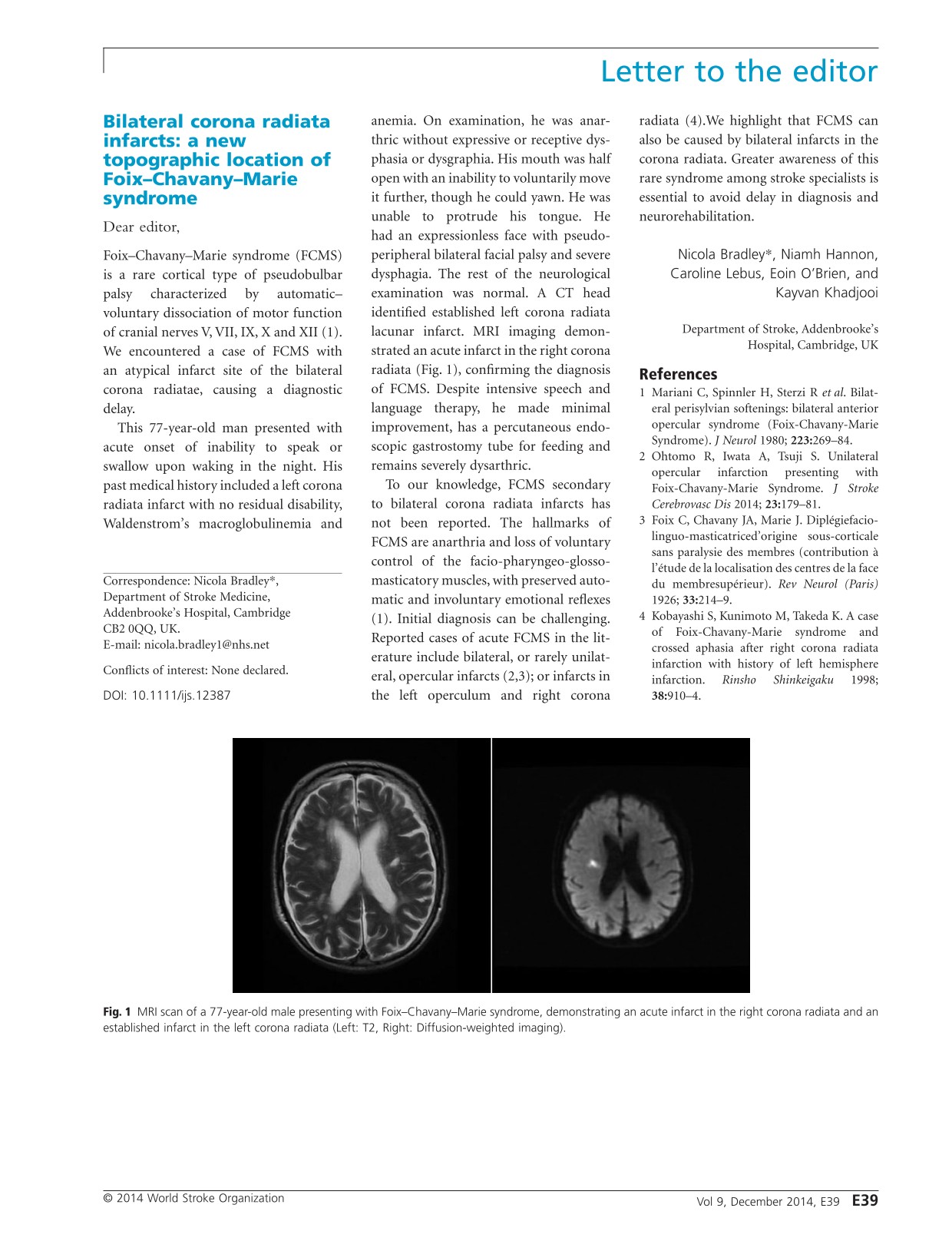
Bilateral Corona Radiata Infarcts: A New Topographic Location of Foix–Chavany–Marie Syndrome
View All


Select search scope: search across all journals or within the current journal

 Restricted accessLetterFirst published December, 2014pp. E39-E39Restricted accessLetterFirst published December, 2014pp. E40-E40
 Restricted accessLetterFirst published December, 2014pp. E41-E41
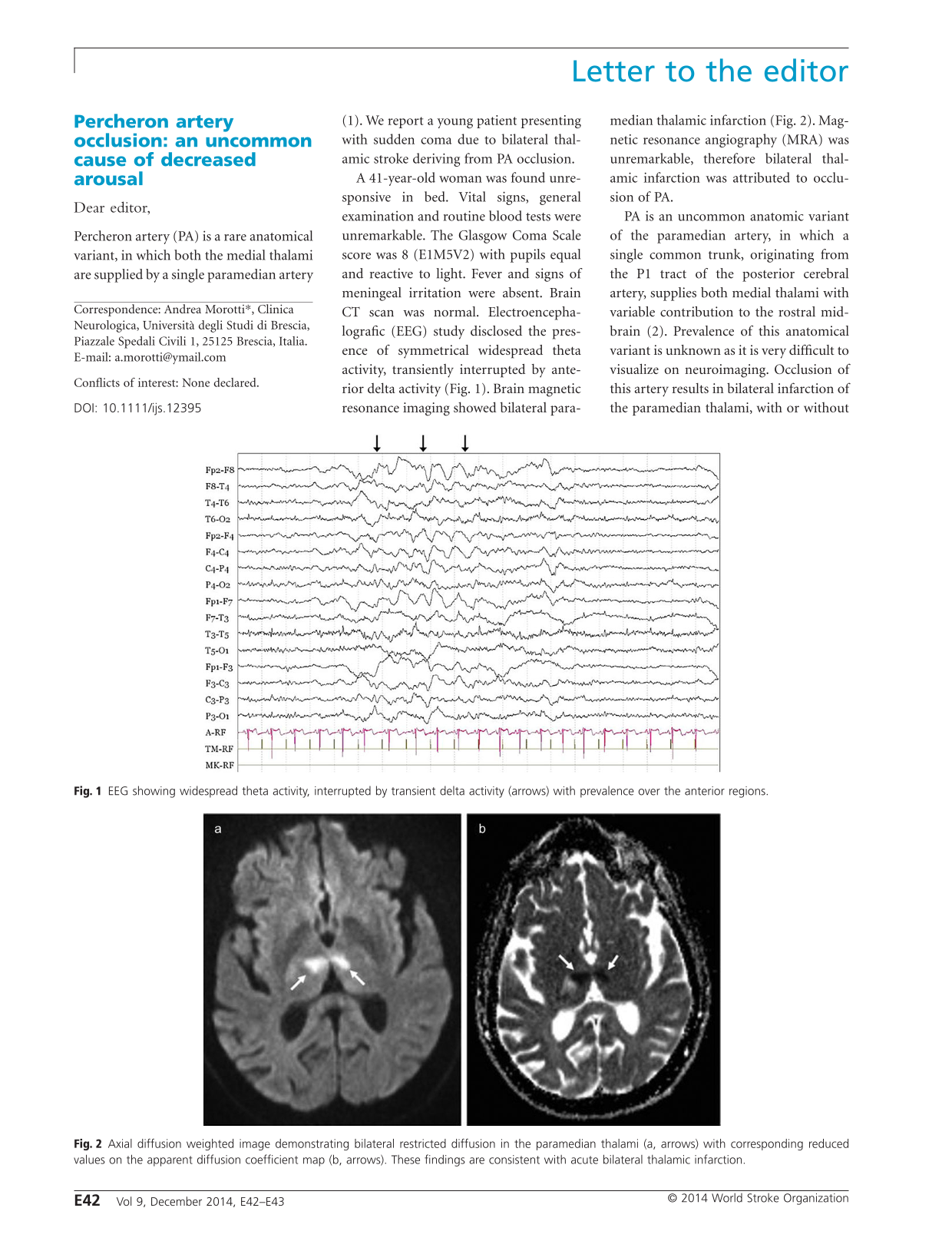
 Restricted accessLetterFirst published December, 2014pp. E42-E43
 Restricted accessLetterFirst published December, 2014pp. E44-E44
 Restricted accessLetterFirst published December, 2014pp. E44-E45
 Restricted accessEditorialFirst published December, 2014pp. 963-963
 Restricted accessResearch articleFirst published December, 2014pp. 964-964
 Restricted accessResearch articleFirst published December, 2014pp. 965-967
There are many randomized controlled trials relating to stroke rehabilitation being carried out in China, which are often published in Chinese-language journals. A recent update to our Cochrane systematic review of physical rehabilitation to improve function and mobility after stroke included 96 trials; over half (51) were conducted in China; 37 of these included studies were published in Chinese. Analyses within this Cochrane review support the conclusion that physical rehabilitation, using a mix of components from different approaches, is effective for the recovery of function and mobility after stroke. The inclusion of the Chinese studies had a substantial impact on the volume of evidence and, consequently, the conclusions. In this paper, we explore whether it is appropriate to draw implications for clinical practice throughout the world from evidence relating to a complex rehabilitation intervention delivered within one particular geographical healthcare setting. We explore the unique challenges associated with incorporating the body of evidence from China, particularly the Chinese-language publications, and identify the ongoing debate about the quality of Chinese research publications. We conclude that the growing body of evidence from China has important implications for future systematic reviews and evidence-based stroke care, but analysis and interpretation raise challenges, and improved reporting is critical.
Restricted accessReview articleFirst published December, 2014pp. 968-973TeleStroke has become an increasing means to overcome shortage of stroke expertise in underserved areas. This rapidly growing field has triggered a large amount of publications in recent years. We aimed to analyze recent advances in the field of telemedicine for acute stroke, with main focus on prehospital management, Stroke Unit treatment and network implementations in developing countries. Out of 260 articles, 25 were selected for this systematic review: 9 regarding prehospital management, 14 regarding Stroke Unit treatment and 2 describing a network in developing countries. Prehospital management showed that stroke recognition can start at the dispatch emergency call, important clinical information can be electronically transmitted to hospitals before admission and even acute treatment such as thrombolysis can be initiated in the prehospital field if ambulances are equipped with CT scan and point-of-care laboratory. Articles on remote clinical examination, telemedical imaging interpretation, trial recruitment and cost-effectiveness described various aspects of Stroke Unit treatment within TeleStroke networks, underlining reliability, safety and cost savings of these systems of care. Only one network was described to have been implemented in a developing/emerging nation. TeleStroke is a growing field expanding its focus to a broader spectrum of stroke care. It still seems to be underused, particularly in developing countries.
Restricted accessResearch articleFirst published December, 2014pp. 974-979There is an increasing trend to treating proximal vessel occlusions with intravenous–inter-arterial (IV-IA) thrombolysis. The best dose of IV tissue plasminogen activator (tPA) remains undetermined. We compared the combination of full-dose IV recombinant tissue plasminogen activator (rtPA) and IA thrombolytic therapy to IA therapy.
Between 2002 and 2009, we reviewed our computed tomographic angiography database for patients who received full-dose intravenous rtPA and endovascular therapy or endovascular therapy alone for acute ischaemic stroke treatment. Details of demographics, risk factors, endovascular procedure, and symptomatic intracranial haemorrhage were noted. Modified Rankin Scale ≤2 at three-months was used as good outcome. Recanalization was defined as Thrombolysis in Myocardial Ischaemia 2–3 flow on angiography.
Among 157 patients, 104 patients received IV-IA treatment and 53 patients underwent direct IA therapy. There was a higher recanalization rate with IV-IA therapy compared with IA alone (71% vs. 60%,
Combined IV-IA therapy with full-dose intravenous rtPA was safe and results in good recanalization rates without excess symptomatic intracranial haemorrhage. Testing of full-dose IV tPA followed by endovascular treatment in the IMS3 trial is justified.
Restricted accessResearch articleFirst published December, 2014pp. 980-984In gradient echo magnetic resonance imaging (MRI), intravascular thrombi (IT) can appear as vascular susceptibility artifacts, linked to local presence of intra-arterial deoxyhaemoglobin, and called susceptibility vessel signs (SVS).
Our objectives were to evaluate the sensitivity of susceptibility-weighted sequences, such as T2* weighted angiography (SWAN) in the visualization of SVS compared with T2*, to consider whether it enabled a better understanding of the importance of SVS, and to compare cerebral circulation regulation profiles according to the localization of the SVS (i.e. proximal or distal).
We prospectively studied the clinical and imaging data of 78 consecutive patients admitted for acute cerebral ischemia to the stroke unit of Besançon University Hospital between 1 April 2009 and 31 January 2010.
An SVS was visualized in 44/78 (56%) patients using SWAN and in 13/78 (16%) patients using T2*. All the SVS visible using T2* were also visible on the SWAN. The interobserver kappa score was 0·72 [CI (0·53–0·91)] for T2*, 0·72 [CI (0·57–0·87)] for SWAN, and weighted kappa was 0·77 [CI (0·61–0·92)] for both T2* and SWAN. When an MCA occlusion was visible on MRA imaging (22/78 patients), a SVS was visualized in 7/22 cases (31·8%) using T2* and in 20/22 cases (91%) using SWAN. When the occlusion was visible in the M1 or M2 segments (17/78 patients), an SVS was visualized in 6/17 cases (35·3%) using T2* and in 15/17 cases (88·2%) using SWAN. When the occlusion was visible in the M3 segment (5/78 patients), an SVS was visualized in 1/5 cases (20%) using T2* and in 5/5 cases (100%) using SWAN. Presence of SVS was not associated with cardioembolic etiology of the stroke.
SWAN was more sensitive than T2* in the visualization of SVS in the intracranial arteries during the acute phase of ischemic stroke. Our study shows that the low number of SVS visualized using T2* in previous studies is probably related to a lack of sensitivity of the sequence, rather than to the nature or age of the thrombus. The greater sensitivity of SWAN seems to be linked to the visualization of SVS in cases of small thrombi.
Restricted accessResearch articleFirst published December, 2014pp. 985-991Stroke patients with diabetes and admission hyperglycaemia have worse outcomes than non-diabetics, with or without intravenous thrombolysis. Poor vessel recanalization was reported in diabetics treated with intravenous thrombolysis.
This study aimed to determine the impact of admission glucose and diabetes on recanalization and outcome after intra-arterial thrombolysis.
We analysed 389 patients (213 men, 176 women) treated with intra-arterial thrombolysis. The association of diabetes and admission glucose value with recanalization, outcome, mortality, and symptomatic intracranial haemorrhage was determined. Recanalization was classified according to thrombolysis in myocardial infarction grades. Outcome was measured using the modified Rankin Scale at three-months and categorized as favourable (modified Rankin Scale 0–2) or poor (modified Rankin Scale 3–6).
The rate of partial or complete recanalization (thrombolysis in myocardial infarction 2–3) did not differ between patients with and without diabetes (67% vs. 66%;
Diabetes and glucose value on admission did not influence recanalization after intra-arterial thrombolysis; nevertheless, they were independent predictors of poor outcome after intra-arterial thrombolysis and a higher admission glucose value was an independent predictor of symptomatic intracranial haemorrhage. This indicates that factors on the capillary, cellular, or metabolic level may account for the worse outcome in patients with elevated glucose value and diabetes.
Restricted accessResearch articleFirst published December, 2014pp. 992-998In stroke patients, collateral flow can rapidly be assessed on computed tomography angiography (CTA).
In this study, the impact of baseline collaterals on early outcome and risk of symptomatic intracerebral hemorrhages after systemic thrombolysis in patients with proximal arterial occlusions within the anterior circulation were analyzed.
Collateralization scores were determined on the CT angiography source images (0 = absent; 1 ≤ 50%, 2 > 50% but <100%, and 3 = 100% collateral filling) of patients with distal intracranial carotid artery and/or M1 segment occlusions treated from 2008 to December 2011. A collateral score of 0 to 1 was designated as poor and 2 to 3 as good collateral vessel status. Outcome variables included in hospital mortality, favorable outcome at discharge (modified Rankin score ≤ 2), and rates of symptomatic intracerebral hemorrhage based on the European–Australasian Acute Stroke Study II definition.
Among 246 subjects (mean age of 74 years; median National Institutes of Health Stroke Scale N at admission 14), 205 patients (83%) had good collaterals, whereas 41 patients (17%) had poor collaterals, respectively. Patients with poor collaterals had significantly higher rates of in-hospital mortality (41% vs. 12%,
Patients with proximal arterial occlusions within the anterior circulation and poor baseline collaterals have a poor early functional outcome and high rates of symptomatic intracerebral hemorrhage after systemic thrombolysis. Since similar findings have also been reported after endovascular therapy, strategies to improve collateral blood flow should be assessed in this patient population.
Restricted accessResearch articleFirst published December, 2014pp. 999-1005: Developing improved methods for analysis of the modified Rankin Scale (mRS) remains a critical issue for the stroke research community. A recently proposed permutation-based approach is assumption-free and easily interpretable but computationally intensive and does not provide confidence intervals to quantify the precision of the effect size estimate. We aimed to develop a method to overcome these limitations.
: We propose a procedure using generalized odds ratios to estimate the odds that a patient who received the investigational treatment will have a better outcome than a patient receiving standard treatment. This approach was validated against the permutation method using hypothetical clinical trial scenarios of neuroprotective effect, early recanalization effect, late recanalization effect, and random benefit.
: The generalized odds ratio approach had strong agreement with the permutation approach provided sample size was >15 patients per treatment arm. Simulation established that the confidence intervals generated were accurate. Ignoring patient pairs with tied mRS scores overestimates the treatment effect compared with splitting tied mRS scores.
: In addition to all the advantages of the recently proposed permutation-based approach, our method generates confidence intervals without the need for intensive computational power. The resulting generalized odds ratios are particularly suitable for inclusion in meta-analyses and have a simple and intuitive connection with the number-needed-to-treat measure.
Restricted accessResearch articleFirst published December, 2014pp. 1006-1010Sonothrombolysis is safe and may increase the likelihood of early recanalization in acute ischemic stroke patients.
In preparation of a phase III clinical trial, we contrast the likelihood of achieving a sustained recanalization and functional independence in a post hoc subgroup analysis of patients randomized to transcranial Doppler monitoring plus intravenous tissue plasminogen activator (sonothrombolysis) compared with intravenous tissue plasminogen activator alone in the CLOTBUST trial.
We analyzed the data from all randomized acute ischemic stroke patients with pretreatment National Institutes of Health Stroke Scale scores ≥ 10 points and proximal intracranial occlusions in the CLOTBUST trial. We compared sustained complete recanalization rate (Thrombolysis in Brain Ischemia flow grades 4–5) and functional independence (modified Rankin Scale 0–1) at 90 days. Safety was evaluated by the rate of symptomatic intracranial hemorrhage within 72 h of stroke onset.
Of 126 patients, a total of 85 acute ischemic stroke patients met our inclusion criteria: mean age 71 ± 11years, 56% men, median National Institutes of Health Stroke Scale 17 (interquartile range 14–20). Of these patients, 41 (48%) and 44 (52%) were randomized to intravenous tissue plasminogen activator alone and sonothrombolysis, respectively. More patients achieved sustained complete recanalization in the sonothrombolysis than in the intravenous tissue plasminogen activator alone group (38·6% vs. 17·1%;
Our results point to a signal of efficacy and provide information to guide the subsequent phase III randomized trial of sonothrombolysis in patients with severe ischemic strokes.
Restricted accessResearch articleFirst published December, 2014pp. 1011-1016Stroke care networks with and without telemedicine have been established in several countries over the last decade to provide specialized stroke expertise to patients in rural areas. Acute consultation is a first step in the management of stroke, but not the only one. Methods of standardization of care and treatment are much needed. So far, quality management systems have only been used for single stroke units. To the best of our knowledge, we are the first stroke network worldwide to aim for certification of a network-wide quality management system.
The Stroke Network Using Telemedicine in Northern Bavaria (STENO), currently with 20 associated medical institutions, is one of the world's largest stroke networks, caring for over 5000 stroke patients each year. In 2010, we initiated the implementation of a network-wide ‘total’ quality management system according to ISO standard 9001:2008 in cooperation with the German Stroke Society and a third-party certification organization (LGA InterCert).
Certification according to ISO 9001:2008 was awarded in March 2011 and maintained over a complete certification cycle of 3 years without major deviation from the norm in three external third-party audits. Thrombolysis rate significantly increased from 8·2% (2009) to 12·8% (2012).
Certified quality management within a large stroke network using telemedicine is possible and might improve stroke care procedures and thrombolysis rates. Outcome studies comparing conventional stroke care and telestroke care are inevitable.
Restricted accessResearch articleFirst published December, 2014pp. 1017-1025Approximately 15 million people who suffer a stroke globally each year are at risk of developing depression.
To update our systematic review and meta-analysis of the frequency of depression after stroke published in 2005, including studies published before July 2004.
We included all published observational studies (to 31 May 2013) with prospective consecutive recruitment and quantification of the proportion of people with depression after stroke. We included studies of adult (>18 years) patients with a clinical diagnosis of stroke, where an assessment of depression or depressive symptom burden was performed at a pre-specified time-point for all study participants.
Data were available from 61 studies including 25 488 people. The proportional frequency of depression varied considerably across studies; however, the pooled frequency estimate of 31% (95% confidence interval 28% to 35%) was not significantly different from the 33% (difference of 2%, 95% confidence interval <1% to 3%) reported in the 2005 review. The proportion with depression between one and five-years (25%; 95% confidence interval 16 to 33%) and at five years after stroke (23%; 95% confidence interval 14 to 31%) was significantly lower.
Despite systematic review evidence describing validated depression screening tools and effective treatment and prevention strategies for depression after stroke, there has not been a significant reduction in the proportion of people experiencing depression after stroke. There is a pressing need for increased clinical uptake of evidenced-based strategies to screen for, prevent, and treat depression after stroke.
Restricted accessResearch articleFirst published December, 2014pp. 1026-1036We previously published a systematic review in 2005 on factors associated with the development of depression in people with stroke.
To update and expand that review to include published data on the impact of depression on stroke outcome.
We included all published observational studies (to May 31, 2013) with prospective consecutive recruitment of people with a clinical diagnosis of stroke where an attempt was made to assess the variables associated with, or predictive of, the development of depression.
We included data from 23 studies including 18 374 people. Depression after stroke was associated with prestroke depression, more severe neurological deficit and physical disability in the acute phase, and later after stroke. No consistent relationship between depression and demographic parameters or stroke features was identified. The review of the impact of depression on stroke outcome included data from 14 cohorts, including 4498 people, and found that depression was negatively associated with functional outcome in stroke survivors.
Early identification of patients at high risk of depression after stroke, those with a history of depression and physical disability after stroke, would enable the early implementation of effective management and prevention strategies for depression. The reciprocal relationship between depression and physical disability highlights the need for interventions that reduce disability after stroke, which may in turn improve mood and overall recovery for an increasingly large number of stroke survivors.
Restricted accessResearch articleFirst published December, 2014pp. 1037-1044Social functioning encompasses a range of important skills that an individual uses to interact with the social world. Previous studies suggest that social functioning (outcomes) may be impaired after childhood stroke, but research is limited.
We examined the following: (1) the effect of ischemic stroke upon social outcomes in children; (2) the correlation of cognitive abilities and problem behaviors with social outcomes; and (3) the role of infarct characteristics as predictors of social outcomes.
We conducted an observational case-controlled study to compare children with neonatal or childhood onset stroke and controls with chronic asthma. Neurological deficits were measured with the Pediatric Stroke Outcome Measure. Cognitive abilities, problem behavior, adaptive behavior, and social outcomes were assessed with standardized measures.
Overall stroke cases were impaired in several areas of adaptive behaviors but not in cognitive ability, problem behaviors, or social outcomes. Children with more severe neurological deficits had impairments in a range of adaptive behaviors, social adjustment, and social participation. Impaired cognitive ability and more problem behaviors correlated with impaired social adjustment, particularly in stroke cases. Larger infarcts correlated with greater neurological impairment, lower IQ, and poorer social participation.
Stroke can result in impaired adaptive and social functioning without apparent deficits in IQ or behavior. Infarct size, residual neurological deficits, impaired cognitive ability, and problem behaviors increase the risk for poor social adjustment and participation. These findings can help the clinician anticipate impaired social functioning after pediatric stroke, which is important because age-specific treatments are available.
Restricted accessResearch articleFirst published December, 2014pp. 1045-1051Atrial fibrillation impairs left atrial appendage function and the thrombus formation in the left atrial appendage is a major cause of cardioembolic stroke.
To evaluate the association between the volume of the left atrial appendage measured by real-time three-dimensional transesophageal echocardiography and presence of paroxysmal atrial fibrillation in patients with cerebral infarction or transient ischemic attack.
Real-time three-dimensional transesophageal echocardiography was performed to measure left atrial appendage end-diastolic and end-systolic volumes to calculate left atrial appendage ejection fraction. Patients with normal sinus rhythm at the time of real-time three-dimensional transesophageal echocardiography were divided into groups with and without paroxysmal atrial fibrillation. Volumetric data were corrected with the body surface area.
Of 146 patients registered, 102 (29 women, 72·2 ± 10·7 years) were normal sinus rhythm at the examination. In 23 patients with paroxysmal atrial fibrillation, left atrial appendage end-diastolic volume (4·78 ± 3·00 ml/m2 vs. 3·14 ± 2·04 ml/m2,
Left atrial appendage volumetric analysis by real-time three-dimensional transesophageal echocardiography is a promising method for detecting paroxysmal atrial fibrillation in acute cerebral infarction or transient ischemic attack.
Restricted accessResearch articleFirst published December, 2014pp. 1052-1056Risk factors for aneurysmal sub-arachnoid haemorrhage can be divided into environmental and inherited factors; the latter being presumed more important in young patients. We explored in young sub-arachnoid haemorrhage patients whether risk-factor profiles influence clinical and radiological characteristics of aneurysms and sub-arachnoid haemorrhage.
From the 2139 aneurysmal sub-arachnoid haemorrhage patients who had been entered in our prospectively collected database between January 1997 and August 2012, we retrieved data on young (18–40 years) aneurysmal sub-arachnoid haemorrhage patients and compared those with smoking or hypertension (atherogenic risk factors) with those without. Clinical and radiological characteristics were compared with risk ratios and corresponding 95% confidence intervals. Possible confounding by age and gender was adjusted with multivariable Poisson regression analysis.
Patients with atherogenic risk factors (
Young sub-arachnoid haemorrhage patients without atherogenic risk factors are rare. Clinical and radiological characteristics vary between sub-arachnoid haemorrhage patients with different risk-factor profiles. This clinical heterogeneity should be taken into account in future genetic and other etiological studies.
Restricted accessResearch articleFirst published December, 2014pp. 1057-1064Neuroimaging manifestations of small vessel disease are heterogeneous, and correlation with patient features has not been adequately characterized.
Our goal was to correlate magnetic resonance imaging findings with clinical features in a large multiethnic cohort with recent lacunar stroke.
Patient characteristics were correlated with neuroimaging results in the Secondary Prevention of Small Subcortical Stroke study participants.
Among 3005 patients, mean age was 63 years; 62% were men; and 51%, 30%, and 16% were non-Hispanic White, Hispanic, and Black, respectively. Recent lacunar infarcts were distributed between the subcortical hemisphere (31%), thalamus (26%), brainstem/cerebellum (26%), and basal ganglia/internal capsule (16%). Multiple lacunar infarcts (i.e., acute and remote) were present in 40% and associated with increased age (OR 1·3 per 20 years, 95% CI 1·1, 1·5), male gender (OR 1·5, CI 1·3, 1·7), hypertension (OR 1·5, CI 1·2, 1·8), increased systolic blood pressure (OR 1·2 per 20 mmHg, CI 1·1, 1·3), and prior stroke (OR 3·8, CI 2·9, 5·0). Moderate-severe white matter hyperintensities were present in 50% and associated with increased age (OR 4·3 per 20 years, CI 3·4, 5·4), hypertension (OR 1·8, CI 1·4, 2·3), increased systolic blood pressure (OR 1·3 per 20mmHg, CI 1·1, 1·5), increased diastolic blood pressure (OR 1·2 per 10 mm, CI 1·0,1·3), and prior stroke (OR 3·3, CI 2·3, 4·5). Infarct location varied significantly by race-ethnicity (
In patients with recent lacunar stroke, infarct location and number have distinctie associations with gender, vascular risk factors, and race-ethnicity, demonstrating the complex pathogenesis of lacunar stroke and cerebral small artery disease.
Restricted accessResearch articleFirst published December, 2014pp. 1065-1072We aimed to stratify the risk of vascular event recurrence in patients with cerebral infarction according to living and socioeconomic characteristics and geographic region.
The Outcomes in Patients with TIA and Cerebrovascular Disease (OPTIC) study is an international prospective study of patients aged 45 years or older who required secondary prevention of stroke [following either an acute transient ischemic attack, minor ischemic strokes, or recent (less than six-months previous), stable, first-ever, nondisabling ischemic stroke]. A total 3635 patients from 245 centers in 17 countries in four regions (Latin America, Middle East, North Africa, South Africa) were enrolled between 2007 and 2008. The outcome measure was the two-year rate of a composite of major vascular events (vascular death, myocardial infarction and stroke).
During the two-year follow-up period, 516 patients experienced at least one major cardiovascular event, resulting in an event rate of 15·6% (95% confidence interval 14·4–16·9%). Event rates varied across geographical region (
Vascular risk in stroke patients in low- and middle-income countries varies not only with the number of arterial beds involved but also with socioeconomic variables.
Restricted accessResearch articleFirst published December, 2014pp. 1073-1082Craniocervical arterial dissection is a common cause of ischemic stroke in the young to middle-aged population. There have been a number of previous studies where radiological features have been described but few with detailed mapping of infarct topography and none where these features have been related to the reported risk factors.
The aims of this study were to describe the radiological characteristics of dissection patients ≤55 years and relate these to reported risk factors.
Craniocervical arterial dissection cases ≤55 years, and age- and gender-matched controls were identified from a medical records database between 1998 and 2009. Control cases had stroke from another cause than dissection. Records and radiology were reviewed.
Thirty-six radiologically confirmed dissection cases [20 (56%) vertebral artery, 16 (44%) internal carotid], and 43 controls were identified. Dissections were extracranial with intracranial extension in 10 (28%) cases. Infarction was demonstrated in 22 (61%) dissection cases. The most common wall deficit identified was an intimal flap. Twenty-three (64%) dissection cases had a recent history of neck trauma (
Restricted accessResearch articleFirst published December, 2014pp. 1083-1089Ischemic bowel disease and stroke have been noted to have shared pathomechanisms. However, data regarding the stroke occurrence following ischemic bowel disease are still lacking.
The aim of this study is to explore the risk of stroke in patients with ischemic bowel disease during a one-year follow-up period in Taiwan.
Data used in this study were retrieved from the ‘Longitudinal Health Insurance Database 2000. Five hundred sixty-nine patients hospitalized with ischemic bowel disease were included as the study group, and 3414 subjects, matched by age and gender, were randomly extracted as a comparison group. Cox proportional hazards regression analysis was performed to test the relationship of ischemic bowel disease and subsequent stroke during the one-year follow-up period.
The incidence rate of stroke among the sampled subjects during the 30-day, 90-day, and 365-day follow-up period was 1·24, 0·76, and 0·43 per 10 person-years. The adjusted hazard ratio for stroke for those patients with ischemic bowel disease within 30-, 90-, and 365-day follow-up periods was found to be 3·71 (95% confidence interval = 1·89–7·27), 2·11 (95% confidence interval = 1·22–3·66), and 1·70 (95% confidence interval = 1·14–2·52) times that of matched comparisons, respectively. The adjusted hazard ratio of ischemic stroke for patients with ischemic bowel disease was found to be 5·29 during the 30-day follow-up period than comparisons.
We found ischemic bowel disease to be significantly associated with stroke occurrence.
Restricted accessResearch articleFirst published December, 2014pp. 1090-1096The increased mortality rates of survivors of aneurysmal subarachnoid haemorrhage have been attributed to an increased risk of cardiovascular events in a registry study in Sweden. Swedish registries have however not been validated for subarachnoid haemorrhage and Scandinavian incidences of cardiovascular disease differ from that in Western European countries. We assessed risks of vascular disease and death in subarachnoid haemorrhage survivors in the Netherlands.
From the Dutch hospital discharge register, we identified all patients with subarachnoid haemorrhage admission between 1997 and 2008. We determined the accuracy of coding of the diagnosis subarachnoid haemorrhage for patients admitted to our centre. Conditional on survival of three-months after the subarachnoid haemorrhage, we calculated standardized incidence and mortality ratios for fatal or nonfatal vascular diseases, vascular death, and all-cause death. Cumulative risks were estimated with survival analysis.
The diagnosis of nontraumatic subarachnoid haemorrhage was correct in 95·4% of 1472 patients. Of 11 263 admitted subarachnoid haemorrhage patients, 6999 survived more than three-months. During follow-up (mean 5·1 years), 874 (12·5%) died. The risks of death were 3·3% within one-year, 11·3% within five-years, and 21·5% within 10 years. The standardized mortality ratio was 3·4 (95% confidence interval: 3·1 to 3·7) for vascular death and 2·2 (95% confidence interval: 2·1 to 2·3) for all-cause death. The standardized incidence ratio for fatal or nonfatal vascular diseases was 2·7 (95% confidence interval: 2·6 to 2·8).
Dutch hospital discharge and cause of death registries are a valid source of data for subarachnoid haemorrhage, and show that the increased mortality rate in subarachnoid haemorrhage survivors is explained by increased risks for vascular diseases and death.
Restricted accessResearch articleFirst published December, 2014pp. 1097-1104Coronary artery disease is highly prevalent in patients with stroke, but because revascularization does not improve major clinical outcomes in patients with stable coronary artery disease relative to intensive medical therapy, routine evaluation for this disease is not warranted in stroke patients. However, it might be warranted in patients destined to undergo vigorous physical therapy. The Locomotor Experience Applied Post-Stroke study, a randomized controlled trial of 408 participants that tested the relative efficacy of two rehabilitation techniques on functional walking level, provided the opportunity to address this question.
The study aims to test the efficacy of screening for cardiovascular disease and an exercise tolerance test in assuring safety among patients undergoing vigorous rehabilitation for gait impairment.
All participants were screened for serious cardiovascular and pulmonary conditions. At six-weeks poststroke, they also completed a cardiovascular screening inventory and underwent an exercise tolerance test involving bicycle ergometry. Participants received 36, 90-min sessions of a prescribed physical therapy (three per week), initiated at either two-months or six-months poststroke.
Twenty-nine participants were excluded on the basis of the cardiac screening questionnaire, and 15 failed the exercise tolerance test for cardiovascular reasons. No participant experienced a cardiac event during a treatment session. Two participants experienced myocardial infarctions, but continued in the trial. In three additional participants, myocardial infarctions caused or contributed to death.
The combination of a negative cardiac screen and the absence of exercise tolerance test failure appeared to have a high negative predictive value for cardiac events during treatment, despite the likelihood of a high prevalence of coronary artery disease in our population.
Restricted accessResearch articleFirst published December, 2014pp. 1105-1108Middle East and North Africa (MENA) countries have a diversity of populations with similar life style, dietary habits, and vascular risk factors that may influence stroke risk, prevalence, types, and disease burden. Egypt is the most populated nation in the Middle East with an estimated 85.5 million people. In Egypt, according to recent estimates, the overall prevalence rate of stroke is high with a crude prevalence rate of 963/100 000 inhabitants. In spite of disease burden, yet there is a huge evidence practice gap. The recommended treatments for ischemic stroke that are guideline include systematic supportive care in a stroke unit or stroke center is still deficient. In addition, the frequency of thrombolysis in Egypt is very low for many reasons; the major one is that the health insurance system is not covering thrombolysis therapy in nonprivate sectors so patients must cover the costs using their own personal savings; otherwise, they will not receive treatment. Another important factor is the pronounced delay in prehospital and in hospital management of acute stroke. Improvement of stroke care in Egypt should be achieved through multi and interdisciplinary approach including public awareness, physicians' education, and synergistic approach to stroke care with Emergency Medical System.
Restricted accessResearch articleFirst published December, 2014pp. 1109-1116Stroke is the second-leading cause of death in low- and middle-income countries, but use of evidence-based therapies for stroke prevention in such countries, especially those in Africa, is extremely poor. This study is designed to enhance the implementation and sustainability of secondary stroke-preventive services following hospital discharge.
The primary study aim is to test whether a Chronic Care Model-based initiative entitled the Tailored Hospital-based Risk reduction to Impede Vascular Events after Stroke (THRIVES) significantly improves blood pressure control after stroke.
This prospective triple-blind randomized controlled trial will include a cohort of 400 patients with a recent stroke discharged from four medical care facilities in Nigeria. The culturally sensitive, system-appropriate intervention comprises patient report cards, phone text messaging, an educational video, and coordination of posthospitalization care.
The primary outcome is improvement of blood pressure control. Secondary endpoints include control of other stroke risk factors, medication adherence, functional status, and quality of life. We will also perform a cost analysis of THRIVES from the viewpoint of government policy-makers.
Restricted accessResearch articleFirst published December, 2014pp. 1117-1124Because of lack of information regarding timing of stroke, patients who suffer stroke during sleep are generally ineligible for intravenous thrombolysis, although many of these patients could potentially recover with this treatment. Magnetic resonance image findings with positive diffusion-weighted imaging and no marked parenchymal hyperintensity on fluid-attenuated inversion recovery (negative pattern) can identify acute ischemic stroke patients within 4·5 h from symptom onset.
The THrombolysis for Acute Wake-up and unclear-onset Strokes with alteplase at 0·6 mg/kg trial aims to determine the efficacy and safety of intravenous thrombolysis with alteplase at 0·6 mg/kg body weight, the approved dose for Japanese stroke patients, using magnetic resonance image-based selection in ischemic stroke patients with unclear time of symptom onset, and compare findings with standard treatment.
This is an investigator-initiated, multicenter, prospective, randomized, open-treatment, blinded-end-point clinical trial. The design is similar to the Efficacy and Safety of MRI-based Thrombolysis in Wake-up Stroke trial. Patients with unclear-onset time of stroke symptoms beyond 4·5 h and within 12 h after the time of the last-known-well period and within 4·5 h after symptom recognition, who showed a negative fluid-attenuated inversion recovery pattern, are randomized to either intravenous thrombolysis or standard treatment.
This trial may help determine if low-dose alteplase at 0·6 mg/kg should be recommended as a routine clinical strategy for ischemic stroke patients with unclear-onset time.