Editorial
Select search scope: search across all journals or within the current journal

Despite current literature pointing to a link between shortened telomeres and aging, chronic diseases, and geriatric syndromes, the precise implications of this connection remain unclear. The aim of this exploratory, cross-sectional, observational study was to investigate the association between the relative telomere length (RTL) of peripheral blood leukocyte subtypes (mononuclear cells and granulocytes) and physical performance using the Short Physical Performance Battery (SPPB) in older adults. A cohort of 95 participants was recruited, which included men and women aged over 60 years (70.48 ± 5.5 years). It was found that mononuclear cell RTL was significantly lower than that of granulocytes (
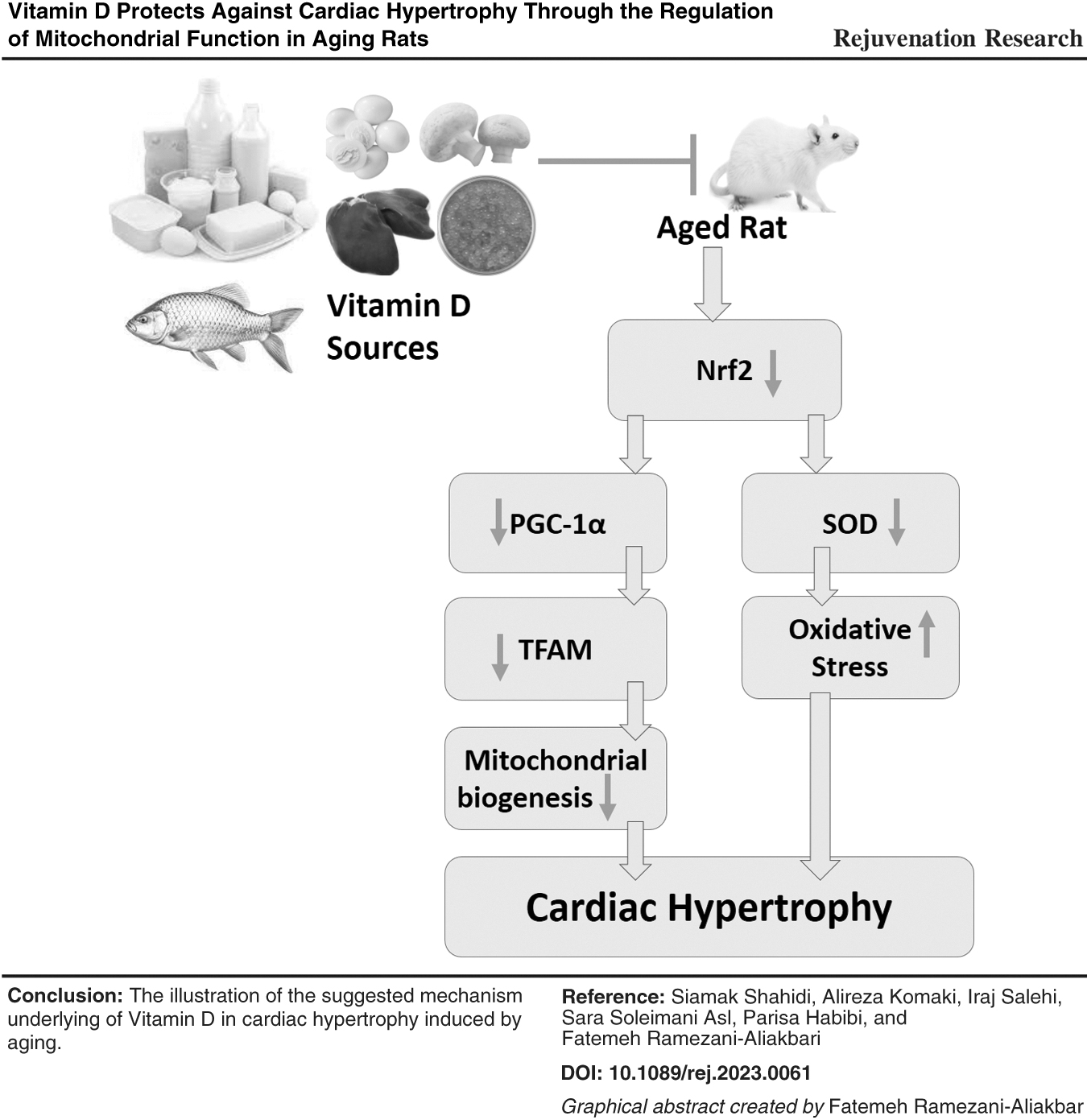
Cardiac aging is defined as mitochondrial dysfunction of the heart. Vitamin D (VitD) is an effective agent in ameliorating cardiovascular disorders. In this study, we indicated the protective effects of VitD against cardiac aging. Male Wistar rats were randomly divided into four groups: control (CONT), D-galactose (D-GAL): aged rats induced by D-GAL, D-GAL + Ethanol: aged rats treated with ethanol, and D-GAL + VitD aged rats treated with VitD. Aging was induced by D-GAL at 150 mg/kg via intraperitoneal injection for 8 weeks. Aged rats were treated with VitD (D-GAL + VitD) by gavage for 8 weeks. The serum samples were used to evaluate biochemical factors, and heart tissues were assessed to determine oxidative stress and gene expression. The D-GAL rats exhibited cardiac hypertrophy, which was associated with decreased antioxidant enzyme activity, enhanced oxidative marker, and changes in the expression of mitochondrial genes in comparison with the control rats. Co-treatment with VitD ameliorated all these changes. In conclusion, VitD could protect the heart against D-GAL-induced aging via enhancin
Astragali radix (AR) and anemarrhenae rhizoma (AAR) are used clinically in Chinese medicine for the treatment of chronic heart failure (CHF), but the exact therapeutic mechanism is unclear. In this study, a total of 60 male C57BL/6 mice were divided into 5 groups, namely sham, model, AR, AAR, and AR-AAR. In the sham group, the chest was opened without ligation. In the other groups, the chest was opened and the transverse aorta was ligated to construct the transverse aortic constriction model. After 8 weeks of feeding, mice were given medicines by gavage for 4 weeks. Left ventricular ejection fraction (LVEF) and left ventricular fractional shortening (LVFS) were detected by echocardiography. Heart weight index (HWI) and wheat germ agglutinin staining were used to evaluate cardiac hypertrophy. Hematoxylin–eosin staining was used to observe the pathological morphology of myocardial tissue. Masson staining was used to evaluate myocardial fibrosis. The content of serum brain natriuretic peptide (BNP) was detected by enzyme-linked immunosorbent assay kit. The content of serum immunoglobulin G (IgG) was detected by immunoturbidimetry. The mechanism of AR-AAR in the treatment of CHF was explored by proteomics. Western blot was used to detect the protein expressions of complement component 1s (C1s), complement component 9 (C9), and terminal complement complex 5b-9 (C5b-9). The results show that AR-AAR inhibits the expression of complement proteins C1s, C9, and C5b-9 by inhibiting the production of IgG antibodies from B cell activation, which further inhibits the complement activation, attenuates myocardial fibrosis, reduces HWI and cardiomyocyte cross-sectional area, improves cardiomyocyte injury, reduces serum BNP release, elevates LVEF and LVFS, improves cardiac function, and exerts myocardial protection.
Since the association between frailty and difficulty in finding venous access (VA) is largely unexplored and unclear in geriatrics, the aim of this study is to demonstrate how multidimensional frailty is associated with bad VA in a population of older hospitalized people. Multidimensional Prognostic Index (MPI), based on eight different domains usually assessed in comprehensive geriatric assessment, was used for identifying multidimensional frailty; VA heritage was investigated using a questionnaire prepared by a trained nurse, based on clinical experience. Overall, 145 patients were included (mean age 78.6 ± 7.6; males 51.0%). Frailer people, identified as an MPI >0.66 (MPI 3), had a significantly higher presence of bad VA (49.0% vs. 27.3% in MPI 3 and MPI 1 groups,