






Abstract


Wellbeing is a metric that is garnering attention not only at the level of the individual but also within families, organizations, communities, and even nations. Gallup-Healthways, for example, publishes comparative data on wellbeing (http://www.well-beingindex.com/2014-global-report), and the Sustainable Development Solutions Network (SDSN) produces a world happiness report (http://worldhappiness.report/ed/2015/). Sustainable development, as described by SDSN, calls for all societies to balance economic, social, and environmental objectives acknowledging that when countries pursue economic growth in a lopsided manner, forgetting about social and environmental objectives, the results can be adverse for human wellbeing.
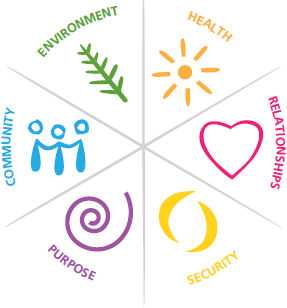
While policy objectives of nations can significantly impact their populations’ wellbeing, people are increasingly looking for self-care guidance and strategies to improve their personal health and well-being. The University of Minnesota Center for Spirituality & Healing website “Taking Charge of Your Health & Wellbeing” (http://www.takingcharge.csh.umn.edu/) draws more than 275,000 unique visitors per month who are able to develop a personal plan for health and wellbeing and explore healing practices. Interestingly, close to half of the users are from outside of the United States. As illustrated in the Center's model (Figure), the dimensions of wellbeing include health (physical, psychological, emotional, social, and spiritual), purpose, relationships, community, security, and the environment.
Figure The Wellbeing Model of The University of Minnesota Center for Spirituality & Healing.
Global advances in health and medicine require a whole-systems approach that goes far beyond reforms within healthcare systems. Intergenerational equity requires that we invest in solutions now that will benefit future as well as present generations. With this mindset, we should be asking ourselves, “What do we need to do within our families, schools, workplaces, and communities today to ensure the wellbeing and human flourishing of those yet to be born?” “If not now, when?” is a reasonable question to be asking ourselves. Which priorities would rise to the top and which investments would we make if wellbeing and human flourishing became a strategic priority as well as a policy imperative? Which decisions could we be making today that would lead to higher levels of wellbeing and human flourishing for present as well as future generations?