




Abstract
The performance of the supplier is a crucial factor for the success or failure of any company. Rational and effective decision making in terms of the supplier selection process can help the organization to optimize cost and quality functions. The nature of supplier selection processes is generally complex, especially when the company has a large variety of products and vendors. Over the years, several solutions and methods have emerged for addressing the supplier selection problem (SSP). Experience and studies have shown that there is no best way for evaluating and selecting a specific supplier process, but that it varies from one organization to another. The aim of this research is to demonstrate how a multiple attribute decision making approach can be effectively applied for the supplier selection process.
1. Introduction
Due to rapid development in supply chains and an increase in the number of suppliers with varying performances, suppliers can be considered as inevitable sources of external risks in modern supply chains [1].
Supplier selection has therefore been focused on by both practitioners and researchers. Furthermore, suppliers is a challenging issue that involves the evaluation of both qualitative and quantitative attributes. In fact, modern supply chains are not simple chains or a series of processes, but are complex networks where disruptions can occur at any time [2]. The nature of the supply chain is characterized by parameters such as product demand, product variety, product life-cycle, and other factors [3]. As stated by Christopher and Peck [4], understanding and managing the processes that comprise supply chains is critical for the reduction of potential risks. Thus, the supply chain environment is today more dynamic and unpredictable than in the past [5]. Supplier selection is one of the key activities of the purchasing department in any organization, because it is responsible for considerable savings, as well as reducing risk hazards for the company. Due to the importance of supplier selection, firms must intelligently delineate their supply chain strategy. There is no best way to apply supplier selection; therefore, decision makers (DM) apply a variety of approaches for the selection process.
There are several methods for supplier selection and evaluation. Weber et al. [6] clustered the quantitative approaches for doing so into three types: linear weighting models, mathematical programming models and stochastic methods. In linear weighting methods, weight is rated according to each attribute using an ordinal or cardinal scale. Mathematical programming models include linear programming (LP), mixed-integer linear programming including binary variables, nonlinear programming and goal programming. Stochastic approaches encompass methods such as clustering analysis and supplier selection according to uncertain behaviour on the part of the supplier. Hwang and Yoon [7] categorized a series of 17 MADM methods, contingent on the type and the most important features of data given by DM.
This study presents a methodological approach for supplier selection as a guideline for supplier relationship management.
To determine the precise interdependencies among several criteria that characterize performance supplier selection performance, the analytic hierarchy process (AHP) is applied.
The main objective of the research is to carry out a comparative evaluation of supplier selection processes in different companies using an exploratory case study approach. Other more particular objectives include:
Suggest a modified supplier selection criteria list based on previous studies, as completed by Dickson [8] and Krishna [9].
Investigate the criteria on which the company focuses and rank them in terms of importance.
The rest of the paper is structured as follows: section 2 presents the supplier selection problem; section 3 analyses the methodological approach based on AHP theory. In section 4, model validation for Iranian and Swedish companies is presented as a result of research developed with Iranian and Swedish companies. Section 5 presents the study results and future developments. Finally, section 6 outlines conclusions.
2. Supplier Selection Problem (SSP)
The aim of the proposed methodology is to define an effective approach for demonstrating how the multiple attribute decision making approach can be effectively used for vendor selection decision making.
Figure 1 shows the research framework and phases proposed in this study.
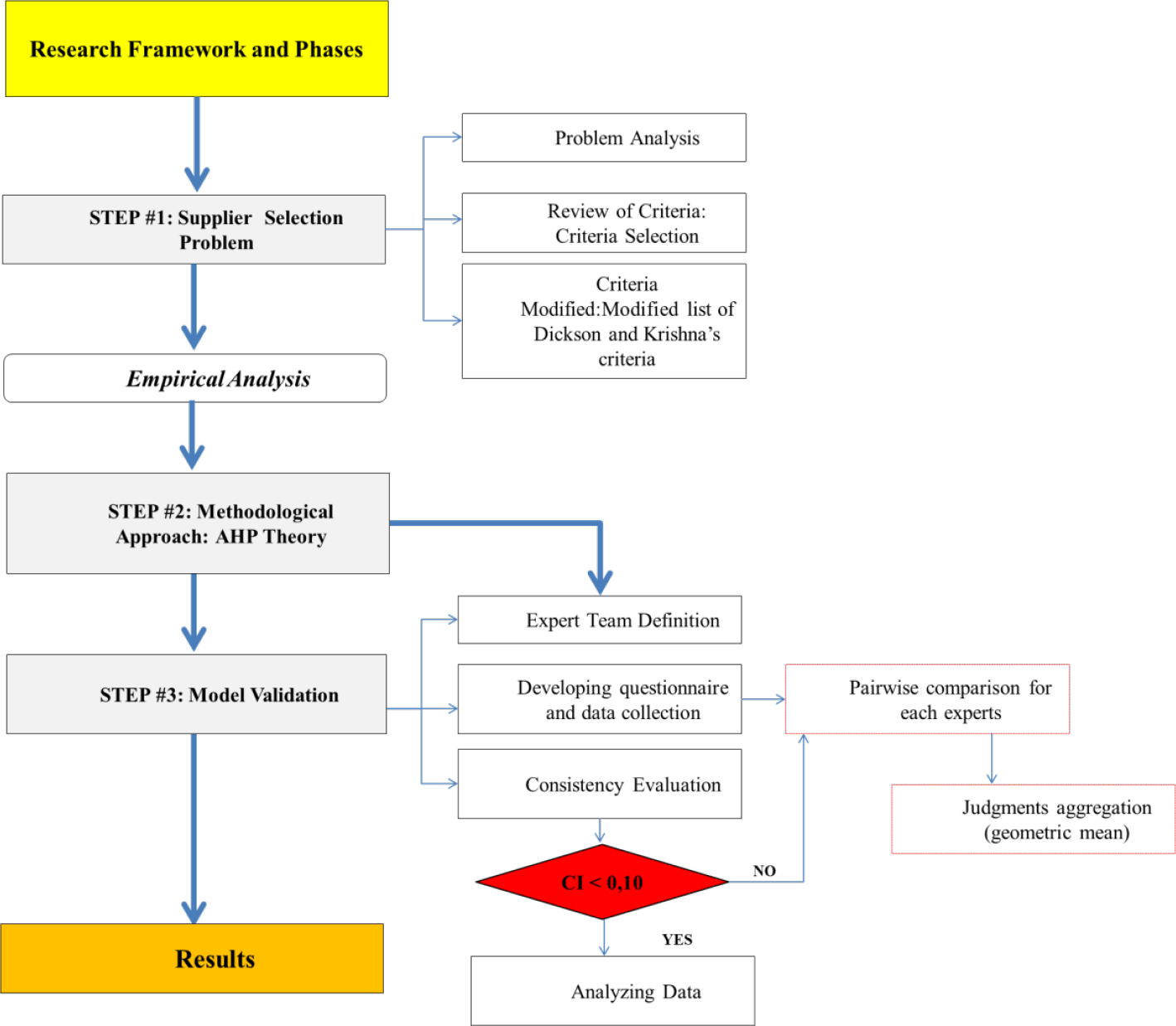
Research framework and phases
2.1 Problem Analysis
In an era of global sourcing and a highly competitive and interrelated production environment, SSP performance is a crucial factor for any company. Purchasing management is a strategic process and as such, rational and effective decision making in terms of the supplier selection process assists in the organization of optimizing cost and quality functions. Small cost reductions gained from a suitable supplier can have a considerable impact on profit and customer satisfaction, which in turn can lead to competitive advantages for the organization. Concerning this process, decision makers (DM) face a multi-criteria problem that comprises both qualitative (intangible) and quantitative (tangible) factors. Over the past decade, several solutions and methods have emerged for addressing the supplier selection problem (SSP), and the methods proposed in this area are extremely diverse. Experience and studies have shown that no best way exists for evaluating and selecting a particular supplier process; rather, this approach varies from one organization to the next.
The investigation criteria for the selection and measuring of supplier performance have been a central focus for many scientists and purchasing practitioners since the 1960s. Several methods, models and techniques have been introduced for the supporting supplier selection problem.
Kar [10] proposes in his paper an approach for group decision support concerning the supplier selection problem by integrating a fuzzy analytic hierarchy process (AHP) for group decision making and fuzzy goal programming for discriminant analysis. Ghodsipour and O'Brien [11] suggests a combination of the analytic hierarchy process (AHP) method and linear programming (LP) in order to consider both tangible and intangible factors for determining the best supplier.
Cebi and Bayraktar [12] integrated lexicographic goal programming and the analytic hierarchy process model for addressing the vendor selection problem. Cengiz et al. [13] used a fuzzy analytic hierarchy process method in order to find a solution to the vendor selection problem. Kasilingam [14] applied an integer programming model for the vendor selection problem in a stochastic demand function that was subjected to quality constraints. Akarte et al. [15] applied the analytic hierarchy process method for the addressing the supplier selection problem by implementing a web-based system. Forker and Mendez [16] proposes a method for benchmarking the comparative efficiency of the supplier by applying DEA, which can be imitated by similar companies in terms of organizational structure.
Kwang et al. [17] used the scoring method and fuzzy logic for vendor selection. Pi and Low [18] developed an analytic hierarchy process and Taguchi's loss function approach for the vendor selection problem. Liu et al. [19] studied application of the data envelopment analysis (DEA) technique by presenting a case study in order to evaluate the performance of vendors. Research by Degraeve et al. [20] employed total cost of ownership information to evaluate the procurement strategies of companies in order to develop a decision support system (DSS) at a European multinational steel firm. Cao and Wang [21] focused on optimizing vendor selection in a two-stage outsourcing process. Rao [22] designed a method by combining a genetic algorithm (GA) with AHP for the supplier selection problem. Regarding the supplier selection problem in supply chain management (SCM), Amid et al. [23] suggests a multi objective linear model. Shyur and Shyh [24] built a hybrid MCDM model using ANP and TOPSIS methods in order to promote strategic vendor selection.
Yadav and Sharma [25] present a case study of an automobile company to illustrate and propose three alternative supplier selection models based on AHP. Bruno et al. [26] indicates the preference of engaging the AHP method and its variations (ANP, Fuzzy AHP, Fuzzy ANP) for SSP.
According to Scopus, the research articles that have been published on “supplier selection AND analytic hierarchy process” have been 319 from 1997 to 2015. Figure 2 shows the number of documents published according to year. While Figure 3 shows the number of documents published according to year by source. The result is more impressive if Google Scholar it is analysed, where 18.100 articles appear from 1997 to 2015.

Documents according to year (source: Scopus)
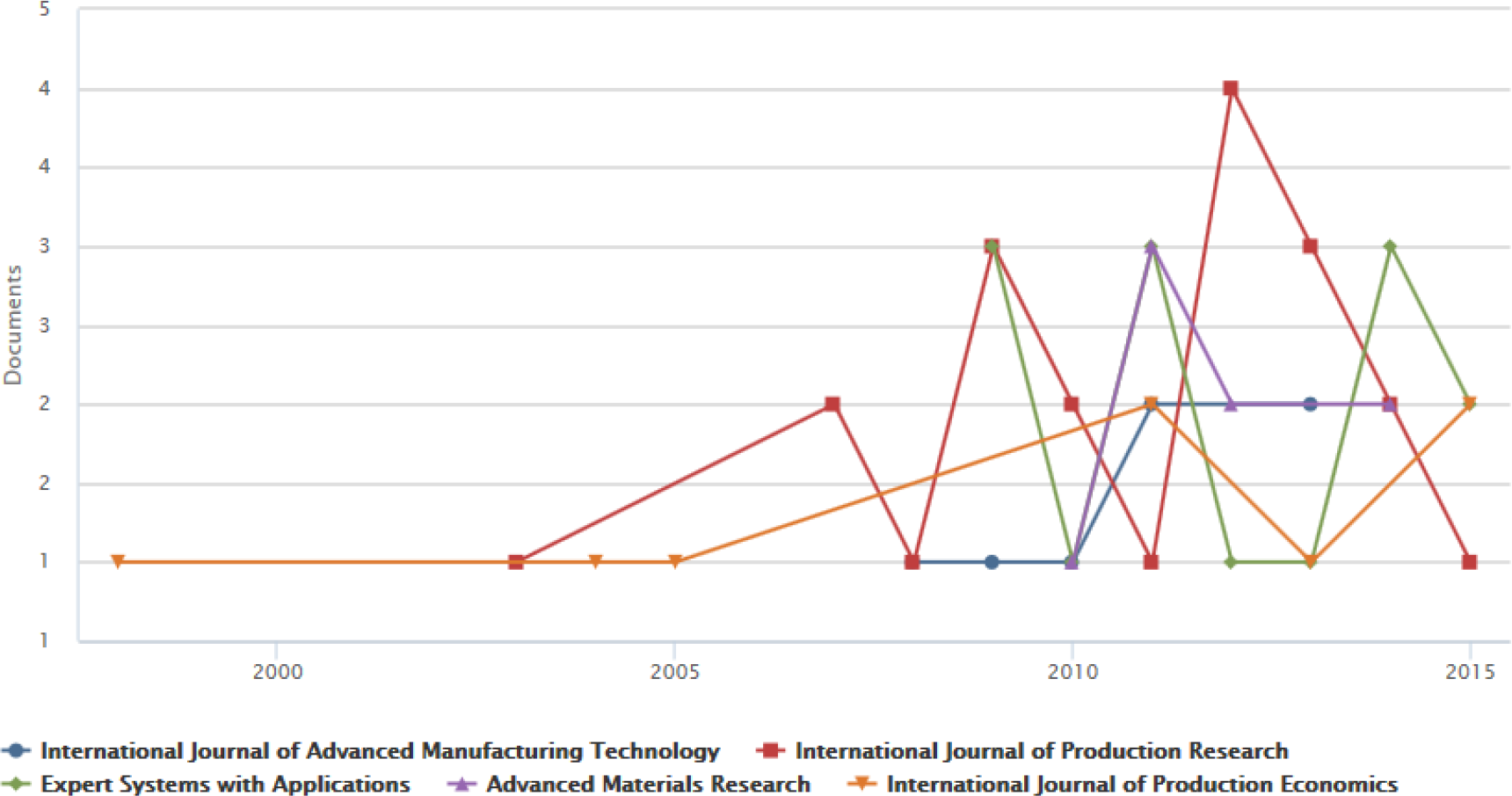
Documents according to year by source (source: Scopus)
2.2 Review of Criteria Selection
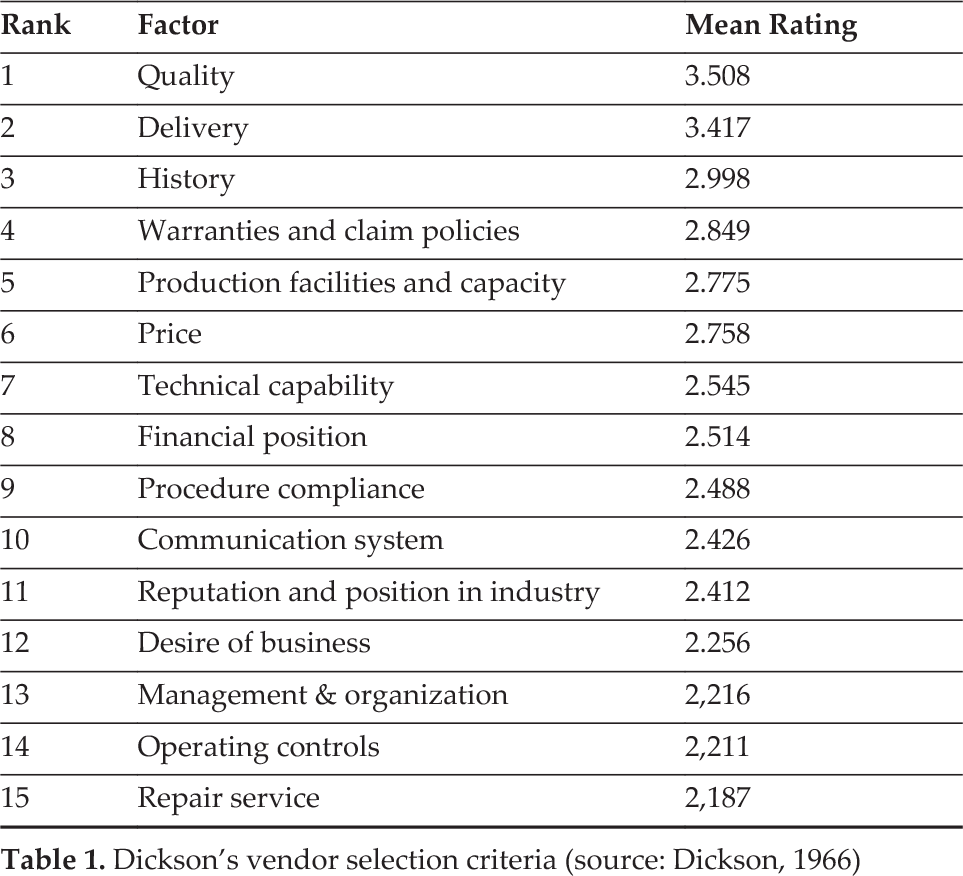
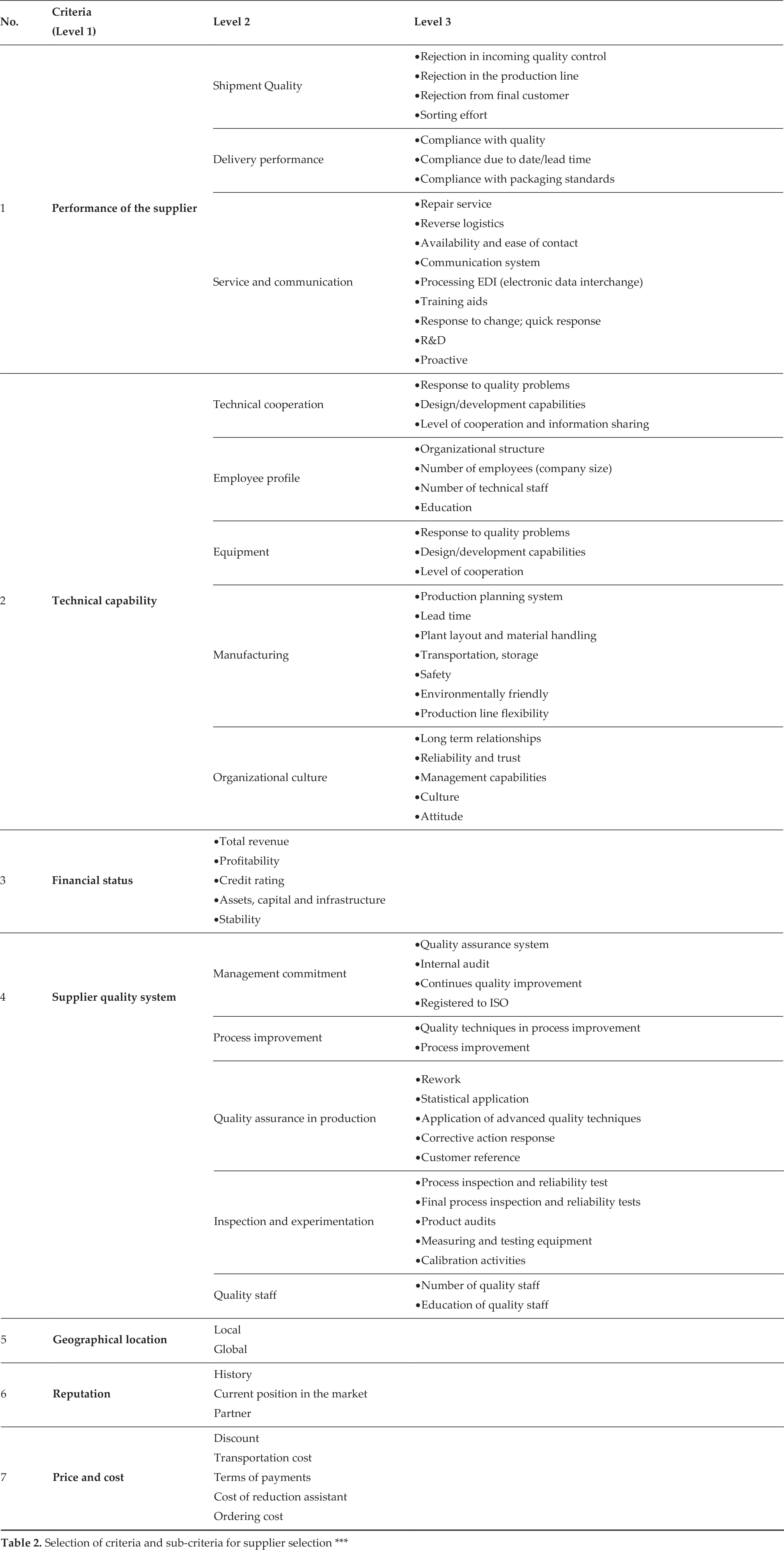
As part of the procurement process, the purchasing function must deal with a range of different suppliers. The first step is to identify criteria for evaluating and ranking the supplier. Naturally enough, there are several advantages to having an appropriate supplier. These include reducing purchase risks, maximizing overall value to the purchaser, decreasing project delays (on-time delivery), improving customer satisfaction, the reduction of costs and developing strategic alliances between supplier and purchaser, which ultimately leads to competitive advantages. Dickson [8] lists 23 attributes for supplier selection, based on a questionnaire of 273 purchasing questions that were sent to agents and managers in the United States and Canada. As can be seen from Table 2, various factors influence supplier selection in a supply chain environment, for example: the performance of the supplier, its technical capabilities, financial status, the quality system of the supplier, geographical location, supplier reputation, price and cost, etc. The top fifteen criteria are ranked and presented in Table 1.
Dickson's vendor selection criteria (source: Dickson, 1966)
Selection of criteria and sub-criteria for supplier selection ***
As Table 2 shows, the most significant criteria are the quality of the product, delivery, history and the supplier's warranty policy. These criteria are key elements of the suppler selection process.
Weber et al. [27] extensively review, interpret and classify 74 articles written since 1966. The study addresses supplier selection criteria in manufacturing and retail areas.
The articles investigated the type of criteria, rank and rating based on Dickson's study, as shown in the above table. Firstly, the study reviewed the articles, looking for criteria that had been selected as supplier selection criteria and then evaluated the authenticity of Dickson's criteria. The result was surprisingly close to Dickson's criteria. Twenty-two of the 23 criteria stated by Dickson were considered in at least one of the articles.
2.3 Criteria Modified: Modified List of Dickson and Krishna's Criteria
In this research, we summarized and identified new criteria regarding the supplier selection problem, based on different criteria introduced by Ha and Krishnan [9], Dickson [8], Barbarosoglu and Yazgac [28] and others. In our model, there are levels and sub-levels of criteria, as shown in Table 2.
3. Methodological Approach: AHP Theory
The analytic hierarchy process (AHP) developed by Saaty [29] is one of the common methods used for qualitative data, which can easily be converted to ranked information or pairwise comparison data. In this method, complex problems become much more understandable through the use of the hierarchy process.
The AHP breaks down a decision-making problem into several levels in such a way that they form a hierarchy with unidirectional hierarchical relationships between levels [30]. Using the AHP, hierarchies or feedback networks can be constructed; judgments or performance measurements can then be made on pairs of elements with respect to a controlling element in order to derive ratio scales, which are then synthesized throughout the structure to select the best alternative.
The top level of the hierarchy is the primary goal of the decision problem. The lower levels are the tangible and/or intangible criteria and sub-criteria that contribute to the goal. The bottom level is formed by the alternatives for evaluating the criteria [30]. The modelling process can be divided into different phases in order to better understand them; these phases are described as follows:
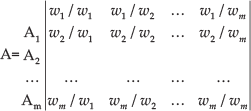
For a general AHP application, we can consider that A1, A2,…,Am denote the set of elements, while aij represents a quantified judgment on a pair of Ai, Aj. Through the 9-value scale for pairwise comparisons, this yields an [m × m] matrix A as follows:

where
The result of the comparison is the so-called dominance coefficient aij, which represents the relative importance of the component on row (i) over the component on column (j), i.e., aij=wi/wj. The pairwise comparisons can be represented in the form of a matrix. A score of 1 represents equal importance for the two components and 9 represents extreme importance of component i over component j.
In matrix A, the problem becomes one of assigning to the m elements A1, A2,…,Am a set of numerical weights w1, w2,…,wm, which reflects the recorded judgments. If A is a consistency matrix, the relations between weights wi, wj and judgments aij are simply given by aij = wi/wj (for i,j = 1, 2,…, m) and
If matrix w is a non-zero vector, there is a Λmax of Aw = Λmaxw, which is the largest eigenvalue of matrix A. If matrix A is perfectly consistent, then Λmaxw = m. However, aij denotes the subjective judgment of decision-makers, who provide comparisons and appraisals, with the actual value (wi/wj) having a certain degree of variation. Therefore, Ax = Λmaxw cannot be set up. As a result, the judgment matrix of the traditional AHP always needs to be revised for consistency.
The reason why we have chosen the AHP method above others concerns a number of advantages related to using AHP:
The AHP method allows decision makers (DM) to model a complex problem within a hierarchical structure. In other words, breaking down a complex, unstructured situation into simple, structured component parts produces a good picture.
Considering uncertainties and other factors in criteria and sub-criteria.
Allows DM to integrate objective and subjective considerations.
Flexibility
Measuring consistency between judgments.
Synthesizing judgments to determine which variables have the highest priority.
Considering the judgment as a whole and reaching and consensus.
Furthermore, over the years, there has been a broad range of applications in industry and government where AHP had been applied. Based on a study conducted by Saaty [33], AHP appears to be a useful application for a range of users, from economists, politicians, to those handling social and technological problems.
4. Model Validation: Case Study for Iranian and Swedish Companies
In this section, we will introduce the case study and empirical evidence. Developing a questionnaire and the data collection process are also discussed and an analysis of data is presented.
4.1 Expert team Definition
Five experienced supply chain managers from three different companies (two Swedish and three Iranian) were selected as responsible for completing the matrix.
4.2 Developing the Questionnaire and Data Collection
In order to achieve the goals of the research, questionnaires in the form of a matrix were considered. The matrix consisted of seven main criteria at the first level and were broken down into two sub-levels. Each sub-level could also be divided into sub-criteria. After final developing of the criteria, the questionnaire was submitted to interviewees via email. For making clear any ambiguity in terms of understanding the concept of the questions, face-to-face or telephone conversations were provided. After almost three weeks, data were collected and the practical process of analysis was started.
For the first level of criteria and analysis, the first research question was stated: “How can supplier selection criteria be categorized and described?”
Figure 4 shows an example of the questionnaire (pairwise comparison).

Example of the questionnaire Verbal assessment for pairwise comparison (first level)
Pairwise comparison provides to the respondent the scaling of two criteria in order to decide their relative preference and importance. Respondents completed the matrix based on Saaty's scale (mentioned on section 3). All of the matrixes were completed similarly. As previously noted, there were five respondents hailing from two different countries. Thus, the results of each country in one group were made using a geometric mean.
4.3 Consistency Evaluation
At this stage, the accuracy of the collected data was checked. For this purpose, inconsistency ration analysis was deployed, as per section 3.
Some results yielded numbers out of range of the amounts in the inconsistency ratio index. These results were resent to respondents to allow them to revise their judgments about criteria.
4.4 Analysing Data
In this section, results for both companies (Iranian and Swedish) are presented.
Analysis of supplier selection criteria at selected Iranian companies
Iranian company results are summarized in Table 3.
Swedish SSP ranking and comparison evaluations

Results show that the most important criterion for Iranian companies for selecting a supplier is geographical location. In some cases, it is a necessity for a supplier to support Iranian companies with locally produced parts, rather than global alternatives. Finding the cause of this selected preference is beyond the scope of this research; however, we argue that these causes may be related to governmental regulation, as well as international forced sanctions. Another criterion of extreme importance is the performance of the supplier, which is categorized into shipment quality, delivery performance, service and communication. In the first level of criteria, two criteria out of seven are the same as in Dickson's evaluation. In Table 4, Iranian companies' selection criteria are presented and compared with the rankings stated by Dickson [8].
Swedish SSP ranking and comparison evaluations

Reputation is evaluated by both Iranian companies and Dickson's study as being of considerable importance.
Iranian companies judge technical capabilities to have average importance, whereas Dickson's research assessed this criterion to be of considerable importance. Compared to Dickson's findings, Iranian companies estimated the financial status criterion to be of extreme importance, while Dickson considered it to have considerable importance. The quality system of the supplier was not included in Dickson's study; for the present study, this criterion was assessed to be of slight importance to Iranian companies.
Analysing supplier selection criteria at selected Swedish companies
Similar to the previous section, Table 4 presents Swedish company SSP perspectives.
Table 5 shows the most important criterion in supplier selection for Swedish Company is Performance of the supplier. Geographical location is ranked as average importance at both Dickson's study and Swedish Company. Reputation is ranked as considerable importance at both Dickson's study and Swedish Company. At the first level of criteria set, four criteria out of seven carry the same priority with Dickson's judgment. However there are some differences regarding the priority criteria as given.
Comparison of Sweden, Iran and Dickson's evaluations

Comparison of SSP in Swedish, Iranian and Dickson's evaluations
As we can see from Table 5, Quality system of supplier is ranked as slight importance at both Iranian companies and Swedish Company. We identified that given rank for Performance of the supplier (including delivery and shipment quality) is extreme importance similarly for Swedish Company, Iranian Companies, and Dickson's study.
As shown in Figure 5, the top priorities for Iran and Sweden were geographical location and performance of the supplier, respectively. However, the second most important criterion for Iranian companies, similar to Sweden, was performance of the supplier. This means that Iranian companies considered this criterion to have an overall contribution of 20.1%. The second most important preference from the Swedish perspective was technical capability, with 21.4%.

Vendor selection: primary criteria, Iran/Sweden
Another important finding concerns the commonality between Iran and Sweden in terms of considering the quality system of the supplier and the reputation criteria at (6.7%, 7.4%) and (13.8%, 13.2%), respectively.
Not surprisingly, quality – which is one of the elements related to the performance of the supplier – played a major role during the vendor selection process. We will discuss this further in the following section.
Analysis of sub-level criteria, facts and observations
As we have discussed previously, the criteria of first level were divided into additional sub-criteria, depending on the number of factors that may have affected them. For example, we can break down technical capability into five sub-criteria including technical cooperation, employee profile, equipment, manufacturing and organizational culture. Furthermore, these sub-level criteria can also be broken down into more detailed aspects. For example, we considered three smaller elements that can influence technical cooperation: response to quality issues, design/development capabilities and level of cooperation and information sharing. Nevertheless, these factors can be extremely varied in their impact, depending on different issues such as, DMs' knowledge and experience regarding the specific criteria.
Figure 6 shows that the dominant factor for performance of the supplier tends to be shipment quality, whereas Iranian companies considered the service and communication criterion as a dominant factor.

Performance of the supplier
Figure 7 shows the results regarding the quality system of the supplier.
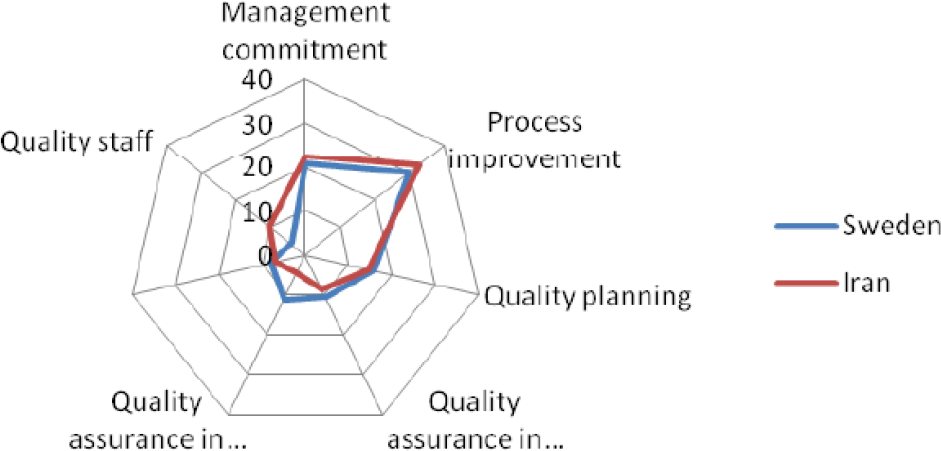
Quality system of the supplier
Quality system of the supplier was divided into six sub-levels, as shown in Figure 5. Almost all criteria were weighted roughly the same, except for the quality staff factor. Other results were obtained in a similar way.
5. Results and Future Developments
After reviewing the criteria lists of Dickson and Krishna, we attempted to modify new criteria that had previously been neglected, e.g., reverse logistics. The final results were obtained using a synthesizing method; some of the most important factors for supplier selection are shown in Figures 8 and 9.

Synthesis summary – Sweden

Synthesis Summary – Iran
Table 6 shows the absolute (ABS) difference between Sweden and Iran regarding the most important criteria and sub-criteria.
Absolute (ABS) difference between Sweden and Iran

In this research, the AHP method was applied as one of the preferred MADM for vendor selection. Below, some of the advantages and disadvantages of AHP are listed.
Advantages:
Regarding the importance of tangible and intangible attributes in the supplier selection process, AHP can provide a multiple sourcing approach, while other methods are able to focus only on quantitative factors.
Corporate strategies can be taken into account in buying processes.
Improving the consistency of the system and simplifying calculations by employing real data.
Dependency on human judgment can be reduced through pairwise comparisons. In other words, the possible arbitrary nature of judgments is reduced through pairwise comparison.
Performing systematic policy in order to weigh and rank the criteria of supplier selection to be determined.
Disadvantages:
Data are relatively subjective depending on experience, knowledge and judgment, which varies from one DM to another.
AHP does not consider any constraints or limitations regarding criteria or optimization requirements.
AHP does not operate well within vertical organizations, where some data can be influenced by inappropriately by top level management.
By considering the advantages and drawbacks of AHP, the conclusion was drawn that the following methods can be combined with AHP in order to yield efficient results. Here, some of these methods are briefly introduced.
AHP & fuzzy set theory. Presenting fuzzy logic into pairwise comparisons will recommend improvements regarding numerical judgment via forms of “fuzzification”. In most of the proposals, for prioritizing different criteria and attributes, triangular fuzzy numbers are deployed as a pairwise comparison scale.
AHP & Optimization methods. In order to cope with the order allocation problem, the combination between AHP and optimization methods such as integer programming and multi-objective programming are suitable to use. Sellers are ranked using AHP preferences; later, since the seller is able to provide the buyer with needed quantities, the optimization approach estimates the quantity to be purchased from each chosen seller by providing a maximum given target function.
6. Conclusions
Nowadays, supplier selection is one of the crucial activities to an organization. Successful selection can provide competitive advantages in the market including high quality, customer responsiveness and low costs. However, in some cases, the lowest price offered by the seller does not necessarily lead to the lowest cost if the supplier is unable to provide the product or service within the required time.
In this paper, supplier selection was considered a multi-criteria decision problem and an AHP model was P. The primary results were as follows:
A modified list of criteria based on earlier research conducted by Dickson and Krishna.
Identification of the most important criteria according to two different countries (Sweden and Iran).
Furthermore, the paper shows that AHP can be used as a decision-making tool when it comes to making strategic decisions, e.g., selecting a supplier with which to establish a long term relationship or from which to procure critical material for the company. Future research may aim to investigate using the analytic network process (ANP) model in this context. ANP is a more general form of AHP; however, unlike AHP, ANP is a more complicated model that is generally used by experts only. For this reason, AHP was applied in our initial research.